Affiliate disclosure: Daily Home Decorating may earn a commission if you buy through links in this article, at no extra cost to you. As an Amazon Associate, we earn from qualifying purchases. Product images and listing details below come from Amazon Creators API; we have not physically tested these pieces. Verify the exact size, color, fabric, seller, delivery, and return terms on the current listing before ordering.
The best chairs and sofas for a master bedroom create a comfortable place to read, get dressed, take a phone call, or unwind without turning the room into a second living room. The right combination depends on available floor space, how much privacy and separation you want, and whether the seating is for one person, a couple, or occasional guests. A compact loveseat plus one accent chair can form a useful conversation nook, while a chair alone may be the better choice when the bed and wardrobe already fill the room.
This guide compares a small loveseat, a convertible futon-style sofa, and a bedroom accent chair, then explains how to plan a seating area around the bed, doors, wardrobes, and walking paths. Product recommendations are based on current catalog listings and dimensions available at the time of review, not hands-on testing. Measure the room and check the live product details before purchase; marketplace titles can group different colors and sizes under one page.
If you are also deciding how to finish the room, use our rug sizing guide for general furniture spacing and browse more ideas in Home & DIY. Bedroom placement has its own circulation needs, so leave clear access to the bed, closet, windows, and bedroom door.
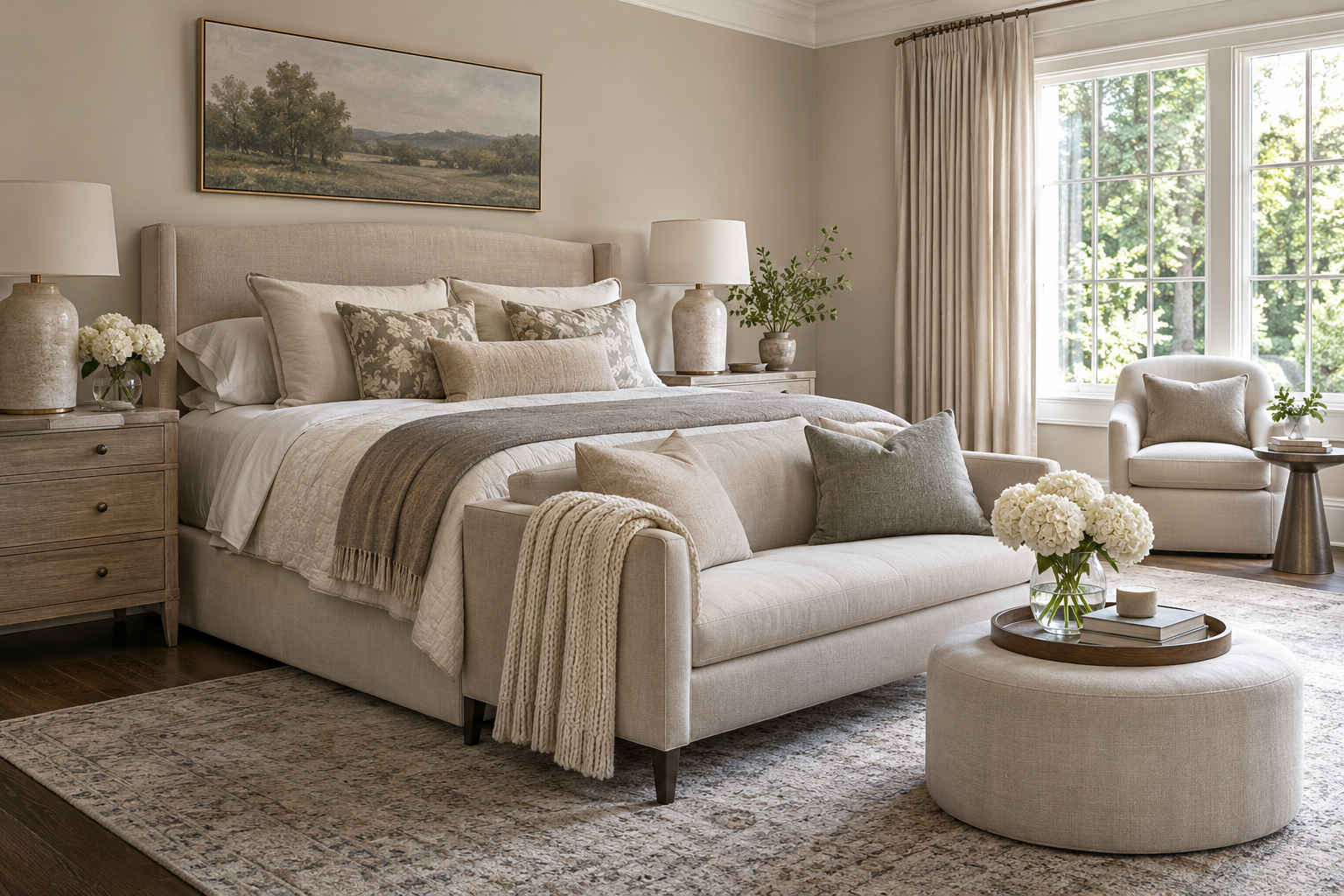
Quick picks: bedroom seating by use
- Best compact loveseat for an alcove: TROMIRY 50-inch mini loveseat, a small tufted couch listed for bedrooms and apartments.
- Best for flexible lounging or occasional guests: Marsail 66-inch futon sofa bed with an adjustable backrest and armrests.
- Best for a single-person reading corner: Kromax upholstered accent chair with a no-screw assembly design described in its current catalog title.
These products suit different room layouts. A loveseat creates a two-seat area but occupies more wall and floor space. A futon offers a convertible surface, though its open position needs extra clearance. An accent chair is the smallest arrangement and can be angled toward a window or bedside lamp. The product descriptions do not establish comfort for every body type; compare seat height, depth, and back support with your own needs.
1. TROMIRY 50-inch mini loveseat: best for a compact bedroom nook

The TROMIRY listing describes a 50-inch mini loveseat with tufted styling for bedrooms, apartments, and other small spaces. Its short overall width can make it a candidate for a window nook or a wall at the foot of a bed, though the listing’s numerical dimensions should be checked in full. Measure the usable seat width, overall depth, seat height, and package size—not only the headline width—before deciding that it fits.
A compact loveseat can provide a place for two people to sit without adding a full-size living-room sofa. In a master bedroom, consider whether that second seat will actually be used. If the room is mostly for reading or putting on shoes, a chair and ottoman may be more practical. If two people regularly spend quiet time together, a loveseat makes the nook feel intentional, but it should not block access to drawers or the bed.
Tufting gives the piece a tailored visual texture, but it does not say anything by itself about cushion support or cleaning. Check the upholstery material, cleaning instructions, frame construction, and customer reports about assembly and wobble. If the sofa has removable cushions, find out whether covers can be removed or replaced. Choose a color that works with the bedding but does not need to match it exactly.
See the TROMIRY 50-inch mini loveseat listing. Verify the exact selected variant, current seller, return policy, and shipping dimensions.
2. Marsail 66-inch futon sofa bed: best when the room needs flexibility
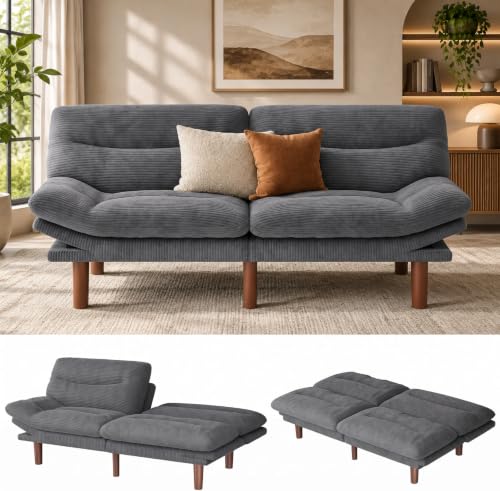
The Marsail listing describes a 66-inch convertible futon with an adjustable backrest and armrests. A small sofa bed can make sense if the master bedroom doubles as a guest room or if you want a place to recline without dedicating floor space to a full sofa. The important measurement is the length and width in the open position. A compact closed profile may extend significantly when converted.
Futon-style seating often uses a hinged back or adjustable sections. Confirm how each position locks, whether the arms can be adjusted independently, and how much force is required to convert it. A mechanism that is difficult to operate can be inconvenient in a room with limited clearance. Check the sleeping surface size and support before treating it as a regular bed for overnight guests.
Position the futon where the open surface will not collide with the bed, nightstands, wardrobe doors, or bedroom entrance. Tape both the sofa and open-bed footprints on the floor. Leave a route to walk around it, and avoid placing it directly over a heating vent. If the sleeper will be used only rarely, store bedding in a nearby ottoman or closet instead of keeping it on the sofa.
View the Marsail 66-inch futon sofa-bed listing. Compare the sofa and sleeper dimensions, assembly instructions, and current return terms before ordering.
3. Kromax accent chair: best for a one-person reading spot

The Kromax listing describes a beige mid-century accent chair with upholstered arms and a no-screw assembly design. A single chair can be the simplest bedroom seating solution when you want somewhere to read or set down a robe without adding a second sofa. Its neutral color can sit comfortably beside patterned bedding or a darker wood finish, but check the actual fabric and measurements because product images can shift in tone from one screen to another.
Place the chair near a window or floor lamp, and add a small side table only if there is enough space to keep a clear walking path. A chair that is angled toward the bed can create a reading corner, while one angled toward the room can make the space feel more open. Check the seat height and depth so you can sit down and stand up comfortably; a low lounge chair may be relaxing but difficult for some users to rise from.
Read the full assembly guide even when a title says “no screws.” Some designs use interlocking parts or require cushions to be placed in a particular orientation. Confirm the package contents, weight limit, and whether the cover is removable. If the chair will be used daily, warranty and replacement part information matter more than an easy setup claim.
See the Kromax beige accent chair listing. Verify the seller, color, exact product dimensions, and care instructions on the current page.
How to decide whether you need a chair, loveseat, or sofa
Begin with the activity. A chair is usually enough for reading, dressing, or taking a quiet call. A loveseat is better when two people will use the space regularly. A standard sofa may suit a very large primary bedroom or a bedroom suite that includes a sitting area, but it can overwhelm a typical room and make the bed area harder to navigate.
Consider how often seating will be used. Occasional use may justify a compact chair that can be moved easily. Daily reading calls for an armchair with comfortable seat height, back support, and task lighting. A loveseat used by two people should have enough usable cushion width, not only an impressive overall measurement. A sofa bed requires enough space to open and a plan for bedding storage.
Think about privacy and sightlines. Some people prefer a chair facing a window or a view, while others want a seat tucked into a corner away from the bed. A small sofa can create a visual boundary between a dressing area and sleeping zone. In a room shared by partners, separate chairs can be more flexible than one loveseat if each person wants a different activity.
Measure the master bedroom before shopping
Measure the open floor area where you might put the chair or sofa, then record the height of windowsills and the location of outlets, vents, radiators, and closet doors. The footprint includes the chair’s arms and back, plus the space needed to sit and stand. Mark the proposed furniture outline with painter’s tape and live with it for a day. A paper plan may not make a tight pathway obvious.
Check door swings and drawers. Bedroom and closet doors should open fully, and dresser drawers should pull out without hitting the chair. Leave enough space beside the bed for getting in and out. Avoid placing seating where it blocks a path to the bathroom or causes a person to walk around furniture in the dark at night.
Measure the delivery route from the front entrance to the bedroom. Include stairs, turns, elevator doors, hallway widths, and the bedroom door. Ask for package dimensions, not only assembled dimensions. A mini loveseat can still arrive in a large carton, while a chair may be delivered in separate components. Confirm whether delivery is to the room or just to the threshold.
If the room is narrow, orient seating along the longest uninterrupted wall. Keep the center open where possible. A compact chair beside a window often works better than a loveseat at the foot of the bed. For wider rooms, place two smaller chairs with a round table between them to create a conversation area while preserving access on both sides.
Plan the seating zone around the bed
The bed remains the room’s visual and functional center. Seating should support the bedroom’s routines without competing for the main walkway. A loveseat beneath a window can anchor a nook, but check that the back does not obstruct window treatments or heat flow. A chair near a wardrobe can offer a place to sit while dressing, but it should not block doors or full-length mirrors.
At the foot of the bed, a bench is often easier to fit than a sofa because it has a smaller back profile. If you prefer a chair or loveseat, leave adequate distance from the bed so the room does not feel crowded. Do not let furniture interfere with making the bed or walking around the sides. Consider a low-profile chair or armless loveseat where the bed already has a tall, visually heavy headboard.
For a private reading corner, angle the chair slightly into the room rather than pushing it hard into a corner. Add a focused floor lamp and a compact table. Keep cords away from walking paths and avoid placing a lamp where a closet door can hit it. A small rug can define the nook, but ensure the edge does not curl or create a trip hazard.
In a large primary suite, two chairs may create a more balanced arrangement than one long sofa. Place them across from each other or at a slight angle, with a narrow table between. This layout is useful for conversation and can be rearranged more easily if the room’s purpose changes. Confirm each chair has a clear route to the bed and the exit.
Upholstery, color, and care
Bedroom seating is often exposed to less food and household traffic than a living-room couch, but it still sees clothing dye, skin oils, makeup, lotions, and dust. Check the fabric composition and cleaning code. A removable cover is useful only if the maker permits washing or dry cleaning. Ask how to treat a spill and whether replacement covers can be purchased.
Color should relate to the bedding, curtains, floor, and wall paint without copying all of them. Neutral upholstery can create a calm base, while a muted accent color adds personality. If the chair or sofa is the main color statement, keep nearby pillows and accessories simpler. Consider how morning daylight and evening bulbs change the fabric shade.
Texture can make a small bedroom seating area feel more layered. Boucle, chenille, velvet, and linen-like weaves each have different care needs and visual weight. A nubby texture can collect dust and snag, while velvet pile can show shading. If you have pets that sleep on the bed, check how easily hair can be removed and whether claws can catch the weave.
Dark colors can make furniture feel visually heavier in a small room, though they may hide some marks. Light upholstery can brighten the corner but may show stains or makeup more readily. Use a fabric sample in the room and place it next to the duvet and floor. Photographing the swatch under different lighting can help you compare it with your existing textiles.
Lighting and comfort for reading
Overhead bedroom lighting is not always enough for reading. A chair or loveseat needs a lamp that directs light onto a book without shining into the eyes of someone in bed. Place the lamp on the reading side and check that the switch is easy to reach while seated. A floor lamp can save table space, but its base must not intrude into the walking path.
Check seat height, seat depth, back support, and arm height against the person using it. A deep seat may be comfortable for lounging but leave shorter legs unsupported. A low seat can feel relaxed but require more effort to stand. An upright chair with a firm arm may be easier for reading or dressing. Try a similar chair if possible and do not assume a photo conveys the seat angle.
For a couple, two separate chairs provide independent support and allow different positions. A loveseat can feel more intimate, but the cushion layout may not suit two adults equally. If one person reads and the other watches a screen, directional lighting and a small table become more important than matching upholstery.
When a bedroom sofa bed makes sense
A convertible sofa bed can help when a bedroom is also an occasional guest space. It can be useful in a large primary suite or a room that serves as both an office and guest room. Compare the closed footprint, open sleeping dimensions, mattress type, mechanism, and bedding fit. Make sure the room can accommodate the bed without blocking the main route.
Do not assume a loveseat sleeper provides a standard bed size. Measure the surface after opening and check the product’s weight limit. Consider how often it will be used: a few guest nights per year and regular weekly sleep have different comfort needs. Test the mechanism and confirm whether sheets can be secured without interfering with hinges.
Plan where bedding goes. A nearby storage bench, closet shelf, or under-bed drawer can hold sheets and a blanket. If the room is tight, the sofa-bed transformation may be difficult even when it fits on paper. Tape out the open footprint and practice walking around the temporary outline before buying.
Small master bedroom ideas
For a small master bedroom, use one piece of seating unless you have a clear second function. A slim accent chair can fit beside a window or dresser. A 50-inch loveseat may work in an alcove, but only if the outside depth and arm width leave a usable route. Avoid adding a large side table; a small wall shelf or narrow C-table can provide a surface without consuming floor area.
Choose legs that lift the furniture slightly off the floor if you want the room to feel visually lighter, but confirm the frame and seat height. Armless seating can reduce the footprint, while a chair with arms may be more comfortable for getting up. The right trade-off depends on the person and activity.
Use multifunctional furniture only when the function is genuinely useful. A futon that never opens may not justify its mechanism and extra weight. A chair with a storage pocket or removable cushion may be more useful than a sofa bed. Avoid placing furniture directly in front of a wardrobe just to complete a matching set.
Common mistakes when adding bedroom seating
- Buying by outside width alone: compare depth, usable seat width, and arm size.
- Blocking the bed or closet path: tape the footprint and test doors and drawers.
- Choosing a sleeper without measuring open mode: include its full bed footprint.
- Using only overhead light: add a lamp suited to the actual seat position.
- Choosing a deep seat without trying it: shorter users may not be able to sit comfortably upright.
- Matching every fabric exactly: use coordinated tones and textures for a more natural room.
- Ignoring delivery boxes: measure the route and package size before ordering.
- Adding two seats when one is enough: preserve clear walking space first.
A further mistake is treating the master bedroom like a smaller living room. The bed, wardrobes, and nightstands already occupy most of the room’s circulation. Seating should support a clear routine—reading, dressing, or occasional guests—rather than fill an empty corner automatically. Try a chair first if you are unsure whether a loveseat will be used.
Frequently asked questions
Should a master bedroom have a sofa or a chair?
A chair is usually better when the room has limited space or only one person needs a place to sit. A loveseat can work in a larger room or when two people will use the nook. Measure first and keep bed and closet paths clear.
What size sofa fits in a master bedroom?
There is no universal size. Compare the sofa’s full width and depth with the open floor area, then include doors, drawers, side tables, and walking routes. A compact loveseat may fit one room but feel oversized in another.
Where should a chair go in a master bedroom?
A window corner, unused alcove, or space beside a dresser can work if it does not block access. Add task lighting and a small table only if there is enough room. Keep cords and rug edges out of the walkway.
Is a loveseat enough for two adults?
It depends on the usable seat width, cushion shape, and how the adults prefer to sit. Overall width includes the arms, so review the inside dimensions and test the model when possible.
Can a small sofa bed work in a master bedroom?
Yes, if the room has enough space for the open bed and a clear route around it. Measure the full sleeping footprint, verify the mattress size, and consider how often it will be used.
What upholstery is easiest to maintain in a bedroom?
Care depends on the fabric and manufacturer’s instructions. Look for a clear cleaning code, removable covers if useful, and replacement availability. A texture’s appearance does not guarantee stain resistance.
How do I arrange chairs and a loveseat together?
Use one loveseat and one chair if they form a small, usable conversation zone. Angle the chair toward the sofa or window and place a compact table between them. Maintain a clear route to the bed and door.
Do small sofas need assembly?
Many arrive with some assembly, even when the listing emphasizes easy setup. Check the package contents, tools, and estimated assembly time. Confirm whether cushions arrive compressed and need time to expand.
Final recommendation
For a small master bedroom, begin with one accent chair or the compact TROMIRY loveseat and confirm its complete footprint. If you need a second sleeping surface, compare the Marsail futon and tape out the open position before ordering. A Kromax chair can suit a reading corner when its seat dimensions and assembly terms fit the user and room.
Choose seating around an activity, not an empty corner. Protect the main path around the bed, ensure wardrobes and doors open fully, and place useful lighting where someone will actually sit. Check exact dimensions, material care, seller terms, and package size. For more room-layout help, browse our rug guide and Home & DIY.
Certain content on this site comes from Amazon and may change over time. Product titles, images, specifications, availability, and offers are supplied through Amazon Creators API and may change. Verify the exact model, dimensions, seller, and return terms before purchase.