“Chair sofa” can describe a few different pieces: an oversized armchair with room to curl up, a compact chair that folds into a single sleeper, or a chair-and-a-half that bridges the space between an armchair and a loveseat. The phrase is not a standardized furniture category, so compare the product’s dimensions and function rather than relying on its name. This guide looks at chair sofas for small rooms, reading corners, guest spaces, and flexible living areas.
Affiliate disclosure: This article contains affiliate links. As an Amazon Associate, this site may earn from qualifying purchases. Product titles and images are from Amazon Creators API results and may change. Verify current dimensions, configuration, seller, return terms, and included accessories before ordering.
Quick answer: Choose an oversized chair sofa if you want a generous everyday seat, and choose a convertible chair bed only if you need occasional guest sleeping. Check the width and depth in both chair and bed positions, then compare support, upholstery, assembly, and delivery. A small chair sleeper will not provide the same sleeping room as a regular sofa bed.
Chair sofa options to compare
These product listings illustrate different interpretations of a chair sofa. They are not hands-on durability or comfort tests. Product titles, variants, and details may change; open the current listing and confirm what is included.

NESLAKO convertible futon sofa-bed chair
A compact foldable chair designed to open into a single sleeping surface. It may work in a small room where a full-size sofa bed would be too large. Confirm its open length, surface width, floor support, and recommended weight limit.

Ahomly 3-in-1 convertible sofa chair bed
The listing describes a pull-out chair with an adjustable backrest and linen upholstery. This kind of multi-position seat can serve as a reading chair, lounger, or occasional sleeper. Check each position’s dimensions and assembly requirements.
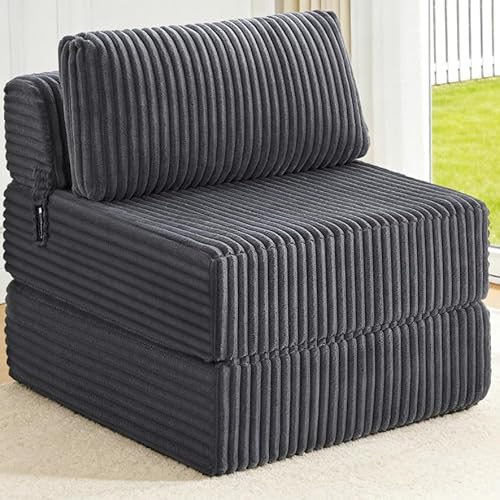
MEGAYES 4-in-1 folding sleeper chair
A floor-style folding chair that the listing describes with pocket-coil and foam fill. It converts between sitting, lounging, and sleeping positions. Confirm the mattress-like surface and whether the low seat height works for the intended user.

45.66-inch oversized chenille single sofa
A broad single-seat chair with a cloud-inspired silhouette, listed in chenille upholstery. This is a stationary lounge seat rather than a bed. Check its overall footprint and the usable seat width so it fits the room without blocking a walkway.
The first three are convertible chair sleepers; the last is a fixed oversized lounge chair. Their use cases differ. If guests will sleep there frequently, a dedicated mattress or full sofa bed may provide better support and space. If the priority is a spacious reading chair, a fixed chair-and-a-half can feel more stable and comfortable than a folding mechanism.
What does chair sofa mean?
Retailers do not use “chair sofa” consistently. Sometimes it means an armchair with an extra-wide seat. Other listings call a folding floor couch a chair, futon, or sleeper. A chair-and-a-half typically has a wider seat than a standard armchair but is still intended for one person or close two-person use. A chair bed converts into a single sleeping surface. Because product categories overlap, inspect the measurements and diagrams.
Consider the number of people who will use it. A wide chair may accommodate one person who likes to curl up, but it is not necessarily a comfortable two-person loveseat. The usable seat width between arms matters more than the full outside width. If you want a chair and a half, look for the interior dimensions and try a similar model before ordering.
For sleep use, understand whether the chair opens by unfolding a cushion, pulling out a frame, or reclining the back. The mechanism determines the bed height, surface continuity, and floor space required. Some small chair beds are close to the floor and may not be appropriate for people who have difficulty getting up from low seating.
Oversized chair or convertible sleeper?
Choose an oversized chair for everyday lounging
A stationary oversized chair has fewer moving parts and is often easier to use as a daily reading or television seat. It can anchor a corner of a living room or bedroom and pair with a footstool. Compare seat depth, arm height, back support, and cushion firmness. A very deep chair may be comfortable for lounging but require a pillow to support upright posture.
Check the chair’s exterior width before purchase. A wide seat can still be too large for a narrow room or a small doorway. Make sure a side table and floor lamp can fit without narrowing the main path. If the chair sits near a sofa, leave enough space to get in and out comfortably.
Choose a chair bed for occasional overnight guests
A chair sleeper can provide a separate sleeping place in an office, studio, dorm room, or guest room. It takes less floor space than many sofa beds when closed. Before buying, measure the open surface and compare it with the sleeper’s intended user. A single chair bed is usually a one-person solution and may not have the length or width an adult expects.
Ask whether the cushions create the mattress surface or a separate mattress unfolds from the frame. Inspect how the sections join and whether there are gaps or hard transitions. Confirm the bed’s maximum weight, conversion steps, and recommended use. Occasional guest use and nightly sleep place different demands on a compact mechanism.
Choose a chair-and-a-half for a middle ground
A chair-and-a-half gives one person extra room to stretch and can look like a small sofa in a compact setting. It may suit a bedroom or reading room where a loveseat feels too bulky. If you expect two people to share it, test the model together; seat width and arm shape can limit usable space.
Measure the room in every position
Record the closed width, depth, and height, then measure the sleeper when fully extended or reclined. Tape both outlines on the floor. Include the path to a door and the room needed to walk beside the bed. A chair bed may extend forward much farther than the product’s closed dimensions imply.
Measure the delivery route: entrance door, hallway, staircase, elevator, landing, and tight turns. Compare the narrowest opening with package dimensions. A compact chair may arrive in a large box, and vacuum-packed upholstery can expand after opening. Confirm whether legs or arms detach and whether assembly requires tools or a second person.
Check the nearby furniture too. A sleeper chair needs a place to store bedding and a clear path to the bathroom. An oversized chair should not block a closet, window, or radiator. If the room serves several functions, consider where the chair will sit when open and whether it can be moved without lifting heavy furniture.
Comfort and support checks
Try sitting upright and reclining. Check whether your lower back is supported, whether your feet reach the floor, and whether the arms sit at a comfortable height. For a low floor chair, consider how the user will get up. If the chair is intended for an older adult or someone with mobility limitations, seat height and firm support may matter more than a very soft cushion.
Ask about the cushion fill, frame, and support. Foam density, coil systems, webbing, and platform bases feel different. A listing may use “cloud” or “plush” language without explaining construction. Review the product details for weight capacity, cushion recovery, and recommended use. If the information is missing, treat that as uncertainty rather than guessing from the photo.
For a convertible, test every position if possible. The chair should lock or rest securely in each configuration and should not pinch fingers during conversion. Read the manual before opening it. Do not use a mechanism that feels unstable or has a damaged hinge. Check that the folded chair returns to its seat shape without forcing the fabric or frame.
Who benefits from a chair-and-a-half?
A wide chair can be useful when a standard armchair feels narrow but a loveseat would dominate the room. It gives one person room to sit cross-legged, tuck in a pet, or lean against a pillow. It may work in a bedroom, nursery, home office, or beside a fireplace where you want a more personal seat than a sofa. Measure the interior seat and arm height so you know how much usable room remains.
A chair-and-a-half is not necessarily a practical substitute for two separate chairs. Two people may sit close together, but whether that is comfortable depends on the width between arms and the shape of the seat. If the chair has a center seam or deep contours, the usable space may feel smaller. Try sitting with another person if shared use is part of the plan.
Pairing a wide chair with an ottoman can create a chaise-like lounging spot, but the ottoman may need to move when guests arrive or when the room is used for another purpose. Check whether the ottoman is part of the price or a separate item. If you often move it, consider its weight and whether it has glides that will not damage the floor.
Special considerations for bedrooms and offices
In a bedroom, think about the path around the bed, closet doors, and bedside access. A chair sofa can be a useful place to dress, read, or host an overnight guest, but placing it in front of a wardrobe can make daily use frustrating. In a home office, confirm that the chair sleeper will not block desk drawers or the route to the door when unfolded.
For a child’s room or dorm, secure the chair on a stable floor and follow any age or weight recommendations on the listing. Keep the conversion mechanism away from small fingers while opening or closing it. Store bedding in a clean, dry place rather than between folding sections unless the manufacturer says that is intended.
In a guest room, test the chair bed before the first visitor arrives. Practice opening and folding it, check that the hinges or supports engage, and confirm that sheets fit. Tell guests how to operate it safely. A small lamp and reachable side table can make a compact sleep area more comfortable without taking up much floor space.
Fabric and care
Chair sofas are available in linen-look fabric, chenille, velvet, corduroy, faux leather, and other coverings. The fiber and weave matter more than a broad marketing label. Ask for the cleaning code and whether covers can be removed. Removable does not automatically mean machine washable. Some fabrics can shrink, fade, or lose their fit when cleaned incorrectly.
For a small room used by children or pets, choose upholstery that can tolerate the household’s routine and use a washable cover if appropriate. Looped or fuzzy fabrics may catch claws or collect lint. Smooth surfaces may be easier to wipe according to the maker’s care directions, but can still scratch or show marks. Avoid unapproved cleaners and test any approved treatment in an inconspicuous area.
Vacuum gently around seams and beneath cushions. Keep the chair away from direct sunlight and heaters to reduce fading or material stress. For a sleeper chair, do not store damp bedding inside or fold it while the fabric is wet. Follow the manufacturer’s instructions for recovery time if the chair arrives compressed.
Design and placement ideas
Use an oversized chair as a reading nook with a floor lamp, side table, and footstool. Keep the lamp’s base outside the main walkway and choose a table that can hold a book and drink without crowding the arm. A rug can define the nook, but make sure the chair’s feet sit securely and do not rock on an uneven pile.
A sleeper chair works well in a home office that occasionally hosts a guest. Place it where it can open without moving a desk or blocking a closet. Store a sheet, pillow, and light blanket nearby. Keep cords and loose rugs out of the sleeping path. If the chair is used as a bed often, plan for a more supportive mattress or a separate guest bed.
In a small living room, one chair sofa can complement a standard sofa and create an additional seat without committing to a bulky loveseat. Match or intentionally contrast the fabric with the sofa. Two oversized chairs can create a conversation area, but measure the combined footprint before buying a pair.
Budget, delivery, and return policy
Compare the total cost, including shipping, assembly, and any optional ottoman or pillow. Check whether the product photos show accessories that are not included. Review the return period, return shipping, restocking fees, and packaging requirements. An opened or assembled sleeper may be harder to repack than a standard chair.
Ask how the chair is delivered and whether the carrier brings it into the room. Confirm expected shipping time and whether the package comes in more than one box. If the product is compressed, check how long it needs to expand before use. Photograph damage and keep packaging until the return window passes.
For a convertible product, review warranty coverage on the mechanism separately from fabric and cushions. Find out whether replacement covers, hinges, or mattress components are available. For a stationary chair, ask whether the seat cushion can be replaced or rotated. Service information can matter more than one extra reclining position.
Common mistakes to avoid
- Assuming “chair sofa” always means the same type of furniture.
- Buying a sleeper chair without checking the open bed’s actual size.
- Confusing exterior chair width with usable seat width.
- Choosing an extremely deep seat that does not support upright sitting.
- Ignoring the low seat height of a floor-style sleeper.
- Forgetting to measure the delivery route and the extended configuration.
- Assuming a pictured ottoman, pillows, or mattress topper is included.
- Skipping the return and mechanism warranty terms.
Buyer checklist
Before ordering, decide whether you need a stationary oversized chair, chair-and-a-half, or convertible sleeper. Record the exterior width, interior seat width, depth, seat height, back height, and open-bed dimensions. Measure doorways and the room in both closed and open configurations.
Confirm frame and cushion details, weight capacity, fabric content, cleaning code, assembly, shipping method, return costs, warranty, and replacement parts. Check which accessories are included. If the chair is for a guest, make sure the sleep surface fits the user and that bedding is easy to store.
Finally, think about how the chair will be used most of the year. A guest sleeper that is awkward as a chair may not be worth the occasional bed function. An oversized chair that is delightful for lounging may take too much room in a small bedroom. Choose the configuration that solves the main daily need first.
Frequently asked questions
Is a chair sofa the same as a chair-and-a-half?
Not always. Retailers use chair sofa broadly for oversized chairs, folding sleepers, and compact couch-like seats. A chair-and-a-half is generally a wide stationary chair. Check the dimensions and function.
Can a sleeper chair fit an adult?
Some can, but the sleeping length and width vary. Compare the actual open dimensions with the person’s height and sleeping style. A chair bed is usually intended for one sleeper, not a couple.
Are chair beds comfortable for everyday sleep?
Many compact chair beds are intended for occasional guests. Check mattress construction, support, and warranty before using one as a primary bed. Test the surface if possible.
What is the difference between a sofa chair and an accent chair?
An accent chair is a broad decorative category for a single seat. A sofa chair may be wider, more lounge-oriented, or convertible. Product naming varies, so compare usable seat measurements and the intended function.
How much space should I leave for a chair sleeper?
Use the fully extended dimensions and leave enough clearance for someone to get into and out of bed. Tape the full outline on the floor before buying.
Final thoughts
The best chair sofa matches the room’s main job: an oversized chair for daily lounging, a chair-and-a-half for extra seat width, or a sleeper chair for an occasional overnight guest. Confirm measurements, support, fabric care, delivery access, and the conversion mechanism. Looking beyond the product title helps you choose a chair that works in both its everyday position and any secondary role.
For related small-space seating, read our boneless loveseat guide, compact sofa bed guide, and small-space sofa guide. See our affiliate disclosure.
Certain content on this site comes from Amazon and may change. Product images and listing information are supplied through Amazon Creators API. Confirm current dimensions, included pieces, seller, delivery, and return terms on the listing.