Affiliate disclosure: Daily Home Decorating may earn a commission if you buy through links in this guide, at no extra cost to you. As an Amazon Associate, we earn from qualifying purchases.
When shopping for the best built sofas for heavy people, the most useful details are the sofa’s stated weight capacity, seat width and depth, support system, arm shape, and warranty. A sofa that looks sturdy may have no published capacity, while a smaller-looking model may list a clear limit. Product specifications can also use different methods: total sofa capacity, capacity per seat, and an unclear “weight limit” are not interchangeable.
This guide explains how to compare those claims respectfully and practically. We focus on comfort, space, and construction rather than assumptions about a person’s body. We did not physically test the products below. Amazon product details are supplied through Creators API and are seller or manufacturer claims; verify the exact model and current terms before buying. Capacity numbers are not universal guarantees, and the tested load method may not be stated.
For more structure and cushion guidance, read our built affordable sofa guide, compare larger seating in affordable big sofas, plan the room with our living room rug guide, and browse Home & DIY.
Quick checklist: what to verify before you buy
- Capacity: find the limit for the exact sofa and determine whether it applies to the whole sofa or each seat.
- Seat dimensions: check usable seat width, depth, height, and space between arms; overall width does not equal sitting width.
- Support: look for frame and suspension details, such as springs, webbing, or platform support, and ask how those parts are warranted.
- Access and comfort: consider arm height and firmness if you use the arms to sit down or stand, and test the model where possible.
- Durability details: inspect cushion construction, reversibility, cover care, and replacement parts.
- Delivery: measure the entry route and confirm package dimensions, assembly, and return costs.
Start by writing down the measurements and capacity information you need. Then compare three exact models, not just brand names. If a retailer cannot confirm the capacity or what it means, treat that uncertainty as a reason to ask more questions rather than guessing from appearance.
Understanding sofa weight capacity
A published capacity is useful only when you know what it describes. Some manufacturers give one total capacity for the entire sofa; others provide a per-seat limit. A sectional can have separate limits for each module. A product might also state the capacity of a sleeper surface or a reclining seat rather than the sofa as a whole. Confirm whether the figure applies to evenly distributed weight, a single seated user, or a particular seat.
Do not simply divide a total sofa limit by the number of cushions. Cushion count does not always equal the number of independently supported seats, and a shared frame can distribute load differently. Likewise, a sofa labeled “three seat” does not prove a particular capacity per person. Ask the manufacturer for the written specification and, if available, the test procedure or standard behind it.
Ashley’s customer-facing product information notes that there is no single industry-standard method for measuring the maximum weight-bearing capacity of most residential furniture. That makes direct product information particularly important. You can read the note on an Ashley sofa product page. A number without a clear method should be treated as a seller claim, not as a universal comparison score.
Use the limit as one factor in a broader decision. Ask what configuration it covers, whether the frame and seat support were tested together, and whether the warranty has separate weight-related exclusions. If more than one person will use the sofa at once, include their combined load when reviewing the stated total capacity. Avoid selecting a model right at a published limit if the seller does not explain how that limit is defined.
Seat dimensions can matter as much as strength
Overall sofa width measures the outside edges, including arms. The usable seating width is the space between the arms and can be much smaller. A sofa with broad decorative arms may look wide but offer less room to sit. Measure the actual seat width and compare it with a couch you already find comfortable. If a listing omits seat width, ask the seller for the distance between the inside arm surfaces.
Seat depth changes posture. A deep seat may offer more room to lounge or shift positions, while a shallower seat can make it easier to sit upright and place both feet on the floor. Seat height and cushion firmness also affect how it feels to get in and out. If you rely on the arms for support, examine their height, firmness, and attachment rather than assuming that a thick arm will hold repeated pressure.
Try the exact model if you can. Sit near the middle and at the end, check whether the cushions compress evenly, and see if the seat feels stable as you shift position. When shopping online, look for detailed measurements, videos, return conditions, and reviews that specifically discuss seat support and dimensions. Product photos alone cannot show how the seat will feel for your body.
Construction details to compare
Frame and joints
Ask what materials make up the frame and how the seat and arm structure are connected. Listings may mention hardwood, engineered wood, metal, or combinations. No one phrase guarantees a sofa’s life span; joinery, reinforcement, quality control, and normal use also matter. A manufacturer that can describe the frame and service parts clearly gives you more information to compare than a listing that only says “heavy duty.”
Look for a warranty that covers the structural frame and read its conditions. Check whether the coverage is limited to the original buyer, whether labor is included, and how a claim is handled. A lifetime frame warranty may apply only to specified structural parts and may exclude cushions, upholstery, normal wear, and transportation. Save the warranty with the receipt and exact model number.
Seat suspension and support
Common descriptions include sinuous springs, webbing, platform foundations, or a combination of support methods. These terms are not direct substitutes for a load rating. Ask whether the suspension limit is specified and whether it applies to an individual seat or the sofa as a whole. If the seller describes a cycle test, find out which part was tested and how the result relates to the complete seating system.
A retailer’s product page for the Armen Living Greyson leather sofa lists a total weight capacity of 650 pounds and says it seats up to three; the same page describes web suspension. That is a product-specific listing, not a recommendation for every shopper. Compare the exact dimensions and ask how the capacity is measured. See the current item in the Ashley sofa catalog for the retailer’s own description.
Cushions and foam
Check whether the cushion fill is foam, fiber, a spring unit, or a combination. High-density foam is a product description, but the phrase alone does not state a universally comparable firmness or long-term compression result. Ask for foam density and thickness if those details are important and available. Find out whether cushions are removable, reversible, or replaceable.
Reversible cushions can sometimes be rotated to distribute wear, but only if the cover and construction allow it. Attached cushions cannot be moved. If a cushion softens, ask whether replacement cores are sold and whether the warranty covers that type of change. Normal softening may be excluded even when a frame warranty is long.
Upholstery, seams, and care
Choose a fabric that fits your household’s maintenance needs. Leather, faux leather, chenille, microfiber, and performance weaves each feel and clean differently. Check the fiber content, care code, and any warranty conditions for stains or abrasion. A stain-resistant treatment does not make the sofa immune to damage, and some cleaners can harm the finish.
Inspect seams, zippers, and the underside of cushions where photos or showroom access allow. Ask whether covers can be replaced and whether the manufacturer sells spare cushion covers. If the sofa is modular, check that each component can be repaired or ordered separately. These details can matter when a single high-use cushion wears sooner than the rest.
Amazon examples with published capacity claims
The following listing examples were returned through Amazon Creators API. Their capacity figures are product-page claims, not independent test results, and listings may change. Verify the selected item’s exact capacity, whether it is per seat or total, and the included configuration before relying on the number.
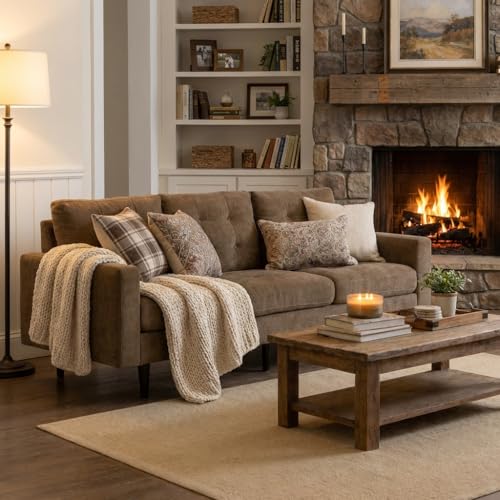
YESWOOD 83.85-inch chenille sofa
The API listing states a maximum capacity of 1,000 pounds for the sofa and describes a larch and multilayer-board frame with an S-spring base. Confirm whether the limit is total, how it is tested, and which exact color and configuration the listing covers.

wanan modular six-seat sectional
The API title states a 1,300-pound capacity for the six-seat configuration, and the features describe a deep seat with high-density foam. Verify the loaded configuration, total versus per-seat limit, module connectors, and assembly details.

Armen Living Greyson 83-inch leather sofa
The Amazon API listing identifies the model and dimensions. Ashley’s catalog separately lists the Greyson sofa with a 650-pound total capacity and web suspension. Confirm that the marketplace item matches the catalog model and check the live specification before ordering.
These examples represent different constructions and capacity descriptions, so they should not be ranked by the largest number alone. The modular sofa’s capacity could describe the entire assembled configuration, while the single sofa’s stated limit may be defined differently. Use each number only after confirming its scope and the seller’s test method.
Comfort and access features worth checking
Look at arm height and shape if you use the arms when standing. A stable arm can make a sofa easier to use, but not all decorative arms are designed as support rails. Ask whether the arms are structurally connected to the frame and whether the manufacturer provides any guidance about using them to push up. Do not use a loose cushion or movable back pillow as a grab point.
Seat height and cushion firmness are personal. Some people prefer a firm surface that compresses less; others prefer a softer feel. Test the model and pay attention to whether the seat remains stable when you move to the edge. If shopping online, see whether the seller provides a return window that allows you to assess comfort at home. Return freight for a large sofa can be substantial, so clarify it first.
Consider the sofa’s shape and how it supports different sitting positions. A broad seat can allow more room to adjust, while a deep seat may be more comfortable for reclining or sitting cross-legged. A low sofa may be difficult for some people to rise from. Use the exact seat dimensions and try the furniture where possible rather than relying on labels such as “oversized” or “extra supportive.”
Room fit, delivery, and everyday use
Measure the sofa’s full width, depth, and height, then measure the room route: exterior door, hall, stairwell, elevator, and doorway. Ask for package dimensions because a sofa may arrive assembled or in pieces. Verify delivery service, setup, and whether the crew can place it in the room. A large or sturdy sofa can be heavy; make sure the floors and path can support moving it safely.
For a sectional, check each module’s footprint and capacity. One piece may have a lower limit than another, and a chaise may be designed differently from a standard seat. Read the product diagram and understand how connectors keep modules aligned. A configuration that works well in one arrangement may shift or distribute load differently if you rearrange pieces.
Think about flooring and furniture placement. A rug can help anchor the sofa, but the sofa’s feet should sit securely and not catch on a rug edge when people sit down or stand. Place tables far enough away that they do not block access. Keep the area around the sofa open enough for safe movement and easier cleaning.
Decide whether a standard sofa or sectional is more practical
A sectional can create a larger continuous sitting area, but it does not necessarily provide wider individual seats. Arms, consoles, and corner pieces occupy room and affect where people can sit. A standard sofa with broad seats or a modular arrangement with independent pieces may offer a layout that better fits your needs. Compare seating width per person and the way weight is distributed across modules.
Check how many people will usually sit down at once and whether they need space to sit side by side or spread out. A single long bench cushion may feel different from separate cushions, and seat divisions can affect where people choose to sit. If you prefer a particular position, try that spot rather than assuming all seats feel the same. Ask whether a center support leg or internal divider changes the usable space.
Consider arm height and entry assistance
Some shoppers use the sofa arms to help lower themselves onto a seat or push up to stand. If that applies to you, test whether the arms feel stable and are positioned at a useful height. A soft pillow-top arm may be comfortable to lean against but not intended as a grab rail. Ask the manufacturer whether the arm structure is designed for repeated weight-bearing contact; do not assume from its size or appearance.
If you want additional assistance getting up, consider a model with a higher seat or firmer cushion, or compare a separate chair designed for support. For some households, a sofa plus a supportive armchair may be more useful than one oversized couch. This is a personal fit choice, so testing the seat and arms can provide information that weight capacity alone cannot.
Warranty, returns, and questions for the seller
Read warranty terms by component: frame, springs or webbing, cushion cores, upholstery, and mechanisms. Ask whether the warranty names any maximum weight or other use limits. Clarify whether the seller covers labor, travel, or shipping for a repair. A capacity claim and a warranty claim are separate: the written warranty governs whether a defect is covered.
Review the return policy before checkout, especially if you cannot test the sofa. Find out whether returns are allowed after assembly, who pays freight, and what condition the sofa must be in. Ask how to report damage at delivery and how quickly it must be reported. Save the order page, capacity statement, assembly instructions, and warranty document.
Useful questions include: Is the capacity total or per seat? Which configuration does it cover? How is it tested? Does the number apply to dynamic sitting or static load? Can replacement cushions be purchased? Is the arm structure covered? How do repairs work in my ZIP code? Written answers make it easier to compare sellers and resolve questions later.
Common shopping mistakes
- Treating total capacity as per-seat capacity: verify the scope before comparing models.
- Assuming a three-seat sofa divides evenly: seat cushions do not always correspond to individual support limits.
- Choosing by “heavy duty” copy alone: look for product-specific specifications and written warranty terms.
- Ignoring seat width: outer dimensions include arms and do not show usable space.
- Assuming firmer always means stronger: comfort feel and structural capacity are different properties.
- Taking one large capacity number as proof of superior quality: testing methods may differ or be unstated.
- Skipping return and delivery terms: a large sofa can be difficult and expensive to send back.
Frequently asked questions
What is the best built sofa for a heavy person?
There is no single choice for every home. Start with a clear capacity statement for the exact model, then compare seat width and depth, arm structure, frame, suspension, cushions, delivery access, and warranty. Try the sofa if possible, especially if seat firmness or getting up is a concern.
What weight capacity should I look for?
Use the manufacturer’s specification for the number of people and configuration that will use the sofa. Confirm whether the stated limit is per seat or total and how it was tested. Do not assume a universal minimum, because product capacity methods and layouts vary.
Are sofas made for larger-bodied people available?
Many brands offer wide seats, deep seating, reinforced frames, and products with published capacity limits. Some specialize in higher-capacity seating, while others have individual models with explicit ratings. Compare the exact dimensions and support details rather than relying on a brand label.
Does a higher weight capacity mean a more comfortable sofa?
No. Capacity describes a load limit, not seat comfort, cushion feel, or fit. Test the seat dimensions and cushion firmness separately.
Should I choose a sofa with a steel frame?
Frame material is only one part of construction. Check the complete frame, seat support, joints, cushions, upholstery, and warranty. A material name alone does not establish how the entire sofa will perform.
Can I use a sectional capacity for each individual piece?
Only if the manufacturer says so. A total limit for an assembled sectional does not automatically apply to each module, and individual modules may have their own specifications.
Final checklist
- Confirm capacity for the exact model and whether it is total or per seat.
- Ask how the stated limit was tested and which configuration it covers.
- Measure usable seat width, depth, and height—not only overall dimensions.
- Review frame, support, cushions, arm structure, and warranty.
- Try the sofa or confirm return terms before ordering.
- Measure the delivery path and review setup and repair options.
A sofa can be a better fit when its published capacity, usable dimensions, support details, and warranty are clear. Compare the exact configuration, ask how any limit is measured, and choose a seat that feels comfortable for the people who will use it. If a seller cannot explain a weight claim, do not rely on the number alone.
Continue with our built affordable sofa guide, compare affordable big sofas, plan the room with our rug guide, and browse Home & DIY.
Certain content on this site comes from Amazon and may change. Amazon product images and listing details are supplied through Amazon Creators API. Confirm the exact option, seller, dimensions, materials, and current terms before purchase.