Where to buy
Check the latest price, availability and delivery on Amazon. Orders are placed on Amazon. We may earn a commission from qualifying purchases.
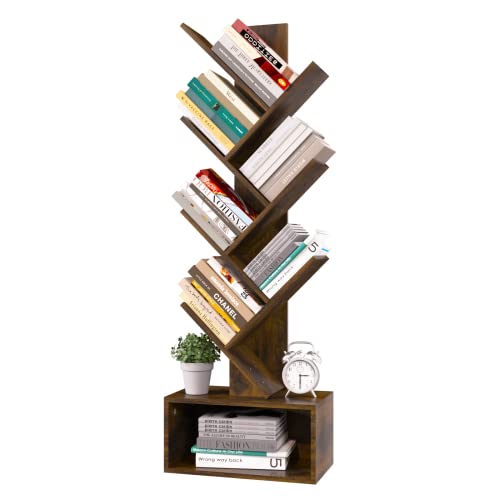
- Best overall for small spaces: Yoobure Tree Bookshelf, 6 Shelf Retro Floor Standing Bookcase, Rustic Brown — Check on Amazon
- Furinno TURN-N-TUBE Corner Shelf, 5-Tier Corner Bookshelf, Beech — Check on Amazon
- Furinno LUDER Book Shelf, 5-Cube Bookshelf, Bookcase with Open Shelf, White — Check on Amazon
- Furinno LUDER Book Shelf, 5-Cube Bookshelf, Reversible Bookcase, Amber Pine — Check on Amazon
See 2 more Amazon options
- Furinno Turn-N-Tube 5-Tier Multipurpose Shelf / Display Rack / Bookshelf, Square Tubes, French Oak Grey/Black — Check on Amazon
- Furinno PASIR Book Shelf, 3-Tier Bookshelf, Storage Shelves Bookcase, Plain White — Check on Amazon
Read the full guide ↓
Disclosure: As an Amazon Associate, dailyhomedecorating.com earns from qualifying purchases. Links to Amazon on this page are affiliate links; they cost you nothing extra. Listing details such as price and availability change often, so check the current Amazon listing before you buy.
The best bookcase for small spaces under $50 is a shape problem before it is a shopping problem. Small spaces are not small rooms, exactly — they are the fragments every home has and no standard furniture fits: the 15-inch wall beside the bathroom door, the corner behind the armchair, the stretch under the window, the landing strip at the top of the stairs, the nook under the eaves. A standard bookcase is 30 inches wide and a foot deep, and it fits none of those places, which is why they stay empty while the rest of the home overflows. The best bookcase for small spaces under $50 is the one dimensioned for the fragment you actually have.
That is how this guide is organized. Every pick below is a real, currently listed Amazon model in this budget tier — check price on Amazon before you buy, because budget listings move — chosen because its stated dimensions solve a specific small-space geometry: the shallow wall, the dead corner, the narrow vertical strip, the low under-window run, the awkward wide-but-short wall. We quote each maker’s stated dimensions and load limits exactly, because in small spaces a half inch and a per-shelf rating are the difference between a bookcase that transforms a nook and one that gets returned. Measure your fragment first — width, depth, height, and the door swings and traffic that pass it — and then find it in the reviews below.
Our short answer: the Yoobure tree shelf, just 15 inches wide and 7.8 inches deep, fits more small spaces than any other design in this tier and leads the list. Corner owners should start with the corner tower, and anyone with a narrow but tall strip of wall should go straight to the LUDER cube tower. For the broader field without the small-space lens, see Best Bookcase Under $50.
In this guide
Quick Picks
In a hurry? This table matches each bookcase to the small space it was shaped for.
| Buyer type | Pick | Why it stands out | Link |
|---|---|---|---|
| Best overall for small spaces | Yoobure Tree Bookshelf, 6 Shelf Retro Floor Standing Bookcase, Rustic Brown | 15 in wide, 7.8 in deep — fits walls and nooks nothing else can use | Check on Amazon |
| Best for corners | Furinno TURN-N-TUBE Corner Shelf, 5-Tier Corner Bookshelf, Beech | Quarter-round shelves turn a dead corner into five display levels | Check on Amazon |
| Best narrow tower | Furinno LUDER Book Shelf, 5-Cube Bookshelf, Bookcase with Open Shelf, White | Five cubes and a 150 lb stated total on a 15.8-inch-wide strip | Check on Amazon |
| Best low nook | Furinno LUDER Book Shelf, 5-Cube Bookshelf, Reversible Bookcase, Amber Pine | 31.5 in tall for under windows and eaves — and it works lying down | Check on Amazon |
| Best tall and flexible | Furinno Turn-N-Tube 5-Tier Multipurpose Shelf, Square Tubes, French Oak Grey/Black | 57.4 in of tool-free tiers for the leftover wall beside a desk | Check on Amazon |
| Best wide but low | Furinno PASIR Book Shelf, 3-Tier Bookshelf, Storage Shelves Bookcase, Plain White | Strong 40 lb shelves in a 31.5-inch height for short walls and under-sill runs | Check on Amazon |
How These Picks Were Chosen
We began with the verified under-$50 field: genuine Amazon listings with stated dimensions and stated load limits, sitting in this tier at the time of checking — check price on Amazon before you buy, because budget listings change often. Then, instead of ranking by capacity or looks, we mapped each candidate against the small-space geometries that actually occur in homes.
Five fragments recur. The shallow wall — beside a door, along a hallway — where depth under 9 inches is the whole game; only the Yoobure, at 7.8 inches deep, truly qualifies, which is why it leads. The dead corner, where a square footprint wastes the wedge and a quarter-round design wins it back. The narrow vertical strip — 16 inches of wall between a window and a corner — where the LUDER tower’s width and closed back convert air into archive. The low run — under windows, under eaves, under a stair slope — where height under 32 inches matters more than shelf count, and both low picks live. And the leftover wall — a couple of feet beside a desk or a sofa — where the tool-free tube tower’s height and flexibility fit a space whose purpose changes yearly.
Load honesty filtered within each geometry. A small-space bookcase still has to hold things: we kept the makers’ stated per-shelf and total ratings in front of every claim, and the reviews distinguish the genuine small bookcases (the LUDER tower, the low PASIR) from the display pieces that merely occupy small spaces charmingly (the corner unit, and in part the tree). Both kinds earn their place — small spaces need display as much as storage — but they are not interchangeable, and this guide never pretends they are.
We did not hands-on test these units. We compared stated specifications against measured-fragment logic, favored designs under about 16 inches in their critical dimension, and treated included anti-tip hardware and closed backs as small-space virtues: in tight quarters furniture stands close to traffic, and stability and containment matter more, not less.
The 6 Best Bookcase for Small Spaces Under $50 — Reviewed
Yoobure Tree Bookshelf, 6 Shelf Retro Floor Standing Bookcase, Rustic Brown
Best for: the shallow wall and the narrow nook — bedside strips, hallway walls, the fragment beside a door where depth is the deal-breaker. Check on Amazon
Start with the two numbers that win this guide: 15 inches wide, 7.8 inches deep. No other pick here — and very few bookcases at any price — fits a wall that shallow. Seven-point-eight inches is the depth of a paperback plus a finger’s width, which means the Yoobure can stand in a hallway without becoming an obstacle, beside a bed without crowding the sleeper, in the strip between a door frame and a corner where a standard 12-inch case would jut into the room’s traffic and sightlines. Small spaces are usually lost on depth, not width, and this design simply refuses to lose.
The format is a small tree: six branch shelves rising about 45 inches from a backboard-reinforced spine, each branch holding five to ten small books by the maker’s reckoning, kept upright by the shelves’ raised edges — no bookends, which in a nook is one less thing to fit. The rustic brown finish makes the piece read as intentional decor in the bargain, important when the space is small enough that everything in it is on display. The maker includes anti-tip straps; on a unit this narrow, in a spot this trafficked, fit them before the first book.
The limits are the shape’s own: large hardcovers and art books do not fit 7.8-inch branches, total storage is a few dozen small-format books, and there is no question of boxes or binders. Within the shallow-wall job, though, it has no competition in this tier — it is the pick that turns the most unusable fragments into the home’s most charming shelf.
Pros:
- Shallowest design here — 7.8-inch depth fits hallways and beside-door strips
- Six divided shelves keep small books upright without bookends
- Anti-tip straps included; backboard-reinforced spine
- Decorative silhouette suits spaces where everything is visible
Honest limitation: small-format books only, and modest total capacity — a nook solution, not a library.
Choose it if your space is shallow or narrow and your books are paperbacks, comics and small formats. Skip it if you need depth or bulk. Check on Amazon
Furinno TURN-N-TUBE Corner Shelf, 5-Tier Corner Bookshelf, Beech
Best for: the dead corner — the one storing nothing behind the armchair, at the end of the hall, beside the TV. Check on Amazon
Corners are the purest small-space opportunity because their opportunity cost is zero: nothing else can use the wedge where two walls meet. This unit is shaped exactly for it — quarter-round shelves on the twist-together tube system, 11.6 inches square, rising 57.7 inches through five levels. Into a space that held air go the plants, the speaker, the framed photos, the charging basket, a short flat stack of handsome books per tier — and the room’s flat surfaces, suddenly relieved of the display layer, breathe again.
Know its number before you fall for it: 10 pounds per shelf, 50 total, per the maker. That is display weight, full stop. It will not hold rows of standing books, and this guide will not pretend otherwise — its role in a small space is the vertical display garden, not the archive. Assembly is tool-free, the whole thing weighs almost nothing, and the pale beech finish keeps a tall object feeling light in a tight room. Pairs flanking a sofa give small rooms a designed symmetry out of all proportion to the cost.
Pros:
- Uses the one footprint that is genuinely free — the corner
- Five display levels at full height
- Tool-free assembly; featherweight to place and replace
- Beech tone keeps tight rooms feeling airy
Honest limitation: display loads only; quarter-round shelves are wrong for boxes, binders and book rows.
Choose it if your corner is empty and your surfaces are crowded. Skip it if you need to store a collection. Check on Amazon
Furinno LUDER Book Shelf, 5-Cube Bookshelf, Bookcase with Open Shelf, White
Best for: the narrow vertical strip — 16 inches of wall between window and corner, beside the desk, at the hallway’s end — that needs to hold a real collection. Check on Amazon
When the fragment is narrow but the need is bulk, this is the answer. The LUDER stands 52 inches tall on a footprint 15.8 inches wide and 9.4 deep, and fills that column with five closed-back cubes rated by the maker at 30 pounds each, 150 pounds total evenly distributed — the strongest total in this tier, in the second-smallest footprint. That is the small-space equation solved in the storage direction: a serious library, archive boxes in baskets, the household’s games and gear, all in a strip of wall most homes leave to a leaning picture frame.
The closed back matters doubly in small spaces. Nothing slides through into the unreachable gap behind — in a tight room, behind the bookcase is another country — and the white grid looks finished from the side angles that small rooms force you to view furniture from. Cubes also impose order at small scale: one cube per category keeps a compact collection browsable instead of stacked.
Anchor it — a tall, narrow column in a trafficked spot earns its strap — load the bottom cubes heaviest, and measure your largest books against the cube openings and the 9.4-inch depth before ordering; oversized formats are this design’s honest exclusion.
Pros:
- Most real storage in a narrow footprint: 150 lb stated total
- Closed back ends the lost-behind problem in tight rooms
- Cubes keep a compact collection sorted and browsable
- White finish brightens small, dim fragments
Honest limitation: fixed shallow cubes exclude oversized books, and the tall narrow form must be wall-anchored.
Choose it if your fragment is narrow and your collection is real. Skip it if your space is a low nook instead — the next pick owns those. Check on Amazon
Furinno LUDER Book Shelf, 5-Cube Bookshelf, Reversible Bookcase, Amber Pine
Best for: the low fragments — under windows, under eaves and sloped ceilings, beneath a wall-mounted screen — where height, not width, is the constraint. Check on Amazon
Some small spaces are short rather than narrow: the wall under the window, the knee wall under the eaves, the run beneath a stair slope. This low LUDER is dimensioned for them — 31.5 inches tall, 19.5 wide, 9.4 deep — with five cubes in two sizes behind a closed back, in a warm amber pine that suits the bedroom and attic rooms where low fragments live. Under a sill it stores without stealing light; under the eaves it uses the floor the slope makes useless for anything tall.
Its reversible design is a small-space multiplier: laid horizontally it becomes a 31.5-inch-long — now wide — low bench of storage that can run along a knee wall or under a screen, doubling the layouts a single purchase can solve. Two cube sizes take books in one, baskets in the other, and the low stance is calm in rooms where children and pets move fast through tight quarters.
Capacity is everyday-scale and the depth suits standard books; this is the fragment-filler, not the main library. Paired with a tall pick in the same room — low under the window, tower in the strip — it completes the small-space system this guide keeps describing.
Pros:
- 31.5-inch height fits under windows, eaves and slopes
- Reversible — doubles as a horizontal low bench of storage
- Closed back and two cube sizes keep nooks tidy
- Low stance is inherently stable in tight, busy rooms
Honest limitation: modest total storage and shallow depth; a complement to a taller case, not a replacement.
Choose it if your fragment is low. Skip it if your fragment is a corner or a shallow wall — those have their own picks above. Check on Amazon
Furinno Turn-N-Tube 5-Tier Multipurpose Shelf / Display Rack / Bookshelf, Square Tubes, French Oak Grey/Black
Best for: the leftover wall — a couple of feet beside a desk, a sofa or a dresser in a room whose layout changes too often for permanent furniture. Check on Amazon
Not every small space is a fixed architectural fragment; some are temporary — the wall a desk will vacate next year, the rental’s spare corner, the guest-room strip. The tube tower fits those because it asks nothing of the future: shelves twist onto square tubes by hand, the 57.4-inch, five-tier unit stands on an 11.6 by 23.6 inch footprint at about 19 pounds, and when the room changes, it untwists and follows. Its French Oak Grey and black finish is the most current-looking in this tier, which helps a leftover wall look furnished rather than filled.
Load it as a small-space display-and-paperback shelf: the listing’s 75-pound total is the budget, heaviest items go low, baskets civilize the open back. It is not the archive — the LUDER tower is — but for the wall whose job is still being decided, five honest tiers that can be rebuilt anywhere in minutes are the right kind of storage.
Pros:
- Tool-free build and teardown suits changing rooms
- Tallest pick here — 57.4 inches of tiers on a modest footprint
- Light enough to trial in three spots in one afternoon
- Two-tone finish makes leftover walls look intentional
Honest limitation: 75 lb total and an open back cap it at lighter loads; not the small space’s heavy archive.
Choose it if the space is temporary or multi-purpose. Skip it if the fragment is permanent and the load is heavy. Check on Amazon
Furinno PASIR Book Shelf, 3-Tier Bookshelf, Storage Shelves Bookcase, Plain White
Best for: the wide-but-short wall — under a big window, beneath wall art, along a low hallway run — where the books are heavy and the height is capped. Check on Amazon
The PASIR’s small-space role is specific: it is the strong low shelf. At 23.7 inches wide, 9.7 deep and 31.5 tall, with an enclosed, reinforced back, it fits the short walls and under-sill runs — and then out-carries everything else here, with a stated 40 pounds per shelf and 120 total. Small spaces concentrate weight: the whole cookbook collection on one wall, the textbooks in one nook. This is the pick that takes that concentration without bowing, and its top surface returns a styled plane — lamp, plant, landing tray — to a room short on surfaces.
Three shelves, honestly counted, is the whole offer; it will not solve a tall fragment or a huge collection. But in the wide-low fragment it is unbeatable at this price, and its inherent stability suits the high-traffic spots — hallways, landings — where small-space furniture actually lives.
Pros:
- Strongest shelves here: 40 lb stated per shelf for concentrated loads
- Low height fits under windows and along short walls
- Enclosed back adds rigidity in high-traffic spots
- Top doubles as a console surface small rooms lack
Honest limitation: three shelves only, and too wide for the narrow fragments the tower and tree exist to serve.
Choose it if your fragment is wide, low and load-bearing. Skip it if your fragment is narrow or a corner. Check on Amazon
Comparison Table
Figures are the makers’ own stated specifications — dimensions in inches (D x W x H) and stated capacity — organized by the fragment each design fits.
| Bookcase | Size (D x W x H) | Shelves | Stated capacity | Fragment it fits |
|---|---|---|---|---|
| Yoobure Tree Bookshelf, Rustic Brown | 7.8 x 15 x 45 | 6 branch | 5–10 books per shelf (maker) | Shallow walls, beside doors, bedside strips |
| Furinno Turn-N-Tube 5-Tier Corner, Beech | 11.6 x 11.6 x 57.7 | 5 corner | 10 lb per shelf, 50 lb total | Dead corners |
| Furinno LUDER 5-Cube, White | 9.4 x 15.8 x 52 | 5 cubes | 30 lb per cube, 150 lb total | Narrow vertical strips |
| Furinno LUDER 5-Cube Reversible, Amber Pine | 9.4 x 19.5 x 31.5 | 5 cubes | Everyday loads — see listing | Under windows, eaves, slopes |
| Furinno Turn-N-Tube 5-Tier, Square Tubes | 11.6 x 23.6 x 57.4 | 5 | 75 lb total | Leftover walls, changing rooms |
| Furinno PASIR 3-Tier, Plain White | 9.7 x 23.7 x 31.5 | 3 | 40 lb per shelf, 120 lb total | Wide-but-short walls |
How to Choose the Best Bookcase for Small Spaces Under $50
Measure the fragment, all three dimensions. Width decides the family, depth decides the books, height decides the silhouette. Write the three numbers down and shop against them — a bookcase that fits two dimensions and fails the third fits nothing. Include the baseboard in your depth; skirting steals half an inch listings never mention.
Classify your fragment before browsing. Shallow wall, dead corner, narrow strip, low run, leftover wall, wide-but-short: each has a pick in this guide shaped for it. Most small-space disappointment is a good bookcase bought for the wrong fragment.
Match the load to the fragment’s pick, honestly. Display fragments get display pieces — the corner unit’s 10 pounds per shelf is plenty for plants and frames. Storage fragments get the rated pieces — the LUDER’s cubes, the PASIR’s 40-pound shelves. If your fragment and your load disagree, the load wins: put the heavy collection in the room’s one real storage spot and let the fragment do display.
Think in systems, not pieces. Small spaces organize best as a low piece plus a narrow piece plus, if a corner offers, a display piece — distributed storage that never looms. Two of this tier’s units together still cost less than one mid-range case, and they fit the home you have instead of the one in the listing photo. Readers working with a compact apartment rather than scattered nooks should also see Best Bookcase For Small Apartments Under $50.
Anchor anything tall in a traffic path. Small-space furniture stands where people brush past. Strap tall units, load heavy low, and give the tree and corner pieces the wall contact their narrow bases ask for.
Will It Fit? A Five-Minute Check Before You Order
Tape the footprint — then live around the tape. Open the nearest door through its full swing, pull the vacuum through, walk the fragment at night-time width with a laundry basket in your arms. Hold your deepest book against the stated depth and your tallest against the shelf or cube opening, not the overall height; in small spaces those two checks decide everything. Look up: does a tall pick clear the sloped ceiling, the low beam, the hanging light at its exact position, not the room’s center? And check the wall for the outlet, the vent or the baseboard heater the unit would smother. Five minutes with tape and a tape measure is the entire difference between a fragment transformed and a return label printed.
Common Buying Mistakes
Measuring width and forgetting depth. Small spaces are lost on depth. A 12-inch-deep case in a hallway is a hip-bruise with shelves; the 7.8-inch tree exists precisely because of this mistake.
Buying a square unit for a corner. A rectangular case in a corner wastes the wedge and protrudes on both walls. Corner geometry wants corner furniture.
Ignoring the door swing and the drawer path. The fragment beside the door is inside the door’s arc until proven otherwise. Swing everything before ordering.
Overloading the charming piece. The tree and the corner are display furniture with honest, small numbers. The day they groan under book rows, the fragment and the furniture both fail.
Filling every fragment. A home where every nook holds furniture feels smaller than one with a few deliberate empties. Solve the fragments that hurt; leave one corner to a plant and air.
Skipping the anchor because the space is small. Tight quarters mean more contact, not less risk. Strap the tall pieces.
Materials in This Guide, Explained Honestly
Composite wood and laminate throughout, with PVC tubes on the two Turn-N-Tube models and engineered wood in the Yoobure’s branches. For small spaces these materials carry specific virtues: they are light, so a piece can be trialed in three fragments in an afternoon; they are consistent, so the stated dimensions are the real dimensions, which is what fragment-fitting depends on; and they are inexpensive enough that a piece can be bought for one nook without a committee. Their limits travel with them — water at the edges, ratings that must be respected, screw holes that dislike repeated rebuilding. In a bathroom-adjacent nook, mind the humidity and wipe downs; everywhere else, the material will not be the reason a small-space bookcase fails. The tape measure will be, if you skip it.
Assembly, Care and the First Month
Build panel cases in the fragment they will occupy — carrying a finished tower into a tight nook is how corners get dented, both kinds. Square the frame before the back panel fastens; in small spaces a racked unit shows against every nearby door frame. Twist tube models together in place, and fit the Yoobure’s included straps and any tall unit’s anchor before loading.
First month: re-check fasteners after a week, load bottom-up, and watch traffic — if shoulders brush a hallway piece daily, shift it the inch that saves it. Dust weekly (small spaces show dust at eye level), wipe spills immediately, and resist the slow creep of storing one more thing on top. A small-space bookcase earns its keep by staying exactly the size it was bought as.
A Tour of Fragments, Matched
The hallway that fits nothing: tree shelf, shallow and upright, holding the household’s in-and-out library. The corner behind the reading chair: corner tower, carrying the lamp’s companions — plant, speaker, the current stack. The strip between the nursery window and the wall: LUDER tower, anchored, cubes sorted by small owner. Under the stairs’ slope: the low reversible LUDER, horizontal now, swallowing board games in the dark triangle. Beside the desk that anchors a spare-room office: the tube tower, five tiers of working supplies that can leave when the guests arrive. Under the living-room window: the PASIR, strong and low, holding the cookbook row beneath the light. Six fragments, six shapes, one budget — that is the entire argument of this guide, and it is why measuring first and matching honestly beats buying the prettiest listing every time. For the styled version of the same logic, Best Bookcase For Modern Homes Under $50 ranks this field by looks.
Architectural Leftovers: Stairs, Eaves and Alcoves
Some fragments are not accidents of furniture arrangement but of architecture, and they reward a different eye. The under-stair slope is the classic: a triangle of floor whose ceiling drops from full height to nothing. The reversible LUDER laid horizontally claims the tall end of that triangle for board games, photo albums and the archive boxes, while the slope above it — useless to furniture — stays gloriously empty. Measure the slope’s height at the point where the case’s back edge will sit, not at the wall; that single measurement is the one buyers get wrong.
Alcoves and chimney breasts create paired fragments — the two recesses flanking a fireplace or a bump-out. Symmetry is the opportunity: a LUDER tower in one recess, the corner or tree piece’s worth of display in the other, or matched low cases in both with art above. Eaves and knee walls in attic rooms are the low LUDER’s home ground, and the landing at a stair’s top — a fragment with traffic on two sides — wants the shallowest, most anchored option available, which in this guide is the tree shelf with its straps fitted and its load kept light. Architectural fragments feel like flaws until the right-shaped piece moves in; afterwards they read as the home’s most characterful storage, and guests assume they were designed.
Small Spaces With Special Conditions: Kids’ Rooms, Bathrooms, Kitchens
A child’s small bedroom concentrates every constraint at once: the fragment is tiny, the user is short, and the safety stakes are highest. The low reversible LUDER is the pick — child height, closed back, stable by shape — with the tree shelf, strapped, as the bedside upgrade for older children whose books are small and whose corners are precious. The rule from our family guide travels intact: nothing tall and unanchored shares a room with a climber.
Bathroom-adjacent fragments — the linen nook, the wall outside the door — tempt bookcase duty for towels and baskets, and the low panel cases can serve there if the air stays dry; composite wood and steam are enemies, so a true in-bathroom shelf should be chosen from moisture-tolerant designs rather than this guide’s picks, and we would rather say so than sell you a swollen bookcase. Kitchens, by contrast, suit the PASIR beautifully: cookbook weight is exactly what its 40-pound shelves were rated for, and a low case under a kitchen window is a cookbook library with a plant on top. Match the fragment’s conditions, not just its dimensions, and the piece will last.
When the Fragment Deserves a Bigger Budget
Honesty requires one exit ramp in this guide. Some fragments matter enough to outspend: the library wall of a small forever-home, the nook that will hold a lifetime of hardcovers, the entry piece every guest sees first. This tier’s depths cap out around 12 inches and its shelves are fixed, so a fragment destined for oversized art books, vinyl or adjustable shelving is a fragment asking for the next tier — deeper cases, thicker panels, metal frames. The tell is simple: if you measured your books and they failed the depth check against every pick here, the fragment is not small in the way this guide means; it is standard-sized and merely in a small room, and it deserves standard furniture. Buy the budget picks for the fragments they genuinely fit, and they will never feel like compromises; force one into the wrong job and it will feel like nothing else.
There is also a hybrid worth naming: use this tier for the secondary fragments — hallway, corner, bedside, under-window — and save the one serious purchase for the room’s main wall. Distributed small-space storage is where under-$50 bookcases outperform their price most completely, because the fragments they fit were never going to be served by any single expensive piece anyway.
Styling Small: Making a Fragment Look Intentional
A bookcase in a small space is never background — it is always in someone’s sightline — so its styling carries the room. Keep the palette tight: one finish family across the fragments in a room, books loosely grouped by tone, and a single basket style repeated wherever clutter needs hiding. Leave the top of tall pieces bare in tight rooms; a crown of stored objects reads as overflow, while a clean top line reads as architecture. On low pieces, the top is a stage: one plant, one lamp or one tray, never a landing strip.
Light is the small-space stylist’s secret weapon. A fragment with a shelf on it can still feel like a leftover; the same fragment with a small lamp beside it becomes a vignette. If the nook has no outlet, even a battery picture light above a low case changes its status from storage to feature. Finally, edit seasonally: small-space shelves should hold the current chapter — this season’s reads, this month’s display — with the archive exiled to the least visible fragment. A small shelf that turns over always looks curated; one that only accumulates always looks full.
Final Recommendation
For the most small spaces, the answer is the Yoobure Tree Bookshelf: nothing else in this tier fits a 7.8-inch-deep wall, and its six branch shelves turn bedside strips and hallway fragments into the home’s favorite shelf. When the fragment is narrow but the collection is serious, the LUDER 5-Cube tower is the storage answer on a 15.8-inch strip. Give the corner to the corner tower, the low runs to the two low cases, the leftover wall to the tube tower, and the heavy short wall to the PASIR. Measured first and matched to its fragment, an under-$50 bookcase does not just fit a small space — it is usually the moment that space starts working. Families working with small rooms and small people should cross-check Best Bookcase For Families Under $50 before ordering.
Frequently Asked Questions
What is the smallest type of bookcase that still holds real books?
The tree design in this guide: 15 inches wide and 7.8 inches deep, holding a few dozen paperbacks and small formats across six branch shelves. Below that footprint you are into desktop and wall-shelf territory. For real hardcover bulk in a small footprint, the narrow cube tower is the smallest honest answer.
How do I fit a bookcase in a hallway?
Depth is everything: keep the unit under about 9 inches deep so shoulders and laundry baskets pass, choose a closed back or branch shelves so nothing protrudes or falls into the path, and anchor it. The Yoobure’s 7.8-inch depth was made for this; measure your hallway’s narrowest point, including baseboards, before ordering anything.
Are corner bookcases worth it?
For display, yes — they monetize floor that is otherwise worthless and lift plants, photos and objects off crowded surfaces. For book storage, no: quarter-round shelves waste rectangular space and the ratings are display-weight. Buy one as the room’s display garden, not its library.
Can a low bookcase work as well as a tall one in a small room?
Differently, and sometimes better. Low cases fit the fragments tall ones cannot — under windows, eaves and slopes — keep a small room’s sightlines open, and their tops return a usable surface. What they cannot do is match a tower’s total volume on the same footprint, so the choice is fragment-driven, not preference-driven.
How do I stop a small-space bookcase looking like clutter?
One finish family, one job per shelf, and visible air: leave part of one shelf empty, keep the top clear unless the piece is low, and use a single basket style for the untidy categories. In a small space the bookcase is always in view, so its tidiness is the room’s tidiness.
What if my space is small but my books are big?
Then depth, not width, is your constraint, and you should shop the next tier for a deeper case for the main collection while using this guide’s picks for the small-format overflow. Forcing oversized books into 8-to-10-inch shelves damages spines and looks worse than an honest split: big books in one proper case, small books distributed through the fragments.
How many small bookcases are too many?
When the fragments stop being fragments — when every wall segment holds a unit and the room’s visual rest disappears, the system has tipped from distributed storage into a siege of furniture. As a rule of thumb, keep at least one wall in each room substantially empty, and let any new addition displace an old one rather than colonize the last clear surface. Small spaces need storage; they need breathing room slightly more.
What is the best bookcase shape for a rental’s small room?
The one that needs nothing from the walls and leaves nothing behind: a low closed-back case or a strapped slim tower, in a finish that suits the room as rented. Renters should weight the low picks in this guide more heavily than owners do — they move without drama, work in every subsequent home, and their stability never depends on a landlord’s permission. Add felt pads under the feet and the deposit never hears about any of it.
Should I buy one bookcase now or save for a bigger one later?
Buy the one that fits the fragment you have, now. Small-space storage delayed is clutter lived with daily, and this tier’s pieces do not become worthless when you upgrade — they migrate to the next fragment, the next room, the next home. The economics of small spaces favor several small, right-shaped pieces bought as the need proves itself over one large piece bought on speculation, and the secondhand demand for slim bookcases means a well-kept unit is never stranded value.
Can I put a bookcase in a small space with no wall behind it?
Sometimes — a low case can stand free as a divider, and the reversible LUDER lying horizontally is designed to be seen from both sides thanks to its closed back. Tall pieces are different: without a wall to anchor to, a narrow tower in a traffic path is a risk we would not take, so freestanding spots belong to low, wide units loaded evenly. If the fragment floats in the room, go low or do not go.
How do I measure a corner for a bookcase?
Measure out from the corner along both walls to the first obstruction — baseboard heater, door trim, outlet you need — and take the smaller of the two as your limit; corner units are usually listed by their square footprint, like the 11.6-inch square of the pick in this guide. Check height at the corner itself, since ceilings slope toward walls in older homes, and remember the unit’s shelves are quarter-rounds: the usable straight-run space on each shelf is less than the full footprint suggests.
Do small bookcases need anchoring too?
Tall and narrow ones, yes — small spaces put furniture in traffic paths where it gets brushed and bumped, which raises rather than lowers the case for a strap. Low, wide pieces are stable by geometry. When in doubt, anchor: it is minutes of work for a permanent removal of worry.
Still measuring? The neighboring guides cover the adjacent problems: Best Bookcase Under $100 when the fragment deserves a deeper, adjustable case, and Best Storage Ottoman Under $50 for the small-space storage that hides in a seat.


