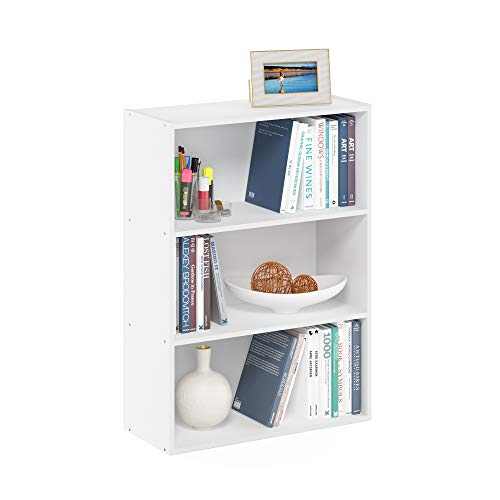
Where to buy
Check the latest price, availability and delivery on Amazon. Orders are placed on Amazon. We may earn a commission from qualifying purchases.
- Best overall for families: Furinno PASIR Book Shelf, 3-Tier Bookshelf, Storage Shelves Bookcase, Plain White — Check on Amazon
- Furinno LUDER Book Shelf, 5-Cube Bookshelf, Bookcase with Open Shelf, White — Check on Amazon
- Furinno LUDER Book Shelf, 5-Cube Bookshelf, Reversible Bookcase, Amber Pine — Check on Amazon
- Furinno Turn-N-Tube 5-Tier Multipurpose Shelf / Display Rack / Bookshelf, Square Tubes, French Oak Grey/Black — Check on Amazon
See 2 more Amazon options
- Yoobure Tree Bookshelf, 6 Shelf Retro Floor Standing Bookcase, Rustic Brown — Check on Amazon
- Furinno TURN-N-TUBE Corner Shelf, 5-Tier Corner Bookshelf, Beech — Check on Amazon
Read the full guide ↓
Disclosure: As an Amazon Associate, dailyhomedecorating.com earns from qualifying purchases. Links to Amazon on this page are affiliate links; they cost you nothing extra. Listing details such as price and availability change often, so check the current Amazon listing before you buy.
The best bookcase for families under $50 has a harder job description than any other bookcase in this price tier. It must hold a household’s real mix — board books and picture books, school textbooks, the parents’ novels, toy bins, games with a hundred loose pieces — and it must do it in a home where a toddler will eventually pull up on it, a seven-year-old will treat the bottom shelf as a step, and someone will spill juice across the middle shelf before the year is out. The best bookcase for families under $50 is therefore not simply the cheapest tall case that fits the wall. It is the one whose shape, height and construction stay safe and useful while family life happens at full speed around it.
That is why this guide ranks differently from a general best-bookcase list. Stability comes first: low, wide units and closed backs score ahead of tall, narrow ones, and every tall pick here is discussed together with the wall anchor it needs — because in a family home, anchoring is not an optional accessory, it is part of the product. Reach comes second: children should be able to get their own books without climbing, which makes height a feature to spend carefully, not maximize. Durability comes third: wipeable laminate, honest per-shelf load ratings, and shelves strong enough for the textbook years. Every pick below is a real, currently listed Amazon model in this budget tier — check price on Amazon before you buy, because budget listings move — and each review states plainly who in the family it suits and where it falls short.
Our short answer: start with the low, wide Furinno PASIR 3-Tier, our best overall for families, and then match the other picks to the rooms and ages in your house. Households whose children are older will get more from the tall LUDER cube tower in Best Bookcase Under $50; households furnishing a nursery from scratch may find the low reversible LUDER below is the only pick they need this year.
In this guide
Quick Picks
In a hurry? This table matches each bookcase to the family situation it handles best.
| Buyer type | Pick | Why it stands out | Link |
|---|---|---|---|
| Best overall for families | Furinno PASIR Book Shelf, 3-Tier Bookshelf, Storage Shelves Bookcase, Plain White | Low, wide and stable, 40 lb stated per shelf, closed back, everything reachable | Check on Amazon |
| Best family library tower | Furinno LUDER Book Shelf, 5-Cube Bookshelf, Bookcase with Open Shelf, White | Five cubes for the whole household’s books and bins — anchor it to the wall | Check on Amazon |
| Best at child height | Furinno LUDER Book Shelf, 5-Cube Bookshelf, Reversible Bookcase, Amber Pine | 31.5 inches tall — kids reach their own books with feet on the floor | Check on Amazon |
| Best flexible playroom shelf | Furinno Turn-N-Tube 5-Tier Multipurpose Shelf, Square Tubes, French Oak Grey/Black | Tool-free build you can move and reconfigure as the playroom evolves | Check on Amazon |
| Best reading-corner piece | Yoobure Tree Bookshelf, 6 Shelf Retro Floor Standing Bookcase, Rustic Brown | Six short branch shelves for a rotating cast of favorites; anti-tip straps included | Check on Amazon |
| Best for display up high | Furinno TURN-N-TUBE Corner Shelf, 5-Tier Corner Bookshelf, Beech | Keeps plants, photos and breakables on upper tiers, out of toddler reach | Check on Amazon |
How These Picks Were Chosen
We began with the same budget discipline as our general guide: every bookcase below is a genuine Amazon listing that belongs in the under-$50 tier — check price on Amazon before you buy, because budget listings change often. Models that hid their dimensions or load limits were excluded. But for the family edition, three extra filters did most of the work.
The first filter was stability by design. We scored each candidate on how it would behave in a real family room: its height against its footprint, whether its center of gravity stays low when loaded sensibly, and whether the maker supplies or supports wall anchoring. Low, wide cases passed on geometry alone. Tall cases stayed on the list only where a closed back and a sensible anchor point made them honestly anchorable — and their reviews say so, every time, because a family recommendation that whispers the safety part is not a recommendation at all.
The second filter was reach. A family bookcase serves readers from knee height to full height. We favored layouts that put a useful share of storage below about 32 inches — the zone a young child can use standing flat-footed — and treated very tall storage as adult territory to be loaded and used accordingly. The third filter was family-proofing: closed backs that stop books and small toys disappearing behind the unit, laminate finishes that wipe clean after the inevitable spills, and per-shelf ratings strong enough for the years when school textbooks arrive home by the armload. The PASIR’s stated 40 pounds per shelf is the benchmark here; the corner unit’s 10 pounds per shelf is why it is recommended for display, not for a child’s book collection.
We did not hands-on test these bookcases. We compared makers’ stated dimensions, capacities, materials and hardware, and we have written the reviews around how families actually live with furniture: the pulling-up stage, the climbing stage, the everything-in-bins stage and the textbook stage. Where a design has a real weakness for family use — a tall tube tower’s flex, a tree shelf’s shallow branches — the review names it in plain language and tells you which household should skip it.
A final note on materials, because it matters more in family homes: every pick is composite wood with a laminated finish. That is what this budget buys, and for families it has one genuine virtue beyond price — it wipes clean. Crayon, juice and mystery stickiness come off laminate with a damp cloth in a way they never come off raw timber. Its weaknesses are water soaking into edges and screw holes that dislike repeated reassembly, so the family rules are simple: coasters and quick wipes, assemble once and well, anchor anything tall.
The 6 Best Bookcase for Families Under $50 — Reviewed
Furinno PASIR Book Shelf, 3-Tier Bookshelf, Storage Shelves Bookcase, Plain White
Best for: most families — the shared living-room bookcase that toddlers cannot tip, children can reach, and parents can load without worry. Check on Amazon
The PASIR wins this guide on geometry. At 23.7 inches wide, 9.7 inches deep and only 31.5 inches tall, it is a low, wide, three-shelf case whose center of gravity sits near the floor even fully loaded. A toddler pulling up on its top edge meets a unit that barely notices; a child can reach every shelf standing flat-footed; and the top surface sits at a height where parents can keep a lamp, the library books due back this week, and their own reading safely in adult territory. In a family home, that profile is worth more than extra shelves.
The strength story matches the shape. Furinno rates each shelf at up to 40 pounds, 120 pounds across the unit — the strongest per-shelf figure among our picks, and the one that survives contact with family reality: a shelf of school textbooks, a shelf of board books (surprisingly heavy in bulk), a shelf of bins. The enclosed back panel is reinforced to keep the frame aligned, and it earns its keep daily in a family room — no books, toys or lost puzzle pieces sliding through the back and vanishing behind the unit. The laminated finish is described as scratch-resistant and wipes clean, which any parent can translate: it survives the juice incident.
Assembly is simple flat-pack work, and because the unit is low, it is also the one pick here we would call stable before anchoring — though anchoring remains a cheap, sensible habit if it will live in a toddler’s primary play space. Two PASIRs side by side make an excellent under-window family library wall as collections grow.
Pros:
- Low, wide stance is the most tip-resistant shape in this guide
- 40 lb stated per shelf handles textbooks and board-book bulk
- Every shelf reachable by a standing child — no climbing incentive
- Closed back keeps books and small toys from disappearing behind the unit
Honest limitation: three shelves fill fast in a bookish household, and the 31.5-inch height that makes it safe also caps total storage; growing families will eventually pair it with a second unit or a taller anchored case.
Choose it if your children are young and the bookcase will live in shared space. Skip it if you need maximum volume for an older household — the LUDER tower below stores more. Check on Amazon
Furinno LUDER Book Shelf, 5-Cube Bookshelf, Bookcase with Open Shelf, White
Best for: the whole household’s library in one slim tower — provided it is anchored to the wall, which in a family home is non-negotiable. Check on Amazon
The tall LUDER is the storage engine of this guide: five cubes in a footprint just 15.8 inches wide and 9.4 inches deep, standing 52 inches tall, with a stated capacity of 30 pounds per cube and 150 pounds total when evenly distributed. For a family, the cube format is the quiet genius — one cube for each child’s current books, one for the parents, one with a fabric bin that swallows games and chargers, one for the library-borrowed stack. Everyone’s things have an address, and tidying becomes a sorting game rather than an excavation.
The family discussion has to start with height, so let us be direct: a 52-inch narrow tower must be anchored to the wall in any home with children under about ten, full stop. The closed back panel helps — it adds rigidity and stops anything being pushed through — and sensible loading helps more: heaviest cubes at the bottom, display and soft toys at the top. Anchored and loaded that way, the LUDER is a genuinely good family citizen that uses wall space other furniture wastes, slotting beside a sofa or at a hallway’s end.
Assembly is conventional flat-pack with the back panel doing structural work, so build it square on a hard floor. Once anchored, it is the pick that grows with the family longest: nursery bins today, chapter books tomorrow, textbooks eventually.
Pros:
- Five cubes give every family member and category its own compartment
- Strongest stated total capacity here — 150 lb evenly distributed
- Slim 15.8-inch width fits living rooms that have no spare wall
- Closed back adds rigidity and keeps small items contained
Honest limitation: it must be wall-anchored around children, and the fixed, shallow cubes will not fit oversized picture-book formats or tall binders on every level.
Choose it if you will anchor it and want one organized tower for everyone. Skip it if your walls cannot take an anchor or your children are at peak climbing age with no way to site it in adult space. Check on Amazon
Furinno LUDER Book Shelf, 5-Cube Bookshelf, Reversible Bookcase, Amber Pine
Best for: children’s own bookcase — bedrooms and reading nooks where the reader is under four feet tall and independence is the point. Check on Amazon
Everything about this low LUDER suits small readers. It stands 31.5 inches tall — the same child-friendly height as the PASIR — but divides its 19.5-inch width into five cubes of two sizes, which map beautifully onto how children actually own books: a cube of picture books, a cube of early readers, a cube with a bin of soft toys, a cube for the current obsession, whatever it is this month. A child who can see, reach and reshelve their own books reads more of them; that is the entire case for a child-height bookcase, and this one makes it at a budget price in a warm amber pine finish that suits bedrooms better than office-white.
The reversible design adds a second life: laid horizontally, it becomes a long low storage bench under a window or at a bed’s foot — a useful trick when a room gets rearranged for a bigger bed or a desk. The closed back keeps books from sliding behind, the low stance removes tip anxiety almost entirely, and the composite panels wipe clean after art-project incidents migrate from the table.
Keep expectations sized to the unit: capacity is everyday-load territory, the 9.4-inch depth suits standard children’s formats rather than the very largest picture books standing upright, and teenagers will outgrow its height long before they outgrow reading. As a first bookcase a child owns outright, though, it is exactly right.
Pros:
- Child height throughout — independence without climbing
- Five cubes in two sizes organize a child’s collection by category
- Reversible: works standing or laid horizontally as rooms change
- Low, closed-back design is calm and stable in bedrooms
Honest limitation: the shallow depth can frustrate the largest picture-book formats, and its modest scale means it is a child’s bookcase, not a whole family’s.
Choose it if the reader is young and the room is theirs. Skip it if you need shared family storage — the PASIR covers that job better. Check on Amazon
Furinno Turn-N-Tube 5-Tier Multipurpose Shelf / Display Rack / Bookshelf, Square Tubes, French Oak Grey/Black
Best for: playrooms and evolving family spaces — a tall, light, tool-free shelf for toys, games and paperbacks that can move rooms as fast as the family does. Check on Amazon
Family storage needs change every eighteen months, and the Turn-N-Tube is built for that churn. Its shelves twist together on square tubes with no tools at all, so the 57.4-inch, five-tier unit can be assembled in the playroom this year, taken apart without a toolbox argument, and rebuilt in a teenager’s room later. At about 19 pounds it is the easiest tall pick to relocate, and its open tiers take the bulky, awkward things cube cases refuse: board-game boxes, toy bins, craft supplies, the oversized plush that must live somewhere.
The family caveats are real and we will state them plainly. The listing rates the unit at 75 pounds total, so this is a light-to-medium load shelf — paperbacks, toys and games, not a textbook archive. The open back means small items need bins to stay put. And a tall, light, open frame is the design most dependent on a wall anchor in a home with climbers; treat the strap as part of the purchase, load the bottom tiers heaviest, and keep climbable temptation — the favorite toy — off the top shelf, because a shelf a child wants to climb will eventually be climbed toward.
Used with that honesty, it is the most adaptable family storage here, and its French Oak Grey and black finish survives the transition from playroom to teen room without looking like nursery furniture.
Pros:
- Tool-free assembly and disassembly — reconfigures as family needs change
- Open tiers swallow board games, bins and bulky toys cubes cannot
- Light enough to move between rooms in one trip
- Two-tone finish ages with the child, from playroom to teen room
Honest limitation: 75 lb total rating and an open, flexible frame make it the wrong choice for heavy book loads, and it needs anchoring and sensible loading around young children.
Choose it if flexibility matters more than load and the users are past the climbing stage — or it will be anchored and loaded low. Skip it if you need a heavy, permanent family library. Check on Amazon
Yoobure Tree Bookshelf, 6 Shelf Retro Floor Standing Bookcase, Rustic Brown
Best for: the family reading corner — a small, charming shelf beside the armchair where the current rotation of bedtime books lives. Check on Amazon
Reading habits in families are built in corners: one chair, one lamp, one small shelf of the books currently in rotation. The Yoobure was practically designed for that corner. Its six branch shelves climb a backboard-reinforced spine in a footprint just 15 inches wide and 7.8 inches deep, each branch holding a short run of books — the maker suggests five to ten — held upright by the shelf’s own edges. Six small shelves invite exactly the curation a reading corner needs: this week’s bedtime stories, the comic series of the moment, the parents’ current novel on the top branch.
Two family details stand out. First, the maker includes anti-tip straps in the box — on a tall, narrow design that is the right instinct, and families should use them, because a reading corner is precisely where a child will pull up, lean and reach. Second, the shallow branches suit the formats family reading actually uses — paperbacks, early readers, comics, small picture books — while honestly excluding the big hardcovers, which belong on the PASIR or LUDER anyway.
As the family’s only bookcase it would be overwhelmed in a month. As the living heart of a reading corner, rotated weekly from the main shelves, it is the pick children will remember — the book tree is the rare storage a child describes to friends.
Pros:
- Six short shelves suit a rotating cast of family favorites
- Anti-tip straps included — and sized for a corner children actually use
- Tiny footprint fits beside the reading chair where books get read
- Branch edges keep small books upright without bookends
Honest limitation: 7.8-inch depth excludes large picture books and hardcovers, and total capacity is a few dozen small books — a supplement to family storage, never the whole of it.
Choose it if you are building a reading corner for shared story time. Skip it if it would be your only bookcase. Check on Amazon
Furinno TURN-N-TUBE Corner Shelf, 5-Tier Corner Bookshelf, Beech
Best for: the parents’ things — plants, framed photos and the breakable, sentimental objects that need to live visibly but out of small hands’ reach. Check on Amazon
Every family room has two storage problems, not one: the children’s things need to be reachable, and the adults’ fragile things need to be unreachable. This corner tower solves the second problem. Its five quarter-round shelves twist together without tools, stand 57.7 inches tall in an 11.6 by 11.6 inch corner footprint, and put their upper tiers well beyond a toddler’s reach — the natural home for the plant that must not be grabbed, the framed photos, the ceramic thing from the trip before children.
Its numbers demand honesty: the maker rates it at 10 pounds per shelf, 50 pounds total. That is display weight. It will hold a plant, a speaker, a short flat stack of coffee-table books per tier — not rows of standing hardcovers, and never a shelf a child should be encouraged to load or unload. Sited in a corner, anchored if your household is boisterous, loaded lightly and high, it quietly removes the fragile-object problem from the rest of the room, which can then be organized at child height without negotiation.
It is a specialist, and in a family home the specialty is genuinely valuable: not everything in a shared room should be shared.
Pros:
- Upper tiers keep breakables and plants out of toddler reach
- Corner footprint costs the room almost nothing
- Tool-free build; light enough to reposition as the room evolves
- Warm beech finish softens a family room’s look
Honest limitation: the lightest rating in this guide — strictly display duty; it is not a children’s bookcase and should never be loaded or climbed on by a child.
Choose it if your fragile things need a high, quiet home. Skip it if you are shopping for book storage for the kids. Check on Amazon
Comparison Table
Figures are the makers’ own stated specifications — dimensions in inches (D x W x H) and stated weight capacity. The family column is our plain-language summary of how each design behaves around children.
| Bookcase | Size (D x W x H) | Shelves | Stated capacity | Family note |
|---|---|---|---|---|
| Furinno PASIR 3-Tier, Plain White | 9.7 x 23.7 x 31.5 | 3 | 40 lb per shelf, 120 lb total | Lowest, widest, strongest — best default for young children |
| Furinno LUDER 5-Cube, White | 9.4 x 15.8 x 52 | 5 cubes | 30 lb per cube, 150 lb total | Anchor required; cubes organize every member’s books |
| Furinno LUDER 5-Cube Reversible, Amber Pine | 9.4 x 19.5 x 31.5 | 5 cubes | Everyday loads — see listing | Child height; the child’s own first bookcase |
| Furinno Turn-N-Tube 5-Tier, Square Tubes | 11.6 x 23.6 x 57.4 | 5 | 75 lb total | Anchor and load low; best for toys and games, not heavy books |
| Yoobure Tree Bookshelf, Rustic Brown | 7.8 x 15 x 45 | 6 branch | 5–10 books per shelf (maker) | Straps included; reading-corner rotation shelf |
| Furinno Turn-N-Tube 5-Tier Corner, Beech | 11.6 x 11.6 x 57.7 | 5 corner | 10 lb per shelf, 50 lb total | Adults’ display up high; not a children’s bookcase |
How to Choose the Best Bookcase for Families Under $50
Match the height to the youngest user. If a child under five will use the bookcase daily, its working shelves should sit below about 32 inches, reachable standing flat-footed. That single rule points to the PASIR or the low LUDER and prevents the climbing that makes tall furniture risky. Taller cases belong to older children and adults — anchored, always.
Treat the anchor as part of the price. Any bookcase over roughly 30 inches tall in a home with young children should be strapped to the wall. Some picks include straps; for the rest, a universal anti-tip kit is a small, essential add-on. Load heavy low, keep climbing temptations off top shelves, and re-check the strap after any move.
Rate the shelves for the textbook years. Children’s books get heavier, not lighter: board books are dense, school textbooks denser. A stated 40 pounds per shelf (the PASIR) absorbs that future; a stated 10 pounds per shelf (the corner unit) never will. Buy for the load two school years from now, not just today’s picture books.
Prefer closed backs in shared rooms. A back panel stops books, toys and small parts vanishing behind the unit, adds rigidity, and keeps the inevitable dust-and-crumb zone visible and cleanable rather than hidden. Open-backed shelves still earn their place for bins and bulky toys — in bins, so nothing small migrates through.
Plan for the spill. Laminate finishes across this guide wipe clean with a damp cloth. Keep drinks on coasters, wipe spills the day they happen, and avoid soaking panel edges. Families who want the next tier’s thicker panels and more finishes will find them in Best Bookcase For Families Under $100.
Will It Fit? A Five-Minute Family Check Before You Order
Tape the footprint on the floor where the bookcase will live, then watch the room work around it for an hour: can the toddler’s ride-on still pass, does the door swing clear, can you vacuum behind the tape line? Have your child stand at the tape and reach up — their comfortable reach is the top working shelf, whatever the diagram says. Measure the largest picture books and the toy bins you actually own against shelf depth and cube openings. Find the wall stud or anchor point for anything tall, and check the spot is not beside the tempting step-up of a sofa arm. Five minutes of tape and one honest reach test prevent nearly every family-furniture regret.
Common Buying Mistakes
Buying the tallest case for a toddler’s room. Height a child cannot use becomes height a child tries to climb. Child-height storage first; tall storage later, in shared or adult space, anchored.
Skipping the anchor because the unit ‘feels sturdy’. A bookcase feels steadiest empty and upright — the two states it will rarely be in. Strap it before the first book goes on.
Putting the favorite toy on the top shelf. Display the beloved, unreachable item and you have built a climbing goal. Favorites live at child height or in a closed cabinet.
Loading heavy books on top. Weight goes low — for stability, for shelf sag, and for what falls if anything is pulled down.
Choosing open shelves for small loose things. Puzzle pieces, game tokens and craft bits migrate through open backs and vanish. Bins first, then shelves.
Forgetting the collection grows. A bookcase that exactly fits this year’s books fails next year. Leave one shelf of headroom, or choose a design — like the low LUDER — that pairs gracefully with a second unit later.
Materials in This Guide, Explained Honestly
Every pick is composite wood — particleboard or MDF — with a laminated finish; the tube models add PVC posts. For families this material story has a genuine upside: laminate is the most forgiving surface in the house. It wipes clean after meals migrate, art projects escape and drinks spill, and it does not splinter. The downsides are equally specific: standing water swells panel edges, so coasters and quick wipes matter; screw holes do not forgive repeated disassembly, so build once and well; and long shelves loaded past their rating will bow, so the stated numbers deserve respect. Nothing at this price is solid timber, and in a family room, honestly, laminate’s wipeability is the feature you will thank most often.
Assembly, Care and the First Month
Build panel cases on a hard floor with the back panel fitted square — it is structural — and fit wall anchors before loading a single book, while the unit is still light enough to move precisely. Tube cases twist together by hand; reseat any tube that resists rather than forcing it, and strap the finished tower before the toys go on. The Yoobure’s straps are in the box: use them the same day, not the same month.
In the first month, re-check fasteners after a week as panels settle, load progressively from the bottom shelf up, and set one family rule early: books and bins on shelves, feet on floors. Wipe spills immediately, dust weekly, and audit the top shelves once — anything up there should be light, stable and boring to a climber. These habits turn a budget bookcase into a safe, long-serving piece of family infrastructure.
What Family Life Asks That Other Rooms Do Not
A bookcase in a spare room holds books. A bookcase in a family home holds books plus the entire weather system of childhood: the library books that must not be lost, the school project drying on the middle shelf, the bin of toys that migrates daily, the grandparents’ framed photos, the growing row of height marks penciled on the frame’s side in some households we could name. Choosing for that reality means valuing reach over height, closed backs over airy openness, ratings over looks, and an anchor strap over optimism. It also means accepting a division of labor — child-height cases for children’s things, one high quiet corner for the adults’ fragile pieces — rather than asking one unit to be safe at every height simultaneously. The six picks above were chosen to cover that division honestly at this budget, and matched to your children’s ages, they will serve the household through several chapters of its story. For the rest of the room, Best Storage Ottoman Under $50 hides the toy overflow gracefully.
A Room-by-Room Plan for Family Bookcases
The living room is shared territory, and it wants the division of labor this guide keeps returning to: the PASIR at child height for the books and bins everyone uses daily, and — if the room has a true corner — the beech corner tower for the adults’ plants and breakables. Keep the living-room case stocked with the current week, not the whole library; a shelf that turns over stays tidy, and tidiness in the shared room is what keeps the peace.
Children’s bedrooms want ownership. The low reversible LUDER gives a child five cubes that are unambiguously theirs, at a height that makes bedtime book selection a pleasure rather than a negotiation. Put a small lamp beside it, keep the rotation fresh from the main shelves, and let the child arrange — a bookcase a child organizes themselves is a bookcase that stays organized, mostly, and the mostly is fine.
The hallway or landing is the family’s overflow library and the tall LUDER’s natural home: anchored to the wall, loaded low with the reference sets and the parents’ collection, its 15.8-inch width fits walls that doors and traffic leave useless. Hallway storage feels like found space every single day.
The playroom, if you have one, takes the tube tower: bins of toys, game boxes, craft supplies — light, bulky, ever-changing, and perfectly matched to tool-free shelves you can rebuild when the room’s purpose changes. Anchor it, load it low, and let it be the flexible servant rather than the family archive.
Planned this way, no single bookcase has to be everything. Each room gets the shape its users need, the safety profile matches the youngest person in it, and the whole system costs less than one mid-range bookcase asked to do every job badly.
When a Family Should Move Up a Tier
There are three honest signals that the under-$50 tier has done its job and the household is ready to spend more. The first is density: when the shelves hold mostly hardcovers, textbooks and reference sets, per-shelf ratings become the binding constraint, and the thicker panels and higher ratings of the next tier stop being luxuries. The second is permanence: a bookcase bought for the home you expect to keep for a decade deserves joinery and materials chosen for a decade, and composite flat-pack — assembled once, moved rarely — is happiest in life’s earlier chapters. The third is fit: when the collection includes the oversized art books, atlases and vinyl that this tier’s 9-to-12-inch depths simply cannot house, no arrangement trick will save you, and deeper shelves are the only answer.
None of those signals makes the budget purchase a mistake. Families change faster than furniture wears out, and a bookcase that serves the toddler years, the picture-book years and the first textbook years for under $50 has paid for itself several times over — especially when it then retires gracefully to a hallway, a spare room or a first apartment of its own. Buy the tier that matches the chapter you are in, anchor it, load it kindly, and let it go when the family outgrows it. That is not settling; that is furnishing a growing household with clear eyes.
Final Recommendation
For most families, buy the Furinno PASIR 3-Tier first: low, wide, strong-shelved and closed-backed, it is the bookcase young children can use safely today and the household can load confidently for years. Add the Furinno LUDER 5-Cube tower — anchored, loaded low — when the family’s library outgrows three shelves, and give young readers their own low LUDER in their bedroom. Use the tube tower for the playroom’s bulky light things, the Yoobure to build the reading corner habit, and the corner shelf to give the adults’ breakables a high, quiet home. Chosen by age and room rather than by shelf count, an under-$50 bookcase stops being a compromise and becomes the piece of family furniture that quietly organizes everyone’s day.
Frequently Asked Questions
What is the safest type of bookcase for a home with toddlers?
A low, wide bookcase with a closed back — under about 32 inches tall — whose stability comes from its shape rather than from hardware. The PASIR in this guide is the template. Whatever the height, keep heavy items on the lowest shelf, and anchor anything taller to the wall.
At what age can a child use a tall bookcase?
There is no single age; it depends on the child and the anchoring. A tall case that is properly wall-anchored, loaded heaviest at the bottom and stocked with age-appropriate books on its lower shelves can serve school-age children well. Unanchored tall cases and climbing toddlers should never share a room.
How do I stop children climbing a bookcase?
Remove the motive and the means: keep desired items at child height, nothing tempting on top, no step-like furniture beside it, and the unit anchored so an attempt has no consequence. Then stock a child-height bookcase they are allowed to use freely — most climbing is just reaching with extra steps.
Are cube bookcases good for children’s books?
Yes — cubes sort a child’s world naturally: one for picture books, one for early readers, one bin for toys. Check the cube opening against your largest picture books first, and prefer closed-back cubes so nothing slides through and disappears behind the unit.
Can a budget bookcase survive family use?
Within its stated ratings, yes. Laminate wipes clean, panels hold their loads, and the designs here are built for exactly this volume of daily life. What shortens their lives is water left standing on edges, repeated disassembly, and loads past the rating — all avoidable with the habits in this guide.
What about bookcase safety around pets?
Cats climb and dogs collide, so the family rules extend naturally: anchor tall units, keep anything breakable or chewable off the lowest shelves in puppy households, and expect a cat to claim one cube as a bed — lining it with a washable cushion converts an argument into the household’s favorite photo. The low, closed-back picks tolerate pet traffic best; the display corner should hold nothing a tail can sweep off that you would mourn.
How do I keep a family bookcase from becoming a junk magnet?
Give every category an address and defend the addresses. One cube or shelf per child, one for the parents, one bin — and only one — for the miscellaneous things that have no category yet. When the bin overflows, something leaves the house; that single rule does more than any organizer. A five-minute family reset once a week, timed and treated as a game for younger children, keeps the system from ever reaching the state where tidying feels like archaeology.
How do I teach children to use a bookcase safely?
Make the rules physical, not verbal. Books they may take live on shelves they can reach standing flat-footed; shelves above that line are visibly the grown-ups’ — different contents, maybe a plant, nothing a child would ever want. Praise reshelving, put a step-free path to their shelf, and never use the bookcase as a reward display for items they cannot have. Children climb toward desire, so design the desire out of the high shelves and the lesson mostly teaches itself.
Should each child have their own bookcase?
Not necessarily, but a child-height shelf of their own — like the low LUDER — measurably encourages independent reading and tidying, because the books are visible, reachable and theirs. A shared family case plus one small personal shelf per child is the combination most households end up loving.
Shopping for the rest of the family’s rooms? See Best Bookcase For Small Apartments Under $50 if your family home is compact, Best Bookcase For Small Spaces Under $50 for nurseries and nooks, and Best Bookcase For Modern Homes Under $50 when the family room needs to look grown-up again.


