Where to buy
Check the latest price, availability and delivery on Amazon. Orders are placed on Amazon. We may earn a commission from qualifying purchases.
- Best for wide picture windows: Hiasan Blackout Curtains, Silver Grey, 52 x 54 Inch, 2 Panels — Check on Amazon
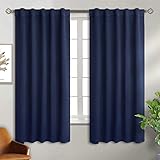
- BGment Rod Pocket and Back Tab Blackout Curtains, Navy Blue, 42 x 63 Inch, 2 Panels — Check on Amazon
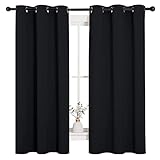
- NICETOWN Thermal Insulated Grommet Blackout Curtains, Black, 42 x 63 Inch, 2 Panels — Check on Amazon
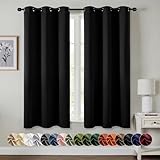
- MIULEE Black Blackout Curtains, 40 x 63 Inch, 2 Panels, Grommet Top — Check on Amazon
See 2 more Amazon options
- DWCN Blackout Curtains, Grey, 42 x 63 Inch, 2 Panels, Rod Pocket — Check on Amazon
- Deconovo Blackout Curtains, Rod Pocket, Black, 42 x 63 Inch, 2 Panels — Check on Amazon
Read the full guide ↓
Disclosure: As an Amazon Associate, dailyhomedecorating.com earns from qualifying purchases. Links to Amazon on this page are affiliate links; they cost you nothing extra. Listing details such as price and availability change often, so check the current Amazon listing before you buy.
Modern homes are the hardest houses in the world to curtain cheaply, and this guide starts with that admission rather than burying it. The architecture is glass: floor-to-ceiling panels in the living room, a wall of sliders to the patio, ceilings at nine, ten, twelve feet. No blackout curtain under $15 covers any of that. A standard pair of 52 x 84 inch panels from a brand you have heard of sits well above this tier at regular prices, and the longer drops modern windows actually need sit higher again. So this guide is not about your great room, and pretending otherwise would waste your money. It is about the second rank of windows every modern home also has — the wide, shallow picture window over the kitchen counter, the ribbon window in the primary bath, the ordinary windows in the secondary bedrooms, the laundry, the stair landing, the basement egress — because those windows are real, they leak light like any other, and fifteen dollars genuinely can dress them.
Two more pieces of honesty shape everything below. The first is about percentages: the 85 to 99 percent blocking figures in curtain titles are maker claims with no standard test behind them, and in a home with this much glass, the light that gets in comes mostly around a curtain’s edges rather than through its fabric anyway. The second is about color, and it cuts against the modern palette specifically: white and pale-grey curtains are the look, but in triple-weave blackout fabric the pale colors are measurably the worst performers — the same curtain glows in beige that goes dark in black. Every pick below is a real two-panel set verified within this $15 budget in the size named in its review, because with curtains the price belongs to the size, never to the product name — check the current price on Amazon for the size you need before you buy. For most modern homes we would start with the Hiasan pair, the only full-width listing at this budget, made for the wide shallow glass modern architecture loves. If the top of the curtain is part of your design — and in a modern interior it always is — the BGment’s hidden-rod back tabs are the cleanest hang here. And for the standard-sized windows that survive in bedrooms and baths, the NICETOWN remains the proven answer. Below: a quick picks table, detailed notes on all six pairs, a comparison table, a buying checklist, an honest account of the glass this tier cannot cover, the truth about blackout percentages and pale colors, the mistakes modern-home shoppers make at this price, and answers to the questions that come up again and again.
Quick Picks
Short on time, or comparing several options at once? Each row below names the modern-home job and the curtain pair that suits it, with the size and a link to the listing. Prices vary by size and move with promotions, so check the current price on Amazon for the size named in that row.
| Buyer type | Pick | Why it stands out | Link |
|---|---|---|---|
| Best for wide picture windows | Hiasan Blackout Curtains, Silver Grey, 52 x 54 Inch, 2 Panels | The only full 52-inch width under $15 — made for wide, shallow modern glass — check the current price on Amazon | Check on Amazon |
| Best tailored look | BGment Rod Pocket and Back Tab Blackout Curtains, Navy Blue, 42 x 63 Inch, 2 Panels | Back tabs hide the rod completely — the cleanest, most architectural header at this price — check the current price on Amazon | Check on Amazon |
| Best proven all-rounder | NICETOWN Grommet Blackout Curtains, Black, 42 x 63 Inch, 2 Panels | The decade-proven budget blackout pair for standard secondary windows — check the current price on Amazon | Check on Amazon |
| Best for small windows | MIULEE Black Blackout Curtains, 40 x 63 Inch, 2 Panels | Slim 40-inch panels for baths and landings, a limited-time-deal regular — check the current price on Amazon | Check on Amazon |
| Best for the tightest budget | DWCN Blackout Curtains, Grey, 42 x 63 Inch, 2 Panels | A full pair at the very bottom of this budget — utility darkness for laundry, garage and basement windows; check the current price on Amazon | Check on Amazon |
| Best certified fabric | Deconovo Blackout Curtains, Rod Pocket, Black, 42 x 63 Inch, 2 Panels | OEKO-TEX certified fabric from an established maker, in budget on sale — check the current price on Amazon | Check on Amazon |
How These Picks Were Chosen
The first filter was the budget, applied to a named size — and in a modern home that filter is unforgiving, because modern window sizes are exactly the sizes this budget cannot reach. Every product below is a real Amazon listing that fits this $15 budget in the precise size and panel count this guide recommends. Where a brand’s larger sizes climb past the line — and in this category they climb fast, because an 84-inch pair is a different product at a different price — we name the configuration that belongs here and say so in the review. Three of the six picks, the Hiasan, the MIULEE and the Deconovo, live at this budget only when their listings are discounted, and their reviews flag that deal dependence rather than letting a promotion pose as an everyday price. Anything whose smallest honest configuration started above $15 was excluded, however well it would have suited a modern interior.
We did not hang these curtains ourselves. We read the maker listings and specification pages, compared construction — triple-weave fabric, header styles, panel dimensions and counts — and cross-checked prices against deal trackers and retailer roundups. Because this guide is written for modern homes, we weighted two things more heavily than a general guide would: width, because modern glass runs wide even when it runs short, and the header’s appearance, because a curtain hung in a minimalist interior is judged as a design element whether it wants to be or not. Headline light-blocking percentages were weighted least of all: they are maker figures with no standard test behind them, and the section on percentages below explains how far they can be trusted.
Coverage math decided the borderline cases, and in modern homes coverage math is mostly a story of refusal. Two 42-inch panels give you 84 inches of fabric, which dresses a window roughly 42 to 56 inches wide once fullness is accounted for — fine for a secondary bedroom, meaningless against a ten-foot slider. Length refuses even harder: a 63-inch panel is a sill-length curtain, and modern drops of 84, 96 or 108 inches simply have no entry in this price tier at all. So the picks were chosen for the windows where the math works — wide and shallow, small and standard — and the section after the reviews names, just as explicitly, the windows where it does not. Where a listing was vague about a dimension or a claim, we say so in the review rather than guess.
The 6 Best Blackout Curtains for Modern Homes Under $15
Hiasan Blackout Curtains, Silver Grey, 52 x 54 Inch, 2 Panels
Who it suits: Owners of modern architecture’s signature window — the wide, shallow picture window, ribbon window or clerestory band — over a kitchen counter, along a hallway, or above a headboard wall.
Modern design loves a window that is wider than it is tall, and that single preference makes this Hiasan pair the most relevant listing in the guide. Every other pick trades in 42-inch widths or less; this is the one pair under $15 that sells the full standard width: two panels of 52 x 54 inches, 104 inches of fabric in total, eight grommets per panel. The compromise is taken in length instead of width — 54 inches is a short drop — and for the window shapes named above, that trade is exactly right. A wide window over a counter or a ribbon window in a bath gets genuine fullness and frame overlap, the two things that determine real-world darkness, instead of a narrow pair stretched flat and leaking at both sides. The color helps the case in a modern interior: silver grey is a true mid-tone, at home in the charcoal-and-concrete palette, and mid-tones block respectably through the fabric while hiding dust far better than black does.
Two cautions, one about price and one about proportion. The pair fits this budget only as a discounted deal — price trackers put its typical level above the $15 line — so it earns its place in this guide on deal days and belongs to the next tier at full price; check the current price on Amazon before you plan around it. And the 54-inch drop must be measured against your window, not assumed from the product photo: on a tall window it ends mid-wall in a way that reads as a mistake, because modern interiors punish a hem that lands at no intentional line. Hung on a genuinely shallow window, though, it does the one job no other pick here can do, and it is the pair to buy first if your home’s secondary glass runs wide.
- The only full-width pair at this budget: 52-inch panels, 104 inches of fabric in total.
- Eight grommets per panel keep the wide span sliding smoothly with even folds.
- Silver grey suits modern palettes and splits the difference between black’s blocking and white’s looks.
Honest limitation: Its in-budget price is a deal price, not its typical level, and the short 54-inch drop only suits genuinely shallow windows.
Choose it if your window is wider than it is tall — the classic modern picture or ribbon window. Skip it if you need length; every other pick in this guide is longer, and tall glass belongs to a bigger budget.

BGment Rod Pocket and Back Tab Blackout Curtains, Navy Blue, 42 x 63 Inch, 2 Panels
Who it suits: Modern-home owners who care how the top of the curtain looks — which, in a minimalist room, is everyone — and anyone dressing a guest room or study where the curtain is part of the architecture.
In a modern interior, a curtain is read as a surface: flat, even, uninterrupted. The BGment pair is the only pick here that understands that. Its back tabs pull the rod completely out of sight and let the fabric fall in regular, tailored folds — the closest a budget curtain gets to the ripplefold look of designer window treatments — and the same header also works as a plain rod pocket or with clip rings if you add them, three hanging methods on one pair. The navy blue 42 x 63 pair sits comfortably within this budget, in line with the single-header competition — check the current price on Amazon. The fabric is BGment’s triple-weave blackout polyester; the maker advertises blocking in the 90 to 99 percent range, a claim to file under the category optimism examined below, and navy earns its place in a modern palette honestly — deep enough to perform through the cloth, deliberate enough to read as a color choice against white walls rather than as a blackout apology.
The costs are the friction kind. Both built-in headers draw slowly compared with grommets — you pull and shuffle rather than slide — so this pair suits windows that stay dressed rather than curtains thrown open twice a day. The tailored look also depends on the first hang: space the tabs evenly or the middle folds sag, and in a modern room a sagging fold line is the whole impression. One more distinction matters: BGment sells a separate double-layer line with a sewn black liner that blocks more light, and this is not that product — the lined versions cost more than this budget allows. What is here is the best-looking hang under $15, on a well-made triple-weave pair, for the rooms where looks carry weight.
- Back tabs hide the rod entirely — the cleanest, most architectural header in this guide.
- Three hanging methods in one header: back tabs, rod pocket, or clip rings.
- Navy is a strong-blocking color that still works as a deliberate modern accent.
Honest limitation: No grommet option, so daily drawing is friction-slow; and this is the triple-weave line, not BGment’s better-blocking lined line, which costs more.
Choose it if the curtain’s appearance matters as much as its darkness — a guest room, study or finished secondary space. Skip it if the curtain will be opened and closed constantly; grommets forgive that, tabs do not.
NICETOWN Thermal Insulated Grommet Blackout Curtains, Black, 42 x 63 Inch, 2 Panels
Who it suits: The standard-sized windows that modern homes still have — secondary bedrooms, kids’ rooms and home offices, especially in mid-century and ranch-style modern houses whose bedroom windows were never oversized.
Strip away the showcase glass and most modern homes are full of ordinary windows, and for those, this is still the pair to beat. NICETOWN’s triple-weave blackout curtain has been Amazon’s default budget answer for the better part of a decade, and the 42 x 63 inch pair in black sits comfortably inside this budget, with deals taking it lower still — check the current price on Amazon. The construction is the classic triple weave — a black yarn layer woven between two polyester faces, so the fabric itself does the blocking with no separate liner to crack or delaminate — hung from metal grommets that slide on a standard rod. Black is doing double duty here: it is the anchor color of the modern palette, and it is also the best-performing color this fabric comes in, because in triple weave the color is a performance spec and the maker itself notes that darker shades block more light. The color range on the listing is the deepest in this guide, which matters when a secondary room needs to match an existing scheme.
Set expectations by the fabric, not the title. Through the panel itself, a dark triple weave genuinely blocks the great majority of light — independent roundups of this curtain family put standard triple-weave panels around 85 to 95 percent — and hung wide and close to the wall, a bedroom goes properly dark at noon. What no curtain in this guide does is seal edges: light halos at the top and sides unless the rod holds the panels against the wall and the pair overlaps the frame, which is a mounting fact, not a defect. The harder limit for modern homes is the size itself: 63 inches is a sill-length drop, and the same curtain in 52 x 84 sits well above this budget, in the next tier up, with longer modern drops above that again. Buy this pair for the windows it fits, and it is the safest purchase in the guide; the full bedroom-by-bedroom treatment of this tier is in Best Blackout Curtains For Bedrooms Under $15.
- The proven budget blackout fabric: triple weave with a black core layer, no liner to fail.
- Grommet top slides open and closed daily — the right header for bedrooms in daily use.
- Black anchors a modern palette and blocks the most light of any color in the range.
Honest limitation: The in-budget price belongs to the 42 x 63 size. The 52 x 84 pair on the same listing sits well above this budget, and the palest colors of this fabric block noticeably less light than the black linked here.
Choose it if you have standard windows in secondary rooms and want the best-documented pair at the budget. Skip it if your windows are tall or wide — that is a different size and a different budget.
MIULEE Black Blackout Curtains, 40 x 63 Inch, 2 Panels, Grommet Top
Who it suits: The small windows modern homes scatter everywhere — powder rooms, primary-bath privacy glass, laundry rooms, stair-landing windows — and deal-watchers happy to buy when the price dips.
Read the width first, because it defines the product: each panel is 40 inches wide rather than 42 or 52, so the pair totals 80 inches of fabric. On the small windows it is made for, that is exactly enough — a 30 to 40 inch window gets proper fullness and a clean hang — and modern homes have more of those small windows than their floor plans suggest: the slit window over a soaking tub, the square bath window, the narrow landing glass that pours morning light down a stairwell. In black, the triple-weave fabric blocks at the top of its class through the cloth, the grommet top slides freely, and MIULEE is one of the largest curtain sellers on Amazon, with the review depth to match. The price is the headline: on limited-time deals the black 40 x 63 set drops to the very bottom of this budget, and it moves in volume at that level — check the current price on Amazon.
Both cautions are about honesty rather than quality. Its in-budget price is a limited-time deal price against a much higher list price, and between deals the set drifts up toward and past the top of this budget — it belongs in an under-$15 guide on the days the deal is live, and the live price is the one that counts. And the width math reverses on standard windows: stretch 80 inches of fabric across a 50-inch window and the panels hang nearly flat, leaking more light at the sides and looking skimpy in a design-conscious room. Treat it as the small-window specialist it is — in a small room with a small window it is arguably the best-matched pick here, as Best Blackout Curtains For Small Rooms Under $15 argues in detail — and leave standard windows to the pairs above.
- Among the lowest-priced grommet pairs in the guide when its deal is live — check the current price on Amazon.
- 40-inch panels are the right scale for bath, laundry and landing windows.
- Black triple-weave fabric from a major curtain brand, with an easy-sliding grommet top.
Honest limitation: The under-$15 price is a limited-time deal price, not the everyday one — and 80 total inches of fabric is too little for standard or wide windows.
Choose it if your window is genuinely small and you can catch the deal price. Skip it if your window is wider than about 44 inches — the coverage math stops working.
DWCN Blackout Curtains, Grey, 42 x 63 Inch, 2 Panels, Rod Pocket
Who it suits: The utility windows of a modern home — laundry rooms, garage windows, basement egress glass, a mudroom door — where darkness and privacy matter and nobody is judging the drape.
Not every window in a beautiful house is a design moment. Some are a basement window well that admits a shaft of light at dawn, or a garage window the neighbors can see through, and for those the DWCN pair is the cheapest credible answer in this guide: the 42 x 63 inch two-panel set sits at the very bottom of this budget, and stays near the bottom of the band even when its deal price is gone — check the current price on Amazon. The fabric is a triple-layer polyester in the same family as the NICETOWN’s, sold as a matched pair with a rod pocket header. Grey is a considered choice for utility glass: a mid-tone that blocks respectably through the fabric, hides the dust that black displays, and disappears against the concrete and steel finishes modern utility spaces actually have.
The compromises are predictable and, for these rooms, acceptable. A rod pocket is the slowest header to live with — the panel bunches on the rod and drawing it is a pull and a shuffle — but utility curtains mostly stay closed, which is precisely the use case where a pocket beats grommets: hung close to the wall, it also leaks a little less light at the sides. The fabric sits at the lighter end of the triple-weave class, so read the listing’s room-darkening language literally: this pair dims thoroughly and darkens well, but strong direct sun will show a glow through the cloth that the denser NICETOWN weave handles better. At its deal level, that trade is easy to take for a laundry or basement window; at its occasional full price it has wandered out of this budget entirely. Apartment dwellers outfitting a whole unit at this tier will find the broader plan in Best Blackout Curtains For Apartments Under $15.
- The cheapest verified pair in the guide: a full 42 x 63 two-panel set at the bottom of this budget — check price on Amazon.
- Triple-layer fabric in a dust-hiding grey that suits modern utility spaces.
- Rod pocket hangs close to the wall, which quietly helps with side light leaks.
Honest limitation: The rod pocket makes daily opening and closing a chore, and the lighter weave glows against strong direct sun where denser curtains stay dark.
Choose it if the window is a utility window and the budget is absolute. Skip it if the curtain will be drawn daily or the room is on display — step up to a grommet or back-tab pair.

Deconovo Blackout Curtains, Rod Pocket, Black, 42 x 63 Inch, 2 Panels
Who it suits: Health-conscious modern-home buyers — nurseries, children’s rooms, low-VOC households — who prefer an established brand with certified fabric and can buy on sale.
Modern homes are often built around material standards — low-VOC paints, certified timber, tested finishes — and this is the one curtain in the guide that speaks that language. Deconovo’s rod pocket pair uses OEKO-TEX certified fabric, meaning the finished textile has been tested for harmful substances, a certification none of the other listings here carries and a genuine consideration for a curtain that will hang for years in a child’s room. The construction is the familiar triple weave in black, the header a simple rod pocket, the size the standard 42 x 63 inches, and Deconovo is the other household name in budget curtains, with a wide range that makes matching or replacement panels easy to find years later. In use it behaves like the DWCN — hangs close, blocks well through the cloth in black, draws with a pull rather than a slide — with a slightly more finished fabric hand than the no-name end of the market.
The price is where this pick earns its honest label. Discounted, the pair sits inside this budget against a much higher list price, and between promotions it drifts just over the line — which is to say it qualifies for this guide on its sale days and sits outside it on its ordinary ones. We include it because it spends so much of its life discounted and because certified fabric is a real point of difference, and we label it because pretending a sale price is its everyday price would be exactly the trick this guide exists to avoid. Buy it when the listing shows a price under $15 and it is the most credentialed pair here. When the listing sits above this budget, the NICETOWN above is the better buy.
- OEKO-TEX certified fabric — the only certified textile in this guide.
- An established maker’s fit and finish, with easy matching panels in a wide range.
- Black triple weave with a close-hanging rod pocket that limits side leaks.
Honest limitation: It only meets this budget on sale — discounted it fits; at regular price it sits just over the line.
Choose it if certified fabric matters to you and the listing is showing a sale price. Skip it if the live price is over $15 — at that point the NICETOWN is better value.

Comparison Table
| Product | Size & panels | Best use | Link |
|---|---|---|---|
| Hiasan Blackout Curtains, Silver Grey | 52 x 54 in, 2 panels, grommet | Wide, shallow picture and ribbon windows | Check on Amazon |
| BGment Rod Pocket and Back Tab Curtains, Navy Blue | 42 x 63 in, 2 panels, pocket/tab | The cleanest tailored look; rod fully hidden | Check on Amazon |
| NICETOWN Grommet Blackout Curtains, Black | 42 x 63 in, 2 panels, grommet | Standard secondary windows; the proven all-rounder | Check on Amazon |
| MIULEE Black Blackout Curtains | 40 x 63 in, 2 panels, grommet | Small bath, laundry and landing windows, at a deal price | Check on Amazon |
| DWCN Blackout Curtains, Grey | 42 x 63 in, 2 panels, rod pocket | Utility windows on the hardest budget | Check on Amazon |
| Deconovo Blackout Curtains, Rod Pocket, Black | 42 x 63 in, 2 panels, rod pocket | Certified fabric from an established brand | Check on Amazon |
How to Choose Blackout Curtains for a Modern Home Under $15
- Sort your windows into two lists before you shop. Showcase glass — floor-to-ceiling panels, sliders, two-story windows — belongs to a different budget entirely. Secondary glass — shallow picture windows, baths, bedrooms with standard windows, utility rooms — is what this tier is for. Shopping with the wrong list is the most expensive mistake at this price.
- Measure the drop from where the curtain will actually hang. Modern homes often hang curtains from ceiling tracks or high wall mounts, not from just above the frame. A 63-inch panel measured from a ceiling track in a nine-foot room ends in the middle of the wall. Measure the real drop, then compare it with the sizes here.
- Do the fullness math. Curtains need 1.5 to 2 times the window’s width in fabric to hang in folds and block edge light. Two 42-inch panels — 84 inches — honestly cover a window up to about 50 inches wide; the Hiasan’s 104 inches stretches that to roughly 60.
- Choose the darkest color the room can take. In triple-weave fabric, color is performance: black blocks the most light through the cloth, navy and charcoal follow, mid-greys compromise, and white glows. The modern pale palette is the worst-performing palette in this category — plan around that fact instead of discovering it at sunrise.
- Match the header to the interior, not just the habit. Back tabs hide the rod and read as architecture; grommets read contemporary and slide daily; rod pockets gather softly and belong to traditional rooms and utility windows. In a minimalist interior the header is visible design — choose it like it is.
- Check whether the price is a pair price. Every pick in this guide is a two-panel set, but this category also sells single panels at similar prices. Confirm the panel count on the listing before comparing anything.
- Treat deal prices as deal prices. Three picks here qualify only when discounted. If the live price has drifted over $15, the honest moves are the NICETOWN at its everyday price or a step up in budget — the same windows viewed with more money are covered in Best Blackout Curtains For Modern Homes Under $40.
- Budget for the hardware. No pair in this guide includes a rod, and modern hardware — matte black rods, ceiling tracks — costs more than the curtains at this tier. Price the whole window, not the fabric alone.
- Keep the packaging until the first morning. Judge blackout curtains at dawn, in the room, against the light that actually troubles you. Every pair here is easier to return boxed.
The Glass This Tier Cannot Cover
It is better to name the refusals plainly than to let a product photo imply otherwise. Floor-to-ceiling glass needs drops of 96 inches and beyond; sliding doors need both that length and widths no pair here can furnish with fullness; the two-story glass in a great room needs more of everything. None of it exists under $15, from any brand, at any honest configuration. The benchmark that proves it is the ordinary one: a standard 52 x 84 inch pair from a known maker — the size for a merely tall window, not a dramatic one — sits well above this tier at regular prices, and each step up in length sits higher again. The full-length panels a modern living room needs live above that, not below it.
The tempting workaround — hanging two short pairs, or one pair stretched flat across a slider — fails on both arithmetic and appearance. Two pairs cost what one correct pair costs at the next tier, and a 63-inch panel on a 100-inch window leaves a band of bare glass that no amount of styling turns into a decision; in a modern interior, where every line is exposed, it reads as exactly what it is. So the honest division of labor is this: let this tier dress the windows it genuinely fits, and take the showcase glass to the budget that can dress it properly, which is where Best Blackout Curtains For Modern Homes Under $40 begins. Readers who want the unfiltered, size-first view of this price tier — every window type, no modern framing — will find it in Best Blackout Curtains Under $15.
The Truth About Blackout Percentages — and Pale Colors
Somewhere in almost every curtain listing in this guide sits a number — 85%, 90%, 95%, 99%, occasionally a flat “100% blackout” — and here is what that number is: a maker’s claim, produced by no standard test, under no regulator, measured, if measured at all, through the fabric alone under conditions the maker chose. The honest version, supported by independent roundups that have put light meters behind these fabrics, is that standard triple-weave blackout cloth blocks somewhere around 85 to 95 percent of the light that strikes it in dark colors — and well below that range in pale ones. True 100 percent blockage through the fabric requires an opaque coated or lined layer, and those products start above this budget, which is why none appears among the picks.
Modern homes make this worse in two specific ways. The first is area: a fabric that passes five percent of the light falling on a small bedroom window passes the same five percent of a much larger amount of light on a wide modern window, and five percent of a sunlit picture window is a bright room. The second is the palette. The modern interior runs on white, pale grey and natural linen tones — and in triple-weave fabric those are precisely the colors that glow, because the woven dark core that does the blocking is diluted by the pale face. A white blackout curtain is close to a contradiction in terms at this price; the silver grey of the Hiasan and the mid-greys in this guide exist as the workable compromise, and where true darkness in a pale scheme is non-negotiable, the answer is a lined curtain at a higher budget, not a paler triple weave. Finally, remember that in a real room most of the light that wakes you comes around the curtain, not through it — the halo above the rod, the seams at the sides — so width, overlap and a close mount do more for darkness than any percentage printed on a listing.
Where These Curtains Actually Work in a Modern Home
Walk a modern house room by room and the under-$15 tier finds more work than its reputation suggests. The wide, shallow windows are the headline case — the picture window over the kitchen sink, the ribbon window high in a hallway, the clerestory band that admits light nobody can reach to shade — and they belong to the Hiasan’s 52-inch width. Bathrooms and powder rooms, with their small privacy windows, are the MIULEE’s home ground. Secondary bedrooms and kids’ rooms in most modern and mid-century homes still use standard window sizes, and the NICETOWN and the Deconovo split those between them — grommets for daily use, certified fabric for the nursery. A guest room or study that is seen by visitors is the BGment’s tailored case. And the utility rank — laundry, garage, basement egress, mudroom — is the DWCN’s, where simple budget darkness is exactly the right spend.
The same walk names the three defeats honestly. Floor-to-ceiling glass and sliders, covered above, need a different budget. Windows wider than about 60 inches need either the Hiasan’s width in a short drop or two pairs — and two pairs at this tier cost what one correct pair costs at the next. And ceiling-track installations, the signature modern hang, expect full-length panels by design; a sill-length pair on a ceiling track satisfies neither the track nor the room. Five minutes with a tape measure, before ordering, settles which list each of your windows belongs to — and that measurement, not any listing’s percentage, is what decides whether this tier serves your home well.
Common Buying Mistakes
- Shopping for the living-room glass with a secondary-window budget, then blaming the curtains for a size problem.
- Choosing white or pale grey for the palette and expecting the blackout claim to survive it — pale triple weave glows.
- Measuring from the top of the frame when the curtain will hang from a ceiling track or a high mount, and ordering a drop that ends mid-wall.
- Believing the headline price without checking which size it belongs to — then receiving 42 x 45 inch panels fit for a kitchen window.
- Comparing a single panel’s price against a pair’s price and thinking you have found a bargain.
- Trusting the percentage in the title. There is no standard test behind “99% blackout,” and edges leak more light than fabric ever does.
- Hanging the rod exactly to the frame, so the panels cover glass and nothing else, then blaming the fabric for the halo.
- Stretching a narrow pair flat across a wide window to save money — flat panels leak at both sides and look skimpy in a modern room.
- Forgetting the hardware entirely — no pick in this guide includes a rod, and modern rods and tracks cost real money at this tier.
- Judging the darkness at noon in a bright living room instead of at dawn in the room where it matters.
Final Recommendation
- Wide, shallow picture and ribbon windows: Hiasan Blackout Curtains, Silver Grey, 52 x 54 Inch, 2 Panels.
- The cleanest tailored look: BGment Rod Pocket and Back Tab Blackout Curtains, Navy Blue.
- Standard secondary windows: NICETOWN Grommet Blackout Curtains, Black, 42 x 63 Inch, 2 Panels.
- Small windows, deal price: MIULEE Black Blackout Curtains, 40 x 63 Inch, 2 Panels.
- Utility windows, hardest budget: DWCN Blackout Curtains, Grey, 42 x 63 Inch, 2 Panels.
- Certified fabric, bought on sale: Deconovo Blackout Curtains, Rod Pocket, Black, 42 x 63 Inch, 2 Panels.
Our top two for modern homes are the Hiasan, because width is the dimension modern architecture actually demands of its secondary windows and it is the only pair here that supplies it, and the BGment, because its hidden-rod back tabs are the one header at this price that a minimalist interior would choose on looks alone. Between those poles, choose by window, not by brand: the NICETOWN where the window is standard and the use is daily, the MIULEE where the window is small, the DWCN where the window is merely useful, and the Deconovo where a certified fabric matters and the sale price is showing. And hold the line this guide opened with: if the window you are dressing is the glass your home shows off — floor-to-ceiling, sliding, two stories tall — no pick here belongs on it, and the right move is the next budget tier, not a hopeful compromise. Measure the glass, confirm the size and panel count on the listing, check the live price — curtain prices move with promotions weekly — and order the pair that matches the window you actually have.
Frequently Asked Questions
Can blackout curtains under $15 cover floor-to-ceiling windows in a modern home?
No. Floor-to-ceiling glass needs drops of 96 inches and more, and no pair at that length exists under $15 from any brand. Even a standard floor-length 52 x 84 inch pair from a known brand sits well above this tier at regular prices. The under-$15 tier covers a modern home’s secondary windows — wide and shallow picture windows, small bath and laundry windows, standard bedroom windows — and the showcase glass needs the next budget tier up.
Why do white blackout curtains glow in modern interiors?
Because in triple-weave fabric, color is part of the blocking mechanism. The dark woven core does the work, and a pale face dilutes it: the same curtain that blocks 85 to 95 percent of light through the cloth in black blocks noticeably less in white or beige. True darkness in a pale color requires a lined or coated panel, which starts above this budget. Mid-greys are the workable compromise at this price — they suit modern palettes and still block respectably.
Which windows in a modern home can these curtains actually dress?
More than you might expect: wide shallow picture and ribbon windows (the Hiasan’s 52-inch width), small bathroom, powder-room and laundry windows (the MIULEE), standard-sized windows in secondary bedrooms and kids’ rooms (the NICETOWN and Deconovo), a tailored guest room (the BGment), and utility glass in garages and basements (the DWCN). What they cannot dress is the showcase glass — sliders, floor-to-ceiling panels and very wide windows needing full-length fullness.
Do any of these work on sliding glass doors?
No, and any guide that suggests otherwise at this price is selling you a compromise you will see every day. A slider needs roughly 84 inches of drop and enough width for fullness across a six-to-eight-foot span; the longest panel in this guide is 63 inches and the widest pair totals 104 inches of fabric. Two short pairs cost what one correct pair costs at the next tier and still leave the proportions wrong.
Grommets or back tabs — which suits a modern interior?
Back tabs, on looks: they hide the rod completely and let the fabric fall in even, tailored folds, the closest budget approximation of the ripplefold treatments modern interiors favor — the BGment pair is the pick. Grommets are the practical choice for curtains opened and closed daily, and their metal rings read contemporary rather than traditional. Rod pockets gather softly, hang closest to the wall, and suit utility windows and rooms where the curtain mostly stays shut.
When should a modern-home owner skip this tier entirely?
When the window is the point of the room. If you are dressing floor-to-ceiling glass, a slider, a two-story great-room wall, or a ceiling-track installation, nothing under $15 will look or perform like anything but a placeholder, and the money is better spent once, at the tier that covers those windows properly: Best Blackout Curtains For Modern Homes Under $40. This tier earns its place on the secondary glass — and modern homes, for all their drama, have plenty of it.