Where to buy
Check the latest price, availability and delivery on Amazon. Orders are placed on Amazon. We may earn a commission from qualifying purchases. A quick honesty note for this tier: under $400 is a ceiling, not a target — several picks below sit well under it, and the guide says plainly which features are included with the hardware and which are subscription features, so you can price the whole ownership, not just the box.
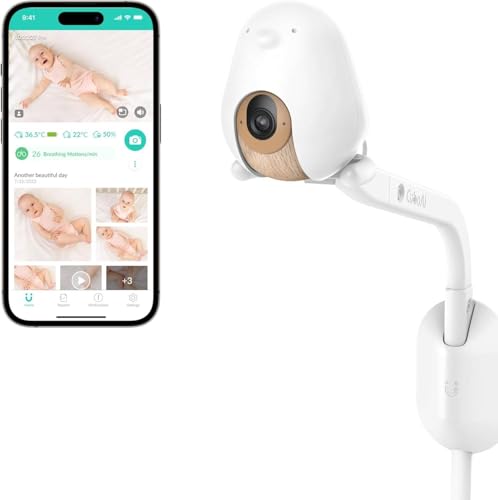
- Best for AI covered-face and rollover alerts (maker claim): CuboAi Plus Smart Baby Monitor with Wall Mount
- Best for sleep analytics from an overhead view: Nanit Pro Smart Baby Monitor — Camera & Floor Stand
- Best no-Wi-Fi monitor with a dedicated parent unit and zero subscription: Infant Optics DXR-8 PRO Video Baby Monitor
- Best for contact-free breathing monitoring with no wearable (maker claim): Miku Pro Smart Baby Monitor with Camera
- Best two-camera bundle with a big dedicated parent screen: VTech RM7764-2HD Smart Wi-Fi Baby Monitor with 2 Cameras
- Best for wearable pulse-rate and oxygen readings alongside video (maker claim): Owlet Dream Duo (Gen 3) — Dream Sock & 2K HD Camera Bundle
Read the full guide ↓
Disclosure: As an Amazon Associate, dailyhomedecorating.com earns from qualifying purchases. Links to Amazon on this page are affiliate links; they cost you nothing extra. Listing details such as price and availability change often, so check the current Amazon listing before you buy.
Choosing the best baby security camera for apartments under $400 is a different problem from choosing one for a house, and the differences are physical. Your nursery may be a corner of your own bedroom. Your walls may be lease walls you cannot drill. Your Wi-Fi may be a landlord’s router two rooms away, shared with a building full of streaming neighbours. And your $400 ceiling has to buy a camera that fits that reality: compact, mountable without renovation, reliable on imperfect Wi-Fi — or independent of Wi-Fi altogether — and safe in a small room where the crib, the bed and the camera are never far apart.
This guide ranks the same flagship tier through the apartment lens. The wall-mounted CuboAi Plus leads because a single mounted camera with AI alerts (maker claim) suits a small nursery where you are always nearby but not always looking. The Nanit floor stand follows as the no-drilling route to an overhead view. The Infant Optics is here as the honest Wi-Fi-free option for buildings where the network is not yours to fix. And because apartment babies become apartment toddlers fast, the two-camera VTech earns its place for crib-plus-play-space coverage.
Two apartment truths apply to every pick. First, subscriptions do not get smaller in a small home: the Nanit’s analytics and the CuboAi’s alert layer are still plan features, and we state plainly what each plan unlocks and what stays free. Second, cable safety matters more, not less, in tight rooms: with furniture close together, it is tempting to run a power cable along a crib rail or behind a cushion. Do not. Every pick here can be installed with its cable fully out of the baby’s reach, and the apartment-friendly ways to do that — stands, wall routing, cable guards — are covered for each one.
In this guide
Quick Picks
| Pick | Best for | Key spec |
|---|---|---|
| CuboAi Plus | Best for AI covered-face and rollover alerts (maker claim) | 1080p HD Wi-Fi camera with night vision; AI covered-face, rollover and danger-zone alerts (maker claim); cry and temperature detection; two-way audio; wall mount included |
| Nanit Pro with Floor Stand | Best for sleep analytics from an overhead view | 1080p Wi-Fi camera on a floor stand for a true overhead crib view; two-way audio; room temperature and humidity sensing; works with the maker’s Breathing Band for breathing-motion monitoring (maker claim) |
| Infant Optics DXR-8 PRO | Best no-Wi-Fi monitor with a dedicated parent unit and zero subscription | No Wi-Fi, closed local link to a 5-inch 720p parent display; patented Active Noise Reduction; pan, tilt and zoom; interchangeable lenses; no app, no cloud, no subscription |
| Miku Pro | Best for contact-free breathing monitoring with no wearable (maker claim) | 1080p Wi-Fi camera; contact-free breathing and sleep monitoring with no wearable (maker claim); real-time alerts; two-way audio; night vision; wall mount and floor stand included in this kit |
| VTech RM7764-2HD (2 cameras) | Best two-camera bundle with a big dedicated parent screen | Two 1080p pan-and-tilt cameras; 7-inch HD parent unit plus Wi-Fi app access; 10x zoom; night vision; two-way talk; temperature and motion detection; soothing sounds |
| Owlet Dream Duo Gen 3 | Best for wearable pulse-rate and oxygen readings alongside video (maker claim) | Bundle: wearable Dream Sock sensor plus 2K HD Wi-Fi camera; maker states the sock tracks pulse rate, oxygen level and sleep trends with app notifications; two-way talk; room temperature monitoring; cable guards included |
How We Chose
We chose for rental reality. A pick had to install without renovation: a floor stand, a compact wall mount, or a set-back shelf position, with a cable run that can be pinned or guarded out of reach in a small room. We weighted Wi-Fi resilience heavily — apartment networks are congested and often not under your control — which is why a hybrid with a local parent unit and a fully local no-Wi-Fi monitor both rank high here. We required the same subscription honesty as the main guide: what is free, what is a plan, and what happens when an included trial year ends. We favoured compact hardware and multi-room flexibility, because in an apartment one camera often has to cover a crib now and a play corner next year. And as everywhere in this guide, breathing and vital-sign features are treated as manufacturer claims that prompt a check, never as medical protection.
The 6 Picks in Detail
CuboAi Plus Smart Baby Monitor with Wall Mount
The CuboAi Plus Smart Baby Monitor with Wall Mount is built around a single idea: instead of you watching the screen all night, the camera’s AI watches the crib. The maker says its computer vision can detect a covered face, a rollover onto the stomach, and a baby entering a danger zone you draw near the crib edge, and push an alert with a snapshot to the app. It also detects crying and reports room temperature, streams 1080p video with night vision, and includes a wall mount that positions it for the overhead view its detection is designed for. Treat every one of those detection features as a manufacturer claim. They can prompt you to check; they cannot watch your baby for you, and they do not change safe-sleep rules.
The subscription story needs stating plainly, because it changed over this product’s life and older write-ups get it wrong. CuboAi includes the first year of its Care Premium plan with the camera, starting when you pair it with the app. On the free Basic plan that remains afterwards you keep live video, cry and cough detection and a few days of playback. The AI safety alerts the camera is famous for — covered face, rollover and danger zone — and the sleep analytics sit in the paid Premium tier once the included year ends, with a higher Ultimate tier extending the analytics and reports. So the honest summary is: year one, everything is on; after that, you are paying a yearly plan to keep the alert layer, or dropping back to a good basic Wi-Fi camera.
Storage is cloud-based through the app, with multi-day playback rather than a memory card in the camera, so your history depends on your plan and your connection. The wall mount is the right way to install it: the detection wants a stable overhead angle, and a mounted camera with its cable routed down the wall and away from the crib is also the safe way to run it. Never drape the cable across or inside the crib, and keep every part of the power lead well out of reach of a baby who can pull to standing. The bird-shaped housing is cute, but buy it for the alert system and the clean app, not the styling.
Choose it if proactive crib alerts are the feature you actually want and you are comfortable renewing the plan after the included year. Skip it if subscription renewals are a hard no for you, or if your Wi-Fi is unreliable, because an app-only camera is only as good as its connection.
In an apartment, the wall mount earns its keep: one compact camera, screwed high once (or fitted with a landlord-friendly mount where drilling is not allowed), covering a crib that may share your bedroom. Check your lease before drilling — a shelf set well back with the cable pinned down the wall achieves the same safe geometry in many rentals.
Nanit Pro Smart Baby Monitor — Camera & Floor Stand
The Nanit Pro Smart Baby Monitor with Floor Stand is the pick that defines the top of this price tier, and it earns that spot with the overhead view. The floor stand places the 1080p camera directly above the crib, looking straight down at the sleep surface. That angle is not a cosmetic extra. It is the angle the maker’s sleep analysis is built around, and it is the angle that shows a rolled blanket, a shifted sleep position or a baby who has scooted to the corner of the crib without the distortion you get from a camera angled in from a shelf. The stand also solves a practical problem: it needs no wall screws, so the camera can move rooms or move house with you.
Be clear about what the subscription does here, because Nanit splits its features more sharply than most. Live video, two-way audio, sound and motion notifications, and temperature and humidity readings work in the app without a paid plan. The paid Insights plans are what unlock the headline analytics: sleep analysis and sleep history, saved video clips and continuous video history, milestone tracking and the smarter alerts such as cry detection. A short trial of the entry Insights plan is included with new overhead setups, and the higher plans lengthen the video history and the sleep-analysis window and add caregiver accounts. In other words, the hardware under $400 buys you an excellent camera; the ongoing plan buys you the data layer. Budget for both if the analytics are why you are buying it.
Storage follows the same split. There is no local memory-card recording doing the heavy lifting here; saved clips and history live in the maker’s cloud under your plan, while live viewing is simply streamed. The breathing-motion feature deserves the same honest framing. With the maker’s Breathing Band worn over sleepwear, Nanit says the camera can track breathing motion and alert you to changes. That is a manufacturer claim about monitoring motion, not a medical measurement, and no camera in this guide is a medical device or a substitute for safe-sleep practice: baby on their back, on a firm flat surface, with nothing soft in the crib. On placement, the floor stand keeps the camera and its cable run behind the stand and away from the crib rails when installed as directed — route the cable fully out of reach, because a standing baby can grab anything left within arm’s length of the rails.
Choose it if you want the strongest sleep-analytics ecosystem in this tier and you accept a subscription as part of the deal. Skip it if you want everything you pay for to work forever with no plan, or if your nursery has no floor space beside the crib for the stand.
For apartment nurseries the floor stand is the renter’s friend: a true overhead view with zero holes in a wall you do not own, and it moves to the next apartment when the lease ends. Measure the corner beside the crib first — in a tight room the stand’s footprint competes with the glider.
Infant Optics DXR-8 PRO Video Baby Monitor
The Infant Optics DXR-8 PRO is the deliberate opposite of everything above it in this guide, and at this tier that is a feature. There is no Wi-Fi, no app, no cloud account and no subscription — ever. The camera talks to its own 5-inch parent display over a closed local link, with patented Active Noise Reduction filtering the hiss and hum that make lesser audio monitors exhausting to sleep next to. It pans, tilts and zooms, takes interchangeable lenses (a wide-angle lens is the popular add-on for a full-room view), and simply works the moment you plug it in, in any house, on any internet connection, including none.
That simplicity defines both its ceiling and its value. The picture is 720p on the parent unit, not the 1080p or 2K of the Wi-Fi flagships. There are no sleep analytics, no breathing features, no covered-face alerts, no recordings in a cloud, and no way to check in from work or share a feed with grandparents — viewing happens on the one screen, at home, within range. Storage is not part of the proposition at all: this is a live monitor, not a recording system. For a great many families, especially by the second child, that list of absences reads as relief rather than lack. Nothing to update, nothing to renew, nothing to troubleshoot at midnight, and a feed that does not travel over the internet at all — a privacy posture the app cameras cannot match.
Placement still matters. The camera should be mounted or set back so its power cable runs down behind furniture or the wall, entirely out of the crib’s reach; a local-link camera is not exempt from cord safety just because it skipped the Wi-Fi. The interchangeable lens system is genuinely useful here: the standard lens for a crib close-up from across the room, the wide lens when the baby becomes a mobile toddler and the ‘room’ is the product. Battery life on the parent unit, screen brightness at night and the noise reduction are the daily details owners praise, and they are the right details for a device whose whole job is to sit on a nightstand and be trusted.
Choose it if you want maximum reliability, zero subscriptions and a feed that never touches the internet. Skip it if remote viewing, recordings or any analytics feature matter to you — this monitor will never grow them.
Apartment Wi-Fi is often shared, congested or landlord-controlled, and this is the one pick that does not care. It also does not care about your building’s internet outage at 1 a.m. In a small flat where the nursery is ten steps away, a local monitor is frequently all the monitor you need.
Miku Pro Smart Baby Monitor with Camera
The Miku Pro Smart Baby Monitor takes the opposite approach to the Nanit and the Owlet: no band, no sock, nothing on the baby at all. The maker says its sensor array and signal processing read the tiny movements of breathing through clothing and blankets, and build sleep analytics from that, with real-time alerts when the pattern changes. This kit includes both the wall mount and a floor stand, streams 1080p video with night vision and two-way audio, and reports room conditions in the app. As with every breathing feature in this guide, file that firmly under manufacturer claim. It is a monitoring aid that may prompt a check; it is not a medical device, it does not diagnose anything, and it never replaces back-to-sleep positioning on a clear, firm crib surface.
Miku built its reputation partly on not gating the core product behind a subscription, and the honest position today is: check the current plan terms on the listing before you buy, because the brand has changed hands and its app offering has evolved. Core live monitoring and breathing tracking have historically been the no-plan proposition, with an optional care plan adding longer history and extras. Whatever the current split, the questions to ask are the same ones this guide asks of every pick: what keeps working if you never pay, how much history is stored, and where. Video and data are handled through the app and the maker’s cloud services rather than a memory card in the camera, so this is an internet-dependent monitor.
In daily use the appeal is real. Nothing to charge, wash, size up or remember to put back on after a 3 a.m. change is a genuine quality-of-life advantage, and the dual mounting kit means you can start with the stand and switch to the wall mount when the baby starts pulling up. That transition matters for safety: once a baby can stand in the crib, the camera must be mounted, not perched, and every cable must be routed completely out of reach. The trade-offs are equally real. An app-only monitor gives you no dedicated screen for the nightstand, and a smaller brand’s app and support are a different bet from the biggest names in this tier.
Choose it if the no-wearable idea is the whole point and you want breathing-motion monitoring (maker claim) without dressing the baby in tech. Skip it if you want a dedicated parent unit, local recording, or the longest-established app ecosystem.
The Miku suits apartment life when the crib is in your bedroom and floor space is spoken for: mount it once, and the contact-free sensing means no extra chargers, bands or socks competing for the two outlets by the bed. Confirm the mount position gives it the clear overhead view its breathing tracking (maker claim) is designed around.
VTech RM7764-2HD Smart Wi-Fi Baby Monitor with 2 Cameras
The VTech RM7764-2HD Smart Wi-Fi Baby Monitor answers a question the flagship analytics cameras dodge: what if you have two rooms to watch? This bundle puts two 1080p pan-and-tilt cameras in the box — twins, a nursery and a toddler room, or a crib and a play space — with a large 7-inch parent unit that shows them at home and an app that shows them away. The cameras pan a full circle and tilt, zoom up to 10x, report temperature, detect motion, play soothing sounds and support two-way talk. It is a lot of hardware for the tier, and for multi-room families it is the most complete out-of-the-box answer in this guide.
The money story is the cleanest here alongside the Infant Optics. There is no analytics subscription standing between you and the features on the box: the parent unit works on a direct local link at home, the app adds remote viewing over Wi-Fi, and the core monitoring you paid for keeps working without a monthly plan. Recording and history depend on how you use the app and the parent unit rather than on a cloud tier you rent, so check the listing for the current storage details if saving clips matters to you. What you give up versus the flagships is the data layer: no sleep analytics dashboards, no breathing monitoring, no AI crib-safety alerts. This is a watch-and-listen monitor, done thoroughly.
Two cameras double the placement homework, and it is worth doing properly. Each camera needs its cable routed down and away, completely out of reach of the crib or bed it watches — a toddler room camera at grabbing height with a loose cable is a hazard, not a feature. Pan-and-tilt means you can mount a little further back and still frame the crib, which is safer than perching a fixed camera on the rail. The 7-inch screen is big enough to genuinely see two feeds, though it is also a bigger slab to carry room to room, and a household that mostly checks a phone may find the app does the daily work while the screen anchors the nightstand.
Choose it if you need two cameras on day one, want a real parent screen and app access together, and want no subscription in your life. Skip it if sleep analytics or breathing-motion features (maker claims on other picks) are your main reason for shopping at this tier.
In an apartment, two cameras usually means crib plus living-room play space rather than two bedrooms, and the pan-and-tilt heads cover a combined room better than fixed cameras. The big parent screen doubles as the apartment’s monitor hub on the kitchen counter.
Owlet Dream Duo (Gen 3) — Dream Sock & 2K HD Camera Bundle
The Owlet Dream Duo (Gen 3) is the bundle for parents who want numbers, not just pictures. It pairs a 2K HD Wi-Fi camera with the Dream Sock, a fabric sock with a sensor worn on the baby’s foot. Owlet states the sock tracks pulse rate and oxygen level as wellness indicators, along with sleep trends, and notifies you through the base station and app when readings move outside preset ranges. The maker describes the sock as FDA-cleared; even so, read it the way this guide reads every health-adjacent feature: these are manufacturer-reported wellness metrics from a consumer wearable, not hospital monitoring, not a diagnosis, and never a reason to relax safe-sleep practice. A sock can fall off, lose contact or misread on a wriggling foot, and the correct response to any alert is to check the baby, not the app.
On money, Owlet is refreshingly different from the analytics subscriptions above: the Dream app is included with the bundle, and the core sock readings, notifications and camera streaming are the product you bought rather than a plan you rent. Confirm the current feature split on the listing, as app features evolve, but there is no headline ‘your alerts stop in year two’ catch of the kind the Nanit and CuboAi carry. What you do take on is wearable upkeep: the sock comes in sizes for the first year and a half or so of life, needs charging, needs washing, and needs to actually be on the correct foot, fitted as directed, every single night you want data.
The camera half of the bundle is a modern Wi-Fi unit with two-way talk, night vision and room temperature reporting, mounted with the included kit. Owlet includes ASTM-certified cable guards in the box, which tells you the brand takes the cord hazard seriously — you should too. Route the camera cable inside the guards, down the wall, and fully out of the crib’s reach zone. There is no dedicated parent screen in this bundle; your phone and the sock’s base station do the alerting, and recordings and history are app-and-cloud based rather than local. For the right family that is fine. For a family that wants a screen that simply works with the router down, it is the wrong shape of product.
Choose it if foot-worn pulse-rate and oxygen trend readings (maker claim) are what will actually help you sleep, and you will keep up with a wearable routine. Skip it if you know a sock will end up in the laundry basket by week two, or if you want a dedicated monitor screen.
Apartment parents choosing the Owlet should plan the base station’s spot: it needs to live within range of the sock, which in a small flat is easy — one more reason the bundle behaves well in compact homes. The camera still needs a mounted position with the guarded cable run the box provides for.
Comparison Table
| Pick | Viewing | Storage | Subscription | Check price |
|---|---|---|---|---|
| CuboAi Plus | Phone app (Wi-Fi) | Cloud playback in app | Care Premium (first year included) unlocks AI alerts and sleep analytics | Check on Amazon |
| Nanit Pro with Floor Stand | Phone app (Wi-Fi) | Cloud history under plan | Insights plan unlocks analytics, history and smart alerts | Check on Amazon |
| Infant Optics DXR-8 PRO | 5-inch parent unit only (no Wi-Fi) | Live viewing only, no cloud | None — no app, no cloud, no subscription | Check on Amazon |
| Miku Pro | Phone app (Wi-Fi) | App/cloud services; check current terms | Core monitoring positioned without a required plan; verify current terms on listing | |
| VTech RM7764-2HD (2 cameras) | 7-inch parent unit + phone app | Local parent unit / app-based; check listing | No required plan for core monitoring | Check on Amazon |
| Owlet Dream Duo Gen 3 | Phone app (Wi-Fi) | App/cloud based | Core sock and camera features included with bundle | Check on Amazon |
How to Choose the Best Baby Security Camera for Apartments Under $400
Start with your walls, not with features. If your lease forbids drilling, your shortlist is floor stands (Nanit), set-back local cameras (Infant Optics), or mounts your landlord approves. If drilling is fine, the CuboAi and Miku wall mounts give the overhead angles their smart features are designed for. Decide this first; it eliminates half the market honestly.
Audit your Wi-Fi like a tenant, not an owner. You may not be able to move the router, add a mesh node or change the network name. If the nursery signal is weak, prefer a hybrid with a dedicated parent unit (VTech) or the fully local Infant Optics over an app-only flagship that will stutter exactly when you lean on it. Test the signal at the crib with your phone before ordering.
Think in rooms you actually have. Apartment coverage usually means the sleep space plus wherever the baby plays by day. A pan-and-tilt camera that can be re-aimed, or a two-camera bundle, stretches further than a fixed flagship pointed at one crib. If the baby sleeps in your room, a single camera you can reposition beats two you cannot.
Keep the subscription maths in the budget. Rent is already the big monthly number; a monitor plan is a small one, but it is forever. The Nanit’s analytics and the CuboAi’s post-year-one alerts are rented features. The VTech, Infant Optics and Owlet core features are not. Choose the structure your household budget prefers, not just the box you prefer.
Route cables for a small room. In tight spaces the cable run is short, which helps: stand cables drop straight behind the stand, wall-mount cables pin down the wall inside guards, and nothing should cross the crib, the floor where you walk at night, or the gap a toddler will explore. If the only outlet is beside the crib, move the camera plan, not the safety rule.
Small Rooms, Shared Walls: Apartment-Specific Setup Notes
Sound behaves differently in an apartment nursery. A monitor’s microphone in a room that shares a wall with your neighbour’s television will hear more of the building than a house monitor does, and two-way talk from your phone in the next room can feel oddly loud through a small speaker at close range. The practical fixes are placement and settings: mount the camera for the view, then set notification thresholds so the building’s life does not become your alert stream, and keep the parent unit or phone volume modest at night — you are close enough to hear the real cry through the wall anyway. The monitor’s job in an apartment is often confirmation and recording, not first alert.
Light is the other small-room factor. Flagship cameras handle darkness with infrared night vision, which washes a small room evenly; you do not need the brightest night vision in a six-foot viewing distance, you need even exposure that does not blow out a pale blanket into a white blob. Every pick here manages that at apartment range. What differs is the glow: some cameras show a small status light, and in a bedroom-nursery that light is in your eyeline too. Check for a light that can be dimmed or disabled in settings if the crib shares your room.
Finally, plan the exit. Apartment gear gets moved — to a bigger flat, to a house, to a sibling. Floor stands and local monitors move trivially. Wall mounts leave two screw holes and a patching job; keep the paint code. None of this should decide the purchase alone, but in rented homes it is part of the real cost.
Setting Up in a Rented Nursery: A Lease-Friendly Walkthrough
Work in this order and an apartment install takes under an hour with no deposit drama. First, walk the room with your phone and check the Wi-Fi signal exactly where the camera will live — not at the door, at the crib wall, at mounting height. If that spot is weak and the router is not yours to move, that result is your shortlist speaking: favour the VTech’s local parent unit or the fully local Infant Optics, or place an app camera where the signal is honest and its view still covers the crib. Second, decide the mount by the lease, not by preference. No-drill terms point to the Nanit floor stand or a set-back Infant Optics. Small-hole tolerance opens the CuboAi, Miku and Owlet wall mounts — and if you drill, drill once: mark the overhead position with the app preview running before the bit touches the wall.
Third, run the cable like a tenant who wants the deposit back and a baby who will soon stand. Down the wall in a straight line, inside a paintable cable guard or pinned with removable clips where the lease prefers them, ending at the outlet with no slack loop anywhere near the crib. In most apartments the run is short — often a single straight drop — which makes the safe way also the tidy way. If the outlet beside the crib is the only one, do not solve it with an extension lead trailing across the floor; solve it by choosing the stand-based pick or repositioning the camera to the wall the outlet actually serves.
Fourth, tune the monitor to the building. Set sound and motion sensitivity for a home with neighbours, a hallway and a lift: too sensitive, and the app narrates the building’s evening; too dull, and it narrates nothing. Test two-way talk volume at night levels — in a small flat, the speaker is close to the baby and closer to your own bed than you think. Fifth, do the handover test: a partner, a grandparent, a sitter — whoever will use it — checks the baby unaided. In an apartment that person is usually steps away, which is why the parent-unit picks shine here: the screen is the handover.
Last, photograph the install. If the flat is inspected or the lease ends mid-babyhood, you will know exactly what was mounted where, what to patch, and how the same system re-installs in the next home. Apartment monitoring is portable monitoring; buy and install it that way from day one, and the under-$400 tier travels with you instead of being left in the walls.
Common Buying Mistakes
Drilling first and reading the lease later. A wall-mounted flagship is a poor buy if your landlord charges for the holes. Floor stands and set-back cameras exist precisely for this constraint.
Assuming the building Wi-Fi will cope. Congested evening networks drop app feeds. If you cannot improve the network, buy a monitor with a local screen and treat the app as a bonus.
Running the cable along the crib because the room is small. Small rooms make safe routing easier, not optional. Pin it down the wall, guard it, or use a stand — never drape it where a standing baby can reach it.
Buying two fixed cameras for a one-room nursery. In most apartments one pan-and-tilt or repositionable camera covers sleep and play. Spend on the right single system before duplicating it.
Forgetting the plan when budgeting a rental. The analytics and alert layers on the flagship picks are ongoing costs. In a household already carrying rent, the no-subscription picks deserve their ranking here.
When the Lease Ends: Taking the System With You
Every apartment monitor decision eventually meets a moving van, and the picks here travel very differently. The Nanit floor stand is the champion mover: unplug, collapse, re-stand in the new nursery, and the overhead view is restored in minutes with nothing to patch. The Infant Optics is nearly as easy — two units, two plugs, done. The VTech bundle moves as a box of parts and re-installs room by room; label the cameras for their rooms before you pack them and the new setup takes an afternoon at most. The wall-mounted picks — CuboAi, Miku, Owlet — leave the only real moving homework: two to four screw holes per mount to fill and paint, and a fresh decision about mount position in a room with different geometry.
That homework is manageable if you plan it at install time, not at moving time. Keep the mount screws and any spare anchors in a labelled bag taped inside a kitchen drawer. Keep the paint code for the nursery wall in your phone. Photograph each cable run before you dismantle it; the photograph is the re-installation manual. And if the next home is a house you own, the same cameras graduate happily: mounts can go anywhere, the stand gains a permanent corner, and the system you bought for a rental becomes the house system without a second purchase.
The subscription layer travels too, for better and worse. App accounts, histories and plans follow you across addresses automatically — one quiet advantage of the cloud picks. Local picks have nothing to transfer and nothing to lose. Either way, an apartment buyer at this tier is not buying a fixture; you are buying portable equipment that happens to mount. Choose it, install it and document it that way, and the under-$400 you spend now keeps working through the next two leases.
Final Recommendation
For most apartment families, the CuboAi Plus is the sweet spot under $400: one mounted camera, proactive alerts (maker claim), and an included first premium year — with the renewal decision made knowingly. If your lease says no holes, the Nanit floor stand delivers the overhead flagship experience without touching a wall. And if your building’s Wi-Fi is the weakest link, skip the apps entirely: the Infant Optics DXR-8 PRO was built for exactly your floor plan.
CuboAi Plus · Nanit Pro with Floor Stand · Infant Optics DXR-8 PRO
Final-review note (20 November 2026): The Miku Pro baby monitor could no longer be verified in a live Amazon listing at final review, so it is presented prose-only here without a purchase link; its description is kept so you can judge the category, and the linked alternatives are the safer buys.
Frequently Asked Questions
Can I install these cameras without drilling into my rental walls?
Yes — the Nanit’s floor stand needs no fixings at all, and the Infant Optics can sit on a shelf or dresser set back from the crib with its cable routed safely. The CuboAi, Miku and Owlet cameras are designed for wall mounting; if your lease allows small screw holes they are straightforward, and if not, choose the stand-based picks instead.
My apartment Wi-Fi is unreliable. Which pick is safest?
The Infant Optics DXR-8 PRO does not use Wi-Fi at all — it links locally to its own parent unit. The VTech RM7764-2HD is the next safest: its parent unit works locally at home and the app is an addition, not the foundation. App-only flagships depend entirely on your network.
Is one camera enough for an apartment nursery?
Usually, yes. In a small home the sleep space and play space are often the same room or adjoining rooms. A pan-and-tilt model like the VTech, or repositioning a stand-mounted camera, covers both. The two-camera VTech bundle makes sense when the crib and the daytime play area are genuinely separate spaces.
Do the subscription plans matter in a small apartment?
The same as anywhere: the Nanit’s sleep analytics and video history and the CuboAi’s AI alerts after its included year are plan features, while live viewing stays free. The VTech, Infant Optics and Owlet core features carry no required plan. Small home, same maths — decide if you want to rent the data layer.
How do I keep the camera cable safe in a tight room?
Use the geometry: stands drop the cable straight behind them, wall mounts pin the cable down the wall, and cable guards cover exposed runs. The rule never changes — no cable within the baby’s reach from the crib, and none draped across the crib, rail or floor path.
Will a baby monitor disturb my neighbours or pick up their noise?
The camera itself is silent apart from two-way talk, which you control. Microphones will hear building noise in a thin-walled flat, so set sound-alert sensitivity thoughtfully; at apartment distances you will usually hear a real cry directly before any alert matters.


