Disclosure: As an Amazon Associate, dailyhomedecorating.com earns from qualifying purchases. Links to Amazon on this page are affiliate links; they cost you nothing extra. Prices and availability change often, so check the current Amazon listing before you buy.
Dogs test rugs at a scale cats and houseguests never reach: forty pounds of mud arriving at speed, water bowls sloshed by enthusiastic drinking, nails that click and occasionally dig, and the occasional accident with real volume behind it. The best area rugs for dogs are engineered for that scale — washable in real machines, shallow enough that mud stays on the surface, gripped hard enough that a launching dog does not take the rug surfing, and patterned to forgive the evidence between cleanings. The best area rugs for dogs also respect the dog: traction for aging joints on hard floors, a surface worth napping on, and nothing in the construction a curious mouth should be able to unravel.
This guide reviews six verified rugs through the dog lens specifically — not generic pet suitability, but the door-and-mud circuit, the feeding station, the launch-and-land zones in front of sofas, and the nap fields where big dogs spend their days. If your household’s pet is feline, the companion guide Best Rugs For Cats argues the claw-and-litter case; for mixed households, Best Area Rugs For Pets takes the general brief. For the accident-heavy puppy season in particular, Best Rugs For Dogs That Pee goes deeper on the laundry-first strategy.
Where to Buy
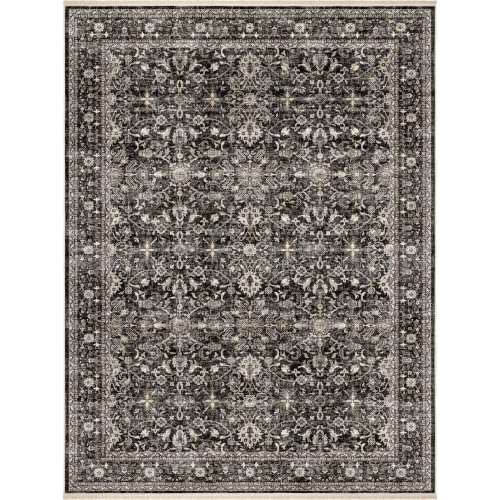
All six rugs are sold on Amazon, where you can check the current price and availability and confirm size and care details on the listing before you buy. Start with our top pick, the Tumble Lisa Washable Area Rug | 9×12 Living Room Bedroom Area Rug — Check on Amazon. The other five are the GORILLA GRIP Washable Area Rug (Check on Amazon), the Lahome Insect 5×7 (Check on Amazon), the SAFAVIEH Madison Collection Area Rug (Check on Amazon), the SAFAVIEH Adirondack Collection Area Rug (Check on Amazon), and the nuLOOM Moroccan Blythe (Check on Amazon).
In this guide
Quick Picks
| Pick | Badge | Why it earns its place |
|---|---|---|
| Tumble Lisa Washable Area Rug | 9×12 Living Room Bedroom Area Rug | Best Overall | Spillproof, washable, pad-anchored field for the main dog living zone. |
| GORILLA GRIP Washable Area Rug, 5×7 | Best for Mud Season | Plush washable workhorse that swallows paw traffic and launders clean. |
| Lahome Insect 5×7 Area Rugs | Best for Doors and Bowls | 0.19-inch wipeable shallows with gripping backing at the mud sources. |
| SAFAVIEH Madison Collection Area Rug – 8′ x 10′ | Best for Hair Control | Low dense weave that vacuums dog hair completely, fast. |
| SAFAVIEH Adirondack Collection Area Rug – 8′ x 10′ | Best Large and Durable | Pet-rated non-shedding field for multi-dog and big-dog rooms. |
| nuLOOM 5×7 Moroccan Blythe Area Rug | Best Budget | Replaceable tier for puppy season and rental dog life. |
Key Takeaways
- Dogs are a scale problem: washability and grip matter more than in any other pet brief.
- Zone the dog’s circuit — door, bowls, launch zones, nap field — rather than buying one heroic rug.
- Low, dense surfaces release mud and hair; deep piles store both.
- Traction is a kindness: gripped rugs steady puppies and senior dogs on hard floors.
- Patterns that forgive evidence are a feature, not a compromise.
- Every pick here is a construction a dog household can actually maintain.
How These Picks Were Chosen
We filtered the verified pool for dog-scale duty: machine washability or genuinely easy surface cleaning, low-to-medium piles that release mud and hair, backings and pads that hold position under launching weight, and sizes that cover real dog zones. Delicate naturals (the pool’s jute hand-loomed rug digs and sheds under nails) and deep shag (a mud archive) were excluded and are discussed in the mistakes section. Ranking follows the completeness of each rug’s answer to the full dog circuit rather than any single trait.
Product facts come only from the verified pool data.
The 6 Best Area Rugs for Dogs — Reviewed

Tumble Lisa Washable Area Rug | 9×12 Living Room Bedroom Area Rug
Our badge: Best Overall
The Tumble Lisa Washable Area Rug | 9×12 Living Room Bedroom Area Rug anchors the main dog living zone like nothing else in the pool: a spillproof polyester chenille surface that beads water-bowl slosh and muddy shakes for a quick wipe, full machine washability for the events beyond wiping, and an included cushioned pad held by corner pockets so a forty-pound launch does not re-arrange the room. At 9×12 it covers the sofa’s landing strip, the nap field and the traffic lane in one designed field.
For senior dogs the Tumble’s steady, cushioned traction is the quiet headline — hard floors are where aging hips slip, and a large, anchored, slightly yielding surface is genuine quality-of-life equipment. Its costs are the system tier and large-load laundry; its return is the room where the dog actually lives becoming washable end to end.
Strengths
- Spillproof plus washable at full room scale
- Included anchored pad defeats launch-surfing
- Cushioned traction kind to senior joints
Trade-offs
- System pricing — check the listing
- Large wash loads need a full routine
- One field cannot also be the door mat — zone the door separately
| Color | Midnight |
| Size | 9×12′ |
Choose the Tumble for the main living zone in dog homes that want one excellent, washable answer at scale.
Best for: main living zones, senior dogs, multi-dog rooms / Not suited for: door duty alone
Choose this for the flagship zone. Check on Amazon

GORILLA GRIP Washable Area Rug, 5×7
Our badge: Best for Mud Season
The GORILLA GRIP Washable Area Rug, 5×7 is the mud season’s workhorse: a plush 0.40-inch pile that gives wet paws something to wipe into, stain-resistant fibers, and full machine washability with durable serged edges that survive the laundry’s tempo. Deployed inside the dog door, it is the difference between a muddy dog and a muddy house.
Its plushness also makes it the nap rug dogs vote for — which concentrates hair and evidence in one washable place, a feature disguised as a preference. Rotate two in mud season and the circuit never closes for laundry day.
Strengths
- Washable plush that traps paw mud at the door
- Stain resistant; edges built for repeat laundry
- The nap surface dogs choose themselves
Trade-offs
- Plush holds more hair than flat weaves — vacuum between washes
- Needs a pad for launch-proof grip on slick floors
- 5×7 is a zone, not a whole large room
| Color | Navy |
| Size | 5′ x 7′ (Rectangular) |
Choose the Gorilla Grip inside the dog’s door and wherever mud is a season, not an event.
Best for: dog doors, mud season, nap zones / Not suited for: households avoiding laundry rotations
Choose this for the mud circuit. Check on Amazon

Lahome Insect 5×7 Area Rugs
Our badge: Best for Doors and Bowls
The Lahome Insect 5×7 Area Rugs runs the dog’s wet infrastructure: at 0.19 inches it is the shallowest pool in this guide, so bowl slosh, drool and tracked water sit on top for a wipe, and its TPE backing grips the floor through every thirsty arrival. Under a feeding station it converts the splash radius into a washable tray with pattern.
The same shallowness serves the door circuit on hard floors where a thicker rug would slow the door itself. Between the bowls and the door, the Lahome is the dog home’s plumbing — unglamorous, essential, and washed without ceremony.
Strengths
- Ultra-low wipeable surface for bowls and doors
- Machine washable; dries fast
- Backing grips hard floors under traffic
Trade-offs
- Minimal cushion — not the nap rug
- Bold pattern directs the scheme
- Zone scale, not room scale
| Color | Green |
| Size | 5′ x 7′ (Rectangular) |
Choose the Lahome under bowls, at doors, and anywhere the dog’s water meets your floor.
Best for: feeding stations, dog doors, mudrooms / Not suited for: comfort-first nap fields
Choose this for the wet zones. Check on Amazon
SAFAVIEH Madison Collection Area Rug – 8′ x 10′
Our badge: Best for Hair Control
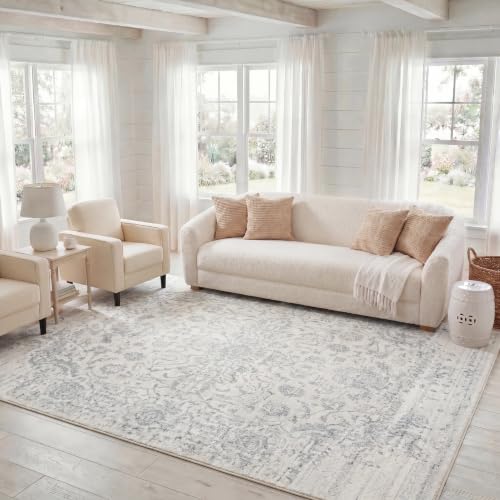
The SAFAVIEH Madison Collection Area Rug – 8′ x 10′ is the shedding household’s fast reset: a low, dense 3/8-inch polypropylene weave that gives dog hair nowhere to hide, vacuumed — per its maker, without a beater bar — completely clean in a couple of passes. For double-coated breeds in full seasonal shed, that reset speed is the difference between a rug that copes and a rug that becomes a second coat.
Its silver-ivory boho pattern suits styled rooms, and its stain resistance handles the everyday. It is not washable, so the accident-prone zones still belong to the washable picks; the Madison owns the hair, not the liquids.
Strengths
- Fastest hair release in the guide
- Stain-resistant, non-shedding construction
- Room-scale style at 8×10
Trade-offs
- Not washable — accidents need prompt spot work
- Suction-only vacuuming per maker
- Light palette shows mud until cleaned
| Color | Silver/Ivory |
| Size | 8′ x 10′ (Rectangular) |
Choose the Madison where shedding is the main adversary and the room still wants to look like a room.
Best for: shedding breeds, styled living rooms / Not suited for: puppy accident zones
Choose this for hair control. Check on Amazon

SAFAVIEH Adirondack Collection Area Rug – 8′ x 10′
Our badge: Best Large and Durable
The SAFAVIEH Adirondack Collection Area Rug – 8′ x 10′ is the multi-dog room’s field: power-loomed polypropylene at a dense 3/8-inch pile, non-shedding, and explicitly rated by its maker for homes with kids and pets. Big dogs wrestling, crates being dragged, zoomies at dusk — the Adirondack’s tight construction takes the mechanical abuse that unravels lesser rugs, and its ivory-sage pattern forgives the between-cleanings evidence.
Pair it with a quality pad for launch-proofing on hard floors, vacuum it on the household’s normal rhythm, and spot treat events promptly; in exchange it returns years of service in the rooms where dogs are the dominant species.
Strengths
- Maker-rated for pet homes; dense and non-shedding
- Withstands wrestling, crates and zoomies
- Forgiving pattern at room scale
Trade-offs
- Not washable — the washable picks own the worst zones
- Needs a pad for full grip
- Traditional pattern is a defined look
| Color | Ivory/Sage |
| Size | 8′ x 10′ (Rectangular) |
Choose the Adirondack for big dogs, multiple dogs and the rooms they rule.
Best for: multi-dog and big-dog rooms / Not suited for: accident-heavy puppy zones
Choose this for durable scale. Check on Amazon

nuLOOM 5×7 Moroccan Blythe Area Rug
Our badge: Best Budget
The nuLOOM 5×7 Moroccan Blythe Area Rug is the puppy season’s and the rental’s rational rug: stain-resistant polypropylene in a faded grey trellis that camouflages the daily evidence, at a tier where the rug is a renewable surface. Puppies are a temporary condition with permanent enthusiasm; a rug priced for replacement lets you train without flinching.
Anchor it well, vacuum it often, and let it absorb the season. When the dog is grown and the house rules are learned, graduate the good rooms to the washable flagship picks and let the Blythe retire to the den.
Strengths
- Stain-resistant camouflage pattern
- Replacement-friendly tier for puppy season
- Easy vacuum maintenance
Trade-offs
- Not washable — accidents need fast spot work
- Needs anchoring on slick floors
- Boho style is a commitment
| Color | Blythe Grey |
| Size | 5′ x 7’5″ (Rectangular) |
Choose the Blythe for puppies, rentals and any dog season you expect to be temporary and intense.
Best for: puppy season, rentals, starter dog homes / Not suited for: permanent flagship duty
Choose this for budget resilience. Check on Amazon
Comparison Table
| Pick | Dog zone | Cleaning | Surface | Check price on Amazon |
|---|---|---|---|---|
| Tumble Lisa | Main living field | Machine washable | Spillproof chenille | Check price on Amazon |
| GORILLA GRIP | Door / mud / nap | Machine washable | Plush 0.40″ | Check price on Amazon |
| Lahome Insect | Bowls / doors | Wipe / wash | 0.19″ low | Check price on Amazon |
| SAFAVIEH Madison | Hair-heavy rooms | Vacuum, spot | Dense 3/8″ | Check price on Amazon |
| SAFAVIEH Adirondack | Big / multi-dog rooms | Vacuum, spot | Dense 3/8″ | Check price on Amazon |
| nuLOOM Blythe | Puppy / rental | Vacuum, spot | Low polypropylene | Check price on Amazon |
How to Choose the Best Area Rugs for Dogs
Start with the dog’s circuit, not the room
Map where the dog actually goes: the door they use, the bowls, the water route to the sofa, the nap field, the launch strip. Rugs belong on that circuit, sized with margin. A beautiful rug outside the circuit decorates; rugs on the circuit protect. The machine-focused extension of this map is drawn in Best Vacuums For Pet Hair On Carpet.
Match the surface to the dog’s coat and habits
Heavy shedders want low dense weaves (Madison, Adirondack). Mud carriers want washable surfaces at the door (Gorilla Grip, Lahome). Diggers and nesters want tight constructions with no loops to catch a nail — and no rug at all in the crate-digging corner if the habit is strong.
Grip is a safety feature at dog scale
A rug that slides under a launching dog endangers joints, furniture and floors simultaneously. Included pads, quality separate pads and furniture anchoring are not accessories in dog homes; they are the installation. The pad science is covered in Best Padding For Area Rugs.
Size for the whole dog, lying down, plus traffic
Nap fields should fit the dog’s full sprawl with room for the humans’ route around it. Door rugs should extend far enough that four wet paws land on textile, not two on textile and two on the good floor beyond.
Budget by zone criticality
Spend flagship money where the dog lives most (the Tumble’s zone), workhorse money at the door, and renewable money on the puppy season. The circuit as a whole costs less than one heroic rug asked to do everything.
How Do You Keep a Rug Fresh in a Dog Household?
Run the dog rhythm. Daily: shake the door rug in mud season; a ten-second habit that halves the house’s dirt. Twice weekly: vacuum traffic lanes; weekly: vacuum fully, moving furniture quarterly. Monthly: wash the washables on rotation so no zone is ever bare; inspect backings and pads. On events: blot accidents immediately, clean per the construction, and let everything dry completely before the dog reclaims it. Seasonally: deep-review each zone against the dog’s current age and habits — puppies become adults, adults become seniors, and the circuit’s needs change with them.
Problem: the dog digs at one corner — A nesting instinct or a fascinating smell. Wash the rug, rotate it so the corner moves, and give the dog a sanctioned digging alternative — a bed or blanket that is theirs to excavate.
Problem: wet-dog smell lives in the rug — The rug is holding moisture too long. Wash it, dry it completely (air movement matters), and add a door-zone rug so less water reaches the field.
Problem: nails click and catch — The construction has loops or the pile is too open. Move to a tight, cut, low construction and keep nails trimmed; the Madison and Adirondack weaves are the reference.
Problem: the rug bunches under the sofa’s launch zone — Grip has failed at scale. Add or upgrade the pad, anchor under furniture legs, and consider the Tumble’s corner-pocket system for the main field.
The Senior Dog Amendment
Aging dogs rewrite the brief in one direction: traction and cushion outrank everything. Slipping on hard floors is how old hips get hurt, so the circuit becomes continuous — door to bowls to bed with no bare-floor gaps — surfaces gain a little yield, and thresholds between rug and floor stay low and beveled in practice. The Tumble’s anchored cushion and the Gorilla Grip’s plush are the guide’s senior instruments; the Lahome’s shallows serve the bowls where old dogs drink longest. It is the same guide, re-ranked by love.
Puppy Season: A Rug Survival Plan
Puppies combine accidents, teething curiosity and zero impulse control for about a season. Survive it by zoning: a washable at the door and the pen, a renewable rug (the Blythe) in the play zone, and the good rugs either graduated after training or protected by the washable layer. Wash on rhythm, not on despair, and remember that every puppy rug in this guide was chosen to be replaceable or launderable — the season ends, and the floors should not remember it.
Common Buying Mistakes
Deep shag for a muddy dog
It stores mud, hair and moisture at archaeological depth. Shag is a bedroom luxury for dog-free floors.
Looped or delicate naturals under nails
Jute and loops catch, pull and unravel. Beautiful rugs — in rooms the dog does not dig in.
One rug for the whole circuit
The door, bowls and nap field are three jobs. Zoning beats heroics at dog scale.
Ignoring the water bowl’s radius
More floor damage comes from bowls than from accidents. A washable tray-rug under the bowls is the cheapest insurance in this guide.
Buying for the puppy the dog will never be again
Or the reverse — flagship rugs for a three-month season. Match the purchase to the dog’s current chapter.
Two Dogs, Three Dogs: Scaling the System
Multi-dog households do not need different rugs — they need the same system at higher tempo and one size up. Wash rotations double (two door rugs minimum), the nap field grows to the largest washable or the durable Adirondack, and the hair strategy becomes structural: low dense weaves everywhere, because two coats shed geometrically, not arithmetically. The circuit map also gains lanes — dogs travel between each other’s stations — so continuous coverage matters more than in the single-dog plan. The good news: everything in this guide was chosen for maintainability, and maintainability is the trait that scales.
The Dog Rug and the Rest of the House
A dog household’s rug logic radiates outward: the bedroom gets the quiet, washable end of the spectrum, the living room the field system described in Best Rugs For Living Room, and the general pet brief in Best Rugs For Pets covers the mixed-species rooms. Keeping one philosophy — washable where it is wet, low where hair flies, gripped where animals launch — across all of them means the house cleans as one system rather than as a museum of exceptions. Dogs, who cannot read care labels, benefit most from that consistency.
Breed Notes: Shedders, Droolers, Diggers and Swimmers
Double-coated shedders (the retrievers, shepherds and huskies of the world) make hair the headline: Madison and Adirondack fields, daily lane vacuuming in shed season, and no plush anywhere except the washable door rug. Droolers — the big, jowly breeds — make water the headline: Lahome shallows under bowls and at the nap field’s edge, because drool is a moisture event with a daily schedule. Diggers and nesters need tight, cut constructions and a sanctioned excavation bed. Swimmers and water lovers import the lake: the door circuit becomes a drying station, with the Gorilla Grip’s plush as the towel that stays down. Every breed writes the same guide in a different emphasis, which is why the picks are a system rather than a single winner.
The Crate, the Gate and the Feeding Station: Micro-Zones
Three micro-zones deserve their own specifications. The crate zone wants a washable rug larger than the crate’s footprint, because crates get dragged, bowls inside crates slosh, and puppies treat the crate’s threshold as a suggestion. The gate zone — baby gates and pet gates channel dogs through one gap — concentrates traffic to a runway’s intensity; the lowest, grippest construction belongs there. The feeding station wants the Lahome’s tray logic plus a wall-side margin, because dogs back up while eating and bowls migrate. Specify these three honestly and the rest of the house’s rugs can be chosen for pleasure.
What Dogs Would Choose (Observed, Not Asked)
Dogs vote with their naps, and their ballots are data: they choose the rug with yield in the room’s social center, they choose cool low weaves in summer and plush in winter, and they choose, overwhelmingly, the spot where the household’s life happens over the expensive bed in the quiet corner. A rug plan that puts a comfortable, washable surface at the social center will be used by the dog exactly as intended; a plan that banishes the dog’s surface to the margins will be renegotiated nightly, in the dog’s favor. Design with the voter, not against him.
Renting With a Dog: The Deposit-Safe Layout
Rental dog life adds one rule: every accident must land on something washable or replaceable, and the floors must be photographable as undamaged at move-out. The layout that achieves it is this guide’s circuit executed completely — door, bowls, field, pen — with the renewable Blythe absorbing the highest-risk zone and the washables rotating above it. Keep the pads clean so nothing transfers downward, lift monthly to verify, and the landlord’s hardwood will testify in your favor. The system costs less than one professional carpet cleaning, which is the correct comparison for every rental rug decision.
The Seasonal Calendar of a Dog Rug
Spring is mud’s high season: door rotations double, and the field rug gets its first deep wash of the year. Summer is shed and water — hair tempo rises, bowl splashes multiply, and cool low weaves earn their keep. Autumn brings the second shed and the return of wet paws; winter brings salt and grit at the door, which argues for the runner’s discipline borrowed from the entry guides. A household that adjusts the rhythm quarterly rather than reacting weekly finds the system nearly effortless — the calendar does the remembering, and the rugs simply rotate through their appointed seasons.
The First Month With a New Dog Rug
Week one is observation: watch where the dog actually naps, drinks and launches, and nudge the rugs onto the real circuit — every household’s map surprises it. Week two sets the rhythm: first wash of the door rug, first full vacuum of the field, first lift-and-check beneath. Weeks three and four are refinement — a pad added where a corner travels, a rotation spare ordered for the door, the feeding station’s margin adjusted to the dog’s true splash radius. By the second month the system runs itself, and the household has converted a purchase into infrastructure. Skipping the observation month is how good rugs end up in the wrong rooms.
When the Dog Is a Guest
Visiting dogs — family at holidays, a friend’s dog for a fortnight — deserve a temporary version of the system rather than access to the household’s best rugs. Roll the renewable rug into the guest dog’s zone, put a washable at the door they will use, and let the resident dog’s field stay the resident dog’s. Hosts who prepare this way enjoy the visit; hosts who improvise spend it following a strange dog with a towel. The same temporary logic serves fostering, which is guest-dog life with higher turnover and correspondingly greater returns on washable everything.
The Honest Limits of a Dog Rug
A rug will not train the dog, dry the dog, or trim the dog’s nails — the three interventions that most reduce rug wear happen off the rug entirely. A towel station at the door halves the mud any rug must handle; trimmed nails spare every construction; a trained settle gives the nap field a calm tenant. Buy the rug system in this guide and pair it with those three habits, and each makes the others look brilliant. Skip them, and even the best rug is fighting the whole war alone, at a disadvantage no weave can overcome.
Carpeted Homes vs Hard-Floor Homes
In carpeted homes, dog rugs serve as sacrificial, washable layers over a surface that cannot be laundered — the strategy is protection of the un-washable by the washable, and the low washable picks here carry the whole brief. In hard-floor homes, rugs add the traction and warmth the floor lacks, and grip becomes the senior specification. The circuit logic is identical; only the rug’s day job changes. Households with both floor types — most homes — should simply read each room’s brief separately and let the system vary by floor while the philosophy stays constant.
Aging Floors, Young Dogs: Who the Rug Is Really For
It is worth saying plainly that in most dog homes the rug protects two retirements at once: the floor’s finish, which cannot be refinished cheaply or often, and the dog’s joints, which cannot be replaced at all. Every specification in this guide — washable, gripped, low, forgiving — serves both, and the households that internalize that double duty maintain their systems with unusual fidelity, because the beneficiary is not an object but a member of the family who happens to have four legs and strong opinions about nap locations. Buy and keep the system for the dog; the floor’s gratitude is a bonus.
The Walk-Route Rug: Hallways and Stairs
Dogs commute: door to kitchen, kitchen to sofa, sofa to bed, on routes worn smoother than any other path in the house. Hallways along those routes deserve the runner treatment — low, gripped, washable or vacuum-fast — and stairs, where an old dog’s footing matters most, deserve particular honesty: a loose rug on stairs helps no one, so either fit proper stair treads or keep the stairs bare and rug the landings. The commute map is the last piece of the circuit, and completing it is what separates a few good rugs from a dog-ready house.
Budgeting the Whole Circuit
Priced as a system, the dog circuit is cheaper than it looks from any single product page: a flagship field, two door rotations, a bowl zone and a renewable puppy or guest rug together cost less than one ruined wall-to-wall carpet or one refinished room of hardwood. Phase the purchases by risk — door and bowls first (they protect daily), field second, refinements third — and let each phase prove the philosophy before the next is funded. Households that phase this way rarely overspend, because each rug arrives with its job already measured.
The Smell Audit: A Monthly Honesty Check
Once a month, get down to rug level — literally, at the dog’s altitude — and smell the field, the door rug and the bowl zone. A well-run system smells like a house; a system slipping behind smells like a kennel, and the nose at dog height detects it weeks before the standing nose does. The audit takes twenty seconds and triggers exactly the right responses: a wash cycle moved up, a pad inspected, a bowl mat replaced. Dogs live at that altitude permanently; auditing from it is the least a household can do.
Travel, Boarding and the Rug at Home
When the dog travels or boards, the home system gets its deep-clean window: wash everything, inspect every pad, and re-lay onto a rested floor. When the dog returns, the circuit is fresh for the homecoming zoomies — which are, reliably, the most destructive ninety seconds in a dog rug’s year, and the best argument for anchored everything ever recorded. Plan the deep clean for the trip, and the homecoming becomes a pleasure instead of an incident.
The Last Word on Zoomies
Every dog household knows the hour: a still evening detonated by a creature possessed, running laps that use the sofa as a banked turn. Zoomies are joy, and they are also the rug system’s final exam — grip, anchoring, low edges, forgiving surfaces, all tested at full speed without warning. A circuit that survives zoomies nightly without traveling, bunching or recording the event is a circuit that has passed. Build to that standard and the rest of dog life — mud, hair, water, naps — is paperwork.
A Note for First-Time Dog Owners
If the dog is new, buy the circuit before the dog arrives if you can: door, bowls, field, in that order, with the renewable rug standing by for the learning season. The first month of dog ownership generates enough surprises without adding floor damage to the list, and a prepared house lets the household spend that month on the relationship instead of the mop. Every experienced dog owner gives some version of this advice; the rugs in this guide are simply its current best execution.
Measuring Your Dog’s Circuit Before Ordering
Do the homework with a tape and ten minutes of observation: measure the door’s swing and the four-paw landing zone beyond it, the bowls’ full splash radius (watch one enthusiastic drink), the nap field at the dog’s full sprawl, and the lanes between them. Note door clearances for pile height and furniture legs for anchoring. Order to those measurements, checking each listing’s true dimensions against its name size, and the system will fit the dog you have rather than the dog in a catalog photograph.
The Ten-Year Dog Rug
No single rug in a dog home serves a decade — but a system does, because its parts retire at different rates and its philosophy survives each replacement. The door rug may cycle three times while the field serves throughout; the puppy rug becomes the guest rug becomes the garage rug. Judge the purchase by the system’s decade, not the item’s season, and the economics that looked steep on day one look wise by year three. That long view is the final recommendation beneath all the others in this guide.
Postscript: The Photograph Test
Take a photograph of your main room today, before the system arrives, and another a month after it settles. The difference — a defined field, a calm door zone, a dog asleep in the exact center of the composition — is the whole argument of this guide in two frames. Keep the second photograph; on the hard laundry days of mud season, it is the reminder of what the system is for.
One More Lap
If you take only one idea from this guide, take the circuit: dogs live on routes, and rugs placed on routes — washed on rhythm, gripped without exception — turn the most demanding pet in the house into the easiest to live with beautifully. Everything else here is refinement of that single thought.
Final Recommendation
Build the circuit: the Tumble Lisa Washable Area Rug | 9×12 Living Room Bedroom Area Rug as the main field, the Gorilla Grip at the door — Check on Amazon — and the Lahome under the bowls. Add the Madison for shedding rooms, the Adirondack for big-dog durability, and the Blythe for puppy season, and the whole dog — mud, hair, water and naps — is provided for.
Frequently Asked Questions
What rug material is best for dogs?
Washable, low-to-medium synthetics with tight constructions — they release mud and hair, survive laundry, and give nails nothing to unravel. The tightness of the construction matters as much as the fiber: a dense surface keeps mud at vacuum depth and denies a digging nail the loose yarn it is looking for, which is why the picks in this guide cluster where they do, deliberately.
How do I stop my dog sliding on hard floors?
Continuous gripped rugs along the dog’s routes — door, bowls, bed — with anchored pads. Traction is a layout, not a single rug.
Are washable rugs worth it for dogs?
They are the category’s center of gravity: mud and accidents are certainties, and only laundry fully resets a rug.
What size rug for a large dog’s nap zone?
The dog’s full sprawl plus margin — measure the sleeping dog, not the standing one, and add the humans’ walk-around.
Can dogs damage hardwood through a rug?
Nails rarely reach through a rug; the real risks are trapped moisture and grit beneath. The lift-and-check rhythm covers both.
Is a patterned rug really better with dogs?
Between cleanings, yes — pattern density hides hair and paw evidence so the room looks kept on ordinary days, not just wash days.
How many rugs does a dog household actually need?
Three roles minimum: door, bowls, and the main field — plus a rotation spare for the door in mud season. Most happy dog homes run four to six rugs as one system.
How do I introduce a new rug to a dog that marks new things?
Stage the introduction rather than unveiling the rug as an event. Let the dog investigate the unrolled rug in a supervised session with the household calm, feed a meal or a chew on it so the first associations are domestic, and keep the first nights’ access consistent with where you ultimately want the dog to treat it as territory or as furniture. Most marking of new textiles is novelty plus scent unfamiliarity, and both fade within days if the rug immediately joins the dog’s normal routes — walked on, napped near, vacuumed on the household rhythm. If an incident happens, clean it promptly and completely, and launder the rug if it is one of this guide’s washables; a rug that never holds a scent record rarely becomes a repeat target. The deeper principle is this guide’s recurring one: rugs that are part of the dog’s circuit from day one are treated as home, and home is what dogs, given consistency, generally respect.
What changes when a second dog joins the house?
The circuit scales, and it scales at the stations rather than everywhere at once. The door zone takes double traffic and double mud, so it wants the larger washable and a shorter laundry interval; the feeding station wants separation, because two dogs eat with more splash and more negotiation than one; and the nap field wants either size or duplication, since dogs that adore each other still occasionally want a rug of their own. Hair volume roughly doubles but the camouflage strategy does not change — it simply earns its keep twice as fast. The households that struggle with a second dog are usually the ones whose first system had no margin: a door rug exactly one dog wide, a single washable with no rotation partner. Build the first system with a station’s worth of slack, and the second dog is an adjustment of rhythm rather than a refurnishing — which is also, not coincidentally, how the dogs themselves prefer it. One practical sequence helps: upgrade the door zone first, in the week the new dog arrives, because that is where the doubled load lands immediately; let the nap arrangements reveal themselves over the first month before buying for them, since two dogs’ sleeping geometry is genuinely unpredictable until it happens in front of you, night after night, in the spots they choose themselves, together or apart, as the mood takes them each evening, all year round, in every season of the year ahead of them.
Do dogs prefer rugs to bare floors?
Observably, yes — for napping, playing and steady footing most dogs choose textile when offered it. That preference is the system’s ally: the dog polices the layout for you by using it.
What is the best rug color for dog hair?
The one closest to your dog’s coat, in a pattern. A black dog on an ivory rug is a daily confession; matched mid-tones make the same hair nearly invisible between vacuums.
How do I introduce a new rug to a dog?
Let the dog investigate it unrolled and unpressured, place a familiar-smelling blanket on it for the first days, and reward settling on it. Most dogs adopt a comfortable surface within the week.
What if my dog chews rug edges?
Choose flat, serged, low constructions with nothing to unravel, remove the chewed rug until the habit is trained out, and provide sanctioned chews in the same spot. Puppies usually outgrow it; the rug should be boring enough to help.
Should the dog’s bed go on the rug?
Yes — the rug defines the dog’s territory and catches what the bed sheds. Wash the bed’s cover and the rug on the same rotation and the whole station resets at once.
What about robot vacuums and dog hair?
They pair well with the low dense picks here — daily robot passes over the Madison or Adirondack keep shed under control between full vacuums. Keep cords and rug edges tidy so the robot’s route stays clear.


