Disclosure: As an Amazon Associate, dailyhomedecorating.com earns from qualifying purchases. Links to Amazon on this page are affiliate links; they cost you nothing extra. Prices and availability change often, so check the current Amazon listing before you buy.
The best padding for area rugs is the layer nobody sees and everybody feels: it is the difference between a rug that stays planted and one that surfs, between pile that lasts a decade and pile crushed in two years, between a floor protected and a floor quietly abraded by the rug meant to protect it. Shoppers searching for the best padding for area rugs usually arrive with a symptom — a traveling rug, a thin feel, a dull patch on the finish — and the pad is the cure for all three, provided it is matched to the rug, the floor, and the room’s traffic.
This guide explains the matching — pad materials, thickness, sizing, floor compatibility — and reviews six verified rugs ranked by how they handle the padding question, led by the one whose maker solved it by including the pad in the system. For the floors pads most often protect, see Best Area Rugs For Hardwood Floors; for the room where padding matters most underfoot, Best Area Rugs For Bedrooms takes the comfort side of the argument.
Where to Buy
Every rug in this guide is sold on Amazon, where you can check the current price and availability and confirm specifications on the listing before you buy. Start with our top pick, the Tumble Lisa Washable Area Rug | 9×12 Living Room Bedroom Area Rug with Pad — Check on Amazon. The other five are the Loloi Layla (Check on Amazon), the Unique Loom Sofia (Check on Amazon), the Loloi Loren (Check on Amazon), the nuLOOM Blythe 5×7 (Check on Amazon), and the SAFAVIEH Madison (Check on Amazon).
In this guide
Quick Picks
| Pick | Badge | Why it earns its place |
|---|---|---|
| Tumble Lisa Washable Area Rug | 9×12 Living Room Bedroom Area Rug with Pad | Best Overall | The pad question answered by the maker: an included, fitted, cushioned non-slip pad system, and the rug is washable. |
| Loloi Layla Olive/Charcoal 7′-6″ x 9′-6″ Area Rug | Best Pad-Dependent | A printed flat rug transformed by the right pad — grip, cushion, and presence all come from beneath. |
| Unique Loom Sofia Collection Area Rug – Salle Garnier (7′ 1″ x 10′) | Best Thin Pad | Jute backing plus a slim grip pad is the formal-room formula: planted, low, and floor-safe. |
| Loloi Loren Terracotta/Sky 8′-4″ x 11′-6″ Area Rug | Best Large | Maker-recommended padding at near-8×12 scale, for comfort, longevity, and floor protection. |
| nuLOOM 5×7 Moroccan Blythe Area Rug | Best Compact | A pad cures its one weakness — lightness — and turns a small rug into a planted one. |
| SAFAVIEH Madison Area Rug 8×10 – Silver/Ivory | Best Pad-Optional | Twenty-one pounds of self-anchoring; a thin pad adds cushion without changing its manners. |
Key Takeaways
- A pad does four jobs: grip, cushion, pile protection, and floor protection. Choose thickness and material by which job matters most in the room.
- Size the pad about an inch smaller than the rug on every side so it hides and the rug’s edges lie flat.
- On hardwood, the pad is also a mediator: it keeps backings and trapped grit off the finish.
- Thick is not better: doors, transitions, and trip edges set the ceiling, and dense beats lofty for longevity.
- For the vinyl version of the interface question, see Best Rugs For Vinyl Plank Flooring.
- Kitchens combine padding with water risk; their specific rules are in Best Kitchen Rugs For Hardwood Floors.
How These Picks Were Chosen
Our verified pool contains rugs rather than standalone pads, so the picks are ranked by the padding question itself: one includes its fitted pad, several have makers who explicitly recommend padding, and the rest illustrate the pad-dependent, pad-optional, and pad-transformed cases a shopper will actually meet. Pad guidance — materials, thickness, sizing — is category knowledge stated as guidance, and the listings should be checked for current pad specifications before buying. Specifications in the mini spec boxes come only from verified listing data.
The 6 Best Best Padding for Area Rugs — Reviewed

Tumble Lisa Washable Area Rug | 9×12 Living Room Bedroom Area Rug with Pad
Our badge: Best Overall
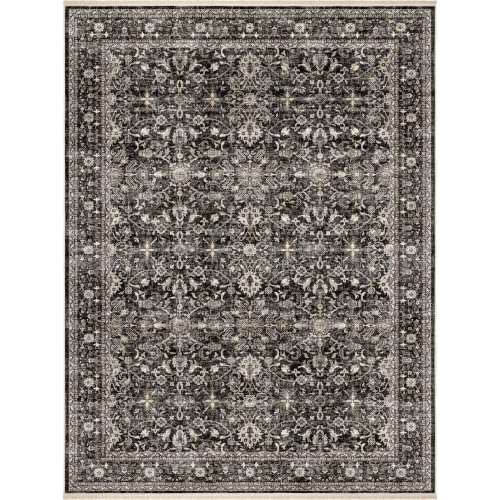
The Tumble Lisa Washable Area Rug | 9×12 Living Room Bedroom Area Rug with Pad leads a padding guide the honest way: it is the pick that removes the question. Its cushioned non-slip pad is included and fitted, the rug itself is spillproof and machine washable at full 9×12, and the system arrives as one decision instead of two products researched separately.
Strengths
- Included fitted pad: grip and cushion solved by the maker.
- Machine washable rug at full 9×12 — rare at this size.
- Spillproof surface suits family and pet rooms.
Trade-offs
- System price reflects the included pad.
- Colors limited in this configuration.
- Verify current pad specifications on the listing.
| Color | Midnight |
| Size | 9 x 12 feet |
The integrated system also answers the sizing question perfectly — the pad fits the rug because it was made for it — which is where most separate pad purchases go wrong by an inch in one direction or another. For shoppers whose real question is “just make the rug stay and feel right,” the Tumble is the guide’s shortest path, with washability as the dividend: when the rug goes to the laundry, the pad stays home, and the room is never fully bare. The integrated approach has one more quiet merit: warranty and responsibility live in one place. When rug and pad are separate purchases, every problem is the other product’s fault; when they arrive as a system, the maker owns the interface, and the interface — as this entire guide argues — is where rugs succeed or fail. First-time rug buyers, especially, should weight that simplicity heavily: the system cannot be mis-sized, mis-trimmed, or mis-paired, which removes the three most common pad errors before they can happen.
Best for: Anyone who wants the padding question answered in one purchase / Not suited for: Shoppers who already own a pad they love
Choose the Tumble for the solved system; skip it if your pad is already perfect. Check on Amazon
Loloi Layla Olive/Charcoal 7′-6″ x 9′-6″ Area Rug
Our badge: Best Pad-Dependent
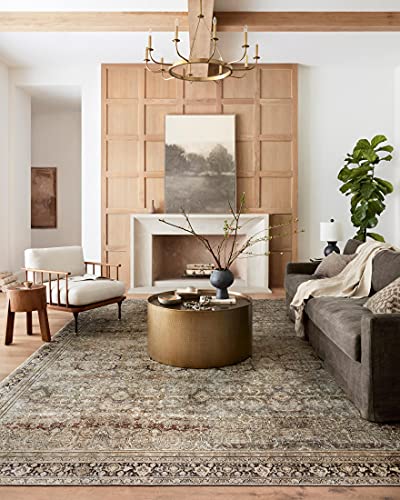
The Loloi Layla Olive/Charcoal 7′-6″ x 9′-6″ Area Rug is the clearest demonstration in the pool of what a pad does: its printed surface is about an eighth of an inch thick, so everything underfoot — cushion, grip, presence — comes from the pad beneath it. With the right dense pad, it feels like a much more expensive rug; without one, it skates and reads thin.
Strengths
- Printed surface cannot snag and cleans completely.
- Pad choice lets you tune the feel from firm to plush.
- Non-shedding, low-maintenance top layer.
Trade-offs
- Pad is a genuine requirement, not an accessory.
- Flat feel if the pad is skimped.
- Spot-clean care only.
| Color | Olive / Charcoal |
| Size | 7’6″ x 9’6″ (Rectangular) |
| Dimensions | 114 x 90 x 0.13 inches |
| Weight | 6.61 pounds |
The Layla teaches the pad shopper’s core skill: buying the underlayer as deliberately as the rug. A dense felt-and-grip pad at moderate thickness gives it body without a trip edge; a lofty cheap pad makes it squirm. Owners who get the pairing right routinely report the combination reads as a far pricier floor than either part costs — the pad is not the rug’s accessory, it is half the product. There is a test worth running before committing: stand on the Layla bare, then on the same rug over the pad you are considering, in the shoes and socks of ordinary life. The difference is not subtle, and it is the difference between a rug guests describe as “nice” and one they describe as “where did you get that” — the printed top is identical in both cases, which isolates the pad as the entire cause. Few home purchases offer so clean an experiment, or so repeatable a result.
Best for: Shoppers willing to buy rug and pad as one deliberate system / Not suited for: Pad-free minimalists
Choose the Layla with a quality pad; skip it if you will not pad at all. Check on Amazon

Unique Loom Sofia Collection Area Rug – Salle Garnier (7′ 1″ x 10′)
Our badge: Best Thin Pad
The Unique Loom Sofia Collection Area Rug – Salle Garnier (7′ 1″ x 10′) illustrates the formal-room formula: a jute-backed, quarter-inch rug over a slim grip pad. The jute already anchors; the thin pad’s job is mediation — keeping backing and grit off the finish — and a whisper of cushion, without raising the profile into door or trip territory.
Strengths
- Jute backing plus thin pad: planted and floor-safe.
- Low total profile suits formal rooms and doors.
- Classic patterning for traditional spaces.
Trade-offs
- Keep the interface dry; jute dislikes soaking.
- Thin pad adds mediation, not luxury.
- Spot-clean care for stains.
| Color | Beige/Ivory |
| Size | 7’1″ x 10′ (Rectangular) |
| Dimensions | 120 x 85 x 0.25 inches |
| Weight | 15.17 pounds |
Formal rooms are where pad discipline shows: a thick pad under the Sofia would lift its edges into sight lines and door swings, while the correct slim pad disappears entirely, which is the point. The pairing also protects the investment symmetrically — the pad keeps the rug’s backing from abrading the floor, and keeps floor grit from abrading the backing — so both surfaces age at the pace of the calmer one. Formal rooms add an aesthetic clause to the contract: the pad must never announce itself. No ridge at the border, no peek at the corners, no change in the rug’s drape lines where furniture meets floor. The slim pad’s invisibility is its luxury, and a formal room whose padding cannot be detected by eye or by door has been padded by someone who understood the assignment completely.
Best for: Formal rooms on finished floors / Not suited for: Cushion-first comfort seekers
Choose the Sofia with a slim grip pad; skip it for plush builds. Check on Amazon
Loloi Loren Terracotta/Sky 8′-4″ x 11′-6″ Area Rug
Our badge: Best Large
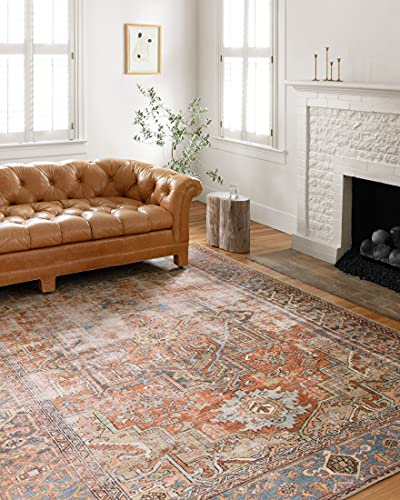
The Loloi Loren Terracotta/Sky 8′-4″ x 11′-6″ Area Rug carries the maker’s own padding counsel: padding is recommended for comfort, for the rug’s longevity, and for floor protection — the four pad jobs in one sentence, at near-8×12 scale. Large rugs multiply every pad effect, good and bad, which makes this the size class where pad quality pays most visibly.
Strengths
- Maker-endorsed padding for comfort and longevity.
- Large-format coverage for real living rooms.
- Printed low profile keeps total height manageable even padded.
Trade-offs
- Pad at this size is a real purchase, not an afterthought.
- Printed texture reads flat up close.
- Too large for modest rooms.
| Color | Terracotta / Sky |
| Size | 8’4″ x 11’6″ (Rectangular) |
| Dimensions | 138 x 100 x 0.25 inches |
| Weight | 6.61 pounds |
At this scale the pad is also a handling decision: a quality pad keeps a large light rug planted through vacuuming and furniture life, so the room’s layout survives the week intact. Buy the pad in the rug’s exact class, trim it an inch inside the edges, and let the combination settle for a day before judging the feel — large systems relax into place, and the second day’s floor is the honest one. Large rooms also reward a two-person installation more than any other size: four hands keep the pad un-creased and the margin even while the rug is walked into place, and a crease trapped under nine feet of rug on day one is a ridge you will feel for years. The hour spent installing a large system properly is repaid every single day it is walked on, which makes it some of the best-compensated time in furnishing.
Best for: Large living rooms committing to a padded system / Not suited for: Small rooms
Choose the Loren with its recommended pad; skip it for compact spaces. Check on Amazon

nuLOOM 5×7 Moroccan Blythe Area Rug
Our badge: Best Compact
The nuLOOM 5×7 Moroccan Blythe Area Rug is the pad as cure: its only real weakness is lightness — eight pounds that a vacuum or a zooming pet can move — and a grip pad ends the travel entirely while adding the body its sleek pile does not provide. No pick in the pool is more completely transformed by its underlayer.
Strengths
- Pad converts its lightness from flaw to feature.
- Durable, stain-resistant pile for real rooms.
- Faded pattern forgives the interval between cleanings.
Trade-offs
- Without a pad it creeps; budget the pair together.
- Compact coverage only.
- Cool grey palette.
| Color | Blythe Grey |
| Size | 5′ x 7’5″ (Rectangular) |
| Dimensions | 84 x 60 inches |
| Weight | 8 pounds |
Small rugs are where pad sizing discipline is easiest to learn: trim the pad an inch inside on all sides, center it, and the rug’s edges lie flat with no pad peeking at the borders. The Blythe-plus-pad combination is also the apartment classic — one person can lift, clean beneath, and relay the whole system in minutes, pad included, which keeps the monthly floor audit realistic instead of theoretical. Renters should note the double dividend: the pad that anchors the Blythe also stands between its backing and a landlord’s floor for the entire tenancy, so the cheapest layer in the system is simultaneously the deposit’s best friend. Photograph the interface at the first monthly lift and the file is complete.
Best for: Apartments and small rooms needing a planted rug / Not suited for: Large seating areas
Choose the Blythe with a grip pad; skip it for big rooms. Check on Amazon
SAFAVIEH Madison Area Rug 8×10 – Silver/Ivory
Our badge: Best Pad-Optional
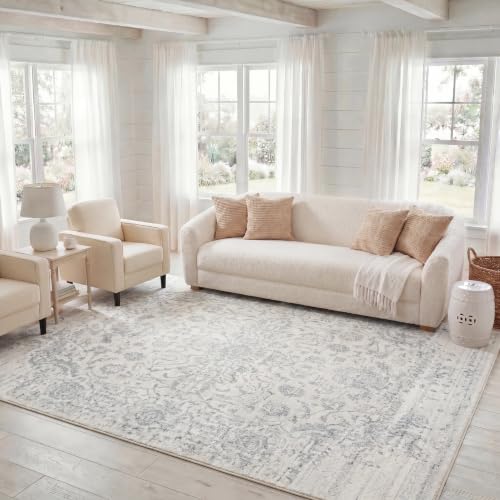
The SAFAVIEH Madison Area Rug 8×10 – Silver/Ivory closes the guide as the control case: at over twenty-one pounds with a dense pile, it anchors itself, and the pad becomes a pure comfort-and-mediation choice rather than a grip necessity. Knowing when a pad is optional is as much padding literacy as knowing when it is essential.
Strengths
- Self-anchoring weight; pad purely for cushion.
- Dense pile with real body of its own.
- Pattern camouflages family traffic.
Trade-offs
- A thick pad plus its pile can challenge door clearance.
- Heavier to lift for beneath-cleaning.
- Not machine washable.
| Color | Silver/Ivory |
| Size | 8′ x 10′ (Rectangular) |
| Dimensions | 96 x 120 inches |
| Weight | 21.5 pounds |
On carpeted floors the Madison needs nothing beneath it at all; on hardwood, a thin mediator pad still earns its place for the finish’s sake even though the grip is redundant. That distinction — pad for the floor versus pad for the rug — is the most useful sentence in padding, and the Madison teaches it by needing one and not the other. It also teaches the budget order: households furnishing several rooms should pad in order of need — the flat rug that travels first, the formal room’s mediator second, the heavy rug’s optional cushion last — because pad money spent in need order transforms the worst floors first, and a house is judged, daily, by its worst floor.
Best for: Heavy-rug households wanting optional cushion / Not suited for: Washable convenience
Choose the Madison with a thin pad on hard floors; skip the pad on carpet. Check on Amazon
Comparison Table
| Pick | Size | Pad relationship | Recommended pad | Check price on Amazon |
|---|---|---|---|---|
| Tumble Lisa | 9′ x 12′ | Included, fitted | Its own system pad | Check price on Amazon |
| Loloi Layla | 7’6″ x 9’6″ | Required | Dense felt-grip, moderate | Check price on Amazon |
| Unique Loom Sofia | 7’1″ x 10′ | Mediation | Slim grip pad | Check price on Amazon |
| Loloi Loren | 8’4″ x 11’6″ | Maker-recommended | Quality pad, exact class | Check price on Amazon |
| nuLOOM Blythe | 5′ x 7’5″ | Transformative | Grip pad, trimmed 1″ in | Check price on Amazon |
| SAFAVIEH Madison | 8′ x 10′ | Optional | Thin mediator on hard floors | Check price on Amazon |
How to Choose the Best Padding for Area Rugs
Start with the job ranking
List the four pad jobs in your room’s order. Hallways and entries rank grip first; bedrooms rank cushion; formal rooms on fine floors rank mediation; family rooms rank pile protection, because traffic crushes pile against hard floors and the pad is the pile’s only spring. The ranking chooses the material: grip favors rubber-faced pads, cushion favors dense felt, mediation favors thin and smooth, protection favors density over loft.
Thickness: dense beats lofty
A quarter to a half inch of dense pad outperforms an inch of soft foam in every job except barefoot luxury, and soft foam actively harms grip and longevity by letting the rug swim. Mind the ceilings: door swing, transition strips to other floors, and the trip edge a thick build creates at the rug’s border. When in doubt, go thinner and denser.
Size and trim
Buy the pad in the rug’s size class and trim it to sit about an inch inside the rug on every side. A pad that peeks out telegraphs cheapness and collects dirt at the lip; a pad trimmed too small lets the rug’s edges curl and wear unsupported. Lay rug and pad as one system, let them settle a day, then judge.
Match the floor, not just the rug
Some pad materials and cheap rubber backings can interact with certain floor finishes over long contact; on fine or freshly finished floors, choose pads sold as finish-safe and lift monthly to verify the interface is clean, dry, and unmarked. The pad should be the floor’s mediator, never its mystery.
Installing a Pad Like You Mean It
Clean the floor first — a pad seals whatever is beneath it, including the grit you meant to remove. Unroll the pad where the rug will live, trim it with a straightedge, and let it relax flat. Position the rug over it with the inch margin even on all sides, then walk the whole surface to seat the system. Check every door’s swing and every transition before declaring victory. In a week, lift one corner: the pad should be exactly where you left it, and so should the rug.
Problem: The rug still travels with a pad under it. — The pad is too soft, too small, or its grip face is against the rug instead of the floor. Flip it, size it, or replace loft with density.
Problem: A visible ridge shows at the rug’s edge. — The pad is cut to the rug’s full size or beyond. Trim it an inch inside on all sides and the edge will lie down.
Problem: The door now catches the rug. — The build is too thick for the clearance. Drop to a slim dense pad; the formal-room formula exists for exactly this ceiling.
Problem: The floor under an old pad looks marked. — Retire that pad, clean the interface, and replace with a finish-safe material, lifting monthly to verify. Mediation only counts if it is inspected.
Padding on Carpet, Tile, and Heated Floors
On wall-to-wall carpet, most rugs need no pad for grip — carpet grips for them — and a pad’s only job is preventing the rug’s backing from abrading the carpet beneath, a thin mediator at most. On tile, pads add the cushion tile refuses and keep rugs planted on a slick surface, but grout lines telegraph through thin builds, so density matters. On radiant-heated floors, choose pads sold as heat-appropriate and keep total build modest, since a thick insulating stack blunts the heat you are paying for. Each floor rewrites the pad’s job description; the four-job ranking from the How to Choose section is how you rewrite yours.
Common Buying Mistakes
Buying the thickest pad on the shelf
Loft is not quality. The better move is dense and matched to the room’s job ranking.
Cutting the pad to the rug’s exact size
It peeks and ridges. The better move is an inch inside on every side.
Skipping the pad under a flat rug
Printed and flatweave rugs are half a product without one. The better move is to budget rug and pad as a single purchase.
Ignoring the floor finish
The wrong material in long contact can mark fine finishes. The better move is finish-safe pads and monthly interface checks.
Padding a rug that anchors itself, thickly
Heavy rugs need mediation at most. The better move is thin on hard floors, none on carpet.
Final Recommendation
If you want the padding question answered in a single purchase, choose the Tumble Lisa Washable Area Rug | 9×12 Living Room Bedroom Area Rug with Pad — its included fitted pad delivers grip and cushion as one system, and the rug washes. For an existing rug, the runner-up lesson is the Loloi Layla (Check on Amazon): pair any flat rug with a dense, correctly trimmed pad and you have bought half a new floor for the price of an underlayer. Rank the four jobs, buy density, trim an inch inside — that is the best padding for area rugs, whatever the shelf labels say.
Frequently Asked Questions
How thick should a rug pad be?
For most rooms, a quarter to a half inch of dense pad. Bedrooms chasing luxury can go thicker if doors and transitions allow; formal rooms and door-heavy layouts should stay slim. Density matters more than thickness in every job but barefoot feel.
Should a rug pad be smaller than the rug?
Yes — about an inch inside on every side. The margin hides the pad, keeps the rug’s edges lying flat, and prevents the dirt-collecting lip a full-size pad creates.
Do heavy rugs need pads?
For grip, no; for floor mediation on hard floors, a thin pad still earns its place. On carpet, heavy rugs generally need nothing beneath them.
Can a rug pad damage hardwood floors?
The wrong material in long, uninspected contact can mark some finishes. Choose pads sold as finish-safe, keep the interface clean and dry, and lift monthly to verify — mediation with inspection is the safe system.
What pad works under a washable rug?
A separate pad stays home while the rug launders, which is the convenient arrangement; integrated systems like the Tumble’s are designed so the pad and rug work as a unit — check the listing’s care guidance for how the maker intends the pair to be maintained.
How long does a rug pad last?
A quality dense pad serves for years; retire it when it crumbles, goes slick, sticks to the floor, or stops anchoring. A dying pad announces itself through the rug’s behavior — travel, ridges, and noise are its resignation letters.
The Physics Underfoot: Why Pads Extend Rug Life
A rug dies from the bottom up. Every footstep drives the pile against the floor, and without a pad the impact is absorbed by the rug’s own fibers and backing — the two components that cannot be replaced. A dense pad interposes a spring: impact spreads, fibers flex instead of crushing, and the backing stops grinding against grit and finish. The effect is largest exactly where rugs die first, in traffic lanes and under chair legs, which is why padded rugs in busy rooms routinely outlast unpadded rugs in quiet ones. The floor’s side of the physics is symmetric: the pad spreads load, mediates friction, and keeps the abrasive partnership of grit and backing from ever meeting the finish directly. When a maker like Loloi’s Loren line recommends padding for “assurance of comfort, longevity, and floor protection,” it is not upselling; it is stating the mechanics. The room-by-room results of that protection, on the floor type pads serve most, are surveyed in Best Rugs For Living Room.
Padding Through the House: A Room-by-Room Brief
Entries want the thinnest effective grip: doors swing, grit arrives, and the pad’s job is pure anchoring with a mediator’s manners. Hallways want density, because runners take linear traffic that crushes pile in a stripe. Living rooms want the balanced build — grip, cushion, protection in equal thirds. Bedrooms are the one place loft is forgiven, since bare feet vote and doors are few. Dining rooms want slim and utterly planted, because chairs drag rugs sideways a dozen times a meal and a traveling pad under a dining rug is a daily annoyance with a long memory. Kitchens add water discipline: pads there must tolerate a damp interface’s inspection rhythm, lifted and dried on schedule. Read the house room by room, rank the four jobs in each, and the pad cart fills itself — usually with two or three pad types rather than one, which is correct, because the house was never one room repeated.
Antique, Delicate, and High-Value Rugs: The Protective Case
The more a rug is worth — in money, in memory, in irreplaceability — the more its pad is insurance rather than accessory. A dense, smooth pad under a fine rug distributes the point loads of furniture feet that would otherwise print through the pile and stress the foundation, keeps the rug from creeping into the micro-folds that crack old backings, and guarantees that the floor beneath an heirloom is being mediated by a known, finish-safe material rather than by the rug’s own aging underside. Pair the pad with the gentle vacuuming regime from the wool-care tradition — the machine side of that discipline is surveyed in Best Vacuums For Rugs — and an heirloom’s two great enemies, impact and grit, are both under management. Conservators pad; households that intend their rugs to become heirlooms should start padding now, while the rugs are merely beloved.
When to Skip the Pad Entirely
Honesty requires the exceptions. Rugs on wall-to-wall carpet with no travel problem need no pad. Rugs with integrated, functioning grip systems — the Lahome’s TPE class, or an included system like the Tumble’s — have already answered the question. Temporary and seasonal rugs in low-traffic corners can live unpadded without consequence. And a rug whose door clearance is measured in millimeters may be safer with rug alone than with a build that lifts it into the door’s path. The pad is a tool with four jobs; where none of the four needs doing, the tool stays in the shed, and the money goes to the rooms where the jobs are real. Padding literacy is knowing both lists — where it is essential, and where it is merely available — and this guide’s picks were arranged to teach exactly that range.
The Pad’s Own Care: The Layer Beneath the Layer
Pads are not immortal and not maintenance-free. Vacuum the pad itself whenever the rug is lifted for its monthly audit — the pad’s top face collects what sifts through the rug, and a gritty pad is a sandwich filling of abrasives. Inspect the grip face: when it polishes smooth, sticks, or crumbles, the pad is done, and continuing to run it risks the floor it was mediating. Keep pads dry with the same discipline as rugs; a pad that has taken a soaking should be dried fully in air before the rug returns, and one that smells musty after drying should be replaced rather than negotiated with. None of this is burdensome — it rides along on the lifting rhythm the household already keeps — but it converts the pad from a forgotten consumable into a managed component, which is what every layer of a good floor deserves to be. Keep a note of each pad’s purchase date on the closet card with the filter dates; pads die slowly and announce themselves ambiguously, and a date turns “this rug feels different lately” into a diagnosis with a timeline. The household that tracks its invisible layers is the household whose visible ones stay beautiful.
Reading the Symptoms: A Pad Diagnosis Chart in Prose
A rug that creeps in one direction only is reporting an uneven pad or a slope in traffic; rotate the system and watch whether the creep follows the rug or the room. A ridge that appears weeks after installation is the pad relaxing wider than its trim — re-trim it. A rug that feels luxurious in the center and hard at the borders has a pad cut too small; the margin should be an inch, not a foot. A faint squeak or crunch underfoot is grit in the interface, and the answer is the full lift, clean, and relay, not more padding. A floor that shows the rug’s silhouette at the annual deep clean is reporting a mediation failure — wrong material or an uninspected interface — and the next pad should be chosen finish-first. Every symptom under a rug is legible once you accept that the pad is a component with behavior, not a slab with a price, and legible symptoms are cheap ones. The diagnostic habit has a pleasant side effect: it makes you fluent in your own floors. A household that can read a ridge, a creep, and a silhouette owns its surfaces in a way no purchase confers, and that fluency — not any product in this guide — is the final form of the best padding for area rugs.
The Budget Logic of the Invisible Layer
Padding money is the best-leveraged money in a rug purchase, and the arithmetic is not close. A quality pad typically costs a fraction of the rug it serves, yet it governs how that rug feels, how long it lives, whether it stays where it was placed, and whether the floor beneath survives the partnership. Skimping on the pad to afford a slightly grander rug inverts every one of those outcomes: the grander rug travels, crushes, and endangers the finish, while the modest rug on the right pad feels expensive and behaves for a decade. Allocate in the order this guide ranks — rug and pad as one line item, pad quality protected when the budget tightens, rug splendor trimmed first — and the floor you live on will feel richer than the receipts suggest. The exception proves the rule at the top of the market too: the Tumble’s system price, pad included, is the honest way to sell what every rug actually is — a two-layer product, whether the layers arrive in one box or two. Keep the receipt logic in mind at replacement time as well: when a rug finally retires, its pad — if dense, sound, and correctly sized for the successor — often serves a second rug’s full life, which is the final dividend of buying the invisible layer well the first time. Pads, in other words, compound: bought well, they serve rug after rug, floor after floor, quietly transferring their value forward — the only furnishing in the house with that property, and the strongest argument in this guide for treating the invisible purchase as a first-class one. When the next rug arrives, unroll the old pad first and read it like a report: even wear means the system worked, a crushed lane means the density was nearly right, and damage in one corner tells you where the room’s life actually concentrates — intelligence for the next purchase, free of charge. No other layer of the home offers that retrospective; the pad is the floor’s diary, written in compression, and the household that reads it buys every subsequent layer — rug, pad, even furniture placement — with evidence instead of hope. Keep the retired pad a week before discarding it, beside the new one, and compare them barefoot: the difference between the old diary and the new page is the clearest explanation of everything this guide has argued, delivered in a single step. Then let the old pad go with the respect due to a component that carried the household, unthanked, for years — and write the new one’s date on the card, so its own diary begins with a known first page. Small rituals like that date are what separate households that manage their floors from households that merely own them, and the difference compounds quietly, year after year, into the condition of the most expensive surfaces in the home. Floors are patient accountants; they record every layer’s behavior and present the total, without appeal, on the day the furniture moves. Households that understand the accounting keep the ledger boring: same pad, right size, inspected monthly, replaced on evidence — and boring ledgers, in flooring, are the ones that end in beautiful totals.
Children, Elders, and the Safety Case for Padding
Two household members make the pad a safety device rather than a comfort feature. For toddlers, the rug zone is the falling zone, and a dense pad under a planted rug converts the room’s most-used floor into its most forgiving — while the grip that keeps the rug planted removes the skid risk that makes unpadded rugs on hard floors a genuine hazard to new walkers. For elders, the calculus is identical at the other end of life: a planted rug cannot slide under a careful step, a cushioned one softens the falls that happen anyway, and edges kept low and flat by correct trimming remove the trip lip that thick, badly fitted builds create. In both cases the specification is the same — dense, grippy, trimmed an inch inside, inspected monthly — and in both cases the pad’s price is trivial against the events it prevents. Comfort framing aside, this is simple household safety: the layer nobody sees is the layer that catches everybody. Homes with either population should also shorten the inspection rhythm — a fortnightly corner lift instead of monthly — because the cost of a pad quietly failing is not symmetric across households, and the rhythm should be set by the household’s most vulnerable walker, not its average one. The same principle reorders the pad budget in such homes: the child’s room and the elder’s route get the best pads in the house, bought first, while decorative rooms inherit what remains — a hierarchy no one regrets, because it is set by love rather than by looks. Guests will never know the hierarchy exists, which is fitting: the best-run safety in a home is the kind that presents as nothing more than a comfortable, planted rug in a room that feels calm to stand in. Calm, in the end, is the pad’s true product: a floor that does not shift, skid, crunch, or surprise is a floor the nervous system trusts, and trusted floors are the background of every relaxed room in this guide’s whole series. It is a strange and satisfying conclusion for a shopping guide to reach — that its most important product is the one no guest will ever see — but the floors themselves testify to it in every house that has run the experiment both ways. Run it once, in your most-traveled room, and the testimony becomes personal: a month later the rug will be where you left it, the floor beneath will be unmarked, and the room will feel — there is no other word — settled. Settled is the state every other guide in this series is ultimately pursuing, whether its subject is vacuums, materials, or pets: a floor that has stopped being a problem and become a foundation. The pad is where that state begins, an inch at a time, from underneath. Begin there, with the room that bothers you most, and let the settled feeling recruit the rest of the house at its own pace. It will not take long; comfort, like its opposite, is contagious from room to room. The second room always gets padded faster than the first, because the household has stopped debating whether the invisible layer matters and started simply enjoying the evidence. That is the quiet endpoint of the whole padding question: not a product, but a household that has stopped thinking about the layer beneath its rugs because the layer, at last, is doing its four jobs without being asked twice. Grip, cushion, protection, mediation — four quiet jobs, done daily, adding up to the feeling of a house that is finished in the best sense: settled, safe, and soft where it should be, every single day of the year, without exception or fanfare of any kind.


