Disclosure: As an Amazon Associate, dailyhomedecorating.com earns from qualifying purchases. Links on this page are affiliate links; they cost you nothing extra. Prices and availability change often, so check the current Amazon listing before you buy.
Best Anti Snoring Mouthguards: A Careful, Comfort-First Guide
Choosing among the best anti snoring mouthguards deserves more care than choosing most bedroom products, because these devices go in your mouth, move your jaw while you sleep, and sit close to real health questions. So this guide begins with the limits, stated plainly, before any product is named. A mouthguard of the kind reviewed here is a comfort and wellness product aimed at ordinary snoring. It is not a treatment for sleep apnoea, it does not diagnose anything, and it is not a substitute for medical or dental care. Snoring can be a symptom of obstructive sleep apnoea, a serious condition whose signs include pauses in breathing during sleep, gasping or choking at night, heavy daytime sleepiness, morning headaches, and a partner’s report that your breathing stops and starts. If any of that describes your nights, the correct next step is a doctor and, where advised, a sleep study, not a shopping list, and nothing in this article should delay that step.
With that boundary clear, mouthguards do have a legitimate, modest place. For many adults whose snoring is of the ordinary, non-apnoea kind, a well-fitting mandibular advancement device, which gently holds the lower jaw slightly forward during sleep, can reduce the vibration in the throat tissues that makes the sound of snoring, and can give both the snorer and the household quieter nights. The honest expectations are these: results vary from person to person, an adjustment period of nights to weeks is normal, jaw and tooth discomfort are common especially early on, and some people simply cannot get comfortable with any device of this type. The picks below were verified model by model before being linked, they are presented with their fitting methods and trade-offs in the open, and two well-known names that could not be confidently verified for linking are discussed in prose only, with the reason stated. Read the sections on who should not use these devices, and on side effects, before you read the product reviews; in this category, the buying guide is the safety information.
Who Should Pause, And Who Should Not Use A Mouthguard At All
Do not buy a device in this category, or stop using one and seek advice, in any of these situations. You have been told you may have sleep apnoea, or your partner observes breathing pauses, gasping, or choking in your sleep. You have significant jaw joint problems, jaw pain, or a history of temporomandibular disorder. You have loose teeth, advanced gum disease, recent dental work, dentures that do not stay secure, braces, or other orthodontic appliances, unless your dentist advises otherwise. You are under eighteen. You have epilepsy, significant respiratory conditions, or any condition your doctor has said affects your airway or sleep. You develop persistent jaw pain, tooth pain, bite changes that do not resolve by midday, loose-feeling teeth, or worsening sleep while using a device. A dentist who knows your mouth is the right professional to judge whether your teeth and jaw can carry a device that applies gentle force all night, and a short consultation before buying is money and discomfort saved for a great many people.
It is also worth naming what these devices are not for. They are not for children. They are not a way to silence snoring so that a possible medical condition can be ignored in comfort. They are not a guarantee of silence for a partner, and marketing language anywhere that promises to cure snoring, or to treat apnoea, should lower your trust in that product rather than raise it. What a good mouthguard can honestly offer a suitable adult is a chance at quieter nights, tested gradually, abandoned without shame if comfort or a professional’s advice says no, and used alongside the unglamorous habits that also reduce ordinary snoring: sleeping on your side, avoiding alcohol late in the evening, keeping nasal passages comfortable, and maintaining a healthy weight, each discussed in the how-to section below.
Where To Buy And How The Picks Were Chosen
Every linked pick below is sold through Amazon, and each link leads to the exact model and configuration named in its heading. Use the Check price on Amazon link under each review to confirm the current listing, what is included, and the maker’s own fitting and care instructions before buying, and read the maker’s warnings on its listing as part of your decision, not as fine print afterwards. Two widely known brands in this category, SnoreRX and VitalSleep, are discussed in the prose-only section because repeated verification searches did not return a confident, exact match for their products that met this guide’s linking standard; rather than guess at a listing, they are described without links, and the same standard was applied to every name in the article.
The four linked picks were chosen to represent the real choices in this category rather than to multiply near-identical products. There is a two-size starter system for people who do not know their size and want no boiling or moulding. There is a Swiss-made adjustable guard for buyers who value a slim, considered design. There is an adjustable device with a storage case aimed at straightforward, reusable nightly use. And there is a long-standing adjustable mouthpiece design for people who want incremental control over advancement. Between them they cover the fitting philosophies on offer, and the comparison table and buying guide will help you decide which philosophy, if any, suits your mouth, with the recurring advice that your dentist’s view outranks this page.
In this guide
Quick Picks
| Pick | Fitting style | Best for |
|---|---|---|
| ZQuiet 2-Size Starter Pack | Ready to use, two sizes, no boiling or moulding | First-time users who want the simplest start |
| Somnofit-S by SnoreLessNow | Adjustable, Swiss-made | Buyers wanting a slim, adjustable design |
| Difiney Anti Snoring Device | Adjustable, with storage case | Straightforward reusable nightly use |
| Tranquility PRO 2.0 | Adjustable mouthpiece | Users wanting incremental advancement control |
The Detailed Reviews

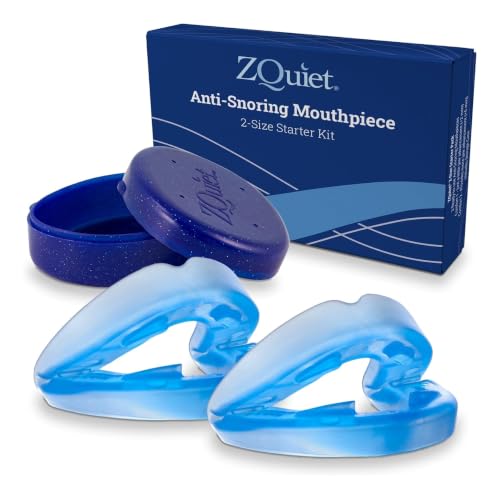
ZQuiet 2-Size Starter Pack — Best First Device For Most Suitable Adults
Badge: Best starting point. The ZQuiet starter pack solves the first problem every new mouthguard user meets, which is not knowing what will fit, by including two sizes of its hinged mouthpiece, with a case, in a design the maker describes as ready to use with no boiling or moulding. The living-hinge design allows some mouth movement during the night rather than locking the jaw rigidly, which many first-time users find easier to tolerate, and the maker describes the device as cleared by the United States Food and Drug Administration for its stated purpose. None of that removes the cautions at the top of this article: begin gradually, expect an adjustment period, and stop and seek dental advice if pain, bite changes, or loose-feeling teeth persist.
- Type: Mandibular advancement mouthpiece, hinged design
- Fitting: Two sizes included, no boiling or moulding, case included
- Maker’s description: Living Hinge technology for all-night comfort and easy breathing
- Audience: Adults only; read the maker’s warnings before use
Strengths
- Two sizes remove the commonest first-purchase mistake.
- No moulding process makes the first night simple and repeatable.
- Hinged design permits some natural mouth movement while sleeping.
Trade-offs
- A non-moulded fit will not feel custom, because it is not.
- Jaw and tooth soreness are commonly reported in the early nights with this whole category.
- It will not suit mouths the two sizes do not cover, and forcing a fit is never the answer.
Best for: suitable adults trying a mouthguard for the first time who want the lowest-friction start. Not suited for: anyone in the do-not-use groups listed above, or anyone wanting a dentist-fitted custom device.

Somnofit-S Anti-Snore Mouth Guard By SnoreLessNow — Best Slim Adjustable Design
Badge: Best adjustable design pick. The Somnofit-S is a Swiss-made adjustable mouth guard whose maker describes it as cleared by the United States Food and Drug Administration and designed for comfort, with adjustment that lets the user set the degree of advancement rather than accepting a single fixed position. That adjustability matters because the central bargain of every device in this category is between enough advancement to quieten ordinary snoring and little enough to keep the jaw comfortable, and a design that lets you approach that balance gradually, at the lowest effective setting, follows the safest logic in this category. As with every pick here, the maker’s own fitting instructions and warnings govern its use, and a dentist’s view of your teeth and jaw outranks any product description.
- Type: Adjustable mandibular advancement mouth guard
- Origin: Made in Switzerland, as the maker describes
- Maker’s description: FDA cleared, adjustable snoring solution for men and women
- Audience: Adults only; follow the maker’s fitting guidance exactly
Strengths
- Adjustable advancement supports a gradual, lowest-effective-setting approach.
- Slim, considered design aims at comfort across the night.
- Clear maker information makes pre-purchase checking straightforward.
Trade-offs
- Adjustability adds setup decisions that ready-to-use designs avoid.
- Premium positioning among the picks in this category.
- Comfort still varies by mouth; adjustability reduces, and does not remove, the trial element.
Best for: suitable adults who want control over advancement and value a refined, slim device. Not suited for: buyers wanting zero setup, or anyone advised by a dentist against advancement devices.

Difiney Anti Snoring Device — Best Straightforward Reusable Option
Badge: Best no-fuss reusable pick. The Difiney device is presented by its maker as an adjustable, reusable anti-snoring mouthpiece for men and women, cleared by the United States Food and Drug Administration as the maker describes, and supplied with a storage case for hygienic keeping between nights. Its appeal is administrative as much as mechanical: a device that lives in its case, is cleaned as directed, and adjusts to a repeatable setting becomes part of a bedtime routine rather than a nightly experiment. That routine quality matters in this category, because the devices that help are the ones used consistently and correctly by people they suit, and abandoned promptly by people they do not.
- Type: Adjustable anti-snoring mouthpiece
- Includes: Storage case, as listed
- Maker’s description: FDA-cleared, adjustable, reusable for nighttime use
- Audience: Adults only; follow the maker’s care and replacement guidance
Strengths
- Adjustable fit with a case supports a clean, repeatable routine.
- Reusable design aimed at nightly use rather than single occasions.
- Straightforward proposition that is easy to understand before buying.
Trade-offs
- Less design distinction than the slimmest picks here.
- Requires the same gradual adjustment period as the whole category.
- Replacement on the maker’s schedule is an ongoing cost to plan for.
Best for: suitable adults who want an adjustable device with simple, hygienic storage. Not suited for: anyone in the caution groups above, whatever the convenience.

Tranquility PRO 2.0 — Best For Incremental Advancement Control
Badge: Best control-focused pick. The Tranquility PRO 2.0 is an adjustable anti-snoring mouth guard whose design centres on incremental advancement: small, deliberate changes to jaw position, made over successive nights, rather than a single large setting chosen on night one. That philosophy aligns with the most responsible pattern of use in this category, starting gently, changing one small step at a time, and valuing morning comfort as data rather than as an obstacle to push through. Users who like methodical adjustment, and who will honestly record what setting they used and how the morning felt, will find this design’s approach congenial. Users who want to open a box and think no further should choose a simpler pick, and all users should treat persistent morning jaw stiffness that does not ease, tooth tenderness, or bite changes as stop signals for professional advice.
- Type: Adjustable anti-snoring mouth guard
- Approach: Incremental advancement adjustment
- Audience: Adults only; follow the maker’s adjustment schedule
- Use: Night-time use, with gradual introduction
Strengths
- Incremental control supports the safest pattern of gradual use.
- Methodical design rewards users who track settings and comfort.
- Established product concept with clear maker guidance.
Trade-offs
- More involvement than ready-to-use designs.
- Advancement temptation must be resisted; more is not better.
- Like all picks here, unsuitable for the caution groups regardless of its controls.
Best for: suitable adults who prefer precise, gradual adjustment and will use it patiently. Not suited for: impatient users, or anyone seeking a device to push through pain.
Prose-Only Mentions: Two Known Names, No Links, And Why
Two brands many readers will expect in a roundup of the best anti snoring mouthguards appear here without purchase links, deliberately. SnoreRX is known for an adjustable, mouldable mouthpiece concept with incremental settings, and VitalSleep is known for an adjustable, mouldable design with a long presence in this category. Both may suit some suitable adults, and both deserve the same dental cautions as every linked pick. They are not linked because repeated verification searches against current listing data did not return a confident, exact match for their products that met this guide’s standard for linking, and this guide does not guess at listings for health-adjacent products. If you pursue either brand, go to the maker’s own channels, verify the exact product and its current instructions and warnings there, and apply every caution in this article unchanged.
Comparison Table
| Device | Fitting | Standout point | Main trade-off |
|---|---|---|---|
| ZQuiet Starter Pack | Two sizes, ready to use | Simplest first night | Not a custom fit |
| Somnofit-S | Adjustable | Slim Swiss-made design | Setup decisions, premium tier |
| Difiney | Adjustable, cased | Clean reusable routine | Plainer design |
| Tranquility PRO 2.0 | Incremental adjustment | Gradual control | Most involvement |
How To Choose: Fit Philosophy, Comfort, And Honest Expectations
Choose first by fitting philosophy, because it decides your first fortnight. Ready-to-use hinged designs like the ZQuiet remove the moulding step and suit people who want to learn quickly whether jaw advancement agrees with them at all. Mouldable designs, represented in prose above, trade an evening of careful fitting for a more personal shape. Adjustable designs like the Somnofit-S, Difiney, and Tranquility PRO trade simplicity for control over the single variable that matters most, how far the jaw is held forward, and reward the patient user who advances gradually and stops at the lowest setting that helps. There is no universally best philosophy; there is only the one matched to your patience, your mouth, and your dentist’s advice.
Choose second by comfort features you can verify: a design that allows some mouth movement if you are a restless sleeper, a size range that honestly includes your mouth, materials and care instructions the maker states clearly, and a replacement schedule you can accept, because these devices are consumables on a months scale, not heirlooms. Choose third by the quality of the maker’s information. In a health-adjacent category, clear warnings, clear fitting instructions, and modest claims are product features, and any seller promising guaranteed silence, or using language that suggests treating apnoea, has told you something important about themselves.
Set expectations before the first night, in writing if it helps. Expect one to two weeks of adaptation, with some jaw awareness, extra salivation or dryness, and mornings that teach you whether the setting is right. Expect a partner’s report, or a simple phone recording used with everyone’s consent, to be more informative than your own impression, because the snorer is the one person who never hears the snoring. Expect to abandon the experiment if comfort or professional advice says so, without treating that as failure; a device that does not suit your jaw is information, and the correct response to information is to act on it. And keep the wider sleep picture in view: mouthguards address one mechanical contributor to ordinary snoring, while side-sleeping, evening alcohol, nasal comfort, weight, and a regular sleep schedule all pull in the same direction, and are covered in the practical section next. Readers improving a whole sleep environment rather than one device may also value how to sleep in a car safely for its ventilation and temperature principles, which apply in bedrooms too, and the best humidifiers we tested where dry bedroom air is part of a household’s night-time discomfort. For the air-quality background, see indoor air quality statistics, and for the difference between comfort devices and air treatment, humidifiers vs diffusers.
How To Start Using A Mouthguard: A Gradual, Dentist-Friendly Pattern
Before night one, read the maker’s instructions and warnings in full, inspect your own mouth honestly for loose teeth, sore gums, or jaw pain that should pause the whole project, and consider the dental check this article keeps recommending, particularly if you have crowns, implants, significant dental work, or any jaw history. Fit or select the size exactly as directed, without improvising with tools, heat, or force beyond the instructions. Wear the device awake for short periods first if the maker permits, so the sensation is familiar before it is asked of your sleeping self.
For the first nights, use the gentlest setting the design offers, wear the device for part of the night if full nights are initially difficult, and build up gradually across one to two weeks. Keep a simple morning note: jaw comfort, tooth comfort, bite feel on waking and whether it normalises quickly, sleep quality, and a partner’s impression of the night’s sound. Change advancement, if your design allows it, in the smallest steps and least often the maker permits, and never chase silence by advancing through pain. Clean the device exactly as directed, every morning, store it dry in its case away from heat and pets, for whom these devices are a chew hazard, and replace it on the maker’s schedule or sooner if it cracks, distorts, or will not clean properly.
Stop and seek advice on clear triggers: jaw pain that persists into the day, a bite that feels changed and does not settle, any tooth that feels loose or increasingly tender, gum damage, worsening sleep, or a partner’s report of breathing pauses or gasping at any point, which returns the conversation to a doctor regardless of how the device is performing. Alongside the device, run the supporting habits for ordinary snoring: side-sleeping, which a pillow arrangement can encourage; no alcohol in the last part of the evening; comfortable nasal breathing, helped by a bedroom whose air is neither very dry nor dusty; and a regular sleep schedule, because exhausted sleepers snore more heavily. None of these habits is a treatment for apnoea either, and the same red-flag symptoms always route to medical care.
Side Effects And Limits, In One Honest Place
The commonly reported effects of mandibular advancement devices include temporary jaw soreness and stiffness, tooth tenderness, increased saliva or, in some users, dryness, gum irritation where a device rubs, and disturbed sleep during adaptation. Most early effects ease as a suitable user adapts at a gentle setting. Effects that should end the experiment pending professional advice include persistent jaw joint pain, bite changes that linger, loosening or shifting sensations in teeth, and any damage to dental work. Long-term use of any device that moves the jaw deserves periodic dental review, because bite and tooth position can change gradually, and a dentist who knows you use one can watch for exactly that. This section is general information, not personal medical advice, and your own clinicians’ guidance replaces it wherever the two differ.
Common Mistakes In This Category
The first mistake is buying a mouthguard to avoid a medical conversation that the symptoms are asking for; breathing pauses, gasping, and heavy daytime sleepiness belong in a clinic. The second is advancing too far, too fast, and injuring comfort that a gradual start would have preserved. The third is pushing through persistent pain, which is information, not weakness. The fourth is neglecting cleaning and storage, turning a nightly oral device into a hygiene problem. The fifth is expecting guaranteed silence and judging a modest, real improvement as failure. The sixth is buying for a partner, a teenager, or anyone in the caution groups as a surprise; these devices are personal, adult, and chosen with the wearer’s mouth and consent in mind.
Final Recommendation
For a suitable adult whose snoring shows no red-flag symptoms, and ideally with a dentist’s blessing, the ZQuiet 2-Size Starter Pack is the calmest first step, because it removes the sizing and moulding hurdles from the first night. Buyers who want adjustable, gradual control in a slim design should look at the Somnofit-S; those who want a straightforward reusable routine, at the Difiney; and methodical users who value incremental adjustment, at the Tranquility PRO 2.0. Whichever you choose, start gently, keep notes, clean faithfully, stop on the warning signs, and remember the frame that opened this guide: these are comfort devices for ordinary snoring, used by adults who have honestly ruled out the symptoms that belong in front of a doctor.
The Partner’s Perspective, And The Household Conversation
Snoring is unusual among sleep problems in having two patients in the room, only one of whom is asleep through it. The partner who lies awake cataloguing the noise, nudging, retreating to a spare room, and arriving at morning already tired has a legitimate interest in this purchase, and the healthiest households treat a mouthguard as a shared experiment with shared rules rather than as one person’s failing being corrected by the other’s purchase. Agree the experiment in daylight: what device, what gradual plan, what morning notes each of you will keep, and what result, after a fair fortnight, counts as success worth continuing or as a signal to try the next step, which may be a different device, a dental consultation, or a medical one. Agree also that either person can call a stop on comfort or health grounds without a debate at three in the morning.
Partners are also the most reliable witnesses in this whole topic, and their observations carry clinical weight as well as domestic weight. A partner who can say that the sound is quieter at a given setting is giving the experiment its best data. A partner who can say that the snoring stops because the breathing stops, that there are long silences ending in a gasp or a snort, or that the sleeper wakes unrefreshed despite a quieter night, is giving information that outranks every product in this article and belongs in a doctor’s room. Households should treat that second kind of report as a gift rather than an accusation, because it is frequently partners, not patients, who first identify the pattern that leads to an apnoea diagnosis and to treatment that changes a person’s health, not merely a bedroom’s volume.
There is a wider household etiquette worth stating while this guide has your attention. Earplugs, separate blankets, staggered bedtimes, and a spare room used without resentment are all legitimate tools alongside any device, and none of them is an admission of defeat. Sleep is a health behaviour for both people in the bed, and a household that protects both sleeps, with a mouthguard where one genuinely helps and with practical arrangements where it does not, will do better than a household that stakes everything on a single product silencing a complex, human noise. Readers rebuilding a whole sleep environment, rather than adjusting one device, may find the temperature and ventilation thinking in how to sleep in a car safely surprisingly transferable to bedrooms, since fresh air and a cool, dark room serve sleep in any building or vehicle.
When A Mouthguard Is Not The Answer: The Other Routes, Honestly Listed
A responsible guide to the best anti snoring mouthguards should end its advice by pointing beyond its own category, because for a substantial minority of readers the right purchase is no mouthguard at all. If snoring arrives mainly when you sleep on your back, positional approaches, from pillow arrangements to purpose-made positional aids used under appropriate advice, may address the pattern more directly than jaw advancement. If snoring tracks closely with nasal blockage, allergies, or a dry and dusty bedroom, then nasal comfort, allergen control in the bedroom, and the air-quality measures discussed elsewhere on this site may matter more than any oral device, and persistent nasal obstruction deserves a medical look in its own right. If snoring began or worsened with weight gain, that connection, handled with professional support rather than shame, is often the most powerful lever of all over time.
If the red-flag pattern is present, pauses, gasping, choking, heavy daytime sleepiness, morning headaches, or a witnessed stop-start breathing rhythm, the route is medical assessment and, where a clinician advises, a sleep study, after which treatment may include professionally fitted oral appliances within a monitored pathway, positive airway pressure therapy, or other options a specialist will explain. That pathway is not a failure of the shopping route; it is the correct route, and it begins the moment the symptoms describe it. Even where a mouthguard from this article is the right comfort step, keep it inside that honest frame: one tool, for ordinary snoring, in a suitable adult mouth, reviewed as your health and your dentist advise, and set aside the moment a better-informed route calls.
A Fortnight Diary: What A Sensible Trial Actually Looks Like
Because vague intentions produce vague results, here is the shape of a sensible trial, described so a suitable adult can picture it before spending anything. The days before the trial are for preparation: the dental conversation this article recommends, a read of the chosen maker’s instructions and warnings from beginning to end, and a baseline, three ordinary nights in which the partner notes, roughly and kindly, how the snoring seemed and how both sleeps felt. A baseline sounds like bureaucracy until the trial begins, when memory starts editing the past in whichever direction enthusiasm prefers, and three honest baseline nights become the only trustworthy comparison the household owns.
Nights one to three are for acquaintance, not results. The device is worn at its gentlest setting, for as much of the night as is comfortable, with no expectation of silence and no adjustment chasing. The morning notes record jaw comfort, tooth comfort, how the bite feels on waking and how quickly it feels normal, and how the night’s sleep went for both people. Mild strangeness is expected and uninteresting; pain, lingering bite change, or a tooth that complains are interesting immediately and pause the trial for advice. Nights four to seven extend the wearing time toward full nights at the same gentle setting, because consistency, not intensity, is what a jaw adapts to, and the partner’s notes begin to carry the first real information about sound.
The second week is where judgement forms. If comfort is acceptable and sound is unchanged, a single smallest adjustment, where the design allows one, may be tried for several nights, never a staircase of changes in pursuit of a silent ideal. If comfort is acceptable and sound is improved, the correct move is usually to stop adjusting entirely and let a working, gentle setting become a routine, reviewed as the maker and your dentist advise. If comfort is poor at every gentle setting, the trial has succeeded in its other purpose: it has established, cheaply and safely, that this category does not suit this mouth, and the next step is a professional conversation rather than a more expensive device bought in hope. At the fortnight’s end the household should be able to answer three questions in one sentence each: is it comfortable enough to forget, is the night measurably quieter, and is everyone sleeping better, including the person wearing it. Three yeses justify continuing. Anything else justifies advice, alternatives, or a dignified stop.
Costs, Replacement Rhythms, And Value Judged Honestly
Value in this category is easy to misjudge, because the cheapest device that hurts is expensive and the well-made device that is never cleaned becomes worthless, so judge cost across a year of honest use rather than at the checkout. Mouthguards of this type are consumables: makers direct replacement on a schedule measured in months, sooner if the device cracks, distorts, or will not clean properly, and a household should expect to replace a successful device several times across a year of nightly use. Budget-tier framing is the honest way to hold this: treat the category as a modest, repeating household cost, comparable in spirit to other personal-care consumables, and compare devices on cost per comfortable month rather than on the price of the first box. A two-size starter pack earns value by preventing a wrong-size write-off; an adjustable device earns value if its control extends the comfortable life of each unit; a device abandoned in week two has cost its full price for fourteen uncomfortable nights whatever its tier.
There are also costs this article would rather you spent first, where they apply. A dental check before a year of nightly jaw advancement is not an upsell; it is the inspection that tells you whether the whole project is sound for your teeth, and it can catch the small problems, a loose filling, early gum trouble, a cracked crown, that a device would otherwise discover painfully on your behalf. Likewise, where any red-flag symptom is present, money spent on assessment is worth more than any sequence of devices, because it buys information about health rather than a quieter symptom. Judge every product in this guide, and every rival to them, against that order of spending: professional eyes first where the signs call for them, a careful, gradual device trial second, and replacements only for a device that has already proved it suits the mouth it serves.
A closing word about language, because the words on the box shape the expectations in the bedroom. In this category you will meet phrases like stop, solution, relief, and silent, used by sellers of every quality, and the careful reader learns to translate them into the modest, honest claims this article has used throughout: may reduce, for some suitable adults, when fitted and used as directed, with comfort as the limiting factor and professional advice as the backstop. A maker whose own materials include clear warnings, a candid list of who should not use the device, and instructions that begin gradually has written the most trustworthy marketing in the category, whatever its design budget. Prefer those makers. Prefer, too, your own recorded experience over any testimonial, including the enthusiastic kind and the furious kind, because mouths differ more than marketing does, and your fortnight diary, kept honestly, is the only review ever written about the exact mouth the device has to serve. That is the standard this guide has tried to model from its first paragraph: modest claims, stated limits, verified products, and the reader’s own judgement, supported by professionals where it matters, in charge of the decision.
It is also fair to ask, before any purchase, whether the snoring in your house has actually been characterised well enough to shop for at all, and a single week of honest observation answers most of that question without costing anything. Note which nights are loud and which are quiet, and what distinguishes them: sleeping position, a late drink, a blocked nose during a cold, exhaustion after travel, the driest nights of winter. Note whether the sound is steady through the night or broken by silences, because that distinction, more than volume, decides whether this article’s category is even the right shop. Note, too, how each person in the room actually feels in the morning, since refreshed waking is the outcome every intervention here is really chasing, and a quieter night that leaves both people tired has solved the wrong problem. Households that arrive at a purchase with that week of observation in hand choose better devices, set them more patiently, judge them more fairly, and recognise the medical red flags, if they appear, without confusion or delay. Observation first, professionals where the signs point, devices last and modestly: that sequence is the whole philosophy of this guide compressed into one sentence, and it will serve readers who never buy a single product from this page exactly as well as it serves those who do.
Keeping Records That Help a Professional Help You
If snoring is significant enough that you are trialling a mouthguard, it is significant enough to record a little of what happens, and the record is worth more than most people expect. Keep it deliberately simple: the date, whether the device was worn and for how long, how your jaw, teeth and sleep felt in the morning, and one line from a partner, if you have one, about how the night sounded. Note the ordinary variables too, because they explain more nights than the device does: alcohol in the evening, sleeping on your back, a blocked nose from a cold, and unusually late or short sleep. A fortnight of such notes turns a vague impression, it seems a bit better, into a pattern you can actually judge.
That pattern is also the most useful thing you can hand to a dentist or clinician. Professionals make better decisions from a short, honest record than from a general account of snoring being bad. If you attend an appointment about snoring, jaw pain, or daytime sleepiness, bring the notes, the device itself, and a list of what you have already tried, including nasal measures, positional changes and any previous devices. Mention specifically any morning headaches, witnessed pauses in breathing, gasping, or sleepiness that affects driving, because those details change the clinical picture and may point toward formal sleep assessment rather than further self-help. A mouthguard trial that ends in a proper assessment has not failed; it has done its diagnostic job.
Photographs can help where words struggle. A monthly photo of the device shows wear, cracking or distortion that gradual change hides, and supports a decision about replacement. If you develop a sore spot, a changed bite or a tooth that feels different, a dated note of when you first noticed it, paired with stopping use, gives a dentist a clean timeline. None of this record-keeping should become a burden: a notebook by the bed and thirty seconds a night is the whole system. If the notes themselves start disturbing your sleep, simplify them, because the goal is better rest, not better paperwork.
Travel, Houseguests and Sleeping Away From Home
A mouthguard earns a particular kind of loyalty when it travels well, because snoring is often most socially pressing away from home: in a partner’s flat, a family spare room, a shared holiday rental, or a hospital ward. The practical routine is small. Carry the device in its ventilated case, in hand luggage if you fly, since a lost suitcase should not cost you your sleep for a whole trip. Bring the cleaning method you actually use at home in miniature rather than improvising with unfamiliar products, and keep the device in its case whenever it is not in your mouth or being cleaned, because small translucent objects on unfamiliar bathroom shelves have a way of being tidied, binned or knocked into sinks.
Socially, a brief word in advance is kinder than an apology at midnight. Housemates and partners generally respond well to being told you snore, that you use a device that helps, and that they should wake you or tell you honestly if the night was still loud. That conversation also protects you from the false confidence of assuming silence; a device that worked at home may perform differently after travel, late nights, alcohol at a celebration, or sleeping in an unfamiliar bed in an unfamiliar position. Judge the trip as a whole when you get home rather than abandoning a device over its worst holiday night.
Finally, plan the nights you will not use it. Illness with a blocked nose, dental work, a mouth ulcer, or a few days when your jaw simply needs rest are all reasonable reasons to pause, and a device that fits your life will survive those pauses. Keep expectations proportionate on the nights you resume, since the first night back can feel unfamiliar again. The households that sustain mouthguard use over years are not the ones that achieve perfect attendance; they are the ones that treat the device as a flexible aid for ordinary snoring, use it most nights, set it aside sensibly when there is a reason, and keep a clinician, not a shopping basket, as the next step whenever the snoring itself raises questions the device was never designed to answer.
Frequently Asked Questions
What if my partner says the snoring is unchanged?
Believe the report and treat it as information rather than as a verdict on you or the device. First check the ordinary variables in your notes: fit, wear time across the whole night rather than the first hours only, sleeping position, alcohol, and nasal congestion, each of which can erase a device’s benefit on a given night. If the pattern persists across a fair trial of consistent use, the honest conclusions are that this device does not suit your snoring, or that your snoring has a cause a mouthguard does not address. Either conclusion points the same way: a conversation with a dentist or clinician, with your notes in hand, rather than buying a succession of similar devices hoping the next one will be different.
Can I use a mouthguard if I sometimes grind my teeth?
This is a question for a dentist who can examine your teeth, because grinding and snoring devices interact in ways that depend on your bite, your dental history and the device’s design. Some people are advised that a particular appliance is unsuitable, others that a professionally made device should address both issues together rather than layering two separate products. What you should not do is improvise by wearing two devices at once, or assume an anti-snoring mouthguard doubles as protection against grinding. Mention the grinding at any dental appointment, note morning jaw or tooth symptoms in your record, and let the examination, not the packaging, decide.
Do anti-snoring mouthguards treat sleep apnoea?
No, not in the sense these consumer products should be used. Sleep apnoea is a medical condition that requires diagnosis, usually through a sleep study, and treatment planned with a clinician; some prescription oral appliances exist within that medical pathway, fitted and monitored by professionals. A shop-bought mouthguard is a comfort product for ordinary snoring, and using one to quieten the sound while apnoea goes unevaluated can mask a symptom that needs care. If you suspect apnoea, see a doctor first.
How long does it take to get used to a mouthguard?
Plan on an adjustment period of nights to a couple of weeks at a gentle setting, during which some jaw awareness and changed salivation are common. Build up wear time gradually, change advancement slowly if your design allows it, and judge the device on the trend across the fortnight rather than on the first night. Effects that persist or worsen, especially pain or bite changes, are a reason to stop and take dental advice rather than to persevere.
What side effects should I watch for?
Early, usually temporary effects include jaw soreness, tooth tenderness, extra saliva or dryness, and gum irritation. Stop and seek professional advice for jaw pain that lasts into the day, a bite that feels persistently changed, loose-feeling or increasingly tender teeth, damage to dental work, or worsening sleep. A partner noticing breathing pauses or gasping at any stage means a medical conversation, whatever the device seems to be doing for the sound.
Who should not use an anti-snoring mouthguard?
Children and teenagers, anyone with suspected sleep apnoea who has not been evaluated, people with significant jaw joint problems, loose teeth, advanced gum disease, braces, insecure dentures, or recent major dental work, and anyone whose doctor or dentist advises against one. The safe route for all of these groups is professional advice tailored to their own mouth and health, not a product from a list, including this one.
How do I clean and store a mouthguard?
Follow the maker’s instructions exactly, which generally means cleaning the device every morning with the method and products the maker specifies, rinsing, drying it fully, and storing it in its ventilated case away from heat, sunlight, and pets. Replace it on the maker’s schedule, or sooner if it cracks, warps, retains odour after proper cleaning, or no longer fits as it did. A device that goes in your mouth all night deserves the same hygiene seriousness as anything else in your bathroom routine.
Can I travel with an anti-snoring mouthguard?
Yes, and its small size makes it one of the easiest sleep aids to carry, provided the ordinary rules travel with it. Keep the device in its case, in hand luggage rather than checked bags where heat and loss are likelier, clean it on the same daily rhythm wherever you wake, and store it dry and away from pets in shared accommodation. Time zones and broken routines disturb sleep for a few nights in most travellers, and snoring often follows that disturbance, so judge a device on your settled home pattern rather than on the first nights of a trip. If a device is lost or damaged away from home, the correct response is a few device-free nights and a replacement on your return, not a substitute improvised from anything else.
What else helps ordinary snoring besides a mouthguard?
For ordinary, non-apnoea snoring, the supporting habits with the most consistent reputations are sleeping on your side, avoiding alcohol late in the evening, keeping nasal passages comfortable, maintaining a regular sleep schedule, and addressing excess weight with professional support where relevant. These are lifestyle measures, not treatments, and they share this article’s central rule: snoring accompanied by breathing pauses, gasping, or serious daytime sleepiness is a medical matter first and a shopping matter never.