Disclosure: As an Amazon Associate, dailyhomedecorating.com earns from qualifying purchases. Links to Amazon on this page are affiliate links; they cost you nothing extra. Prices and availability change often, so check the current Amazon listing before you buy.
Everyone who camps has a 2 a.m. story: the inflatable slowly surrendering to a thorn, a seam, or a cold night, until your hip is on the tent floor and the trip’s remaining nights are already ruined. If you are searching for the best air mattresses for camping, you are probably shopping to end that story. We are going to be straight with you about this guide’s approach: our verified product pool for this round contains no inflatable mattresses at all, so rather than invent listings we could not verify, we have built this guide around the alternative that experienced car campers increasingly choose — foam and foldable mattresses that cannot leak, need no pump, and feel like a real bed at the campsite.
That trade has a shape you should accept with open eyes. Foam camping mattresses are bulkier than a deflated air bed and they belong to car camping, basecamps, rooftop tents, truck beds, and camp cabins — not backpacking. In exchange you get a surface that is exactly as supportive at dawn as at dusk, silent when you roll over, warm against cold ground, and immune to punctures. If your camping is vehicle-based and sleep quality decides whether you go again, this is the honest shortlist. For the indoor versions of the same problem, see our guides to Best Air Mattresses For Guests and Best Air Mattresses For Everyday Use, which apply the same no-leak logic to spare rooms and daily sleep.
Where to Buy
Every pick in this guide is sold on Amazon, where you can check current price, size options, and delivery timing before a trip. Start with our top pick, the Milliard Trifold Mattress — Check on Amazon. The other five picks are the Linenspa 8 Inch Hybrid Mattress — Check on Amazon; the Best Price Mattress 6 Inch Bed-In-A-Box — Check on Amazon; the Zinus 12 Inch Green Tea Memory Foam Mattress — Check on Amazon; the Lucid 10 Inch Gel Memory Foam Mattress — Check on Amazon; and the Novilla Bliss Queen Size Mattress — Check on Amazon. Order early enough for full expansion before departure day, and confirm current pricing on the listing itself.
In this guide
Quick Picks
| Pick | Badge | Why it earns its place |
|---|---|---|
| Milliard Trifold Mattress | Best Overall | Tri-folding memory foam made for travel, camping, and guest duty, with a washable cover for camp life |
| Linenspa 8 Inch Hybrid Mattress | Best Compact | Twin-size hybrid at 36 pounds that fits truck beds, single tents, and camp cots with real coil support |
| Best Price Mattress Full Mattress 6 inch Bed-In-A-Box | Best Budget | Six-inch foam at just over 30 pounds — the lightest full-size basecamp bed in this guide |
| Zinus 12 Inch Queen Green Tea Memory Foam Mattress | Best for Basecamp Comfort | A full home-grade 12-inch bed for glamping tents and camp cabins where the vehicle does the carrying |
| Lucid 10 Inch Gel Memory Foam Mattress | Best for Warm Nights | Gel foam and bamboo charcoal help summer campers sleep cooler than basic foam allows |
| Novilla Bliss Queen Size Mattress | Best for Couples at Camp | Queen-size contouring with motion isolation for two-person basecamp and rooftop tent setups |
Key Takeaways
- Foam camping mattresses cannot leak, need no pump or batteries, and feel identical on night five as on night one.
- The trade is bulk: these are car camping, basecamp, and cabin solutions, not backpacking gear.
- Foldable designs like the Milliard solve the transport problem best; full mattresses suit semi-permanent camps.
- Foam insulates you from cold ground better than a basic uninsulated air bed, a real comfort factor on shoulder-season trips.
- Thickness buys ground forgiveness: six inches handles smooth sites; rougher ground wants eight inches or more, or a cot underneath.
- Let any new foam mattress expand fully at home before its first trip — never debut it at the trailhead.
How These Picks Were Chosen
We started from a verified product pool and filtered for campsite reality. Portability came first: foldable construction, twin or full footprints that fit vehicles and tents, and weights a camper can actually move. Support came second: enough foam depth or hybrid construction to keep hips off the ground on uneven sites. Camp practicality came third: washable or durable covers, freshness treatments for multi-day trips, and materials that shrug off the dust and damp of camp life. Finally, we included two full home-grade mattresses for the basecamp and glamping end of the spectrum, where the vehicle carries the weight and the campsite becomes a bedroom.
What we filtered out: heavy premium queens that make sense only in a cabin, and any product whose verified specifications we could not confirm. The honest limitation, stated plainly: if you need a mattress that packs into a backpack or inflates to fill a odd-shaped space, none of these is that product, and you should shop dedicated inflatable pads with verified listings elsewhere. Within the car-camping brief, though, these six cover the real range — from a 36-pound twin hybrid to a queen basecamp bed. Readers outfitting a camp-adjacent guest space at home will find the same foldable logic in our guide to Best Twin Mattresses For Adults.
The 6 Best Best Air Mattresses for Camping — Reviewed

Milliard Trifold Mattress
Our badge: Best Overall
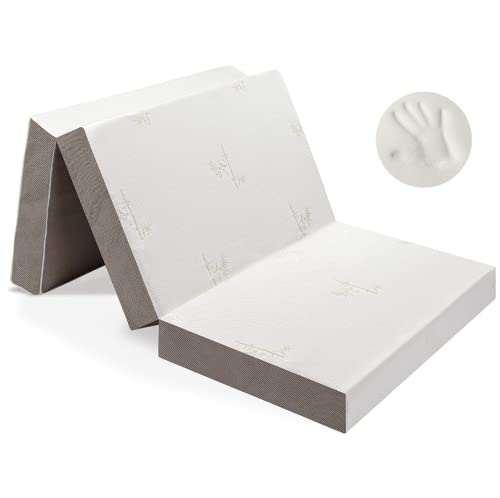
The Milliard Trifold Mattress is the only product in this guide designed from the start for the camping brief, and it shows. Six inches of high-density memory foam fold into thirds in seconds, turning a Twin XL bed into a package that rides in a trunk, stores in a closet between trips, and unfolds into a genuinely supportive sleep surface at the site. Milliard positions it explicitly for camping, RV travel, road trips, and guest duty, and the tri-fold format is exactly why it works for all four: no pump, no inflation wait, no leak lottery.
Strengths
- Tri-folding design packs and stores in seconds with no pump or power needed
- Memory foam contours and relieves pressure like a home bed, and cannot deflate overnight
- Removable, machine-washable cover suits dusty, multi-day camp use
Trade-offs
- Folded foam is still bulkier than a deflated inflatable — trunk space required
- Six inches of foam wants reasonably level ground or a cot on rough sites
- Twin XL width is a solo sleeper’s format; couples need two or a larger pick
| Color | White |
| Size | Twin XL |
| Dimensions | 78 x 38 x 6 inches |
On the ground, the Milliard’s virtues compound. Memory foam does not bounce your partner’s every turn across the tent the way a shared air chamber does, and it does not conduct the night’s cold up through a thin layer of air — foam is an insulator in its own right, which shoulder-season campers feel immediately. The surface is silent: no vinyl crinkle, no rubbery squeak when you roll to check the time. In a rooftop tent or truck bed, where the platform is flat and hard, six inches of contouring foam is the difference between tolerating the trip and enjoying it.
The washable cover is not a minor detail at camp. Dust, spilled coffee, a dog’s muddy pass through the tent — the cover unzips and goes in the wash when you get home, and the mattress is ready for the next trip or the next houseguest. That double life is the Milliard’s economic argument: it is a guest bed fifty weeks a year and a camping bed for the other two, instead of a dedicated inflatable that lives in a bag and ages by seam stress.
For transport, fold it, strap it if your vehicle is tight, and keep it dry in a bag or under a tarp in an open truck bed. At home it stores upright in a closet corner. If your camping is solo or one-per-person, this is the format to beat, and the rest of this guide only improves on it for specific situations like couples, cots, and cabins.
Best for: solo car campers, rooftop tents, truck beds, and RV travelers who want real-bed comfort with zero leak risk / Not suited for: backpackers or anyone counting liters of pack space
Choose the Milliard if your vehicle does the carrying and your sleep decides the trip. Skip it if you hike to your campsite. Check on Amazon
Linenspa 8 Inch Hybrid Mattress
Our badge: Best Compact
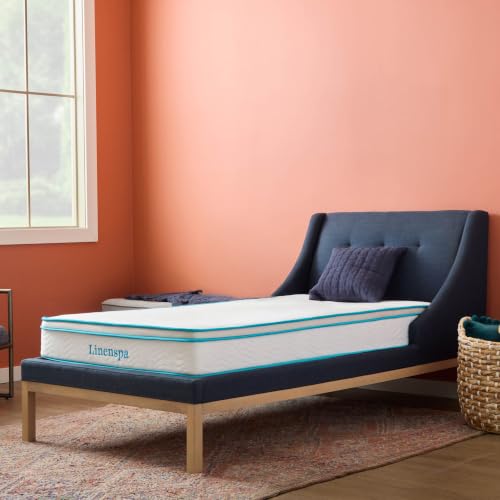
The Linenspa 8 Inch Hybrid Mattress brings a home-bed construction — memory foam over innerspring coils — into a twin footprint that works at camp. At 74 by 39 inches and 36 pounds, it fits the places camping sleep actually happens: a truck bed, a large single tent, a camp cot platform, a camper shell, or the floor of a basecamp cabin. The medium-firm hybrid feel supports back and stomach sleepers well, and the coils give it a responsiveness foam-only camp pads lack.
Strengths
- True hybrid support in a portable twin size at a manageable 36 pounds
- Coils add airflow and bounce, easing warm nights and position changes
- Medium-firm feel suits back and stomach sleepers on hard camp platforms
Trade-offs
- It does not fold — transport needs a flat space in the vehicle
- Coil construction is heavier and bulkier than a foam pad of similar size
- Twin width is solo-only, like the Milliard
| Color | Mattress Only |
| Size | Twin |
| Dimensions | 74 x 39 x 8 inches |
| Weight | 36 pounds |
The hybrid build earns its keep on uneven ground. Foam alone over a lumpy site transmits every contour; coils distribute load across the surface, smoothing small irregularities and keeping the hip zone supported even when the tent floor is less than perfect. Eight inches is the sweet spot for camp thickness — enough depth to isolate you from the ground without the transport bulk of a full home mattress. Linenspa notes this profile is popular for guest rooms, bunk beds, and trundle beds at home, which is the same double-duty logic as the Milliard: camp gear that also works in the house gets used, stored kindly, and replaced less often.
Setup at camp is nothing more than carrying it in and laying it down — it arrives as a bed-in-a-box, so let it expand fully at home first, where it has 24 to 72 hours to reach full height, rather than hoping a compressed hybrid opens properly in a cold tent. Once expanded, it is a mattress, with all the storage simplicity that implies: keep it dry, keep it flat or on edge in the garage, and it is ready when the weather turns good.
For campers who sleep on a cot, measure the cot platform before ordering; the twin dimensions suit most camp cots and turn a sling of fabric into a bed with real support, which older backs at camp will appreciate by the second morning.
Best for: solo campers with a truck, cot, or cabin who want coil support in a portable size / Not suited for: campers who need a mattress that folds or packs small
Choose the Linenspa if you have flat transport space and want the most bed-like twin at camp. Skip it if trunk geometry demands a fold. Check on Amazon

Best Price Mattress Full Mattress 6 inch Bed-In-A-Box
Our badge: Best Budget
The Best Price Mattress 6 Inch Bed-In-A-Box is the lightweight value play: a full-size foam mattress at just over 30 pounds, with memory foam infused with green tea over support and high-density layers. For a couple car camping on smooth ground, a scout troop outfitting a cabin, or a family that needs a second camp bed without a second big spend, the combination of full width and low weight is genuinely useful.
Strengths
- Full-size sleeping surface at roughly 30 pounds — easy for one person to load
- Memory foam layer relieves pressure for side sleepers at camp
- Green tea infusion helps the mattress stay fresh across multi-day trips
Trade-offs
- Six inches is the minimum viable depth — rough or rocky ground will be felt
- Full size does not fold, so vehicle space must accommodate it flat or rolled per maker guidance
- Thinner foam suits average builds best; heavier sleepers may bottom out on hard ground
| Color | White |
| Size | 6 Inch |
| Dimensions | 75 x 54 x 6 inches |
| Weight | 30.42 pounds |
Think of this mattress as the camp equivalent of a good spare tire: not the plushest ride, but light, dependable, and there when you need it. On a tent footprint with a groundsheet, six inches of layered foam keeps hips and shoulders off the floor for most sleepers, and the memory foam surface quiets the restless micro-movements that hard ground provokes. The CertiPUR-US certified foams and cotton-based fire retardant cover the safety basics, and a 10-year warranty backs the purchase — unusual reassurance at this tier.
Its best camp roles are specific. Inside a large family tent on a smooth site, it gives a couple a real shared bed. In a rented camp cabin with dubious bunks, it turns a wooden platform into something sleepable. As the kids’ camp bed, it is light enough to move without a committee and forgiving of the spills and dust that follow children outdoors. Pair it with a simple fitted sheet you do not mind getting smoky, and wash the bedding, not the mattress, after each trip.
Respect its limits and it will serve well: keep it on level ground, add a foam pad or blanket layer beneath it on coarse sites, and store it dry. Campers who routinely sleep on rough terrain should step up to the thicker picks in this guide.
Best for: budget-minded couples and families camping on smooth sites, cabins, and large tents / Not suited for: rough-ground camping or heavier sleepers needing deep support
Choose the Best Price if weight and value lead your packing list. Skip it if your sites are rocky. Check on Amazon

Zinus 12 Inch Queen Green Tea Memory Foam Mattress
Our badge: Best for Basecamp Comfort
The Zinus 12 Inch Green Tea Memory Foam Mattress is where this guide stops pretending to be minimal. Twelve inches of zoned memory foam in a queen is a home bed, full stop — and for glamping tents, long basecamps, hunting cabins, and seasonal campsites where the vehicle parks beside the bed’s final position, that is exactly the point. Its patented zoned pressure relief targets cushioning by sleep position, the medium-firm feel suits most adults, and the green tea and charcoal infusion keeps a closed-up tent smelling fresher across a long weekend.
Strengths
- Full 12-inch home-grade comfort — the most forgiving surface here on imperfect ground
- Zoned pressure relief supports back, side, and stomach positions for mixed groups
- Freshness infusion suits enclosed tents and cabins on multi-day stays
Trade-offs
- At 62.3 pounds and full queen size, it is a commitment to transport and store
- Needs a large tent or cabin footprint — measure before you dream
- Overkill for one-night stops; this is a settle-in mattress
| Color | White |
| Size | Queen |
| Dimensions | 80 x 60 x 12 inches |
| Weight | 62.3 pounds |
The glamping case is stronger than skeptics admit. A basecamp that sleeps like home changes who comes camping: partners who swore off tents, parents whose backs vetoed the ground, friends who need real sleep to enjoy real days. The Zinus’s depth isolates sleepers from whatever is under the tent — roots, packed gravel, a cabin’s plank floor — and its zoned foam means the bed serves a back-sleeping organizer and a side-sleeping spouse equally well. The breathable knitted cover and CertiPUR-US and OEKO-TEX certified materials keep the health paperwork in order, and the fiberglass-free construction with a carbon rayon fire barrier is a detail many families specifically seek.
Logistics decide success here. Transport it in a wagon, SUV, or truck with the mattress protected from weather; set it on a footprint or platform rather than bare ground; and give it a day at home to expand before the first trip. Between trips it can live as the guest room bed — the double-duty pattern that makes its size justifiable in a garage-limited household.
If your camping style is a week in one beautiful place rather than a new site every night, this is the pick that turns the tent into the best bedroom of the trip.
Best for: glamping, long basecamps, and camp cabins where comfort is the whole point / Not suited for: mobile touring camping or small tents
Choose the Zinus if the campsite is a destination, not a waypoint. Skip it if you move camp daily. Check on Amazon

Lucid 10 Inch Gel Memory Foam Mattress
Our badge: Best for Warm Nights
The Lucid 10 Inch Gel Memory Foam Mattress answers the summer camper’s specific misery: foam is warm, tents are warmer, and sleep in July can feel like a negotiation with the weather. Lucid infuses its three-inch comfort layer with cooling gel and adds bamboo charcoal to absorb moisture and regulate temperature, over a transition layer and a high-density base. The result is a ten-inch queen that sleeps noticeably fresher than basic foam — the pick for warm-climate camping, summer festivals with vehicle access, and un-air-conditioned camp houses.
Strengths
- Gel-infused comfort layer draws heat away from the body through the night
- Bamboo charcoal manages moisture and odor in humid camp conditions
- Layered build balances contour and support for back and combination sleepers
Trade-offs
- Queen footprint and 57.9 pounds limit it to vehicle-based camping
- Medium feel may be soft for strict stomach sleepers on hard platforms
- Gel cooling moderates heat; it does not air-condition a hot tent
| Color | White |
| Size | Queen |
| Dimensions | 79 x 59 x 10 inches |
| Weight | 57.9 pounds |
At camp, the Lucid’s layered construction shows a second benefit beyond cooling: the transition layer grades your descent into the support foam, so on a hard cabin platform or tent floor you do not get the abrupt bottoming-out that thin camp pads deliver at the hip. Back sleepers get contour with alignment; side sleepers get shoulder relief. It is CertiPUR-US certified, made in the USA with global and US parts, backed by a 10-year warranty, and compatible with adjustable bases, platforms, and slatted frames — so at home it can serve as a real guest bed between trips, deepening the value story.
Summer specifics matter. In humid regions, the charcoal’s moisture management keeps the surface from feeling clammy by the third night, and the gel layer’s heat draw pairs well with a simple battery fan moving tent air across the bed. Use breathable cotton sheets rather than microfiber, which traps the very heat the mattress is designed to shed.
Transport it protected and flat where possible, expand it at home first, and store it in a dry space — foam and mildew are enemies, and a mattress that smells of a damp garage will not be invited on the next trip.
Best for: warm-climate and summer campers with vehicle access who sleep hot on foam / Not suited for: minimalist packers or cold-weather campers prioritizing insulation depth
Choose the Lucid if your camping calendar lives in summer. Skip it if you camp cold and high. Check on Amazon

Novilla Bliss Queen Size Mattress
Our badge: Best for Couples at Camp
The Novilla Bliss Queen Size Mattress closes the guide as the couples’ basecamp bed. Its three-layer foam design contours with gel memory foam, isolates motion across the surface, and reinforces the edges — a combination that matters when two adults share a queen inside a tent, where every roll on a shared air chamber becomes a seesaw. On the Novilla, one sleeper’s 3 a.m. exit barely registers for the other, and nobody spends the night migrating toward a deflating middle.
Strengths
- Motion isolation keeps a partner’s movements from crossing the bed — the anti-air-mattress
- Gel memory foam relieves pressure at back and hips after hard outdoor days
- Reinforced edges keep the full queen usable inside tight tent footprints
Trade-offs
- Queen size and foam depth make it a basecamp-only proposition
- Full expansion can take up to 72 hours — plan setup at home, not at camp
- Foam sleeps warmer than the Lucid’s gel-forward build for hot sleepers
| Color | Bliss |
| Size | Queen (U.S. Standard) |
| Dimensions | 80 x 60 x 12 inches |
| Weight | 61.5 pounds |
The case for couples is really a case about sleep architecture. Days at camp are physical — hiking, paddling, hauling — and recovery sleep is what makes day three as good as day one. A surface that contours away the day’s pressure points, holds spinal alignment, and isolates a partner’s movement is not luxury; it is the trip’s engine. The Novilla’s breathable knitted cover and gel infusion keep the surface comfortable, its plant-infused comfort foam helps with freshness, and the foams are CertiPUR-US certified with a 100-day trial and 10-year protection on the listing.
Set it on a proper footprint or platform inside a tent with genuine queen clearance — measure the tent’s floor dimensions, not its marketing capacity, since tent “six-person” labels describe sardines, not beds. A battery fan, breathable sheets, and a shared agreement about who gets the edge complete the setup.
Between trips, the Novilla returns to guest-room duty at home, which is where its trial and warranty do their quiet work. For couples who camp a few times a year and host a few times more, it is the most defensible big-bed purchase in this guide.
Best for: couples at basecamp, glamping tents, and camp cabins who refuse the air-bed seesaw / Not suited for: solo minimalists or small tents
Choose the Novilla if two people’s sleep quality makes or breaks the trip. Skip it if you camp alone and light. Check on Amazon
Comparison Table
| Pick | Format | Size listed | Weight | Profile | Check price on Amazon |
|---|---|---|---|---|---|
| Milliard Trifold | Tri-fold foam | Twin XL | Not listed | 6 inches | Check price on Amazon |
| Linenspa Hybrid | Foam + coils | Twin | 36 pounds | 8 inches | Check price on Amazon |
| Best Price Mattress | Foam | Full | 30.42 pounds | 6 inches | Check price on Amazon |
| Zinus Green Tea | Zoned foam | Queen | 62.3 pounds | 12 inches | Check price on Amazon |
| Lucid Gel Memory Foam | Gel foam layers | Queen | 57.9 pounds | 10 inches | Check price on Amazon |
| Novilla Bliss | Gel foam, 3-layer | Queen | 61.5 pounds | 12 inches | Check price on Amazon |
How to Choose the Best Camping Mattress Setup
Start with your transport reality
The best camping mattress is the one your vehicle can carry and your campsite can fit. Measure both before shopping: trunk or truck-bed dimensions for the folded or flat mattress, and the tent floor’s true usable rectangle. Rooftop tents and truck beds reward the Milliard’s fold; cabins and glamping tents reward the queens. If the mattress does not fit the vehicle, nothing else about it matters.
Match thickness to your ground
Smooth, grassy, or platform sites forgive six inches. Gravel pads, roots, and uneven forest floor argue for eight to twelve inches, or a cot under a thinner mattress to lift you off the irregularities entirely. Heavier sleepers compress foam further and should read every thickness in this guide as effectively thinner — when in doubt, size up in depth.
Think about temperature in both directions
Foam insulates from cold ground, which is a gift in spring and fall. In summer, that same insulation plus tent heat argues for gel infusions, breathable covers, and airflow planning — the Lucid’s specialty. Uninsulated air beds do the opposite: chilly in the cold, neutral in the heat. Choose for the season you actually camp.
Plan the mattress’s second life
Camp gear used four nights a year must justify its storage. Every pick here doubles as a guest bed, floor bed, or cabin mattress at home — the Milliard and Linenspa most obviously, the queens as guest-room fixtures. If a mattress will only ever camp, a cheaper inflatable you accept replacing may honestly suit you better; our wider bedding guides, including Black Friday Bedding Deals 2026 and lounge extras like Best Throw Pillows Under $500, can help outfit the home side of that double life.
Pack for the mattress you chose
A foam camping mattress changes the packing list around it, and planning for that is the difference between a system and a pile. You gain back the pump, the repair kit, and the battery anxiety; you spend trunk volume and gain a flat, stackable platform that other gear can ride on top of. Protect the mattress from the two things vehicles do to foam: sharp cargo edges that can tear a cover, and fuel or solvent smells that foam absorbs and keeps. A simple mattress bag or even a dedicated old sheet as a wrap pays for itself on the first dusty forest road. Inside the tent, bring the footprint or tarp habit from home camping — ground moisture wicks into foam exactly as it wicks into a sleeping bag, and a dry mattress on night three is a cared-for mattress, not a lucky one.
Also plan the campsite bed as a system: mattress, insulation beneath it in cold weather, your home pillow if space allows, and bedding you can wash as a set when you return. Campers who assemble that kit once, test it in the backyard, and store it together between trips are the ones whose sleep stops being the trip’s weak point. The backyard test night is not overkill — it is where you learn that the trifold fits the tent door, that the sheets stay on, and that your partner’s definition of firm-enough matches yours, all at zero cost and ten steps from your own bathroom.
Test at home before the trip
Sleep on any new camp mattress at home for a night or two. You will learn its firmness, its smell timeline, and whether your sheets fit — discoveries that are merely useful at home and miserable at a trailhead.
How Should You Set Up and Care for a Foam Mattress at Camp?
Expand any bed-in-a-box at home first, days before departure, so full loft and off-gassing happen in your garage rather than your tent. At the site, lay a footprint or tarp first, position the mattress, and keep it off bare damp ground where possible. Make the bed with sheets you are willing to get smoky, and ventilate the tent during the day to keep moisture from settling into foam. Each morning, pull the bedding back for an hour — camp damp accumulates in any mattress, and airing is the cheapest care there is.
After the trip, the routine decides the mattress’s lifespan: shake it out, vacuum dust and grit, spot-clean marks, and let it dry completely before storage. Store foam dry, flat or folded as designed, away from garage damp. A mattress put away damp in October greets you in May with a smell no washing fully cures. Convertible home setups follow the same rules, as our readers with Best Mattresses For Sleeper Sofas setups already know.
Problem: your hip finds the ground on uneven sites — add a closed-cell pad or folded blanket under the mattress at the hip zone, or step up in mattress thickness next purchase.
Problem: the mattress smells of campfire for weeks — air it outdoors in shade for a day, vacuum it, and wash all bedding; smoke lives in fabric more than foam.
Problem: morning damp makes the bed feel clammy — ventilate the tent, air the mattress daily, and avoid sealing foam in plastic while it is still moist.
Problem: the folded mattress will not fit the trunk — measure before buying; if it is close, remove the headrests and fold rear seats, or choose the twin formats in this guide.
Problem: your partner’s movement crosses the bed — that is an air-chamber problem; a foam pick like the Novilla, or two solo mattresses side by side, ends it.
Foam Versus Air: An Honest Accounting
Inflatables win on pack size, weight, and shaped spaces, and modern backpacking pads are marvels nobody should dismiss. They lose on failure mode: every inflatable is one puncture, one valve fault, or one cold night of pressure loss away from a floor-sleeping emergency, and field repairs at midnight are nobody’s hobby. Foam inverts the ledger: it cannot fail catastrophically, it insulates, it is silent, and it feels like the bed at home — at the cost of vehicle space. Most campers who switch do so after exactly one ruined night too many, and most never switch back for car camping. The mature setup many families land on is both: foam for the vehicle-based trips that dominate the calendar, and a maintained inflatable for the rare hike-in night.
There is also a sound argument, literally. Tents are thin-walled rooms, and campgrounds at night are quieter than most bedrooms. A vinyl air mattress announces every roll, shift, and exit with crinkles and squeaks that carry to the next site; a foam mattress makes no sound at all. Light sleepers, parents camping with children in the same tent, and anyone who has lain awake cataloguing a partner’s every movement on an air chamber will recognize this as a first-order comfort feature, not a footnote. Silence is part of why foam campers describe their sleep as home-like: the whole sensory profile — support, temperature, stillness, quiet — matches the bedroom instead of approximating it.
Durability accounting favors foam over years as well. An inflatable’s life is governed by seams, valves, and the puncture lottery; a quality foam mattress’s life is governed by slow compression, measured in years of regular use and softened by rotation and dry storage. For a family that camps six weekends a year and hosts guests six more, the foam picks in this guide amortize quickly, while the inflatable bought for the same calendar often dies mid-season two. None of this makes inflatables bad products — it makes them specialized ones, best reserved for the trips where their one great virtue, packability, is actually required.
Camping With a Bad Back: Ground Rules
Backs that complain at home complain louder at camp, where the days are physical and the beds are improvised. The rules that help: keep the sleep surface level even if it means spending ten minutes preparing the ground; choose the thickest mattress your transport allows; keep your home pillow if you possibly can, because camp is the worst place to experiment with neck support; and place the mattress so getting up does not require a twist-and-haul from ground level — a cot under a foam mattress is a legitimate accessibility decision, not a luxury. Our lower-back guidance elsewhere in this series applies outdoors unchanged, because spines do not care about the scenery.
Ground preparation deserves its ten minutes. Before the tent goes up, lie down on the bare footprint yourself and feel for the root, stone, and slope your mattress will be asked to forgive. Move the tent two feet if it buys you a level, clear patch; fill a shallow hollow with a folded tarp rather than asking foam to bridge it; and orient the bed so your head is very slightly uphill if any slope remains — sleeping with your head downhill is a misery no mattress can fix. Campers who do this once per site sleep better every night of the stay, and the habit costs less time than one midnight rearrangement of a badly placed bed.
Finally, plan the morning exit. A mattress on the ground asks stiff joints for a floor-level stand, which is the hardest movement of the camping day for older backs and knees. A cot raises the whole operation to chair height, and the foam twins in this guide are sized for exactly that pairing. If a cot is not in the kit, place a camp chair or cooler beside the bed as a push-off aid and brief your tentmate — small dignities, deliberately arranged, are what separate campers who return from campers who retire.
Campers should also think about the second trip, not just the first, because that is where the foam-versus-air economics finish their argument. A foam pad or trifold that survives a season of weekends without a single repair has already out-served most inflatables; by the second season the comparison is no longer close. Care is correspondingly simple: store foam unrolled or loosely folded in a dry place, air it after trips that ended damp, and keep it out of the trunk-baking heat that degrades any material left in a summer car. The kit you maintain in five unglamorous minutes per trip is the kit that is simply ready — every trip, every season — which is the entire promise the air mattress made and could not keep.
Common Buying Mistakes
Buying for the tent’s marketing capacity
A “six-person” tent rarely fits a queen mattress and gear. Measure the floor’s usable rectangle and shop to that.
Debuting a bed-in-a-box at the trailhead
Compressed foam needs a day or more to expand and air out. Unbox at home or your first camp night is on a half-inflated slab.
Underestimating thickness for your ground
Six inches on a lawn is comfort; six inches on gravel is a rumor of comfort. Match depth to terrain honestly.
Storing foam damp
One damp storage season can permanently scent a mattress. Dry fully, every time, no exceptions.
Assuming one mattress must do every trip
Basecamp queens and solo trifolds solve different trips. Owning the right two beats compromising on one.
Camp hosts — the friend who lends the gear, the parent equipping the family — should note that this guide’s picks compose into a fleet: a trifold for the car, slim pads for the kids, a hybrid-grade basecamp bed for the adults whose backs have seniority. Fleets share one maintenance language (foam: air it, dry it, store it loose), one failure profile (slow softening across seasons rather than midnight deflation), and one packing logic. A household that standardizes on foam sleeps every camper at the same reliability, and the camp-morning conversation moves from who deflated to where the coffee is — which is where it always should have been.
Final Recommendation
For most car campers, the Milliard Trifold Mattress is the answer: it folds, it travels, it washes, and it cannot leak at 2 a.m. Couples building a basecamp should take the runner-up route — Check on Amazon for the Novilla Bliss and its motion-isolating queen comfort. Cot and truck-bed campers will be happiest with the Linenspa twin, budget families with the Best Price full, and summer campers with the Lucid’s gel build. Whichever you choose, expand it at home, sleep a test night before the trip, and let the campsite be about the camping.
Frequently Asked Questions
Are foam mattresses really better than air mattresses for camping?
For car camping, many campers find them better: no leaks, no pump, better insulation from cold ground, and a consistent feel all night. Inflatables still win for backpacking and tight packing. The right answer depends on how the mattress travels.
How thick should a camping mattress be?
Six inches is the practical minimum for adults on smooth ground. Rougher sites, heavier sleepers, and side sleepers should look at eight inches or more, or place a thinner mattress on a cot.
Can I use a regular mattress in a tent?
Yes, if the tent floor truly fits it and your vehicle can transport it. The queens in this guide work in glamping and basecamp tents; measure the floor’s usable dimensions rather than trusting person-capacity labels.
How do I keep a foam mattress clean at camp?
Use a footprint underneath, sheets you do not mind getting smoky, daily airing, and a washable cover where the design offers one, like the Milliard. Dry the mattress completely before storage.
Will a foam mattress keep me warm on cold ground?
Foam insulates better than a basic uninsulated air bed, so it helps in shoulder seasons. In deep cold, add an insulating pad beneath it and use bedding rated for the temperature.
What size fits a rooftop tent or truck bed?
Measure the platform first. Twin and Twin XL formats like the Milliard and Linenspa in this guide fit most single-width platforms; wider setups may take a full. Platform dimensions, not mattress marketing, decide the fit.


