Disclosure: As an Amazon Associate, dailyhomedecorating.com earns from qualifying purchases. Links to Amazon on this page are affiliate links; they cost you nothing extra. Prices and availability change often, so check the current Amazon listing before you buy.
The best rust stain remover for tubs is a different purchase from a rust remover, and the distinction decides whether your Saturday works. Active rust — the fresh orange bloom, the bleeding chip — is a corrosion problem. A rust stain is what remains after the corrosion event: iron oxide that has soaked into a finish’s microscopic texture, tinted grout and caulk lines, and shadowed the surface in a ghost of the original mark. Stains live in the material as much as on it, which is why scrubbing fails them so completely — you cannot scrub the inside of a surface. This guide is about the chemistry and patience that reach where brushes cannot, and about the honest endpoint: some stains fade to invisibility, some fade to a whisper, and a few, in compromised finishes, are the finish’s new biography.
The verified pool’s three cleaners divide the stain work by severity. The acidic tub-and-tile cleaner leads for set-in stains on tolerant surfaces, because stain removal is dissolution, not detergent work. The foaming disinfectant takes the fresh stain — the ring caught within days — and the weekly maintenance that keeps stains from setting. The no-scrub weekly spray is ranked, openly, as the anti-stain system: stains are deposits given time, and a surface denied deposit time is a surface that never stains. Three prose-only picks complete the ladder: a peroxide-based paste approach for color-safe stain lifting, a gel-type rust stain remover format that clings to vertical stains, and a professional resurfacing reality-check for stains that have become part of the finish. The material cautions from Best Rust Remover For Tubs apply throughout — that guide owns active rust and its sources; this one owns the stain that rust leaves behind.
Where to Buy
Every linked pick in this guide is sold on Amazon, where you can check the current price, sizes, and listing details before you buy. For stain work, test any product on the least visible stain first — stain chemistry is finish chemistry, and your tub’s tolerance is a fact to discover cheaply.
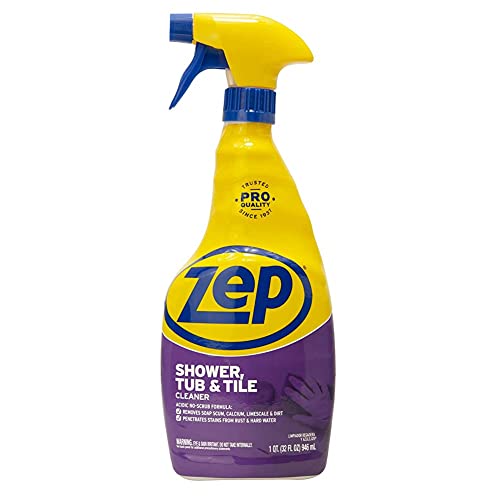
- Zep Shower Tub and Tile Cleaner — Check on Amazon
- Scrubbing Bubbles Grime Fighter Disinfectant Bathroom Cleaner Spray — Check on Amazon
- Wet & Forget Shower Cleaner Spray — Check on Amazon
- Peroxide-based stain paste method (prose-only pick — see review)
- Gel-type rust stain remover format (prose-only pick — see review)
- Professional resurfacing assessment (prose-only pick — see review)
In this guide
Quick Picks
| Pick | Badge | Why it earns its place |
|---|---|---|
| Zep Shower Tub and Tile Cleaner | Best Overall | Acidic dissolution for set-in stains on porcelain, enamel, and tile. |
| Scrubbing Bubbles Grime Fighter Bathroom Cleaner | Best for Fresh Stains | Foaming lift for rings and films caught before they set. |
| Wet & Forget Shower Cleaner Spray | Best for Stain Prevention | The weekly system that denies deposits the time stains require. |
| Peroxide-based stain paste method | Best for Delicate Finishes | Prose-only: color-safe lifting for acrylic, fiberglass, and caulk lines. |
| Gel-type rust stain remover format | Best for Vertical Stains | Prose-only: cling chemistry for wall streaks and fixture shadows. |
| Professional resurfacing assessment | Best for Permanent Stains | Prose-only: the honest endpoint when the stain is the finish now. |
Key Takeaways
- A rust stain is iron oxide inside the surface’s texture — dissolution and dwell time remove it; scrubbing mostly polishes the stain.
- Fresh stains are cleaning; set-in stains are chemistry; permanent stains are a resurfacing conversation. Know which you have.
- Porous materials — grout, caulk, stone, worn enamel — stain deepest and forgive least. Caulk, mercifully, can be replaced.
- Work the ladder from gentlest to strongest, photographing between rungs under the same light.
- Prevention is a time strategy: stains need deposits to sit undisturbed, and weekly care denies them the sitting.
- Never mix stain chemicals, ventilate, and spot-test — stain removers are the strongest chemistry most bathrooms ever host.
How These Picks Were Chosen
The pool was assessed for stain-specific virtues: dwell-friendly chemistry, cling on vertical surfaces, and compatibility with the finishes that stain. The Zep cleaner’s verified identity — an acidic, scrub-free formula for dissolving water-related bathroom stains — is precisely the stain mechanism, and it leads on porcelain, enamel, and tile. Scrubbing Bubbles’ foaming format and broad verified surface list suit the fresh-stain and maintenance tier, where most household staining is actually won or lost. Wet & Forget’s weekly no-scrub system is included under a prevention label with no inflation of its claims: its maker promises prevention of the scum and grime matrix, and this guide argues — as reasoning, not as a product claim — that denying the matrix denies stains their nursery.
The prose-only picks name the stain ladder’s missing rungs without inventing listings: peroxide paste, the color-safe oxidizer approach keepers use on caulk and delicate finishes; gel removers, a real format class whose cling solves the vertical-stain problem; and professional resurfacing, which is not a product at all but the honest final rung, included because a guide that pretends every stain is removable sells false hope at chemical prices. Excluded: the pool’s tubs (the stained, not the stainer’s cure), the spa chemicals (a different water world), and the faucet trim kit, which is neither tub nor cleaner. The everyday cleaning baseline for all of this lives in Best Cleaner For Bath Tubs; the plastic-specific version in Best Bathtub Cleaner For Plastic Tubs governs acrylic stain caution.
The 6 Best Rust Stain Remover for Tubs — Reviewed

Zep Shower Tub and Tile Cleaner
Our badge: Best Overall
The Zep Shower Tub and Tile Cleaner leads the stain list for the same reason it leads the rust list, with a stain-specific twist: set-in rust staining yields to sustained acidic contact, and this ready-to-use acidic, scrub-free formula is built to dissolve the water-related stains that define the problem. On porcelain, sound enamel, glazed tile, and grout, it reaches the iron oxide that has settled into the surface’s texture and converts it back into something water can carry away — the only mechanism that has ever truly removed a stain.
Strengths
- True acidic dissolution — the stain mechanism itself, not a detergent approximation.
- Scrub-free design protects the finish while the chemistry works.
- Ready-to-use consistency removes dilution guesswork from a strong product.
Trade-offs
- Acid rules apply in full: gloves, ventilation, no mixing, label discipline.
- Delicate finishes — acrylic, fiberglass, stone — need the gentler rungs or a maker’s blessing first.
- Deep stains in porous grout may fade across sessions rather than vanish in one.
| Size | 32 Fl Oz (Pack of 1) |
| Dimensions | 3 x 11.2 x 4.4 inches |
| Weight | 2.01 pounds |
Stain technique differs from rust technique in one variable: time under contact. A stain is removed at the speed of diffusion, so the craft is keeping the chemistry wet and present — apply to the stain, cover with a damp cloth or plastic film to stop evaporation, and let the dwell run long, checking periodically rather than scrubbing impatiently. Rinse, dry, and judge under bright, consistent light; wet surfaces hide stains that reappear on drying, and many a “failed” removal was a success photographed too early. Expect a campaign, not an event, on old stains: two or three sessions across a week routinely accomplish what one heroic session cannot, because each pass removes the loosened layer and exposes the next to fresh chemistry.
On grout and caulk, calibrate expectations by material. Glazed tile releases stains most completely. Grout, being porous cement, holds iron deeper and may keep a blush after the surface is clean — the gel pick below addresses its dwell needs. Caulk is the mercy case: silicone and latex caulks that have absorbed stain through their body are not cleaned but replaced, a small job whose craft is covered in Best Sealant For Tubs, and replacing a stained caulk line is often the single highest-impact “stain removal” in the whole bathroom.
Best for: Set-in rust stains on porcelain, enamel, tile, and grout / Not suited for: Delicate finishes without a spot test, or stained-through caulk
Choose it if your surfaces are tolerant and your stains are established. Skip it for acrylic — your ladder starts at the peroxide pick below.

Scrubbing Bubbles Grime Fighter Disinfectant Bathroom Cleaner Spray
Our badge: Best for Fresh Stains
The Scrubbing Bubbles Grime Fighter Disinfectant Bathroom Cleaner Spray owns the stain timeline’s first chapter: the ring discovered this week, the orange film at the waterline, the faint shadow under a product bottle. At this age a stain is still mostly a deposit — iron held in the soap-and-mineral film rather than married to the finish — and a foaming cleaner that dissolves the film takes the stain with it. Its verified reach across tubs, fiberglass, glazed porcelain, and shower surfaces makes it the safe first move on nearly every material in the modern bathroom.
Strengths
- Foam clings and dwells on vertical stain zones — walls, waterlines, fixture bases.
- Broad surface compatibility makes it the low-risk first rung.
- Cleans and disinfects the whole stain neighborhood in one pass.
Trade-offs
- Fresh stains only: set-in discoloration will survive it untouched.
- Requires the household rhythm to catch stains young — a habit, not a rescue.
- Not a grout-deep or caulk-through solution at any age of stain.
| Size | 32 Fl Oz (Pack of 1) |
The deeper argument for this pick is temporal. Every set-in stain in every bathroom was once a fresh stain that somebody’s cleaning rhythm missed, which means the most effective rust stain remover ever sold is a weekly foam and the ten minutes to use it. Households with iron-bearing water should treat the waterline and drain zone as a standing appointment. The foam’s cling does quiet technical work here: on the vertical wall where a chip’s rust streak descends, dwell is the difference between lifting the young stain and merely rinsing it. Spray, wait out the foam’s working time, wipe with a soft cloth, rinse — and inspect the streak’s source while you are there, because a fresh stain with a live source is a repair announcement, as the source guide in Best Rust Remover For Tubs details.
Set its ceiling in your mind now: if two honest applications leave the mark unchanged, the stain has set, and further foam is theater. Graduate to the acid on tolerant surfaces or the peroxide method on delicate ones, and let this pick return to the job it is best at — making sure the next stain never sets at all.
Best for: Fresh rings, films, and shadows on all common tub surfaces / Not suited for: Established, set-in staining
Choose it as the standing weekly answer. Skip it as a rescue plan for old stains — that is not modesty, it is chemistry.

Wet & Forget Shower Cleaner Spray
Our badge: Best for Stain Prevention
The Wet & Forget Shower Cleaner Spray is this guide’s prevention pick, labeled as plainly as in its sibling review: a bleach-free, no-scrub weekly spray whose verified work is preventing soap scum, grime, and body-oil buildup across fiberglass, acrylic, tile, and glass. Its stain relevance is a matter of mechanism. A rust stain is a deposit that was given undisturbed time in a film of soap and minerals. A shower kept film-free by a weekly no-scrub system offers iron nothing to anchor in and no quiet weeks in which to set — the stain, quite simply, never gets its childhood.
Strengths
- Weekly no-scrub rhythm is sustainable in real households — the only prevention that counts.
- Gentlest chemistry here: bleach-free, no harsh fumes, safe across delicate finishes.
- Long dwell design (8–12 hours) does its work while the household sleeps.
Trade-offs
- Removes no existing stain. Remediation first, system second — always.
- Requires an initial deep clean on neglected showers before the system can hold the line.
- Its benefits are invisible when it works, which tests human motivation everywhere.
| Color | Fresh Scent |
| Size | 64 Fl Oz (Pack of 1) |
| Dimensions | 7.75 x 4.1 x 9 inches |
| Weight | 4.94 pounds |
Consider the economics of attention. A stain campaign — testing, dwelling, repeating, photographing — consumes an afternoon and a measure of household goodwill. The weekly spray consumes ninety seconds. Iron-water households, who face the stain question as a permanent condition, are this pick’s natural constituency, and for them the layered strategy is the whole game: water treatment upstream if the iron load warrants it, the ladder from the rust guide for what deposits anyway, and this system underneath everything, shrinking the ladder’s workload month by month. Acrylic and fiberglass owners benefit doubly, since the finishes that most restrict their stain chemistry are exactly the finishes this gentle system was made for.
Begin it the maker’s way: on a clean shower — daily applications until any heavy buildup clears — then weekly, sprayed after the last shower, rinsed before the next use. Mark the day on the household calendar the way the spa families in this series mark their water tests; prevention systems die of vagueness, not of chemistry.
Best for: Iron-water homes and delicate-finish owners preventing stains from ever setting / Not suited for: Any existing stain, of any age
Choose it the week your stains are finally gone. Skip it as a treatment — it is a vaccine, not a cure, and this guide keeps the two in separate drawers.
Peroxide-Based Stain Paste Method
Our badge: Best for Delicate Finishes
This prose-only pick is the delicate finish’s stain method: a paste built on hydrogen peroxide — commonly with a mild alkaline carrier such as baking soda in keeper practice — applied to the stain, covered, and given hours rather than minutes. Peroxide works as an oxidizer that attacks the stain’s color and loosens its hold without the aggressive acidity that acrylic and fiberglass cannot tolerate, and the paste form keeps it parked on vertical and caulk-line stains where sprays run away. It is the method of choice for the orange shadow on an acrylic tub, the stained caulk line, and the fixture-base blush on fiberglass.
Strengths
- Color-safe, finish-gentle chemistry for the surfaces acids endanger.
- Paste dwell reaches caulk lines and vertical shadows sprays cannot serve.
- Ingredients are household-familiar and mixed fresh in small batches.
Trade-offs
- Slow: measured in hours and often in repeated applications.
- Deep iron penetration may fade rather than disappear — the delicate finish’s honest bargain.
- Peroxide degrades with age and light; old bottles underperform silently.
| Type | Prose-only — method pick, no pool product |
| Format | Fresh paste, covered dwell, soft removal |
| Best pairing | Acrylic, fiberglass, and caulk-line stains |
Technique notes from keeper practice: mix only what the session needs, apply it generously over the stain, cover with plastic film to hold moisture, and let time work — checking at long intervals, re-wetting if the paste dries. Remove with a soft cloth and copious rinsing. On caulk, manage expectations by depth: a stain in the caulk’s surface film yields; a stain through its body is a replacement job wearing a stain’s clothes, and the replacement craft in Best Sealant For Tubs is short, cheap, and transformative. On acrylic, resist the temptation to assist the paste with a scouring pad — the pad’s scratches will collect future staining faster than the original surface ever did, trading one stain for a stain-shaped vulnerability.
Best for: Acrylic, fiberglass, and caulk-line staining where acids are unwelcome / Not suited for: Fast results or through-body caulk stains
Choose this method when the finish’s safety outranks the stain’s urgency. Skip it when the surface is porcelain and the stain is deep — the acid ladder serves that case better.
Gel-Type Rust Stain Remover Format
Our badge: Best for Vertical Stains
The second prose-only pick is a format class: gel rust stain removers, sold across the category as thick, clinging liquids designed to stay where they are put. Their stain niche is geometry. Rust streaks descend walls from chips and fixtures; waterline shadows ring vertical curves; grout lines run in every direction — and every one of those targets defeats a runny spray’s dwell time. A gel parks its chemistry on the stain at full strength for the full dwell, which is why the format exists and why vertical staining is its home ground.
Strengths
- Cling delivers full dwell time on walls, streaks, and grout lines.
- Precision application keeps strong chemistry off surrounding finishes.
- Suited to the long, covered dwells set-in stains require.
Trade-offs
- Gel chemistries vary widely — the specific product’s surface list governs, always.
- Thick formats rinse slowly; budget the rinse as part of the session.
- Not a whole-tub cleaner: a scalpel, not a broom.
| Type | Prose-only — format pick, no pool product |
| Format | Clinging gel for targeted, long-dwell stain work |
| Best pairing | Wall streaks, waterline shadows, grout-line staining |
Shopping the format well means reading for three things: the chemistry family (acid gels for tolerant surfaces, gentler gels for delicate ones), the stated dwell, and the surface list’s explicit inclusions — a gel that names your finish is a candidate; a gel that does not is a gamble. Application mirrors the acid pick’s discipline with the gel’s advantage: apply, cover if the session is long, wait without scrubbing, rinse thoroughly and repeatedly, judge dry. Streaks from a fixture or chip should also trigger the source inspection — a gel that erases the streak while the chip above it stays open is buying you a few weeks, and the repair guidance in Best Rust Remover For Tubs closes that loop.
Best for: Vertical streaks and grout-line stains on surfaces the specific gel approves / Not suited for: Whole-tub cleaning or unlisted finishes
Choose this format when your stain’s problem is staying power. Skip it for broad film staining — the foam and spray picks cover area more sensibly.
Professional Resurfacing Assessment
Our badge: Best for Permanent Stains
The final pick is not a product, and including it is this guide’s pledge of honesty: some rust stains are no longer stains. When iron has penetrated a worn, crazed, or porous finish — the antique enamel whose glaze is a network of micro-cracks, the fiberglass whose gel coat has thinned to a sponge — the discoloration is distributed through the material itself, and no chemistry that spares the finish can reach all of it. At that point the professional options are resurfacing (a refinishing coating system applied over the prepared tub) or replacement, and the correct purchase is an assessment, not another bottle.
Strengths
- Ends the chemical campaign honestly when the stain is structural.
- Resurfacing restores a uniform, cleanable surface at a fraction of replacement cost.
- A professional diagnosis distinguishes “stained” from “failing” — vital information either way.
Trade-offs
- Resurfacing is a coating with a lifespan, not a new tub; it needs its own care discipline.
- Cost and downtime are real — days of curing, a bathroom out of service.
- Some tubs, on inspection, argue for replacement instead; be ready to hear it.
| Type | Prose-only — professional service pick, no pool product |
| Format | Refinishing assessment and coating systems |
| Best pairing | Worn, crazed, or porous finishes with through-body staining |
Recognize the candidate honestly: stains that return identically after every successful cleaning, because the finish itself holds the iron; a surface that feels rough or looks webbed with fine cracks; discoloration that no ladder rung moves at all. A refinisher’s visit converts months of chemical frustration into a decision with numbers attached, and the decision often liberates — owners describe the resurfaced tub’s first year as the year the bathroom stopped being a project. If replacement wins the assessment instead, the tub guides across this series — from the alcove workhorses in Best Cleaner For Bath Tubs‘ companion reviews to the freestanding statements in the tier guides — are the shopping map.
Best for: Finishes whose staining is structural and permanent / Not suited for: Any stain that chemistry has not yet honestly tried
Choose the assessment when the ladder has been climbed in full and the stain remains. Skip it as a shortcut — it is the last rung, and it means what it says.
Comparison Table
| Pick | Stain stage | Safe surfaces | Method | Check price on Amazon |
|---|---|---|---|---|
| Zep Tub and Tile Cleaner | Set-in | Porcelain, enamel, tile, grout | Acidic dissolution, covered dwell | Check price on Amazon |
| Scrubbing Bubbles Grime Fighter | Fresh | Broad, incl. fiberglass | Foaming lift | Check price on Amazon |
| Wet & Forget Shower | Pre-stain | Acrylic, fiberglass, tile, glass | Weekly prevention | Check price on Amazon |
| Peroxide paste method | Light set-in | Acrylic, fiberglass, caulk | Prose-only oxidation paste | Check price on Amazon |
| Gel stain remover format | Set-in, vertical | Per product’s list | Prose-only cling gel | Check price on Amazon |
| Resurfacing assessment | Permanent | Worn finishes | Prose-only professional service | Check price on Amazon |
How to Choose the Best Rust Stain Remover for Tubs
Grade your stain before you grade products
Fresh (days old, sits on the film), set-in (weeks to months, bonded to the surface’s texture), or structural (in the finish itself). The grade chooses the rung: foam for fresh, acid or gel for set-in on tolerant surfaces, peroxide patience for set-in on delicate ones, assessment for structural. Most failed stain projects are grading errors, not product errors.
Let porosity set your expectations
Glazed surfaces release stains nearly completely. Porous ones — grout, unglazed stone, worn enamel, aged caulk — hold iron at depth, and “faded to a whisper” may be their honest best. Price that expectation before the campaign, and remember caulk’s exemption: it can simply be replaced, per the craft in Best Sealant For Tubs.
Match the format to the stain’s geometry
Films want sprays and foams; spots want pastes; streaks and lines want gels. Geometry is not a detail — dwell time is the active ingredient of stain removal, and format is how dwell is delivered to the shape you have.
Protect the finish’s future cleanability
Every stain decision is also a surface decision. Abrasion and over-strong chemistry roughen finishes microscopically, and roughened finishes stain faster forever after. The gentlest effective rung is not timidity; it is asset management for the tub’s next decade.
Plan the prevention in the same breath
A stain removed into an unchanged routine is a stain rescheduled. The weekly system, the source repair, the dry storage of metal objects — choose at least one while the remover is still in your hand, or expect to meet this guide again.
How Do You Get a Set-In Rust Stain Out of a Tub?
The campaign, in order: clean the whole tub first with your regular gentle cleaner, so the stain stands alone and products are not wasted on film. Dry the area. Spot-test the chosen remover in a hidden place through a full dwell. Apply to the stain and establish the dwell properly — covered with a damp cloth or film so the chemistry stays wet and active. Wait without scrubbing; check at long intervals. Rinse with generous water, dry completely, and judge under the brightest consistent light you have, photographing for the record. Repeat the session up to two more times across days before changing rungs. When the stain resolves — or reaches its honest floor — rinse the entire tub, address the source, and start the prevention rhythm within the week.
Problem: The stain looks gone wet and returns on drying — Water was masking the residual iron in the texture. This is normal mid-campaign optics, not failure; continue the sessions and judge only on dry surfaces.
Problem: The grout stays blushed after the tile is clean — Porosity, as predicted. Extend dwell with the gel format, accept a whisper as the endpoint, or re-grout the worst lines — grout, like caulk, is renewable.
Problem: A white haze appeared where the acid sat — Possible etching on a sensitive glaze or stone-adjacent surface. Stop acids there, rinse extensively, and consult the surface’s maker; haze is the warning grade of finish damage.
Problem: The stain is exactly the shape of a bottle base — An object print: the metal cap or can rusted in place and tattooed the finish. Remove by the ladder, then change the storage — a rack, a tray, or plastic-capped products end the pattern.
Grout, Caulk, and Stone: The Porous Frontier
The tub’s basin gets the attention, but staining’s hardest cases live at its edges. Grout is a sponge made of rock: iron enters with water and crystallizes at depth, which is why grout stains fade in layers and why sealing grout after a successful campaign — with the sealing discipline detailed in the sealant guide — is the professional’s finishing move. Caulk splits into two fates: surface film stains lift with the peroxide method; through-body stains mean the caulk has become the stain, and replacement is faster, cheaper, and cleaner than any chemistry — a truth that liberates many owners who have spent months fighting a ten-dollar bead. Natural stone, where it surrounds a tub, plays by its own rules entirely: acids are forbidden, iron stains are a stone specialist’s topic, and this guide’s honest counsel is to keep every product in it off the stone until a stone-safe label says otherwise.
The frontier lesson generalizes: in stain work, the material is the message. Identify each surface in the stain’s neighborhood, assign each its own rung and its own endpoint, and the campaign becomes a set of small, winnable battles instead of one discouraging war.
The Stain Timeline: Why Age Is the Master Variable
Iron oxide on a wet bathroom surface ages like a rumor becoming history. In its first days it is a deposit — iron particles resting in the soap film, removable by anything that removes the film. Across weeks, moisture cycles drive the oxide into the finish’s microscopic texture and begin the weak chemical bonding that defines a set-in stain; removal now requires dissolution and dwell. Across seasons, on porous or compromised finishes, the iron distributes through the material’s accessible depth, and the stain’s address changes from “on the tub” to “in the tub” — the structural grade. Every intervention in this guide is priced by that timeline, which is why the fresh-stain foam and the weekly prevention spray, the two cheapest picks here, are also the two most powerful: they operate at the timeline’s beginning, where everything is easy. The single most valuable sentence in stain care is the shortest: treat it this week.
Common Buying Mistakes
Scrubbing a set-in stain with abrasive pads
You cannot scrub the inside of a surface, but you can scratch the outside of it — permanently raising its future stain rate. Chemistry and dwell remove stains; pads remove finishes.
Using acid removers near stone or on acrylic
The stain may fade while the surface etches — a trade that reveals itself under raking light forever. Material identification precedes product selection, without exception.
Judging results on a wet tub
Water hides residual staining with optical kindness. Campaigns judged wet end early and “fail” mysteriously on dry mornings. Dry, bright, photographed: the only honest scoreboard.
Fighting stained-through caulk with chemistry
When the caulk is the stain, replacement is the removal. Owners lose months to this misclassification; the sealant guide’s small craft project ends it in an afternoon.
Removing the stain and keeping the routine
Same water, same objects, same film — same stain, rescheduled. Pair every campaign with one prevention change, or the campaign is a subscription.
Final Recommendation
For set-in rust stains on tolerant surfaces, the answer is the Zep Shower Tub and Tile Cleaner, worked as a campaign: covered dwells, dry judging, patient repetition. The runner-up is the household rhythm itself — Scrubbing Bubbles Grime Fighter on the weekly clean, Check on Amazon, catching every stain while it is still a rumor. Delicate finishes take the peroxide path, vertical streaks take the gel, and the stain that survives an honest ladder earns a professional’s assessment rather than another bottle. The best rust stain remover for tubs is the one matched to your stain’s age and your surface’s nature — grade first, dwell long, and let prevention make the whole subject boring.
Stain Prevention as a Household System
Because stains are time made visible, prevention is a scheduling achievement before it is a chemical one, and the households that never develop rust stains share a recognizable system. Objects live out of the tub: metal-capped bottles, razors, and cans occupy a rack or a dry ledge, because every object print in this guide’s case files began as storage. The tub dries between uses where the household can manage it — a squeegee pass or a cracked window — because iron deposits in standing films, not in dry ones. The weekly clean happens on a named day with the foam pick in hand, catching the waterline film in its deposit stage. And the water itself is known: a one-time test tells the household its iron story, and households with a real iron load treat the water or accept the rhythm with open eyes. None of these habits is heroic; together they move a bathroom from the stain economy to the maintenance economy, where the currency is minutes per week instead of afternoons per campaign.
The system’s weakest point is always the transition — the move, the new baby, the busy season when the named day slides. Stains exploit transitions, which is why they so often seem to appear “suddenly” in a previously clean tub: the deposit weeks were invisible, and only the set-in result announced itself. The countermeasure is a tripwire rather than a resolution: a monthly thirty-second inspection of the waterline, drain, and bottle zone under bright light, whose only job is to catch the film while the foam still owns it. Tripwires survive busy seasons because they ask almost nothing — and almost nothing, applied monthly, is the entire difference between the households in this paragraph and the ones reading the ladder sections above.
Vintage and Colored Tubs: Stain Work with a Conservator’s Hand
Old and colored fixtures deserve their own doctrine, because their finishes are both more fragile and more valuable than the modern white standard. Colored glazes — the pastels and deep tones of mid-century bathrooms — can shift under strong acids in ways white porcelain forgives, and their replacement cost is effectively infinite, since the color is the room’s identity. Vintage enamel over cast iron often carries a century of micro-crazing: beautiful, characterful, and a sponge for iron at a depth modern finishes never reach. The doctrine for both is conservatorial: begin with the gentlest rungs and the longest, kindest dwells; test in the least visible place and wait a full day before judging, because color shifts can declare late; photograph everything, since the record is the only way to distinguish “fading” from “unchanged” across a patient campaign; and accept endpoints that a modern tub would not require you to accept. A whisper of stain on a ninety-year-old tub is patina with a known name; the same whisper chased with aggressive chemistry becomes damage with no name at all. When the campaign reaches the structural grade, the resurfacing conversation changes too — a conservator-refinisher who works in color is the specialist to find, and the general assessment pick above is the door to that search.
Photographing the Campaign: Evidence as a Cleaning Tool
One humble technology deserves promotion to a first-class stain tool: the phone camera. Stain work is slow, incremental, and judged across days — exactly the conditions under which human perception lies. We adapt to gradual change and call it nothing happening; we misremember last week’s shade and despair at this week’s identical one. A photograph taken from the same position, under the same light, at each session’s dry-judging moment converts the campaign from an argument with your own eyes into a record with a plot. Owners who photograph discover that the acid sessions are working at half the sessions they believed, that the peroxide’s patience is compounding visibly, and — equally valuable — the exact session at which progress stopped, which is the evidence that authorizes the next rung or the professional call. Keep the sequence in an album with the dates and the products used at each step. If the campaign ends at a refinisher’s assessment, that album is the professional’s intake history, saving both of you the archaeology. If it ends in victory, the album is the household’s proof, the next time a ring appears, that the ladder works and the first week is when it works cheapest. Either way, the camera earns its place in the cleaning caddy beside the bottles — the only tool in this guide that removes nothing and improves everything.
When the Tub Is New: Warranty-Era Staining
One population of stain owners has an option the rest of this guide has not mentioned: the owners of new tubs. A finish that stains abnormally fast — iron blooming within weeks on a new acrylic, discoloration that the gentle rungs cannot touch on a months-old enamel — may not be a cleaning problem at all but a finish defect: a gel coat too thin, a glaze improperly fired, a surface whose porosity belongs to the factory rather than to age. The warranty-era protocol differs from the ladder in one respect: document before you escalate. Photograph the staining’s onset and progression, keep the products you have used within the maker’s approved list and be able to name them, and contact the manufacturer while the gentle-rung record is clean — because a warranty claim survives on exactly that record, and a finish attacked with forbidden chemistry gives the maker an exit the owner built themselves. Many such cases end with a factory-authorized repair or replacement that no bottle could have achieved. The general law survives the special case: the gentler your documented history, the stronger your position with every professional — maker, refinisher, or landlord — the stain may eventually involve. New-tub owners should read the whole ladder in this guide as their evidence file as much as their instruction set.
Frequently Asked Questions
What is the difference between a rust remover and a rust stain remover?
A rust remover addresses active corrosion and fresh deposits — the rust itself. A stain remover addresses the discoloration rust leaves bonded into a surface’s texture after the event. The products overlap, but stains demand dissolution and long dwell rather than cleaning power.
Can a rust stain be permanent?
On sound glazed finishes, almost never. In porous or compromised materials — worn enamel, aged grout, through-stained caulk — staining can be effectively permanent at the surface level, which is why caulk replacement and resurfacing assessments are honest rungs of this guide’s ladder.
Will vinegar remove rust stains from a tub?
Household vinegar is a weak acid and can fade fresh, light staining with long dwell, but it is slow and inconsistent compared with purpose-built acidic removers, and it carries the same acid cautions on sensitive surfaces. Treat it as the mildest rung, not a strategy.
How long should a stain remover sit on a rust stain?
Longer than impatience suggests: follow the product’s stated dwell, keep the stain covered and wet through it, and expect set-in stains to need repeated sessions across days. Dwell time is the active ingredient; scrubbing is not a substitute for it.
Why did my rust stain come back after I removed it?
Either the source is still active — a chip, iron-bearing water, a stored metal object — or the removal reached only the stain’s surface layer and deeper iron re-oxidized visibly. Fix the source, and give deep stains their full campaign of sessions.
Is it safe to use rust stain removers on colored or vintage tubs?
With extra caution: colored glazes and vintage finishes vary in acid tolerance, and a hidden spot test through a full dwell is non-negotiable. Vintage porcelain in sound condition usually tolerates the acid ladder; worn or crazed vintage finishes belong to the peroxide-and-assessment end of this guide.


