Disclosure: As an Amazon Associate, dailyhomedecorating.com earns from qualifying purchases. Links to Amazon on this page are affiliate links; they cost you nothing extra. Prices and availability change often, so check the current Amazon listing before you buy.
The best rust remover for tubs depends on a diagnosis most people skip: where is the rust coming from? Rust in a bathtub is almost never the tub itself corroding in place — it is iron arriving in the water and oxidizing on the surface, rust bleeding from a chipped enamel spot down to bare metal, or a metal object — a can, a razor, a hairpin — quietly tattooing the finish it sat on. Each source has a different cure, and the wrong product for your source wastes money at best and etches the finish at worst. This guide works the diagnosis first, then ranks the removers, because a rust stain removed without its source fixed is just a stain with a return ticket.
The verified pool contributes three linked cleaners whose strengths map onto rust work honestly: an acidic tub-and-tile cleaner built to dissolve water-related stains, a foaming disinfectant that handles the light end of rust and the grime that travels with it, and a no-scrub weekly spray whose real rust role is prevention. Three prose-only picks cover the remover types the pool lacks — a citric-acid paste approach for delicate finishes, an oxalic-acid-based cleanser type for stubborn stains, and the mechanical option, a pumice-type scouring approach for the toughest surfaces only. Every method below is matched to tub materials explicitly, because the acrylic and fiberglass tubs reviewed across this series — in guides like Best Cleaner For Bath Tubs — can be ruined by the very products that porcelain shrugs off. Safety note up front: never mix cleaning chemicals, ventilate the room, and test any remover in a hidden spot first.
Where to Buy
Every linked pick in this guide is sold on Amazon, where you can check the current price, sizes, and listing details before you buy. For rust work, buy the smallest size that covers your test area first — the right product proves itself on one stain before it earns a bigger bottle.
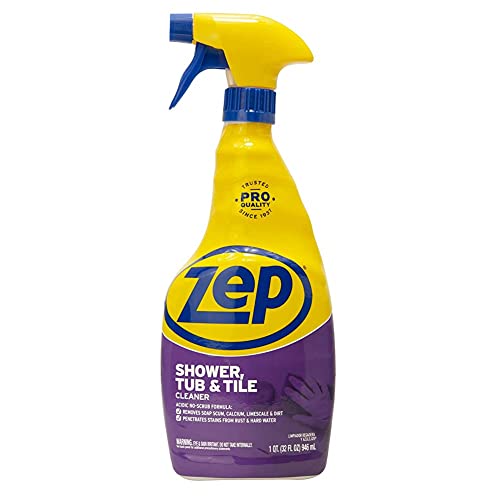
- Zep Shower Tub and Tile Cleaner — Check on Amazon
- Scrubbing Bubbles Grime Fighter Disinfectant Bathroom Cleaner Spray — Check on Amazon
- Wet & Forget Shower Cleaner Spray — Check on Amazon
- Citric-acid paste method (prose-only pick — see review)
- Oxalic-acid-based cleanser type (prose-only pick — see review)
- Pumice-type scouring for porcelain only (prose-only pick — see review)
In this guide
Quick Picks
| Pick | Badge | Why it earns its place |
|---|---|---|
| Zep Shower Tub and Tile Cleaner | Best Overall | Acidic, scrub-free formula made to dissolve the water-related stains rust travels with. |
| Scrubbing Bubbles Grime Fighter Bathroom Cleaner | Best for Light Rust and Grime | Foaming disinfectant that lifts fresh surface rust while it cleans the whole tub. |
| Wet & Forget Shower Cleaner Spray | Best for Prevention | Weekly no-scrub spray that stops iron deposits from maturing into stains. |
| Citric-acid paste method | Best for Delicate Finishes | Prose-only: the gentle chemistry acrylic and fiberglass can live with. |
| Oxalic-acid-based cleanser type | Best for Stubborn Stains | Prose-only: the classic rust-dissolving chemistry for set-in discoloration. |
| Pumice-type scouring | Best for Porcelain Only | Prose-only: mechanical removal for the toughest tubs — and a hazard to all others. |
Key Takeaways
- Diagnose the source first: iron in the water, a chip bleeding rust, or a metal object left sitting. The cure differs for each.
- Acidic cleaners dissolve rust chemically; that is why the acidic pick leads this list.
- Material is destiny: what porcelain tolerates, acrylic and fiberglass may not. Match the remover to the tub, always.
- Fresh rust is a cleaning task; set-in rust is a chemistry project. Work from gentlest to strongest.
- Prevention — weekly no-scrub care, dry metal objects, prompt chip repair — is cheaper than any remover.
- Never mix products, ventilate, and spot-test. Rust removal is the one bathroom job where patience is a safety feature.
How These Picks Were Chosen
The pool was read with a chemist’s skepticism. Most bathroom cleaners are not rust removers, and this guide refuses to pretend otherwise: each linked pick is ranked for the rust work it can honestly do. The Zep cleaner leads because its verified description is an acidic, scrub-free formula for dissolving common water-related bathroom stains — and rust staining is precisely a water-related stain, dissolved by acid attack on the iron oxide. Scrubbing Bubbles follows as the light-duty and maintenance option: a foaming disinfectant whose verified surface list includes the tub materials in question and whose strength is the fresh, thin rust film that arrives with iron-bearing water. Wet & Forget is ranked openly as prevention — its no-scrub weekly system prevents the soap-and-mineral matrix in which iron deposits anchor and mature.
The three prose-only picks fill the pool’s real gaps, described as types and methods with no invented products: citric paste, the gentle acid keepers of acrylic reach for; oxalic-based cleansers, the classic rust chemistry found in many powder cleansers, described by behavior rather than brand; and pumice scouring, the mechanical last resort whose material limits are stated in capital letters. Excluded from the pool: the soaking tubs themselves (they are the patient here, not the medicine — though the steel tub’s chip-and-rust maintenance is discussed where relevant, echoing its review in Best Bang For Your Buck Hot Tubs), the spa chemicals (a different water system entirely), and the faucet trim kit, which is not a tub or a cleaner. The sibling guide Best Rust Stain Remover For Tubs takes the stain-specific angle — set-in discoloration, porous surfaces, and color restoration — while this guide owns active rust and its sources.
The 6 Best Rust Remover for Tubs — Reviewed

Zep Shower Tub and Tile Cleaner
Our badge: Best Overall
The Zep Shower Tub and Tile Cleaner leads because rust removal is, at its core, an acid’s job, and this is the pool’s true acid: a ready-to-use, acidic, scrub-free formula whose verified purpose is dissolving common water-related bathroom stains — the soap scum, scale, and mineral staining family to which rust marks belong. On porcelain, enamel, tile, and grout, it does what gentler cleaners cannot: it chemically attacks the iron oxide bond instead of asking a surfactant to lift what chemistry has welded.
Strengths
- Acidic formula dissolves rust and mineral staining rather than merely lifting it.
- Scrub-free action protects finishes from the mechanical damage desperate scrubbing causes.
- Ready-to-use spray: no mixing, no dilution errors.
Trade-offs
- Acid demands respect: ventilation, gloves, and strict label discipline.
- Not the choice for delicate or unknown finishes without a spot test — acid and some surfaces are enemies.
- It removes rust; it does not stop the source. Pair it with the diagnosis sections below.
| Size | 32 Fl Oz (Pack of 1) |
| Dimensions | 3 x 11.2 x 4.4 inches |
| Weight | 2.01 pounds |
Technique is the difference between this product succeeding and disappointing. Work on a dry-ish surface so the acid is not diluted by standing water. Apply, and then — the step impatience ruins — wait: give the formula its dwell time to dissolve, agitating only with a soft cloth or non-scratch pad, then rinse thoroughly and inspect under good light. Repeat rather than escalate; two patient applications outperform one aggressive one on every finish. Around fixtures and drains, keep the acid off metal trim you care about, and rinse the whole zone when you finish. For enamel-over-steel tubs — the pool’s Bootz being the type specimen — this is also the chip protocol’s first half: dissolve the rust blooming from a chip, dry the spot completely, and seal it with a proper touch-up before moisture restarts the cycle.
Where not to reach for it: acrylic and fiberglass tubs of unknown tolerance, natural stone surrounds, and any surface whose maker forbids acids. Those cases belong to the citric pick below. The acid’s power is the point, and power in cleaning chemistry is always rented with attention. Used on the right surfaces with the dwell-and-rinse discipline, it is the closest thing this category has to a sure answer — which is what “best overall” should mean in a remover guide.
Best for: Porcelain, enamel, and tile tubs with genuine rust staining / Not suited for: Delicate acrylic or fiberglass without a successful spot test
Choose it if your tub’s material can take an acid and your rust is real. Skip it — and start with citric — if your finish is delicate or unknown.

Scrubbing Bubbles Grime Fighter Disinfectant Bathroom Cleaner Spray
Our badge: Best for Light Rust and Grime
The Scrubbing Bubbles Grime Fighter Disinfectant Bathroom Cleaner Spray earns its place at the light end of rust work, where most household rust actually lives: the faint orange bloom around the drain, the rust-tinged film that iron-bearing water leaves on a white tub between cleanings, the shaving-can ring caught in its first week. Its foaming action clings to vertical surfaces, its verified surface list spans tubs, fiberglass, glazed porcelain, and more, and it disinfects while it cleans — relevant, because rust zones and grime zones are usually the same zones.
Strengths
- Foam clings to tub walls and fixtures where rust films form.
- Broad verified surface compatibility, including fiberglass and glazed porcelain.
- Handles the whole tub’s grime in the same pass as the light rust.
Trade-offs
- It is a cleaner, not a dedicated rust dissolver — set-in rust will outlast it.
- Light rust only: expecting it to erase a year’s neglect ends in disappointment.
- Citrus scent and disinfectant chemistry still call for ventilation and label care.
| Size | 32 Fl Oz (Pack of 1) |
The strategic role of this pick is frequency. Rust’s lifecycle in an iron-water home is deposit, anchor, stain — and the deposit stage, where this cleaner wins, recurs weekly. A household that foams the tub on its regular cleaning rhythm never lets iron mature into the stains that need the acid pick, which is why the two products are complements rather than competitors. Technique mirrors the general discipline of Best Cleaner For Bath Tubs: spray, let the foam work, wipe with a soft cloth, rinse. On the drain’s metalwork and the overflow plate — rust’s favorite furniture — a soft toothbrush extends the foam’s reach without scratching.
Know its ceiling and it will never disappoint you. Orange that survives two honest applications is no longer light rust; graduate to the acid or the oxalic type below rather than scrubbing harder, because mechanical desperation is how finishes get damaged while stains survive. That graduation discipline — gentlest first, escalate on evidence — is the entire philosophy of this guide in one habit.
Best for: Weekly maintenance in iron-water homes and fresh, light rust films / Not suited for: Set-in stains or rust bleeding from chips
Choose it if your rust is young and your cleaning rhythm is regular. Skip it as a sole solution if the staining is old — it will clean everything around the stain and leave the stain as a lesson.

Wet & Forget Shower Cleaner Spray
Our badge: Best for Prevention
The Wet & Forget Shower Cleaner Spray is ranked third and labeled honestly: it is not a rust remover, and this guide will not call it one. Its verified system — a bleach-free, no-scrub, no-rinse weekly spray that prevents soap scum, grime, and body-oil buildup on fiberglass, acrylic, tile, and glass — earns its place because rust prevention is rust removal’s cheaper half. Iron deposits anchor in the soap-and-mineral film a tub accumulates; a surface that never grows that film gives iron nowhere to take hold.
Strengths
- Weekly no-scrub application prevents the deposit matrix rust anchors in.
- Bleach-free with no harsh fumes — the gentlest chemistry on this list.
- One bottle covers up to 12 weeks of weekly use per the maker.
Trade-offs
- Prevention only: existing rust needs the picks above or below, first.
- Works on an 8-to-12-hour dwell rhythm — a system, not an event.
- Heavy existing buildup must be cleaned away before the system starts.
| Color | Fresh Scent |
| Size | 64 Fl Oz (Pack of 1) |
| Dimensions | 7.75 x 4.1 x 9 inches |
| Weight | 4.94 pounds |
The household this pick transforms is the well-water household — the home where iron arrives with every fill and rust management is a permanent condition rather than an incident. For them, the winning strategy is layered: treat the water if the iron load justifies it, remove what deposits with the gentle-to-acid ladder, and run a weekly prevention system so the ladder is climbed rarely. Wet & Forget is that third layer, and its no-scrub gentleness matters doubly on the acrylic and fiberglass tubs that dominate modern bathrooms — the same surfaces the plastic-tub care in Best Bathtub Cleaner For Plastic Tubs is written to protect. Spray after the week’s last shower, let it sit, rinse before the next use: a rhythm so light it survives busy households, which is the only kind of prevention that exists in practice.
Set expectations with the maker’s own framing: on heavy buildup, daily application until clean, then weekly maintenance. Rust veterans will recognize the pattern — remediation first, system second — and will also recognize that a household running this system faithfully will read the rest of this guide as history rather than as a shopping list.
Best for: Iron-water households and acrylic/fiberglass owners preventing rust’s return / Not suited for: Removing existing, established rust stains
Choose it after the stains are gone, to keep them gone. Skip it as a first response to active rust — that is the acid’s job, above.
Citric-Acid Paste Method
Our badge: Best for Delicate Finishes
This pick is prose-only: a method, not a product, because the pool holds no dedicated gentle rust remover and acrylic owners deserve their own answer. Citric acid — the food-grade acid sold as a powder for canning and descaling — mixed with just enough water to form a paste, is the gentle end of acid rust removal: strong enough to chelate and lift iron oxide from the surface, mild enough that acrylic and fiberglass keepers reach for it first. Applied as a paste so it stays where the stain is, given time, and rinsed without scrubbing heroics, it handles fresh-to-moderate rust on the finishes the strong acid pick cannot touch.
Strengths
- The gentlest effective acid approach — the acrylic-safe starting point.
- Paste form keeps the chemistry on the stain, not running down the drain.
- Food-grade familiarity: inexpensive, available, and simple to mix fresh.
Trade-offs
- Gentle means slower and sometimes repeated — patience is the active ingredient.
- Set-in, years-old rust may exceed its reach entirely.
- Still an acid: spot-test, time it, rinse it, respect it.
| Type | Prose-only — method pick, no pool product |
| Format | Fresh-mixed paste, dwell, soft-cloth removal |
| Best pairing | Acrylic and fiberglass tubs, light-to-moderate rust |
The method, carefully: mix the paste to a toothpaste consistency, spread it over the stain a few millimeters thick, cover it with plastic wrap if you want a long dwell without drying, and check at intervals rather than by the clock — you are watching the orange fade, not obeying a timer. Remove with a soft cloth and generous rinsing. Two or three cycles handle most delicate-finish rust that is going to yield to gentleness; what survives that honest trial has earned a conversation with the tub’s manufacturer about what their finish tolerates, not a unilateral escalation to stronger acids. That restraint is the delicate-finish keeper’s creed, and it is why their tubs still shine at year ten.
Best for: Acrylic and fiberglass owners removing rust without risking the finish / Not suited for: Heavy, set-in rust or anyone in a hurry
Choose this method if your finish is precious and your rust is moderate. Skip it if the stain has survived gentleness before — graduate deliberately, with the manufacturer’s blessing.
Oxalic-Acid-Based Cleanser Type
Our badge: Best for Stubborn Stains
The second prose-only pick is the classic: oxalic acid is the chemistry historically synonymous with rust removal, the active principle in a family of powder and liquid cleansers sold for exactly this purpose. Described here as a type — seek cleansers whose rust claim rests on oxalic chemistry — it earns the stubborn-stain slot because oxalic acid does not merely attack rust; it converts iron oxide into a soluble, colorless compound, which is why it succeeds on the grey-orange shadows that survive general cleaners, particularly on porcelain and enamel.
Strengths
- The definitive rust chemistry for set-in staining on tolerant surfaces.
- Effective on the residual shadow stains that outlast scrubbing.
- Powder forms double as a mild polishing cleanser on porcelain.
Trade-offs
- A real chemical with real handling rules — gloves, ventilation, no mixing, ever.
- Not for acrylic, fiberglass, or stone unless the specific product says so.
- Toxicity discipline: store away from children and never decant into food containers.
| Type | Prose-only — cleanser type, no pool product |
| Format | Powder or liquid cleansers built on oxalic chemistry |
| Best pairing | Porcelain and enamel with stubborn, set-in rust |
Application wisdom for the type: make a slurry or apply the liquid to the stain, keep it wet through its working time — a damp paper towel laid over the spot is the old keeper’s trick — and rinse with more water than feels necessary. On porcelain, a soft brush can assist; on enamel, cloth only. As with the acid pick, repetition beats aggression. And a boundary worth engraving: oxalic chemistry and the delicate finishes do not mix, and its use anywhere near the acrylic tubs that fill this series’ other guides should be ruled out by default. The stain-specific companion guide, Best Rust Stain Remover For Tubs, extends this discussion to porous grout, stone, and the color-restoration endgame.
Best for: Porcelain and enamel tubs with rust that has survived everything gentler / Not suited for: Acrylic, fiberglass, stone, or casual handling
Choose this type when the ladder has been climbed honestly and the stain remains. Skip it as a first resort — its strength is wasted on fresh rust and its risks are real.
Pumice-Type Scouring for Porcelain Only
Our badge: Best for Porcelain Only
The final pick is mechanical, prose-only, and fenced with warnings: a pumice-type scouring stick — volcanic stone softer than porcelain glaze but harder than rust and mineral crust — can physically plane away rust rings and deposits that chemistry alone leaves behind on true porcelain. Wet stone, wet surface, light strokes with the grain of the finish, constant rinsing to float the grit away: on the right surface, it is miraculous. On every other surface in the modern bathroom, it is vandalism.
Strengths
- Removes crusts and rings that defeat chemistry alone — on porcelain.
- No chemical exposure, no dwell, immediate visible feedback.
- The stone wears to the surface’s shape as you work.
Trade-offs
- Destroys acrylic, fiberglass, and most enamel finishes. Porcelain only — no exceptions, no experiments.
- Technique-sensitive: dry stone or heavy pressure scratches even porcelain.
- Useless on rust bleeding from a chip; that is a repair, not a scouring.
| Type | Prose-only — mechanical method, no pool product |
| Format | Wetted pumice-type stone, light strokes, constant rinse |
| Best pairing | True porcelain tubs with crusted rust rings |
The discipline of the method is moisture and lightness. The stone and the surface stay wet — the water is both lubricant and grit transport — and the strokes stay lighter than your instinct suggests, letting the stone’s slow planing do what pressure would do badly. Test in the least visible corner of the tub even on porcelain you are sure of; certainty about a finish is cheap to verify and expensive to assume. If your tub is enamel over steel or cast iron with any chip history, treat it as enamel, not porcelain, and stay with chemistry. The line this pick walks is the whole guide in miniature: the strongest method, reserved for the surface that can bear it, after gentler methods have had their honest chance.
Best for: Verified porcelain tubs with crusted, chemistry-resistant rust rings / Not suited for: Every other tub material, without exception
Choose it if you are certain of porcelain and chemistry has done its best. Skip it — entirely, forever — on acrylic and fiberglass.
Comparison Table
| Pick | Method | Safe surfaces | Rust strength | Check price on Amazon |
|---|---|---|---|---|
| Zep Tub and Tile Cleaner | Acidic spray | Porcelain, enamel, tile (spot-test) | Strong | Check price on Amazon |
| Scrubbing Bubbles Grime Fighter | Foaming cleaner | Broad, incl. fiberglass | Light | Check price on Amazon |
| Wet & Forget Shower | Weekly prevention | Acrylic, fiberglass, tile, glass | Preventive | Check price on Amazon |
| Citric-acid paste | Prose-only method | Acrylic, fiberglass | Light-moderate | Check price on Amazon |
| Oxalic-based cleanser | Prose-only type | Porcelain, enamel | Stubborn stains | Check price on Amazon |
| Pumice-type scouring | Prose-only method | Porcelain ONLY | Crusted rings | Check price on Amazon |
How to Choose the Best Rust Remover for Tubs
Diagnose the source before buying anything
Iron in the water supply paints the whole tub faintly and returns forever until the water is treated. A chip bleeds from one point and streaks downward. An object print matches the shape of what sat there. Photograph your rust, find its pattern, and let the pattern choose the product — and the repair, the water decision, or the habit change that must accompany it.
Match chemistry to your tub’s material
Write your tub’s material at the top of the shopping list. Porcelain and sound enamel open the full ladder, acids included. Acrylic and fiberglass close it at the gentle end — citric methods and prevention systems — and any product that cannot state its compatibility with your finish is disqualified until it can. The tubs reviewed in Best Cleaner For Bath Tubs carry the same material logic through everyday cleaning.
Climb the ladder: gentle, acid, oxalic, mechanical
Escalation on evidence is the method. Fresh rust yields to cleaning; moderate rust to acids; stubborn rust to oxalic chemistry; crusted rust on porcelain to careful mechanics. Skipping rungs risks the finish; refusing to climb wastes the weekend. Let each rung’s result — photographed under the same light — authorize the next.
Budget the source fix in the same purchase
A chip touch-up kit for the bleeding enamel, a filter conversation for the iron water, a silicone mat habit for the metal cans. Remover without source repair is a subscription, and the subscription always costs more than the cure.
Read the safety panel like it matters — it does
Acids and oxalic products carry real handling rules: gloves, ventilation, no mixing with anything — above all never with bleach — and storage away from children. A remover chosen without reading its panel is not yet chosen.
How Do You Remove Rust from a Tub Without Damaging It?
The safe sequence, start to finish: clear the tub of objects and loose debris; rinse and let the surface drain so products are not diluted. Spot-test your chosen remover in a hidden area — behind the faucet, inside the overflow’s shadow — and wait out its full dwell before judging. Apply to the stain, honor the dwell time, and assist only with soft tools: cloth, non-scratch pad, soft brush. Rinse with generous water, dry the area, and inspect under bright light; photograph the result to compare honestly. Repeat the same rung once before escalating. When the stain yields, neutralize the episode with a final thorough rinse of the whole tub, then fix the source and start the prevention rhythm the same week.
Problem: The stain lightens but will not vanish — You are likely looking at iron that has penetrated a compromised finish or at the shadow stage that oxalic chemistry addresses on tolerant surfaces. On delicate finishes, accept “faded and sealed” as the honest endpoint rather than sacrificing the surface.
Problem: Rust returns within weeks in the same place — The source is alive: a chip still open, water still iron-bearing, an object still stored in the tub. Removers cannot win an argument with a source; repair, treat, or relocate it.
Problem: The finish went dull where you cleaned — The product or the pad was too strong for the surface. Stop, return to the gentlest rung, and consult the finish’s maker before further chemistry — dullness is the warning that precedes damage.
Problem: Rust rings keep forming under the shampoo bottles — Metal cans and caps in a wet tub are rust farms. Move products to a rack or the ledge’s dry end, and wipe the ring zone in the weekly clean before rings set.
Iron in the Water: The Source Behind Most Tub Rust
Well water and aging municipal lines deliver dissolved iron that is invisible in the glass and unmistakable on the tub: a faint orange blush that deepens at the waterline, around the drain, and wherever water stands and evaporates. No remover strategy outruns a continuous supply; the household fix lives upstream, in iron filtration or softening sized to the water’s actual iron content, which a simple water test establishes. Until then, the management rhythm in this guide — weekly prevention spray, prompt light cleaning, acid on evidence — keeps the tub white at a modest cost in attention. City-water households see a milder version after hydrant flushing or nearby main work stirs sediment into the lines; those episodes pass, and the rust they leave is a one-time removal, not a lifestyle.
There is a diagnostic gift hidden in water-borne rust: it maps your water’s behavior. The stains gather where water stands longest and evaporates slowest — which is also where scale forms and where finishes age fastest. Reading the rust is reading the tub’s whole mineral biography, and the keepers who learn to read it stop fighting stains and start managing water, which is the moment the problem actually ends.
Chips, Enamel, and the Rust That Bleeds
Enamel-over-steel and enamel-over-cast-iron tubs carry a specific rust mechanism: a chip through the enamel exposes metal, moisture reaches it, and rust blooms outward and streaks down with every shower. Removal here is a two-act play — dissolve the rust with the acid approach, then repair the breach, because an open chip re-rusts on schedule forever. The repair craft: clean and completely dry the chip, apply an enamel touch-up made for tubs in thin layers, let it cure fully, and keep the spot dry through the cure. The sealing principles in Best Sealant For Tubs govern the moisture discipline around the repair. Prevention is mostly tenderness: no dropped steel tools in the tub, no scouring pads, and prompt attention to the first chip rather than the tenth. The steel tub in this series’ value guide survives decades on exactly this covenant — its owners trade a little vigilance for a generation of service.
Common Buying Mistakes
Buying the strongest acid for a delicate tub
Strength is not suitability. An acid that erases rust and etches acrylic has traded a stain for a scar. Material first, chemistry second, always.
Scrubbing harder instead of dwelling longer
Rust yields to chemistry and time, not to elbow violence. Aggressive pads damage finishes while stains watch. Apply, wait, rinse, repeat — the patient sequence wins.
Mixing products to “boost” them
Never. Acid plus bleach and other combinations can generate dangerous gases. One product, one session, rinsed fully before anything else touches the tub.
Removing the stain and ignoring the source
The chip, the water, the shaving can — whichever authored the rust will author it again. Every removal in this guide is paired with a source fix for a reason.
Skipping the spot test on a visible tub
Two square inches in a hidden corner, one full dwell cycle. The test costs ten minutes; the alternative costs a refinish. There is no version of this math that favors skipping.
Final Recommendation
For most tubs with real rust, start with the Zep Shower Tub and Tile Cleaner: true acidic dissolution, scrub-free, on the surfaces that can take it — with a spot test as your entry ticket. Keep the runner-up, Scrubbing Bubbles Grime Fighter — Check on Amazon — on the weekly rhythm so the acid is needed rarely, and run Wet & Forget behind both if your water carries iron. Acrylic owners: begin and usually end with the citric method. Porcelain owners with crusted rings: the pumice is your careful last resort. The best rust remover for tubs is the one matched to your stain’s source and your tub’s material — diagnose first, climb the ladder, fix the source, and the orange stays gone.
Well Water, City Water, and the Two Rust Regimes
The household’s water source quietly decides which version of this guide it lives in. Well water is the rust regime in its full form: iron content varies by aquifer and season, often arriving with the manganese and hardness that complicate every bathroom chemistry, and the well household’s tub is a monitoring station for its own water. For them, rust removal is a maintenance rhythm layered over a water-treatment decision — and the decision deserves real analysis, because iron filtration sized to the actual load converts rust from a lifestyle into a memory. The test that starts it is inexpensive and definitive: a water sample read for iron, hardness, and pH gives the household numbers instead of folklore, and every treatment conversation afterward is arithmetic.
City water writes the gentler regime: rust as episode rather than condition. Municipal iron episodes follow main breaks, hydrant flushing, and construction — the water runs discolored for a day, and the tub keeps the souvenir for a season if nobody acts in the deposit window. The city household’s skill is therefore speed: recognize the episode, run the gentle rungs while the deposit is young, and return to a life in which rust is a story told about last spring. Both regimes punish the same error — the shrug that lets a deposit become a stain — and reward the same virtue, which is treating rust in its first week as the minor event it still is.
Rust Around Fixtures: Drains, Overflows, and Faucet Bases
A disproportionate share of tub rust lives at the metalwork, and it has its own mechanics. Drain flanges and overflow plates are metal living in water’s favorite gathering places; their finishes age, their edges trap moisture, and rust blooms outward from them in the rings and streaks that dominate bathroom photographs of the problem. Removal around fixtures adds two cautions to the standard ladder. First, protect the fixture’s finish: acids that tub porcelain tolerates can dull chrome and attack the softer metals of decorative finishes, so mask or carefully avoid fine metalwork with the strong rungs, and rinse the zone thoroughly when the session ends. Second, diagnose before celebrating: rust at a drain may be the drain’s own corrosion announcing its replacement season, and rust beneath a faucet base may be reporting a slow supply leak whose water is rusting from inside the wall’s story. A ring removed while its fixture continues to corrode is a subscription renewed. The keepers who win at fixtures treat every ring as a question — is this the water, the object, or the fixture itself? — and let the answer, not the stain, assign the work.
Protecting the Rest of the Bathroom While You Work
Rust sessions happen in a room full of other finishes, and the collateral map deserves a minute of the plan. Chrome and brushed-metal fixtures dull under strong acids and oxalic contact — work around them with the applicator, not over them, and rinse the whole neighborhood when the session ends. Natural stone thresholds, saddles, and decorative inlays share the acid ban that governs stone everywhere in this series; a remover session that wanders onto stone trades one stain for an etch. Colored grout can lighten under aggressive chemistry in ways white grout forgives, and painted surfaces near the tub — the wainscot’s bottom edge, the vanity’s side — should be masked or simply respected with distance and a steady hand. Floors matter too: drips of strong product on vinyl or wood finishes are their own small disasters, preventable with the towel laid along the tub’s apron before the bottle opens. None of this is meant to make the work forbidding; it is the ordinary perimeter discipline of any strong-chemistry job, and it takes ninety seconds. The keepers whose bathrooms emerge from rust campaigns better than they entered them are not luckier than other people. They are the ones who laid the towel down first.
Renters, Landlords, and Rust: Whose Problem Is It?
A practical coda for the large share of tubs that live in rented homes: rust sits at an interesting boundary of responsibility, and knowing the boundary saves both parties grief. Rust from the water supply and from aging fixtures is the property’s condition, not the tenant’s damage — a landlord presented with documented, water-borne staining is looking at their own plumbing’s biography, and tenants do well to photograph the tub’s state at move-in with the same care this guide teaches for stain campaigns. Rust from a tenant’s stored cans and razors is, equally plainly, the tenant’s housekeeping, and it is removable by the gentle rungs of this guide’s ladder at trivial cost when caught in its deposit weeks. The shared interest is the deposit-stage truth that governs everything here: rust addressed young is a cleaning line item for whoever owns the chore, while rust ignored becomes a refinishing argument at move-out, priced in the currency of deposits and disputes. A five-minute conversation at lease signing — who treats the water, who owns the weekly clean, what the tub looked like on day one, in photographs — converts the entire subject from a future conflict into a shared maintenance note. Rust, in the end, is rarely a character flaw in either party. It is iron, water, and time, and it yields to exactly the households, rented or owned, that treat it as a rhythm rather than a verdict.
The Ten-Minute Monthly: A Rust Tripwire for Every Household
If this entire guide were compressed into one habit, it would be this: once a month, in bright light, spend ten minutes reading your tub the way this guide has taught you to read it. The waterline for the first blush of film. The drain and overflow for the ring’s first whisper. The bottle zone for the object print in its first week. The known chip for any change in its bloom. Ten minutes, monthly, with the gentle cleaner already in the house — that is the whole subscription price of a rust-free tub, and it is the cheapest insurance policy in this entire series of guides.
Frequently Asked Questions
What actually dissolves rust on a bathtub?
Acids do — they convert iron oxide back into soluble compounds that rinse away. That is why the acidic cleaner leads this guide, why citric paste works gently, and why oxalic-based cleansers are the classic stubborn-stain answer. Neutral cleaners can only lift rust that has not yet bonded.
Can I use rust remover on an acrylic tub?
Only gentle chemistry: the citric-acid method and prevention systems are the acrylic-safe route. Strong acids, oxalic cleansers unless explicitly labeled for acrylic, and any abrasive — above all pumice — risk etching or scratching the finish. Spot-test anything, always.
Why does rust keep coming back in my tub?
Because its source is still active: iron in the water supply, an unrepaired enamel chip, or metal objects stored wet in the tub. Removal without source repair is a recurring appointment; the sections above pair each source with its fix.
Is the orange stain around my drain rust or something else?
Usually iron oxide from the water or from the drain’s metalwork — true rust in behavior and cure. Pink or black films, by contrast, are typically biofilms and mildew, which answer to the disinfectant and prevention picks rather than to acids.
Can rust stains permanently damage a tub?
Surface rust on a sound finish is removable and harmless. Rust from a chip is the dangerous kind — it signals exposed metal that will keep corroding and can eventually compromise the tub. That rust is a repair job, not just a cleaning job.
What should I never do when removing tub rust?
Never mix cleaning chemicals, never use abrasives or pumice on acrylic or fiberglass, never skip the spot test on a visible surface, and never leave strong acids dwelling unattended. Patience and sequence are the whole safety system.


