Disclosure: As an Amazon Associate, dailyhomedecorating.com earns from qualifying purchases. Links to Amazon on this page are affiliate links; they cost you nothing extra. Prices and availability change often, so check the current Amazon listing before you buy.
Winter camping punishes bedding optimism. A blanket that feels heroic on a showroom sofa can be useless in a tent at twenty degrees, too bulky for the pack, damp by midnight, and cold by three in the morning when the fire is ash and the wind finds every seam. The best blankets for winter camping are chosen as part of a sleep system — insulation from the ground, a sleeping bag or quilt rated for your conditions, and a blanket layer that adds warmth, handles moisture, and survives sparks, dirt, and being stuffed into a vehicle without ceremony. This guide is honest about its pool: these are home blankets evaluated for car camping, cabin, and basecamp duty, not technical backpacking quilts, and no blanket here replaces a properly rated winter sleeping bag. Within that honest frame, wool leads as it has for a century of cold camps, with heated options for powered sites and fleece layers for insulation and camp comfort.
Ranked below: the pure wool blanket that shrugs off damp and sparks better than synthetics, heated blankets for RV and powered-campsite preheating, sherpa and fleece for tent and cabin layering, and the system advice that keeps all of them working. Cold-weather home lessons transfer from Best Blankets For Cold Sleepers and natural-fiber depth from Best Wool Blankets For Beds, while vehicle-based campers can plan the rest of their kit around Black Friday Throw Pillow And Blanket Deals and Best Throw Pillows For Small Rooms Under $100 for cabin comforts.
Where to Buy
Every pick in this guide is sold on Amazon, where you can check the current size, color, and availability before you buy. Start with the lead pick, the Pendleton National Park Blanket, and use its Check on Amazon listing to confirm the design. The remaining picks are the Beautyrest Reversible Heated Blanket — Check on Amazon; the Bedsure GentleSoft Sherpa Fleece Throw Blanket for Couch — Check on Amazon; the Bedsure Fleece Bed Blankets Queen Size Grey — Check on Amazon; the Sunbeam Electric Heated Blanket — Check on Amazon; and the Exclusivo Mezcla Soft Large Fleece Throw Blanket for Couch — Check on Amazon. Check price on Amazon for each, and test your full sleep system at home before any cold trip.
In this guide
Quick Picks
| Pick | Badge | Why it earns its place |
|---|---|---|
| Pendleton National Park Blanket | Best Overall | Pure wool warmth that breathes, resists damp, and belongs around cold camps. |
| Beautyrest Reversible Heated Blanket | Best for Powered Sites | King heated warmth for RVs, cabins, and campsites with electricity. |
| Bedsure GentleSoft Sherpa Fleece Throw Blanket for Couch | Best for Camp Comfort | Sherpa layer for fireside evenings, tent lounging, and foot warmth. |
| Bedsure Fleece Bed Blankets Queen Size Grey | Best Budget | Washable insulation layer inside bags and over cabin beds. |
| Sunbeam Electric Heated Blanket | Best for Cabins | Precise heated prewarming for bunks and cabin beds with power. |
| Exclusivo Mezcla Soft Large Fleece Throw Blanket for Couch | Best Compact | Light vehicle and emergency layer that packs anywhere. |
Key Takeaways
- Wool is the winter camp blanket: warm when damp, breathable, durable, and traditional around fires for good reason — though never treat any blanket as fireproof.
- No home blanket replaces a winter-rated sleeping bag and ground insulation; blankets upgrade systems, they do not substitute for them.
- Heated blankets transform powered camping — RVs, cabins, electric sites — and are dead weight without power.
- Fleece layers add cheap, washable warmth inside bags and over cabin bedding, and dry faster than most fibers after damp nights.
- Pack for the coldest hour, test the system in the backyard first, and keep one dry layer sacred in a waterproof bag.
- Size and bulk rule vehicle camping generously and backpacking absolutely; know which trip you are packing for.
How These Picks Were Chosen
Picks were judged on cold-weather insulation, moisture behavior, durability against ground and fire-adjacent camp life, packability for vehicle-based trips, and honesty of role. Wool led on fiber physics. Heated blankets were included strictly for powered contexts and labeled so. Cooling blankets, thin cotton, and delicate quilts were excluded as structurally unsuited to winter. Every review states whether its pick is a primary layer, a system booster, or a comfort piece, because winter is the season where vague bedding claims stop being funny. Specifications are pool-verified only, with no prices or fixed ratings.
The 6 Best Best Blankets for Winter Camping — Reviewed

Pendleton National Park Blanket
Our badge: Best Overall
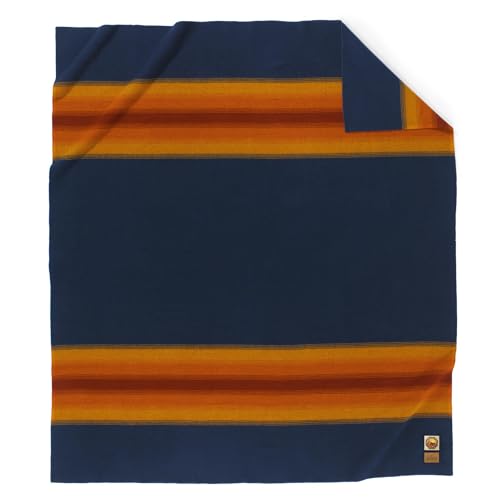
The Pendleton National Park Blanket is what winter campers have carried for generations: one hundred percent wool, queen-sized, napped for softness, warming even when the air is damp, breathing so you do not wake clammy, and heavy enough to stay where you wrap it around shoulders at a cold picnic table or lay it over a sleeping bag for a serious boost. It suits car campers, cabin stays, hunting and ice-fishing camps, and anyone building a cold-weather kit meant to last decades.
Strengths
- Wool insulates when damp, unlike most fibers.
- Substantial drape blocks drafts around shoulders and over bags.
- Heirloom durability across seasons of rough use.
Trade-offs
- Too bulky and heavy for backpacking.
- Wool care after camp requires airing and gentle handling.
- Premium piece to expose to sparks and mud; use with respect.
| Color | Grand Canyon Navy |
| Size | Queen (90″ x 90″) |
| Dimensions | 18 x 15 x 6.5 inches |
| Weight | 6.2 pounds |
In camp, deploy it three ways: as the fireside wrap for the evening (at a safe distance from flame, always), as the over-bag layer that turns a three-season bag’s cold night survivable inside a sound system, and as the cabin bed’s main blanket where its steadiness beats cabin heating that cycles off at midnight. Air it thoroughly after every trip before storage, since camp moisture and smoke linger. Choose wool as the winter camp foundation. Skip it for ultralight packs, where technical quilts — outside this pool — are the honest answer.
Best for: Car camping, cabins, and over-bag warmth / Not suited for: Backpacking or sole winter insulation
Choose it for real cold-weather fiber; skip it for ultralight loads. Check on Amazon

Beautyrest Reversible Heated Blanket
Our badge: Best for Powered Sites
The Beautyrest Reversible Heated Blanket changes winter camping wherever electricity exists: RV beds, powered campsites, cabins, and lodges. Its king size, twenty settings, plush and sherpa faces, and auto shut-off let you preheat a freezing bunk and sleep in controlled warmth instead of hoping insulation alone will catch up.
Strengths
- Preheats cold beds in RVs and cabins on arrival.
- Dual-zone potential for couples in king bunks.
- Thick fabrics insulate during power-free hours too.
Trade-offs
- Useless weight without a power source; plan honestly.
- Large and heavy to pack even for vehicle trips.
- Must be used exactly as directed, flat and supervised per its guidance.
| Color | Ivory |
| Size | King (90 in x 100 in) |
| Dimensions | 90 x 100 x 0.25 inches |
| Weight | 9.53 pounds |
The killer use is arrival night: plug in, preheat while you unpack and cook, and the coldest bed in the county becomes the reward for the drive. In RVs it also lets you keep cabin heat lower overnight, saving propane or battery for other systems — within the blanket’s own safety instructions, never folded or bunched while powered, and never as a child’s unsupervised bedding. Choose it for powered winter bases. Skip it for tent trips beyond the cord’s reach.
Best for: RVs, powered sites, and cabin bunks / Not suited for: Unpowered tent camping
Choose it where outlets live; skip it where they do not. Check on Amazon

Bedsure GentleSoft Sherpa Fleece Throw Blanket for Couch
Our badge: Best for Camp Comfort
The Bedsure GentleSoft Sherpa Fleece Throw Blanket for Couch owns the camp evening: sherpa warmth around shoulders at the fire, across laps in a cold tent vestibule, and at the foot of a sleeping bag where feet chill first. It is the comfort layer that makes winter camping feel like leisure instead of endurance.
Strengths
- Fast sherpa warmth for stationary cold moments.
- Compact throw packs into vehicles and tent corners easily.
- Reversible for different cold levels across the evening.
Trade-offs
- Synthetic pile must be kept well clear of flames and sparks.
- Throw size is a layer, not a sleep system.
- Pile collects camp debris; shake it before it enters the tent.
| Color | 01 – Grey |
| Size | Throw (50″ X 60″) |
| Dimensions | 59.05511805 x 51.18110231 x 0.0399999999592 inches |
| Weight | 2.03 pounds |
Keep it as the outside blanket and let it take the smoke, the frost, and the dropped marshmallow, then shake it hard before it joins sleep layers. Inside the tent it earns a second shift over feet or as a pillow-side draft blocker. Wash it when home without ceremony. Choose it for camp morale. Skip it as primary insulation — pair it with wool or a rated bag, a pairing philosophy shared with Best Outdoor Blankets For Fire Pit for home fireside setups.
Best for: Fireside evenings and tent comfort layers / Not suited for: Primary winter insulation
Choose it for morale and foot warmth; skip it as the system. Check on Amazon

Bedsure Fleece Bed Blankets Queen Size Grey
Our badge: Best Budget
The Bedsure Fleece Bed Blankets Queen Size Grey is the system booster: laid inside a sleeping bag as a liner-blanket, spread over cabin beds, or doubled as a tent-floor lounge layer, its smooth fleece adds real warmth per dollar, packs without preciousness, and washes back from camp life without a specialist routine.
Strengths
- Versatile insulation inside bags and over bunks.
- Dries faster than cotton after damp nights.
- Washable forgiveness for mud, smoke, and spills.
Trade-offs
- Fleece alone is not winter-rated protection.
- Bulky queen footprint for small vehicles.
- Synthetic; keep from sparks and flame.
| Color | Grey |
| Size | Queen (90″ X 90″) |
| Dimensions | 94.48818888 x 86.61417314 x 0.0399999999592 inches |
| Weight | 3.19 pounds |
The inside-the-bag trick deserves its fame: a fleece layer against the body stops the cold shock of a bag’s interior, adds noticeable warmth, and — just as valuable — keeps body oils off the bag itself, extending the life of expensive insulation. Cut or fold it to your bag’s shape if you dedicate one to the role. Choose it as the affordable warmth multiplier. Skip it as a standalone winter plan.
Best for: Bag liners, cabin beds, and budget warmth / Not suited for: Standalone winter sleeping
Choose it to upgrade every system; skip it as the only layer. Check on Amazon

Sunbeam Electric Heated Blanket
Our badge: Best for Cabins
The Sunbeam Electric Heated Blanket is the cabin bunk specialist: full size, twelve settings, heat-sensing technology, a backlit dial for dark bunkrooms, and a long selectable auto-off for preheating while the stove warms the room. Hunting cabins, ice-fishing shacks with power, and guest lodges are its natural habitat.
Strengths
- Sensed, adjustable heat for unpredictable cabin temperatures.
- Backlit control suits dark, cold rooms.
- Soft microplush feels welcoming on arrival night.
Trade-offs
- Power-dependent, like all heated picks.
- Full size suits bunks, not king lodge beds.
- Requires the standard heated-bedding disciplines.
| Color | Mushroom |
| Size | Full |
| Weight | 4.63 pounds |
Leave it as the cabin’s permanent bunk equipment if the cabin is yours, with instructions for guests pinned beside it, and it will pay for its place every cold arrival. For rented cabins and lodges, confirm outlets and policies before packing it. Choose it for powered bunk warmth. Skip it for the trail.
Best for: Cabin bunks and powered shacks / Not suited for: Trail or tent use without power
Choose it for cabin arrivals; skip it for the backcountry. Check on Amazon

Exclusivo Mezcla Soft Large Fleece Throw Blanket for Couch
Our badge: Best Compact
The Exclusivo Mezcla Soft Large Fleece Throw Blanket for Couch is the always-in-the-vehicle blanket: light, long, smooth, and cheap to replace, it covers winter driving emergencies, passenger naps, dog duty on cold seats, and the extra layer nobody planned for. Every winter vehicle in cold country should carry something exactly like it.
Strengths
- Packs small and light for permanent vehicle storage.
- Long throw covers a reclined passenger or a curled sleeper.
- Washes clean after road and camp abuse.
Trade-offs
- Light warmth; an emergency layer, not a sleep system.
- Synthetic fire caution applies around camp.
- One color for visibility planning in the vehicle kit.
| Color | Forest Green |
| Size | Throw XL (50″ x 70″) |
| Dimensions | 70 x 50 x 0.04 inches |
| Weight | 1.55 pounds |
Store it with the winter car kit — alongside water, light, and traction aids — and replace it into the vehicle the same day it is used and washed, because emergency gear that migrates indoors is not emergency gear. On trips it doubles as the picnic, passenger, and tent-door layer. Choose it as the compact insurance blanket. Skip it as planned primary warmth.
Best for: Vehicles, emergencies, and spare layers / Not suited for: Planned primary insulation
Choose it to always be ready; skip it as the main event. Check on Amazon
How the Six Picks Behave Across a Whole Cold Weekend
Single-night impressions flatter almost any blanket, so it helps to walk the full weekend. On Friday evening the Pendleton earns its keep before anyone sleeps: it is the wrap that stays on shoulders through dinner, dish duty, and the last fire check, because its weight keeps it seated instead of sliding off like a slick fleece. By Saturday morning it has also done invisible work — wool aired on a line or over a camp chair for twenty minutes sheds the night’s moisture and smoke far more willingly than pile fabrics, which tend to hold campfire smell deep in their fibers until they are washed. Campers who rotate the Pendleton between fireside duty and over-bag duty should pick one role per trip, though; a blanket that smells of woodsmoke is pleasant at the fire and noticeably less pleasant against a pillow.
The Beautyrest heated blanket shows its value in a pattern rather than a moment. The first night it rescues an ice-cold RV mattress. The second night, once the crew learns the routine — switch it on while the kettle boils, turn it down before getting in, let the auto shut-off be the backstop rather than the plan — it becomes infrastructure, the thing that lets the furnace or cabin stove rest at a lower setting overnight. Its plush and sherpa faces matter here too: on a night when the site loses power, those thick unpowered layers still insulate respectably over a sleeping bag, which is more than a thin heated throw could claim. What it never becomes is packable; plan its space in the vehicle as fixed cargo, the way you plan space for the cooler.
The Bedsure sherpa throw is the weekend’s morale officer, and morale is a real variable on cold trips. It is the blanket a chilled kid gets handed without negotiation, the one across the lap of whoever drew dish duty in the dark, and the one that makes a frosty tent vestibule a place people linger over morning coffee instead of fleeing. Because it is a throw rather than bed-sized, nobody fights over its allocation — it circulates. Its weakness appears on day two of damp weather: pile that got misted takes longer to feel dry again than smooth fleece, so hang it inside the tent or vehicle during the day rather than leaving it wadded on a sleeping bag.
The queen Bedsure fleece is the quiet workhorse nobody photographs. Inside a sleeping bag it removes the nightly cold-shock moment and adds warmth exactly where the sleeper is, which is more efficient than heating the whole tent volume of air. Over a cabin bunk it turns thin rental bedding into a credible bed. Its weekend lesson is about quantity: one queen fleece cut or folded to serve two bags, or two fleeces rotated so one is always airing, beats one premium layer asked to be everywhere. It also takes the abuse — boot scuffs, spilled cocoa, a dog’s muddy pivot — and washes back without a specialist routine, which is why budget fleece so often outlives fancier gear in real camp kits.
The Sunbeam’s weekend is about arrival energy. Cabins are coldest in the first three hours, exactly when tired people most want to crawl in; a sensed, adjustable heated blanket on the bunk collapses that misery window. Its backlit dial sounds like a small thing until you are changing a setting at 2 a.m. in a bunkroom where turning on a light would wake three other people. By the second night most users settle two settings lower than their first-night choice — bodies acclimate, the cabin holds some heat — and that dial-down is the sign the system, not just the blanket, is working.
The Exclusivo Mezcla throw finishes the weekend in the vehicle, where it started: over a sleeping passenger on the drive home, under a muddy dog, then straight into the wash. Its contribution is that it is always present. Winter kits fail most often not on the headline insulation but on the unplanned hour — the breakdown, the delayed departure, the extra night — and a light, long, replaceable layer that lives in the car covers those hours without anyone having packed for them.
Fitting Each Pick to a Camper, Not Just a Campsite
The solo car camper should build around the Pendleton and the queen fleece and stop there: wool outside and over the bag, fleece inside it, one system that packs into a single bin and answers every night the season offers. Adding heated gear to a solo tent kit adds weight, cords, and a power dependency that buys nothing at an unpowered site. The couple in an RV should invert the logic — the Beautyrest becomes the foundation because their bed is fixed, powered, and shared, and the wool becomes the evening and emergency layer rather than the main event. Matching the kit to the camper’s actual shelter, rather than to a generic idea of camping, is the single decision that predicts whether a winter kit gets used happily for years or quietly abandoned after two trips.
Families need a different arithmetic again: layers per child, plus one. Children kick, spill, and soak bedding at rates adults do not, and a family kit with exactly enough layers has no answer for the 2 a.m. accident except waking the whole tent. The budget fleece and the sherpa throw exist in this guide largely for that arithmetic — cheap enough to own in multiples, washable enough to forgive the night, and warm enough in combination that no child sleeps in the damp layer while it dries. Families should also rehearse the layering at home, because a child who has practiced pulling the fleece inside the bag in a warm living room can do it in a cold tent; a child meeting the system for the first time at midnight cannot.
Hunters, ice fishers, and others who rise well before dawn should weight the Sunbeam-style cabin logic more heavily than tent campers do. Their sleep is compressed into the coldest hours and their mornings begin in the dark, so a preheated bunk and a blanket staged at the door for the first step outside are worth more than an extra increment of bag insulation. The same logic serves anyone whose camp day is physical — splitting wood, hauling water, skiing in — because deep fatigue lowers the margin for a cold, broken night. Recovery is a legitimate design goal for a blanket kit, not a luxury.
Finally, consider the blanket kit as part of the household’s wider winter readiness rather than a sealed hobby purchase. The wool blanket that camps in January is the guest bed’s best layer in December and the sofa’s anchor during a February power outage; the vehicle throw is already counted in the car kit; the fleece boosters serve sick days, sleepovers, and couch naps all year. Kits bought with those second jobs in mind get maintained, washed, and kept in repair, because they are in weekly sight. Kits bought for one annual trip get forgotten in a damp bin and fail on the one night they were for. Buy blankets your household will touch in every season, and the winter camping performance takes care of itself.
Comparison Table
| Pick | Size | Weight | Color | Check price on Amazon |
|---|---|---|---|---|
| Pendleton National Park Blanket | Queen (90″ x 90″) | 6.2 pounds | Grand Canyon Navy | Check price on Amazon |
| Beautyrest Reversible Heated Blanket | King (90 in x 100 in) | 9.53 pounds | Ivory | Check price on Amazon |
| Bedsure GentleSoft Sherpa Fleece Throw Blanket for Couch | Throw (50″ X 60″) | 2.03 pounds | 01 – Grey | Check price on Amazon |
| Bedsure Fleece Bed Blankets Queen Size Grey | Queen (90″ X 90″) | 3.19 pounds | Grey | Check price on Amazon |
| Sunbeam Electric Heated Blanket | Full | 4.63 pounds | Mushroom | Check price on Amazon |
| Exclusivo Mezcla Soft Large Fleece Throw Blanket for Couch | Throw XL (50″ x 70″) | 1.55 pounds | Forest Green | Check price on Amazon |
How to Choose a Blanket for Winter Camping Honestly
Name the trip before the blanket
Backpacking, tent car camping, RV travel, and cabin stays are different sports sharing a name. This pool serves the vehicle-based three well and backpacking barely; ultralight travelers need technical insulation designed for packs. Buy for the trip you take most, not the expedition you imagine.
Insulate from the ground first
Cold rises from frozen ground through any blanket. A proper sleeping pad or insulated mattress is non-negotiable, and blankets layer above it. Campers who blame their top blanket for a cold night are usually lying on the real problem.
Respect moisture as the enemy
Breath, condensation, and damp air wet insulation nightly. Wool tolerates it best here, fleece dries fastest, and a dry sacred layer kept in a waterproof sack guarantees one good night even in a bad week. Ventilate tents despite the cold; sealed tents rain inside.
Keep synthetics and flames apart
Fleece and sherpa melt and must live away from fire and stove zones. Wool’s natural slowness to ignite is relative, not permission. Assign fire-side roles to wool, keep synthetics in the tent and vehicle, and never dry any blanket over open flame.
How Should You Test and Pack a Winter Sleep System?
Test at home first: one backyard or garage night at forecast temperatures, in the full system — pad, bag, blanket layers, clothing — reveals every lie your kit tells while rescue is a doorway away. Note where cold entered, adjust one variable, and write the winning combination on the storage bin. Pack blankets compressed only for travel, store them lofted at home, and keep the sacred dry layer sealed until needed. After trips, air everything for a full day before storage, wash fleece as needed, air wool thoroughly, and inspect heated blankets and cords before they return to cabin duty.
On the trip itself, change into dry sleep clothes at night — the day’s clothes carry moisture that will chill you — keep a hat and warm socks as part of the sleep system, and eat and hydrate adequately, since a fueled body heats its blankets better than any fiber can. These are comfort fundamentals of cold camping, offered as practical tradition rather than medical advice.
Problem: Warm at midnight, freezing at four — Insulation is compressing or moisture is accumulating. Add the wool over-layer, check ground insulation, ventilate condensation, and ensure you did not sweat into the system earlier in the night.
Problem: Blanket is damp by morning — Tent condensation is raining on your sleep. Improve ventilation, keep breath outside the bag where possible, and air the blanket at first sun or wind without fail.
Problem: Heated blanket has no power at the site — It becomes a thick ordinary blanket; your unpowered layers must still form a survivable system. Never let a powered plan be the only plan in winter.
Problem: Everything smells like smoke — Fire-side and sleep textiles should be different pieces. Dedicate the sherpa to evenings, keep sleep layers in the tent, and air all of it at home before storage.
Winter Camping With Cabins, Kids, and Dogs
Cabins forgive what tents do not: bring the heated blankets, the wool, and the fleece, and let children experience winter nights with margins of warmth everywhere. Kids lose heat faster in practical terms because they kick layers off; sleeping bags with blanket boosters inside a cabin’s safety are the forgiving architecture, with adults checking layers through the night. Dogs earn their fleece defender on the floor or bunk foot and should never be the reason a heated blanket is used against its instructions. Winter camping with family succeeds on redundancy — spare dry layers, spare socks, spare patience — packed before departure, not improvised at midnight.
Storing Camp Blankets Between Seasons
Store wool clean, dry, aired, and protected from moths; store fleece washed and loosely folded; store heated blankets loosely rolled with cords untangled and controllers protected, per their makers’ guidance. Label bins by trip type — tent kit, cabin kit, vehicle kit — so the right blankets travel together and the sacred dry layer is never accidentally promoted to picnic duty in July. A kit that is stored as a system gets packed as a system, and winter mornings at the trailhead stay calm.
Layering Blankets With a Sleeping Bag: The Order Matters
Where a blanket sits in the stack changes what it does. A blanket inside the bag, against the body, works by eliminating air gaps and adding a soft, warm-touch surface; smooth fleece is the right tool there, because pile and thick wool bunch and create pressure points under a sleeper. A blanket over the bag works differently: it adds insulation on top, where rising body heat meets the coldest air, and it catches the condensation that would otherwise dampen the bag’s shell — one reason the wool over-layer is a classic, since wool tolerates that moisture duty night after night. Putting the heavy blanket under the bag, by contrast, wastes it: body weight compresses its loft to nearly nothing, and ground cold should be answered by the pad, never by a blanket.
Draft control is the second half of layering. Cold air enters a sleep system at the neck, along the zipper, and anywhere the bag’s edge lifts when the sleeper turns. A blanket draped so its excess falls around the shoulders and seals the neck opening does more for real warmth than a thicker blanket laid flat and square. Tuck decisions matter too: a blanket tucked hard under the pad can hold the system together on a restless night, while a blanket left loose on a windy cabin porch bed will migrate to the floor by 3 a.m. Practice the arrangement during the backyard test, in the dark, with cold hands — the configuration you can rebuild half-asleep is the only one you truly own.
Planning the Second Night, Not Just the First
Most winter kits are packed for night one and merely survive night two. Moisture is the reason: breath and damp air load insulation gradually, loft flattens under repeated compression in transit, and small annoyances — a blanket that slid, a throw that stayed damp — compound. Build the plan around recovery. Every blanket should have a daytime job in the system: airing on a line, draped in a sunlit vehicle, or resting lofted rather than stuffed. The sacred dry layer exists precisely for the trip where recovery fails — two nights of rain, no sun, no wind — and it should be opened with the seriousness of a reserve parachute, then promoted to first-line duty while the damp layer takes the rest cure. Campers planning shoulder-season trips can borrow the rotation mindset from warmer-weather kits like Best Light Blankets For Summer, where a spare layer in rotation is standard practice rather than paranoia.
Blankets for the Camp Kitchen and the Cold Morning Start
The hardest cold of a winter trip is rarely at midnight; it is at 6 a.m., standing on frozen ground waiting for a stove. Assign blankets to that hour on purpose. A wool wrap that lives by the tent door, a fleece kept with the kitchen kit for the cook’s lap, and throws staged in the vehicle for passengers turn the morning from an endurance test into a routine. The same staging logic applies to the evening wind-down: blankets that must be fetched from a cold vehicle at bedtime will, some nights, simply not be fetched, and the system quietly loses a layer. Keep each blanket where its job happens, label the bins that way at home, and consider the cabin-comfort touches gathered under Best Throw Pillows For Bedrooms Under $100 for the indoor end of the trip, where a bunk that feels furnished invites people to actually rest in it.
Wind, Altitude, and the Nights the Forecast Gets Wrong
Wind is the variable forecasts understate and campers feel most. Moving air strips the warm boundary layer from any blanket and finds every unsealed edge, which is why the same kit that slept warm in a sheltered valley can fail on an exposed ridge at the same temperature. Answer wind with architecture before insulation: pitch or park for shelter, keep the blanket stack’s edges tucked and weighted, and favor the wool over-layer on windy nights because its dense weave and sheer mass resist being lifted and pumped full of cold air the way a lofty, feather-light layer is. In a cabin, the equivalent audit is for drafts — a bunk against a leaky wall needs the blanket’s excess folded as a bolster on the wall side, not spread evenly over a sleeper who is only cold on one edge.
Altitude compounds quietly: nights cool faster, temperature swings between dusk and dawn widen, and a system tested at home in a lowland backyard may be meeting conditions ten degrees colder than the test suggested. The honest response is a margin layer — the compact vehicle throw promoted into the tent, the second fleece unfolded — planned into the kit rather than improvised from car seat covers. Trips that cross elevations should pack for the highest night’s forecast, not the trip’s average, because blankets cannot be downloaded at the trailhead. When the forecast gets it wrong in the warm direction, the layered system simply sheds a layer; when it errs cold, the household that packed a margin sleeps anyway. That asymmetry — layers forgive in both directions, a single blanket in neither — is the deepest reason this guide recommends systems over single heroic purchases.
Common Buying Mistakes
Believing a blanket replaces a winter sleeping bag
It does not. Bags and pads carry rated insulation jobs; blankets boost, comfort, and rescue margins. Build the system in that order.
Packing cotton for winter tents
Cotton absorbs moisture and chills; it is excluded from this guide’s winter picks for cause. Wool and fleece own the cold, damp hours.
Bringing heated blankets beyond the cord
Without power they are heavy ordinary blankets consuming pack space your real insulation needed. Match power plans to confirmed sites.
Drying synthetics at the fire
Melted fleece is a ruined trip and a hazard. Distance, air, and time dry camp textiles safely.
Skipping the backyard test
The mountain at midnight is the worst classroom. One home test night converts guesses into knowledge while failure is free.
Treating a heated blanket as set-and-forget bedding
Heated blankets earn their place in powered winter camping only inside their makers’ disciplines: flat, unfolded, controller unobstructed, and inspected before each trip for cord or fabric damage. The camper who tosses one bunched at the foot of a bunk and switches it on has converted a comfort tool into a hazard. Read the specific model’s instructions at the start of every season, not just the day it was bought.
Buying for the group trip you host once a year
A kit built around the annual eight-person cabin weekend leaves one couple over-supplied the other fifty weekends. Buy the core system for your own household’s real trips, and cover the rare crowd with inexpensive fleece layers that wash, store flat, and double as vehicle and guest bedding at home. The crowd gear should be the cheapest layer in the bin, not the reason the bin exists.
Final Recommendation
Build winter camp around the Pendleton National Park Blanket for wool’s damp-tolerant, decades-long warmth, and add the fleece system booster as runner-up — Check on Amazon to confirm quantities for bags and bunks. Powered campers should add the heated pick for their bunk size, and every winter vehicle should carry the compact throw without exception.
Frequently Asked Questions
Should my winter camp blanket go inside or on top of the sleeping bag?
Both placements work, for different jobs. Smooth fleece inside the bag removes cold shock and fills air gaps against the body. A heavier blanket, especially wool, on top adds insulation where heat escapes and shields the bag from condensation. Many experienced campers use a light layer in each position rather than one thick layer in either.
How do I keep a blanket from sliding off a sleeping bag at night?
Choose a blanket wide enough to drape over both sides of the bag rather than balancing on its crown, let the excess fall around the shoulders to seal drafts, and tuck the foot end lightly under the pad so turning does not walk it off. A slippery bag shell under a slippery blanket is the worst pairing; a fleece layer between them adds the friction that keeps the stack together.
Can a wool blanket keep me warm winter camping alone?
Inside a sound system — insulated pad, adequate sleeping bag or cabin bed, shelter from wind — wool is a powerful primary blanket layer. As the sole insulation on frozen ground in deep winter, no home blanket in this guide is sufficient, and this guide will not pretend otherwise.
Are heated blankets practical for camping?
Yes, wherever reliable power exists: RVs, powered sites, cabins, and lodges. They preheat beds and control warmth beautifully there. Beyond power, they are simply heavy blankets, so unpowered layers must still complete the system.
Why is cotton excluded from winter picks?
Cotton absorbs moisture from air, breath, and spills, loses insulation when wet, and dries slowly in cold conditions. Wool tolerates damp and fleece dries fast, which is why they own this guide.
How do I stop tent condensation wetting my blanket?
Ventilate the tent even in cold, keep your breath outside the sleeping bag, avoid bringing snow and wet gear into the sleep area, and air blankets at every opportunity. A waterproof-sacked dry layer guarantees one pristine night in reserve.
What blanket should live in my car all winter?
A light, long, washable fleece throw like the Exclusivo Mezcla in this guide, stored with your winter kit. It serves passengers, emergencies, and animals, and washes clean after any of those duties.
What should I do if someone in camp gets dangerously cold?
A blanket guide is not the place for wilderness medicine, and genuinely cold, confused, or shivering-uncontrollably campers need real help, not bedding advice: stop the trip’s activity, get them sheltered, dry, and insulated, warm them gradually, and seek professional or rescue assistance whenever there is any doubt about their condition. The blanket system’s job is prevention — margins, dry reserves, and honest testing — long before that point. Pack the kit so that point never arrives, and treat any night it nearly does as a verdict on the system, to be fixed at home before the next trip rather than explained away.
How should I store a wool camp blanket?
Clean, fully aired and dry, loosely folded in breathable storage with moth awareness, away from damp basements. Air it before the season’s first trip so it arrives at camp fresh and lofted.


