Disclosure: As an Amazon Associate, dailyhomedecorating.com earns from qualifying purchases. Links to Amazon on this page are affiliate links; they cost you nothing extra. Prices and availability change often, so check the current Amazon listing before you buy.
The best material for blankets depends entirely on the job: cotton breathes and washes like a champion, wool insulates while it breathes, fleece delivers instant plush warmth at low cost, cooling knits move heat on contact, and merino-cotton blends regulate temperature for sensitive sleepers. This guide compares materials through six verified blankets, each chosen as the clearest example of its material family: a cotton-bamboo waffle, a 100 percent wool blanket, a microfiber fleece bed blanket, a cotton patchwork quilt, a merino-and-organic-cotton toddler blanket whose fiber logic applies across ages, and a double-sided cooling blanket with an Egyptian cotton reverse. By the end you will be able to walk past marketing adjectives and choose fiber the way textile people do — by season, sleeper, laundry, and lifespan. Hot sleepers should cross-read Best Blankets For Hot Sleepers; winter shoppers, Best Blankets For Winter.
Material is destiny in a blanket. Weave and weight modulate it, but fiber decides breathability, moisture behavior, static, pilling, care, and how the blanket feels in year three. Two blankets can share a product photo and share nothing else. The reviews below therefore lead with fiber behavior in real bedrooms — humidity, sweat, pets, washing machines — and treat each product as evidence for its material’s character.
Where to Buy
All six material exemplars are sold on Amazon; check listings for current price and availability. Start with the most versatile material pick, the Bedsure Cooling Cotton Waffle Blanket for Hot Sleepers — Check on Amazon. The others are the Pendleton Wool Blanket — Check on Amazon; the Bedsure Fleece Bed Blanket — Check on Amazon; the Tache Cotton Patchwork Quilt — Check on Amazon; the Woolino Merino Wool and Organic Cotton Blanket — Check on Amazon; and the Elegear Cooling Blanket — Check on Amazon. Coordinate finished rooms with Best Throw Pillows Under $100.
In this guide
Quick Picks
| Pick | Badge | Why it earns its place |
|---|---|---|
| Bedsure Cooling Cotton Waffle Blanket for Hot Sleepers | Best Overall | Cotton-bamboo waffle: the most versatile material system for most homes. |
| Pendleton National Park Blanket | Best Premium | 100 percent wool — warm, breathable, and built for decades. |
| Bedsure Fleece Bed Blankets Queen Size Grey – Soft Cozy Warm Winter Blanket Christmas Than | Best Budget | Microfiber fleece: maximum softness and simplicity per purchase. |
| Tache Cotton Patchwork Quilt Blanket Country Farm Cottage Vintage Antique Ditsy Floral Pai | Best for Summer | Pure cotton patchwork that breathes and softens with every wash. |
| Woolino Toddler Blanket – Merino Wool and Organic Cotton Baby Blanket for Girls and Boys – | Best for Temperature Regulation | Merino lining plus organic cotton outer — regulation in both directions. |
| Elegear Double-Sided Cooling Blanket for Hot Sleepers | Best for Hot Sleepers | Cooling knit on one side, natural cotton on the other — two materials, one blanket. |
Key Takeaways
- Cotton (especially in waffle or woven form) is the safest all-round blanket material: breathable, absorbent, washable, and familiar.
- Wool is the premium insulator that still breathes — best for cold rooms and people who overheat under synthetics.
- Fleece and microfiber win on softness, price simplicity, and carefree washing, and lose on breathability in humidity.
- Cooling knits win the first hour for hot sleepers; breathable natural weaves win the whole night for most others.
- Blends are not compromises — cotton-bamboo, merino-cotton, and cotton-poly quilts each engineer a specific balance on purpose.
How These Picks Were Chosen
Each pick is the pool’s clearest representative of a material family, verified from pool data: fiber blends are stated only where the pool or maker features state them (the waffle’s 50/50 cotton and bamboo-derived rayon; the Pendleton’s 100 percent wool; the Woolino’s merino lining with GOTS-certified organic cotton outer as described). We excluded weighted and heated products from material exemplars because their behavior is dominated by fill and electronics rather than face fiber. Judgments about materials are general textile knowledge, clearly separated from product-specific verified specs, which appear only in the spec boxes. Readers choosing yarn for handmade blankets will find the same fiber logic in Best Yarn For Blankets.
The 6 Best Best Material for Blankets — Reviewed

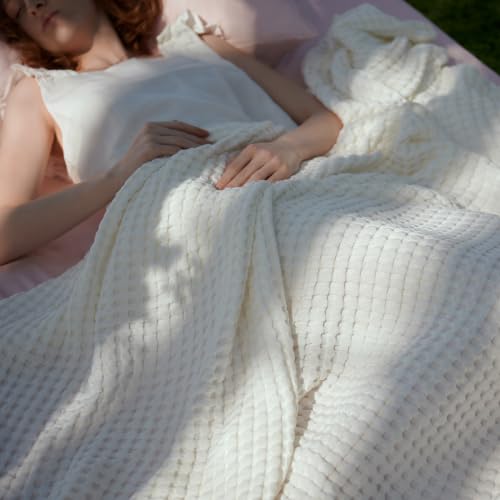
Bedsure Cooling Cotton Waffle Blanket for Hot Sleepers
Our badge: Best Overall
The Bedsure Cooling Cotton Waffle Blanket for Hot Sleepers represents the winningest material formula in bedding: 50 percent cotton for absorbency and familiarity, 50 percent rayon derived from bamboo for softness and moisture pull, woven into a waffle that manufactures airflow out of geometry. If a household could own one material, this blend in this weave covers the most seasons, sleepers, and laundry realities.
Strengths
- Absorbs and releases moisture instead of sealing sweat against skin.
- Waffle structure adds breathability without adding weight.
- Washes like family bedding — because it is family bedding.
Trade-offs
- Less warm than fleece or wool for winter-primary use.
- Textured weave snags more than flat weaves under rough treatment.
- Natural-fiber softness is calm rather than plush-dramatic.
| Color | 01 – Ivory |
| Size | Queen (90″ X 90″) |
| Weight | 3.8 Pounds |
As material evidence, the waffle blanket demonstrates why blends beat purism for most buyers: pure cotton alone would be heavier and slower to dry; bamboo-derived rayon alone would lack cotton’s sturdy familiarity. Together in an open weave, they produce the blanket our other guides keep recommending for summer, sleeping, and hot sleepers alike. Choose this material when you want no drama in any season. Its only true rival for versatility is a good cotton quilt — reviewed next in pure-cotton form via the Tache — and the choice between them is weave and style, not quality.
One more material lesson hides in the weave itself: geometry can matter as much as fiber. The same cotton-bamboo blend woven flat would sleep noticeably warmer than this waffle, because the waffle’s raised cells hold the fabric partly off the skin and create channels where air moves. When you shop materials, read weave as a second material — waffle, gauze, seersucker, and open knits all manufacture breathability, while sateen and brushed finishes manufacture smoothness and warmth. A shopper who learns to ask “which fiber, in which weave?” will predict a blanket’s behavior better than one who memorizes fiber rankings, because the blanket you sleep under is always the combination.
Best for: most households wanting one breathable, washable material / Not suited for: shoppers wanting maximum winter insulation from one layer
Choose the cotton-bamboo waffle as your material default. Check on Amazon

Pendleton National Park Blanket
Our badge: Best Premium
The Pendleton National Park Blanket is wool’s closing argument: 100 percent wool, napped for softness, in a queen blanket substantial at 6.2 pounds. Wool fibers are naturally crimped, trapping insulating air while their structure absorbs and releases moisture vapor — which is why wool feels warm in a cold cabin and merely comfortable, not clammy, in a heated bedroom. No synthetic in this guide replicates that two-way behavior.
Strengths
- Warmth with breathability — the premium winter material balance.
- Exceptional longevity; wool blankets are measured in decades.
- Naturally odor-resistant in character, needing less frequent washing.
Trade-offs
- Premium cost and gentler care than any synthetic here.
- Texture, even napped, differs from plush fleece softness.
- Some users are wool-sensitive; know your household.
| Color | Grand Canyon Navy |
| Size | Queen (90″ x 90″) |
| Weight | 6.2 pounds |
Wool’s material lesson is that insulation and breathability are not opposites — cheap synthetics made them seem so. For camping and cold-weather depth, see Best Wool Blankets For Camping, where wool’s outdoor virtues (warmth even when damp in character, durability) get full treatment. At home, one wool blanket upgrades every bed it rotates across and anchors a room visually like no fleece can. Choose wool when you buy blankets rarely and keep them forever. Skip it when laundry simplicity rules the house.
Wool quality varies more than wool marketing admits, and material shoppers should know the levers. Fiber fineness decides skin feel — finer wool feels softer, coarser wool wears harder and can prickle. Staple length decides durability: longer fibers spin into stronger yarns that pill less. The napped finish on this blanket is a deliberate softness treatment, brushing the surface so the hand meets loft rather than weave. None of these details require expertise to use: handle the blanket if you can, layer it over cotton if your skin is unsure, and remember that a wool blanket’s first impression improves — wool softens and settles with use and airing in a way synthetics, which only decline from their first day, do not.
Best for: cold rooms, cabins, and buy-it-for-life shoppers / Not suited for: carefree machine-wash households
Choose wool for premium, breathable warmth. Check on Amazon

Bedsure Fleece Bed Blankets Queen Size Grey – Soft Cozy Warm Winter Blanket Christmas Than
Our badge: Best Budget
The Bedsure Fleece Bed Blankets Queen Size Grey – Soft Cozy Warm Winter Blanket Christmas Than represents microfiber fleece honestly: premium microfiber flannel, per the maker upgraded for softness and warmth, in a light queen blanket that feels warm instantly, washes without instructions anxiety, and costs its tier’s simplicity rather than heirloom money (check the current listing for pricing). Fleece is polyester engineered for loft — millions of fine fibers trapping air — and its virtues and limits both flow from that.
Strengths
- Immediate plush warmth and softness at first touch, every time.
- Lightest care in the guide: wash, dry, use, repeat.
- Durable seams and fade resistance as the maker describes, for family rotation.
Trade-offs
- Breathes least in humidity; hot sleepers overheat under fleece.
- Can build static and attract lint and pet hair to its surface.
- Softness is surface-deep — fleece does not develop character like wool or cotton.
| Color | Grey |
| Size | Queen (90″ X 90″) |
| Weight | 3.19 pounds |
Fleece’s material verdict: unbeatable for cool sleepers, kids’ beds, pet corners, dorms, and any blanket that will be washed weekly and loved roughly. It is the wrong hero material for humid summers and hot sleepers, who should demote it to a cool-night layer as our summer guide does. Households often own fleece plus one natural-fiber blanket and thereby cover the year. Choose fleece for softness and simplicity. Skip it as your only material if you sleep warm.
Fleece has grades, and the grade shows by month six. Denser fleece with a proper anti-pill character keeps its surface smooth and warm; the lightest bargain fleece pills into a rough, thin mat that still washes easily but no longer feels like the blanket you bought. Since fleece listings rarely give shoppers much to go on, judge by weight in hand, surface evenness, and the maker’s durability language — Bedsure’s emphasis on neat stitching and fade and shed resistance is the kind of signal to seek. Also know fleece’s static season: in dry winter air it will cling and spark over synthetic sheets, while over cotton sheets the effect mostly disappears. Material never acts alone; fleece plus cotton bedding is a calmer system than fleece plus microfiber bedding.
Best for: cool sleepers, families, and easy-care warmth / Not suited for: hot sleepers in humid rooms
Choose fleece for carefree cozy material value. Check on Amazon

Tache Cotton Patchwork Quilt Blanket Country Farm Cottage Vintage Antique Ditsy Floral Pai
Our badge: Best for Summer
The Tache Cotton Patchwork Quilt Blanket Country Farm Cottage Vintage Antique Ditsy Floral Pai is pure cotton’s exhibit: real cotton patchwork with a thin poly-cotton fill and cotton reverse, quilted in vermicelli stitching at throw size. Cotton as a material absorbs moisture, breathes in woven form, softens with washing, and carries print and patchwork character that synthetics imitate poorly. This is the summer and heritage face of the fiber.
Strengths
- Breathable, absorbent comfort for warm nights and layered beds.
- Softens and gains character with every wash — cotton improves with age.
- Patchwork construction showcases cotton’s print and hand-feel virtues.
Trade-offs
- Throw size only; cotton quilts for full beds must be sourced at bed dimensions.
- Needs delicate cold washing to protect patchwork and color.
- Thin fill means modest insulation — a summer and layering material here.
| Color | Burgundy |
| Size | 50×60 |
Compare the Tache with the waffle pick to learn cotton’s range: same fiber family, radically different blankets — one textured and modern, one patchworked and nostalgic. Both breathe, both wash, both outlast trends. Cotton’s full summer case is made in Best Cotton Blankets For Summer. Choose cotton quilts when the blanket should be seen as well as slept under. Skip pure cotton when you need maximum warmth from minimum weight — that is wool’s or fleece’s contest.
Cotton’s one structural weakness deserves plain statement: it dries slowly and holds moisture against itself when saturated, which is why pure cotton is a summer hero and a damp-cabin disappointment. In a heated, ventilated home that weakness rarely appears; in humid or unheated spaces, cotton layers should be thin enough to dry between uses — exactly what this quilt’s light fill achieves. The patchwork format also demonstrates cotton’s repairability: a torn square can be patched in kind, by hand, invisibly in spirit if not in fact, which is part of why quilts become family documents. A synthetic throw with the same tear is simply replaced. Material choice is also a choice about whether your textiles age, mend, and accumulate meaning — or stay new-looking until they are suddenly discarded.
Best for: summer layers, cottage style, and cotton purists / Not suited for: primary winter insulation
Choose the cotton quilt for breathable heritage material. Check on Amazon
Woolino Toddler Blanket – Merino Wool and Organic Cotton Baby Blanket for Girls and Boys –
Our badge: Best for Temperature Regulation
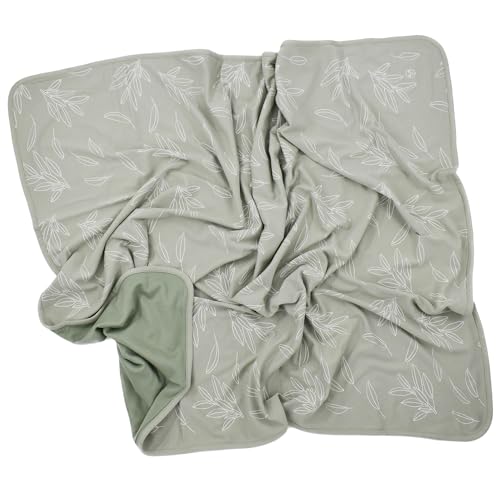
The Woolino Toddler Blanket – Merino Wool and Organic Cotton Baby Blanket for Girls and Boys – demonstrates the most intelligent blend in the pool: an Australian merino wool lining for temperature regulation — warm in cold, cool in heat, as merino is prized for — inside a GOTS-certified organic cotton outer for a smooth, chemical-free-feeling surface, per the maker’s description. Though sized as a toddler blanket (about 52.5 by 40 inches per the maker), its material logic is the guide’s regulation masterclass for any age.
Strengths
- Merino regulates in both directions, reducing over- and under-heating.
- Organic cotton outer is silky, itch-free in feel, and gentle on sensitive skin.
- Machine washable per the maker — rare practicality for a wool-containing blanket.
Trade-offs
- Toddler dimensions; adults should treat it as material evidence, not their bed blanket.
- Premium natural materials at a premium tier.
- Wool content still asks for label-respecting care.
| Color | Sage |
| Size | 40 inch |
For parents, this is a genuine pick as well as an exemplar — see Best Blankets For Newborns for how it fits a nursery textile plan with safe-sleep basics respected. For material shoppers generally, Woolino proves that the future of blankets is engineered natural blends: the right fiber against skin, the regulating fiber inside, care designed for real laundry. Choose merino-cotton where temperature swings and sensitive skin meet. Skip it if you need adult bed dimensions from this exact listing.
Merino’s regulation secret is worth understanding because it generalizes. Fine merino fibers absorb moisture vapor into their structure and release a trace of warmth as they do, then give the moisture back as conditions dry — a buffering behavior that smooths the microclimate next to skin in both directions. Coarser wools do this less gracefully; synthetics barely do it at all, which is why a fleece blanket can feel warm and clammy simultaneously while merino feels merely warm. Adult shoppers who love this blanket’s logic should hunt the same architecture at bed scale: merino or merino-blend layers with a smooth cotton face. The toddler size here limits this listing, but the material principle is the most transferable idea in the entire guide.
Best for: temperature-sensitive sleepers and premium nursery textiles / Not suited for: adult bed coverage from this size
Choose Woolino for regulation-smart natural materials. Check on Amazon

Elegear Double-Sided Cooling Blanket for Hot Sleepers
Our badge: Best for Hot Sleepers
The Elegear Double-Sided Cooling Blanket for Hot Sleepers represents engineered cooling material — and, wisely, pairs it with nature: one side in Arc-Chill 3.0 cooling fabric (maker-stated Q-Max above 0.5, cool to the touch), the reverse in natural Egyptian cotton as described by the maker. It is the material guide’s proof that synthetics earn their place when they do something natural fibers cannot: move heat on contact, instantly.
Strengths
- Contact cooling no natural fiber matches in the first minutes.
- Cotton reverse keeps the blanket honest and breathable on mild nights.
- Lightweight, washable engineering suited to nightly summer use.
Trade-offs
- Cooling fibers absorb less moisture than cotton; heavy sweaters may prefer blends.
- Slick hand feel divides opinion versus woven textures.
- Technical fabrics ask for gentle washing and no heavy softener coatings.
| Color | Light Grey |
| Size | Full/Queen (79″ x 86″) |
| Weight | 3.26 pounds |
Material shoppers should file cooling knits as a specialty tool: unbeatable for falling asleep hot, unnecessary for neutral sleepers, and best combined with breathable construction rather than sealed under other layers. The Elegear’s two-material design is the category’s most honest expression — technology where it helps, cotton where it comforts. Choose cooling material if heat defeats natural fibers at your house. Skip it if waffle cotton already solves your nights.
Cooling fabrics ask for informed ownership. Their contact effect depends on clean, uncoated fibers, so the care rules in this guide — gentle washing, mild detergent, restraint with fabric softener and dryer sheets — are not fussiness but performance maintenance. Expect also that the effect is a surface phenomenon: the cotton reverse of this blanket is not a lesser side but the design’s admission that a full night needs breathability as well as a cool first touch. Shoppers comparing cooling materials should ask two questions of any listing: what is the cooling side made of, and what is the other side for? A blanket that answers both, as this one does, was designed by people who understand the whole night.
Best for: genuinely hot sleepers needing contact cooling / Not suited for: neutral sleepers satisfied with cotton
Choose Elegear for engineered cooling material. Check on Amazon
Comparison Table
| Pick | Material | Breathability | Care | Check price on Amazon |
|---|---|---|---|---|
| Bedsure Waffle | Cotton / bamboo rayon | High | Easy machine wash | Check price on Amazon |
| Pendleton | 100% wool | High for an insulator | Gentle, infrequent | Check price on Amazon |
| Bedsure Fleece | Microfiber fleece | Low-moderate | Easiest | Check price on Amazon |
| Tache Quilt | Cotton patchwork | High | Cold delicate | Check price on Amazon |
| Woolino | Merino + organic cotton | High, regulating | Machine washable | Check price on Amazon |
| Elegear | Cooling knit + cotton | Moderate + contact cool | Gentle machine wash | Check price on Amazon |
How to Choose the Best Material for Blankets
Choose by sleeper temperature first
Hot sleepers: cotton weaves, merino blends, cooling knits. Cold sleepers: wool, fleece, sherpa constructions. Neutral sleepers: cotton blends, which forgive in both directions. Temperature misfit cannot be laundered or layered away cheaply — get fiber right first and every later decision gets easier.
Then by moisture reality
Sweaty sleepers and humid climates need absorbent, quick-releasing fibers: cotton, bamboo blends, merino. Dry, cool sleepers can enjoy fleece’s sealed-in softness without penalty. If bedding ever feels clammy in your home, treat that as material data and move one step toward natural absorbency.
Then by laundry truth
Weekly washers need cotton, fleece, and washable blends. Wool rewards households that wash rarely and gently. Technical cooling fabrics need softener restraint. Buy the material whose care you will actually perform; neglected premium fiber underperforms cheerful mid-tier fiber every time.
Finally by lifespan and feel preference
Wool and quality cotton improve or endure for years; fleece stays cheerful but static-prone; cooling knits depend on fiber integrity that gentle care protects. Handle materials in person when possible — hand feel is personal, and you will touch this purchase nightly. Coordinate with room textiles like Best Throw Pillows For Bedrooms Under $40 only after fiber performance is settled.
Learn the three label numbers that actually matter
Most blanket labels hide their useful information in plain sight. Fiber percentages tell you the material’s personality, as this guide repeats. Weight — sometimes expressed as GSM for fabrics — tells you substance: within one material, heavier usually means warmer and more durable, and suspiciously light usually means a blanket that will thin quickly. Dimensions tell you whether the material can do its job at all, since the best fiber in a too-small blanket still leaves shoulders cold. Read those three, in that order, and you have extracted ninety percent of what a label knows. Everything else — thread counts borrowed from sheet marketing, invented warmth scales — is decoration.
Match material to skin, honestly
Skin contact is where material preference becomes personal. Some sleepers find wool’s texture grounding; others cannot rest against it and should layer it over cotton or choose merino-fine fibers. Some find fleece’s plush soothing; others find its static and surface heat irritating by midnight. There is no hierarchy here — only fit. If you are buying for someone else, ask what they sleep in and what they have loved before; a recipient’s history with materials predicts their next blanket better than any fiber chart, including this guide’s.
How to Care for Each Blanket Material
Cotton: wash warm or cool, dry medium, expect softening and slight character change — that is health, not wear. Wool: cool, gentle, minimal agitation, dry flat or as directed, store clean with air circulation. Fleece: wash cool, avoid high dryer heat that damages loft, and wash separately from lint-shedding loads early on. Cooling knits: gentle cycle, mild detergent, skip heavy softeners that coat fibers. Blends: follow the most delicate fiber in the blend. Universal rule: the maker’s label outranks every general guide, including this one.
Problem: Blanket feels clammy in humidity. — The fiber seals moisture in. Switch the primary layer to cotton, bamboo blend, or merino and demote synthetics to cool-night duty.
Problem: Fleece blanket crackles with static. — Dryer heat and dry air are culprits. Dry on lower heat, remove slightly damp, and layer fleece over cotton rather than synthetic sheets.
Problem: Wool blanket feels scratchy. — Layer a cotton blanket or sheet between wool and skin; napped and merino wools feel softest. Sensitivity that persists means wool is not your skin-contact material.
Problem: Cotton blanket keeps shrinking. — Water is too hot or drying too aggressive. Wash cool, dry medium-low, and size up if your laundry habits are fixed.
Problem: A new blanket sheds lint over everything. — Most new textiles release manufacturing lint in the first washes. Wash separately twice before pairing the blanket with contrasting bedding, shake it outside, and judge shedding only after the third wash — persistent heavy shedding after that is a quality signal worth remembering against the maker.
Care has a calendar as well as a method. Air wool and quilts on dry days instead of washing on schedule; wash skin-contact cotton and cooling layers by use, not by date; and give every blanket a full inspection each season change — seams, thinning patches, trapped odors — while the weather still lets you act on what you find. Materials reward this light attention disproportionately: most blanket deaths are neglected small problems, not exhausted fibers.
Natural vs. Synthetic: The Honest Ledger
Natural fibers — cotton, wool, merino, bamboo-derived rayon — lead on breathability, moisture behavior, odor character, and aging gracefully. Synthetics — polyester fleece, microfiber, cooling nylons — lead on price simplicity, instant softness, durability under rough washing, and specialty tricks like contact cooling. Neither family wins absolutely; the best blanket closets in this series are bilingual, with natural fibers against skin and synthetics where plushness, budget, or cooling technology serve better. Buy by layer and by sleeper, not by ideology, and be suspicious of any guide — or label — that claims one fiber does everything.
The ledger has a cost column worth reading honestly. Synthetics usually win the purchase moment and lose the decade: they are replaced more often, and their softness peaks on day one. Natural fibers often cost more at the till and less per year of service, while asking more of their owner’s care. Neither column makes the other foolish — a dorm blanket should be synthetic and replaceable; a marriage blanket should be wool and kept. The error is applying one column’s logic to the other column’s job. Decide which purchase you are making before you decide which fiber family is “better.”
Material by Room and Season: A Quick Map
Primary bedroom, summer: cotton waffle or quilt. Primary bedroom, winter: wool or fleece over cotton. Guest room: cotton blend base plus fleece option — forgiving for unknown sleepers. Couch: fleece or sherpa for plush resilience against snacks, pets, and daily folding. Nursery: merino-cotton regulation with safe-sleep practices. Cabin and camping: wool, full stop — see the camping guides. This map will not match every home, but it gives material decisions a starting geography instead of a blank page.
Two rooms deserve additions to the map. The child’s room wants materials that survive both the child and the laundry: cotton blends and fleece, with merino-cotton reserved for the pieces a caregiver will actually wash gently. The porch and patio want materials that tolerate dew, sun, and being forgotten outside overnight — cotton quilts and sturdy fleece shrug off that life; fine wool and technical cooling knits should stay indoors where their virtues are protected. Material by room is really material by consequence: ask what the room will do to the blanket, then choose the fiber that forgives it.
Common Buying Mistakes
Judging material by first touch only
Store softness is often a finish that washes out. Judge by fiber content, weave, and washed reviews of construction — and by how the material behaves at hour six, not second six.
Ignoring fiber percentages
A cotton blanket that is mostly polyester behaves like polyester. Read the blend; the majority fiber is the personality. Our spec discipline — verified fibers only — is the habit to copy as a shopper.
Buying winter material for a summer problem
Fleece in July and sealed synthetics for night sweats are material errors, not product errors. Match fiber to the season’s physics first.
Expecting one material to serve every room
Beds, couches, nurseries, and cabins stress materials differently. A two-material household closet beats a one-material ideology at the same total spend.
Treating blends as inferior by definition
Purism is not a material strategy. The best-performing blanket in this guide is a deliberate blend, and the most intelligent construction is a two-fiber layering. Blends exist because fibers have complementary strengths; judge a blend by whether its proportions serve a purpose you can name, not by the mere fact of mixing. A blend with a reason beats a pure fiber with only a pedigree.
Final Recommendation
Default to cotton-blend breathability — the Bedsure Cooling Cotton Waffle Blanket — for your primary blanket, add wool via the Pendleton when winter or longevity calls — Check on Amazon — and let fleece and cooling knits play their specialty roles. Choose material by sleeper, season, and laundry, and every blanket you buy from now on will feel less like a gamble.
A final synthesis for shoppers who have read this far and still feel torn between two materials: you are probably choosing between two good answers, and the deciding factor is rarely in the fiber chart. It is in your house — the humidity of your summers, the honesty of your laundry habits, the temperature of your coldest sleeper, the presence of pets and children and guests. Run your finalists against your house rather than against each other. The material that fits the house wins every night; the material that wins the comparison table wins only the day it arrives.
Frequently Asked Questions
What is the best blanket material overall?
Cotton and cotton blends for most people, most seasons, and most laundry rooms. Wool overtakes cotton for cold-climate insulation with breathability; cooling knits overtake both for genuinely hot sleepers. Overall means default, not universal.
Is wool better than fleece?
For breathable warmth and longevity, yes. For price simplicity, instant plushness, and carefree washing, fleece wins. Many households own both and deploy them by room and season.
What material is best for hot sleepers?
Breathable cotton weaves and merino blends for all-night comfort; cooling knits for instant contact relief. Avoid sealed fleece as a primary hot-sleeper layer. See Best Blankets For Hot Sleepers for full picks.
What is the softest blanket material?
New fleece, sherpa, and chenille-style synthetics feel softest at first touch; washed cotton and merino feel softest to many sleepers across a whole night. Softness has a duration — choose by the timescale you care about.
Which material lasts longest?
Quality wool and sturdy cotton weaves lead on lifespan with proper care. Fleece endures rough treatment cheerfully but can pill and static with age. Care quality matters as much as fiber choice.
Are bamboo blankets really cooling?
Bamboo-derived rayon adds softness and moisture handling to blends like the waffle pick; it supports breathability rather than actively cooling. For active-feel cooling, choose engineered cooling knits; for breathable comfort, bamboo blends excel.
What blanket material is best for people with sensitive skin?
Smooth, low-lint surfaces washed clean before first use: organic cotton, cotton blends, and fine merino behind a cotton face, as in the Woolino’s construction. Avoid coarse wool against skin and heavily finished synthetics if finishes bother you. This is comfort guidance, not medical advice — persistent skin reactions belong in a clinician’s office, with material experiments as the comfort side of the plan.
Does a higher price mean a better material?
Not reliably. Price reflects fiber cost, construction, brand, and design in varying proportions. A mid-priced cotton-bamboo waffle outperforms premium fleece for a hot sleeper every night of summer, because fit beats tier. Use price to shortlist within the right material, never to choose the material itself — and always check the current listing rather than assuming a tier from memory.
What material is best for a blanket in a rental or vacation home?
Washable, replaceable, and forgiving: cotton blends for beds and fleece for couches, in colors that tolerate varied guests and industrial laundry rhythms. Vacation textiles live hard and anonymous lives; heirloom wool and technical cooling fabrics belong where their owners can care for them. Buy the rental blanket by the same logic as the dorm blanket — durability per wash — and spend the savings on the bed you actually sleep in.
Can two blankets of the same material feel completely different?
Yes — weave, weight, finish, and quality spread one fiber across a wide range of blankets, which is why this guide reviews constructions, not just materials. A gauze cotton and a sateen cotton share a fiber and almost nothing else. When a material disappoints you, identify whether the fiber or the construction failed before swearing off the fiber: many people who believe they dislike cotton merely disliked one heavy, tight cotton blanket, and many fleece skeptics have only met the thinnest grade.
What does GSM mean for blankets, and should I shop by it?
GSM — grams per square meter — measures fabric weight. Within a single material, higher GSM generally means a warmer, more substantial blanket; across materials it misleads, because wool insulates more per gram than fleece and cotton carries its weight differently again. Use GSM to compare two fleece blankets or two cotton blankets against each other, and use fiber and weave to compare across families. A listing that provides GSM is at least speaking quantitatively, which correlates with honest material descriptions generally.
Is sherpa a material or a construction?
A construction — a knitted, brushed pile designed to imitate sheepskin, usually in polyester. That is why sherpa appears in this guide as a fleece-family behavior rather than a fiber: it insulates like lofted fleece, washes like fleece, and mats like fleece when dried too hot. Knowing which words on a label are fibers and which are constructions (waffle, sherpa, flannel, velvet) prevents the classic error of comparing a fiber against a finish as if they were alternatives. The complete description of any blanket is fiber plus construction plus weight — insist on all three.
What material should I choose for a gift blanket when I do not know the recipient’s preferences?
Cotton or a cotton blend, in a breathable weave and a generous size. It is the material least likely to offend any skin, season, or laundry routine, and it layers gracefully with whatever the recipient already owns. Avoid wool for unknown recipients (sensitivity and care unknowns) and avoid technical cooling fabrics for anyone whose temperature you have not discussed. Include a gift receipt and, if you know it, a note about the fiber and its care — thoughtfulness that survives even an exchange.
How do materials behave after a year of use?
Plan by trajectory. Cotton softens and fades gently toward comfort. Wool settles, airs clean, and looks much the same for years. Fleece gradually loses loft and may pill at friction points. Cooling knits hold their effect when washed gently and lose it fastest under harsh detergents and coating softeners. A material whose year-two self you would still choose is the right purchase; a material that only wins on day one is a rental, whatever the receipt says.
Which material is best for a blanket that will live on a couch?
Couch life is abrasion, snacks, pets, and daily folding — a durability contest more than a sleep contest. Fleece and sherpa synthetics win it for most households: they forgive spills, wash without ceremony, and keep their looks under rough handling. Cotton quilts win it in homes that value character over convenience and will wash gently. Fine wool and cooling knits should live on beds, where their virtues are used and their vulnerabilities are not tested hourly by the household’s busiest furniture.
Does blanket material affect allergies and dust?
As comfort guidance only: smooth, frequently washable materials — cotton, cotton blends, and washable synthetics — let you keep bedding genuinely clean with hot-enough, regular washing, which is the practical lever most households control. Wool is often described as less hospitable to dust accumulation, but the decisive factor is the wash routine you actually keep. Choose the material you will wash often and properly; that choice does more than any fiber reputation. Anyone with diagnosed allergies should follow their clinician’s bedding guidance first.
How can I tell if a blanket’s material claims are honest?
Honest listings name fibers with percentages, give dimensions and weight, and describe care plainly. Vague listings lean on adjectives — luxury, premium, cloud — without a fiber breakdown. When a listing will not say what the blanket is made of, assume the least flattering plausible fiber and price it accordingly, or walk away. The verified-pool discipline behind this guide — no material claim without a source — is available to every shopper willing to read a full listing.
What is linen like as a blanket material?
Linen is cotton’s cooler, crisper cousin: highly breathable, absorbent, durable, and famously rumpled. It is not a linked pick in this guide’s pool, so treat this as general material knowledge — linen blankets suit hot, dry climates and sleepers who love a crisp hand feel, and they soften dramatically over years of washing. The cautions are cost, initial stiffness, and wrinkles that no ironing schedule fully defeats. If your heart is set on linen, buy it for summer and let time do the softening.
What material should a first blanket purchase be?
A cotton or cotton-blend blanket in a breathable weave, sized generously for your bed. It teaches you your own temperature and laundry truth at the lowest risk, serves in every season as at least a layer, and remains useful forever as the household’s second blanket when you later specialize into wool, fleece, or cooling materials.


