Disclosure: As an Amazon Associate, dailyhomedecorating.com earns from qualifying purchases. Links to Amazon on this page are affiliate links; they cost you nothing extra. Prices and availability change often, so check the current Amazon listing before you buy.
The best mattresses for obese sleepers start from a premise the industry too often skips: a larger body is not a defect in the sleeper — it is a specification for the mattress. Standard mattresses are engineered around average-weight test bodies, so their comfort layers bottom out, their edges surrender, and their support fades years early under a body they were never designed to carry. An obese sleeper shopping honestly needs the opposite build sheet: deep profiles with real compression travel, coil systems or high-density cores that hold support under sustained load, reinforced edges that make the full surface usable and the morning stand-up safe, and cooling that respects the simple physics of a larger body’s heat. This guide applies that build sheet to the verified pool without euphemism and without condescension — specifications, trials, and warranties, judged in the open. Where the pool’s mainstream products reach their honest limits, the reviews say so, because a sleeper who has been undersold by mattresses before deserves candor most of all.
Comfort framing note: this guide discusses support, pressure, and durability as engineering. It makes no medical claims, and pain that persists on a well-chosen mattress deserves a clinician’s evaluation — a good bed is a foundation for rest, not a treatment.
Where to Buy
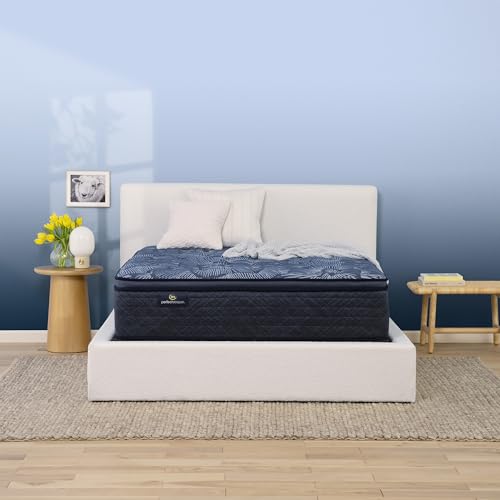
All six picks are sold on Amazon — verify current price, size, and warranty terms on the listing before buying. Start with the Serta Perfect Sleeper Ultimate 14.5″ Queen Mattress, the deepest and most load-engineered build in the pool; confirm it via this Check on Amazon link. The remaining picks: Sealy Dreamlife 12″ Hybrid Mattress-in-a-Box — Check on Amazon; Signature Design by Ashley Chime 12 Inch Hybrid Mattress — Check on Amazon; Nectar 12″ Memory Foam Mattress — Check on Amazon; Purple Mattress — Check on Amazon; Sweetnight CoolNest Queen Mattress — Check on Amazon.
In this guide
Quick Picks
| Pick | Badge | Why it earns its place |
|---|---|---|
| Serta Perfect Sleeper Ultimate 14.5″ Queen Mattress | Best Overall | Zoned high-density coils, the deepest profile in the pool, and reinforced edge encasement — maximum mainstream load engineering. |
| Sealy Dreamlife 12″ Hybrid Mattress-in-a-Box | Best Coil Support | Encased coils that carry load locally and hold their support profile for years. |
| Signature Design by Ashley Chime 12 Inch Hybrid Mattress | Best Firm Gauge | 13-gauge pocketed coils with a reinforced perimeter — the thickest-wire discipline in the pool (full size). |
| Nectar 12″ Memory Foam Mattress | Best Warranty | Firm foam support underwritten by a forever warranty and a year-long trial. |
| Purple Mattress | Best Pressure Distribution | The grid spreads load point-by-point, cradling pressure areas while holding the surface line. |
| Sweetnight CoolNest Queen Mattress | Best Deep Foam | Fourteen inches of zoned foam with a full cooling system — the deepest foam travel in the pool. |
Key Takeaways
- Depth and density are the specification: twelve inches minimum, fourteen preferred, with cores built for sustained load.
- Coils outlast foam under load — encased and zoned systems are the structural default for larger bodies.
- Edges are safety equipment: sitting, standing, and transferring all happen at the perimeter.
- The foundation must be rated for sleeper plus mattress; an underrated base manufactures sag and voids warranties.
- Strong warranties and long trials are worth more under load — they are priced risk transfer, and the risk is real.
- For couples where both partners are larger, Best Mattresses For Heavy Couples extends this guide’s math to two bodies.
How These Picks Were Chosen
We screened the verified pool by the build sheet above: profile depth, coil construction and gauge where stated, density language in support cores, named edge systems, and warranty strength. Thin mattresses and plush-first designs were excluded outright. One honesty note belongs here, in the methodology rather than buried in a review: this pool contains no mattress marketed specifically as a bariatric or heavy-duty model with reinforced construction beyond mainstream flagships. The six picks are the strongest mainstream builds the pool offers, ranked for load — and the how-to section explains the specifications to demand if you shop beyond this pool, because candor about a pool’s limits serves the reader better than overselling its contents.
We also weighted mobility: getting into and out of bed, and turning within it, cost a larger body more effort, and mattresses that assist — responsive coils, grid, firm edges — were credited for it in every review.
The 6 Best Mattresses for Obese Sleepers — Reviewed

Serta Perfect Sleeper Ultimate 14.5″ Queen Mattress
Our badge: Best Overall
The Serta Perfect Sleeper Ultimate 14.5″ Queen Mattress leads because it stacks every load virtue the pool offers in one build: a high-density zoned coil system with support concentrated at the lower back and hips, fourteen and a half inches of total profile — the deepest travel here, so a heavier body’s compression is absorbed across layers rather than bottoming against the core — PillowSoft Aire and Cool Twist gel memory foam comfort layers, and BestEdge foam encasement, an extra-deep rail engineered against edge roll-off. For an obese sleeper, that rail is not trim: it is the difference between using the full width of the bed and retreating from its edges, and between a seated edge that holds and one that dumps you toward the floor at the exact moment you are standing up.
Strengths
- Deepest profile plus zoned high-density coils: the most load margin in the pool
- BestEdge encasement makes sitting, transferring, and full-width sleeping safe
- Pillow top comfort proves load capacity does not have to feel like a board
Trade-offs
- Premium position in this guide’s range
- Deep profile requires deep-pocket sheets and a lower frame plan
- At over eighty-two pounds, setup and rotation need planning and help
| Color | Dark Blue |
| Size | Queen |
| Dimensions | 79.5 x 60 x 14.5 inches |
| Weight | 82.26 pounds |
The Serta’s daily experience under a larger body is defined by margins: the comfort layers have somewhere to go before the coils take the load, the coils are zoned to spend strength where the body is heaviest, and the edge holds a seated adult without the slow slide that teaches sleepers to fear their own bed’s perimeter. Its hundred-night trial and ten-year warranty are appropriately flagship, and its adjustable-base compatibility (on a properly rated base) preserves elevation options that larger sleepers often value for reading, reflux comfort, and easier exits.
If your budget reaches one flagship and your body has been failed by standard mattresses, this is the pool’s most complete answer — the build that treats your weight as the design brief it always should have been.
Best for: obese sleepers wanting maximum mainstream load engineering and safe edges / Not suited for: high frames, tight budgets, or shoppers needing a split setup
Choose it for margin everywhere; skip it if the room or budget argues for the Sealy’s value. Check on Amazon

Sealy Dreamlife 12″ Hybrid Mattress-in-a-Box
Our badge: Best Coil Support
The Sealy Dreamlife 12″ Hybrid Mattress-in-a-Box is the value-structural answer: seven inches of individually encased coils providing targeted support across the entire surface, beneath gel memory foam and a high-density transition layer. Encased coils matter under load for two reasons — each coil carries its own zone, so support does not dilute across a shared platform, and steel holds its response under sustained weight for years after foam cores begin their slow softening. The ventilated coil core also moves air, which a larger body generating more heat will feel by the second hour of the night.
Strengths
- Coil longevity under sustained load outclasses every foam core here
- Localized support: the body is carried by its own coil neighborhood
- Airflow through the core addresses the larger body’s heat honestly
Trade-offs
- Twelve inches is adequate travel; the Serta’s fourteen-plus offers more margin
- Motion isolation is a step below foam for couples
- Just over eighty pounds at setup
| Color | Dreamlife |
| Size | Queen |
| Dimensions | 80 x 60 x 12 inches |
| Weight | 80.6 pounds |
The Dreamlife’s pitch is durability economics: under heavy load, mattresses are consumables on different clocks, and coil clocks run longest. A larger sleeper replacing foam mattresses every few years spends flagship money in installments while sleeping on declining support between purchases; the Sealy’s structure defers that cycle. Its Surface-Guard antimicrobial technology and CertiPUR-US foams handle the hygiene file, and the gel layer keeps the contact surface from feeling like bare machinery.
On a properly rated foundation with center support, rotated quarterly, the Dreamlife is the guide’s recommendation for the load-first shopper who wants the structure to do the work and the price to stay mainstream.
Best for: obese sleepers prioritizing long-term coil support at a mainstream tier / Not suited for: couples prioritizing motion isolation
Choose it for structural value; skip it if you want maximum depth and edge engineering. Check on Amazon

Signature Design by Ashley Chime 12 Inch Hybrid Mattress
Our badge: Best Firm Gauge
The Signature Design by Ashley Chime 12 Inch Hybrid Full Size Mattress in a Box specifies the number load shoppers dream about: 13-gauge pocketed coils — thick wire, firm support, slow fatigue — reinforced at the perimeter rows, under a high-density gel memory foam lumbar layer. Stated plainly, as in our other guides: this listing is a full size, which suits single sleepers and smaller rooms; its engineering, however, is the pool’s firmest, and for a single obese sleeper in a full frame it out-supports queens with finer coils. A 180-night trial — the longest evaluation window here after the Nectar — and a ten-year warranty complete a serious load product at a value tier.
Strengths
- Thickest-gauge coils in the pool: support that fatigues slowest under load
- Reinforced perimeter defends the sit-and-stand edge
- 180 nights to verify support across the seasons of real use
Trade-offs
- Full size only in this listing — couples and sprawl need a queen pick
- Firm, disciplined feel; plush comfort is not its language
- Less motion isolation than foam for light-sleeping partners
| Color | White |
| Size | Full |
| Dimensions | 74.4 x 53.3 x 12 inches |
| Weight | 62 pounds |
The Chime’s honesty about firmness is a feature for this keyword: heavier bodies experience a given mattress as softer than lighter bodies do, because they compress it further — so a mattress that reads assertively firm to an average tester often reads correctly supportive under a larger load. The Chime starts from that truth instead of apologizing for it. Its lumbar layer concentrates extra density where a back sleeper’s or side sleeper’s mass centers, and the pocketed construction keeps that support local.
For the single sleeper whose frame is full and whose priority is support that lasts, this is pound-for-pound the guide’s strongest engineering value — a specialist that happens to wear a mainstream brand.
Best for: single obese sleepers in full-size frames wanting maximum coil discipline / Not suited for: couples or queen-size rooms
Choose it for gauge and value; skip it if you need queen width. Check on Amazon

Nectar 12″ Memory Foam Mattress
Our badge: Best Warranty
The Nectar 12″ Memory Foam Mattress is the foam answer engineered around risk: a firm-leaning contouring build over an adaptive support layer, twelve inches deep, underwritten by a forever warranty and a 365-night trial. For an obese sleeper, the warranty is not a brochure line — support fade is the statistically predictable failure mode of foam under load, and Nectar’s terms transfer that failure’s cost to the manufacturer for the life of the product. The trial, a full year, lets the sleeper verify support across weight fluctuations, seasons, and the mattress’s own settling before the commitment is final.
Strengths
- Forever warranty directly insures the load-specific failure mode
- Firm-leaning support holds alignment where plush foam would bottom out
- Superb motion isolation for couples, and a cooling top layer for a warm body
Trade-offs
- Foam physics under sustained heavy load remains the long game the warranty, not the material, answers
- Slow foam response taxes turning and exiting for larger bodies
- Seventy-eight pounds at setup
| Color | White |
| Size | Queen |
| Dimensions | 80 x 60 x 12 inches |
| Weight | 78 pounds |
The Nectar suits the obese sleeper whose history is foam loyalty plus foam disappointment: the contouring comfort is real — pressure relief at hips and shoulders that coils approximate but foam perfects — and this time the disappointment is contractually insured. Its firm-leaning feel is the correct foam posture for load: soft foam under a heavy body is a hammock by August, while the Nectar’s support layer is built to hold the line the first night promised.
Buy it with the discipline its design assumes: a rated foundation, quarterly rotation, and honest trial notes across the year. Under that regime it is the guide’s most protected foam purchase — and for couples, its silence when a partner moves is a quality-of-life feature no coil here matches.
Best for: obese sleepers wanting foam comfort with contractual protection against fade / Not suited for: sleepers wanting coil physics as the primary load answer
Choose it for the guarantee; skip it if you want springs. Check on Amazon

Purple Mattress
Our badge: Best Pressure Distribution
The Purple Mattress distributes a larger body’s load the way no uniform material can: the two-inch GelFlex Grid flexes at pressure points — hips, shoulders, the greater trochanter that side-sleeping larger bodies load heavily — while its upright cells hold the surface’s line elsewhere, so support and pressure relief happen at different addresses on the same mattress. The grid is temperature-neutral with air channels, addressing the heat a larger body generates, and its instant response removes the extraction effort that makes foam turning a nightly workout at higher body weights.
Strengths
- Point-by-point load distribution: pressure relief without global softness
- Effortless turning and exiting — mobility assistance built into the material
- Cool, ventilated surface for a body that runs warm
Trade-offs
- One hundred pounds — the heaviest setup in the pool
- Foam layers beneath the grid carry the long-term load; rotation is non-negotiable
- Premium tier positioning
| Color | White |
| Size | Queen |
| Dimensions | 80 x 60 x 11 inches |
| Weight | 100 pounds |
The Purple’s special constituency here is the larger side sleeper: the position concentrates the body’s weight on the smallest contact area, and uniform mattresses answer with either a hard shoulder jam (too firm) or a collapsed hip (too soft). The grid’s local flex threads that needle mechanically. Its edge support foam keeps the perimeter usable, and the absence of heat buildup removes the sweaty restlessness that fragments larger sleepers’ nights.
Honest limit, stated as this guide promises: at the very top of the load range, coil structures carry more long-term margin than any foam-based build, the Purple included. Within the mainstream range, it offers pressure intelligence nothing else here matches.
Best for: larger side sleepers wanting pressure distribution, cool sleep, and easy movement / Not suited for: the highest load ranges, where coil margin leads
Choose it for intelligent distribution; skip it if maximum structural margin is the brief. Check on Amazon
Sweetnight CoolNest Queen Mattress
Our badge: Best Deep Foam
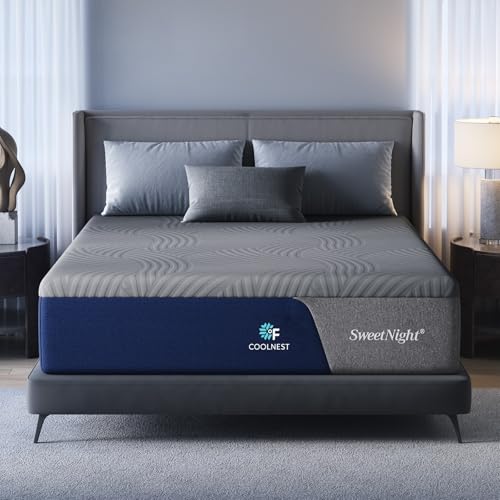
The Sweetnight CoolNest Queen Mattress closes the guide as the deepest foam option: fourteen inches of profile — travel a larger body spends gratefully — with a five-zone support design (softer at the shoulders, firmer at the waist where mass concentrates) and the pool’s most complete cooling system: CoolNest Xcel phase-change memory foam, PCMflux layer, gel memory foam, zoned open-cell airflow, and a cooling cover. For the obese sleeper whose nights fail thermally as much as structurally, it is the foam pick that takes both failures seriously.
Strengths
- Fourteen inches of travel — the deepest foam buffer in the pool
- Five-zone support firms the waist zone where load concentrates
- The most complete cooling system here, sized for a warm body’s output
Trade-offs
- All-foam support under sustained heavy load is the category’s open durability question
- Medium-firm feel may read soft at the top of the load range
- Newer brand against legacy records
| Color | White |
| Size | Queen |
| Dimensions | 80 x 60 x 14 inches |
| Weight | 68.67 pounds |
The CoolNest’s case is the intersection of two underserved needs: larger bodies need depth, and larger bodies run hot. Most deep mattresses are foam ovens; most cooling mattresses are thin. The CoolNest is neither, and its zoned design spends firmness where the load map demands it rather than uniformly. Its fiberglass-free, CertiPUR-US construction closes the safety file, and the open-cell structure keeps the deep foam breathing in a way closed deep foam never does.
At moderate-heavy loads it is a genuinely complete answer. At the highest loads, this guide’s coil picks carry the structure and the CoolNest becomes the comfort alternative for sleepers who prioritize cool depth over maximum margin — a legitimate choice, made with eyes open.
Best for: hot-sleeping obese sleepers wanting maximum foam depth and zoning / Not suited for: the highest loads needing coil structure first
Choose it for cool depth; skip it if structural margin outranks all. Check on Amazon
Comparison Table
| Pick | Support System | Edge Answer | Profile | Check price on Amazon |
|---|---|---|---|---|
| Serta Perfect Sleeper 14.5″ | Zoned high-density coils | BestEdge encasement | 14.5 inch | Check price on Amazon |
| Sealy Dreamlife 12″ | Encased coils | Coil perimeter | 12 inch | Check price on Amazon |
| Ashley Chime 12″ | 13-gauge pocketed coils | Reinforced perimeter rows | 12 inch (Full) | Check price on Amazon |
| Nectar 12″ Memory Foam | Adaptive foam + forever warranty | Firm foam perimeter | 12 inch | Check price on Amazon |
| Purple Mattress | Grid distribution + foam base | Edge support foam | 11 inch | Check price on Amazon |
| Sweetnight CoolNest | Five-zone foam | Consistent zoned width | 14 inch | Check price on Amazon |
How to Choose the Best Mattress for an Obese Sleeper
Specifications to Demand, Wherever You Shop
Profile of twelve inches or more. A coil system with stated construction — encased, zoned, or firm gauge — or a foam core with stated high density. A named edge system. A warranty of ten years or better with terms you have actually read, including its body-impression threshold. A trial long enough to test support across months. Any mattress — in this pool or beyond it — that cannot produce those specifications is asking a larger body to subsidize its vagueness, and the answer is no.
The Foundation Is Half the Purchase
Total the load: sleeper (or sleepers) plus mattress plus bedding, and buy a foundation rated above it, with center support for queen and king spans and slats close enough to support the base layer fully. Under a larger body, an underrated foundation sags first and the mattress gets blamed — and warranties routinely side with the foundation’s inadequacy. Spend on the base like it is structural, because it is.
Firmness Reads Differently Under Load
A heavier body compresses a mattress further, so the same product feels softer to you than to the average tester whose review you are reading. Correct for it: choose one step firmer than the consensus recommendation for your position, and distrust any “plush luxury” framing aimed at your segment — plush under load is a short trip to the core. The trial exists to verify the correction; log your mornings and let the data rule.
Mobility Is a Mattress Feature
Turning, sitting up, and standing from the bed’s edge are physical tasks whose difficulty a mattress sets. Responsive surfaces (coils, grid) return energy; firm named edges provide a launch platform; slow deep foam charges effort for every move. If mobility is part of your daily reality, weight these features like support itself — several picks here were chosen substantially for them. Households managing the guest side of larger visitors will find Best Mattresses For Sleeper Sofas useful for the spare-room version of the same respect.
Know When to Shop Beyond Mainstream
This guide’s candor obligation ends here: at the highest body weights, purpose-built heavy-duty mattresses — with reinforced coil units, extra-high-density foams, and weight ratings stated in the listing — exist outside this pool and deserve consideration alongside it. Demand a stated weight capacity wherever you shop; a brand that publishes one has engineered for it, and a brand that will not answer the question has answered it.
How Do You Set Up a Bed for Maximum Support?
Foundation first and rated, as above. Let the mattress expand fully before the first night — deep, dense builds need their hours to reach specified support. Fit a quality protector (fluid damage exclusions are standard in warranties, and protection is cheap insurance). Position the bed for exit clearance — space at the side you stand from, a nightstand at stable height for a steadying hand, and lighting you can reach before your feet find the floor. Rotate the mattress quarterly with help, on the calendar: under concentrated load, rotation is the difference between even wear and a body-shaped permanent address. Re-inspect the foundation annually — center rails bend, slats crack — and treat the base’s condition as part of the mattress’s health record.
Problem: the middle sags but the mattress is young — audit the foundation first; center-support failure is the most common cause and the cheapest fix in this entire category.
Problem: edges feel unsafe when sitting — the perimeter system is under-specified for your load; grade named edge systems first in the replacement, and use a bed rail or stable furniture assist in the interim.
Problem: turning in bed feels like hard work — your surface is too slow and deep for your mobility; responsive coils or grid belong at the top of the replacement list.
Problem: you sleep hot and wake often — load and heat travel together; coil airflow, grid ventilation, or the CoolNest’s PCM system address it structurally rather than with a fan and hope.
Problem: a visible body impression formed within the warranty — measure it unloaded, photograph it with a straightedge, and open the warranty claim with documentation; impression thresholds are contractual numbers, and yours may already qualify.
Dignity in the Details: What Good Design Owes a Larger Sleeper
A mattress that serves an obese sleeper well never announces itself as a special product — it simply refuses to fail at the ordinary tasks: holding an edge while you tie your shoes, supporting a full-width sprawl, staying quiet when you turn, keeping its promises in year five. The picks in this guide were chosen to that standard, and the standard itself is the point worth keeping after the shopping ends: your body is a specification, not an apology, and the correct response from any product category is engineering. Shop with the build sheet in this guide, hold every brand to it — including the ones recommended here — and let trials and warranties, not sales language, arbitrate.
When a Mattress Claim Deserves a Second Look
Load shopping attracts inflated claims, so a brief skeptic’s checklist: weight capacities should be stated numbers, not adjectives; “heavy duty” should name its reinforcement (gauge, density, added coils); warranties should publish impression thresholds; and trials should specify who pays return shipping on a hundred-pound product. The picks in this guide clear most of that bar through mainstream brands’ published terms — verify the current terms on the listing, as the brief instructs, and treat any brand that resists specifics as a brand whose specifics would not help it.
The Shopping Conversation: Getting Honest Answers From Sellers
Larger shoppers routinely receive worse information from mattress retail than average shoppers — not usually from malice, but from a sales script written around average bodies, plus a discomfort with the subject that produces vagueness exactly where precision matters. The countermeasure is to arrive with questions whose answers are numbers. What is the coil gauge, or the support foam’s density? What is the mattress’s own weight limit or tested load, if the brand publishes one — and if it does not, what does the brand recommend for a sleeper of your weight, in writing? What body-impression depth does the warranty actually cover, and on what foundation does that coverage depend? A seller who can answer those questions is selling you a specification; a seller who answers with adjectives is selling you a hope. Online, the same discipline applies to listings and chat support: ask in writing, keep the transcript, and treat a brand’s refusal to state a number as a number — zero confidence, priced accordingly.
There is a dignity point here that this guide will state once and plainly: you are entitled to the same engineering specificity as any other customer, and a retailer who cannot discuss load without embarrassment has disqualified themselves, not you. The brands represented in this guide publish their constructions openly, which is one reason they are in it. Buy from sellers who answer questions with data, keep the data with the warranty paperwork, and let the trial and the morning log — not the showroom conversation — have the final word. The bedding layer above the mattress deserves the same unembarrassed practicality — sturdy, well-fitting, and easy to change — and Best Throw Pillows For Bedrooms Under $200 covers the finishing pieces that make a properly specified bed feel finished rather than clinical. Households extending the same standard to the rest of the home’s sleeping arrangements will find Best Mattresses For Night Sweats applies it to the heat that load generates, and Best Mattresses For Joint Pain takes the same specification-first approach to the pressure side of a larger body’s sleep.
Sleep Positions at Higher Weights: The Specification by Posture
Load interacts with position, and the obese sleeper’s best mattress depends on where the two meet. Back sleeping distributes the body’s weight across the largest area, making it the most forgiving position at higher loads — the requirements are a level lumbar zone and a surface that does not let the pelvis’s concentrated mass carve the center over months, which is the zoned coils’ home ground. Side sleeping concentrates the same mass onto the shoulder and hip points, the smallest contact area with the largest load: the position that most needs pressure distribution (the grid’s specialty) riding on support that will not bottom out beneath the points — the combination that eliminates the most mattresses and defines this guide’s top picks. Stomach sleeping at higher weights is the position clinicians most often counsel against and sleepers most stubbornly keep; its requirement is the strictest firmness discipline in the catalog, because the pelvis’s load on a soft surface produces the deepest lumbar arch of any body-position pairing, and the sleeper who keeps the position owes their back the firmest, flattest surface in this guide and the thinnest pillow above it. Combination sleepers need the responsive surfaces that let a heavier body change positions without an energy toll that discourages the change itself.
The trial protocol absorbs all of this into one instruction: log the position you wake in alongside the morning rating, because at higher loads the wake position is usually the position the body chose when its guard was down — and the mattress should be graded on the service it gave there, not on the position you intended at lights-out. Specification by posture, verified by the log: that is the whole method, stated for the bodies that need it most precisely.
Caregiving, Recovery, and the Bed as Equipment
For many larger sleepers, the bed is not only furniture but equipment in a wider care picture — the surface where a post-surgical recovery happens, where a caregiver assists with dressing and transfers, where mobility is practiced and regained. Those uses sharpen specifications this guide has already weighted, and add two of their own. Height adjustability becomes valuable: a bed that can meet the caregiver’s working height and the sleeper’s transfer height at different moments — via an adjustable base rated for the load — converts daily assistance from a lifting exercise into a positioning one, which is safer for both bodies in the transaction. Washable, fluid-proof protection becomes non-negotiable rather than prudent, and should be specified to medical-grade standards where recovery is planned, with spares enough that protection never waits on laundry. The mattress beneath serves best when it is the boring element — firm edges, predictable support, no surprises — because care routines are built on surfaces that behave identically every day.
Shoppers in this situation should also recruit the professionals already in the picture: an occupational therapist’s five-minute review of a shortlist will catch transfer and height issues that no guide can see, and discharge planners routinely know which local suppliers handle rated equipment without drama. The mattress remains a purchase; in a care household it is also a prescription-adjacent decision, and it deserves the consult.
The Decade View: Planning a Sequence of Beds
A larger sleeper’s mattress life is a sequence, not a single purchase, and planning it as one saves money at every step. The pattern that works: buy the strongest mainstream construction the current budget honestly reaches, maintain it with the rotation and foundation discipline this guide prescribes, audit it annually with the straightedge and the morning log, and begin the replacement search at the first evidence of decline — during a planned sale window, with the old mattress still serviceable — rather than at collapse. Each purchase in the sequence is informed by the last one’s file: which construction held its center longest, which edge system survived the sit-test of years, which warranty department answered like adults. Households that keep that file stop re-learning the same lessons at retail prices, and their cost per year of good sleep falls steadily across the decades even as the specification stays demanding.
The sequence view also dissolves a common discouragement — the sense that a mattress “failed” because it did not last forever under a heavy load. Nothing in this category lasts forever under any load; the honest products in this guide last longest, decline slowest, and announce their decline in time to plan. Judge the sequence, not the single bed, and the economics of sleeping well at a larger size become what they should be: ordinary.
Allies in the Purchase: Occupational Therapists, Clinicians, and Honest Friends
A mattress decision at higher weights improves with witnesses. The clinician who knows your joints and your back can flag the firmness or height considerations a listing cannot see. The occupational therapist — the most underused consultant in this entire category — evaluates transfers, edges, and heights against your actual mobility in minutes, and their five-minute verdict on a shortlist is worth a month of reviews. And the honest friend who will help with delivery, rotation, and the trial’s heavy chores is part of the equipment whether they know it or not; recruit them before the box arrives, not during it.
None of these allies replaces the trial or the log. They sharpen the shortlist the trial examines — and at the stakes this purchase carries, a sharpened shortlist is the difference between buying once and buying twice.
A Note on Language, From the Guide to Its Readers
This guide has used clinical vocabulary — obese, load, specification — because those are the words the keyword and the engineering share, and because euphemism helps nobody shop. But it is worth saying once, in plain terms, what the vocabulary is for: a body is not a problem to be solved by a mattress, and a shopper is not a diagnosis with a wallet. You are a person buying a bed, entitled to the same specificity, candor, and respect as any customer in any category — and to a product engineered for the body you actually have. If any part of the mattress industry has made you feel otherwise, the failure is theirs, and the correct response is the one this guide recommends for every failure in it: take your specification, and your business, to the sellers who answer with numbers.
The First Night, and the Hundredth
Judge this purchase at two distances. The first night tells you about logistics — the setup, the height, the edge’s welcome — and almost nothing about support, which is a property measured in months. The hundredth night tells you the truth the trial was designed to reveal: whether the center holds its level, whether the morning log’s trend points the way the first week promised, whether the bed has become invisible in the way good equipment becomes invisible. Buy for the hundredth night. It is the one you will be sleeping for years.
Common Buying Mistakes
Buying the Mattress Your Lighter Friend Loves
Their five-star experience was recorded under half your load. Firmness, durability, and edge behavior do not transfer across weight classes — shop your own specification.
Choosing Plush for Comfort
Plush layers under a larger body compress to the core immediately and stay there, delivering neither comfort nor support by month three. Comfort for load lives in depth and zoning, not softness.
Underbuying the Foundation
The most expensive mistake in this category is a flagship mattress on a bargain base. Rate the base above the total load, with center support, or expect the sag to be billed to the mattress.
Skipping the Warranty Fine Print
Impression thresholds, foundation requirements, and fluid-damage exclusions decide real claims. Under load, you are the customer most likely to file — read the terms before you need them.
Judging Support in the First Week
Dense, load-grade materials settle over weeks, and a body calibrated to a failed old mattress misreads correct support initially. Use the trial’s length and a morning log; let the data accumulate.
Final Recommendation
The Serta Perfect Sleeper Ultimate 14.5″ Queen Mattress is our top pick for obese sleepers: the deepest profile, zoned high-density coils, and an edge system that treats the perimeter as the safety equipment it is. Value-structural shoppers should take the Sealy’s encased coils — Check on Amazon — single sleepers in full frames the Chime’s firm gauge, foam loyalists the Nectar’s insured support, and larger side sleepers the Purple’s intelligent distribution. Whatever you choose: rate the foundation, rotate quarterly, read the warranty, and hold every brand to your build sheet. Your sleep deserves engineering that starts from your body as it is. For the moderate end of the same spectrum, Best Mattresses For Overweight works the specification at everyday loads.
Frequently Asked Questions
What mattress type is best for obese sleepers?
Hybrids with strong coil systems are the structural default: coils hold support under sustained load longest, and depth (twelve inches or more) gives the body compression travel. High-density foam with a strong warranty is the alternative for motion isolation. Thin and plush-first designs are the category to avoid.
How firm should the mattress be?
Firmer than the average recommendation for your position — a larger body compresses any mattress further, experiencing it as softer. Medium-firm to firm with real architecture (coil gauge, density, zoning) is the working range; verify across the trial with a morning log rather than trusting the first week.
What weight capacity should I look for?
A stated number, wherever you shop — brands that engineer for higher loads publish capacities. Within this pool, the picks were chosen for load architecture rather than a marketed rating; if your weight is at the highest ranges, purpose-built heavy-duty models with published capacities deserve a place on your shortlist alongside these.
Why does edge support matter so much?
Because life happens at the edge: sitting to dress, standing up, transferring, and using the bed’s full width. A perimeter that collapses is a fall risk and a daily frustration; named edge systems — encasement, reinforced coil rows — are safety features for larger sleepers, not luxuries.
How long will a mattress last under a larger body?
Honestly, less than under an average body — load is wear. Coil systems and dense cores on rated foundations, rotated quarterly, deliver the longest honest service; judge replacement by support feel and measured impressions, not the calendar, and treat a strong warranty as part of the product’s real value.
Does the foundation really matter that much?
It is half the support system. An underrated base sags first, manufactures a trough the mattress gets blamed for, and can void the mattress’s warranty. Rate it above the total load — sleeper plus mattress — with center support, and inspect it annually.


