Disclosure: As an Amazon Associate, dailyhomedecorating.com earns from qualifying purchases. Links to Amazon on this page are affiliate links; they cost you nothing extra. Prices and availability change often, so check the current Amazon listing before you buy.
If you are searching for the best air mattresses for everyday use, it is worth pausing on the two words that fight each other in that phrase: air and everyday. An air mattress is engineered for occasional nights — a bladder that holds pressure for a weekend, a pump that runs a few times a year. Everyday use asks it to do something else entirely: hold a body’s weight through thousands of position changes, night after night, month after month, without sagging, leaking at a seam, or waking you at 3 a.m. on the floor. Most air beds fail that brief within a season, and the failure is not bad luck; it is physics.
So this guide does something more useful than ranking inflatables: it answers the need underneath the search. People shop for an everyday air mattress because they need a bed that is affordable, movable, compact, or temporary-but-not-really — a studio floor bed, a long-stay guest setup, a bed for a season of life in transition. Our verified pool for this guide contains no inflatable mattresses, and rather than pretend otherwise, we have filled it with the pool products that serve the everyday brief better than air ever will: foam and hybrid beds that never deflate, never need a pump, fold or roll away when the room needs its floor back, and sleep like real mattresses because they are real mattresses. Every pick below is an honest everyday answer; the Milliard trifold is the closest spiritual relative of the air bed — a floor bed that stows — and it leads for exactly that reason. Shoppers whose need is a few nights under the stars rather than a daily bed should see our Best Air Mattresses For Camping guide, which works the same honest angle for the outdoors.
Where to Buy
All six everyday alternatives are sold on Amazon with current pricing and sizes on each listing. Begin with the guide’s top pick, the Milliard Trifold Mattress, Twin XL Size, 6 inch — Check on Amazon. The other five are the Linenspa 8 Inch Hybrid Mattress — Check on Amazon; the Best Price Mattress Full Mattress 6 inch Bed-In-A-Box — Check on Amazon; the Zinus 12 Inch Green Tea Memory Foam Mattress — Check on Amazon; the Lucid 10 Inch Gel Memory Foam Mattress — Check on Amazon; and the Novilla Bliss Queen Size Mattress — Check on Amazon. Daily-use buyers should confirm foundation and size details on the listing before ordering.
In this guide
Quick Picks
| Pick | Badge | Why it earns its place |
|---|---|---|
| Milliard Trifold Mattress, Twin XL Size, 6 inch | Best Overall | The air bed’s convenience without air: folds away daily, sleeps nightly, never leaks |
| Linenspa 8 Inch Hybrid Mattress | Best Compact Hybrid | Real coil support in an eight-inch profile for small everyday rooms |
| Best Price Mattress Full Mattress 6 inch Bed-In-A-Box | Best Simple Setup | The lightest full in the guide — an everyday bed one person can move, rotate, and re-room alone |
| Zinus 12 Inch Queen Green Tea Memory Foam Mattress | Best Everyday Upgrade | When “temporary” becomes permanent: zoned, certified, full-profile daily comfort |
| Lucid 10 Inch Gel Memory Foam Mattress | Best Cooling | Gel and charcoal layers for the warm rooms where everyday floor and loft beds usually live |
| Novilla Bliss Queen Size Mattress | Best Full Comfort | A queen with reinforced edges for the everyday sleeper who sits, reads, and lives on the bed |
Key Takeaways
- Air bladders are occasional-use engineering; everyday primary sleep is the use case that breaks them fastest.
- The everyday brief — affordable, movable, compact, durable — is served better by foam and slim hybrids that never deflate.
- Foldable foam (the Milliard) keeps the air bed’s one true advantage: a bed that disappears when the room needs to be a room.
- Daily sleepers should rotate and air their bed weekly; foam rewards the habit with years of even wear.
- If the “temporary” bed is becoming permanent, upgrade the mattress before the foundation — comfort compounds nightly.
- Protector discipline matters more for everyday beds than any other kind; it is the cheapest longevity there is.
How These Picks Were Chosen
Our verified pool contains no inflatable air mattresses, so we selected for the everyday brief directly: durability of the sleep surface under nightly use, compactness or storability for small-space living, solo manageability (weight and handling), support adequate for a primary bed rather than a weekend, and certifications or warranties that suggest the maker expects the product to last. Products were favored if a single person could set them up, move them, and maintain them without help — the lived reality of most everyday alternative-bed arrangements.
Method honesty: we did not test inflatables for this guide because the pool excludes them, and the article says so in its introduction rather than borrowing an air bed’s vocabulary for foam products. If you truly need an inflatable — a hard floor constraint, a lease that forbids furniture, a few weeks only — the buying section’s guidance on what to look for still applies, and the foam picks remain the better answer the moment “a few weeks” becomes “this year.” Everyday arrangements also pair with the right bedding for small beds, as our Best Mattresses For Sleeper Sofas guide’s occasional-bed logic partly overlaps.
The 6 Best Best Air Mattresses for Everyday Use — Reviewed

Milliard Trifold Mattress
Our badge: Best Overall
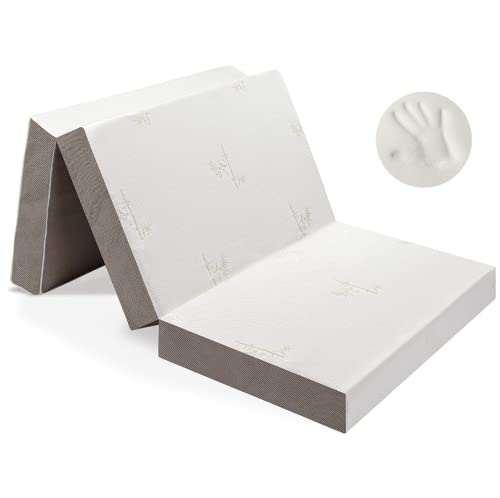
The Milliard Trifold Mattress is the everyday answer that keeps the air bed’s one honest advantage — disappearance — while deleting its failure mode. Six inches of foam in three folding sections: unroll it at night, fold it into the closet or against the wall in the morning, and the studio is a living room again. There is nothing to inflate, nothing to patch, and no pump hum at midnight; the support on night three hundred is the support from night one, because foam does not leak.
Strengths
- Folds away daily — the only pick that returns the floor completely
- Consistent support with zero maintenance: no pump, no patch kit, no pressure checks
- Washable cover suits a bed that lives at floor level and works nightly
Trade-offs
- Six-inch foam is a medium for daily support; heavier sleepers will want the Zinus or Novilla upgrade
- Fold seams are felt faintly by the most position-sensitive sleepers
- Twin XL width is a solo format; couples need a framed pick
| Color | White |
| Size | Twin XL |
| Dimensions | 78 x 38 x 6 inches |
As a daily bed, the Milliard’s ritual is its feature: the morning fold is a two-minute reset that keeps bedding aired, the floor cleanable, and the room honest about its size. Floor sleepers coming from futon traditions will find the firmness familiar; side sleepers should add the alignment checks from the how-to section, since a six-inch surface over a hard floor asks more of the shoulder than a framed bed does.
Longevity under daily use comes from rotation and airing — both trivially easy with a bed you already fold every morning. Flip the fold direction weekly, stand it to air while you clean, and the foam wears evenly instead of memorizing one body’s map. No air bed offers a maintenance routine this simple, because no air bed survives to need one.
For the everyday floor-bed brief — the actual need behind most of these searches — this is the guide’s answer.
Best for: studio and small-space daily sleepers who need the floor back each morning / Not suited for: couples or heavier sleepers needing a full framed bed
Choose the Milliard if your bed must vanish daily. Skip it if the bed can stay put — then buy the Zinus. Check on Amazon
Linenspa 8 Inch Hybrid Mattress
Our badge: Best Compact Hybrid
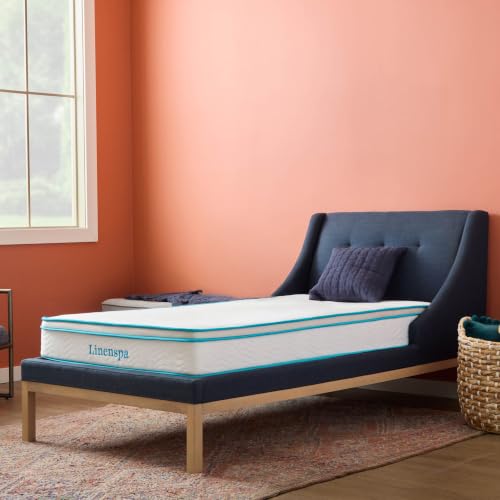
The Linenspa 8 Inch Hybrid Mattress is the everyday pick for small rooms that still deserve real support: a medium-firm hybrid — memory foam over a steel-coil innerspring — in an eight-inch, 36-pound twin that fits bunks, trundles, daybeds, and tight spare rooms while sleeping like a scaled-down adult bed rather than a pad. For a long-stay guest corner, a teen’s room, or a studio’s platform, it is the compact end of durable.
Strengths
- Coil support in an eight-inch profile — primary-bed mechanics at occasional-bed size
- Thirty-six pounds: one person can set up, rotate, and re-room it solo
- Medium-firm neutrality suits the widest range of daily sleepers
Trade-offs
- Twin width is a solo sleeper’s format
- Eight inches leaves less deep-cradle room for curvy side sleeping
- Hybrid motion transfer exceeds foam-only picks
| Color | Mattress Only |
| Size | Twin |
| Dimensions | 74 x 39 x 8 inches |
| Weight | 36 pounds |
The coil core is the everyday argument: steel cycles through years of nightly compression with less permanent set than an all-foam stack of the same slim profile, and it ventilates the bed from below — a quiet advantage in the small, warm rooms where compact beds live. On a daybed or trundle it reads as furniture; on a platform it reads as a proper bed.
Pair it with a rigid base and a protector, rotate it monthly (easy at this weight), and the Linenspa will outlast several generations of the air beds it replaces, at a total cost of ownership that embarrasses the inflatable math.
For compact rooms that need a real bed every night, this is the efficient answer.
Best for: small rooms, daybeds, trundles, and long-stay guest corners / Not suited for: couples or deep-cradle side sleepers
Choose the Linenspa if compact must still mean supported. Skip it if you need width or maximum contour. Check on Amazon

Best Price Mattress 6″ Memory Foam
Our badge: Best Simple Setup
The Best Price Mattress 6″ Memory Foam is the lightest framed-format everyday bed in the guide: a full-size, six-inch green-tea memory foam mattress at just over thirty pounds. Its everyday virtue is manageability — one person can carry it up stairs, rotate it without planning, move rooms without help, and replace a worn sheet in moments. For renters, students, and anyone whose living situation rearranges often, that lightness is a daily quality of life, not a specification.
Strengths
- Thirty pounds in a full size — the most movable real bed in the guide
- Green tea infusion keeps a small room’s daily bed smelling neutral
- Firmer thin-profile feel suits back and stomach sleepers and floor-platform setups
Trade-offs
- Six inches is the guide’s durability floor for nightly adult use — heavier sleepers should size up
- Side sleepers will feel the floor’s opinion through the shoulder on hard bases
- Plain finish; the comfort is functional, not plush
| Color | White |
| Size | 6 Inch |
| Dimensions | 75 x 54 x 6 inches |
| Weight | 30.42 pounds |
Honesty about lifespan belongs in an everyday guide: a six-inch foam at nightly duty is a seasons-long product for an average adult, not a decade-long one, and its economics should be judged that way — as the affordable, replaceable, always-adequate bed for life’s transitional chapters. Within that honest frame it performs exactly as promised, which is more than the air beds at similar effort ever managed past month two.
Set it on a rigid, slat-free-gap platform; thin foams telegraph every gap beneath them, and most “this mattress sagged” stories at this profile are foundation stories. A sheet of plywood over tired slats is the cheapest comfort upgrade in this entire guide.
For the mobile, transitional, everyday brief, this is the simple answer.
Best for: renters, students, and frequently rearranging rooms / Not suited for: heavier sleepers or a decade-long primary bed
Choose Best Price if lightness and simplicity lead. Skip it if this bed must be your ten-year bed. Check on Amazon

Zinus 12″ Green Tea Memory Foam
Our badge: Best Everyday Upgrade
The Zinus 12 Inch Green Tea Memory Foam Mattress is where this guide’s readers should land when “temporary” quietly becomes “my actual life”: a full twelve-inch queen with patented zoned pressure relief, CertiPUR-US certified foams, an OEKO-TEX certified cover, and fiberglass-free construction. As an everyday primary bed it simply out-classes the improvised category — real zoning for real backs, real certifications for a bed you breathe over nightly, and a profile with the depth to age gracefully.
Strengths
- Zoned support engineered for the nightly long term, not the occasional weekend
- Certified materials top to bottom — the paperwork a primary bed deserves
- Twelve inches of depth: the durability and comfort margin everyday use consumes
Trade-offs
- A committed bed: 62 pounds and a full profile end the vanishing act
- Soft foam edges for sitting
- Needs its ventilation window on arrival like any fresh foam
| Color | White |
| Size | Queen |
| Dimensions | 80 x 60 x 12 inches |
| Weight | 62.3 pounds |
The upgrade logic deserves stating plainly, because everyday sleepers under-invest by habit: you will spend more hours on this bed than on your sofa, your desk chair, and your car seat combined. The difference between an improvised bed and this one is not luxury; it is whether your spine gets zoned support on night nine hundred. When the arrangement stops being temporary, the mattress should stop pretending too.
Zoning earns its keep nightly: shoulders sink, hips are held, and the back wakes without the negotiation that thin beds conduct. Pair it with a proper platform and the protector habit and the Zinus becomes the room’s anchor — the piece of furniture the transitional chapter grew up around.
For the everyday sleeper ready to stop improvising, this is the guide’s recommendation.
Best for: transitional sleepers whose “for now” bed became the real bed / Not suited for: rooms that still need the bed to disappear
Choose the Zinus if the arrangement is settling in. Skip it if the floor must clear daily. Check on Amazon

Lucid 10″ Gel Memory Foam
Our badge: Best Cooling
The Lucid 10 Inch Gel Memory Foam Mattress serves the everyday sleeper whose room runs warm — the attic conversion, the sun-facing studio, the loft over the garage — with a three-inch gel memory foam surface, a ventilated transition layer, and bamboo charcoal in the base managing heat and moisture across nightly use. Ten inches is a genuine primary-bed profile, and the maker’s stated adjustable-base compatibility hints at the upgrade path (a simple adjustable frame turns an everyday corner into a reading-and-sleeping station).
Strengths
- Gel surface plus charcoal base: cooling engineered for warm-room daily duty
- Itemized layers and a 10-year warranty — primary-bed accountability
- Balanced medium feel suits the mixed-position reality of everyday sleep
Trade-offs
- Gel moderates surface temperature; it cannot air-condition a hot room
- At just under 58 pounds, re-rooming is a planned event
- Medium feel may read soft to firm-preference back sleepers
| Color | White |
| Size | Queen |
| Dimensions | 79 x 59 x 10 inches |
| Weight | 57.9 pounds |
Everyday beds in warm rooms fail by accumulation: night after night of retained heat degrades sleep quality a few percent at a time, and the sleeper blames stress. The Lucid’s layered answer — gel at the surface, ventilation in the middle, charcoal at the base — addresses the accumulation rather than any single hot night, which is the correct engineering for a daily bed. Its CertiPUR-US certification and fiberglass-free build keep the paperwork as sound as the cooling story.
Maximize it with breathable bedding and a slatted base that lets the ventilation layer breathe; a solid platform in a hot room throttles the design’s lower half. Small setup decisions, compounded nightly, are the whole game at the everyday tier.
For warm-room daily sleepers, this is the cool-headed pick.
Best for: warm rooms, lofts, and heat-sensitive everyday sleepers / Not suited for: firmness seekers wanting a hard platform feel
Choose the Lucid if your room runs warm. Skip it if you want maximum lift. Check on Amazon

Novilla Bliss 12″ Memory Foam
Our badge: Best Full Comfort
The Novilla Bliss Queen Size Mattress is the everyday pick for the sleeper who lives on the bed — reads on it, works from it, sits at its edge every morning — with twelve inches of gel memory foam over support foam and, crucially, reinforced edges that keep the perimeter a real place rather than a slope. In small-space life the bed is also the sofa and the desk chair; the Novilla is built like it knows.
Strengths
- Reinforced edges make the whole surface usable — sitting, reading, dressing
- Gel comfort layer over spine-aligning support foam: a balanced daily feel
- Full queen presence at an everyday-friendly positioning
Trade-offs
- Sixty-one pounds of commitment — not a vanishing bed
- Foam motion character; light sleepers with restless partners should note it
- Needs a week of mornings to judge its balanced feel fairly
| Color | Bliss |
| Size | Queen (U.S. Standard) |
| Dimensions | 80 x 60 x 12 inches |
| Weight | 61.5 pounds |
The 100-day trial the maker states fits the everyday evaluation properly: a daily bed is judged across a season of ordinary nights, not a weekend. The Novilla’s quiet competence — cool surface, aligned support, honest edges — is the profile of a bed that disappears from your attention, which for an everyday mattress is the highest praise available. Beds you notice nightly are beds with problems; beds you forget are doing their job.
Its edge reinforcement also future-proofs the small-room arrangement: when the bed doubles as seating for guests, the perimeter holds its shape instead of collapsing into the foam-bed slouch. Everyday furniture must be furniture, not just a sleep surface.
For the live-on-it everyday sleeper, this is the full-comfort answer.
Best for: small-space sleepers who sit, read, and live on the bed / Not suited for: stowaway-bed households
Choose the Novilla if your bed is also your sofa. Skip it if it must fold away. Check on Amazon
Comparison Table
| Pick | Everyday format | Construction | Size listed | Profile | Check price on Amazon |
|---|---|---|---|---|---|
| Milliard Trifold | Fold-away floor bed | Memory foam trifold | Twin XL | 6 inches | Check price on Amazon |
| Linenspa Hybrid | Compact framed bed | Foam + steel coils | Twin | 8 inches | Check price on Amazon |
| Best Price Mattress | Lightweight framed bed | Green tea memory foam | Full | 6 inches | Check price on Amazon |
| Zinus Green Tea | Full primary bed | Zoned memory foam | Queen | 12 inches | Check price on Amazon |
| Lucid Gel | Cooling primary bed | Gel foam + charcoal base | Queen | 10 inches | Check price on Amazon |
| Novilla Bliss | Live-on-it primary bed | Gel foam, reinforced edges | Queen | 12 inches | Check price on Amazon |
How to Choose the Best Everyday Alternative to an Air Mattress
Decide whether the bed must disappear
That single answer sorts this guide: yes — the Milliard trifold, the one pick that returns the whole floor daily. No — buy the best framed bed the room and budget allow, because a bed that stays put should be a real bed. Most everyday regret comes from buying a vanishing bed for a room that never needed one, or a committed bed for a room that did.
Match durability to your honest timeline
Weeks-to-months of transition: the Best Price or Linenspa serve honestly. A year or more: the Zinus, Lucid, or Novilla depth pays for itself in support that survives the timeline. The expensive mistake is the mismatch — a thin bed asked to serve years, or a flagship bought for a six-week gap.
Plan the foundation like it matters — it does
Thin foams telegraph gaps; hybrids need airflow; floor beds need a clean, dry surface and weekly airing. A rigid platform, a plywood sheet over tired slats, or a tatami-style mat under a floor bed — these small foundations decide whether the mattress above them performs as reviewed. Everyday beds live closer to their foundations than any other kind.
Build the maintenance habit at purchase
Protector from night one, rotation on a calendar, weekly airing for floor beds, bedding washed on schedule — small beds in small rooms live hard lives, and the habits are the difference between a bed that serves its whole honest lifespan and one that sags early. Bedding refreshes belong in the same plan; a set from Black Friday Bedding Deals 2026 season or supportive extras like Best Throw Pillows Under $500 complete the everyday corner.
How Do You Make an Everyday Bed Sleep Like a Real Bedroom?
Layer it like one: protector, proper fitted sheet, a real pillow matched to your position, and darkness and quiet defended as fiercely as in any primary bedroom. The everyday sleeper’s enemy is the improvised feeling — the sense that this arrangement is not quite real sleep — and the cure is ritual completeness, not square footage. A made bed, made daily, sleeps differently from the same mattress left in sleep mode.
Alignment deserves one check: on floor and low-profile beds, side sleepers should confirm the shoulder sinks enough to keep the neck level, adding pillow height rather than suffering a kinked neck for the arrangement’s whole life. Back sleepers on firm thin beds may want a slim pillow under the knees. Small geometry, nightly compounded — the same lesson as our guest-focused guidance in Best Air Mattresses For Guests.
Problem: the floor bed feels damp or musty underneath — air it standing weekly without fail, keep it off cold exterior floors in winter, and never fold it away damp; moisture is the floor bed’s only real enemy.
Problem: a thin everyday foam starts feeling thinner — rotate and flip the sleeping zones first; if the dip is real and the timeline has stretched, that is the upgrade signal the Zinus exists for.
Problem: your partner joins the arrangement — solo formats end at twin XL; step up to a queen pick before the nightly negotiation damages both sleep and goodwill.
Problem: the room still feels improvised — add the bedroom signals: a lamp at pillow height, a small rug where feet land, blackout on the window. The brain sleeps where it believes a bedroom is.
Problem: morning stiffness on a floor bed — check pillow geometry and give the arrangement two honest weeks; if stiffness persists, the surface is too thin or firm for your body and the guide’s deeper picks are the fix.
Why Air Beds Fail at Everyday Duty
The failure modes are structural, not anecdotal. Bladder materials creep under sustained load, so pressure — and therefore support — declines measurably across a single night and dramatically across a season. Seams and valves are engineered for intermittent stress; nightly body-weight cycling fatigues them on a schedule. Temperature swings change internal pressure, so the bed that felt firm at bedtime sags by morning in a cool room. And every puncture risk in a home — pet claws, bed-frame hardware, a dropped earring — is a nightly lottery ticket against a surface with no redundancy. Occasional use hides all of this; everyday use is simply the audit that reveals it. The foam and hybrid beds in this guide have failure modes too — foam softens across years — but they fail in years, gracefully, rather than in weeks, at 3 a.m., onto the floor.
There is also the sleep-quality ledger, quieter than the durability one. An air surface transmits a partner’s or your own movement as a whole-bed event, holds a slight chill from below in cool rooms, and asks its sleeper to accept a firmness that drifts with the weather. None of these ruin a weekend; all of them tax a year. Everyday sleep is a compounding account — small nightly deficits and small nightly comforts both accumulate interest — and the entire premise of this guide is that the everyday shopper should bank the comforts. Foam’s stillness, a hybrid’s support, a foldable’s reliability: modest properties, compounded nightly, are what a real bed actually is.
The Everyday Bed as a Season of Life
There is a dignity point worth making in a guide like this: the everyday alternative bed usually marks a chapter — the first apartment, the job in a new city, the divorce or the deployment or the renovation, the caring-for-a-parent season with a bed in the spare room. Chapters deserve real sleep, because sleep is what carries a person through them. The picks here are ordered by that belief: the cheapest honest bed that serves the chapter, an upgrade path when the chapter extends, and no product that pretends a bladder is a mattress. Buy for the chapter you are actually in, maintain the bed like it matters — because nightly, it does — and let the arrangement be modest without ever being makeshift.
Hosts and households should also note the arrangement’s social side: an everyday bed in a shared room affects everyone who uses the space. The fold-away discipline of the Milliard, the furniture-like presence of a daybed Linenspa, the lamp-and-rug signals of a settled corner — these are courtesies to the people you live with as much as comforts for yourself. A chapter bed that respects the room gets respected in return, and the arrangement survives its season without friction. Modest, maintained, and considerate is the whole aesthetic; everything in this guide was chosen to be capable of it.
The everyday shopper’s budget deserves one honest paragraph, because this category is where false economies breed. The arithmetic that matters is cost per year of acceptable sleep: an inflatable replaced twice in a year of nightly duty costs more — in money, in disrupted weeks, in mornings — than the foam picks in this guide bought once, and the comparison worsens every season the foam continues. Shoppers working a hard ceiling will find the discipline in our Best Mattresses Under $500 guide directly transferable: certified foam, honest depth, and habits that extend life are the same virtues at the everyday tier, and several of this guide’s picks live in that band’s world as well.
Foundation planning closes the everyday system, and it deserves more than the paragraph it usually gets. A floor bed needs a clean, dry, level surface and air beneath it weekly; a framed foam needs slats close enough that the foam cannot migrate into the gaps; a hybrid needs airflow like any coil bed. Shoppers building on a platform should confirm the pairing with our Best Mattresses For Platform Bed guidance, since the platform-and-foam marriage is the everyday arrangement most likely to become permanent — and the one whose foundation mistakes echo longest. Get the base right once, and every mattress you ever place on it performs as reviewed.
Common Buying Mistakes
Buying an inflatable for a primary bed
The category’s most expensive cheap decision. Everyday duty is precisely what air beds are not built for; start with foam or a slim hybrid instead.
Under-buying depth for a long timeline
Six inches serves a season; years need ten to twelve. Match the profile to the honest calendar, not the hopeful one.
Skipping the foundation check
Gaps, sags, and damp floors defeat good mattresses. Inspect what the bed rests on before blaming what you rest on.
Neglecting rotation and airing
Everyday beds wear in one body’s map without rotation. The calendar habit costs minutes and buys years.
Forgetting the protector
Small-room beds absorb more of life’s spills and humidity. A protector from night one is the cheapest lifespan extension in this guide.
One last piece of everyday craft: name the arrangement’s review date the day you set it up. Transitional beds fail their owners by never being re-decided — the six-week solution still in service at month fourteen, quietly taxing every morning. Put a date three months out on the calendar, and on that date ask the only question that matters: is this still the right bed for the life I am actually living now? If yes, maintain it with pride and re-date the review. If the chapter has changed — a partner, a lease, a back that has started filing reports — the upgrade path in this guide is already researched and waiting. Everyday beds serve chapters; the review date is how a chapter gets its ending written on purpose.
Everyday sleepers should also budget the arrangement’s small recurring costs with open eyes, because honesty about totals is this guide’s whole method. A protector replaced yearly, bedding that fits the format properly, a rug or mat under a floor bed, the occasional pillow refresh — the system around an everyday bed runs to a modest annual figure that the improvised version of this life usually spends instead on replacement air beds and their pumps. Planned small costs beat unplanned medium ones, in sleep as in everything; the household that budgets the system owns the outcome, while the household that budgets only the mattress keeps being surprised by the same category of expense wearing different clothes.
There is a sleep-hygiene dividend to the settled everyday bed that deserves the last word before the verdict: ritual. A bed that is made, aired, and slept in on a schedule teaches the body when the day ends — a lesson inflatables and improvised piles never teach, because they never look the same two nights running. The picks in this guide, from the foldable Milliard to the full Zinus, all support a ritual; choose the one your space allows, keep the ritual for a month, and the chapter you are living will start sleeping like it is being lived on purpose.
Everyday arrangements also intersect with health in a way worth one careful paragraph: a chapter bed is often slept on by a body under unusual load — recovering, grieving, working nights, caring for someone. Sleep is the recovery substrate for all of it, and the everyday bed’s adequacy is therefore not a furnishing detail but a care decision. If the sleeper in the arrangement is you, extend yourself the same standard you would buy for a loved one in the spare room; if the arrangement houses someone you care for, the calculus of this guide — real support, honest depth, maintained freshness — is simply what care looks like when it is expressed as furniture. Chapters are survived on sleep; furnish them accordingly.
Everyday sleepers in shared housing should also negotiate the arrangement’s courtesies explicitly, because a bed that lives in common space runs on housemate goodwill: the fold-away done before the room’s morning traffic, the bedding kept fresh enough that the living room never smells like a bedroom, the quiet hours respected in both directions. The picks in this guide were chosen partly for how gracefully they support those courtesies — fast folds, washable covers, furniture-grade presences — and households that agree the courtesies in advance find the arrangement sustainable for exactly as long as the chapter requires. An everyday bed is a small social contract with a mattress inside it; sign both parts deliberately.
And when the chapter closes — the lease signed, the relative recovered, the renovation finished — retire the arrangement with the same intention: the trifold to the guest closet, the hybrid to the spare room, the full bed to the next chapter’s first night. Good everyday beds do not get thrown away; they get promoted into the household’s reserve, where their reliability continues to earn. That afterlife is the final economic argument against the inflatable, which has no second act.
The everyday sleeper should also keep one small luxury in the arrangement, deliberately and without apology: something that makes the bed feel chosen rather than endured — the good pillow, the lamp with the warm bulb, the blanket in the color that pleases you. Chapters are long, and morale is a sleep input like any other; the arrangements that survive their seasons with the sleeper’s affection intact are the ones that included a pleasure or two among the practicalities. Every pick in this guide can carry that small luxury without strain. Add yours, and let the chapter’s bed be a place you are glad to end the day — which, in the end, is the entire difference between an everyday mattress and an everyday compromise.
Everyday sleepers should also decide the arrangement’s laundry rhythm in advance, because small-space beds live closer to life’s spills and the bedding cycle is part of the furniture plan: sheets that fit the format properly, a protector that washes without drama, a spare set so the bed is never held hostage by the laundry’s schedule. It sounds domestic to the point of comedy in a mattress guide, and it is, daily, the difference between an arrangement that feels maintained and one that feels survived. The picks here all accept standard bedding in their listed sizes; stock the second set when you order the first, and the system’s smallest failure mode disappears.
Everyday sleepers should also write the arrangement’s one-line review at the three-month date this guide asked you to set: what the bed is, how the mornings honestly rate, and whether the chapter still matches the furniture. The line takes a minute and prevents the commonest everyday failure — not a bad bed, but an outgrown one kept past its chapter by inertia. Chapters change; the review is how the bed finds out.
And if the arrangement delights you — if the chapter’s bed turns out to be one of the best sleeps of your life — write that down too. Households routinely discover their permanent preferences in transitional furniture, and the everyday bed that outperforms the old primary is data the next decade of purchases deserves to know.
Everyday sleep is still sleep — a third of the chapter you are living, spent on the surface you choose here. Choose it like it counts, because nightly, it is the thing that counts most.
Start tonight: protector on, ritual set, review date written down. The chapter deserves a real bed from its first night, not its fiftieth.
Final Recommendation
For most everyday alternative-bed shoppers, the Milliard Trifold Mattress is the answer that respects the original search: it folds away like the air bed you imagined, and sleeps — nightly, for seasons — like the real mattress an air bed never becomes. If your bed can stay in place, take the runner-up path instead: Check on Amazon for the Zinus and give the arrangement a proper primary bed. Compact rooms get the Linenspa, warm rooms the Lucid, mobile lives the Best Price, and live-on-it small spaces the Novilla. Whatever you choose, choose it as an everyday object: protect it, rotate it, air it — and sleep like the chapter matters, because it does.
Frequently Asked Questions
Can an air mattress really not handle everyday use?
Most cannot, for structural reasons: bladder creep, seam fatigue, and pressure loss across temperature swings. Occasional weekends hide it; nightly duty reveals it within a season. The foam and hybrid picks here are engineered for the nightly cycle instead.
What is the best everyday bed for a studio apartment?
The Milliard trifold if the floor must clear daily; the Novilla or Zinus if the bed can stay. The deciding question is disappearance, not size — answer it honestly and the guide sorts itself.
How long will a foam everyday bed last?
Thin profiles (six inches) serve seasons of nightly use; ten-to-twelve-inch certified foams serve years. Rotation, airing, and a protector move any of them toward the top of its range.
Is a floor bed bad for your back?
Not inherently — firm, level support suits many back sleepers. Side sleepers must manage shoulder and pillow geometry more carefully on thin floor setups, and anyone with persistent pain should involve a clinician rather than a mattress guide.
What foundation does an everyday foam bed need?
A rigid, gap-free surface: solid platform, close slats, plywood over tired slats, or a clean dry floor with weekly airing for foldables. Foundations decide thin beds’ fates.
When should I upgrade from an improvised bed to a real mattress?
When the timeline stretches past a season, when mornings start reporting stiffness, or when a partner joins the arrangement. The Zinus in this guide is the designated upgrade — buy it before the improvised bed starts costing you sleep.


