Disclosure: As an Amazon Associate, dailyhomedecorating.com earns from qualifying purchases. Links to Amazon on this page are affiliate links; they cost you nothing extra. Prices and availability change often, so check the current Amazon listing before you buy.
Side sleepers ask a mattress for a contradiction: be soft enough at the surface for a shoulder and hip to sink in, and structured enough underneath that the waist does not follow them down. If you are searching for the best hybrid mattresses for side sleepers, you have probably already discovered why hybrids are the fashionable answer — they split the contradiction between two materials. Foam comfort layers handle the sinking; a coil core handles the structure, the airflow, and the bounce that makes a bed feel alive instead of swampy.
Our verified pool contains four true hybrids, and they take the first four places in this guide: two substantial queen-class builds, a lumbar-focused full, and a twin that owns the small-room and guest brief. The final two picks are foam designs that side sleepers cross-shop against hybrids constantly — a zoned foam that mimics hybrid zoning and a cooling five-zone foam — included honestly labeled as foam, because for some side sleepers they are the right answer and pretending otherwise would serve nobody. Every pick is judged on the side sleeper’s actual criteria: shoulder travel, hip relief, waist support, edge behavior, and how the bed treats the 2 a.m. roll. Readers whose side sleeping comes with back pain should pair this with Best Mattresses For Side Sleepers With Back Pain; those with hip-specific complaints will find a deeper dive in Best Mattresses For Hip Pain.
Where to Buy
Every pick here is sold on Amazon, where the listing carries current pricing, sizes, and trial terms. Start with our top pick, the Sealy Dreamlife 12” Hybrid Mattress-in-a-Box — Check on Amazon. The other five picks are the Serta Perfect Sleeper Ultimate Pillow Top — Check on Amazon; the Signature Design by Ashley Chime 12 Inch Hybrid — Check on Amazon; the Linenspa 8 Inch Hybrid Mattress — Check on Amazon; the Casper Sleep Original — Check on Amazon; and the Sweetnight CoolNest Queen Mattress — Check on Amazon. Confirm current pricing on the listing itself.
In this guide
Quick Picks
| Pick | Badge | Why it earns its place |
|---|---|---|
| Sealy Dreamlife 12” Hybrid Mattress-in-a-Box | Best Overall | Gel foam over encased coils: shoulder give on top, independent support and airflow beneath |
| Serta Perfect Sleeper Ultimate 14.5″ Queen Mattress – Medium Pillow Top | Best Plush Hybrid | A true pillow top over zoned coils for side sleepers who want maximum shoulder welcome |
| Signature Design by Ashley Chime 12 Inch Hybrid Full Size Mattress | Best for Targeted Lumbar Support | Gel lumbar layer and sturdy wrapped coils for side sleepers whose waist needs holding |
| Linenspa 8 Inch Hybrid Mattress | Best Compact | A real hybrid in a twin footprint for small rooms, guests, and younger side sleepers |
| Casper Sleep Original 11″ Memory Foam Queen Mattress | Best Foam Alternative | Zoned foam that reproduces hybrid zoning for side sleepers who prefer foam’s quiet |
| Sweetnight CoolNest Queen Mattress | Best Cooling Foam Alternative | Five-zone foam with a serious cooling system for hot side sleepers |
Key Takeaways
- Hybrids suit side sleepers because the jobs separate: foam cushions the shoulder and hip, coils hold the waist and ventilate the bed.
- Pocketed or encased coils beat connected coils for side sleeping — each zone of your body gets its own support response.
- Comfort layer depth decides shoulder happiness; two to three inches of quality foam over the coils is the working range.
- Too firm a hybrid bridges the waist; too soft a one drops the hip. Medium and medium-soft with structure is the side sleeper’s zone.
- Edges matter more than side sleepers expect — you will sleep near them and sit on them daily.
- A knee pillow and correct main-pillow loft complete the posture the mattress starts.
How These Picks Were Chosen
We filtered a verified product pool for side-sleeping mechanics in hybrid form. True hybrids needed pocketed, encased, or zoned coil systems — independent support that lets the shoulder zone compress without collapsing the waist — under comfort layers with real depth and a pressure story. We weighed edge support, airflow, motion behavior for partners, and trial length. The two foam picks were admitted under a stated exception: they are the foam designs side sleepers most legitimately cross-shop, one zoned and one five-zone cooling, and each review labels it as foam in plain language.
Filtered out: firm flat hybrids with token comfort layers, connected-coil designs that move as one trampoline, and products whose verified specifications we could not confirm. Method honesty: this guide is built from manufacturer-verified specifications and documented features, not laboratory testing. If your side sleeping is really a heavy-sleeper story, our Best Mattresses For Heavy Side Sleepers guide applies the same criteria at higher loads.
The 6 Best Best Hybrid Mattresses for Side Sleepers — Reviewed

Sealy Dreamlife 12” Hybrid Mattress-in-a-Box
Our badge: Best Overall
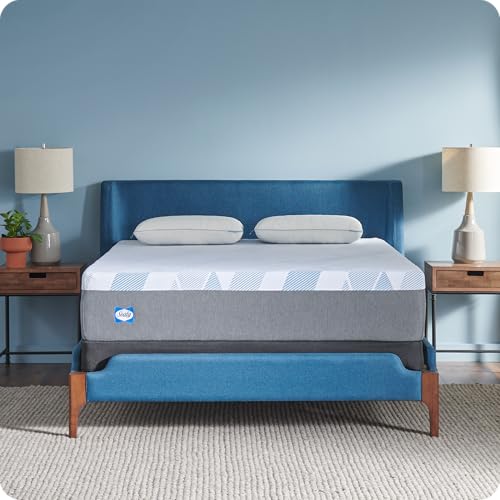
The Sealy Dreamlife 12” Hybrid is the textbook side-sleeper hybrid: two inches of SealyComfort gel memory foam to receive the shoulder and hip, a transition layer to grade the descent, and seven inches of individually encased coils that respond to each body zone independently. That independence is the whole ballgame for side sleeping — the coils under your shoulder compress deeply while the coils under your waist stay taller, holding the spine’s line instead of averaging your body into a compromise.
Strengths
- Encased coils give each body zone its own support response
- Gel foam comfort layer relieves shoulder and hip pressure and moderates heat
- Coil airflow keeps the bed fresher than all-foam rivals
Trade-offs
- Just over 80 pounds in queen — a planned, two-person setup
- More motion transfer than the foam picks, though modest for coils
- Medium-firm lean may be assertive for very light side sleepers
| Color | Dreamlife |
| Size | Queen |
| Dimensions | 80 x 60 x 12 inches |
| Weight | 80.604164 pounds |
The transition layer earns its keep at the shoulder specifically. Without it, a side sleeper sinks through soft foam and lands on coil tops — the hard-shelf sensation that gives cheap hybrids a bad name. With it, the descent is graded: cushion, transition, support, each arriving in proportion. The gel in the comfort foam handles the heat that shoulder and hip contact points generate, and the coil core ventilates what the gel absorbs. Surface-Guard antimicrobial technology and CertiPUR-US certified foams cover hygiene.
Position changes are the hybrid’s daily dividend: coils return energy, so the nightly roll from side to side — or side to back — is assisted rather than excavated from a foam mold. Morning exits benefit the same way. For side sleepers who share, motion transfer is present but civilized by the encased design; a partner’s exit registers as information, not disturbance.
Longevity favors this construction: coil support changes slowly over years, so the side posture you trial is close to the posture you keep. Rotate seasonally, protect the surface, verify your frame’s weight rating, and the Dreamlife is a long-term answer to a nightly geometry problem.
Best for: side sleepers who want the classic hybrid balance of cushion, support, and airflow / Not suited for: shoppers needing maximum motion isolation
Choose the Sealy if you want the hybrid brief executed without gimmicks. Skip it if your partner’s movement is your primary complaint. Check on Amazon

Serta Perfect Sleeper Ultimate 14.5″ Queen Mattress – Medium Pillow Top
Our badge: Best Plush Hybrid
The Serta Perfect Sleeper Ultimate Pillow Top is the plush end of the hybrid spectrum: a genuine medium pillow top — PillowSoft Aire foam with a rippling, airflow-friendly design — over a zoned coil system, with Cool Twist gel memory foam inside the cushion stack. For side sleepers whose shoulders file complaints nightly, that deep, welcoming top is the point of the purchase, and the zoned coils beneath keep it from becoming a hammock.
Strengths
- True pillow top gives shoulders the deepest welcome in this guide
- Zoned coils hold the waist and lower back while the surface cushions
- BestEdge encasement keeps the plush usable to the very edge
Trade-offs
- Fourteen and a half inches tall — deep-pocket sheets and a height audit required
- At 82.26 pounds, the heaviest setup in this guide
- Deep plush will be too soft for side-to-stomach combination sleepers
| Color | Dark Blue |
| Size | Queen |
| Dimensions | 79.5 x 60 x 14.5 inches |
| Weight | 82.26 pounds |
The zoning is what rescues the plush. Serta’s coil system concentrates support at the lower back and hips while cradling elsewhere, so a side sleeper’s shoulder travels deep into the pillow top while the waist stays on the spine’s line. The gel foam inside the cushion addresses the heat that deep contact generates. BestEdge’s deep foam rail means the perimeter does not collapse when you sleep near it or sit on it — plush beds usually surrender both, and this one does neither.
Compatibility spans traditional frames, box springs, platforms, slatted frames, bunky boards, and adjustable frames. Foams are CertiPUR-US certified; the listing includes a 100-night trial and 10-year limited warranty, and the mattress is made in the USA with global components.
Ownership discipline: rotate on schedule to even the pillow top’s workload, and judge the bed at week four after the cushion breaks in. For side sleepers who have always chosen soft and been betrayed by support, this is soft with a spine.
Best for: side sleepers who want maximum cushion over real coil support / Not suited for: low bed setups and combination sleepers who rotate to the stomach
Choose the Serta if your shoulder is the loudest voice in the purchase. Skip it if your frame already sits high. Check on Amazon

Signature Design by Ashley Chime 12 Inch Hybrid Full Size Mattress
Our badge: Best for Targeted Lumbar Support
The Signature Design by Ashley Chime 12 Inch Hybrid brings a specialist feature to the side-sleeper brief: a high-density gel memory foam layer targeting the lower back, over 13-gauge wrapped coils with reinforced perimeter rows. Side sleepers with waist and lower-back complaints — the ones whose hip relief keeps arriving with a side of lumbar ache — are this mattress’s exact audience, in a full size that suits solo sleepers and smaller rooms.
Strengths
- Lumbar gel layer supports the waist zone side sleepers neglect
- Sturdy wrapped coils and reinforced edges keep the full surface honest
- Adjustable-base compatible for position fine-tuning
Trade-offs
- Full size in this listing — couples should check size options
- Medium-firm lean gives less shoulder travel than the Serta
- The lumbar emphasis takes a few nights to stop noticing
| Color | White |
| Size | Full |
| Dimensions | 74.4 x 53.3 x 12 inches |
| Weight | 62 pounds |
The coil specification translates to durability: nine-inch, 13-gauge wrapped coils are a firm, long-lived platform, and pocketing keeps each coil’s response local — shoulder coils can travel without dragging the waist coils down. The doubled perimeter rows make the edges trustworthy for sitting and for sleeping near the side, which in a full size effectively widens the bed. Motion transfer stays low for a coil design.
Adjustable-base compatibility adds a side-sleeper’s experiment: a slight incline changes shoulder and hip loading in ways worth testing during the 180-night trial the listing describes. CertiPUR-US certified foams and a 10-year warranty complete the paperwork.
For a solo side sleeper in a smaller room whose complaint list reads “shoulder, then lower back,” the Chime answers both lines of it in one full-size footprint.
Best for: solo side sleepers with lower back complaints in smaller rooms / Not suited for: couples and maximum-plush seekers
Choose the Chime if your waist needs as much engineering as your shoulder. Skip it if you need queen width. Check on Amazon
Linenspa 8 Inch Hybrid Mattress
Our badge: Best Compact
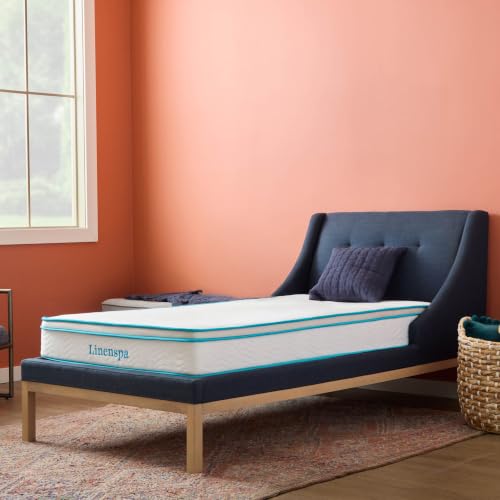
The Linenspa 8 Inch Hybrid Mattress is the hybrid idea at twin scale: memory foam over innerspring coils in a medium-firm, eight-inch profile that Linenspa positions for guest rooms, youth rooms, bunk beds, and trundles. For younger side sleepers, smaller rooms, and guest beds that host side-sleeping visitors, it delivers real coil support where foam-only twins usually phone it in.
Strengths
- True hybrid construction in a portable twin at 36 pounds
- Medium-firm feel suits back and stomach sleepers as well as side sleepers
- Coils add airflow and response that thin foam twins lack
Trade-offs
- Eight inches is a modest depth for heavier adult side sleepers
- Twin width is a solo format by definition
- Comfort layer is thinner than the premium hybrids — shoulder travel is limited
| Color | Mattress Only |
| Size | Twin |
| Dimensions | 74 x 39 x 8 inches |
| Weight | 36 pounds |
Set expectations by body: for children, teens, and lighter adults, the Linenspa’s balance of cushion and coil support is genuinely sufficient, and its responsiveness makes it a friendlier bed for restless young sleepers than slow foam. For a full-grown side sleeper with broad shoulders, treat it as a guest-room or transitional bed rather than a decade-long primary — the eight-inch stack simply has less travel to offer a heavy shoulder.
Setup is bed-in-a-box simple, with 24 to 72 hours for full expansion, faster in a warm room. A 10-year limited warranty backs the purchase. At home it stores and moves easily, and in bunk and trundle applications its profile is a safety feature as much as a dimension, keeping the sleep surface below guard rails as those beds require.
As the gateway hybrid — the bed that teaches a household whether coils suit their side sleepers — the Linenspa is priced and sized to be an easy yes.
Best for: younger and lighter side sleepers, guest rooms, bunks, and small spaces / Not suited for: heavier adults needing deep shoulder travel
Choose the Linenspa if the room or the sleeper is small. Skip it if you are a broad-shouldered adult buying a primary bed. Check on Amazon

Casper Sleep Original 11″ Memory Foam Queen Mattress
Our badge: Best Foam Alternative
The Casper Sleep Original is not a hybrid, and this guide will not pretend otherwise. It earns its place because its Zoned Support reproduces the hybrid’s core trick — different support at the shoulder, waist, and hip — inside an all-foam bed, for side sleepers who want that geometry with foam’s motion isolation and quiet. If your partner’s movement matters as much as your shoulder, this is the cross-shop that wins.
Strengths
- Zoned foam mirrors hybrid zoning: give at the points, support at the waist
- Best-in-guide motion isolation for couples
- Breathable open-cell foam runs cooler than traditional memory foam
Trade-offs
- No coils — no coil airflow, bounce, or edge structure
- Medium-firm may be assertive for very light side sleepers
- Foam edges compress for sitting
| Color | Light Gray |
| Size | Queen |
| Dimensions | 80 x 60 x 11 inches |
The side-sleeping experience is graded and calm: the shoulder sinks into its softer zone, the waist rests on firmer foam, and the whole surface stays silent when your partner’s schedule diverges from yours. Back sleeping works too, which makes the Casper the combination sleeper’s foam answer in this guide. The listing includes a 100-night trial and 10-year limited warranty, with CertiPUR-US certified foams positioned against sinking and sagging.
Choose it over the hybrids if silence and isolation outrank airflow and bounce in your household’s values; choose the hybrids if you run hot, move often in the night, or simply like a bed that pushes back. Either way, rotate the Casper without flipping — the zones have a correct orientation — and support it evenly.
As a foam alternative in a hybrid guide, the Casper is included because it wins real side sleepers every night, not because we ran out of hybrids.
Best for: side-sleeping couples who prize motion isolation and zoned support / Not suited for: shoppers who specifically want coil feel and airflow
Choose the Casper if quiet matters as much as cushion. Skip it if you came for coils. Check on Amazon
Sweetnight CoolNest Queen Mattress
Our badge: Best Cooling Foam Alternative
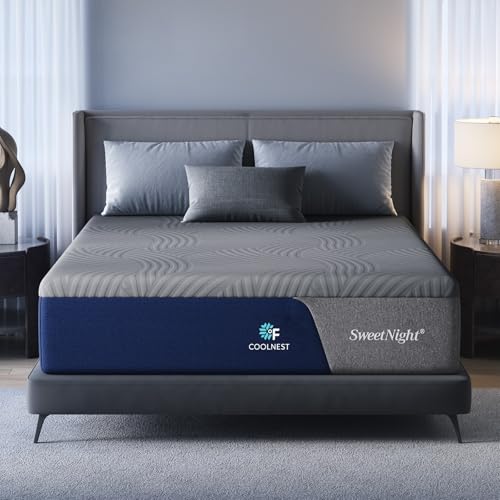
The Sweetnight CoolNest Queen Mattress is the second foam alternative, admitted for the hot side sleeper: fourteen inches with a five-zone ergonomic layout and a CoolNest system — phase-change foam, gel memory foam, ventilated cover — that attacks the heat side sleepers generate at their deep contact points. A hybrid’s coils ventilate better in principle; the CoolNest is what foam does when it takes cooling seriously.
Strengths
- Five-zone support redistributes pressure along the side-sleeping body
- Layered cooling system built for hot contact points
- Strong motion isolation for partners
Trade-offs
- Not a hybrid — no coil core beneath the zones
- Fourteen-inch profile needs deep-pocket sheets and a height check
- Expansion can take up to 72 hours
| Color | Grey & Blue |
| Size | Queen (U.S. Standard) |
| Dimensions | 80 x 60 x 14 inches |
| Weight | 68.67 pounds |
The zone design, recognized by the American Chiropractic Association per the listing, cushions pressure areas from head to toe while maintaining stability — the side posture’s waist included. The maker’s breathability figures are claims we note without adopting; the layered mechanism is the credible part. Foams and cover are CertiPUR-US certified, with a 10-year protection plan listed.
Measure your total bed height before ordering; fourteen inches of foam on a tall frame makes a high exit, and side sleepers with sore shoulders do not need a climbing problem added to the morning. A low-profile frame is the easy compensation.
For the side sleeper whose complaint list reads “shoulder, hip, and hot — in that order,” the CoolNest answers all three lines without a coil in sight.
Best for: hot side sleepers who prefer foam’s feel and isolation / Not suited for: coil loyalists and low bed setups
Choose the Sweetnight if heat shares top billing with your shoulder. Skip it if you want a true hybrid. Check on Amazon
Comparison Table
| Pick | Type | Support system | Size listed | Profile | Check price on Amazon |
|---|---|---|---|---|---|
| Sealy Dreamlife | Hybrid | Encased coils + gel foam | Queen | 12 inches | Check price on Amazon |
| Serta Perfect Sleeper | Hybrid pillow top | Zoned coils | Queen | 14.5 inches | Check price on Amazon |
| Ashley Chime | Hybrid | Wrapped coils + lumbar gel | Full | 12 inches | Check price on Amazon |
| Linenspa Hybrid | Hybrid | Innerspring + foam | Twin | 8 inches | Check price on Amazon |
| Casper Sleep Original | Foam (zoned) | Zoned foam | Queen | 11 inches | Check price on Amazon |
| Sweetnight CoolNest | Foam (5-zone) | 5-zone foam | Queen | 14 inches | Check price on Amazon |
How to Choose the Best Hybrid Mattress as a Side Sleeper
Insist on independent coils
Pocketed, encased, wrapped, zoned — the vocabulary varies, the requirement does not: coils that move independently, so the shoulder’s deep compression does not flatten the waist’s support. Connected coil units move as one springy sheet and are the budget hybrid’s tell. Every hybrid in this guide uses independent coils; hold any other candidate to the same standard.
Measure the comfort layer, not the marketing
Shoulder travel lives in the top two to three inches. A hybrid with a token foam layer over coils is a firm bed with a hybrid label, and your shoulder will file the correction nightly. Look for named comfort foams with stated roles — gel memory foam, pillow-top cushioning, lumbar layers — as the picks here itemize.
Tune firmness to your build
Side sleepers generally land in the medium-soft to medium-firm band, but build moves the target: lighter sleepers need softer surfaces to achieve any sink at all; heavier sleepers compress deeper and need firmer support beneath the same cushion. Broad shoulders argue for deeper comfort layers. Shop your skeleton, not the average reviewer. Bedding and room refreshes can be timed with Black Friday Bedding Deals 2026, and lounge-side comforts like Best Throw Pillows Under $500 complete the room’s brief.
Complete the posture with pillows
The mattress sets the shoulder and hip; pillows set the neck and knees. A side sleeper’s main pillow must fill the ear-to-shoulder gap at the loft your new mattress’s sink creates — recheck it after the mattress settles, because a deeper-sinking bed needs a lower pillow than a firm one did. A knee pillow keeps the pelvis from rotating. Neither is optional equipment for a serious side sleeper.
Trial through your real life
Two to three weeks minimum, including your hardest training days, longest desk days, and laziest Sundays, because side-sleeping comfort is statistical. Log shoulder and hip wake-ups; the right hybrid drives both counts toward zero and keeps them there in week three.
How Should You Set Up a Hybrid for Side Sleeping?
Unbox in the bedroom with help — hybrids are the heaviest class here — and allow full expansion before judging: coils spring immediately, but foam comfort layers need a day or more to reach their true softness, and a hybrid judged at hour two feels firmer than the bed you bought. Ventilate, fit a breathable protector, and check that your foundation suits a hybrid: rigid slats or a platform that lets the coil core work as designed, with weight ratings verified.
Then tune the system. Spend the first week noting shoulder pressure and waist support separately — they have different fixes. Shoulder pressure that persists suggests pillow loft or a softer comfort layer; waist sag suggests foundation flex or a firmer pick. Rotate the mattress after the first month and seasonally thereafter to share the shoulder zones’ workload between both sides of the bed. Convertible and guest hybrids follow the same setup logic, as our Best Mattresses For Sleeper Sofas guide shows for occasional beds.
Problem: your shoulder still aches on the new hybrid — check pillow loft first; a too-tall pillow pushes the shoulder into the bed. Then give the comfort layer its full break-in before concluding.
Problem: your waist sags by morning — inspect the foundation for flex and confirm slat spacing; hybrids telegraph base problems honestly.
Problem: you feel your partner’s every move — encased coils isolate less than foam; a mattress pad with some density, or the Casper’s foam route next time, is the honest fix.
Problem: the bed sleeps warmer than expected — breathable sheets and protector, always; a sealed protector can strangle a hybrid’s airflow advantage entirely.
Problem: the edge collapses when you sleep near it — look for reinforced perimeter designs like the Chime and Serta in this guide when you next buy; for now, rotate so the stronger edge serves your side.
Why Coils Changed the Side-Sleeper Conversation
For a decade, side sleepers were told memory foam was their material, because it was the first surface that truly let a shoulder in. The cost was heat, slow response, and a waist that sank with everything else. The modern hybrid renegotiates all three costs: the foam stays where it is loved — the top two inches — and coils take over the jobs foam does badly. Airflow returns. Response returns. And because coils support by zone rather than by uniform compression, the waist problem that foam zoning later imitated was solved by springs first. None of this makes foam wrong; the two foam picks in this guide prove the counter-case. It makes the hybrid the default architecture for side sleepers who have no special reason to avoid coils, which is most of them.
The coil gauge conversation is worth a plain translation for shoppers comparing listings. Lower gauge numbers mean thicker wire and firmer, more durable support; higher gauges flex more readily. A side sleeper does not need the firmest wire — they need wire that travels at the shoulder and holds at the waist, which is why zoned coil layouts vary gauge or coil density by region. The Ashley Chime’s stated 13-gauge wrapped coils sit at the sturdy end, the Sealy’s encased system is engineered for independent response, and both approaches beat a uniform connected unit for this brief. When a listing names its gauge and its zoning, it is telling you the maker engineered for bodies rather than for brochures.
Height is the hybrid’s quiet tax and should be budgeted honestly. The substantial picks here run 12 to 14.5 inches before the frame adds its share, and side sleepers — who exit the bed by rolling and pushing up through one shoulder — feel total height more than most. A bed that is too high forces a slide-and-drop exit; too low forces a haul. Measure your current total, compare it to the candidate’s, and adjust the frame choice in the same purchase rather than discovering the mismatch with a sore shoulder on the first morning.
The Side Sleeper’s Partner Problem
Side sleeping is often a couple’s compromise position — one partner’s shoulder needs it, the other’s back tolerates it — and the mattress has to serve the household, not the individual. Hybrids thread this needle better than their reputation suggests: encased coils localize support so a heavier partner’s side does not tilt the whole surface, and comfort layers are usually position-neutral enough for a back sleeper sharing the bed. Where the compromise breaks is firmness: a plush pillow-top hybrid that thrills a side sleeper can fold a stomach-sleeping partner. Households in that bind should weight the medium hybrids — the Sealy above all — or the zoned Casper, and use the trial with both partners logging mornings. A bed that wins on both sides of the mattress is the only kind worth keeping.
Weight difference between partners deserves its own arithmetic, because a hybrid responds to each sleeper’s load semi-independently — that is the encased coil’s gift — but the comfort layer is shared territory. A much heavier partner compresses the foam further on their side, and over years that side’s cushion ages faster, which is why rotation is not housekeeping trivia for couples but the mechanism that keeps a shared hybrid symmetrical. Rotate on schedule, and if one side of the household is dramatically heavier, consider it a standing argument for the deepest, densest comfort stacks in this guide rather than the lightest ones.
Finally, a note for the side sleepers who arrived here from a lifetime of firm-bed advice: the hybrid category is where you can stop apologizing for wanting cushion. The structure you were told to prioritize is present — it is simply made of steel now, underneath the softness, doing its work where your shoulder never has to meet it. Comfort at the surface and discipline at the core is not a compromise of the support principle; it is the support principle, correctly layered.
Side sleepers evaluating hybrids should understand the role of the transition layer, the unsung stratum between the comfort foams and the coils. It is the layer that decides whether the shoulder’s descent into the comfort zone ends in a graded landing or an abrupt meeting with steel, and it is why two hybrids with identical top foams can feel entirely different at 2 a.m. Makers rarely headline it, but its presence is inferable: a hybrid whose description lingers on layered construction, zoned coils, and pressure mapping has engineered the landing; one that lists only a top foam and a coil count has left the landing to chance. The picks in this guide were favored for exactly that engineered middle.
The edge of a hybrid matters to side sleepers more than marketing admits. Side sleepers migrate — toward the cool side, toward the partner, toward the edge their shoulder prefers — and a perimeter that collapses steals a third of the bed’s usable width from the sleeper who needs width most. Encased coils with reinforced perimeters, or dense foam rails honestly described, keep the whole surface in play. When comparing finalists, treat edge structure as a side-sleeping specification, not a sitting convenience.
Common Buying Mistakes
Buying a hybrid with a token comfort layer
One inch of foam over coils is a firm bed in hybrid clothing. Your shoulder needs depth; verify the comfort stack.
Assuming all coils isolate motion
Connected coils broadcast movement. Independent, pocketed, encased — accept no substitutes for shared beds.
Ignoring the foundation’s weight rating
Hybrids are heavy and getting heavier with sleepers aboard. A flexing base under a hybrid is a warranty claim and a sore waist in waiting.
Keeping the old pillow by default
New sink depth means new loft math. Recheck the ear-to-shoulder gap after the mattress settles.
Judging before the foam opens
Hybrids feel firmer in the first 48 hours than they will ever feel again. Week three is the verdict; night one is a rumor.
A note on the foam alternatives included alongside the true hybrids in this guide, because the inclusion is deliberate rather than a compromise: a side sleeper whose real priorities are motion isolation and a cradling, pressure-first feel may be served better by a zoned foam flagship than by the fourth-best hybrid, and a guide that pretended otherwise would be serving a category label instead of a sleeper. The reviews label each pick’s construction plainly, the comparison table keeps the distinction visible, and the choice between steel’s lift and foam’s hug is left where it belongs — with the body that will sleep on it, informed by mechanism rather than by marketing tribe. Try to state your own priority in one sentence before you order; the sentence will choose the pick for you.
Hybrid ownership for side sleepers has a break-in reality that deserves plain speech: the first two weeks on a new hybrid are the stiffest it will ever feel, because coil systems and fresh foams settle together on a schedule no delivery day can accelerate. Side sleepers — who judge a mattress at its two most sensitive points — are the shoppers most likely to misread that settling as a firmness verdict and return a mattress that was three nights from becoming right. The trial exists precisely for this negotiation between a new surface and an adapting body; spend it fully, log the mornings, and let week three overrule night two. Every finalist in this guide was chosen to reward that patience.
The foundation under a hybrid matters with unusual specificity, because coils telegraph what they rest on. A hybrid on widely spaced slats will eventually mirror the gaps in its support layer; a hybrid on a rigid, close-slatted, or solid base performs as its designers modeled. Before blaming any hybrid in this guide for a softening midsection, audit the base with a straightedge and a skeptical eye — the fix is often a sheet of plywood rather than a return label. Side sleepers, whose hips concentrate load in the exact zone where foundation gaps announce themselves, benefit most from this unglamorous check.
Couples bring the final hybrid consideration: two side sleepers rarely synchronize. One turns at midnight, the other at three; one migrates toward the cool edge, the other burrows center. Encased coils localize those events better than any shared foam slab, and the hybrid’s responsive surface makes each partner’s repositioning quieter for the other than a deep memory foam’s slow excavation does. If your household’s sleep is a duet of position changes, weight the Sealy and Ashley reviews’ motion notes accordingly — the best hybrid for a side sleeper is often the one their partner never notices.
Side sleepers should also consider the hybrid’s behavior across seasons, a test few categories face as honestly. Summer heat softens foams slightly and swells the sleeper’s need for airflow — the coil core’s home advantage — while winter’s cold firms surface foams and rewards the comfort layer’s depth. A hybrid that serves in August and January alike has passed the year’s full exam, and the trials in this guide’s picks are long enough to begin that exam in whichever season you buy. If your purchase lands in mild weather, weight the airflow specifications more heavily than your current comfort suggests; the mattress must still be right when the room is not.
Lastly, the delivery-day discipline for hybrids: let the mattress expand and air for its full stated window before the first judged night, and expect the coil system to feel fractionally firmer on night one than its settled self. Side sleepers judging a hybrid by its first-night shoulder are judging a photograph of a moving object. Night fourteen is the portrait; buy yourself the patience to see it.
Hybrid shoppers should also decide their protector with the mattress rather than after it, because the protector is the one layer allowed to ruin the engineering: a stiff, waterproof shield drum-tight over a zoned comfort system will flatten the very differential the coils were gauged to create. Choose a protector that flexes and breathes, fit it without tension, and the hybrid you trialed is the hybrid you keep. It is a small purchase riding on a large one, and it deserves the same thirty seconds of specification-reading as everything else in this guide.
And when the verdict lands, whichever finalist wins, keep the trial log. A household that knows how its side sleepers responded to zoned steel, to gel foam, to a grid, owns a map of its own sleep that no future purchase will have to redraw. Mattresses are replaced on a decade’s rhythm; the knowledge should not be.
Side sleepers who run warm should read the hybrid shortlist with a seasonal eye: the coil-core picks ventilate by architecture, in every month, without depending on a gel’s first-hour coolness. If your trial happens to fall in a cool season, discount your own comfort slightly and weight the airflow specifications — August will conduct its own review, and it is the stricter examiner. The finalists here were chosen to pass both examinations.
One last hybrid note for side sleepers who read in bed: the sitting hour is where coil edges and responsive surfaces quietly outscore deep foams, which swallow the reader into a slump the back pays for at lights-out. If your evenings include a chapter or a show from the bed, weight the Ashley and Sealy edge notes accordingly — the best hybrid for your side is also the one your spine thanks at ten o’clock, before sleep is even the subject.
Final Recommendation
For most side sleepers, the Sealy Dreamlife 12” Hybrid is the complete package: independent coils, a real gel comfort layer, airflow, and support that ages slowly. Plush devotees should take the Serta’s pillow top, and foam loyalists the runner-up — Check on Amazon for the Casper Sleep Original and its zoning. Whichever you choose, verify the comfort layer’s depth, recheck your pillow loft in week two, add the knee pillow, and let three weeks of shoulder-and-hip logs make the final call.
Frequently Asked Questions
Are hybrid mattresses good for side sleepers?
Yes — they are arguably the default recommendation. Foam comfort layers cushion the shoulder and hip while independent coils support the waist and ventilate the bed, splitting the side sleeper’s contradictory needs between two materials.
What firmness should a side sleeper choose in a hybrid?
Most land in the medium-soft to medium-firm range, adjusted by build: lighter sleepers softer, heavier sleepers firmer beneath the cushion. The waist test decides — if your spine stays straight on your side, the firmness is right.
Do hybrids sleep cooler than memory foam?
Generally yes. The coil core circulates air in a way solid foam cannot, which matters at the shoulder and hip contact points where side sleepers generate the most heat.
Will a hybrid disturb my partner?
Encased or pocketed coils isolate motion respectably, though not as completely as dense foam. If isolation is your top priority, the Casper in this guide is the foam alternative to weigh.
How thick should a hybrid be for a side sleeper?
Depth buys shoulder travel. The 12-inch class in this guide serves most adults well; the 8-inch Linenspa suits lighter sleepers and smaller applications. Heavier side sleepers should favor the deepest comfort stacks.
Can a hybrid help side sleepers with back pain?
Often, yes: the same zoning that supports the waist on your side supports the lumbar curve on your back. Our side-sleeper back-pain guide in this series goes deeper on that overlap.


