Disclosure: As an Amazon Associate, dailyhomedecorating.com earns from qualifying purchases. Links to Amazon on this page are affiliate links; they cost you nothing extra. Prices and availability change often, so check the current Amazon listing before you buy.
Ask ten households about the best vacuum for rugs and you will hear ten machine recommendations, but watch those same households clean and a pattern emerges: the vacuum is rarely the limiting factor. The rug is. The same machine that leaves one rug genuinely clean will skate across another, bog down in a third, and leave a fourth looking tired no matter how many passes it makes, and the difference is written in pile height, density, backing, and fiber long before it is written in any appliance’s specifications. The best vacuum for rugs cannot rescue a deep shag it cannot seal against, will chew the fringe of a delicate weave, and will surf a lightweight rug across the room instead of cleaning it. Pair the right rug constructions with ordinary vacuum technique, though, and almost any decent machine looks like a hero.
That is why this guide reviews rugs, not machines: six verified rugs ranked by how well they vacuum — how completely they release dirt, how predictably they behave under a brush roll, how honestly their makers describe the care they need, and how little drama they add to a weekly routine — together with the complete technique layer for vacuuming every pile type in your home, from printed flats to the shag in the bedroom corner. If your floors mix rugs with bare wood, the companion guidance in Best Vacuum For Wood Floors covers the hard-floor half of the system, and Best Vacuum For Area Rugs goes deeper on large-format pieces specifically.
Where to Buy
All six rugs are sold on Amazon, where you can check the current price and availability and confirm the construction details on the listing itself before you buy. Start with our top pick, the Loloi Layla Olive/Charcoal 7′-6″ x 9′-6″ Area Rug — Check on Amazon. The other five are the SAFAVIEH Adirondack 8×10 (Check on Amazon), the SAFAVIEH Madison 8×10 (Check on Amazon), the Unique Loom Sofia (Check on Amazon), the nuLOOM Blythe 5×7 (Check on Amazon), and the Lahome Insect 5×7 (Check on Amazon).
In this guide
Quick Picks
| Pick | Badge | Why it earns its place |
|---|---|---|
| Loloi Layla Olive/Charcoal 7′-6″ x 9′-6″ Area Rug | Best Overall | A printed, very low pile that releases dirt in one or two passes on almost any vacuum setting. |
| SAFAVIEH Area Rug 8×10 – Adirondack Collection – Ivory & Sage | Best for Suction-Only Cleaning | Maker-specified for vacuuming without a beater bar, with a smooth low pile that suction handles completely. |
| SAFAVIEH Madison Area Rug 8×10 | Best for High Traffic | Dense polypropylene that takes daily vacuuming in stride and hides what happens between sessions. |
| Unique Loom Sofia Collection Area Rug – Salle Garnier (7′ 1″ x 10′) | Best Traditional | A quarter-inch pile and jute backing that stay planted and clean predictably week after week. |
| nuLOOM 5×7 Moroccan Blythe Area Rug | Best Compact | Small and light enough to flip and vacuum from both sides, the deepest clean a vacuum can give. |
| Lahome Insect 5×7 Area Rugs | Best Washable Backup | Ultra-thin, gripping, and machine washable for when vacuuming reaches its limit. |
Key Takeaways
- Pile height decides vacuum success more than vacuum power: low, dense piles clean completely in few passes, while tall piles defeat even strong machines.
- Follow the rug maker’s brush-roll guidance exactly; several low-pile rugs in this guide specify suction-only cleaning for good reason.
- Slow, overlapping passes beat fast ones every time, because suction needs dwell time over each square foot to lift embedded grit from the base of the pile.
- Vacuum the backing and the floor beneath weekly; the hidden grit layer you cannot see is the one that wears rugs thin and scratches floors.
- Non-shedding, power-loomed constructions keep the machine cleaning dirt instead of slowly harvesting the rug itself, pass after pass, month after month.
- For machine-focused comparisons, see Best Vacuums For Rugs and Best Carpet Cleaning Vacuums.
How These Picks Were Chosen
We ranked our verified rug pool by vacuum behavior, using the makers’ own care instructions as the primary evidence. Rugs whose makers specify regular vacuuming — with or without a beater bar — and whose construction is low-pile, power-loomed, and non-shedding scored highest, because those are the rugs a vacuum can clean completely rather than cosmetically. Deep shag was excluded from the pick list and is handled in the technique sections instead: it can be vacuumed, but it demands specialized settings and patience that disqualify it from a list about easy, effective vacuuming. Washability earned one slot as the honest backup for the dirt vacuums cannot reach.
Specifications come from the verified pool data for each product. Where a maker publishes explicit vacuum guidance, we quote its substance in the review; where it does not, we describe expected behavior from the construction and say so. No machine is recommended by name anywhere in this guide, because the keyword’s honest answer is a rug-and-technique answer, and inventing vacuum specifications would help no one.
The 6 Best Best Vacuum for Rugs — Reviewed
Loloi Layla Olive/Charcoal 7′-6″ x 9′-6″ Area Rug
Our badge: Best Overall
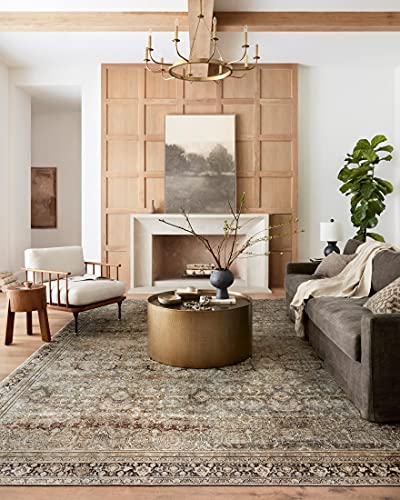
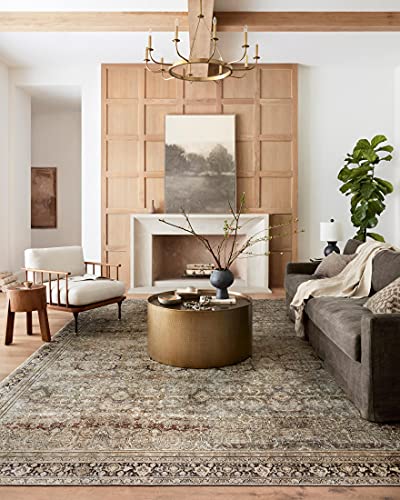
The Loloi Layla Olive/Charcoal 7′-6″ x 9′-6″ Area Rug is the easiest rug in this pool to vacuum, full stop. Its design is printed onto a very low pile — about an eighth of an inch in profile — so dirt, hair, and grit rest on the surface instead of migrating to a backing the suction cannot reach. One slow pass lifts what other rugs surrender only after four, which means less time, less machine wear, and less grit ground into the floor beneath.
Strengths
- Printed low pile releases surface dirt almost completely in one or two passes.
- Non-shedding, power-loomed build keeps the vacuum cleaning the room, not the rug.
- Lightweight for its size, so flipping it for a backing pass is realistic.
Trade-offs
- No cushion to speak of; it vacuums like a champ and feels like a print.
- Needs a pad to prevent slow creep under repeated vacuum passes.
- Spot-clean care only for stains the vacuum cannot address.
| Color | Olive / Charcoal |
| Size | 7’6″ x 9’6″ (Rectangular) |
| Dimensions | 114 x 90 x 0.13 inches |
| Weight | 6.61 pounds |
Technique on the Layla is forgiving: brush roll on or off, it cleans, though suction-only preserves the printed surface most gently over years of weekly sessions. The edges deserve one slow pass with the head half-on, half-off the rug, because that border is where tracked grit accumulates. Because the rug is light, the full weekly ritual — top, flip, backing, floor, replace — takes minutes, and that ritual is the deepest clean any vacuum can deliver to any rug.
Households with robot vacuums will find the Layla equally cooperative: the low profile lets robots climb on and off without beaching, and the flat surface gives their smaller suction a fair chance. It is the rare rug that flatters every machine class, which is what best overall means in this category.
Best for: Any household that wants vacuuming to be fast, complete, and un-dramatic / Not suited for: Anyone who wants plush texture underfoot
Choose the Layla if cleaning ease leads your list; skip it if the rug’s job is comfort first. Check on Amazon

SAFAVIEH Area Rug 8×10 – Adirondack Collection – Ivory & Sage
Our badge: Best for Suction-Only Cleaning
The SAFAVIEH Area Rug 8×10 – Adirondack Collection – Ivory & Sage is the pick whose maker guidance is clearest: vacuum without a beater bar. Its smooth, low-profile polypropylene pile — about three-eighths of an inch — is dense enough that suction alone pulls it clean, and its virtually non-shedding construction means the machine is not harvesting the rug itself week after week.
Strengths
- Explicit suction-only care guidance that genuinely works on its dense low pile.
- Polypropylene fibers release grit and resist absorbing spills between vacuums.
- Large 8×10 format with a forgiving distressed pattern for busy rooms.
Trade-offs
- Households must remember to disable the brush roll at this rug.
- Two-person lift for the full under-rug routine at this size.
- Not washable; deep refresh means careful extraction cleaning.
| Color | Ivory/Sage |
| Size | 8′ x 10′ (Rectangular) |
| Dimensions | 120 x 96 x 0.38 inches |
| Weight | 6.61 pounds |
Suction-only vacuuming has a quiet advantage beyond rug preservation: it is gentler on the floor at the rug’s edge, where a spinning brush can scatter grit across bare boards. On the Adirondack, compensate for the absent brush with pace — slower passes, a third overlap, and a second direction on traffic lanes. The pile is uniform enough that this method leaves it looking groomed, and the distressed floral hides the day’s dust until the next session.
The maker positions the collection for high-traffic living, including kids and pets, and its care rhythm fits that billing: frequent light passes rather than rare heroic ones. If your home’s traffic is heavier still, compare with the Madison below, which shares the fiber family with a denser, more camouflaging pattern.
Best for: Owners of suction-only or brush-roll-off vacuums, and anyone who prefers gentle care / Not suited for: Anyone who will never remember to change vacuum settings
Choose the Adirondack for calm, specified care; skip it if your household cleans on autopilot. Check on Amazon
SAFAVIEH Madison Area Rug 8×10
Our badge: Best for High Traffic
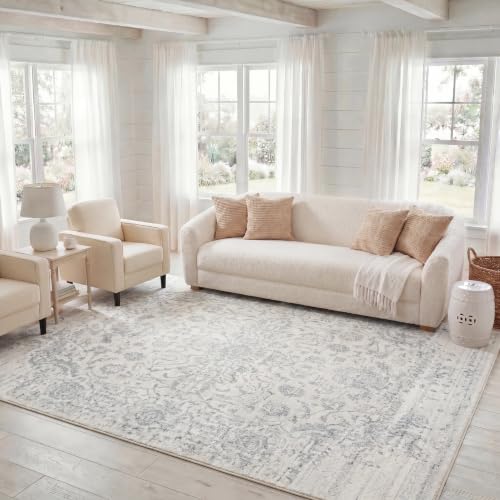
The SAFAVIEH Madison Area Rug 8×10 is built for the rooms where vacuuming is a near-daily event: entry-adjacent living rooms, family spaces, and hallways’ wider cousins. Its power-loomed polypropylene pile sits low and dense, its silver-and-ivory medallion pattern camouflages the interval between sessions, and the maker rates it for homes with kids and pets — the two demographics that test a rug’s vacuum-ability hardest.
Strengths
- Dense low pile stands up to frequent vacuuming without fuzzing or thinning visibly.
- Low-shedding construction keeps bins full of dirt, not rug fiber.
- Busy vintage pattern hides dust and hair between sessions.
Trade-offs
- At 21.5 pounds, the weekly flip-and-clean routine is a real task.
- Spot-clean care only; no machine washing.
- Traditional styling will not suit minimal modern rooms.
| Color | Silver/Ivory |
| Size | 8′ x 10′ (Rectangular) |
| Dimensions | 120 x 96 inches |
| Weight | 21.5 pounds |
High-traffic vacuuming is a war of attrition against grit, and the Madison’s density is its defense: particles stay near the surface where suction wins, instead of sifting to the backing. Vacuum it in two directions — the second pass at right angles lifts what the first pass loosened — and pay the entry-side edge special attention, since that border receives the outdoor world first. The rug’s weight, a burden on cleaning day, is a virtue the rest of the week: it does not creep, bunch, or surf under the vacuum head.
For pet households, this is the pool’s most forgiving large rug to keep vacuumed, because hair sits visibly on the pattern and releases without a fight; households whose problem is specifically long-pile pet hair should still read Best Vacuum For Shag Rugs for the deep-pile technique, since shag plays by different rules entirely.
Best for: Busy family and pet homes with large, hard-working living spaces / Not suited for: Solo cleaners who cannot manage a heavier rug
Choose the Madison for traffic-proof vacuuming; skip it if you need a featherweight. Check on Amazon

Unique Loom Sofia Collection Area Rug – Salle Garnier (7′ 1″ x 10′)
Our badge: Best Traditional
The Unique Loom Sofia Collection Area Rug – Salle Garnier (7′ 1″ x 10′) brings a traditional French-inspired pattern to the easy-vacuuming club: a soft quarter-inch polypropylene pile, power-loomed in Turkey, with a jute backing that gives the rug a planted, settled behavior under the vacuum head. It is the pick for rooms where the rug must look inherited but clean like a modern synthetic.
Strengths
- Quarter-inch pile vacuums thoroughly without specialized settings.
- Jute backing adds stability that resists suction lift and edge curl.
- Maker notes it can tolerate a carefully used carpet cleaner, dried immediately and evenly.
Trade-offs
- Keep wet cleaning rare and careful; the jute backing dislikes soaking.
- Spot cleaning is the everyday stain method, not washing.
- Traditional motif will read formal in casual rooms.
| Color | Beige/Ivory |
| Size | 7’1″ x 10′ (Rectangular) |
| Dimensions | 120 x 85 x 0.25 inches |
| Weight | 15.17 pounds |
The Sofia’s vacuum manners come from balance: enough pile to feel like a rug, little enough that suction reaches the base of the fibers. Its moderate weight keeps it honest during passes, and the maker’s crease advice — reverse-roll with pressure, flip the creased edge, pull gently — gets it flat enough that the head never catches a ridge. In a dining or living room over hard floors, pair it with a pad so the jute never grinds grit against the finish when the rug shifts a fraction under the machine.
That wet-cleaning tolerance deserves respect rather than enthusiasm: it is an occasional deep option, performed off the wood floor or with the floor fully protected, and dried completely before the rug returns. Used that way, it extends the Sofia’s fresh-looking life well beyond what vacuuming alone achieves.
Best for: Traditional rooms that want modern cleaning behavior / Not suited for: Homes that soak-clean rugs or skip pads on hard floors
Choose the Sofia for classic looks with easy upkeep; skip it if you need washable care. Check on Amazon

nuLOOM 5×7 Moroccan Blythe Area Rug
Our badge: Best Compact
The nuLOOM 5×7 Moroccan Blythe Area Rug earns its place on manageability: at 5×7 and about eight pounds, it is the rug you can vacuum from both sides without planning your afternoon around it. Its power-loomed polypropylene pile is sleek and medium, stain resistant, and made for high-traffic placements from bedrooms to entry-adjacent living rooms.
Strengths
- Light enough to flip weekly, enabling the deepest vacuum routine there is.
- Stain-resistant polypropylene shrugs off the spots vacuums cannot fix.
- Faded trellis hides dust between sessions in busy rooms.
Trade-offs
- Coverage is small; large rooms need a bigger rug.
- Light weight means a pad matters to stop vacuum surfing.
- Grey palette will not warm every room.
| Color | Blythe Grey |
| Size | 5′ x 7’5″ (Rectangular) |
| Dimensions | 84 x 60 inches |
| Weight | 8 pounds |
The two-sided routine is worth describing because so few households do it: vacuum the top, flip the rug, vacuum the backing — you will be surprised what the backing holds — then vacuum the bare floor, and flip it back. Ten minutes, monthly at minimum, weekly if you can. It removes the grit reservoir that makes rugs smell old and wear thin from beneath, and only a rug this manageable makes the habit stick.
In a home office or bedroom, the Blythe’s size also means the vacuum reaches every inch without moving furniture, which quietly raises the real-world cleanliness of the whole room.
Best for: Small rooms, offices, and anyone who will actually flip their rug / Not suited for: Anchoring large seating areas
Choose the Blythe for the two-sided clean; skip it for big-room coverage. Check on Amazon

Lahome Insect 5×7 Area Rugs
Our badge: Best Washable Backup
The Lahome Insect 5×7 Area Rugs are this list’s admission that vacuuming has limits — and its answer to them. Ultra-thin, non-slip, and machine washable, the Lahome vacuums effortlessly day to day and then, when ground-in dirt or a pet accident exceeds what suction can do, goes in the wash and comes back reset.
Strengths
- Machine washable for the dirt vacuums cannot reach.
- TPE backing grips, so the vacuum never pushes it around.
- Ultra-thin pile traps almost nothing below the surface.
Trade-offs
- Thin feel; minimal cushion or sound softening.
- Bold insect-and-plant pattern is a specific taste.
- Creases on arrival need reverse-rolling and time.
| Color | Green |
| Size | 5′ x 7′ (Rectangular) |
| Dimensions | 84 x 60 x 0.19 inches |
As a vacuum surface, the Lahome is nearly ideal: the brush roll finds nothing to fight, hair and crumbs sit on top, and the grip means every pass is cleaning rather than chasing. Its role in a whole-home system is the high-mess zone — the pet’s corner, the kids’ play patch, the mudroom-adjacent stretch — where the wash cycle, not the vacuum, is the real maintenance plan.
Vacuum it before washing, always: a machine washing a grit-loaded rug is making mud in a drum. With that one discipline, the Lahome’s cleanability is the highest in this list, and its vacuum sessions are the shortest.
Best for: Pet and kid mess zones that need a washable escape hatch / Not suited for: Comfort-first rooms wanting plush pile
Choose the Lahome when vacuuming alone will not be enough; skip it for luxury feel. Check on Amazon
Comparison Table
| Pick | Size | Profile | Vacuum style | Check price on Amazon |
|---|---|---|---|---|
| Loloi Layla | 7’6″ x 9’6″ | Very low printed pile | Any setting, one-two passes | Check price on Amazon |
| SAFAVIEH Adirondack | 8′ x 10′ | 3/8″ low pile | Suction-only per maker | Check price on Amazon |
| SAFAVIEH Madison | 8′ x 10′ | Low dense pile | Two-direction passes | Check price on Amazon |
| Unique Loom Sofia | 7’1″ x 10′ | 0.25″ pile, jute backing | Standard passes | Check price on Amazon |
| nuLOOM Blythe | 5′ x 7’5″ | Medium sleek pile | Two-sided routine | Check price on Amazon |
| Lahome Insect | 5′ x 7′ | 0.19″ ultra-thin | Quick passes, then wash | Check price on Amazon |
How to Choose the Best Vacuum Approach for Your Rugs
Read the rug’s care guidance before the vacuum’s manual
The rug is the fragile partner in this relationship, so its instructions lead. Makers specify vacuuming frequency, brush-roll permission, and cleaning limits for a reason: those settings were chosen for the fiber and construction you own. A vacuum’s highest setting is a capability, not a recommendation. When the two documents conflict, the rug wins, and when the rug is silent, default to the gentler method — suction-only, slower passes — until you know how the construction responds.
Let pile height set your expectations
Under half an inch, a vacuum can genuinely clean a rug: suction reaches the base, grit lifts, and the job finishes. Between half an inch and an inch, cleaning becomes partial and technique-dependent. Above that — shag territory — vacuuming is surface maintenance between deeper interventions, and the honest tools are suction-only heads, shaking, and patience. Choose rugs for traffic zones from the first band and reserve the tall piles for rooms where their incomplete cleanability does not matter, like bedrooms where shoes never go.
Control the slide
A rug that moves under the vacuum is not being cleaned; it is being chased, and its backing is sanding your floor. Grip comes from rubber backings, included pad systems, or a separate pad, and it matters more as rugs get lighter. Test with a foot push before the first session. If it slides by foot, it will surf by vacuum, and no technique compensates for a rug that will not stay where the suction is.
Maintain the machine like it matters — because it does
A vacuum with a clogged filter, a full bin, or a brush roll wrapped in hair cleans at a fraction of its ability and drags debris instead of lifting it. Empty and clean on the maker’s schedule, inspect the brush roll monthly, and check wheels for embedded grit before they autograph a hard floor. Most “my vacuum stopped working well” stories are maintenance stories, and on rugs the difference shows first, because rugs demand the suction that hard floors forgive losing.
How to Vacuum a Rug Properly: The Full Routine
Start by removing what vacuuming cannot: shake small rugs outdoors, pick up large debris, and clear the floor around the rug’s edges. Vacuum the surrounding hard floor first so you are not dragging grit onto the rug with your own feet and wheels. Then work the rug itself in slow, overlapping passes — roughly a foot per second is a pace suction can use — covering the whole surface in one direction, then repeating the traffic lanes at right angles. Finish the edges with the head half-on the rug or a crevice tool, because edges are where the dirt frontier lives.
Weekly, add the deep layer: flip the rug, vacuum its backing, vacuum the floor beneath, and replace it. Monthly, inspect for spots that need treatment while they are small, check the pad’s condition, and rotate the rug if the room allows, evening out traffic wear. That is the complete system; everything else in this guide is commentary on why it works.
Problem: The vacuum pushes the rug ahead of it. — The rug lacks grip or is curled. Flatten it fully, add or replace the pad, start passes at the rug’s center, and reduce suction if adjustable.
Problem: Hair stays behind after several passes. — Slow down, switch the brush roll on if the rug allows it, and empty the bin; a full machine loses the suction hair removal depends on.
Problem: The rug looks clean but smells stale. — The backing and the floor beneath are holding the odor. Do the full flip routine, air the rug, and consider whether the rug’s zone needs a washable replacement.
Problem: Edges and fringe get eaten by the vacuum. — Keep the head off fringe entirely, use a hand tool there, and approach edges at a shallow angle rather than head-on.
Vacuuming Every Pile Type in Your House
Low printed and flatweave rugs: any setting, fast results, suction-only for print preservation. Low-pile synthetics: follow the maker’s brush guidance, slow passes, two directions on lanes. Medium piles: brush roll usually welcome, more passes, attention to edges where pile meets floor. Shag and high pile: suction-only or a raised head, no aggressive brush, shake outdoors when size allows, and accept that deep grit needs periodic professional or wash intervention — the dedicated settings live in Best Vacuum For Shag Rugs. Natural fibers like jute: lowest suction, no beater bar, handheld tools for spots, because aggressive vacuuming frays the weave. One house usually holds three of these types; the skill is switching your hands, not just the machine’s dial, as you cross from rug to rug.
Robot Vacuums and Rugs: What Actually Works
Robots earn their keep on exactly the rugs that top this list: low, flat, gripping surfaces they can climb onto and seal against. They fail — beaching, bunching, or skipping — on curled edges, tall piles, dark patterns their sensors misread, and rugs light enough to push. If a robot is part of your plan, choose rugs under half an inch with real grip, keep edges flat, and let the robot handle daily surface work while a full-size machine does the weekly flip routine the robot cannot. That division of labor is the realistic best of both: the robot’s frequency plus your thoroughness, on rugs chosen to let both succeed.
Suction, Brush Rolls, and Height Settings, Explained Simply
Three controls decide how a vacuum treats a rug, and most owners use one of them. Suction is the airflow that lifts dirt; it does the real cleaning on low piles and is the only force that matters on delicate rugs. The brush roll is a rotating agitator that beats fibers loose — valuable on sturdy carpet-like piles, destructive on prints, fringe, and natural weaves, and explicitly forbidden by some makers in this guide. Height adjustment sets the gap between head and pile: too low and the head plows, strains, and can scar fibers; too high and the seal breaks and suction spills uselessly. The correct combination is rug-specific, and the learning method is empirical: start gentle — suction-only, higher setting — and add aggression only until the rug comes clean in two passes. Anything beyond that point is wear disguised as thoroughness.
Two quieter factors deserve mention. Filtration decides whether the fine dust the vacuum lifts stays lifted; a machine exhausting fine particles back onto the rug is redistributing the smallest soil fraction, which is why filter maintenance shows up in cleaning results before it shows up in suction. And cord or battery reality decides session quality: a machine that dies or tethers mid-room produces rushed second halves, and rugs remember rushed cleaning in their traffic lanes. None of this requires a new purchase to act on — it requires knowing the three controls, maintaining the filters, and giving each rug the gentlest settings that still finish the job.
Pet Hair: The Vacuum Problem Inside the Vacuum Problem
Pet hair deserves its own section because it breaks the normal rules: it is light, electrostatic, and woven into pile by the pet’s own traffic. On low synthetic piles — most of this list — hair sits near the surface and yields to slow passes with the brush roll on, if the maker allows it, finishing with a pass against the pile’s lay. On the occasions hair mats into felted patches, a rubber broom or a dampened glove lifts what suction cannot, and the vacuum follows behind. The deeper strategy is placement: washable rugs where pets sleep, dense low piles where they patrol, and no tall pile anywhere their shedding concentrates, because shag plus pet hair is the one combination in this category that defeats every machine eventually.
Frequency is the pet home’s real tool. Hair vacuums easily on day one and weaves itself in by day five, so short, frequent sessions outperform heroic weekly ones by a wide margin. Keep the machine accessible rather than closeted, empty it more often than the indicator suggests — hair fills bins loosely and chokes airflow early — and treat the rug edges, where hair migrates and mats, as a named zone in every session. Households that adopt that rhythm report the same discovery: the pet-hair problem was never really about the vacuum. It was about interval, and interval is free.
Common Buying Mistakes
Blaming the vacuum for a rug problem
A deep, loose pile defeats any machine. The better move is to match rug construction to your cleaning reality before replacing appliances.
Vacuuming fast
Speed is the enemy of suction. The better move is slow, overlapping passes with a second direction on traffic lanes.
Never vacuuming the backing
The hidden grit layer wears the rug from below and smells old. The better move is the weekly flip routine, sized to a rug you can handle.
Ignoring the maker’s brush-roll guidance
The wrong setting frays, sheds, or scars a rug over months. The better move is to set the machine per rug, every time.
Buying a rug too heavy to maintain
If flipping it is unthinkable, it will not happen. The better move is honest sizing: the biggest rug you will still lift.
Allergies, Dust, and the Rug as a Filter
A rug in a room is a passive filter: it captures dust, pollen, and dander that would otherwise stay airborne and resettle on every surface, and vacuuming is how that filter gets emptied. This reframes the chore in a way that helps allergy-sensitive households plan. A low, dense rug vacuumed slowly and often is a net win for room air, because its captured load is removed on a schedule. A deep rug vacuumed rarely is the opposite — a reservoir that releases a puff of its contents with every footstep. The variable is never the rug’s existence; it is the interval and thoroughness of its emptying.
Practical consequences follow. In bedrooms, where people spend eight still hours breathing at rug level, favor the constructions that vacuum most completely and keep the routine strict; the washable layer adds a periodic reset that vacuuming cannot match. During pollen season, increase frequency rather than session length, and vacuum soft furnishings in the same session so the room’s reservoirs are emptied together. Keep the vacuum’s own filtration maintained, since a machine that leaks fine dust undoes the filter logic at the last step. None of this is medical advice — it is housekeeping physics — but households that think of rugs as filters with a service schedule consistently report cleaner-feeling rooms, and the reasoning here shows why that feeling is plausible.
Stairs, Hallways, and Other Awkward Rug Geography
Not every rug lives in a rectangle in the middle of a room, and the awkward geographies have their own vacuum logic. Runners want passes along their length, a crevice tool at both long edges where they meet the floor, and particular attention to the ends, which take the turning traffic of the whole house. Stair rugs and the rugs at stair feet collect a concentrated grit load from descending feet; they repay hand-tool attention that a pushed head cannot give on a slope. Rugs under furniture need the furniture moved on a rotation — not every week, but on a calendar — because the sheltered zones beneath sofas hold dust that migrates outward into the visible field between cleanings.
The unifying principle is that dirt follows traffic geometry, not room geometry. Map where feet actually travel — door to kitchen, bed to bath, desk to door — and weight your passes, your edge work, and your flip routine toward those lines. A rug vacuumed uniformly gets uniformly average results; a rug vacuumed according to its traffic map gets clean where clean matters, which is the entire point of the exercise and the honest summary of everything this guide has said about machines: the best vacuum for rugs is a method, applied to constructions that cooperate.
Final Recommendation
For the easiest vacuuming life a rug can offer, choose the Loloi Layla Olive/Charcoal 7′-6″ x 9′-6″ Area Rug: flat, forgiving, and clean in a pass or two on any machine. For heavy traffic at full size, the runner-up is the SAFAVIEH Madison (Check on Amazon), whose density turns daily vacuuming into a winning routine instead of a losing battle. Pick the construction your vacuum can truly clean, keep the flip habit, and the best vacuum for rugs will turn out to be the one you already own.
How Long Should a Vacuuming Session Take? A Room-by-Room Budget
Owners who dread vacuuming usually imagine it as an unbounded chore; putting honest numbers on it makes the routine survivable. A low-pile living-room rug of 8×10, vacuumed at a proper pace in two directions on its lanes, takes about six to eight minutes, plus two for edges. A bedroom rug takes four. A runner takes ninety seconds and repays them daily. The weekly flip routine adds perhaps ten minutes across a whole home’s rugs — the price of removing the grit layer that shortens rug and floor life alike. Total it and the full system for a typical three-rug home lands near half an hour a week, divided however your schedule prefers: one session, or daily five-minute fragments that many households find easier to keep.
The budget matters because it exposes the real trade in rug buying. A deep-pile rug does not merely clean less completely; it doubles or triples the minutes required to reach its own lower standard, every week, for its whole life. A low printed rug’s two-pass cleanliness is a time annuity that pays out hundreds of times. When you stand in front of two candidate rugs — one plush, one flat — you are not choosing between two looks. You are choosing between two weekly schedules, and the households that understand that choose the flat rug for traffic rooms with their eyes open and never regret it.
Teaching the Household: Kids, Guests, and Shared Machines
In most homes the vacuum has several operators, and the rug experiences all of them: the careful owner, the hurried teenager, the helpful guest. Systems that depend on one person’s expertise fail on the other people’s days, which is a final argument for the forgiving constructions at the top of this list — rugs that clean acceptably across a range of settings and speeds give the whole household margin for error. Where a rug does demand a specific setting, make the setting findable: a small note inside the closet door listing each rug and its rule (“blue rug: brush off”) outperforms any amount of verbal instruction delivered once and forgotten.
Shared machines also drift: height settings change, brush rolls get switched, bins fill between operators. A thirty-second reset ritual at the start of each session — empty check, brush check, setting check against the note — keeps the machine honest across hands. Households that adopt it stop having mysterious bad-cleaning days, because the mystery was never the machine or the rug; it was the unrecorded state the last operator left behind. That is the fitting final lesson of this guide: vacuuming rugs well is a small system of rug choice, machine state, and pace, and every part of it is learnable in a week.
Frequently Asked Questions
What type of vacuum is best for rugs?
One with adjustable height or suction and a brush roll you can switch off covers every rug type in a typical home. Beyond that, the rug’s construction matters more than the machine’s badge: low, dense piles clean well on almost anything, while tall, loose piles challenge even the strongest machines and reward patience, suction-only settings, and outdoor shaking far more than raw power.
Should I use a beater bar on my area rug?
Only if the rug’s maker allows it. Several low-pile rugs in this guide specify suction-only vacuuming; printed rugs are gentlest without it; sturdy synthetics often welcome it. The rug’s guidance outranks habit, convenience, and whatever setting the machine happened to be left on by the last person who used it.
How often should I vacuum my rugs?
Traffic zones two to three times a week, bedrooms weekly, and the full flip-and-under routine weekly where you can manage it. Frequency in small doses beats rare marathons every time, because grit removed early never gets the chance to work its way to the backing, where it does its damage slowly and invisibly.
Why does my rug still look dirty after vacuuming?
Usually grit at the backing, a machine that needs emptying or filter care, or passes made too fast. Slow down, service the machine, and do the two-sided routine before blaming the rug. If the dullness survives all three, the rug is holding ground-in soil that dry methods cannot lift, and the honest next step is the cleaning method its fiber allows — washing if it is washable, careful extraction if it is a sturdy synthetic, professional care if it is neither.
Should I vacuum a brand-new rug more often?
Yes, gently. New rugs release loose surface fiber in their first weeks — a normal settling process in many constructions, distinct from defective shedding — and frequent light passes clear it without stressing the weave. Expect the bin to tell a dramatic story early and a boring one by the second month; boring is the goal, and it is also when you will know the rug’s true vacuuming character.
Can a robot vacuum replace regular vacuuming on rugs?
It replaces daily surface passes on low, flat rugs, but not the weekly flip, edge work, or under-rug cleaning. Use it as the frequency layer, not the whole system.
Does vacuuming wear a rug out?
Gentle, correct vacuuming extends a rug’s life by removing the grit that cuts fibers from within; it is neglect, not vacuuming, that wears rugs out. The exceptions are aggressive settings on delicate constructions — a spinning brush on fringe, prints, or natural weaves — which is why following the maker’s settings matters more than vacuuming less.
What do I do about rug edges that curl?
Curl breaks the vacuum’s seal and invites the head to catch. Reverse-roll the edge, weight it flat, check that the pad still grips, and vacuum edges with a hand tool until the rug lies truly flat again; a flat rug is a vacuumable rug.
How do I vacuum a rug without damaging it?
Follow the maker’s settings, keep the head moving slowly, stay off fringe, keep edges flat with a pad, and never force a bunched rug flat with the machine — stop, switch off, and reset it by hand before continuing the session.


