Affiliate disclosure: As an Amazon Associate, Daily Home Decorating may earn from qualifying purchases. If you buy through a link in this guide, we may receive a commission at no additional cost to you.
The best carpet cleaning vacuums are machines that wash carpet with cleaning solution and recover dirty water, not ordinary dry vacuums that collect loose dust. People often use “carpet vacuum” for both tools, but the jobs are different: a dry vacuum removes surface debris, while a carpet extractor sprays solution into carpet fibers, agitates soil, then pulls the liquid and suspended dirt back into a separate tank. A useful home setup may include both, because dry vacuuming before wet cleaning helps remove hair and grit that would otherwise turn into muddy residue.
This guide compares upright deep cleaners, portable spot extractors, and commercial-style machines. It explains tank design, brush action, suction recovery, cleaning path, hose tools, detergent compatibility, drying, and maintenance. The products below illustrate different sizes and use cases; they are not controlled hands-on test winners. Confirm the exact model, surface restrictions, included tools, warranty, and formula instructions before buying.
Carpet extractor examples to compare
These verified Amazon catalog examples illustrate full-size, commercial-style, pet-focused, and portable machines. This is an editorial comparison based on product documentation, not a standardized hands-on test. Confirm the exact model suffix, tool bundle, water-temperature instructions, surface compatibility, and warranty on the current listing and manufacturer site.
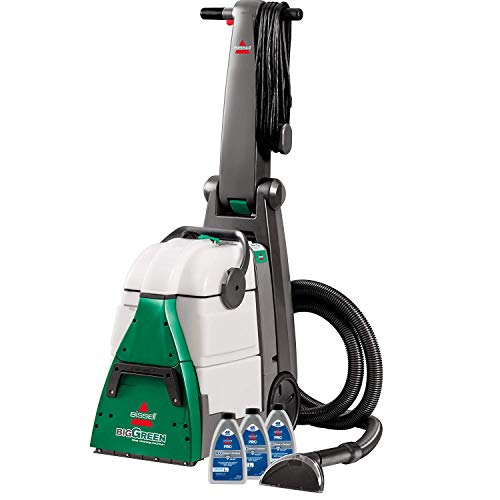
ASIN: B00450U6CS

ASIN: B00667H8CE

ASIN: B09XFH7B5S

ASIN: B0B94P5LDK

ASIN: B0C9V4L32W
Quick picks by cleaning job
For larger rooms and repeat whole-carpet cleaning: a full-size upright extractor with separate clean- and dirty-water tanks can cover more area per fill than a small spot cleaner. The BISSELL Big Green Machine 86T3 is one example of this category.
For pet households and frequent spills: an upright model with a dedicated pet tool, pretreatment feature, and accessible brush assembly can make recurring messes easier to handle. Compare the exact ProHeat 2X Pet Pro bundle and cleaning modes.
For compact stain cleanup: a portable machine with a hose and upholstery tool can reach stairs, cushions, car mats, and isolated spots without rolling out a large upright.
For heavy or repeated workloads: a commercial-style extractor may offer a different tank and brush setup, but its weight, storage space, maintenance, and parts availability need careful checking.
For smaller areas and easier storage: a lighter upright can be easier to carry and store, though it may require more frequent tank refills and dirty-water emptying.
What a carpet-cleaning vacuum actually does
A carpet extractor typically follows a wet-cleaning cycle: dispense solution, agitate the fibers with a brush, and recover the liquid through suction. The clean tank holds water and manufacturer-approved formula; the recovery tank collects dirty solution. Some designs add separate pretreatment spray or a hand tool for upholstery and stairs. The quality of the result depends on the carpet, the soil, the chosen formula, the number of passes, and how much moisture the machine recovers.
Extraction is not the same as steam cleaning in the everyday sense. Many household units use warm tap water and detergent; they do not boil water or produce pressurized steam. Product names may use “heat,” “steam,” or “hydro” branding, so read the manual to see what the machine actually heats or sprays. Do not pour boiling water into a tank unless the manufacturer specifically requires it. Some units can be damaged by excess heat or incompatible cleaning agents.
Because the machine puts liquid into carpet, setup and technique matter. Over-wetting can soak backing or padding, prolong drying, and contribute to odor or damage. A slow wet pass followed by one or more dry suction-only passes usually removes more water than moving quickly once. Follow the machine’s instructions for the trigger, brush, and suction sequence rather than improvising a heavier spray.
Dry vacuum first, then extract
Remove loose dirt, hair, crumbs, and grit with a regular dry vacuum before wet cleaning. If dry debris remains, it can mix with detergent and water, clog the extractor, or spread as muddy residue. Move small furniture, pick up toys and pet items, and pre-treat stains only with a product compatible with the carpet and machine. Test any formula on a hidden area and allow it to dry before judging colorfastness.
For pet hair, use a dry vacuum head that lifts hair without damaging the pile. If the carpet is deeply soiled, a preliminary dry pass in two directions can remove more loose material. A carpet extractor should not be used to pick up loose dry debris unless the manual says it supports that task. Keep dry and wet equipment separate and empty each tank before switching jobs.
If you are choosing one tool for a small apartment, an extractor does not replace the everyday vacuum. It is heavier and slower to deploy, and it is intended for periodic washing or spot cleanup. Consider a portable spot extractor for occasional spills and keep a standard vacuum for daily dust and hair. For full-home carpet care, treat extraction as a separate maintenance step.
Upright, portable, or commercial: choose the machine form
Full-size upright extractors
An upright extractor has a broad floor head, onboard water tanks, brushes, and suction recovery. It is a logical choice for room-sized carpet areas because it covers a wider path and carries more solution than a compact portable machine. Check the machine’s weight when tanks are full, its tank capacity, cleaning path width, cord length, and how easy it is to carry up stairs. Large tanks reduce refill breaks but can make the cleaner cumbersome when full.
Portable spot cleaners
A portable extractor uses a hose and hand tool to clean a stain, stair tread, upholstery panel, or small rug. It can be stored in a closet and is often easier to carry than an upright. Its smaller tanks mean more frequent refills and dirty-water dumps, and the user must move the tool carefully over the spot. Portable machines are not ideal for cleaning a large room quickly, but they can be easier to pull out when a pet accident or drink spill happens.
Commercial and professional-style machines
Commercial-style extractors are built for higher workloads and can have larger tanks, stronger brush assemblies, or different recovery systems. They may be too heavy or bulky for a small home. Consider where you will store them, how you will transport them, and whether replacement hoses, brushes, belts, and tanks are available. A professional label does not guarantee a better match for every carpet or user.
Recovery performance: why suction and dry passes matter
Spraying and scrubbing loosen soil, but recovery determines how much moisture and suspended dirt the machine removes from the carpet. A wide head, good seal, and steady movement can matter as much as the motor rating printed on the box. Look for a clear recommendation on wet passes and dry passes. If the carpet looks saturated after one quick pass, slow down and use the recovery technique in the manual rather than spraying more solution.
Some models have separate cleaning modes. A “deep clean” setting may dispense more solution or use a different brush action; an “express” setting may be designed to apply less liquid or finish faster. Do not assume a shorter mode means the carpet is dry in a fixed number of minutes. Drying varies with pile, humidity, room temperature, airflow, and how much liquid was applied. Use fans and ventilation as appropriate and keep foot traffic off the damp surface.
Also check how dirty water is contained. A recovery tank should be easy to remove, empty, rinse, and reseat without spills. A float shutoff or full-tank indicator can help prevent overflow, but inspect the tank during use. If suction drops, stop and check the recovery tank, nozzle, filter, hose, and seals for blockage or a loose connection.
Tank capacity, cleaning path, and hose reach
Tank size affects how much carpet you can clean before pausing. The clean-water tank determines refill frequency; the dirty-water tank determines how often you stop to empty recovery. A large tank is useful for open rooms but adds weight. A smaller machine may be easier to carry and store, but it can require multiple trips to the sink. Check whether the clean tank and recovery tank come apart separately, whether the fill opening is easy to access, and whether level markings are clear.
Cleaning path width changes how many passes a room requires. A wider head can cover open floor quickly but may be harder to maneuver around furniture and into corners. A narrow head or hose tool is more precise but slower on large carpet. Hose length and tool type matter for stairs and upholstery. Check whether the spot tool has a spray trigger, brush, and recovery nozzle, and whether those parts can be rinsed after use.
Power-cord length affects the number of outlet changes. Do not use an extension cord unless the manual permits the gauge and length. Route the cord away from wet areas and your walking path. If the unit is heavy and corded, consider the stairs and doorway width before buying; a powerful cleaner is not useful if you cannot safely move it to the carpeted room.
Product examples: different extraction-machine roles
BISSELL Big Green Machine 86T3: larger-room upright
The Big Green 86T3 illustrates a full-size extractor for larger carpets and recurring deep-cleaning sessions. BISSELL lists a wide cleaning path, large separate tanks, a rotating DirtLifter brush, long power cord, and hose tool for stairs and hard-to-reach areas. Those features can reduce refill and outlet stops across a big room. They also come with trade-offs: the machine is heavy, takes storage space, and needs both tanks rinsed after use. Check the model suffix, included stain tool, formula, warranty, and weight before ordering. BISSELL says the cleaner uses warm tap water rather than heating water itself; follow the manufacturer’s instructions instead of assuming the machine produces steam.
BISSELL Big Green Pet Pro: pet-focused upright format
The Pet Pro version represents an upright machine designed around household pet messes. Compare the size of the clean and dirty tanks, brush path, hose reach, and included upholstery tools. A pet-focused formula or stain attachment may help with particular messes, but no cleaner can guarantee odor removal from every carpet backing or pad. Blot a fresh spill first, remove solids safely, and pretest compatible formula. If liquid has soaked deeply into padding, an upright extractor may not reach the source; professional treatment or replacement could be necessary.
BISSELL ProHeat 2X Revolution Pet Pro Plus: a mid-size home extractor
The ProHeat 2X Pet Pro Plus illustrates a more maneuverable upright designed for home carpet and pet stains. The manufacturer lists multiple cleaning modes, dual brush rows, a clean-water tank, a hose, and pet upholstery tools for certain packages. It can be a useful middle ground if you want an upright for room cleaning plus a way to treat stairs and furniture. Verify the exact 3588F package because model suffixes and bundled tools can differ. Check the warranty and replacement brush and nozzle availability before buying.
BISSELL Little Green HydroSteam: portable spot and upholstery cleaner
The Little Green HydroSteam 3618 shows the portable-extractor approach. It can be useful for isolated stains, upholstery, pet messes, car mats, and stairs where a large upright is inconvenient. A compact tank requires more frequent refills and dirty-water emptying, and the narrow tool takes longer on a whole room. Product branding that mentions steam should be read alongside the manufacturer’s description and manual so you understand what heating or spray process the model actually uses. Confirm the exact attachment set, hose length, formula, and surface limitations.
BISSELL BigGreen Commercial BG10: heavier-duty machine
A commercial-style extractor such as the BG10 may suit frequent or larger-area cleaning where equipment weight and storage are manageable. Look for the manual’s tank capacity, brush maintenance, cord and hose requirements, and service parts. It may be excessive for a small apartment or an occasional stain. Consider whether the machine can be transported and carried safely by the person who will use it. A larger commercial label alone does not prove that it will clean a particular carpet better than a correctly used home extractor.
Use the right formula and follow label directions
Cleaning solutions are part of the machine system. Use only formulas that the carpet maker and extractor manufacturer permit. A highly foaming household cleaner can fill the recovery tank with suds, interfere with suction, leave residue, or damage seals. Avoid mixing chemicals or adding bleach, vinegar, dish soap, or fragrance unless the instructions expressly approve it. If the wrong chemical has been used, stop and follow the manufacturer’s cleanup advice before running the machine again.
Measure formula and water carefully. More detergent is not automatically more effective; extra residue can attract soil and make carpet feel stiff or sticky. Pre-treatment products also need to be compatible with the carpet color and machine. Test in a hidden place, allow the sample to dry, and check for color transfer or texture change. Apply spot treatment only as instructed, and do not scrub aggressively enough to fuzz the pile.
For pet accidents, distinguish odor removal from visible stain cleaning. A formula may target certain organic messes, but carpet pad, backing, and subfloor can retain liquid below the surface. If odor returns after drying, repeating the same surface pass may not solve it. Follow the carpet and product instructions, and consider a professional cleaner for deeply soaked or recurring contamination. Keep pets away until the carpet is dry and the cleaning product label permits access.
Carpet material and surface compatibility
Not every carpet should be wet-cleaned with every machine. Synthetic carpet, wool, natural fibers, rugs with unstable dyes, and glued-down materials can have different moisture and detergent limits. Check the carpet manufacturer’s care code and warranty. If the fiber or backing is unknown, use a hidden-area test or consult a flooring professional. A machine’s general claim that it works on carpets does not override the specific material’s care requirements.
Be cautious with area rugs. Some are colorfast and suitable for extraction; others have natural-fiber backing, fringe, dyes, or adhesives that react badly to excess water. Read the rug label, secure the rug so it will not shift, and test inconspicuously. Do not run a heavy upright over a delicate rug if the manufacturer warns against it. For specialty rugs, a professional cleaner with material-specific experience may be safer.
Upholstery is also a separate surface. Use the correct hand tool, set the spray and suction as instructed, and do not saturate cushions. Some cushion interiors take a long time to dry and can develop odor if moisture remains inside. Test hidden fabric, use short strokes, and allow full ventilation. Do not use a carpet formula on upholstery unless the label approves it.
Drying time and moisture control
Drying time depends on how much water remains in the carpet and the room’s environment. A machine’s “express” or “fast dry” claim does not guarantee a fixed result for every pile and climate. Make one controlled wet pass and several recovery-only passes if the manual recommends them. Keep windows open or run a fan when appropriate. Avoid replacing furniture until the carpet is dry; use protective tabs if the manufacturer recommends moving furniture back sooner.
Over-wetting is one of the most common extraction mistakes. Moving slowly while continuing to trigger the spray can put more solution down than the suction can recover. Use the trigger only for the intended wet pass. On later passes, release it and make dry strokes. If water is pooling, stop, empty the recovery tank, inspect the nozzle and hose, and check that the tank is correctly seated.
Do not walk on wet carpet in outdoor shoes, and keep pets away until the surface and any cleaning residue are dry according to the product label. Damp carpet can retain dirt from traffic. If it remains wet unusually long, improve ventilation and check whether the cleaner applied too much solution or has weak recovery. Persistent dampness or a musty smell warrants investigation before more cleaning cycles.
Maintenance after each use
Unplug the machine before cleaning it. Empty and rinse both tanks, remove hair and lint from the brush area as directed, and rinse the nozzle and hose if the manual allows. Let removable parts air-dry fully before storing them. Leaving dirty water in the tank can create odor and biofilm. Wipe the machine body and cord, then store it upright in a dry place where the hose is not kinked.
Inspect belts, brushes, filters, seals, and float shutoffs at the manufacturer’s interval. Replace worn parts with compatible components rather than forcing a generic piece to fit. If suction declines, check the recovery tank, float, nozzle, and hose for blockage before assuming the motor failed. If spray stops, check the solution tank, filter, pump, and trigger according to the troubleshooting guide. Never open a sealed electrical housing or bypass a safety switch.
Rinse accessories after pet messes and store them separately if the machine design permits. Wash hands after handling dirty water, and dispose of it according to the product label and local guidance. Avoid pouring concentrated chemical solution into a storm drain. Keep formulas and the extractor itself away from children and pets.
Common carpet-extractor buying mistakes
- Confusing dry vacuuming with extraction. They serve different jobs and most homes need both.
- Buying a portable for whole-room work. Small tanks and narrow heads make large areas slow.
- Ignoring filled weight. A large upright can be difficult to carry upstairs.
- Assuming “heat” means steam. Check what the machine actually heats and what water temperature is allowed.
- Using too much detergent or water. Residue and long drying can undermine the result.
- Skipping carpet compatibility checks. Wool, natural fibers, dyes, backing, and adhesives may have special care limits.
Another mistake is buying a large machine without planning where it will dry and be stored. Extractors need cleaning after use; if tank access is inconvenient or the hose cannot be drained, maintenance can become a reason the machine sits unused. Check the parts diagram and manual before purchase. Consider the source and cost of replacement brushes, belts, recovery tanks, and hoses.
Buying checklist for a carpet cleaning vacuum
- Identify the carpet fiber, pile, backing, and care restrictions.
- Choose upright for rooms, portable for spots and upholstery, or commercial for frequent large jobs.
- Compare separate clean and recovery tank capacities and filled weight.
- Check cleaning path, brush type, hose reach, tools, and cord length.
- Confirm compatible detergent and whether warm water or a heating feature is used.
- Review wet and dry pass instructions, expected drying guidance, and maintenance routine.
- Check warranty, replacement parts, storage footprint, and return policy.
- Verify the exact Amazon model and included attachments before checkout.
Frequently asked questions
Is a carpet cleaner the same as a vacuum?
No. A dry vacuum picks up loose debris, while an extractor sprays solution and recovers dirty water. Dry vacuum before extracting, then clean and dry the machine after use.
How often should I deep-clean carpet?
Follow the carpet maker’s care instructions. Traffic, pets, spills, and soil load affect frequency. Too much wet cleaning can be harmful, so use extraction when the carpet needs it rather than on an arbitrary weekly schedule.
Does a carpet cleaner heat the water?
Some models may have a heating feature; many use warm tap water but do not heat it. Read the exact manual and never use boiling water unless specifically instructed.
How many dry passes should I make?
Use the number recommended in the machine instructions. Dry recovery passes with the spray trigger released can pull out more moisture. Stop if water pools or recovery seems weak.
Can I use any carpet shampoo?
No. Use only formulas allowed by the machine and carpet manufacturers. Incompatible or high-foam cleaners can leave residue or damage the machine.
Can I clean a wool rug with an extractor?
Only if the rug maker and cleaner manufacturer permit it. Wool, dyes, backing, and construction vary. Test hidden areas or use a qualified rug cleaner for delicate pieces.
Why does carpet smell after cleaning?
Odor can result from retained moisture, dirty tanks, residue, or contamination below the carpet surface. Stop adding water, improve ventilation, clean the machine, and seek professional help if odor persists.
Can an upright carpet cleaner clean stairs?
Some models have a hose and stair tool, but the main floor head is not designed for stair treads. Check hose length, tool package, and safe handling instructions.
Final recommendation
Choose a carpet cleaning vacuum by the area and soil you actually need to handle. A full-size upright makes more sense for larger carpeted rooms and periodic deep cleaning; a portable extractor is easier for isolated stains, stairs, upholstery, and small areas; a commercial-style unit belongs in a home only when its workload justifies the size and care it requires. For any category, tank handling, recovery passes, formula compatibility, drying, and maintenance determine how practical the machine will be.
Before buying, verify the exact model and surface restrictions in the manufacturer’s manual, compare tools and replacement parts, and plan where the machine will drain and dry. For daily loose dirt and hair, use a regular dry vacuum cleaner; for rugs and room styling, see our living-room rug guide. Pet households may also find our pet vacuum overview useful for routine dry pickup.
Manufacturer references: BISSELL Big Green 86T3 specifications; BISSELL ProHeat 2X Pet Pro Plus; BISSELL Little Green HydroSteam product information.
Certain content that appears on this site comes from Amazon. This content is provided “as is” and may change or be removed at any time. Product examples and images are supplied through Amazon Creators API; confirm current listings for availability, included accessories, and specifications.