Disclosure: As an Amazon Associate, dailyhomedecorating.com earns from qualifying purchases. Links to Amazon on this page are affiliate links; they cost you nothing extra. Prices and availability change often, so check the current Amazon listing before you buy.
Around six months, a baby’s seating life changes completely. The baby who lived in arms, on mats, and in a bouncer is suddenly sitting — first propped, then wobbly, then upright and indignant about it — and starting solid foods, which turns sitting into a three-times-a-day event with laundry consequences. The best chairs for 6 month old babies are the ones built for exactly this season: high chairs that support a new sitter safely through meals, and the floor seats, boosters, and activity seats that give a six-month-old safe places to sit, play, and watch the world between meals.
This guide reviews the two verified high chairs in its pool in full — a full-featured convertible and a fold-flat budget classic — and covers the four other seat types a six-month-old’s household genuinely needs as prose-only guidance, because the pool contains no floor seats, boosters, or bouncers and this guide does not invent listings. Every pick is framed factually: harnesses, stability, cleanability, and fit for a baby of this age, with no developmental promises — chairs support sitting; they do not teach it, and any concern about your baby’s development belongs with your pediatrician. For the adults feeding from less forgiving seats, Best Chairs For Nursing Mothers covers the other half of the mealtime partnership.
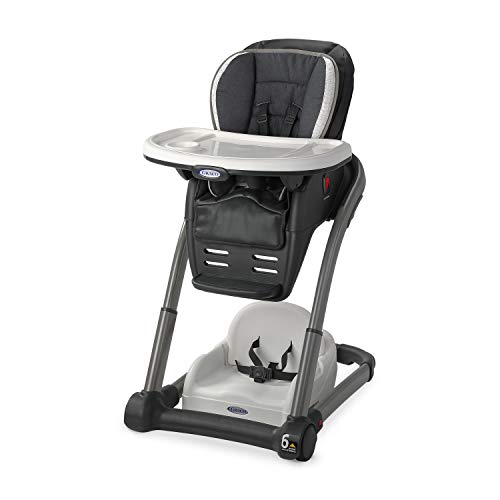
Where to Buy
The two linked high chairs below are sold on Amazon, where you can check the current price, pattern options, and availability before you buy. The prose-only picks are seat types to shop for by the criteria in their reviews.
- Graco Blossom 6-in-1 Convertible High Chair — Check on Amazon
- Cosco Simple Fold High Chair — Check on Amazon
- Supportive Floor Seat (prose-only pick — see its review for what to look for)
- Booster Seat with Tray (prose-only pick — see its review for fit and safety criteria)
- Bouncer or Activity Seat (prose-only pick — see its review for age-appropriate use)
- Hook-On Table Chair (prose-only pick — see its review for table requirements)
In this guide
Quick Picks
| Pick | Badge | Why it earns its place |
|---|---|---|
| Graco Blossom 6-in-1 Convertible High Chair | Best Overall | A 6-in-1 convertible that starts as an infant high chair with three reclines and grows through toddler stages — one purchase for years. |
| Cosco Simple Fold High Chair | Best Budget | A lightweight high chair with a three-point harness that folds flat for storage — the grandparent-house and small-kitchen champion. |
| Supportive Floor Seat | Best for Playtime Sitting | A floor-level seat that supports early sitters during play — covered in prose with safety and fit criteria. |
| Booster Seat with Tray | Best for Small Kitchens | Straps onto a dining chair to save the high chair’s footprint — covered in prose with strap and stability checks. |
| Bouncer or Activity Seat | Best for Supervised Play | A safe, engaging place for awake play between meals — covered in prose with use-time guidance. |
| Hook-On Table Chair | Best for Travel | Clamps to a table so the baby joins meals anywhere — covered in prose with strict table requirements. |
Key Takeaways
- At six months the high chair is the essential purchase: look for a secure harness, a stable base, a tray that removes for washing, and support for a baby still mastering sitting.
- The two verified picks divide the market: the Graco grows with the child through six configurations; the Cosco folds flat and costs little — many households end up owning both types.
- Floor seats, boosters, bouncers, and hook-on chairs each solve a different moment of the day; they are covered in prose because the pool has none, with shopping criteria instead of invented products.
- Safety facts that matter at this age: use the harness every time, never leave a baby unattended in any seat, keep seats on the floor (never on tables or counters), and stop using any seat your baby can climb out of.
- Chairs support a baby’s sitting; they do not accelerate development. Follow your pediatrician’s guidance on readiness for solids and sitting, not a product’s marketing.
How These Picks Were Chosen
The pool’s baby seating is exactly two high chairs, and they happen to be the two archetypes of the category — the full-featured convertible and the simple folding chair — so both are reviewed in full with their verified specifications. Every other seat type in a six-month-old’s life was then assessed for inclusion as prose guidance: floor seats for supported play, boosters for small kitchens and travel, bouncers and activity seats for supervised awake time, and hook-on chairs for meals away from home. Each prose pick explains the type’s purpose, its fit for a six-month-old, and the safety and shopping criteria that matter, without inventing a product, a specification, or a price.
The framing throughout is factual and conservative. Six months is the age when many babies begin solids and sit with support, but babies vary, and readiness signs — good head control, sitting with minimal support, interest in food — are matters for your pediatrician’s guidance, which this guide defers to. Harness use, supervision, and placement rules are stated as the manufacturers and safety authorities state them: plainly, and without exception.
What the guide optimizes for, after safety, is the reality of feeding a baby three times a day: everything gets filthy, everything must wash, and the chair that cleans in two minutes is the chair that gets used correctly at 7 a.m. with a hungry baby announcing the schedule.
The 6 Best Best Chairs for 6 Month Old — Reviewed
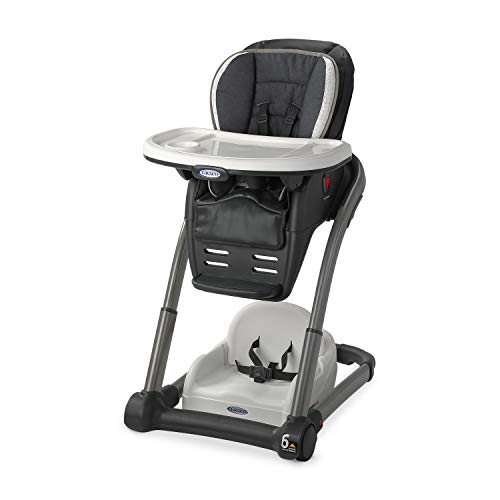
Graco Blossom 6-in-1 Convertible High Chair
Our badge: Best Overall
The Graco Blossom 6-in-1 Convertible High Chair is the one-purchase answer to baby and toddler seating: it converts through six stages — infant high chair with three recline positions, a traditional high chair, an infant booster, a toddler booster, and a youth chair — and can even seat two children at once in its later configurations, with a five-point harness for the early stages, front wheels for moving it around the kitchen, and a premium leatherette seat pad that wipes clean. For a six-month-old starting solids, the infant modes are the point: the reclines support a baby still firming up their sitting, and the harness keeps an increasingly wiggly diner safely in place.
Strengths
- Six configurations carry one purchase from first foods through the youth years.
- Three reclines and a five-point harness suit a brand-new sitter.
- Wipe-clean leatherette pad respects the reality of baby-led weaning.
Trade-offs
- A full-size footprint; small kitchens feel its presence.
- At about 33 pounds it is a fixture, not a traveler.
- More chair than a household that only needs the high-chair year strictly requires.
| Color | Redmond |
| Size | 29×22.5×41 Inch (Pack of 1) |
| Dimensions | 29 x 22.5 x 41 inches |
| Weight | 32.8 pounds |
The Blossom’s genius is economic as much as ergonomic: the booster and youth stages it grows into are products other households buy separately, twice. In its high chair years, the details serve daily feeding — the tray handles the mess shift, the pad wipes down, the wheels let you roll the whole operation from kitchen to table and back, and the recline range means the chair fits the baby at six months rather than waiting for the baby to fit the chair.
Families planning siblings get the most from it, since the two-children-at-once configuration turns the second child’s arrival from a second purchase into a rearrangement. It is the definition of buying once, properly.
Choose the Graco if this is your main high chair and you value longevity. Skip it if your kitchen is tiny or you need a chair that travels — the Cosco below is that chair.
Best for: A main high chair that serves from first foods to youth seating / Not suited for: Small kitchens or travel duty

Cosco Simple Fold High Chair
Our badge: Best Budget
The Cosco Simple Fold High Chair is the beloved utility chair of the category: a lightweight frame with a three-point safety harness, a wipeable seat pad, a built-in leg rest, and a fold that flattens it for storage in a closet, against a wall, or in a car — no disassembly, ever. It serves children up to 50 lb, sets up in moments, and costs little enough that grandparents, babysitters, and vacation rentals all end up with one.
Strengths
- Folds flat in seconds — the storage and travel champion.
- Lightweight enough to carry room to room or house to house.
- Wipeable pad and simple design make cleanup a one-minute job.
Trade-offs
- Three-point harness rather than five; supervision and correct use matter, as with every seat.
- No recline — best once the baby sits with reasonable steadiness.
- A simpler tray and fewer adjustments than the convertible class.
| Color | Comet |
| Size | 28.5×23.5×38.7 Inch (Pack of 1) |
| Dimensions | 28.5 x 24 x 38.75 inches |
| Weight | 10.8 pounds |
The Cosco understands its job completely: be there for the meal, clean up fast, and disappear afterward. In small homes it is often the only high chair that makes sense — out for three meals, folded for the other twenty-one hours — and in big homes it is the second chair that covers the grandparents’ visits and the patio dinners. Its 50 lb ceiling carries most children well past the high-chair years’ end, by which time they have graduated to boosters at the table anyway.
For a six-month-old, pair it with the readiness check: the baby should sit with good steadiness, since this chair offers no recline. Babies still in the wobbly stage start in the Graco’s reclined modes and meet the Cosco a few weeks later, a sequence many families follow without planning to.
Choose the Cosco if space, budget, or travel drives the decision. Skip it as the sole chair for a baby who cannot yet sit steadily.
Best for: Small homes, grandparents, and travel — a fold-flat feeding chair / Not suited for: Babies who still need recline support
Supportive Floor Seat
Our badge: Best for Playtime Sitting
Covered in prose only, because the pool contains no floor seats and this guide does not invent listings. The product type: a low seat that sits directly on the floor and supports a baby who is learning to sit, with a wide, stable base, a supportive back, and usually a play tray or toy bar. For a six-month-old, it is the playtime seat — a place to sit upright, reach for toys, and watch the household from a new vantage, in supervised floor sessions between meals and naps.
Strengths
- Floor-level placement eliminates fall height entirely.
- Supports the sitting posture during play without an adult’s hands.
- Portable room to room at a moment’s notice.
Trade-offs
- Fit matters and babies vary: a seat that is too snug for your baby’s legs is the wrong seat, whatever its reviews say.
- It is a supervised-play seat, not a feeder and never a sleeper.
- Babies outgrow the stage quickly; borrow or buy modestly.
What to look for when you shop: a wide base that cannot tip when the baby leans, a harness or secure design appropriate to the type, materials that wipe clean, and leg openings that fit your baby comfortably — bring the baby’s measurements, not just their age, since six-month-olds vary enormously. Use it on the floor only, in sessions balanced with plenty of free floor time on a mat, because babies build sitting skill by practicing on the floor itself, wobbling and all. Follow the maker’s age and weight guidance, and stop using it when the baby can climb or lean out of it.
Choose this type if your six-month-old loves being upright for play and your arms need the break. It is a complement to floor play, never a replacement for it.
Best for: Supervised playtime sitting for babies learning to sit / Not suited for: Feeding, sleeping, or unsupervised use
Booster Seat with Tray
Our badge: Best for Small Kitchens
Covered in prose only, as a seat type. A booster straps securely onto an ordinary dining chair, raising the baby to table height with its own harness and usually a removable tray. For six-month-olds who sit steadily, it is the space-saving alternative to a full high chair — the dining chair you already own becomes the baby’s chair, and when guests come, the booster unclips and the chair returns to adult duty.
Strengths
- Uses a dining chair you already have — no new footprint in the kitchen.
- Travels to restaurants and relatives’ houses in one hand.
- Many convert to a toddler booster at the table after the tray stage.
Trade-offs
- Its stability is the host chair’s stability — a sturdy, four-legged dining chair is required, never a stool or a folding chair.
- Strap systems must be checked at every installation; a loose booster is an unsafe booster.
- No recline, so it suits babies who already sit with steadiness.
What to look for: two-strap systems (under the seat and around the back) that fit your dining chairs’ dimensions, a three- or five-point harness, a tray that removes one-handed if possible and washes easily, and non-slip feet that protect the host chair’s finish. Install it exactly per the maker’s instructions, tug-test it before every use, and use it only on the floor at a table — never on raised surfaces, and never carry the chair with the baby in it.
Choose this type if your kitchen cannot spare a high chair’s footprint, or as the travel seat that makes every relative’s dining chair baby-ready.
Best for: Small kitchens and travel, on a sturdy dining chair / Not suited for: Wobbly new sitters or unstable host chairs
Bouncer or Activity Seat
Our badge: Best for Supervised Play
Covered in prose only, as a seat type. Bouncers and activity seats are the awake-time seating of the first year: a bouncer gives a baby a gentle, self-powered bounce with a secure harness, and activity seats or centers surround a supported baby with toys at reaching height. At six months, many babies are at the top of the bouncer stage and the beginning of the activity stage — both serve the same household need: a safe, engaging place for the baby to be while the caregiver’s hands cook, work, or rest for ten supervised minutes.
Strengths
- Keeps a baby safely contained and entertained during awake time.
- Bounce and play encourage reaching, kicking, and looking — ordinary play, honestly framed.
- Lightweight and room-portable.
Trade-offs
- Every such seat has strict weight and ability limits — a baby who can sit up unassisted or climb has outgrown most bouncers, whatever their weight.
- Supervised, awake use only; these are never sleep spaces, and babies who doze in them should be moved to a flat sleep surface.
- Sessions should be modest; babies also need unrestricted floor time every day.
What to look for: the maker’s stated limits in both weight and developmental stage, a harness you will actually use every time, a stable frame that does not walk across the floor with vigorous bouncing, and fabrics that come off for washing. Place bouncers on the floor, never on tables, counters, or beds, and keep them away from cords, heaters, and anything a reaching baby could pull down.
Choose this type if your six-month-old’s awake windows are long and your arms need relief during them. Treat its limits as hard stops, not suggestions.
Best for: Supervised awake play in short sessions / Not suited for: Sleep, feeding, or babies past the stated stage limits
Hook-On Table Chair
Our badge: Best for Travel
Covered in prose only, as a seat type. A hook-on chair clamps to the edge of a table, suspending the baby at table height with the table itself as the structure. It is the restaurant-and-travel specialist: folds nearly flat, weighs little, and lets the baby join the meal at the table rather than beside it — at home, at relatives’ houses, and on trips where a high chair cannot follow.
Strengths
- The baby sits at the table with the family, in any location with a suitable table.
- Folds flat and travels in a tote or a large diaper bag.
- No floor footprint at all.
Trade-offs
- Table requirements are strict: solid, heavy, stable tables of specified thickness only — never glass tops, pedestal tables, or tablecloth-covered surfaces the clamps cannot grip directly.
- The baby’s feet can push against table supports; the maker instructions govern placement.
- Weight limits apply and the clamps must be re-checked at every single installation.
What to look for: clamp mechanisms with positive locking, clear table specifications from the maker that you can verify against the tables in your life, a secure harness, and a seat fabric that removes for washing — restaurant tables and baby meals guarantee it will need it. Before first use, install it on your own table and load-test it exactly as the instructions direct, without the baby, until the installation is second nature.
Choose this type if your family eats out, travels, or visits often, and your home table qualifies. Respect its requirements literally; it is a wonderful product on the right table and the wrong product on every other kind.
Best for: Travel and restaurant meals at suitable tables / Not suited for: Glass, pedestal, or lightweight tables
Comparison Table
| Pick | Color | Dimensions | Weight | Check price on Amazon |
|---|---|---|---|---|
| Graco Blossom 6-in-1 Convertible High Chair | Redmond | 29 x 22.5 x 41 inches | 32.8 pounds | Check price on Amazon |
| Cosco Simple Fold High Chair | Comet | 28.5 x 24 x 38.75 inches | 10.8 pounds | Check price on Amazon |
| Supportive Floor Seat | — | — | — | Check price on Amazon |
| Booster Seat with Tray | — | — | — | Check price on Amazon |
| Bouncer or Activity Seat | — | — | — | Check price on Amazon |
| Hook-On Table Chair | — | — | — | Check price on Amazon |
How to Choose the Best Chairs for 6 Month Old
Start with the high chair — it is the essential
Feeding happens three times a day from roughly this age, so the high chair is the purchase everything else orbits. Decide between the two archetypes by your life: the convertible (Graco) if you want one chair for years and have the floor space; the folding chair (Cosco) if space, budget, or a second household location drives you. Both need the same fundamentals — harness, stability, washable surfaces — and both archetypes deliver them at their positions.
Match the seat to the baby’s sitting stage
Six-month-olds range from propped-and-wobbly to sitting-alone-and-proud. Recline and five-point harnesses serve the earlier stage; upright-only seats (the Cosco, boosters, hook-ons) serve babies who sit steadily. Buy for the baby you have this month, not the one the box’s age range imagines, and when in doubt, choose the option with more support — babies grow into upright seats quickly, but they cannot grow out of a fall.
Interrogate the cleaning, not the features
Every feature on a baby chair will be tested by puree. Removable, washable pads; trays that fit in the sink or dishwasher per the maker; crevice counts you can count on one hand; straps that unclip for a soak — these decide whether the chair is still pleasant in month three. In the shop, mentally hose the chair down. The one that survives the imagination survives the baby.
Apply the universal safety rules to every seat
Harness every time, even for two minutes. Supervise always — no seat in this article is a babysitter. Floor placement only for bouncers and floor seats; tables and counters are never surfaces for baby seats. Respect weight and stage limits as hard stops. And register the product or check for recalls, a two-minute task that keeps you informed for the product’s whole life.
Plan the ecosystem, not a throne
A six-month-old’s day moves between feeding, floor play, supervised activity, and being held. The healthiest setup this guide can recommend is modest: one good high chair, generous floor time on a mat, and at most one or two of the prose seat types matched to your home’s real gaps — the grandparent’s house, the tiny kitchen, the restaurant habit. More seats than that mostly store, not serve.
How Do You Start Solids Without Wrecking the Chair (or the Floor)?
Set the chair on a washable mat or an easy-clean floor area, because the first month of solids is a distribution event as much as a meal. Strip the setup to what washes: tray in the sink after every meal, pad wiped while the mess is fresh, straps soaked weekly. Dress the baby in a long-sleeved bib or accept the outfit change as part of the ritual, and keep the meal’s supplies — spoon, cup, cloth — staged before the baby is seated, because a harnessed baby’s patience is measured in seconds.
Keep sessions short and cheerful at first; the chair’s job in month one is to make the table a happy place, with tastes and textures as the entertainment. The mess declines faster than you fear, and the chair that cleans in two minutes never becomes a reason to dread mealtime.
Problem: Food disappears into the chair’s crevices — It will. Choose chairs with few seams, remove the pad weekly for a proper wash, and keep a handheld vacuum near the feeding spot for the daily crumb harvest.
Problem: The baby slumps sideways in the high chair — They are telling you the sitting is still new. Use the recline if your chair has it, ensure the harness is snug, and shorten sessions; steadiness arrives on the baby’s schedule.
Problem: The baby hates the harness — Check it is snug but not tight, correctly routed per the manual, and put the baby in already calm and fed-adjacent rather than ravenous. The harness is non-negotiable, so make everything around it pleasant.
Problem: The tray is too far for the baby to reach food — Many trays adjust in depth; set it close enough for reaching without letting the baby push against it to stand. If yours does not adjust, a suction bowl placed within reach bridges the gap.
Problem: You cannot tell if your baby is ready for any of this — That is a pediatrician question, and a good one. Bring it to the six-month visit; readiness signs are exactly what that appointment assesses.
Seating at Grandma’s, the Restaurant, and the Rental
The second-location problem defines half this category’s sales, and the guide’s types divide it cleanly. A Cosco folding chair stored at the grandparents’ house is the permanent solution — cheap, safe, and always there. A booster is the portable solution, riding in the car for restaurants and relatives. A hook-on is the traveler’s solution, flat in the suitcase. What unites them is the discipline of the familiar: whichever seat travels with the baby should be the seat the baby knows, installed the same way every time, because unfamiliar seating and hurried installation are where mistakes breed. Choose one second-location strategy and standardize on it.
The Floor Is Still the Most Important Seat
Every product in this guide is a supplement to the place six-month-olds develop sitting best: the floor, on a mat, with toys just out of reach and a caregiver nearby. Floor time is where the wobbling that builds a sitter happens, unrestricted by harnesses and supports. Pediatric guidance consistently emphasizes generous daily floor play, and this guide echoes it plainly: use the chairs for their moments — meals, supervised play, containment while hands are busy — and let the floor do the developmental work it has always done. A household that buys one good high chair and protects floor time has bought the right things.
The Rooms Around the Baby: Seating for the Grown-Ups
A six-month-old’s seating ecosystem includes the adults, because babies are fed, played with, and supervised from chairs too — and a caregiver who is uncomfortable rushes the very moments that should be unhurried. The feeding corner benefits from a chair with arms at a height that supports the arm holding the baby or the bottle, the territory covered for the nursing stage in this guide’s sibling on nursing chairs. The nursery corner, if your room has one, wants a compact, quiet chair for the last feed and the first book of the evening; the small-footprint criteria in Best Chairs For Bedroom Sitting Area translate directly to nursery corners, where the chair must fit between crib, dresser, and door swing. Floor play wants the opposite of a chair for the baby and a low, comfortable perch for the adult — many caregivers claim a supportive floor cushion or the end of the sofa, and the lounging criteria in Best Chairs For Lounging help choose a grown-up seat that survives hours at the baby’s altitude.
The family room’s main seating carries a share of baby life too — tummy time happens in front of the sofa, and the first pulled-to-standing cruises happen along it. Households furnishing that room with a baby in it will find the kid-proofing logic of Best Sofas For Homes With Kids directly on point: washable, forgiving, and free of hazards at crawling height. None of this requires a nursery full of new furniture; it requires noticing that the baby’s chairs and the adults’ chairs form one system, arranged around the same small person, and that an hour of feeding or floor play is only as pleasant as the worst seat involved in it.
Traveling With a Six-Month-Old’s Seating
The first trips with a baby reorganize your packing around seats. The car seat itself is the non-negotiable — installed per its manual, every trip, with the vehicle setup questions answered by Best Car Seat For Captain Chairs for families whose second row has the individual chairs. At the destination, the seating questions repeat in miniature: where will the baby eat, sit, and play, in a house or rental that owns none of the equipment? The portable answers from this guide — the folding Cosco stored at the grandparents’, the booster in the car, the hook-on in the suitcase — exist because the improvisations (a baby fed on a lap for a week, propped in a stroller at the table) satisfy nobody by day three.
Small rooms at the destination sharpen the choices further; a folding or strapped solution that disappears between meals suits a small rental exactly as it suits a small home, a logic the small-space seating in Best Sofas And Chairs For Small Room follows for adult furniture. The travel principle mirrors the home principle: one familiar seat, installed the same way every time, beats a rotating cast of improvisations. Babies are connoisseurs of the familiar at six months, and their seating, like their sleep arrangements, travels best when it changes least.
The Secondhand and Hand-Me-Down Question
Baby chairs circulate through families and friend groups like no other furniture, and a six-month-old’s household will likely be offered several. Hand-me-downs are a genuine blessing of this stage — the equipment is outgrown in months and built for years — but seats carry safety-critical parts, so each offered chair deserves the same inspection you would give a purchase. The checklist is short and non-negotiable. Identify the exact model and check it against current recall lists; a recalled seat is not a bargain at any price, including free. Confirm the harness is complete — every strap, buckle, and chest clip present and functioning — because harnesses are the seat’s entire safety argument and they are the parts that get lost, chewed, and “temporarily” removed. Test every lock, fold, and recline through its full range; mechanisms should engage positively, not approximately. Inspect the frame for cracks, bends, and rust, and the straps for fraying, because webbing weakens invisibly before it fails visibly.
Then apply the hygiene pass: pads and fabrics off and washed per the maker’s instructions where they exist, hard surfaces cleaned, and any part that cannot be cleaned to your standard replaced or the chair declined. When instructions are missing, most manufacturers publish them online by model number — worth the search, because the manual also tells you the seat’s weight and stage limits, which the previous owner’s memory may round in the wrong direction. The polite rule for offers you decline is gratitude plus honesty: safety gear is the one category where “we decided to buy new for the harness” offends no reasonable giver, since they would want the same standard for the baby.
What this guide recommends, in one line: accept hand-me-downs gratefully after the inspection, buy new without guilt when anything fails it, and remember that the budget linked pick in this guide exists precisely so that “new” is not a painful word in this category. A six-month-old’s chairs are used three times a day at the age when the baby cannot protect themselves at all; the inspection habit is the cheapest safety equipment in this entire article, and it transfers to every seat the baby will ever be handed.
From Six Months to the Toddler Table: What Changes
It helps to know how quickly this season’s answers expire, because six months is the fastest-moving seat market in a child’s life. The baby who starts solids in a reclined high chair this month will sit bolt upright in it by nine months, feed themselves with maximal distribution by twelve, and begin lobbying to escape it somewhere in the second year — which is when the high chair’s harness discipline matters most and when the convertible stages of a chair like the Graco begin paying their second dividend, first as a booster at the table and then as a youth seat. The floor seat’s career is the shortest in this guide, measured in weeks-to-months between “sits with support” and “climbs out”; the bouncer’s ends the day the baby can sit up or pull to the edge, whichever the maker’s limits reach first. The Cosco’s simplicity is its longevity: nothing to outgrow but the harness stage itself, and a 50 lb ceiling that outlasts most children’s high-chair years entirely.
Plan the transitions rather than being surprised by them. When the baby starts rocking the high chair with intent, that is the chair telling you its occupant’s strength has changed — check the stability, the harness fit, and your supervision habits in the same afternoon. When meals migrate to the family table, the booster stage preserves the ritual with the child at adult height, which toddlers experience as promotion rather than equipment. And keep the folding chair after the home graduates: it becomes the seat visiting babies use at your house for a decade, the most quietly useful object in the hall closet. The chairs of the six-month season are brief in their primary duty and long in their afterlife, which is the final reason to buy them well and inspect them honestly — they will serve children you have not met yet, in houses you may not live in, long after the baby they were bought for has forgotten ever fitting in them.
A Calm Word About Milestones
Every parent of a six-month-old eventually hears another baby’s sitting résumé and feels the comparison stir. This guide’s position is the pediatric consensus, stated plainly: babies sit on their own schedules, across a wide range of normal, and no chair, seat, or device in this article — or anywhere — hurries the process in a way that matters. What the chairs here do is keep a baby safe and comfortable while the process unfolds at its own pace, and give caregivers’ arms their necessary rests along the way. If your baby’s timeline ever worries you, the pediatrician who knows your baby is the only review that counts. Everything else — including this guide — is furniture.
Finally, a practical word about timing the purchases. The high chair is the only item in this guide needed on a schedule — ready before solids begin, whenever your pediatrician gives the word — and it rewards being bought a few weeks early so its assembly, cleaning routine, and placement are settled before a hungry baby is supervising. Everything else in the ecosystem can be bought in response to the need actually appearing: the floor seat when playtime sitting becomes the day’s theme, the booster when the first restaurant or relative’s house exposes the gap, the hook-on when the first trip is booked. Buying in response rather than in anticipation keeps the house free of equipment for stages that arrive on their own calendar — and keeps the budget fresh for the stage that is actually at the door.
Common Buying Mistakes
Buying for the age on the box instead of the baby in front of you
Six-month-olds vary by months in sitting ability. Match support to your baby’s actual stage, and let readiness, not the calendar, choose recline and harness configurations.
Skipping the harness for “just a minute”
Babies fall from seats in exactly those minutes, at every income level, in every country. The harness is a habit, not a judgment call.
Placing bouncers or floor seats on tables and counters
A bouncing baby moves a seat across any surface. Floor only, always — this rule has no exceptions and no “stable enough” surfaces.
Choosing the chair that photographs best
Feeding chairs live under puree. Washable pads, removable trays, and few crevices beat aesthetics by the second week, every time.
Ignoring weight and stage limits on seats the baby “still fits”
Limits account for strength and climbing ability, not just size. A baby who can push up or climb out has outgrown the seat that day, whatever the scale says.
Final Recommendation
For the main high chair, the Graco Blossom 6-in-1 Convertible High Chair is this guide’s answer: reclines for the newest sitters, a five-point harness, a wipe-clean pad, and five more stages after the high chair year. For small kitchens, grandparents, and travel, the Cosco is the essential second — see its Check on Amazon listing for the fold that made it famous. Round out the ecosystem only where your life has gaps — a floor seat for play, a booster for restaurants — keep the harness habit absolute, protect the floor time, and your six-month-old’s seating is sorted from first foods onward.
Frequently Asked Questions
Does my 6 month old need a high chair with recline?
If your baby still sits wobbly and needs support, a recline and a five-point harness — the Graco’s pattern — fit this stage well. Babies who sit steadily can use upright chairs like the Cosco. When in doubt, ask your pediatrician at the six-month visit and choose the more supportive option meanwhile.
How long will a high chair be used?
The high-chair stage typically runs from around six months to two or three years, when children move to a booster at the table. Convertible chairs like the Graco extend their service through those later stages, which is their core value.
Are booster seats safe for a 6 month old?
A booster can suit a six-month-old who sits steadily, provided it is installed exactly per its instructions on a sturdy dining chair, both straps are secured, the harness is used, and the setup is tug-tested before every meal. Babies who still slump belong in a reclined high chair for now.
Can my baby sleep in a bouncer or floor seat?
No. These seats are for supervised awake time only. If your baby falls asleep in one, move them to a flat, firm sleep surface on their back, per standard safe-sleep guidance. Seats are for sitting and playing, never for sleeping.
What is the best seat for starting solids?
A stable high chair with a secure harness, a tray that removes for washing, and a pad that wipes clean — because the first months of solids are messy by design. Between this guide’s two, the Graco suits the newest sitters with its reclines; the Cosco suits steady sitters and small spaces.
How do I know if a secondhand high chair is safe?
Check for recalls on the exact model, confirm the harness is complete and functional, verify stability and all locking mechanisms, and replace any chair with missing parts or damage. When any of that is uncertain, a new budget chair like the Cosco is the safer economy.


