Disclosure: As an Amazon Associate, dailyhomedecorating.com earns from qualifying purchases. Links to Amazon on this page are affiliate links; they cost you nothing extra. Prices and availability change often, so check the current Amazon listing before you buy.
The best home office chairs for back support are ranked here on one discipline: support you can verify — a lumbar system whose position you control, a backrest tall enough for your torso, construction that holds its shape across years of home working. Home adds its own conditions: the chair serves a room that also lives, a floor that is yours, and often a second person whose back is built differently. This guide ranks the verified pool for the home back, in comfort and support terms only — no chair here treats, cures or prevents anything, and persistent pain belongs to a professional, a boundary this article keeps in every section. The desk-bound sibling rankings are Best Computer Chairs For Back and Best Desk Chairs For Upper Back Pain; this page is the home-wide version.
Every specification below comes from verified listing data — dimensions, weights, stated features and capacities exactly as listed, nothing estimated or invented, and no prices printed anywhere, per this site’s standing rule. One flag repeated deliberately: the pool’s Herman Miller Aeron is the Size B (Medium) variant, and its review treats the band as the headline it is. Read the Quick Picks, then the reviews, then the home setup audit that fits the chair to the room as carefully as to the back.
Where to Buy
All six picks are sold on Amazon. Check the current listing for the exact variant, colour options, delivery timing and availability before you buy.
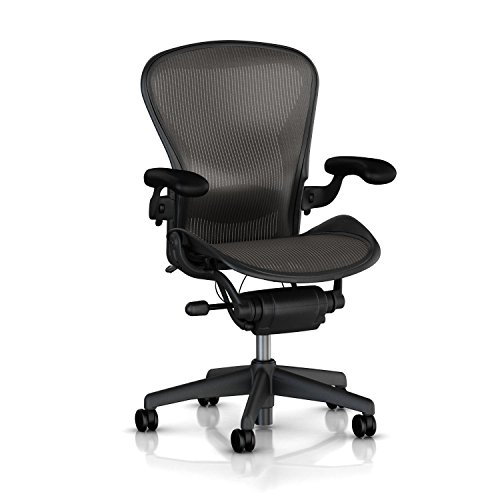
- Herman Miller Classic Aeron Chair-Aluminum — our first choice for home back support. Check on Amazon
- Hbada P5 Ergonomic Office Chair — Check on Amazon
- Secretlab Titan Evo Black Gaming Chair – Regular — Check on Amazon
- Respawn 110 Pro Ergonomic Gaming Chair with Footrest and Recline — Check on Amazon
- LSSPAID Modern Accent Chairs — Check on Amazon
- Homall Gaming Chair — Check on Amazon
In this guide
Quick Picks
| Pick | Badge | Why it earns its place |
|---|---|---|
| Herman Miller Classic Aeron Chair-Aluminum | Best Overall | Dedicated lumbar support and the full control set — Size B fit note applies. |
| Hbada P5 Ergonomic Office Chair | Best Adjustable | Lumbar support that travels to your waist, in breathable mesh. |
| Secretlab Titan Evo Black Gaming Chair – Regular | Best for Long Days | Integrated lumbar, cold-cure foam and a head pillow that positions freely. |
| Respawn 110 Pro Ergonomic Gaming Chair with Footrest and Recline | Best Recline Relief | A 155-degree recline that unloads the back between tasks. |
| LSSPAID Modern Accent Chairs | Best Break Chair | The supportive second posture every home office should offer. |
| Homall Gaming Chair | Best Budget Support | A placeable lumbar pillow and tall back at the accessible tier. |
Key Takeaways
- Support must be positionable: travelling, moulded or pillowed to your waist — not fixed at a factory guess.
- The Aeron leads on engineering; its Size B band decides whether it can lead for you.
- Home back care is a two-chair system: desk posture plus a supported break posture.
- Construction — suspension, cold-cure, dual-density, springs — decides year-three support.
- Every pick is specified from verified data only; check the current price on Amazon.
- Shoulder-specific support questions continue in Best Chairs For Shoulder Pain.
How These Picks Were Chosen
The pool for this guide was fixed before writing began: chairs with Amazon listings whose titles, brands and specifications could be verified. Shortlisting for home back support scored four things. Lumbar truth: does the support reach your waist — by travelling mechanism, by moulded or suspended geometry, or by a pillow you place — and can you verify that from the listing? Back height against torso length. Construction honesty: what holds the support up in year three. And the home layer: whether the pool offered a genuine second posture, because a home office that cannot change posture wastes its one structural advantage over the corporate floor.
The Aeron and Hbada lead on the first criterion by opposite routes — engineered suspension with a dedicated lumbar, and a travelling mechanism in mesh. The Titan integrates its lumbar into a tall moulded back. The Respawn adds the recline as a support tool. The LSSPAID is present as the break chair, badged as such, because posture variety is support strategy, not decoration. The Homall closes the list with the budget’s honest version: a placeable pillow, a tall back, published dimensions.
Badges follow each chair into its review, and the comfort-only boundary is maintained throughout: these chairs support posture; they do not treat backs. Prices appear nowhere, by standing rule; the listing carries the current figure. Fit bands and capacities are quoted exactly as listed, and the first-week home trial — full working days, both chairs if you buy the pair — is the verification this guide prescribes for every pick.
The 6 Best Home Office Chairs For Back Support — Reviewed
Herman Miller Classic Aeron Chair-Aluminum
Our badge: Best Overall
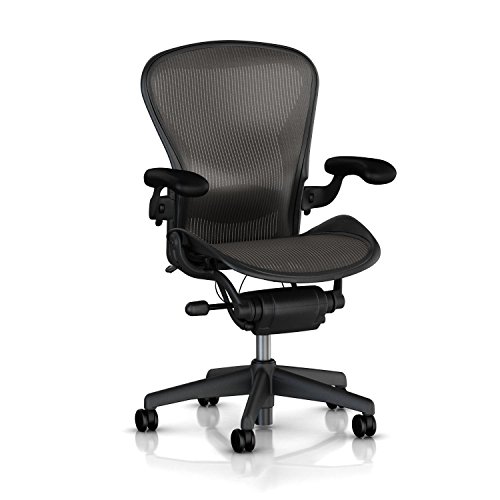
The Herman Miller Classic Aeron Chair-Aluminum leads the home list on the strength of the most complete support system in the pool: a dedicated lumbar support, tension control, tilt lock and forward tilt, in an aluminium frame whose suspended seat and back hold their geometry for years without foam fatigue — with hardwood-floor casters that suit the home it will live in. For the medium-band body it is sized for, it remains the support benchmark.
Strengths
- Dedicated lumbar support within a full ergonomic control set
- Suspended construction never packs down like foam
- Forward tilt supports leaned-in desk work
Trade-offs
- This listing is Size B (Medium) — verify the band fits your body
- Firm, structured feel divides opinion versus cushioned chairs
- Pool data for this listing is sparse; verify every detail on Amazon
| Color | Black |
| Size | B (Medium) |
| Dimensions | 16 x 27 x 41 inches |
| Weight | 50 pounds |
| Product Group | Furniture |
| Binding | Kitchen |
The home reading of its controls: forward tilt serves the paperwork-and-laptop tasks that fill home days between calls; tension control lets the same chair hold an upright morning and a reclined reading afternoon; and the suspended back breathes in the warm spare room where home offices actually live. Its support philosophy is positional — the back meets yours along its whole length rather than pressing at one decorated point — which is why it anchors this ranking whenever the band fits.
The band discipline is stated without softening: Size B is the medium size of a sized design, most tall and many broad bodies belong in a larger variant this pool does not list, and those readers should take the Titan below as their lead. Verify dimensions, then buy the engineering.
Best for: Medium-band home workers wanting benchmark support / Not suited for: Bodies outside the Size B band
Choose it on verified fit; skip it on reputation. Check on Amazon

Hbada P5 Ergonomic Office Chair
Our badge: Best Adjustable
The Hbada P5 Ergonomic Office Chair is the adjustable answer for home backs: lumbar support that travels up and down to meet your waist exactly, height-adjustable armrests, a 2D headrest adjustable in height and angle, an S-shaped mesh back that follows the spine’s curve, a 3.35-inch seat-height range and a 135-degree recline — SGS certification and BIFMA testing noted in the listing. Its listing suits users roughly five feet to five-nine in height, and inside that band it is the most precisely fittable support in this guide.
Strengths
- Travelling lumbar support meets your waist, not a factory average
- S-shaped mesh back breathes and follows the spine
- 2D headrest adjusts for reading and call postures
Trade-offs
- Sized best for users roughly five feet to five-nine in height
- Mesh feel is firmer and less plush than foam chairs
- Compact build may feel small to broad users
| Color | Black |
| Size | 27.56 x 27.56 x 49.41 inches |
| Dimensions | 10.85039368972 x 10.85039368972 x 19.45275588567 inches |
| Weight | 44 pounds |
| Product Group | Furniture |
Home is where travelling lumbar earns its keep twice: once for your back, and again when a partner with a different torso borrows the desk — the support re-finds their waist in seconds, where a fixed support fits whoever the factory imagined and nobody else. The mesh also suits the home’s warmer rooms and vacuums clean in a shared, pet-adjacent house. Set it by the routine in this guide — feet, depth, lumbar into the waist’s curve, arms, headrest — and re-run it at every handover.
For median-bodied home workers and shared desks, this is the support purchase with the fewest ways to be wrong.
Best for: Median-bodied home workers and shared desks / Not suited for: Tall or broad users outside its band
Choose it for fittable support; skip it outside the band. Check on Amazon

Secretlab Titan Evo Black Gaming Chair – Regular
Our badge: Best for Long Days
The Secretlab Titan Evo Black Gaming Chair – Regular supports the home back across the longest days: an integrated adjustable lumbar inside the pool’s tallest back, cold-cure foam that keeps the seat platform honest at hour eight, 4D armrests that hold elbows in every posture, and a magnetic memory-foam head pillow that positions anywhere along the upper back. In a home office that doubles as the evening’s games room, it is one chair supporting the whole waking day.
Strengths
- Integrated lumbar adjusts within a tall, supportive back
- Cold-cure foam resists the dip that undermines support
- Magnetic head pillow positions freely for any neck
Trade-offs
- At about 76 pounds it is a place-once piece of furniture
- Firm seat feel will not suit cushion-first sitters
- Stated capacity is 285 lb — check against your own weight
| Color | Black |
| Size | Regular |
| Dimensions | 19.291338563 x 22.047244072 x 53.937007819 inches |
| Weight | 76.05948039 pounds |
| Product Group | Furniture |
| Binding | Home |
The support argument is integration: the lumbar lives inside the back’s structure rather than strapped to it, so it cannot drift, sag on elastic or be left in another room — the three failure modes of pillow-based support in real homes. The tall back also answers the upper-back half of home support, the region the shoulder and thoracic guides in this series treat at length. For tall home workers it is doubly the lead, as its ranking in the tall guides reflects.
Assembly wants help; the decade after wants nothing but the quarterly rhythm. For long home days, this is the support that does not clock off.
Best for: Long-day home workers and tall users / Not suited for: Small rooms, frequent movers, or anyone over the stated capacity
Choose it for integrated, all-day support; skip it where space rules it out. Check on Amazon

Respawn 110 Pro Ergonomic Gaming Chair with Footrest and Recline
Our badge: Best Recline Relief
The Respawn 110 Pro Ergonomic Gaming Chair with Footrest and Recline supports the home back by changing its load: dual-density foam and lumbar support for the working posture, then a 155-degree recline with infinite angle lock over a reinforced retractable footrest for the breaks — the posture in which a back genuinely rests, available in the same room, in the same chair, between tasks. At home, where no breakout area exists, building the break into the chair is the support strategy.
Strengths
- 155-degree recline unloads the back between tasks
- Dual-density foam keeps the working posture supported
- Reinforced footrest completes the rest position
Trade-offs
- Supports up to 275 lb — less headroom for larger users
- Recline needs clear space behind the desk
- Fabric finish shows household wear more than leather looks
| Color | Gray Fabric |
| Size | 28.50″ D x 26.75″ W x 51.50″ H |
| Dimensions | 28 x 26.4 x 51.2 inches |
| Weight | 46.3 pounds |
| Product Group | Furniture |
| Binding | Kitchen |
Use the recline as the guide prescribes: scheduled, brief, and returned from — ten minutes at a real angle with feet up changes the afternoon’s back more than an hour of fidgeting upright. The gray fabric keeps the chair calm in a living-space office and cool against the back in summer. Measure the recline arc against your room before ordering; the chair’s support promise includes a geometry your walls must allow.
For home workers whose backs complain by mid-afternoon, this two-posture answer is often the one that finally fits the day.
Best for: Home workers who need real breaks without leaving the room / Not suited for: Users over the stated capacity, or wall-tight desk bays
Choose it for the built-in break; measure the arc first. Check on Amazon

LSSPAID Modern Accent Chairs
Our badge: Best Break Chair
The LSSPAID Modern Accent Chairs are this guide’s second posture: charcoal chenille over a 7-inch cushion on a spring base, a 115-degree back angle that opens the hip, a lumbar pillow included for the reading position, anti-slip foot pads and a 350-pound stated capacity. Home back support is a system, and the system’s second half is a chair that lets the back rest in a different shape — for calls, documents and thinking — ten steps from the desk.
Strengths
- Thick cushion over a spring base supports long reading sits
- Lumbar pillow included for the break posture
- 115-degree angle opens the hip after desk hours
Trade-offs
- Fixed accent chair — no desk support features
- Chenille needs prompt spill care
- 24.8-inch seat depth swallows shorter legs without the pillow trick
| Color | Charcoal |
| Size | Medium |
| Dimensions | 30.5 x 29.5 x 31.5 inches |
| Weight | 33 pounds |
| Product Group | Furniture |
| Binding | Kitchen |
The ritual it enables: work at the desk chair, consume at the accent chair, and let the walk between them be the movement break. Backs experience the day as a sum of postures, and a home office that offers two good ones beats a home office that perfects one. Shorter users should place the included pillow behind the back to shorten the deep seat — the trick is described in the chair’s other reviews in this series because it keeps mattering.
Buy it second, after the desk chair; together they are the home support system this guide’s title promises. The support audit applied to chairs generally continues in Best Office Chairs For Support.
Best for: The second posture in a home support system / Not suited for: Desk work itself
Choose it to complete the system; skip it as a workstation. Check on Amazon

Homall Gaming Chair
Our badge: Best Budget Support
The Homall Gaming Chair is the budget’s support kit: a massage lumbar pillow you place at your own waist, a headrest, a back published at 33.1 inches high, a 135-degree recline with a slide-out footrest for breaks, high-density foam, a BIFMA-certified metal base and a 300-pound stated capacity. Placeable support is the honest budget mechanism — it fits varied waists precisely because it is not fixed — and the published dimensions let you verify the rest before spending.
Strengths
- Placeable lumbar pillow fits your waist exactly
- Tall published back height supports long torsos at its tier
- Recline and footrest give the break posture cheaply
Trade-offs
- Pillow support drifts if you fidget — reposition it deliberately
- Armrests lack multi-direction adjustment
- PU leather warms in summer and ages faster than premium surfaces
| Color | White |
| Size | 19.7 inches x 18.5 inches x 50.4 inches |
| Dimensions | 18.5 x 20.9 x 50.4 inches |
| Weight | 39.7 pounds |
| Product Group | Furniture |
| Binding | Kitchen |
The discipline that makes it work: park the pillow at your waist every time you sit, the way you would adjust a mirror in a car — two seconds, every time, no exceptions — because placeable support only supports the sitter who places it. With that habit, the chair covers the home support brief at its tier: waist supported, back tall, breaks reclined, all in a 39.7-pound chair that moves between the spare room and the studio as the household evolves.
It is the first home office chair of many readers of this series, and with the pillow habit installed, it is a respectable one.
Best for: First home offices on a budget / Not suited for: Set-and-forget sitters who will not place the pillow
Choose it with the pillow habit; skip it if you know you will not. Check on Amazon
Comparison Table
| Pick | Dimensions | Weight | Colour | Check price on Amazon |
|---|---|---|---|---|
| Herman Miller Classic Aeron Chair-Aluminum | 16 x 27 x 41 inches | 50 pounds | Black | Check price on Amazon |
| Hbada P5 Ergonomic Office Chair | 10.85039368972 x 10.85039368972 x 19.45275588567 inches | 44 pounds | Black | Check price on Amazon |
| Secretlab Titan Evo Black Gaming Chair – Regular | 19.291338563 x 22.047244072 x 53.937007819 inches | 76.05948039 pounds | Black | Check price on Amazon |
| Respawn 110 Pro Ergonomic Gaming Chair with Footrest and Recline | 28 x 26.4 x 51.2 inches | 46.3 pounds | Gray Fabric | Check price on Amazon |
| LSSPAID Modern Accent Chairs | 30.5 x 29.5 x 31.5 inches | 33 pounds | Charcoal | Check price on Amazon |
| Homall Gaming Chair | 18.5 x 20.9 x 50.4 inches | 39.7 pounds | White | Check price on Amazon |
Read the table as a system: four desk supports across the tiers, one recline specialist, one break chair. Confirm the current price for each on Amazon.
How to Choose the Best Home Office Chairs For Back Support
Find Your Waist Before You Shop
Sit against a wall and note where your back’s inward curve sits; that height is the address every lumbar system in this guide must reach. Travelling mechanisms reach it by adjustment, moulded backs by design across sizes, pillows by placement. A support fixed below or above your waist is decoration. This single measurement — thirty seconds, no tools — is the highest-value act in home back shopping, and it converts every listing’s lumbar claim into a verifiable question.
Match Construction to Your Horizon
Support in year three is a materials question. Suspension and aluminium (the Aeron) barely age; cold-cure foam (the Titan) ages slowly; dual-density foam (the Respawn) splits the difference intelligently; springs under cushions (the LSSPAID) stay lively; standard foam at budget tiers ages fastest and should be bought with its replacement cycle in mind. Home chairs are kept longer than office chairs; buy the construction your horizon implies.
Build the Two-Chair System
Plan the break posture with the work posture: desk chair plus accent chair, or a recline that builds the break in. Then schedule the variety — calls and documents in the second posture — because unscheduled variety does not happen. The home office’s structural advantage over the corporate floor is exactly this, and households that exploit it report the difference in their backs by the second week.
Fit the Room as Well as the Back
The home audit from this series’ other guides applies unchanged: casters or a mat for your floor, the recline arc measured, noise considered for the household’s other lives, a settings card where the desk is shared. A support chair that damages the floor or deafens the nursery will be exiled, and an exiled chair supports nothing. Fit the room in the same purchase decision as the back.
Keep the Boundary With Pain
Support is comfort engineering, not treatment. New, worsening, radiating or persistent pain — pain that changes what you can do — belongs to a clinician, and no purchase in this guide should delay that conversation. Buy the chair for posture; see the professional for pain; the two decisions are independent and both deserve to be made well.
How Do You Set Up a Home Office Chair for Back Support?
Feet flat, seat depth leaving two to three fingers behind the knee. Lumbar next — the step this guide exists for: travel it, mould it or place the pillow until the support fills the small of your back with gentle, even pressure, neither absent nor prodding. Armrests to elbows with shoulders dropped. Headrest to the back of the head on lean-back. Screen raised so the eyes, not the neck, do the travelling. Then the home additions: the break chair placed where you will actually use it, the settings card written while the positions are fresh, and a side photograph of the whole arrangement for the diary. Re-run the sequence after the first week and after any room change.
Judge the setup at the day’s end, not its start: the supported back finishes the day tired like a muscle that worked, not sore like a joint that strained. That distinction — ordinary fatigue versus complaint — is the home worker’s most useful instrument, and it needs no batteries.
Problem: The lumbar support presses too hard — Reduce it: travel it down a notch, soften the pillow’s placement, or recline a degree so the load shares across the back. Support should fill the curve, not fight it; a prod is a misfit, not a therapy.
Problem: My back is fine at the desk but aches in the evening — Audit the evening seat. Sofas and accent chairs carry the day’s second half, and a deep, low evening seat can undo a supported day. The break-chair logic in this guide — supported, hip-open, pillow placed — applies to the evening with interest.
Problem: Support feels right for an hour, then fades — Suspect the seat, not the back: a platform that dips tips the pelvis and unloads the lumbar contact. Check foam recovery, add a firm cushion as a diagnostic, and let the result brief your next purchase.
Problem: Two of us share the chair and one back always loses — Settings card, sixty-second re-tune, and travelling support where possible. If both backs work full-time, the honest answer is two chairs — the second-chair economics in this series’ budget guides apply.
Standing work deserves its footnote in a support guide: many home workers split the day between sitting and a standing desk or a kitchen counter, and the transitions matter more than either posture. Rise slowly after long sits, let the back find neutral before loading it, and treat the standing hours as part of the support system rather than a rest from it — standing badly is just sitting’s tax in a new currency. The chair’s job in a mixed day shrinks to the sitting hours, which paradoxically raises the standard for them: fewer hours, each one fully supported, beats a whole day of approximate support.
What Does an Evening of Back Support Look Like?
It looks like the day’s second system: a supported seat for the evening’s reading and screens, a walk that is actually taken, and a sofa audited rather than assumed. The sofa rankings that apply support thinking to the evening are Best Orthopedic Sofas — support-first by design — and Best Sofas For Older Adults, where seat height and back support are audited for the bodies that feel them most. Home workers often discover their “desk problem” was an evening problem wearing the day’s clothes; the diary, kept for a week across both halves of the day, tells the truth about which half is complaining.
Sleep is the back’s overnight report, and home workers should learn to read it alongside the diary: a back that wakes stiff after supported days is telling a different story from one that wakes easy and complains by three. Mattresses are outside this guide’s pool and this ranking, but the observation costs nothing and belongs in the diary’s third line when it appears — because the professional you may eventually consult will ask about mornings first, and the household that has noticed its mornings answers like a witness instead of a guesser. Support is a twenty-four-hour subject wearing an eight-hour guide’s clothes; this article knows its hours and respects the rest.
How Should You Keep a Support Diary?
Three lines a day for two weeks: where the ache sits, when it arrives, what the day contained. Patterns emerge that no single day reveals — the ache that follows recliner evenings, the one that follows deadline days in the wrong chair, the one that follows neither and therefore belongs to a clinician. Bring the diary to any professional conversation; it is the difference between describing pain and presenting evidence. Keep it with the settings card, and let the pair of them — positions and patterns — be the household’s back file. Two weeks of three lines is the cheapest diagnostic in this entire series, and the one most likely to change what you buy next.
Working from the sofa “just for the morning” deserves its own warning, because it is the home office’s most common support failure and it never appears in any chair comparison. The laptop goes to the sofa for one call; the morning follows it; the back files its complaint by lunch. The discipline is not willpower but furniture geography: the break chair is for breaks, with a book or a call, and the laptop’s home is the desk. Households that keep that one border find their support system suddenly works as designed — the chairs were never the problem, and the border costs nothing but the decision.
Temperature closes the home audit: a support chair abandoned at noon because its surface runs hot in a sun-struck spare room has failed by climate, not by geometry. Mesh and suspension breathe; fabric sits between; leatherette warms. If your room runs hot, weight breathability as a support feature — the supported hour you actually sit is worth more than the specification of the hour you flee.
One more home-specific trap: buying the support chair for the photograph of the room rather than for the room’s actual desk. Home offices migrate — the desk moves to the window, the spare room becomes a nursery, the chair follows — and a chair whose support depends on one exact arrangement (a recline arc that only one wall allows, a break chair that only fits one corner) breaks at the first migration. Favour support that travels: mechanisms inside the chair, pillows that move with it, systems whose geometry is the chair’s own. The households in this series that stay supported for years are the ones whose support survives their own rearranging.
Second-hand support chairs deserve their audit paragraph, because the premium end of this ranking circulates used in every city: check the lift under your full weight for a slow minute, press the foam for uneven recovery, run every adjustment through its range, and — for sized chairs above all — verify the size variant in writing before money moves. A sound used Aeron inside its band is a legitimate route to the benchmark; a worn one is an expensive shape. The two-minute audit is the whole difference, and it is the same audit this guide applies to new chairs in their first week, because support is a condition, not a vintage.
Common Buying Mistakes
Buying Lumbar as a Label
“Lumbar support” printed on a box means a shape exists somewhere in the back. Whether it reaches your waist is the only question, and it is answered by your wall measurement and the chair’s adjustment range — not by the label.
Judging Support in the First Ten Minutes
Support is an hour-three property. Trial across full working days inside the return window, and judge at the day’s end by the fatigue-versus-complaint distinction.
Perfecting the Desk, Ignoring the Evening
Half your sitting happens after work. A supported day followed by a collapsed evening is a half-system, and the back keeps the total.
Sharing Without a Settings Card
Two backs, one chair, no record: the support is re-guessed daily and usually guessed wrong. The card takes a minute and pays out at every handover.
Delaying a Professional for a Purchase
When pain is persistent, changing or limiting, the next step is a clinician, not a checkout. Chairs support posture; professionals assess backs. Confusing the two wastes money and time in equal measure.
Children learning at the same table write the family’s other back story, and it deserves a paragraph before the verdict: the homework hour in an adult chair — feet dangling, back floating away from the backrest — is poor support by geometry, whatever the chair’s quality. A cushion behind the child’s back to shorten the seat depth and a box under the feet convert the family chair honestly for an hour; a small chair of their own converts it permanently. Back support is a household discipline, and the youngest backs in the house are the ones with the longest futures riding on the habits formed now.
Budget sequencing, finally, for the household building the system over time: desk chair first, fitted properly; the diary for a fortnight; the break chair second, bought against the diary’s evidence; the room’s remaining items — mat, screen raise, lighting — as the diary directs. Bought in that order, every purchase is briefed by evidence from the last. Bought all at once in a weekend, the system is a guess with good intentions. The two-chair system in this guide is a destination; the sequence is how real budgets arrive there without waste.
Visitors and family complete the home picture: the parent who works from your spare room for a month, the friend recovering at your desk between flats. A support system that adjusts obviously — and whose settings card restores your fit in a minute — serves guests without a tutorial and returns to you intact. Keep the spare cushion where guests can find it. Hospitality is a support feature in a home in a way it never is in an office, and the households that plan it find their systems survive their generosity.
And keep the receipts and the listing details with the diary — variant, size band, the date the trial began. Support chairs are long-lived, warranties are honoured on paperwork, and the household that can produce its evidence settles every question — fit, fault, resale — in minutes. It is the last boring discipline in a guide full of them, and like the others, it pays out precisely when something has gone wrong, which is the only time paperwork is ever missed. File it with the settings card and the diary, in the desk’s own drawer, where the next question — and there is always a next question — will find it waiting.
Final Recommendation
For most home workers, start with the Herman Miller Classic Aeron Chair-Aluminum if its Size B band fits — its support system is the benchmark — and take the Hbada P5 Ergonomic Office Chair as the adjustable runner-up for median bodies and shared desks: Check on Amazon. Add the break chair when you can, keep the two-week diary before you judge, and confirm the current price on the Amazon listing before you buy. Support is a system — chair, second posture, diary, boundary — and this guide has tried to sell you the system, not just the chair.
And the guide’s last home truth: support is maintained, not installed. Foam settles, pillows migrate, housemates borrow settings, bodies change across a year. The quarterly rhythm — re-run the setup sequence, check the diary for new patterns, re-place the break chair where the season has moved the light — keeps a good system good. Five minutes, four times a year, against the alternative of re-buying the system annually in frustration. That is the whole maintenance contract, and it is written here so it can be kept.
And if the diary eventually sends you to a professional, bring the chair’s story with you — what you bought, how it is set, what the two weeks showed. Clinicians assess backs in rooms full of unexamined furniture; the patient who arrives with measurements, positions and a fortnight’s pattern gets a different conversation from the one who arrives with a complaint alone. This guide’s paperwork — settings card, diary, the dated setup photograph — was always quietly designed for that appointment as much as for the purchase. Support yourself like someone who keeps records, because backs, like floors, keep theirs regardless.
One truly final note, for the reader who has done everything in this guide and whose back has improved only partly: partial is not failure. Support systems work in percentages — the day that ends at discomfort level three instead of seven is a day genuinely improved, and the diary that records the three is what lets you decide, calmly and with evidence, whether the remaining four points are a furniture problem, a workload problem or a clinical one. Buy in evidence, judge in percentages, escalate in order. That is the method, whole — and it is deliberately unglamorous, because backs are not improved by glamour. They are improved by a waist met at its own height, a second posture ten steps away, a diary that tells the truth, and a household that keeps the rhythm after the novelty of the new chair has worn off. Everything else in these pages is commentary on those four sentences.
One more pattern is worth naming before the questions, because home workers discover it slowly: support needs migrate across a life. The chair that fitted the twenty-something’s first flat is audited again by the thirty-something’s longer days, the forty-something’s first real complaint, the household that adds a child, a dog, a second desk. None of that is failure — it is the reason this guide teaches a method rather than merely naming a winner. Keep the waist measurement, the settings card and the diary habit, and every future chair decision in the house becomes a thirty-minute application of a skill you already own, instead of a fresh research project bought under the pressure of an aching afternoon. The chairs will change. The method is the furniture you keep.
And one small domestic scene, offered as the guide’s final evidence: the home worker who, three weeks after setting up properly — chair fitted, break chair placed, diary kept — catches themselves at six in the evening realising the back has not been thought about all day. That unremarkable day is the product. Support, done right, is not an experience; it is the absence of one, repeated until it becomes the ordinary background of a working life. Buy for that absence, measure for it, and distrust any chair — or any guide — that promises something more dramatic.
Frequently Asked Questions
What kind of lumbar support is best at home?
The kind that reaches your waist: a travelling mechanism if you share the chair or your torso is atypical, a moulded or suspended back if your body sits inside its design band, a placeable pillow at budget tiers — provided you place it every time. Measure your waist’s height seated against a wall, and buy the system that verifiably arrives there.
Is a gaming chair supportive enough for home office work?
The better ones in this pool are: the Titan’s integrated lumbar and cold-cure foam and the Respawn’s dual-density build are genuine support engineering, and their tall backs cover the upper back as well. Judge by mechanism and construction, not by category label — and keep the pillow discipline if you choose a pillow-based design like the Homall.
How long before a support chair makes a difference?
Judge across two weeks of full working days, with the diary running. Correct support usually feels unremarkable at first — the absence of the evening complaint is the signal — and the diary catches what sensation forgets. If the pattern does not move in a fortnight of correct setup, the remaining question is professional, not commercial.
Do I need a separate chair for breaks?
Not strictly — a deep, well-built recline like the Respawn’s builds the break into the desk chair. But a separate break chair changes the room as well as the posture, and home workers consistently use variety they can see. Buy the desk chair first; add the second posture when the budget and the room allow.
What if my back pain is getting worse?
See a clinician. This guide ranks chairs for comfort and posture support; it does not diagnose or treat, and no chair purchase should delay an assessment of pain that is worsening, radiating, or limiting what you can do. Bring the support diary — it genuinely helps the conversation.
What is the best first choice for best home office chairs for back support?
The Herman Miller Classic Aeron Chair-Aluminum is the first choice in this guide for bodies inside its Size B band, because its dedicated lumbar support and control set remain the benchmark. Check its full review above for the strengths, trade-offs and the size note, and confirm the current price on Amazon before buying.


