Disclosure: As an Amazon Associate, dailyhomedecorating.com earns from qualifying purchases. Links to Amazon on this page are affiliate links; they cost you nothing extra. Prices and availability change often, so check the current Amazon listing before you buy.
The best desk chairs for upper back pain are decided by a measurement most buyers never take: where the backrest ends. Upper back discomfort at a desk — the ache between and under the shoulder blades, the tightness that climbs toward the neck by evening — usually traces to a backrest that stops below the shoulder blades, a headrest that pushes the head forward, or hours spent reaching toward a screen placed too far away. This guide ranks six chairs from a verified product pool on back height, headrest placement and the support geometry of the upper spine, with comfort framing only: chairs remove aggravating positions, and persistent pain deserves professional assessment. If your ache sits in the shoulders themselves, Best Chairs For Shoulder Pain weights the same pool toward armrests and shoulder line.
Every specification below comes from verified listing data — dimensions, weights, stated features and capacities exactly as listed, nothing estimated or invented. Read the Quick Picks for the short answer, the reviews for the upper-back reasoning, and the setup sections for the screen and headrest geometry that decides whether a good chair can do its work.
Where to Buy
All six picks are sold on Amazon. Check the current listing for the latest price, colour and size options, delivery timing and availability before you buy, because all of these change often.
- Secretlab Titan Evo Black Gaming Chair – Regular — our first choice for upper back support. Check on Amazon
- Hbada P5 Ergonomic Office Chair — Check on Amazon
- Herman Miller Classic Aeron Chair-Aluminum — Check on Amazon
- Respawn 110 Pro Ergonomic Gaming Chair with Footrest and Recline — Check on Amazon
- VINGLI Mid-Century Modern Accent Chair — Check on Amazon
- Homall Gaming Chair — Check on Amazon
In this guide
Quick Picks
| Pick | Badge | Why it earns its place |
|---|---|---|
| Secretlab Titan Evo Black Gaming Chair – Regular | Best Overall | Tall back, sliding head pillow and moulded foam that supports the whole spine. |
| Hbada P5 Ergonomic Office Chair | Best Adjustable | S-shaped mesh back with a headrest that adjusts in height and angle. |
| Herman Miller Classic Aeron Chair-Aluminum | Best Premium | Forward tilt and suspension that support the lean instead of punishing it. |
| Respawn 110 Pro Ergonomic Gaming Chair with Footrest and Recline | Best for Recline Breaks | Deep recline and a cushioned headrest to unload the upper back between blocks. |
| VINGLI Mid-Century Modern Accent Chair | Best High-Back Accent | The fixed chair whose back actually reaches — for reading and recovery. |
| Homall Gaming Chair | Best Budget | A stated 33.1-inch back height and headrest at an entry price. |
Key Takeaways
- Start with the Secretlab Titan Evo: its back reaches the shoulder blades and its head pillow reaches your head.
- Measure your seated torso: the backrest must reach the top of your shoulder blades to support the upper back.
- A headrest belongs behind the head, not under the neck — adjustability of height is the specification that matters.
- Screen distance is an upper-back feature: reaching forward loads the shoulder blades all day.
- Every pick is specified from verified data only; check the Amazon listing for current price and availability.
- For the lower-back-first ranking of a similar pool, see Best Computer Chairs For Back.
How These Picks Were Chosen
The pool for this guide was fixed before writing began: chairs with Amazon listings whose titles, brands and specifications could be verified. Shortlisting for upper back support applied the region’s own tests. Back height first: does the backrest reach the shoulder blades of an average-to-tall torso, by stated dimension or by design class? Headrest second: can it be placed at the back of the head, by sliding, adjusting or correct fixed geometry? Third, the support of the lean: does the chair’s tilt or recline keep the upper back in contact during reading and calls, when upper backs actually load? Low accent chairs and short-backed task chairs failed the first test outright and were excluded from the desk ranking, whatever their other virtues.
The method is stated plainly, as throughout this series: verified manufacturer and listing data assessed against established seating ergonomics, with comfort framing only and no medical claims — a chair is not a treatment, and this guide does not diagnose the cause of anyone’s pain. No prices are printed because they change; no popularity figures appear because they would be stale. Where numbers appear — torso measurements, screen distances, recline angles — they are widely used fitting benchmarks offered for your own audit.
Badges follow the ranking: Best Overall for the most complete upper-back geometry, then adjustable, premium, breaks, accent and budget specialists. One structural note: this pool’s ergonomic chairs concentrate on lumbar systems, because the market does; the upper back is served mainly by height and headrests, which is precisely why this guide exists — to read the same products through the neglected end of the spine. The whole-chain view is scored in Best Home Office Chairs For Back Support, a useful companion read.
The 6 Best Desk Chairs for Upper Back Pain — Reviewed

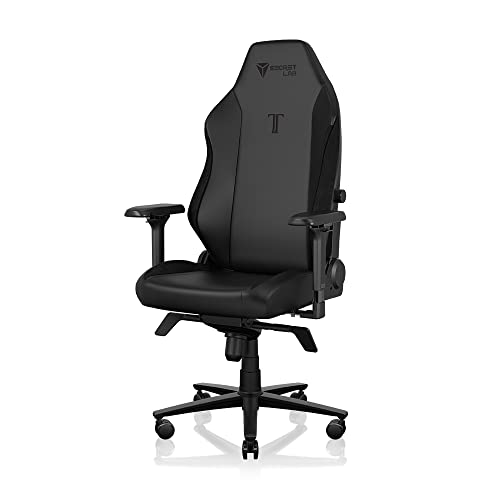
Secretlab Titan Evo Black Gaming Chair – Regular
Our badge: Best Overall
The Secretlab Titan Evo Black Gaming Chair – Regular leads because it completes the spine: a tall backrest that supports through the shoulder blades, cold-cure foam that holds the moulded contour for years, built-in lumbar support anchoring the base of the chain, and a memory-foam magnetic head pillow that slides over a wide range to meet the back of the head — the two contact points upper backs actually need. The 4D armrests finish the geometry by keeping shoulders level. Rated to 285 pounds in the Regular size.
Strengths
- Cold-cure foam holds its shape and support for years
- Magnetic memory-foam head pillow adjusts over a wide range
- 4D armrests and built-in lumbar support dial in a precise fit
Trade-offs
- At 76 pounds it is the heaviest desk chair in this guide
- Premium positioning means you must check the listing carefully against your budget
- Regular size will feel snug for very tall or broad users
| Color | Black |
| Size | Regular |
| Dimensions | 19.291338563 x 22.047244072 x 53.937007819 inches |
| Weight | 76.05948039 pounds |
| Product Group | Furniture |
| Binding | Home |
The head pillow is the detail to interrogate on any chair in this category, and the Titan’s answers best: because it slides and snaps magnetically, it can be placed at the occiput — the back of the skull — for a tall torso, a short torso, and every recline angle between. A headrest that reaches is a support; one that stops at the neck is a lever pushing the head forward, and the upper back pays for it hourly. Combined with the tall, shaped back, the Titan gives the thoracic spine continuous contact from pelvis to head, which is the entire brief of this guide in one product.
Its costs are the familiar ones: weight that makes it installed furniture, a premium tier to verify against your budget on the listing, and a Regular size whose extremes should be checked. For the desk worker whose ache lives between the shoulder blades, it is the most complete answer in the pool.
Best for: Upper back support across long desk days, precisely fitted / Not suited for: Frequent movers, or frames beyond the Regular size
Choose it for full-spine contact; skip it if mesh coolness matters more. Check on Amazon

Hbada P5 Ergonomic Office Chair
Our badge: Best Adjustable
The Hbada P5 Ergonomic Office Chair approaches the upper back through shape and adjustment: an S-shaped mesh backrest that follows the spine’s profile, a 2D headrest adjustable in height and swivelling up to 40 degrees, travelling lumbar support, adjustable armrests, and a 135-degree recline. The mesh keeps the back cool across long sessions — heat between the shoulder blades is an underrated driver of the fidgeting that undoes posture. The listing notes SGS certification and BIFMA testing.
Strengths
- Adjustable lumbar support moves up and down to meet your back
- 2D headrest adjusts in height and angle for neck support
- Mesh back breathes through long, warm work sessions
Trade-offs
- Mesh back is less tall than the gaming chairs’ backs
- Sized best for users roughly five feet to five-nine in height
- Firm mesh feel divides opinion
| Color | Black |
| Size | 27.56 x 27.56 x 49.41 inches |
| Dimensions | 10.85039368972 x 10.85039368972 x 19.45275588567 inches |
| Weight | 44 pounds |
| Product Group | Furniture |
The headrest’s angle adjustment is the upper-back feature to notice: tilting the rest lets it meet the head’s natural recline line rather than presenting a flat board the head must conform to, and that small kindness is felt in the neck and shoulders within a day. The S-curve’s thoracic section supports the mid and upper back by contact rather than by a pad — a distributed support that suits users who find pronounced lumbar devices distracting, provided the lumbar unit is set low, at the waist, where it belongs.
Its ceiling is stature: the stated suitability band (roughly five feet to five-nine) means taller torsos may find the back’s top edge arriving early — measure your seated torso against that band honestly. Within it, the P5 is the adjustable, breathable answer, at a friendlier tier than the Titan.
Best for: Adjustable, breathable upper-back support in the middle size band / Not suited for: Tall torsos needing maximum back height
Choose it for tuning and coolness; skip it if your torso is long. Check on Amazon
Herman Miller Classic Aeron Chair-Aluminum
Our badge: Best Premium
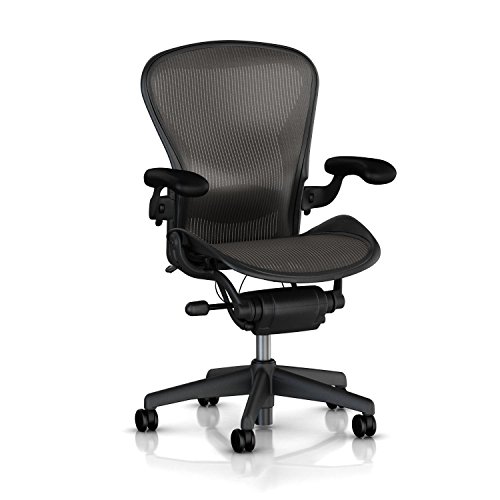
The Herman Miller Classic Aeron Chair-Aluminum serves the upper back by serving motion: tension control, a rear tilt lock and forward tilt keep the back supported through the postures computer work actually cycles through, and the suspended back distributes contact across the whole spine rather than at points. Forward tilt is the connoisseur’s upper-back feature — it supports the lean into detail work that otherwise hangs the thoracic spine off the chair entirely. This listing is Size B, in aluminum, with hardwood-floor casters.
Strengths
- Tension control, tilt lock and forward tilt give precise movement control
- Lumbar support and breathable suspension keep long days comfortable
- Hardwood-floor casters are specified for finished floors
Trade-offs
- No headrest — the head is unsupported in recline
- Size B medium will not fit very tall or very small users correctly
- Controls take a weekend to learn and set properly
| Color | Black |
| Size | Size B (Medium) |
| Dimensions | 16 x 27 x 41 inches |
| Weight | 50 pounds |
| Product Group | Furniture |
| Binding | Kitchen |
The missing headrest must be read correctly: for upright and forward-leaning work — most computer hours — a headrest is furniture the head never touches, and the Aeron’s back support operates without one. It is in reclined reading and calls that the omission registers, and upper-back sufferers who live in those postures should take the Titan or the Respawn instead. What the Aeron offers in exchange is the finest movement quality in the pool and support that cannot decay, because there is no foam to fatigue.
Size discipline, as always with this chair: Size B must match your seated measurements, and the configuration should be confirmed on the listing. For the correctly sized, upright-working user, its upper-back support through motion is a genuinely different — and for many, superior — philosophy.
Best for: Upright and detail workers who value supported movement / Not suited for: Recline-and-calls workers who need a headrest
Choose it for motion; skip it for headrest-dependent days. Check on Amazon

Respawn 110 Pro Ergonomic Gaming Chair with Footrest and Recline
Our badge: Best for Recline Breaks
The Respawn 110 Pro Ergonomic Gaming Chair with Footrest and Recline treats the upper back with rest: a cushioned headrest and dual-density foam for the working blocks, then a 155-degree recline with infinite angle lock and a reinforced retractable footrest, in which the whole spine — thoracic included — unloads completely. For upper backs that tighten progressively across the day, scheduled unloading is the intervention, and no chair here reclines further.
Strengths
- 155-degree recline with infinite angle lock is the deepest here
- Retractable footrest is reinforced with multi-point brackets
- Dual-density foam and fabric upholstery stay cooler than PU leather
Trade-offs
- Supports up to 275 lb, less headroom than rivals for larger users
- Headrest is cushioned but less adjustable than the Hbada’s or Titan’s
- Large footprint needs a proper desk bay
| Color | Gray Fabric |
| Size | 28.50″ D x 26.75″ W x 51.50″ H |
| Dimensions | 28 x 26.4 x 51.2 inches |
| Weight | 46.3 pounds |
| Product Group | Furniture |
| Binding | Kitchen |
The gray fabric keeps the chair calm in a home office and cooler against the back than PU leather — a real consideration for a region that complains in warm rooms. The dual-density foam’s firm base resists the bottoming-out that turns late-day sitting into a slump the upper back must then hold up. Used in the block rhythm this series keeps recommending — upright work, full recline, repeat — it manages upper-back load by schedule rather than by hope.
Check capacity (275 pounds stated) and recline clearance before ordering. For the worker whose upper back keeps a timetable of tightening, the Respawn is the chair that answers it with a timetable of release.
Best for: Progressive tightness answered by scheduled recline breaks / Not suited for: Users over the stated capacity, or shallow desk bays
Choose it for the breaks; skip it if precise headrest tuning leads. Check on Amazon

VINGLI Mid-Century Modern Accent Chair
Our badge: Best High-Back Accent
The VINGLI Mid-Century Modern Accent Chair is the fixed-geometry proof of this guide’s thesis: a high back that reaches the shoulders, pocket coils with high-density foam, metal back support and a sturdy wooden frame — no adjustments, and yet more upper-back support than most desk chairs provide, because height is the support. It serves as the reading and recovery chair beside the desk, where upper backs go to be in a different, kinder position.
Strengths
- High back supports shoulders and upper back better than low accent chairs
- Pocket coils plus high-density foam give structured, lasting comfort
- Breathable linen suits long sitting in warm rooms
Trade-offs
- Fixed geometry — no headrest, no adjustment, the fit is the fit
- At over 49 pounds it is one of the heavier accent chairs here
- Not a desk chair in any configuration
| Color | Green |
| Size | Medium (M) |
| Dimensions | 31 x 31.1 x 35.8 inches |
| Weight | 49.27 pounds |
| Product Group | Furniture |
The angled backrest and armrests hold a relaxed reading posture with the whole back in contact — the exact antidote to a morning spent perched at a screen. Linen keeps it cool, and its substance means a tall frame lands without skitter. Check parts carefully before assembly, as the listing advises. Upper-back sufferers consistently underrate the second chair; an hour’s reading here can return more comfort than a marginal upgrade to the main chair, at a fraction of the cost.
Its limit is absolute, though: it cannot be tuned, raised, swivelled or tasked. Buy it as the companion it is, placed by the best light in the room, and let the desk chair handle the desk.
Best for: Reading and recovery with full upper-back contact / Not suited for: Any desk work, or users needing adjustment
Choose it as the second chair; skip it as the only chair. Check on Amazon

Homall Gaming Chair
Our badge: Best Budget
The Homall Gaming Chair makes the budget upper-back case on published geometry: a back height of 33.1 inches — taller than many chairs at twice its tier — a flexible headrest, a massage lumbar pillow, a 135-degree recline and a slide-out footrest, over high-density foam and a BIFMA-certified metal base rated to 300 pounds. Seat width 19.7 and depth 18.5 inches complete the honest dimensions.
Strengths
- Slide-out footrest and 135-degree recline support real breaks
- Massage lumbar pillow and headrest included in the box
- High-density foam and BIFMA-certified metal base feel solid
Trade-offs
- Headrest is flexible rather than precision-adjustable
- PU leather can feel warm during long summer days
- Racing style looks out of place in a calm office
| Color | White |
| Size | 19.7 inches x 18.5 inches x 50.4 inches |
| Dimensions | 18.5 x 20.9 x 50.4 inches |
| Weight | 39.7 pounds |
| Product Group | Furniture |
| Binding | Kitchen |
The headrest’s flexibility is its honest middle ground: it can be positioned to meet the head of most users, without the sliding precision of the Titan’s pillow. Set it deliberately at the back of the head — not the neck — and re-check it weekly, because flexible rests drift. The tall back does the daily work regardless, keeping the shoulder blades in contact through upright hours, and the recline-plus-footrest covers the breaks.
For a student or budget buyer whose ache is upper, the Homall’s published back height is the specification to beat at its tier — verify the current price on the listing, and buy the geometry with confidence.
Best for: Budget buyers needing genuine back height / Not suited for: Precision headrest tuners, or formal offices
Choose it for tall-back value; skip it if adjustment depth leads. Check on Amazon
Comparison Table
| Pick | Dimensions | Weight | Colour | Check price on Amazon |
|---|---|---|---|---|
| Secretlab Titan Evo Black Gaming Chair – Regular | 19.291338563 x 22.047244072 x 53.937007819 inches | 76.05948039 pounds | Black | Check price on Amazon |
| Hbada P5 Ergonomic Office Chair | 10.85039368972 x 10.85039368972 x 19.45275588567 inches | 44 pounds | Black | Check price on Amazon |
| Herman Miller Classic Aeron Chair-Aluminum | 16 x 27 x 41 inches | 50 pounds | Black | Check price on Amazon |
| Respawn 110 Pro Ergonomic Gaming Chair with Footrest and Recline | 28 x 26.4 x 51.2 inches | 46.3 pounds | Gray Fabric | Check price on Amazon |
| VINGLI Mid-Century Modern Accent Chair | 31 x 31.1 x 35.8 inches | 49.27 pounds | Green | Check price on Amazon |
| Homall Gaming Chair | 18.5 x 20.9 x 50.4 inches | 39.7 pounds | White | Check price on Amazon |
Read the table alongside the reviews’ back-height discussion: overall height is the quick scan, the reviews carry the contact detail. Prices are deliberately not printed — check the current Amazon listing for each finalist.
How to Choose the Best Desk Chairs for Upper Back Pain
Measure Your Torso, Then the Backrest
Sit on a hard chair and measure from the seat to the top of your shoulder blades; then to the top of your head. Your next chair’s backrest should meet or pass the first number, and its headrest — if you recline — must be able to reach the second. Compare those numbers with every candidate’s stated dimensions, favouring chairs that publish them, like the Homall, and treating chairs that hide them as unmeasured risks. This single audit eliminates most upper-back disappointments before purchase, because most are simply height mismatches wearing ergonomic branding.
Interrogate the Headrest
A headrest is a support only at the back of the head. Ask three questions of any candidate: does it adjust in height, does it adjust in angle, and at its best setting does it touch your head or your neck? Sliding and magnetic designs (the Titan) and height-and-angle designs (the Hbada) pass; fixed pillows must be verified against your torso in the trial week; a rest that lands at the neck should be raised, tilted, removed — or the chair returned. Never accept a headrest’s presence as a benefit without its placement.
Fix the Screen Before the Chair
The forward reach is the upper back’s daily load, and it is set by the screen, not the seat. Screen top near eye level, screen at roughly an arm’s length, keyboard close enough that elbows stay by your sides — with that geometry, a good chair’s back stays in contact and the shoulder blades rest. Without it, you will perch out of any chair, including the best in this guide, and conclude wrongly that chairs do not help. Audit the desk first; it is the cheapest upper-back intervention available, and the posture audit in Best Ergonomic Chairs For Tall People shows the same geometry deciding fit for long torsos.
Use Recline as Therapy-Shaped Rest
Comfort framing only: reclined rest unloads the thoracic spine in a way upright perfection cannot. Build it into the day — calls reclined, reading reclined, a full break reclined with the footrest if your chair offers one — and judge chairs partly by how gracefully they support the lean: contact maintained, headrest meeting the head, lumbar still placed. The Respawn’s range and the Titan’s pillow are in this guide because they pass that test at two different tiers.
Keep the Chain in Order
Upper backs complain last in a chain that starts at the floor: feet unsupported, pelvis unparked by a too-deep seat, lumbar misplaced, shoulders shrugged by low armrests — each link loads the next, and the thoracic spine pays the accumulated bill. When a new chair disappoints, audit the chain from the floor up before blaming its backrest; the fix is usually a link below the one that hurts. The complete chain audit is set out in the support guide linked earlier — read both before spending twice.
How Should You Set Headrest and Back Height for Upper Back Comfort?
Set the seat first — feet flat, pelvis parked fully back, the two-finger gap behind the knees. Then the back: confirm contact from pelvis to shoulder blades without pushing or gaps; if the top edge digs below the blades, the chair is short for you and no setting cures it. Headrest next, in your working recline: slide or raise it until it cradles the back of the head with your neck in its natural curve — you should be able to rest your head’s full weight without your chin tipping down or your neck extending. Finally, armrests to relaxed elbows, because shrugged shoulders re-load the upper back from above. Live with it a week, re-tune once, and let the second week’s evenings — the honest auditors of upper backs — deliver the verdict.
Keep the settings recorded if the chair is shared, and re-run the sequence after any desk or screen change. Upper backs notice geometry drift before owners do; the ache is the memo, and this sequence is how you answer it without buying anything.
Problem: The ache sits exactly where the backrest ends — That is the chair telling you its height. A cushion will not extend a backrest; a taller-backed chair will. Treat it as a sizing verdict, not a comfort preference.
Problem: Your headrest pushes your chin down — It is at your neck, not your head. Raise it, tilt it back, or remove it; a headrest touching anything but the back of the skull is working against you hourly.
Problem: Reclining loses back contact — Your tilt tension or recline geometry is sliding you out of the support zone. Increase tension, lock a shallower angle for work, and reserve the deep recline for breaks with the footrest.
Problem: One side aches more than the other — Audit asymmetry: a side monitor, a mouse at full stretch, a phone habit. Centre the work, shorten the reaches, and let the chair support a symmetrical body again.
How Often Should You Do Desk Mobility Breaks?
Briefly and often beats heroically and rarely. Every thirty minutes, change the back’s job: stand, walk to water, or take the next call reclined. Every hour or two, give the thoracic spine its full range — a genuine recline, a stand-and-reach, a short walk. These are comfort habits, not exercises or treatment, and they pair with the natural seams of computer work. Upper backs tighten by accumulation; breaks work by interruption. The chairs in this guide with deep reclines and second-chair options exist to make the interruptions pleasant enough to survive a busy quarter, which is the only kind of health habit that does.
Where the Backrest Ends Matters
This is the section the whole guide turns on, so it gets the plainest statement available: a backrest supports only the back it touches. The market’s standard back heights were set for average torsos and lumbar-focused marketing, and they end, for a great many adults, somewhere in the middle of the shoulder blades — leaving the upper thoracic spine and the muscles that stabilise it to work unsupported for the entire day. Those muscles fatigue silently and complain in the evening, in the pattern that sends people to search for this article. Height is not a luxury specification; for this region of the back it is the specification, and everything else — foam, mesh, pillows — is refinement of a contact that must first exist.
The purchasing consequence is a discipline: never buy an upper-back chair without a back-height number you have compared against your own torso. Chairs that publish heights earn trust; chairs that gesture at “high back” styling earn measurement. And when the number says a beloved chair is short for you, believe the number — the VINGLI’s presence in this guide, an accent chair out-supporting desk chairs on this single axis, is the standing proof that category and price are no substitutes for reach. Readers furnishing the rest of the room to the same standard will find Best Orthopedic Sofas applies the identical reach test to sofas.
Screens, Reaching and the Forward Head Habit
The forward head is the upper back’s second enemy, and it is a habit manufactured by desks. Every inch the head travels forward of the shoulders multiplies the load the neck and upper back must carry to hold it there — a quiet, all-day weightlifting session nobody signed up for. The chair cannot fix it alone, because the head follows the eyes, and the eyes follow the screen. Raise the screen, bring it closer, enlarge the text until leaning in is unnecessary, and the head returns over the shoulders, where the backrest — if it is tall enough — can finally do the job this guide bought it for.
Laptops are the habit’s chief manufacturer, fixing the screen low and the keyboard attached. A riser and a separate keyboard are the standard correction, and they cost less than any chair here. Audit your own setup with a side photograph at the end of a real day: if the head in the photograph is forward of the shoulders, fix the desk before the chair — and if it is not, and the ache persists, the backrest’s height is your remaining suspect, and this guide’s ranking is your shortlist.
Evenings deserve their paragraph in an upper-back guide, because the desk is only half the thoracic day. The reading chair, the sofa, the car seat on the commute — each either continues the support or cancels it, and upper backs keep the total, not the average. This is the practical reason a high-backed accent chair sits in a desk-chair ranking: the two-chair household protects the region around the clock. Households auditing the whole landscape at once will find the sofa end of it ranked in Best Sofas For Older Adults, where back height is audited with the same suspicion this guide applies to desk chairs, and for the same reason — because marketing heights and contact heights are different numbers, and only one of them holds you up at nine in the evening.
And a word about patience, which upper backs demand more than lower ones. Thoracic tightness accumulates over months of short backrests and forward screens, and it releases on the same timescale: expect a correctly tall chair and a corrected screen to feel merely neutral for the first week, better in the second, and obviously right by the month — provided the breaks and the chain audit are running alongside. Judge any finalist at the fortnight, not the first evening, and keep the simple diary of where the ache sits and when it arrives. That diary, brought to a professional if the pattern refuses to move, is worth more than any single purchase — a sentence this guide is happy to end its guidance on, because the goal was never a chair. The goal was evenings that do not hurt, by whatever honest combination of geometry, furniture and advice achieves them.
Shared chairs get a final word, because upper backs suffer silently in hot-desking households. A backrest and headrest tuned for one torso are wrong for the next, and in shared setups nobody re-tunes — the pillow stays where the taller partner left it, at the shorter partner’s neck, manufacturing the exact forward-head load this guide exists to prevent. If your desk chair serves two bodies, keep a settings card, re-run the thirty-second headrest check at every handover, and favour chairs whose headrest moves in one obvious motion. Thirty seconds of discipline at each swap is the difference between a shared chair and a shared problem.
Breathing gets the final word in this guide, because it is the upper back’s most honest progress report. A supported thoracic spine lets the rib cage open; a slumped one folds it. Sit in any finalist, settle against the backrest, and take three slow, deep breaths: if the third breath is easier than the first, the chair is letting your ribs work, and that sensation — measurable in a single test sit, impossible to fake in a specification — is the upper back confirming contact, posture and support in one signal. Use it in the first-week trial of every finalist in this ranking, alongside the shoulder-blade contact test. Between the tape measure, the end-of-day photograph and the breath test, a buyer has three instruments that no marketing department can argue with — and an upper back that finally gets a vote in its own furniture.
Common Buying Mistakes
Buying Lumbar Fame for an Upper-Back Problem
The market’s loudest support story is lumbar. If your ache is thoracic, a celebrated lumbar system under a short backrest solves the wrong region beautifully. Match the chair to the ache’s address.
Counting a Headrest Without Placing It
Presence is not placement. A headrest that cannot reach the back of your head is an ornament with a downside; verify travel and angle, or verify it in the trial week and return without sentiment.
Blaming the Chair for the Screen’s Geometry
Low, distant screens manufacture forward heads in any chair. Audit the desk first — it is cheaper, faster, and frequently the whole answer.
Judging by a Ten-Minute Sit
Upper backs vote in the evening. Trial finalists across real workdays, including a reclined call and a long reading block, before the return window closes.
Expecting a Chair to Treat Pain
Chairs remove aggravating positions; they do not diagnose or treat. Pain that persists, radiates, or follows an injury belongs to a professional — promptly, not after a third chair.
Budget reality deserves one honest paragraph before the verdict. Upper-back geometry — tall backs, real headrests, moulded or suspended construction — concentrates in the middle and premium tiers of this pool, because height and structure cost money to build. The budget pick here earns its place by publishing a genuinely tall back at its tier, which is the exception that proves the rule; buyers below even that tier should know they are usually buying a shorter chair and should plan the second-chair or pillow strategies in this guide accordingly, rather than expecting a label to repeal geometry. Spend first on reach — the backrest that arrives at your shoulder blades — and let every other feature queue behind it. That ordering, respected, is worth more than the difference between any two chairs in this ranking.
Final Recommendation
For most readers searching for the best desk chairs for upper back pain, the answer is the Secretlab Titan Evo Black Gaming Chair – Regular: a tall, moulded back and a head pillow that actually reaches, giving the upper spine continuous support at a precise fit. For the adjustable, breathable alternative, the runner-up is the Hbada P5 Ergonomic Office Chair — Check on Amazon — within its size band. Everyone should confirm the current price, colour and availability on the Amazon listing, since those details change often and are deliberately not printed here. Measure your torso, fix your screen, set the headrest behind your head — and let the evenings deliver a kinder verdict.
One final audit costs nothing and catches what measurements miss: the end-of-day photograph. Have someone photograph you from the side at your desk at the end of a real workday, unposed. The image shows the truth your proprioception hides — how far the head has travelled, whether the shoulder blades ever touched the backrest, where the chair’s top edge actually met your back. Buy, adjust and arrange against that photograph. It is the upper back’s own testimony, and in a category drowning in marketing claims, testimony from your own spine is the evidence that should outrank everything — including, when they conflict, this guide.
And if the diary, the geometry and the breaks have all been honestly run and the ache still sits between your shoulder blades at the same hour every day, take that as the guide’s final instruction rather than its failure: the chair question has been answered, and the remaining question belongs to a clinician who can examine the spine itself. Furniture is powerful within its domain. Knowing the domain’s edge — and crossing it toward professional help without treating it as defeat — is the last piece of upper-back wisdom this ranking has to offer. Bring the diary, the photograph and the chair’s measurements to that appointment; a clinician given evidence can help faster than one given only a description of pain.
Frequently Asked Questions
What back height supports the upper back?
A backrest that reaches at least the top of your shoulder blades when you are seated fully back — and, for reclined work, continues to a headrest that can meet your head. Measure your own seated torso and compare it with stated back heights; in this guide, the Homall publishes 33.1 inches, and the gaming chairs’ tall overall heights signal the same intent.
Can a headrest help upper back pain?
Yes, when it is placed correctly — at the back of the head during recline, it lets the neck and upper back release their load entirely. Placed at the neck, it does the opposite, pushing the head forward. Adjustability is therefore the feature: sliding, height-adjustable or tilting rests help; fixed rests must be verified against your torso.
Is a gaming chair good for upper back support?
Often better than office chairs, on the single axis that matters here: gaming backs run tall, and several include head pillows. Judge by back height, headrest placement and construction rather than category — the Titan and Homall in this guide earn their places on published geometry, not on styling.
How reclined should I sit for upper back comfort?
Slightly reclined for reading and calls — enough that the backrest carries real weight — and upright for typing, with full reclines reserved for breaks. The exact angle matters less than contact: at every angle you use, your back, shoulder blades and (when reclined) head should be supported, not hovering.
Can a lumbar cushion fix an upper back problem?
Indirectly, sometimes: a correctly placed lumbar support parks the pelvis and stacks the spine so the upper back rests against the backrest instead of slumping below it. But it cannot substitute for backrest height — if the chair’s top edge ends mid-shoulder-blade, no cushion at the waist extends it. Fix the chain from the floor up, and buy height where height is the missing link.
What is the best first choice for best desk chairs for upper back pain?
The Secretlab Titan Evo Black Gaming Chair – Regular is the first choice in this guide, because its tall back and adjustable head pillow meet the demands of upper back support with the fewest compromises. Check its full review above for the strengths and trade-offs behind that ranking, and confirm current price and availability on Amazon before buying.


