Disclosure: As an Amazon Associate, Daily Home Decorating earns from qualifying purchases. If you click an Amazon link and buy, we may earn a commission at no additional cost to you.
The best teak patio sofas combine a frame that suits your outdoor space with comfortable cushions and care instructions you can follow. Compare wood species, construction, dimensions, cushion contents, weather exposure, finish, warranties, and delivery before selecting a loveseat or sofa.
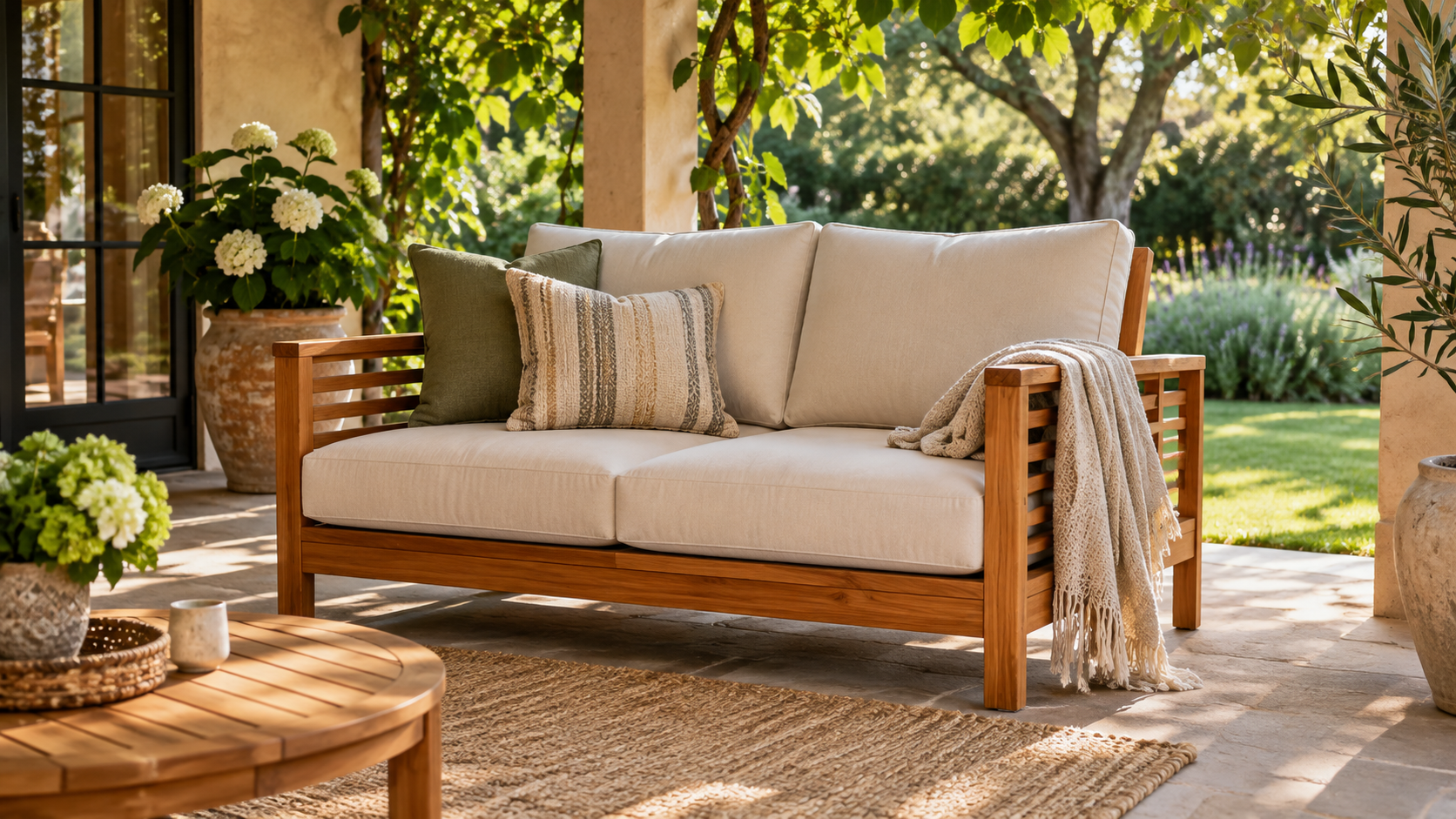
Why teak patio sofas attract buyers
Teak patio sofas combine a warm wood look with upholstered cushions for outdoor lounging. Teak can be left to weather or maintained to retain a warmer appearance, but the exact care depends on the furniture maker and finish. The word “teak” in a product title does not always mean every frame component is solid teak; listings can include teak-colored finishes, acacia alternatives, or wood accents. Start by confirming the species, grade, construction, and parts included. Then assess the patio dimensions, cushion support, exposure, delivery, and maintenance. A teak frame may be a long-term furniture investment, but comfort and value still come from the full product rather than the wood name alone.
Confirm the wood species and grade
Read the materials section carefully. A listing may call an item “teak” while describing solid teak, teak veneer, teak-finish acacia, or a mix of woods and metal. These materials differ in cost, maintenance, weight, and appearance. Ask which components are solid teak: arms, legs, slats, rails, or only visible accents. If the listing gives a grade, ask how the seller defines it and whether documentation is available. Product photos can make different species look similar under lighting. Save the exact specification for the selected option, especially when color or frame material changes by variation. Do not infer wood species from a shade name such as “teak” or “natural.”
Frame construction matters
Inspect the frame independently of the cushions. Look for joint details, hardware, slat spacing, arm construction, and feet. A sofa should sit level and remain stable when someone sits at the edge. Ask whether the frame is glued, bolted, or assembled with other connectors and whether replacement hardware is available. Outdoor exposure can loosen or wear some connections over time, so follow the maker’s inspection and maintenance instructions. If the product page lacks a clear diagram, request one. A solid wood frame can still be poorly constructed, and a mixed-material frame can be well designed. Compare the actual build, warranty, and service support rather than assuming teak alone guarantees quality.
Choose the right sofa size
Measure the patio and the sofa’s full footprint before ordering. Record the width, depth, back height, and seat height, and include the coffee table, side tables, planters, and walking paths. A teak loveseat can work on a balcony or smaller deck; a three-seat sofa or sectional may suit a larger lounge. Leave enough room to open doors and reach grills or garden gates. Use painter’s tape to map the furniture footprint and test the layout. Check delivery access too: teak frames may be heavy, and large cartons can be difficult to turn through a gate or stairwell. Exact dimensions matter more than marketing labels such as “compact patio sofa.”
Comfort depends on cushions too
Teak describes the frame material, not the seating feel. Compare cushion thickness, seat depth, back angle, firmness, and cover fabric. Ask whether cushions are included, removable, reversible, or replaceable. A deep seat may be comfortable for lounging but may not suit shorter users without a lumbar pillow. A firmer cushion can feel more supportive for conversation. Review the manufacturer’s recommendation for storing cushions during heavy rain or winter. Check whether the cushion covers detach and how they should be cleaned. If possible, test the sofa in person or compare its seat dimensions with an outdoor sofa you already like.
A teak loveseat listing to compare

An Amazon Creators API result for a Hives & Honey 57-inch outdoor loveseat describes a Grade-A teak patio couch with cushions and a deep-seat design. Verify the selected listing’s exact material, cushion fabric, dimensions, finish, included pieces, and assembly before considering it. A product title is not a substitute for a material specification. Measure the available patio space and compare the seat height and depth with your preferences. Treat the product as a candidate for specification comparison rather than a hands-on recommendation.
Another solid teak sofa example

A second API result describes an outdoor loveseat with a solid teak frame and five-inch cushions in several color variations. Confirm that the selected option retains the same frame material and cushion dimensions; marketplace variations can differ. Check whether the cushions are included, what cover material they use, and whether the seller provides replacement cushions. A thick cushion may look generous but still feel firm or soft depending on the fill. Review the frame finish, care directions, packaging, and warranty terms. The listing can help compare a solid teak look with cushion configuration, but verify every detail on the current product page.
Teak, acacia, and teak finish are not the same
Acacia and teak are separate wood species, while a teak finish is a color or surface treatment. A listing may use a teak tone to describe another wood, so check the material field and construction details. Do not assume that care instructions for solid teak apply to acacia or painted finishes. Compare the seller’s documentation and warranty for the exact product. If sustainability certification or source matters to you, ask for documentation rather than relying on a broad claim. Wood species, finish, and manufacturing quality all affect what you should expect from the furniture.
Outdoor exposure and placement
Consider whether the sofa sits under a roof, in full sun, near sprinklers, or in a windy area. Outdoor wood furniture may age differently under different exposure and local climates. Follow the manufacturer’s placement and care guidance. Keep the frame away from persistently wet ground, and do not let covers trap moisture around the wood. If the patio is exposed to strong weather, plan how the cushions and frame will be protected or stored. A teak sofa is still outdoor furniture that benefits from thoughtful placement and routine checks.
Weathering and the natural color change
Outdoor teak may change appearance as it ages. Some owners prefer a weathered gray patina, while others want to maintain a golden or brown tone. The finish and the manufacturer’s care instructions determine how to pursue that look. Avoid applying oil, sealers, or cleaners without checking the maker’s directions for the exact furniture. Some brands recommend treatment while others advise a different routine. If preserving color matters, find out what maintenance is required before purchase and whether it needs to be repeated seasonally. If you prefer natural weathering, confirm that the product is intended to age that way and understand how color variation may develop.
Care should follow the furniture maker
Teak care advice can vary, so use the furniture maker’s instructions first. As one example, Carl Hansen outdoor teak care guidance recommends regular cleaning and describes treatment options for maintaining color. Kettler teak care page gives its own guidance, including a waiting period for new furniture. Those instructions are brand-specific, not universal rules for every sofa. Check the manual supplied with your exact product before using oil, cleaner, or protector. A suitable routine depends on the wood, finish, climate, and appearance you want.
Cushion fabric and maintenance
Outdoor cushions are exposed to sun, pollen, rain, food, and dust. Compare cover fabric, cleaning codes, colorfastness information, and whether covers can be replaced. Do not assume a cushion described as “water resistant” can remain outdoors indefinitely. Follow the exact product care guide and let cushions dry fully before storage. If the sofa is used near a pool, consider how wet clothing and splash exposure affect the seating. A cover can help when furniture is unused, but it should fit properly and not trap moisture. Keep replacement cushion dimensions and fabric color in your purchase records.
Weight, movement, and delivery
Teak frames may be heavier than some aluminum or resin alternatives. Check the product weight, package sizes, and number of boxes before ordering. Measure the route to the patio, including gates, steps, narrow turns, and elevators. Confirm whether assembly is required and how many people the seller recommends. Decide whether the sofa needs to move seasonally for cleaning or storage. If it will stay in one place, verify that the surface is level and the feet are suitable for the deck or patio material. Delivery cost and placement are part of the total purchase price, especially for a large frame.
Style the sofa with other outdoor furniture
Teak’s warm tone pairs with neutral cushions, woven textures, metal accents, and garden greenery. Repeat one or two materials in a coffee table or side table for a coordinated look. If combining teak with another wood, compare undertones and finishes rather than trying to match every piece exactly. Choose a cushion color that works with the deck, siding, and nearby plants. A lighter fabric may make the patio feel airy, while a darker color can create contrast. Swatches viewed outdoors are more reliable than color on a screen. Leave enough visual space around the sofa so the natural frame remains a feature.
Budget and total ownership cost
Compare the complete purchase cost: sofa, cushions, delivery, assembly, care products recommended by the maker, covers, and possible replacement cushions. A higher-priced teak sofa may offer a different frame construction or warranty, but price alone cannot establish quality. Check whether cushions are included and whether the seller charges separately for a coffee table or chairs shown in photos. Ask about replacement parts and lead time. Compare models with similar dimensions and materials. A lower initial price may be attractive, but the full cost depends on how the product is configured and maintained.
Warranties and documentation
Read the frame warranty and cushion or fabric warranty separately. Confirm the warranty period, exclusions, requirements for cleaning and storage, and where to submit a claim. Keep the invoice, model number, material description, and assembly manual. Ask whether commercial or rental use changes coverage. A warranty is a written promise with defined terms, not a general guarantee that the sofa will never weather or require maintenance. If the product page gives only a short summary, request the full document before purchase. Compare service availability as well as the stated warranty length.
Common buying mistakes
Do not assume every “teak” patio sofa is made entirely of solid teak. Do not mistake an acacia frame with teak-colored finish for teak. Avoid ordering before checking whether cushions are included and whether the selected color changes the product. Do not apply teak oil or sealant without following instructions for the exact item. Check dimensions, delivery route, assembly, weather exposure, and replacement parts. Avoid choosing a sofa from a staged photo without confirming the listed configuration. These checks help separate actual material value from a product title and prevent surprises after delivery.
Questions to ask before ordering
Ask which wood species and components are used, whether the frame is solid teak, what grade or certification applies, and how joints are constructed. Confirm cushion material, seat measurements, included pieces, assembly, weight, package dimensions, and warranty. Ask how the maker recommends cleaning and whether the frame should be oiled, left untreated, or protected another way. Confirm whether cushions can be replaced and whether the exact fabric remains available. Get answers in writing if the details affect your purchase decision. Clear specifications make it easier to compare products and maintain the sofa correctly.
Frequently asked questions
Does teak patio furniture need oil? It depends on the manufacturer instructions and the appearance you want. Do not use a generic routine without checking the exact product. Will teak turn gray outdoors? Outdoor exposure can change the wood’s appearance; review the maker’s guidance and decide whether you want to preserve a warmer tone or allow weathering. Is acacia the same as teak? No. Confirm the stated wood species and finish. Are cushions included? Listing configurations vary, so check the selected option and package contents. How do I maintain the cushions? Follow their specific cleaning and storage directions.
Final checklist
Confirm species, frame construction, dimensions, cushion contents, and selected finish. Measure the patio and delivery route. Decide how much exposure the sofa will receive and whether cushions need seasonal storage. Read the maker’s care and warranty instructions before applying products. Check assembly, return freight, and replacement parts. Compare the sofa with nearby tables and keep clear paths around it. A teak patio sofa is a better fit when the frame, cushion comfort, maintenance routine, and patio layout all match your household’s needs.
Related guides: Sunbrella patio sofa fabric guide, sunroom materials and care, and Lawn & Garden.
Certain content on this site comes from Amazon and may change. Amazon product images and listing details are supplied through Amazon Creators API. Confirm the exact option, seller, dimensions, materials, and current terms before purchase.
Understand unfinished and finished teak
Some teak furniture is sold untreated so the wood can weather naturally; other pieces may have an oil, sealer, or factory finish. Ask what has been applied and whether it should be maintained or left alone. A finish can affect color and the kind of cleaning that is appropriate. Do not sand or apply a coating unless the manufacturer guidance permits it. If buying a set, check whether the sofa frame and matching table use the same finish. A difference may be intentional, but it can become more noticeable outdoors as each surface weathers. Keep the care instructions with the furniture so future cleaning does not undo a factory treatment.
Decide how much upkeep you want
Some owners are comfortable cleaning teak and allowing the color to change, while others prefer a regular routine to keep a warmer tone. Consider how often you are willing to brush off debris, clean the frame, cover the sofa, and store cushions. If the furniture is in a vacation home or a patio that is hard to access, choose a setup that can tolerate a simpler routine according to the maker. A finish that needs periodic attention may be worthwhile if you want a particular look, but it also creates work. Read the product instructions before buying so the appearance you expect matches the maintenance you are prepared to do.
Check sustainability and sourcing claims
If responsible sourcing matters to you, ask what documentation accompanies the wood claim. Look for a specific chain-of-custody or forestry certification and verify what product or component it covers. Terms such as “eco-friendly” or “sustainably sourced” are broad and should be supported by details. A product listing may identify a country of origin or certification, but confirm that the statement applies to the exact model. Keep certification separate from durability: sourcing credentials do not establish how the sofa is assembled or how it will feel. The material and sourcing details are useful parts of comparison, but they do not replace dimensions, construction, and care information.
Compare seat proportions with your household
Outdoor sofas can have deeper seats than indoor couches. Check seat height and usable depth, not only total dimensions. A deep seat may suit reclining with a cushion behind the back, while a moderate depth can make upright conversation easier. Consider the arm height and the distance between arms for the people who regularly use the sofa. If several guests will share it, verify the listed seating capacity and leave room for a table. Cushions may compress after repeated use, so ask whether replacement inserts are available. A teak frame can remain a visual feature for years, but a poor seat fit can make the sofa uncomfortable from the first day.
Plan for seasonal use
Think about how the patio will be used in cold, windy, rainy, and dry periods. A cover may help protect furniture, but follow the makers instructions and avoid trapping moisture. Remove or store cushions as recommended when the patio is unused for a long time. Inspect the feet and joints after winter and before a busy outdoor season. If the sofa is near a pool, check how splashes affect cushion care and frame placement. Seasonal planning helps keep the sofa ready without forcing a rushed storage decision when weather changes.
What to compare in product listings
For each candidate, record species, frame material, width, depth, seat height, cushion count, fabric, assembly, total weight, delivery package size, warranty, and care instructions. If the listing title says “teak” but the materials field says another wood, treat that as a detail to resolve before ordering. Compare items with similar configurations and ask about missing facts. Do not rank models by star ratings alone; reviews may refer to other colors or sets. A written comparison helps separate differences in the frame from differences in cushions and accessories. Keep the record with the receipt so you can quickly find care or warranty information later.
Keep teak away from trapped moisture
Even outdoor furniture benefits from airflow and a level, well-drained location. Avoid leaving the frame where water collects around the feet or where a tight cover holds moisture against the wood. Follow the product instructions for cleaning and drying after wet weather. If the patio is exposed to snow or long wet seasons, ask the maker whether the sofa should be moved to a sheltered location. These placement choices help reduce avoidable wear and make seasonal maintenance more predictable. Check the surface beneath the sofa as well, since uneven pavers can cause a frame to rock or place stress on joints.
Take a few photographs of the assembled sofa, its care label, and any finish variation when it arrives. Record the seller, model, and cushion details with the receipt. This makes future maintenance, replacement-part orders, and warranty questions easier to handle.