As an Amazon Associate, Daily Home Decorating earns from qualifying purchases. Product information and images may change; verify current materials, dimensions, seller, care instructions, and terms before buying.
The best sofas for a sunroom depend on sunlight, humidity, temperature changes, and how the room is used. Compare indoor upholstery with outdoor-rated cushions, plan window access and ventilation, and check materials and maintenance before choosing a loveseat or larger sofa.

What makes a good sunroom sofa
A sunroom sofa has to work with more than the room’s style. Sunrooms often receive stronger sunlight, bigger temperature swings, and more humidity than a typical living room. The best choice depends on whether the space is fully climate-controlled, how often windows are opened, and whether the sofa will sit in direct sun. Indoor upholstery may be comfortable and refined but need more protection from fading and damp conditions. Outdoor-rated furniture may be easier to maintain but can feel firmer or visually casual. Start by understanding the room’s conditions and how people use it. A reading nook may need one loveseat and a lamp, while an entertaining sunroom may need a longer sofa and durable cushions.
Decide whether the sunroom is indoor or semi-outdoor
A sealed, insulated sunroom with stable heating and cooling can often use indoor furniture, provided direct sunlight is managed. A three-season porch or room with frequent open windows may need materials better suited to temperature variation and moisture. Observe how hot the room gets, whether condensation forms, and whether rain can enter when windows are open. Do not assume a “sunroom” is protected just because it has windows. Check the home’s ventilation and humidity patterns over several days. If conditions are variable, follow furniture-maker guidance for the intended environment and avoid placing sensitive wood or fabric near leaks or unsealed openings. This first distinction guides nearly every later choice.
Measure the layout and window paths
Measure the room, doorways, windows, and circulation routes before choosing a sofa. Include the space needed to open windows, operate blinds, pull curtains, reach screens, and clean the glass. A sofa placed directly in front of a window can make ventilation difficult and may trap heat behind its back. Mark the complete sofa footprint with tape and include side tables, lamps, and ottomans. Leave a clear route to the door and avoid blocking vents or radiators. If the sunroom is narrow, a loveseat or a sofa with visible legs may keep the space feeling open. Compare the product’s outer dimensions and seat depth rather than relying on a “small space” label.
Sunlight and upholstery fading
Direct sun can fade upholstery and create uneven color changes, especially when one cushion receives light for much of the day. Ask the manufacturer about lightfastness and placement recommendations for the selected material. Use shades, curtains, or UV-filtering window treatments when appropriate, and rotate cushions if the design allows it. Sample fabric in the sunroom rather than judging color under store lighting. Lighter colors may show less fading in some cases but can reveal dirt; darker colors may absorb more heat. A textured fabric may disguise minor shading yet collect dust. The right choice balances appearance, maintenance, and actual exposure rather than assuming a specific color is fade-proof.
Indoor upholstery or outdoor-rated cushions
Indoor upholstery generally offers a wide range of textures and softer seating, while outdoor-rated fabrics and cushion covers are designed for more demanding exposure. A sunroom’s conditions may fall between the two. Check the furniture’s care label and ask whether the fabric is suitable for direct sun, humidity, and open-window airflow. “Weather-resistant” does not mean waterproof or appropriate for prolonged wet conditions. Outdoor cushions may still need to be stored during storms or winter, depending on the maker’s instructions. Consider how the fabric feels against bare skin and whether removable covers can be cleaned at home. Choose based on the sunroom’s real climate and the household’s willingness to maintain the furniture.
Frame materials and humidity
Wood, metal, and synthetic wicker each respond differently to temperature and humidity. Solid wood can add warmth but may expand or contract under changing conditions. Metal can feel sturdy, though coatings and hardware should be appropriate for the environment. Synthetic wicker can be easier to wipe clean than natural fibers, but check the frame beneath it and the manufacturer’s use guidance. Avoid assuming all rattan or wicker is suitable for a humid room. Keep furniture away from condensation, leaks, and heating equipment. Ask about protective finishes, cleaning, and storage if the room is not climate-controlled. A sound frame and appropriate placement help a sofa last longer than choosing a material based on appearance alone.
Cushion construction and comfort
Sunroom cushions should feel comfortable for the time people actually spend there. Compare seat depth, height, firmness, back angle, and arm support. Removable cushions can be brought inside or rotated, but check their size and whether covers can be cleaned. Foam and fiber fills have different feel and recovery; ask about the construction and care instructions. Outdoor cushions may require more regular drying after humidity or cleaning. If the sofa is used for reading, ensure the back provides enough support; if it is used for lounging, check the depth and whether an ottoman fits. Test the sofa in person or review return options so the choice is not based only on a staged image.
A wicker three-seat sofa example

An API search returned a Rattaner three-seat patio wicker sofa listing with a steel frame, deep seat, high back, and cushions. It may be a useful comparison point for a sunroom that behaves more like a covered porch, but verify whether its materials and care directions suit the specific room. Check the full width and depth, cushion fabric, frame finish, and whether a cover is recommended when not in use. Wicker appearance alone does not establish weather resistance. Compare the listed dimensions with the planned seating area and make sure windows remain accessible. The listing should be treated as a candidate to evaluate, not as a hands-on recommendation.
A wood-frame outdoor sofa option

A Signature Design by Ashley outdoor sofa surfaced through the Creators API with a eucalyptus finish and stain-resistant fabric described in the title. Those details may be relevant when comparing materials for a bright room, but check the manufacturer’s actual placement and care recommendations. “Outdoor” products can still need protection from prolonged direct sun, moisture, or temperature extremes. Confirm the selected fabric and frame option, current dimensions, assembly, and cushion maintenance. A wood frame can provide a warmer look than metal or wicker, but the room’s humidity and sunlight remain important. Use the product page to compare specifications and care rather than assuming its category guarantees suitability.
A compact loveseat for a smaller room
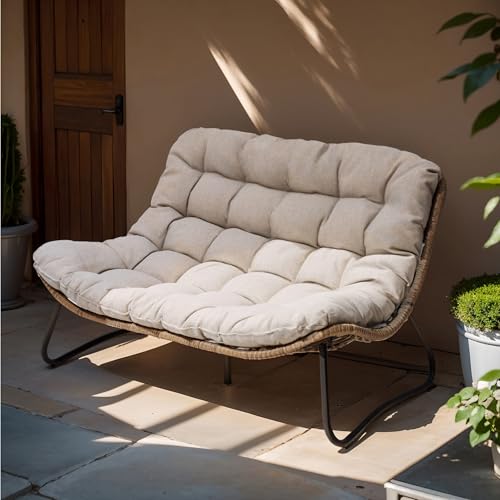
A two-seat boho rattan loveseat appears in the API results as another option for a compact sunroom seating area. Before choosing it, verify the frame material, cushion thickness, seat height, and intended environment on the current listing. A smaller sofa can preserve a path to windows and make a room feel open, but it may not provide enough space for a household that uses the sunroom together. Add the footprint of a side table or ottoman to your layout. Consider whether the loveseat’s style fits the adjoining room, since open-plan sightlines can make the sunroom furniture part of the main interior palette.
Comfort versus easy maintenance
A sunroom sofa should be easy enough to maintain that the household will actually protect it. Removable covers can help, but only if the care label permits washing and the covers fit again after cleaning. A furniture cover can protect the piece when the room is unused, but it may be inconvenient if windows are opened daily. Smooth fabrics can be easier to wipe, though they may feel less soft. Textures add warmth but may hold pollen or dust brought in through open windows. Think through the weekly routine: vacuuming, wiping, airing cushions, and moving them out of direct sun. Choose a level of maintenance that fits the way the sunroom is used.
Manage heat and ventilation
Large windows can make a sunroom significantly warmer than the rest of the home. Keep sofa cushions away from heaters, direct hot airflow, and window areas that become excessively warm. Leave room for air to circulate and avoid placing furniture over vents. If the room overheats, window coverings and ventilation may matter more than upholstery choice alone. Check the sofa manufacturer’s guidance for acceptable temperature and placement. Do not store cushions in a damp, enclosed space after cleaning; let them dry fully according to instructions. A comfortable sunroom depends on the room’s climate as well as on the furniture.
Keep walkways and window access open
A sunroom often serves as a transition to a garden, deck, or yard. The sofa should not block doors or make it hard to reach window locks and screens. Leave an unobstructed path from the entrance to the windows and any exterior door. A low-profile sofa can preserve views, while a high back may interrupt the connection to the outdoors. Measure arm width and side-table placement because small pieces can create pinch points. If children or older adults use the room, keep loose cords and rugs out of the route. Layout matters as much as the sofa itself; a slightly smaller piece may make the whole room more useful.
Style the sofa with rugs and tables
Natural materials, pale colors, and leafy accents often complement a sunroom, but the overall palette should connect to nearby rooms. A rug can define the seating area and make it feel warmer underfoot. Confirm that the rug is suitable for the room’s sunlight and humidity, and choose a size that allows the sofa’s front legs to sit securely. A small side table keeps drinks and books reachable without crowding the windows. Use decor that can tolerate the room’s conditions, and avoid placing fragile objects in direct sun. A restrained arrangement makes the outdoor view part of the decoration rather than competing with it.
Prepare a three-season sunroom
A three-season sunroom may not have the same temperature and humidity control as the main home. Check whether furniture warranties restrict use in unheated or exposed spaces. If conditions change seasonally, removable cushions can be stored indoors during the harshest months. Covers may reduce dust and light exposure, but only use them when the furniture is dry. Allow airflow around stored pieces and avoid trapping moisture. Make a winter plan before choosing large furniture that is difficult to move. The room can still be welcoming, but its furniture must be selected for the climate it actually experiences rather than for its appearance on a pleasant spring day.
Delivery and assembly in a glass room
Sunrooms can have narrow doors, fragile glass, and tight turns. Measure the delivery route, including the room entrance, and compare it with both the sofa and package dimensions. Ask whether legs or arms detach and how many boxes arrive. Protect flooring and window frames during assembly. Check the assembly instructions and arrange help if a piece is heavy. If the sofa arrives compressed, allow cushions to expand as directed before judging their shape. Inspect the upholstery and frame for damage before discarding packaging. Confirm delivery placement and return terms in advance, especially if the room opens only through a patio door or narrow hallway.
Avoid common sunroom sofa mistakes
Do not assume a sofa is sunroom-ready because the listing uses a plant-filled photo. Check intended-use guidance, upholstery care, and exposure limits. Do not place a sofa where it blocks windows, vents, or a patio door. Avoid assuming that outdoor-rated cushions can stay wet or in direct sun indefinitely. Do not overlook package access or seasonal storage. Finally, do not buy a piece based only on color viewed on a screen; test a fabric swatch in the actual light. These checks prevent style decisions from creating comfort, delivery, or maintenance problems after the furniture arrives.
Questions to ask before buying
Ask whether the sofa is intended for indoor, outdoor, or covered-porch use. Confirm the fabric’s light exposure and cleaning guidance, the frame material and finish, cushion fill, and whether covers are removable. Check dimensions, package count, assembly, storage instructions, and warranty limitations. Ask how to protect the furniture during seasonal temperature changes and what to do if cushions become damp. Verify delivery access and return costs. If a seller cannot provide clear care information, compare another model with better documentation. Exact instructions are more useful than a broad “all-weather” phrase.
Frequently asked questions
Can I use an indoor sofa in a sunroom? Sometimes, if the room is climate-controlled and direct sunlight is managed; check the maker’s guidance. Is outdoor furniture always better? No. It may be easier to maintain but can feel firmer or more casual. Will sunlight fade a sofa? It can, depending on the fabric, exposure, and color. Use shades and rotate cushions where possible. Can wicker furniture go in a sunroom? It depends on whether it is natural or synthetic and on the room’s humidity and exposure. Should cushions be stored? Follow the product instructions, especially in a three-season room. What is the best layout? One that preserves window access, ventilation, and a clear route through the room.
Final checklist
Decide whether the room is climate-controlled or exposed to seasonal changes. Measure the sofa footprint, delivery route, windows, doors, vents, and paths. Compare upholstery care, sunlight guidance, frame materials, cushion comfort, and storage needs. Choose a size that leaves room for window operation and circulation. Verify delivery, assembly, warranty, and return terms. Test colors in the actual room and plan how to protect or store cushions when needed. A suitable sunroom sofa should make the room comfortable and inviting while respecting its light, temperature, and humidity.
Make the sunroom usable in every season
Think about how the room works in winter, summer, and shoulder seasons, not only on a mild day. A sofa can look perfect when the windows are open but become uncomfortable if afternoon sun overheats the cushions. Conversely, an outdoor-style set may feel too firm when the room is used for long reading sessions. Plan for shades, ventilation, and cushion storage as part of the furniture decision. If the sunroom connects to a living room, consider how the sofa looks from both spaces. A deliberate choice can turn a bright but underused room into a comfortable extension of the home.
Related reading: easy-care sofa materials, curved sofa layout guide, and Lawn & Garden.
Certain content on this site comes from Amazon and may change. Amazon product images and listing details are supplied through Amazon Creators API. Confirm the exact option, seller, dimensions, materials, and current terms before purchase.
Account for pollen, dust, and garden traffic
A sunroom connected to a garden can collect pollen, soil, and dust more quickly than a closed living room. Consider how people enter the space and whether shoes, pets, or gardening supplies pass beside the sofa. Tightly woven upholstery and removable cushion covers may simplify routine cleaning, but always follow the care label. A washable cover is useful only if the manufacturer permits laundering and the cover can be returned to the cushion without stretching. Keep a small mat near the exterior door and vacuum the seating area regularly. If pets use the room, test how easily fur lifts from the fabric and whether claws can catch on the weave. These practical details help the sofa remain comfortable between deeper cleanings.
Use shade as part of the furniture plan
Window treatments can protect upholstery while keeping the room bright. Consider how shades or curtains move, where fabric stacks, and whether the sofa will interfere with their operation. Sheer coverings reduce glare but may not block much heat; lined shades can offer more control, depending on the product and installation. Compare several times of day because direct sun shifts across the room. If a sofa sits in the strongest beam, rotate cushions and use a cover when the space is not in use, following the furniture care instructions. Planning shade together with sofa placement can reduce uneven fading and improve comfort without turning the sunroom into a dark space.
Choose a setup that can adapt
Sunroom uses can change with the seasons. A small loveseat and movable chairs may be easier to rearrange than a fixed sectional when plants, guests, or outdoor access need more room. Modular furniture can offer flexibility if its connectors and covers are made for repeated changes. Confirm each component weight and dimensions before assuming it will be easy to move. A lightweight chair or table should not be used as a support surface, and large modules should be shifted with help when necessary. Flexible layouts make it easier to respond to changing light, gatherings, and maintenance while preserving the room connection to the outdoors.
Plan for seasonal storage
If cushions or the entire sofa need to move indoors during winter, consider storage before choosing a large set. Measure the closet, shed, or spare room where pieces will be kept, and check whether cushions must be stored flat or upright. Keep them dry and ventilated according to the care directions. A removable cushion is easier to store than a built-in one, but the frame may still need protection. If the sunroom remains in use all year, choose a configuration that does not require seasonal removal. Practical storage planning keeps the room ready for changing weather and can prevent rushed decisions when temperatures drop.
Before checkout, compare the measurements and care notes for the exact finish and configuration in the cart. Listings can group several variants together, and photographs may show a larger or differently colored option. Recheck the final selection, seller, delivery date, and return conditions.