Affiliate disclosure: DailyHomeDecorating.com may earn from qualifying purchases through links in this article. As an Amazon Associate, this site earns from qualifying purchases. Product examples and images below were retrieved through Amazon Creators API; we have not physically tested these sofas. Confirm the exact configuration, module count, dimensions, fabric, seller, delivery, and return terms on the live listing.
Pit sofas are low, lounge-focused modular arrangements that create a broad seating zone on the existing floor. They are different from architectural conversation pits recessed into a floor. Product listings use “pit sofa,” “pit sectional,” and “conversation pit couch” inconsistently, so compare the actual modules, layout diagram, seat depth, and connectors before deciding.
This guide explains how to plan a pit layout, measure its footprint, compare modules, assess upholstery and cushions, and check delivery and ownership costs. Amazon Creator API examples are included as starting points, not tested recommendations. Verify the current listing and exact selected configuration before ordering.
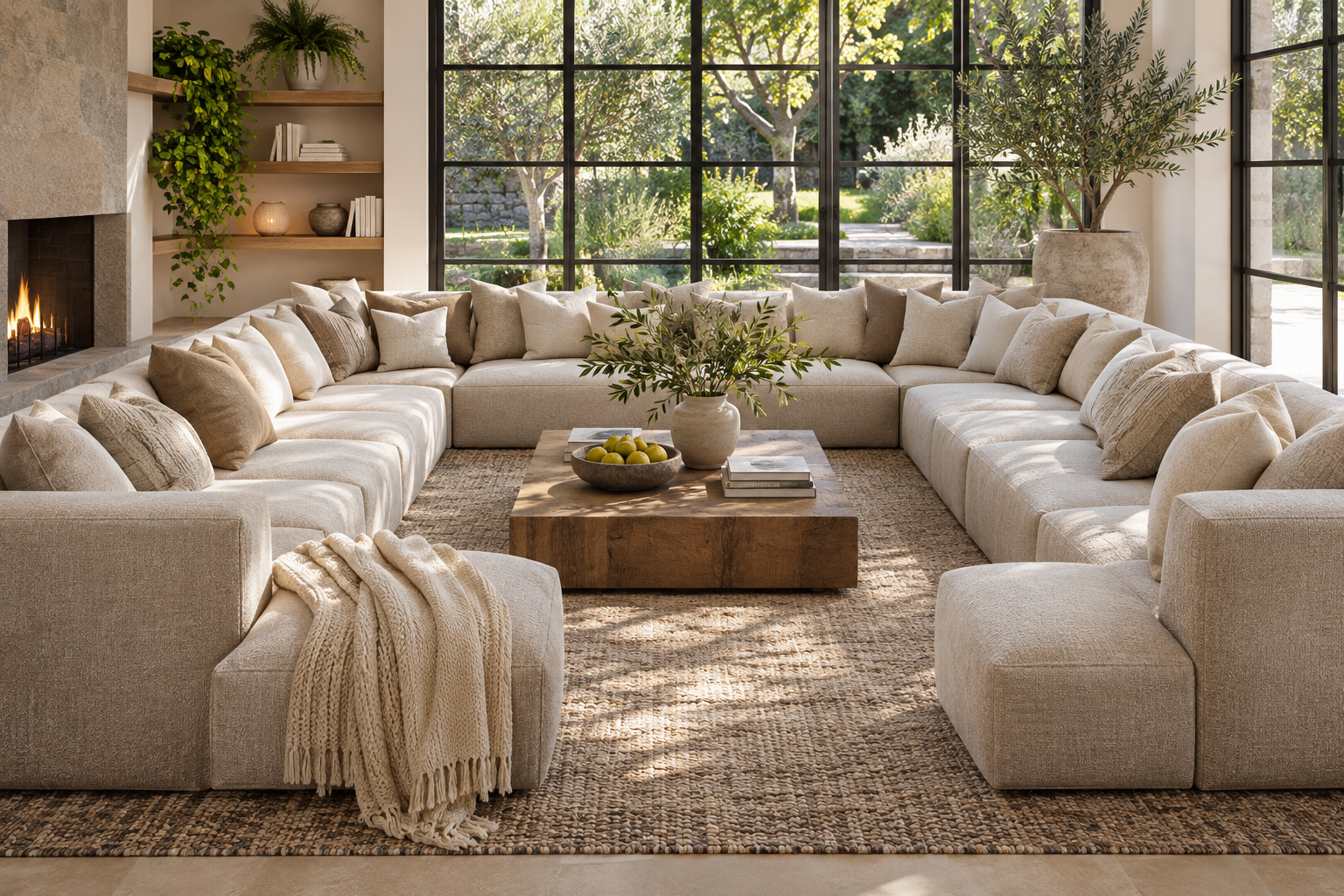
What a pit sofa is
A pit sofa is a low, lounge-focused modular seating arrangement that creates a broad, enclosed-feeling seating area. Unlike a traditional sunken conversation pit built into a floor, a pit-style sofa sits on the existing floor and uses deep seats, corner modules, and ottomans to form a central lounging zone. Retailers may use “pit sectional,” “pit couch,” or “conversation pit sofa” for similar designs.
The label is not standardized, so inspect the piece count and layout diagram. Some products include independent modules that can form a U-shape or square; others are ordinary deep sectionals marketed with pit language. Check how the pieces connect and whether all cushions and ottomans shown are included in the selected configuration.
Plan the footprint before shopping
Pit layouts use more floor area than a straight sofa because they extend into the room on several sides. Measure the entire open space, mark doors, traffic paths, windows, and nearby furniture, then tape the proposed footprint on the floor. Include side tables and space to approach each seat. A configuration that fits wall-to-wall may still block everyday movement.
Check the central opening and decide how it will be used. Some arrangements leave an open central area; others fill it with an ottoman or cushion platform. Measure the distance from the center to each seat and confirm that people can reach the middle without climbing over cushions. Do not rely on a staged photo to judge scale.
Count modules and understand the layout
Ask for a top-down diagram and a complete list of modules: armless seats, corners, chaises, ottomans, backs, and arms. The advertised seat count may not equal the number of independent modules. Verify the exact configuration and whether pieces can be rearranged. A modular product may have a limited set of compatible orientations despite broad listing language.
Check the meaning of left-facing and right-facing, if a chaise is included. Ask whether the set can form a closed U, an L, or separate chairs, and what pieces create the center. If you add modules later, confirm that the same product line and upholstery will remain available and whether connectors match.
Consider the low profile
Many pit sofas have low seats and backs to create a relaxed, lounge-first look. This can make a room feel open above the furniture but may be less comfortable for upright conversation or harder for some people to rise from. Sit on a similar model if possible and consider the height of the intended users.
Compare seat height with cushion compression and back height with the seated position. A large pillow may provide more support but change the usable depth. There is no universal fit, so prioritize the people who use the sofa daily. If mobility or health concerns affect sitting, ask a qualified professional about functional requirements.
Choose seat depth for lounging
Deep seats create room to curl up or stretch out, which is a defining feature of many pit designs. However, extra depth can make upright sitting awkward for shorter users. Check usable depth with the back cushions in place rather than relying on the overall frame depth. Ask whether back pillows are included and whether they can be positioned securely.
If the sofa will be shared by people with different preferences, consider a movable ottoman or separate chair. Loose cushions may adjust the fit but can slide during use. Test the seat for several minutes and try getting up comfortably. A broad lounging area is useful only if it still works for daily sitting.
Connectors and cushion stability
Modular pieces can shift apart on smooth floors unless they use reliable connectors or another retention system. Ask how modules attach, whether connectors are included, and if the system prevents gaps during ordinary use. Read reviews for the same set and configuration. A deep arrangement can feel disjointed if the pieces move whenever people sit down.
Check whether seat cushions have grip fabric, straps, or hook-and-loop fasteners. Loose back pillows may need repositioning. If a set relies mainly on weight to stay in place, consider your flooring and how actively the sofa will be used. Ask the seller whether furniture pads or connectors are recommended and whether they affect the warranty.
Frame and cushion construction
Ask about frame materials, joinery, suspension, cushion fill, and weight guidance for the exact modules. A product title that says “cloud” or “memory foam” does not explain the full structure. Find out whether cushions use foam only or a layered system, and whether covers or inserts can be replaced. Compare details rather than assuming the label guarantees a particular feel.
In a showroom, sit on different sections and notice whether the support feels consistent. Check for rocking, uneven seams, or module gaps. Do not use unsafe stress tests or exceed manufacturer limits. A low profile can hide the base, so ask how the frame and legs are supported and whether the bottom is protected from floor moisture.
Fabric, covers, and cleaning
Large pit arrangements contain more upholstery area and more seams than a compact sofa. Ask for fiber content, cleaning code, and care instructions for every cover. Removable covers can simplify maintenance only if the care label allows your intended cleaning method. A zippered cushion cover is not automatically machine washable.
If children or pets use the seating area, consider lint, spills, and snagging. Check whether covers are sold separately and whether the pattern or dye lot can vary between modules. Ask how to order a replacement cover for one section. The cleaning plan should be practical for the whole arrangement, not just one cushion.
Choose a fabric and color for a large area
A pit sofa occupies a broad visual footprint, so color and texture can strongly influence the room. A neutral shade can keep the layout calm; a saturated color makes the sofa a central feature. Order a swatch and view it against the rug, flooring, and walls at different times of day. The screen image may not represent the delivered fabric accurately.
Textured fabrics can add depth, but consider how they collect lint and how they respond to brushing. Check colorfastness, sunlight exposure, and care instructions. If modules arrive in separate boxes, ask whether the upholstery is from the same dye lot. Small variations may be visible when many pieces sit side by side.
Room circulation and safety
Leave clear routes through the room and around the outside of the pit arrangement. Do not block exits, heaters, vents, or frequently used doors. Make sure the open center does not create an awkward step-over point for children or older adults. If the center is covered with an ottoman, ensure it is stable and does not slide unexpectedly.
Plan reach to side tables, lamps, and outlets without placing cords across walkways. If the sofa floats, inspect the back finish and leave enough space behind it. A low back can preserve sightlines but may not support every posture. Consider how guests enter and leave the seating area from different sides.
Delivery and assembly
A pit sectional may arrive as many boxes or large pieces. Ask for the number of packages, weights, dimensions, assembly steps, and whether two people are required. Measure every doorway, stair turn, elevator, and landing. Multiple boxes can ease access but still require room for assembly and cushion expansion.
Confirm whether delivery includes room placement, assembly, debris removal, and packaging disposal. Check building rules and reserve an elevator if needed. Unpack the pieces in a clear area, identify modules before arranging them, and follow the instructions for connectors. Keep hardware and packaging until all pieces are accounted for.
Budget for the complete configuration
The headline price may apply to a smaller module set rather than the full arrangement shown. Verify how many seats, corners, ottomans, and backs are included. Add tax, delivery, assembly, fabric upgrades, and any additional modules. Compare the delivered total for configurations that create the same layout, not just the base price.
Some sets use many small pieces and may require additional accessories to complete a pit shape. Ask whether the central ottoman, armrests, and pillows are included. Read the return policy carefully; returning several large modules may be more complicated than returning a single sofa. Save the exact configuration and price at checkout.
Compare modular flexibility with fixed sectionals
A modular pit can be rearranged, but flexibility depends on compatible modules and connectors. Ask how many layouts the manufacturer supports and whether each arrangement has finished sides and backs. Separate pieces can be useful when moving or changing the room, yet they may require more assembly and may drift during use.
A fixed sectional can be more stable and simpler to place if the room layout is settled. It may be difficult to reconfigure or move through a tight home. Compare the benefits you will actually use. Do not pay a modular premium unless the sofa’s pieces can form the layouts you want.
Product examples from Amazon
The cards below were returned by Amazon Creators API searches for pit-style and modular sofas. We have not physically tested these models. A title mentioning “conversation pit” may describe a particular module set, and listing variations can change. Verify the exact piece count, dimensions, configuration, fabric, seller, delivery, and return terms on the live listing.
Use the product cards to inspect different approaches to deep modular seating, not as a ranking. Check whether the listing shows a true pit arrangement and what pieces are included. If module dimensions or connectors are unclear, contact the seller before ordering. Images and availability can change after publication.

Conversation Pit Cloud Sectional, Oversized Deep Seat, Luxe Chenille | Fully Removable Washable Covers, Memory Foam Seat Cushions, Storage Ottoman, Non-toxic Premium Fabric
Verify the full module list, footprint, connectors, and selected layout.

Dune Modular Sectional Sofa, Royal Blue Chenille Cloud Couch, 9 Pieces Low Profile Floor Sofa Set, DIY Convertible U Shaped Conversation Pit Couch for Living Room
Verify the full module list, footprint, connectors, and selected layout.

Dune Modular Sectional Sofa, Chenille Cloud Couch, Low Profile Floor Sofa Set, DIY Convertible Sectional Couch for Living Room, Cream White, 6 Pieces
Verify the full module list, footprint, connectors, and selected layout.

159" Oversized Corduroy Modular Sectional Sofa for Living Room, Green | U-Shaped Cloud Couch with 8 Storage Ottomans, 9 Pillows, 9 Adjustable Backrests, Solid Wood Frame, OEKO-TEX Certified Fabric
Verify the full module list, footprint, connectors, and selected layout.
Central tables and accessories
A pit layout can leave a broad center that feels inviting but may be difficult to reach. Decide whether the center should remain open, hold a low table, or use an included ottoman. Measure the reach from each seat and ensure people can move through the arrangement without stepping over loose cushions.
A table should be low enough for comfortable use and stable enough for drinks or remotes. Check its footprint against the space between cushions and consider rounded corners in a tight seating cluster. If the sofa comes with storage ottomans, verify dimensions and whether their lids or trays are included.
Lighting a low lounge arrangement
Low backs can preserve sightlines, but they may leave the seating area feeling visually flat. Floor lamps, table lights, and wall lighting can add height without blocking the room. Make sure lamps can be reached from a seat and that cords do not cross the paths people use to enter or leave the pit.
If the layout sits in a corner, check that each module gets usable light for reading. A central overhead fixture can define the seating zone, but avoid placing a pendant so low that it obstructs conversation or movement. Plan outlet access before finalizing a configuration.
Think about guests and daily use
Pit sofas encourage lounging and group conversation, but a low deep seat may not work equally well for every guest. Consider a nearby chair with a different height or back support. This offers a more upright option without changing the entire modular layout. Keep the entrance side open enough for guests to approach easily.
If the sofa doubles as a guest sleeping area, confirm whether cushions create a stable surface and what dimensions are available. A modular shape is not automatically a sleeper. Avoid promising that a sectional will work as a bed unless the manufacturer identifies that use and the configuration has been checked.
Unpack and configure in stages
Before assembly, identify each module and compare it with the order summary. Lay out pieces in a clear area and follow the manual’s intended connector positions. Try the basic layout before adding ottomans and accessories, then walk through the room to test circulation. A pit arrangement is easier to revise before tables, rugs, and lamps are placed.
After the modules settle, inspect seams, cushion fit, and alignment. Follow any instructions for compressed cushions or covers and allow them to expand for the recommended time. Do not force a connector or improvise hardware. If a part is missing or a module is damaged, photograph the issue and contact the seller promptly.
Care for a large modular set
A pit sectional has many cushions and seams, so routine care takes longer than for a small sofa. Vacuum each module, including spaces between sections, and rotate cushions if the manufacturer allows it. Keep covers and inserts labeled by module if they are removable. Follow the care code rather than applying a single cleaner to every fabric.
Spills can migrate into the gaps between sections. Blot and treat the affected area as directed, then reconnect modules only when surfaces are dry. If covers are washable, record which cushion each one belongs to so they return to the correct fit. Ask about replacement covers if the design is offered as a long-term modular line.
Common pit sofa buying mistakes
The most common mistake is measuring only the wall rather than the full footprint. Others include assuming every pictured module is included, overlooking connector systems, and forgetting to test seat depth. Buyers may also underestimate the delivery route, central access, and space needed for assembly. Tape the layout and compare the complete configuration before purchase.
A pit sofa is not the same as a built-in sunken conversation pit. Do not plan a floor renovation or assume a modular sofa can replace one without checking dimensions and floor level. Another error is choosing loose cushions without considering daily maintenance. Ask how pieces stay aligned and how covers can be cleaned.
FAQ: Is a pit sofa the same as a sunken conversation pit?
No. A pit-style sofa usually sits on the existing floor and uses modular pieces to create a deep, enclosed lounge arrangement. A built-in conversation pit is an architectural feature recessed into the floor.
FAQ: How much room does a pit sofa need?
It depends on the module configuration. Measure the full width and depth, then allow circulation around the outside and access to each seat. Mark the footprint with tape before shopping.
FAQ: Are all pit sofas modular?
Many are sold as modular sectionals, but the term varies. Check the piece count, connectors, and supported layouts rather than assuming every model can be rearranged.
FAQ: Are pit sofas comfortable for upright sitting?
Some people prefer their deep, low seats for lounging; others may find them awkward for upright posture. Try the exact model and consider seat depth, cushion height, and back support.
FAQ: Can I add more pieces later?
Only if the manufacturer sells compatible modules and the upholstery remains available. Confirm connector compatibility, matching fabric, pricing, and delivery before relying on future expansion.
FAQ: How do I keep modular sections from separating?
Use the supplied connectors and follow the maker’s installation instructions. Ask whether the set is designed for your floor type and what retention method is included.
FAQ: Is a pit sofa suitable for a small room?
It can overwhelm a compact room because it uses floor area on multiple sides. Measure the full configuration and walkways; a loveseat or smaller sectional may work better.
FAQ: What should I check before delivery?
Confirm package dimensions, access route, module count, assembly service, elevator requirements, delivery terms, and return policy. Clear the space and protect the floor before arrival.
Final thoughts
The best pit sofa creates a generous lounging zone without blocking the room or becoming difficult to maintain. Compare the complete module set, seat depth, low-profile fit, connector system, fabric care, delivery route, and total cost. Tape out the footprint, verify what the price includes, and inspect the exact listing before ordering.
For related layout ideas, see our two-sofa layout guide, L-shaped sofa guide, and affiliate disclosure.
Certain content on this site comes from Amazon and may change. Product names, images, features, and availability are supplied through Amazon Creators API or the live listing. Confirm current details before purchase.