Affiliate disclosure: DailyHomeDecorating.com may earn from qualifying purchases through links in this article. As an Amazon Associate, this site earns from qualifying purchases. Product examples and images were retrieved through Amazon Creators API; we have not physically tested these sofas. Verify the selected pattern, fabric, dimensions, seller, delivery, and return terms on the live listing.
A patterned sofa can make a room feel more personal, but it is a large and lasting design choice. Compare print scale, color, upholstery care, and the sofa’s shape before ordering. A motif that looks subtle on a phone screen may dominate a room, and product photos may not show how the print aligns across cushions or arms.
This guide explains how to choose patterned upholstery that works with your room and routine. We cover stripes, plaids, florals, geometric designs, fabric care, pattern matching, room scale, swatches, and online buying checks. Current Amazon Creator API examples are included as starting points, not tested recommendations.
Start with the room palette
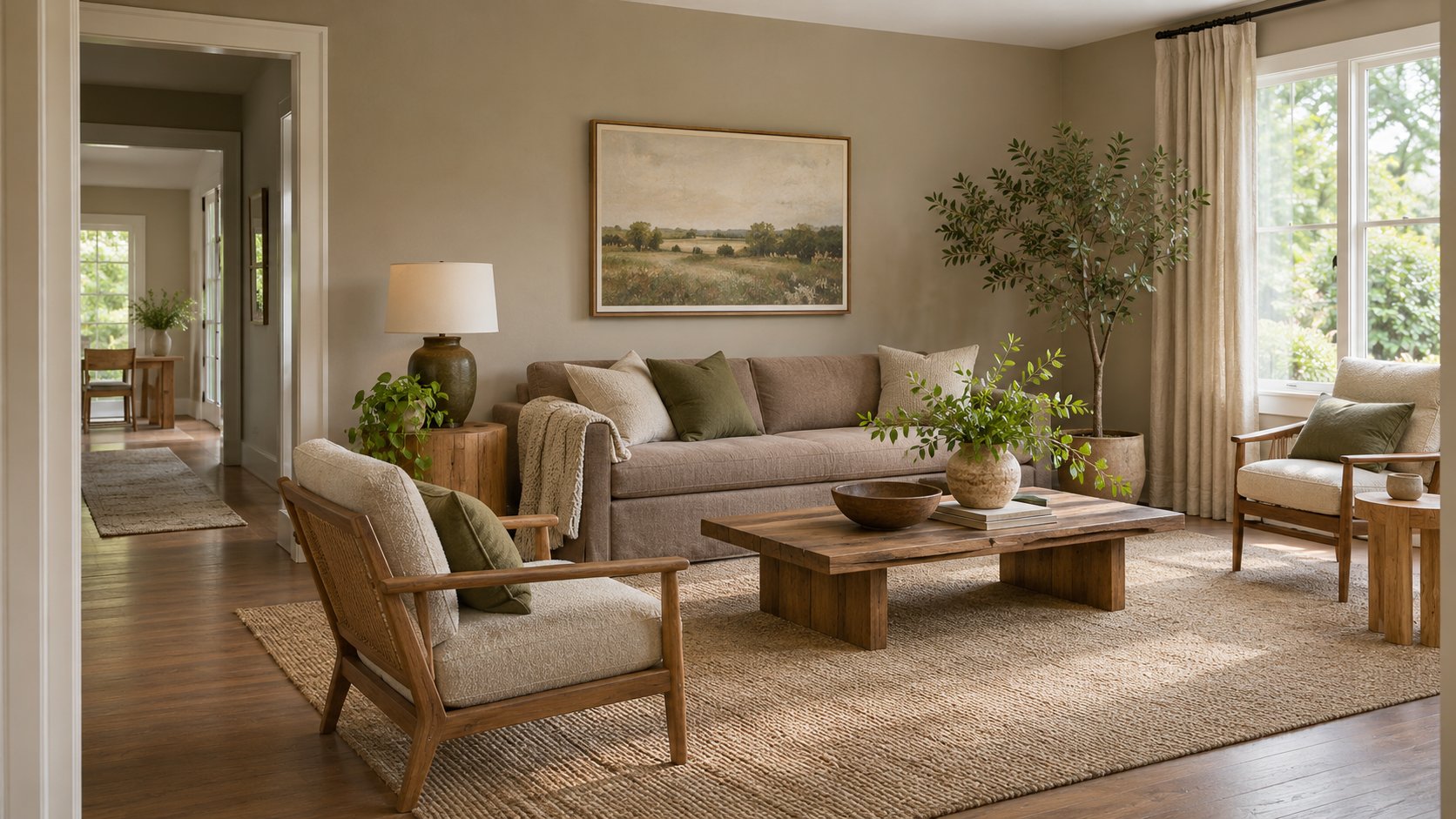
A patterned sofa can become the visual anchor of a room, so compare it with the wall color, flooring, curtains, and rug before choosing a print. Gather swatches or photographs in the room’s actual light. Warm and cool colors shift throughout the day, and a pattern that looks subtle online may dominate a smaller room.
Pick one color from the upholstery and repeat it in a restrained accessory. This connects the sofa to the room without requiring a matching set. If the existing rug has a strong motif, choose a smaller-scale sofa print or a quieter palette. When both surfaces compete, use solid-color curtains and pillows to restore balance.
Choose a pattern scale
Large motifs read clearly from across a room and can suit a broad sofa, but their repeat may be cropped by cushions and seams. Small prints can look like texture at a distance and may feel busy close up. Medium geometric or botanical patterns provide a compromise. Ask for a fabric sample large enough to show the repeat, not just a tiny swatch.
Review the pattern on a sofa-sized image or showroom model. Determine whether the design repeats across seat cushions, wraps around arms, and continues over the back. Directional prints may need careful alignment. Matching a pattern across seams can require extra fabric and affect price, so confirm whether the listing shows the exact upholstery option.
Understand common pattern families
Stripes can make a sofa look tailored, but horizontal lines may emphasize width and vertical lines can make the form feel taller. Plaids add structure and often combine several colors. Florals range from delicate to dramatic, while abstract prints can disguise small marks. Geometric motifs look orderly, though strong contrast can become the room’s main focal point.
Traditional damask, paisley, and toile prints suit some classic interiors; contemporary graphic patterns work well with simpler furniture. These are style cues, not rules. Consider the architecture and items you already own. If the sofa is an investment, choose a pattern you will still enjoy after changing wall paint or accessories.
Check color in real lighting
Screen images are useful for comparing general color but are not reliable color samples. Ask the retailer for a swatch and look at it in morning, afternoon, and evening light. Place it against the wall and rug, then step back several feet. Some dyes appear brighter under cool LEDs, while warm bulbs can deepen reds and yellows.
If ordering online, verify the fabric name and color code on the selected variation. A listing may show several patterns with similar names. Save a screenshot of the exact option and compare it with the order summary. Ask about dye-lot variation and return rules for made-to-order upholstery, because custom fabric may be nonreturnable.
Balance pattern with sofa shape
A simple straight-arm sofa gives a busy print room to stand out. Tufting, nailheads, piping, and curved frames add more visual detail, so compare whether they compete with the motif. A patterned sectional covers a large area and can become visually heavy; using one print across the entire configuration can simplify the look.
Look at the back, sides, and cushion layout. A sofa placed in the middle of a room shows more upholstery than one pushed against a wall. Pattern placement can vary between pieces, especially on separate modules. Ask whether the manufacturer centers motifs on cushions and whether matching is included in the stated price.
Measure the sofa and fabric repeat
The pattern repeat describes how far the design travels before it repeats. Larger repeats may require more fabric and can change how motifs land on seat cushions, arms, or the center back. Ask for the repeat measurement and a layout photo when possible. Product photos sometimes show a carefully arranged sample rather than the exact production placement.
Check outside width, seat width, depth, and height just as carefully as the print. A beautiful pattern cannot fix a sofa that blocks the walkway or has uncomfortable proportions. If cushions are removable, ask whether they can be reversed and whether the reverse side uses the same pattern placement.
Choose upholstery for everyday use
Pattern can help disguise some everyday variation, but it does not make a fabric stainproof or scratchproof. Ask for the fiber content, cleaning code, abrasion information, and care instructions. Woven fabrics, velvet, and printed microfiber each respond differently to brushing and spills. Request a swatch and test how it feels against bare skin and clothing.
If children or pets share the sofa, look at how tightly the fabric is woven and whether claws could snag a looped surface. Confirm that a suggested cleaner is approved by the manufacturer. “Performance” and “easy care” can refer to different standards, so ask what the retailer means for this exact fabric.
Coordinate pillows and throws
Start with fewer accessories than the staged photo. A patterned sofa often needs only one solid throw and a small number of pillows in colors already present in the print. Add a second pattern only if its scale and contrast differ enough to create a clear hierarchy. Repeating the sofa print at the same scale can make a room feel crowded.
Pillows can also change comfort and usable seat depth. Check whether the sofa includes the shown pillows and whether they are part of the price. Consider removable covers for accessories that will be handled often. Let the sofa’s pattern remain visible rather than covering most of the seat with cushions.
Patterns in small and large rooms
In a small room, a low-contrast or medium-scale pattern can add character without fragmenting the space. Keep other large surfaces relatively quiet and use mirrors or lighting to preserve openness. A bold print can still work in a compact room if the furniture footprint is restrained and the rest of the palette is edited.
A large room can accommodate a dramatic motif or a sectional, but scale still matters. Use the sofa to define a seating zone and connect it to a rug or art through color. Avoid adding several competing focal points. Test the room layout with tape before ordering a large patterned piece.
Pattern matching and craftsmanship
Inspect seam alignment in showroom photos or ask customer service how the pattern is matched. Repeating a stripe or plaid across the front rail and cushion can signal attention to detail, but the pattern may not align perfectly on every budget model. Ask whether matching is guaranteed and whether the final layout varies by unit.
Check piping, seams, zipper placement, and cushion symmetry. A busy print can make small irregularities harder to see in product photos, so read the return and defect policies. A fabric sample can reveal the print quality and texture but cannot show every production detail. Save written answers about customization and expected variation.
Care and cleaning
Follow the care label for the exact upholstery. Blot spills rather than rubbing, and test any approved cleaner in an inconspicuous area. Avoid assuming that a removable cover is machine washable. Some dyes bleed or fade if cleaned incorrectly. Vacuum gently with an upholstery attachment and pay attention to seams where crumbs collect.
Sunlight can fade some fabrics, so consider window exposure and rotate cushions if the manufacturer permits. If a pattern includes multiple colors, fading may affect them unevenly. Ask whether replacement covers are available and whether the warranty covers discoloration. Keep the fabric code and care instructions for future reference.
Compare price and customization
Patterned upholstery may cost more than standard solid fabric because of material use, pattern matching, or custom ordering. Compare the total price for the exact size, fabric, delivery, and assembly. Check whether the quoted price includes the pictured legs, pillows, and chaise. Retailers may apply promotions only to selected colors or stock fabrics.
Custom upholstery can increase the lead time and restrict returns. Confirm production timing, cancellation rules, swatch approval, and what happens if the delivered color differs from expectations. For a stock sofa, verify current inventory and the seller’s restocking terms. A clear quote avoids surprises after choosing a fabric.
Buying online versus in person
A showroom lets you see the pattern scale and feel the upholstery, but floor samples may be older or use a different fabric option. Online shopping provides more variety; request swatches and review close-up photos. Ask for images from multiple angles and a diagram showing where the motif falls on cushions and arms.
Check whether the product page is for the same frame and fabric combination you intend to order. Read recent reviews for color, delivery, and construction comments, then confirm key specifications with the seller. Review return eligibility before purchasing a made-to-order item, and save the exact listing and answers.
Stripes, checks, and direction
Stripes and checks have a strong visual direction, so consider how they meet at the seams. A horizontal stripe can make a sofa look broader, while a vertical stripe can emphasize height, but the effect depends on the room and the pattern width. If a stripe runs across seat cushions, ask whether the design lines up from one cushion to the next.
Checks can be formal, casual, or graphic depending on color and scale. A large plaid may look bold on a sectional, while a small check can read almost like texture. Ask whether the fabric is cut on the straight grain and how much alignment is expected. Small variations are normal in production, but the retailer should explain its standards.
Florals and botanical prints
Floral upholstery can range from tiny, low-contrast blossoms to oversized, high-contrast botanicals. A restrained floral may work with traditional furniture or a quiet contemporary frame. Larger flowers create a focal point and can look more balanced when the sofa silhouette is simple. Compare the fabric from a distance and close up to see whether the motif becomes busy.
Check how the flower placement lands on the center cushion and arms. If the main motif is cut off at a seam, the finished sofa may differ from a fabric swatch. Ask for photos of a completed sofa in the same fabric. Coordinate with solid colors drawn from the print rather than repeating another large floral nearby.
Geometric and abstract prints
Geometric designs can make a room feel orderly, while abstract prints introduce movement and color variation. Strong lines may look crisp on a straight sofa but appear interrupted on curved arms or deep tufting. Before ordering, inspect a larger image and consider whether the pattern’s contrast will compete with artwork, rugs, or cabinetry.
An abstract print may hide small signs of use better than a uniform solid, but it does not change the fabric’s cleaning or wear properties. Ask about the fiber content and care code. If the print includes several colors, use one or two of them in nearby objects and let the rest of the room stay simple.
Traditional and modern pattern pairings
A patterned sofa can bridge styles when its colors connect different parts of a room. A classic floral can feel fresh with a restrained silhouette, and a graphic stripe can complement traditional woodwork. Think of the print as one layer rather than a directive to decorate the whole room in the same theme.
Mixing styles works best when some elements repeat: wood tone, color family, or line shape. A traditional sofa with nailhead trim and a busy print can look overly detailed if paired with ornate tables and a patterned rug. Remove competing accents and compare the room from its main entry point.
Test swatches at home
Place the swatch on the sofa frame or a cushion, then view it from across the room and next to nearby fabrics. Check it in natural daylight and under the lamps used at night. Some upholstery has a nap that changes appearance when brushed in different directions. Rub the sample gently to see whether the surface shifts or leaves marks.
Ask if the sample represents the exact production fabric and dye lot. A small swatch cannot show the full repeat, so use a larger memo sample when the pattern is bold. Keep the swatches you considered until delivery. They help compare the delivered sofa and make later choices for curtains or accessories easier.
How prints age in a room
A patterned sofa is less flexible to replace than a throw pillow, so choose a motif that fits the way you expect to use the room for several years. If you like changing décor seasonally, a moderate pattern with a flexible color palette may be easier to coordinate. A highly distinctive print can still be a good choice when you love it and plan the room around it.
Consider sunlight, frequent seating, and how the fabric will be cleaned. Fading may be more visible when a cushion is flipped or a throw is moved. Ask whether the upholstery is rated for the intended use and whether replacement pieces can be ordered. A care plan and reversible cushions can help maintain a consistent appearance.
Style ideas by pattern
For stripes, repeat one stripe color in a rug border or window treatment and keep other patterns subtle. For plaid, use solid cushions that echo a secondary color. Florals can pair with natural wood and quiet linens. Abstract prints look polished alongside simple shapes and restrained accessories. These are starting points; the room’s light and architecture should guide the final choice.
A patterned sofa does not require a themed room. Mix contemporary and traditional pieces if color and scale connect them. Use a sample to compare nearby finishes, and remove accessories that make the room feel busy. The aim is a useful seating area where the sofa feels intentional rather than isolated.
Inspect online product examples carefully
The product cards below were returned by Amazon Creators API searches for patterned sofas. We have not physically tested them. Check the exact ASIN and selected variation; the live listing may change its title, images, seller, colors, or availability. Confirm dimensions, upholstery, assembly, delivery, and returns before buying.
A listing titled “striped” or “plaid” may have several color choices, and not every variation will show the same pattern. Use the current product images as a starting point, then read the specifications and seller information. If pattern scale or fabric content is unclear, ask before purchase rather than inferring from a thumbnail.

81" Mid-Century Modern 3-Seater Sofa, Stripe Upholstered Couch, Blue | 3-Seater Sofa for Living Room, Bedroom, or Office. Stripe linen Upholstery, Solid Wood Legs, Nailhead Trim
Check the selected pattern, fabric, dimensions, and return terms on Amazon.

Bonzy Home Modern Boho Loveseat Couch Sofa Chair for Living Room Bedroom, Upholstered Colorful Plaid Fabric 2-Seat Love Seat Sofa with Wood Leg for Small Space, One Loveseat
Check the selected pattern, fabric, dimensions, and return terms on Amazon.

KISLOT 84" Modern Loveseat Sofa with Solid Wood Base for Living Room,3 Seater Deep Seat Modular Sofa Couch,Chenille Fabric,Spring Cushions, Easy Assembly for Small Spaces,Green
Check the selected pattern, fabric, dimensions, and return terms on Amazon.

YOUDENOVA 2 Piece Set Comfy Sofa Couch, 3 Seater & Loveseat Sofa with Deep Seats, Modern Sleeper Couch for Living Room, Dark Grey Chenille
Check the selected pattern, fabric, dimensions, and return terms on Amazon.
Common shopping mistakes
Choosing from a small thumbnail, ignoring pattern scale, and forgetting the back view are frequent mistakes. Others include pairing a bold sofa with an equally busy rug, assuming patterned fabric hides every stain, and overlooking custom-fabric return restrictions. Use a swatch, room photographs, and a measured layout to catch mismatches before ordering.
Buyers also forget to confirm that the shown pillows or chaise are included. Ask for the exact fabric code and check the order summary. Pattern placement can vary, so clarify what the retailer guarantees. A detailed comparison is more useful than relying on a general style label.
Frequently asked questions
Do patterned sofas go out of style? Any style can feel dated eventually, but choosing colors you enjoy and coordinating the room flexibly can make the sofa easier to live with. Is a print good for pets? It may disguise some hair or marks, but durability depends on weave and care. Should a patterned sofa have patterned pillows? It can, when scale and contrast differ clearly.
Can I return custom upholstery? Policies vary; confirm before ordering. Does pattern hide stains? Not reliably; fabric and color affect visibility, but spills still need proper care. Should a small room avoid prints? No, but scale and contrast matter. Do online colors match? Not always; order a swatch and check it in home lighting.
Final thoughts
The best patterned sofa balances a print you enjoy with a practical shape, suitable upholstery, and dimensions that work in your room. Compare motif scale, fabric care, pattern placement, color in real light, delivery, and return terms. Keep surrounding patterns edited so the sofa can anchor the space without making it feel crowded.
For layout ideas, see our two-sofa layout guide, L-shaped sofa guide, and affiliate disclosure.
Certain content on this site comes from Amazon and may change. Product names, images, features, and availability are supplied through Amazon Creators API or the live listing. Confirm all selected details on Amazon.