Affiliate disclosure: DailyHomeDecorating.com may earn from qualifying purchases through links in this article. As an Amazon Associate, this site earns from qualifying purchases. The product examples and images below were retrieved through Amazon Creators API; we have not physically tested these sofas. “Orthopedic” and similar wording does not establish a medical benefit. Confirm exact dimensions, materials, seller, delivery, and return terms on the live listing.
People searching for the best orthopedic sofas are often trying to solve a practical seating problem: a low couch is difficult to rise from, a deep seat makes upright sitting awkward, or the back cushions do not feel supportive. The label itself is not a medical standard. A useful comparison starts with fit, not the promise in a product title. Seat height, usable depth, cushion behavior, back angle, and arm position all change how a sofa feels and functions.
This guide explains how to assess those features, what to ask retailers, how to compare online listings, and when to get professional guidance. We include a small set of current Amazon listings with relevant seller-described features as examples only. We do not claim they treat pain, prevent injury, or suit a particular diagnosis.

Quick answer: how to choose a supportive sofa
“Orthopedic sofa” is not a standardized furniture certification and does not establish that a couch prevents, treats, or relieves a medical condition. Use the phrase as a shopping starting point, then compare measurable fit: seat height, usable depth, cushion firmness, back angle, arm height, and the effort it takes to sit down and stand up. Comfort is individual, so try the exact model when possible and consult a qualified clinician for condition-specific advice.
For many shoppers, a supportive sofa has a seat that lets the feet rest comfortably on the floor, a cushion that does not bottom out, a back that supports the preferred posture, and arms positioned where the user can push up safely. These traits vary by body size, mobility, and habits. A very deep, low “lounge” couch may feel cozy but can be hard to exit; a firm upright sofa may be easier to rise from but less relaxing for reclining.
What “orthopedic” means in sofa listings
In online furniture listings, words such as orthopedic, ergonomic, posture-supporting, and back-pain relief are often seller descriptions. They are not proof of clinical testing. Treat them as claims to verify, not as a substitute for dimensions, construction details, a return policy, or professional advice. A title that says “ergonomic” does not tell you the seat angle, foam density, support system, or whether a particular person will find the sofa comfortable.
Separate observable facts from promises. “Seat height 19 inches” is a checkable specification; “supports perfect spinal alignment” is a broad claim that requires evidence and may not apply to everyone. Look for a model-specific diagram, materials list, maximum load guidance, warranty terms, and care instructions. If a listing gives no dimensions or uses inconsistent measurements, contact the seller before ordering.
Start with the person who will use the sofa
Write down the user’s priorities before browsing. Is the main concern getting up from a low seat, maintaining back contact while sitting, sharing the sofa, accommodating a mobility aid nearby, or finding a place to rest? The answer changes which measurements matter. A sofa that works for a tall person who likes a deep seat may not suit a shorter person whose feet dangle. Household members should test the same seat if they will share it.
For a person with pain, recent surgery, balance concerns, or a diagnosed condition, do not infer suitability from marketing language. Ask the treating clinician what functional features matter and whether there are movements or positions to avoid. A furniture retailer can explain its product; it cannot determine medical appropriateness. Keep that distinction clear when comparing options.
Measure seat height and the sit-to-stand movement
Seat height is measured from the floor to the top of the compressed seat, but sellers may report an uncompressed measurement. Ask how it is measured. As a practical fit check, sit with hips near the back cushion and notice whether feet are supported, knees feel comfortable, and the user can rise without sliding forward or rocking excessively. A seat that is too high can leave feet unsupported; one that is too low may demand more effort to stand.
Try the movement several times if safe: approach the seat, sit down under control, shift forward, place feet under the knees, and stand using the arms only if needed. Note whether the seat shifts, cushions slide, or the arms flex. Do not choose a model solely from a general height number because leg length, cushion compression, and posture affect the experience.
Choose seat depth for upright sitting or lounging
Seat depth is the distance from the front edge to the back cushion. For upright sitting, the user should be able to sit back while retaining comfortable support behind the knees; a very deep seat may force a shorter person to perch or add pillows. Tall users often prefer more depth, while a shallower seat can make an upright position easier. Check the depth with loose back cushions in their normal position, not just the frame dimensions.
A deep sofa can still work if the user can add a stable lumbar pillow or sit with legs supported, but added cushions change the usable space and may move during transfers. If the sofa is mainly for reclining or naps, depth may be a benefit. Decide how the sofa will be used most often, and avoid expecting one seat shape to serve every posture equally well.
Assess cushion firmness and support
“Firm” is subjective. Ask whether the seat uses foam, springs, webbing, or a combination; request foam density or firmness information if available, and find out whether cushions are reversible or replaceable. Sit long enough to notice whether the cushion bottoms out or pushes uncomfortably against the thighs. A firm surface is not automatically supportive, and a soft surface is not automatically poor. Fit, resilience, and the user’s preference matter together.
New cushions may soften with use, while foam and suspension can change over time. Review the warranty for cushion compression and normal wear exclusions. Ask whether replacement inserts can be purchased and whether covers unzip. A sofa with serviceable components may be easier to maintain than one where a worn cushion requires replacing the entire piece.
Check back height, angle, and lumbar contact
Back height is only one part of support. A tall back can support the shoulders for some users, but its shape and angle also matter. Sit in the normal position and see whether the back cushion contacts the lower back without forcing the shoulders forward. If head support matters, confirm where the top edge lands when seated; a tall back in a product photo can still end below the head.
Loose pillows offer flexibility but can shift and need frequent adjustment. Attached backs stay in place but provide less customization. Reclining backs change posture and room clearance, and powered mechanisms need accessible controls and a reliable power plan. Ask how the sofa behaves at each position and whether the manufacturer specifies a safe clearance from the wall.
Look at arm height and transfer support
Arms can provide a handhold when sitting down or standing up, but only if they are sturdy, reachable, and at a useful height. A low, narrow, or heavily padded arm may not work as a push surface. Do not put full body weight on an arm unless the manufacturer says it is designed for that use. If the user relies on a handhold, test the exact piece and ask about frame construction under the arm.
Track arms, rolled arms, and armless designs change both usable seat width and how a person transfers. Wide arms can act as a stable rest for the forearm but reduce seating space. A sofa with one open side may be easier to approach from a mobility device, though the arrangement should be checked in the actual room. Keep walkways clear and avoid placing a side table where it blocks the transfer path.
Frame, suspension, and stability checks
Ask what the frame is made of, how it is joined, and whether the maker publishes a weight limit. Hardwood, engineered wood, and metal can all be used in furniture; material names alone do not guarantee durability. Stability also depends on joinery, fasteners, legs, and how the load is distributed. Check whether feet are adjustable and whether the sofa rocks on the floor.
Suspension may use sinuous springs, webbing, or other systems. Ask for a plain-language description and whether replacement or repair is available. When testing in person, sit in different places and shift gently to detect noticeable sagging, creaking, or movement. Do not perform unsafe stress tests or exceed stated limits. Online reviews can identify recurring complaints, but confirm that they refer to the same model and configuration.
Compare recliners and lift assistance carefully
A reclining sofa can change the angle of the back and legs, but it is not the same as a lift chair. Powered recliners need outlet access, clear space for the footrest, and controls the user can reach. Confirm the fully open footprint, whether the model can sit close to a wall, what happens during a power interruption, and the warranty for motors and electrical parts.
If standing assistance is the primary need, discuss purpose-built lift seating with a clinician or mobility equipment specialist. Do not assume a standard sofa, a power recliner, or a product carrying the word “orthopedic” can safely perform that function. Check the equipment’s user limits, installation needs, emergency instructions, and return arrangements before buying.
Upholstery and maintenance affect everyday comfort
Fabric texture, temperature, cleaning requirements, and friction all matter. A smooth woven fabric may be easier to slide across than a grippy texture, while some users prefer the latter for stability. Leather and coated materials can feel cool or warm depending on the room and may require specific care. Ask for a swatch, fabric code, cleaning method, and abrasion information rather than relying on a generic “easy clean” claim.
Removable covers are useful only if the care label allows the cleaning method you intend to use. Some covers are dry-clean only or may shrink. If spills, pets, or incontinence are concerns, verify the manufacturer’s care directions and whether replacement covers are sold. Avoid unapproved sprays or treatments that may damage fabric or affect a warranty.
Room layout, access, and delivery route
Measure the sofa footprint and the full route from the delivery vehicle to the room. Include door width, stair turns, elevator dimensions, hallway corners, ceiling height, and any narrow landing. A model that fits the living room can still be impossible to deliver. Ask whether legs come off, whether the back detaches, and whether the item arrives in boxes or as one assembled piece.
Plan the route around the user’s daily movement. Leave enough room for feet, walkers, canes, and a clear path to the door. Measure coffee tables and side tables too; an ideal seat can become difficult to use when surrounding furniture restricts approach. If the sofa reclines, map the extended footprint with painter’s tape before purchase.
Amazon examples: compare specifications, not medical promises
The current Amazon Creator API search returned the examples below because their listings mention features such as a high back, foam, or a deep seat. We have not tested them and do not describe them as medically suitable. The API image and listing can change; inspect the exact variation, dimensions, materials, seller, current availability, and return terms on Amazon.
Use these cards only to start a comparison. Product titles and seller-provided feature text are not independent verification of comfort, durability, or health effects. If the listing does not provide the details needed for your fit checklist, ask the seller or choose a model with clearer specifications.
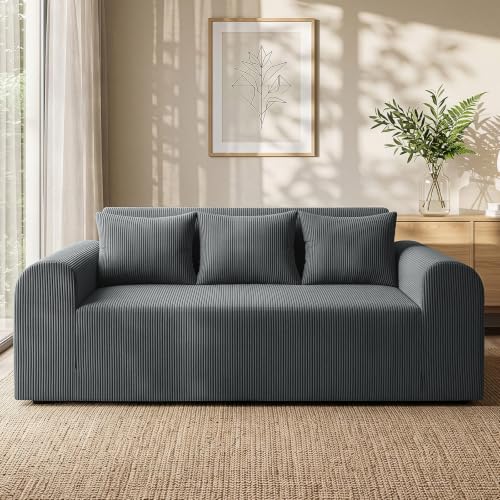
78'' Memory Foam Couch 3 Seater Couch,Boneless Couches for Living Room | 3 Seater Couches, Deep Seat, Ergonomic Backrest, No Assembly, High-Density Foam, for Living Room Bedroom Office, Dark Grey
View current listing, dimensions, seller details, and return terms on Amazon.

Relefree 94.5" Curved Sofa for Living Room, 3-Seater Chenille Sofa, Brown | Modern Oversized Curved Couch, Boneless, Deep Seat, High-Resilience Foam, Cloud Couch for Bedroom Ultra Comfort, No Assembly
View current listing, dimensions, seller details, and return terms on Amazon.

91.5" Modern Boneless Couch for Living Room,Comfy Cloud Sofa,Light Brown | Comfy chenille love seat oversized upholstered 3-seater sofa with deep seat,tall-back tufted couch, no assembly required
View current listing, dimensions, seller details, and return terms on Amazon.

107" Boneless Couch with Storage, 48.6" Extra Deep-High Seat Modular Sectional Sofa with Ottoman, 3 Seater U Shaped Corduroy Cloud Couch, Tool-Free Assembly Sectional Couches for Living Room, Grey
View current listing, dimensions, seller details, and return terms on Amazon.
When online claims are not enough
Contact the seller with specific questions: What is the compressed seat height? What is the usable depth with the back cushion in place? What is the cushion fill and suspension? Are arms attached to the frame? Can cushion inserts or covers be replaced? What is the weight limit, warranty coverage, and return pickup fee? Written answers make models easier to compare and can help resolve disputes later.
Look for consistency across the product page, manual, and warranty. If a key specification is missing or contradictory, do not guess based on a photo. Save the product page and seller response at purchase time because listings can change. For a substantial purchase, consider testing a similar model in a showroom even if the exact color or configuration must be ordered online.
How to test a sofa in a showroom
Spend several minutes in the position you expect to use most. Sit near the back, relax your shoulders, place both feet down, and notice pressure under the thighs and at the lower back. Try getting up without rushing. Repeat on the model’s different cushions and ask whether floor samples differ from the delivered configuration. Test arm height and seat depth with the intended user rather than assuming a companion’s experience applies.
Try sitting at the edge, shifting position, and reaching the controls if it reclines. Check whether cushions slide and whether the frame makes noises during ordinary movement. Ask the salesperson to show the exact dimensions on a spec sheet. A quick showroom sit can reveal obvious fit problems, but it cannot predict years of wear or establish a medical benefit.
How to compare reviews without being misled
Read recent reviews for recurring, specific observations about cushion firmness, assembly, delivery, fabric, and warranty service. Give more weight to details that match the exact size and fabric you are considering. A one-star complaint about a damaged delivery and a five-star comment about color may not answer whether the seat fits your needs. Search the review text for the model name, not just the brand.
Review averages can combine variants with different dimensions or construction. Be cautious with broad statements such as “fixed my back” or “perfect for everyone.” A product review is an individual experience, not clinical evidence or a promise. Compare review patterns with published specifications and seller answers, and confirm what the chosen configuration includes.
Budget for the complete purchase
Compare the delivered price, not just the listed base model. Add fabric upgrades, delivery, stairs, assembly, old-sofa removal, taxes, and possible return pickup. For adjustable models, consider the warranty period and repair process for motors or controls. A lower initial price may be reasonable, but it is useful to know what service and replacement parts will cost over time.
Ask whether the quoted price includes the displayed pillows, chaise, ottoman, headrests, and all modules. Product photos often show accessories that are sold separately. Check whether delivery is threshold-only or includes placement and assembly. If a return requires repacking a large sofa, understand the process before ordering.
Common mistakes when shopping for a supportive sofa
Choosing by the word “orthopedic” is the first mistake. Others include ignoring usable seat depth, failing to test the sit-to-stand movement, assuming a tall back supports the head, and overlooking arm stability. Buyers also forget to measure the path into the home, compare the exact fabric care instructions, or check whether the return policy covers opened furniture. A checklist prevents a catchy product title from deciding the purchase.
Another mistake is treating a single measurement as a universal target. People have different body proportions, mobility, and comfort preferences. A high seat may help one person and feel awkward to another; a firm cushion may feel supportive to one user and uncomfortable to someone else. Test the actual fit and involve the person who will use the sofa.
A practical decision checklist
Before ordering, confirm: exact model and size; seat height and usable depth; cushion filling and support system; back shape and arm construction; frame details and weight guidance; fabric code and care; warranty and repair options; delivered dimensions and route; delivery, setup, and removal fees; and return terms. Keep measurements, product answers, and the chosen variation in one document.
If medical needs are involved, add a conversation with the relevant clinician or specialist. Ask what positions, transfer aids, or equipment features are appropriate. A retailer can help with product measurements, but clinical recommendations should come from a qualified professional familiar with the individual.
FAQ: Are orthopedic sofas medically certified?
There is no general sofa category that guarantees a medical result simply because a listing uses “orthopedic.” Ask what specific standard or test the seller refers to and request documentation. In everyday shopping, compare dimensions and construction rather than relying on that label.
FAQ: Is a firm sofa better for back comfort?
Not for everyone. Firmness preference and body fit vary, and a firm cushion can still have poor dimensions or support. Test the seat and ask a clinician for individualized guidance when pain or a diagnosis is involved.
FAQ: What seat height is easiest to stand from?
There is no single height that suits every body. Try the exact seat and check whether feet are supported and standing feels controlled. Ask the seller how the stated measurement is taken and how much the cushion compresses.
FAQ: Does a high back automatically support the neck?
No. The seated position and back shape determine where the head lands. Check the back height from the compressed seat and test it in person if head support is important.
FAQ: Can an ergonomic sofa cure back pain?
A furniture listing cannot establish that. Do not treat marketing language as medical advice. Seek guidance from a qualified healthcare professional for pain, treatment, or condition-specific seating needs.
FAQ: Should I choose a recliner?
A recliner may offer adjustable positions, but check access, controls, clearance, power, warranty, and how easy it is to return to sitting. For standing assistance, ask about purpose-built lift seating with a qualified specialist.
FAQ: What if the sofa is too deep?
A stable lumbar cushion may help some users, but it reduces usable depth and may shift. Consider a shallower model or test the cushion arrangement with the intended user before buying.
FAQ: Can I rely on Amazon reviews?
Use them to identify patterns, not as proof of medical benefit. Check that reviews match the same size and configuration, then verify specifications and return terms directly.
FAQ: What should I ask customer service?
Ask for compressed seat height, usable seat depth, cushion fill, frame and suspension details, arm construction, weight guidance, fabric care, repair options, warranty exclusions, and return pickup fees.
FAQ: Are removable covers always washable?
No. Follow the care label for the exact fabric. A zippered cover may still require professional cleaning or may not be sold separately.
FAQ: How do I know if a sofa will fit through my door?
Measure the narrowest points along the entire delivery route, including turns and stairs. Ask whether legs or backs detach and request the package dimensions.
FAQ: What if two people need different seat depths?
Try each configuration and consider whether loose cushions can provide a stable adjustment. If both users share the sofa often, prioritize the configuration each can use safely and comfortably.
FAQ: When should I ask a clinician?
Ask when pain, surgery, balance, mobility, or a diagnosed condition affects how you sit or transfer. A clinician can help define functional needs; the seller can then answer product-specific questions.
Final thoughts
The best sofa for supportive everyday sitting is the one that fits the user, room, and routine, with specifications and ownership terms you can verify. Treat “orthopedic” as a search phrase rather than a medical guarantee. Measure seat height and depth, test the back and arms, examine construction and care, and confirm delivery and return details before committing.
If a health condition is part of the decision, get individual guidance from a qualified professional. For broader room planning, see our two-sofa layout guide, L-shaped sofa guide, and affiliate disclosure.