Affiliate disclosure: DailyHomeDecorating.com may earn from qualifying purchases through links in this article. As an Amazon Associate, this site earns from qualifying purchases. The product examples and images below were retrieved through Amazon Creators API and may change. We have not physically tested these sofas. Confirm the exact configuration, measurements, upholstery, seller, delivery, and return terms on the listing before ordering.
The best minimalist sofas make a room feel composed without relying on ornate trim, busy upholstery, or oversized decoration. Minimalist does not have to mean cold, uncomfortable, or completely colorless. It usually means a restrained silhouette, clear lines, uncluttered details, and a focus on proportion and materials. The right sofa can anchor a calm room while still feeling inviting, but a simplified design makes scale, cushion shape, fabric texture, and construction details more visible.
This guide explains how to choose a minimalist sofa by silhouette, proportion, color, material, seating depth, legs, room layout, and daily use. We include current Amazon Creator API listings whose titles use minimalist style language or show a simple contemporary shape. These are examples to compare, not items we tested or an endorsement of their construction. Always verify what the selected variation actually includes.
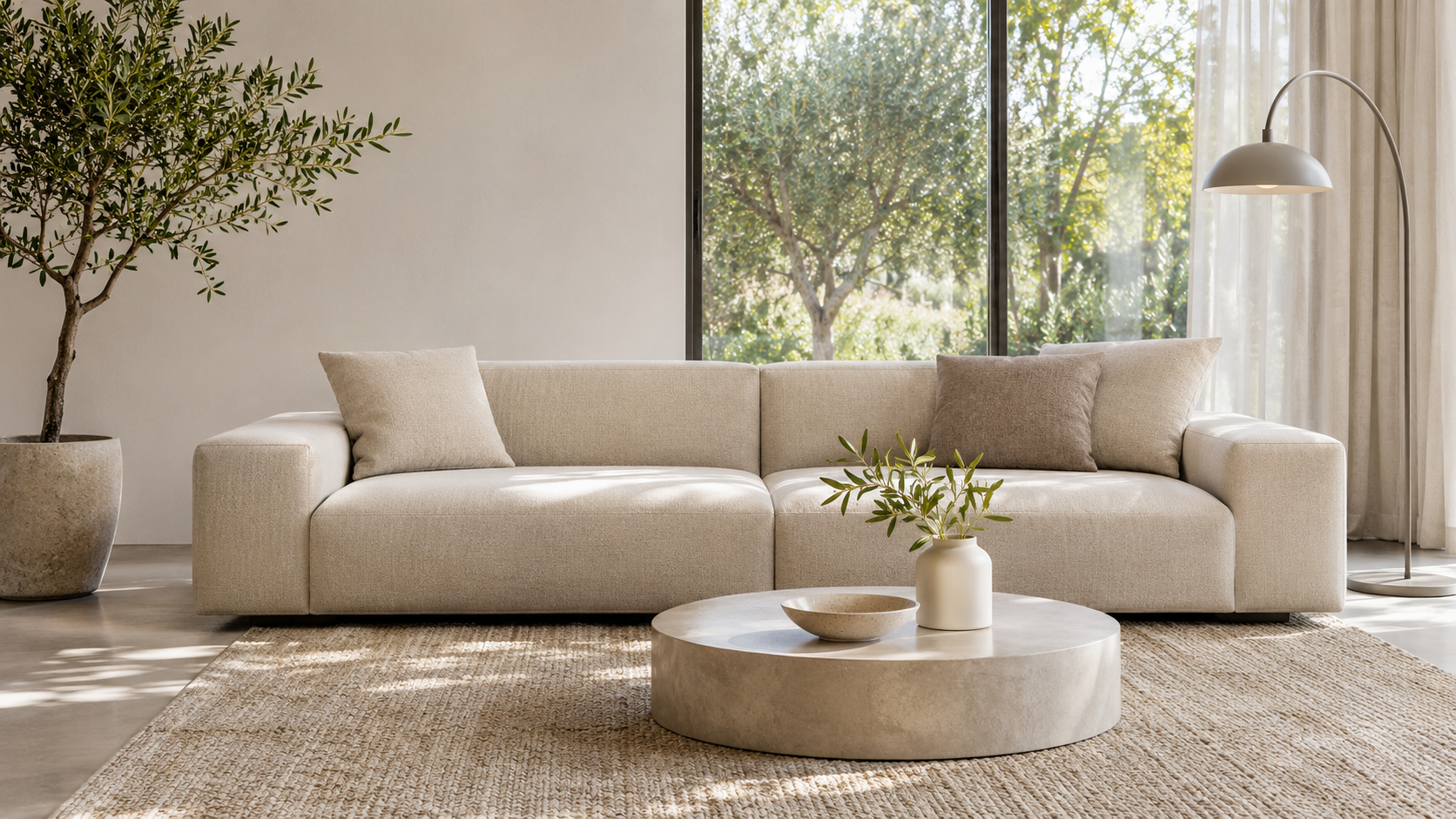
Quick answer: what to look for in a minimalist sofa
Start with a clean-lined shape that fits the room rather than choosing a sofa simply because it looks minimal in a product photo. Compare the outside width, seat depth, back height, arm thickness, leg height, upholstery texture, and cushion seams. A low-profile sofa can preserve sightlines; a curved silhouette can soften a boxy room; a compact two- or three-seat sofa can keep a small space open. Check comfort in person if possible and measure the delivery route before ordering.
Minimalist styling works through editing. Choose one or two strong features, such as a curved back or textured fabric, and keep the rest of the seating group relatively quiet. A neutral sofa is versatile, but a restrained green, rust, navy, or black can also work if the form stays simple. Think about how you will use the sofa, how much maintenance you accept, and whether the upholstery and support match your needs.
What makes a sofa minimalist?
Minimalist design tends to emphasize useful form, visible proportion, and a limited set of details. A sofa may use straight track arms, a low back, a slim leg, a platform base, a simple curved shell, or a monolithic upholstered form. Not every minimalist sofa is angular: a rounded profile can still look restrained if seams, colors, and ornament remain quiet. The best test is whether the shape feels intentional and easy to coordinate rather than merely plain.
Look for details that support the design instead of distracting from it. Piping, tufting, nailheads, deep buttoning, contrast trim, and carved wood may be beautiful but move the look toward another style. A minimalist sofa often relies on the fabric’s weave, the curve of an arm, or the space beneath the frame to create interest. Examine photos from the front, side, and back because a simple sofa may be placed away from the wall.
Do not treat minimalist as a quality grade. Clean lines do not tell you what is inside the frame, how the springs are arranged, or how durable the cushions are. Ask for construction details, warranty terms, and repair options just as you would with a more decorative sofa. Simple styling can make poor fit or uneven finishing more visible, so inspect seams and cushion alignment carefully.
Choose a silhouette that suits your room
Track-arm sofas
Track arms are straight and relatively simple, which gives a sofa a crisp geometric outline. They can be space-efficient because the arms are often narrower than rolled arms, leaving more usable seat width for a given overall footprint. Compare the actual arm width and height, since a broad track arm can still take up valuable room. A tailored fabric and visible legs can keep the shape from appearing too bulky.
Low-profile sofas
A low back can preserve a window view or make a smaller room feel more open. It may be less supportive for people who want a high back or headrest, so comfort should guide the choice. Check the seat height and how low the frame sits; a sleek profile can be difficult for some users to rise from. Balance the sofa with floor lamps or wall art so the room does not feel visually top-heavy.
Curved sofas
A curved sofa adds a soft outline without requiring ornate details. It can encourage face-to-face conversation and work well as a floating focal point. Curved designs often need more floor area than their straight-line width suggests, and the back may not sit against a wall. Tape the shape on the floor or ask for a plan view before ordering. Confirm whether the exact model is one continuous piece or a modular arrangement.
Modular and sectional sofas
A modular sofa can be adapted to changing layouts, but extra pieces can make a supposedly minimalist room feel crowded. Count the modules and measure the final arrangement, including chaise extensions and corner pieces. Ask whether connectors are included and how the sections stay aligned. A sectional’s broad shape may suit a large room while overwhelming a narrow one. Keep side tables and rugs visually quiet to preserve a balanced composition.
Measure proportion before shopping
Record the available wall length, room depth, traffic paths, door swings, windows, radiators, and nearby tables. Then compare the sofa’s overall dimensions and usable seat width. A compact sofa may have generous arms that reduce seating, while a long sofa may be deep enough to crowd a room. Use painter’s tape to outline the footprint on the floor and include the chaise, recline, or ottoman if the design has one.
Measure the delivery route from the entry door to the final room: halls, stair landings, turns, elevators, and interior doors. Ask whether the legs or back detach and whether the packaging is larger than the finished sofa. A clean-lined sofa can still be difficult to bring into a compact apartment. Confirm the delivery service, room placement, assembly, and packaging removal before you place an order.
Think about visual scale as well as dimensions. A low sofa with slim legs leaves more floor visible and can make a room feel lighter. A boxy sofa with a skirt or full upholstered base appears heavier even if its measurements are similar. A curved back can occupy space behind the seat and may need breathing room. The room’s ceiling height, rug size, coffee table, and chair shapes all affect how substantial the sofa feels.
Minimalist sofa examples to compare
The current listings below show several different approaches to a minimal look: a cream tight-curved velvet sofa, a larger modular version, a curved three-seat design, and a softly rounded boucle sectional. Listing titles and images can change, and a product’s “minimalist” label is the seller’s description. Confirm actual fabric content, frame and cushion details, dimensions, included pieces, return options, and seller identity. We have not tested these products in person.

ASIN: B0CDWS3291

ASIN: B0D8TC3HXT

ASIN: B0HCLSKHZY

ASIN: B0H1VMD485
Use product photography for a first impression only. Check the selected color and size in the live listing and see whether the image shows a single sofa, a sectional set, or additional pieces. Review the outside width and seat depth; a 3-seat sofa may have less room per person than you expect if its arms are broad. Read the item description and contact the seller when core construction information is missing.
Fabric and color for a calm room
Neutral colors such as cream, beige, gray, taupe, and warm white can help a minimalist sofa blend with walls and rugs. They are not automatically easy to maintain. Light upholstery may show stains or denim transfer, while dark fabric may show lint and dust. Consider the household and the room’s sunlight. If you want a quiet look with some depth, choose texture rather than a busy pattern: boucle, a subtle weave, matte velvet, or a natural-looking blend can add dimension without visual clutter.
Color should be judged in the room where the sofa will live. Ask for a swatch and look at it in morning, afternoon, and artificial light. Place it beside the flooring, rug, curtains, and wall paint. Warm whites may look yellow next to a cool white wall; gray can read blue or green under different light. A screen image is not a reliable color sample. Save the fabric name and code for future cleaning or replacement requests.
Ask for fiber content, cleaning code, abrasion or performance information where available, and the maker’s care instructions. “Performance fabric” is not a universal guarantee of stainproof behavior. A velvet pile can show shading, a boucle loop can snag, and a flat weave can show abrasion at frequent contact points. Make the choice based on the actual fabric and maintenance instructions, not only a product-page adjective.
Seat comfort matters as much as the outline
Minimalist forms sometimes use firm cushions and a straight back, but softness and support vary widely. Compare seat height, depth, and back angle with your body. A deep seat can feel relaxed for lounging but leave a shorter user without stable foot support. A shallow seat may work for upright conversation but feel cramped for taller users. Test the sofa in your usual sitting positions and ask whether cushions can be replaced or reordered later.
Ask what the seat cushion contains and how it is supported. “Foam,” “fiber,” “down blend,” and “high resilience” do not explain the whole construction. Request the actual cushion specification and warranty if the seller can provide it. Find out whether seat and back cushions are fixed, reversible, or removable. A tailored minimalist sofa can be harder to keep neat if loose cushions slide or compress unevenly.
Check how the sofa feels after several minutes, not only the first impression. Sit upright, lean back, and stand up. Notice whether the arm height supports you, whether the edge presses behind the knees, and whether your feet rest comfortably. If multiple household members will use the sofa, ask them to try it too. A beautiful shape that does not suit everyday posture is unlikely to be a satisfying purchase.
Legs, base, and finish
Visible legs can lighten a minimalist room and make vacuuming easier. Confirm the material, finish, height, and whether felt pads are included. Slim legs can look delicate, but check the manufacturer’s weight limit and how the sofa is supported. A platform base or hidden plinth creates a grounded appearance but can collect dust underneath. Consider whether the sofa’s base fits the rug pile and floor surface.
If the sofa will float in the room, inspect the back upholstery and finishing. Some lower-cost designs use a different fabric or unfinished components on the back. Ask whether the quoted price covers the same upholstery on all sides and whether the design is intended for floating placement. Check whether the back is smooth and finished enough to be seen from the dining area or entry.
Arrange the room around the sofa
A minimalist sofa benefits from a clear visual hierarchy. Let the silhouette be the main feature, then pair it with a simple rug, practical coffee table, and one or two accent pieces. Avoid filling every open surface. Keep the main walking route clear and ensure side tables are reachable from the seat. A rug should anchor the seating group without swallowing the floor area or making the sofa appear disconnected.
For a small living room, choose a compact sofa with a narrow arm and raised legs to preserve visible floor. A loveseat or apartment-size three-seater may fit better than a sectional. For a larger room, a curved or modular sofa can create zones without partitions. Measure the seating arrangement and test sightlines to the television, fireplace, windows, and conversation area.
Minimalist design does not require all-white furniture. A colored sofa can be the only bold object in a quiet room. Use a restrained palette with a contrast in tone or texture: for example, a warm neutral sofa with a dark wood table, or a muted green sofa with a pale rug. Repeating a color in a small accessory can tie the room together without making it busy.
Construction, warranty, and ownership
Ask about frame materials, joint construction, suspension, cushion fillings, and service support for the exact model. A minimalist shape can come from many different manufacturing approaches; the appearance does not show what is inside. Check whether the maker offers replacement cushions, covers, legs, or fabric. If you are choosing a custom or made-to-order piece, confirm the model, fabric, color, dimensions, and total price in writing before the production order begins.
Read warranty coverage for the frame, suspension, cushions, upholstery, and labor separately. Note exclusions for normal wear, fading, stains, pilling, pets, commercial use, or improper cleaning. Ask who arranges repair and whether the service provider operates in your area. A long warranty is only useful if you understand how to file a claim and what costs are excluded.
Compare the total delivered cost: chosen fabric upgrades, legs or finish options, shipping, assembly, taxes, old-furniture removal, and any return fees. For online shopping, confirm the return window, pickup charges, and whether an assembled sofa can be returned. Save the listing and all seller answers. A simple silhouette can make the sofa look easy to buy, but the operational details still deserve careful attention.
Common minimalist sofa shopping mistakes
- Confusing simple design with quality: Ask for frame, support, cushion, and warranty details.
- Choosing a low back without testing comfort: Check head and shoulder support in person.
- Ignoring the back view: A floating sofa needs a finished rear panel.
- Buying a pale fabric without a care plan: Verify the exact fiber and cleaning code.
- Choosing by screen color: Order a swatch and see it under home lighting.
- Underestimating curved shapes: Mark the full floor footprint and circulation space.
- Forgetting delivery access: Measure the tightest hallway turn and doorway.
- Assuming every photo prop is included: Check whether pillows, ottomans, and tables are extra.
Frequently asked questions
What is a minimalist sofa?
It typically has a restrained silhouette, limited ornament, and clear proportions. The style can be straight, curved, low-profile, or modular, depending on the room and design.
Are minimalist sofas comfortable?
They can be, but style does not predict comfort. Compare seat depth, height, cushion firmness, back angle, and support, ideally by trying the exact model.
Which color is best for a minimalist sofa?
Choose a color that works with the room’s floor, walls, and light. Neutrals are common, but a muted or bold solid color can also suit a simple shape.
Are white sofas a good minimalist choice?
They can make a room feel light, but cleaning and color transfer matter. Check the fabric code, fiber content, and maker’s stain-care directions first.
What fabric looks minimalist?
Plain weaves, subtle textures, matte velvet, and restrained boucle can all work. Choose by the actual swatch and care needs rather than a style label alone.
Should a minimalist sofa have visible legs?
Visible legs can make a room feel lighter and help with cleaning. A full base can also suit minimalist design; compare the look and practical access underneath.
Are curved sofas minimalist?
They can be. A simple curved profile can create interest without ornament, but it needs enough floor area and may work best away from a wall.
Are modular sofas minimalist?
They can fit a simple aesthetic when the arrangement is edited. Too many modules or accessories can clutter the room, so choose only the pieces you need.
How do I size a sofa for a small living room?
Measure the floor plan, walking paths, door swings, and delivery route. Consider narrow arms, raised legs, and an apartment-size width before choosing a sectional.
Is a low-profile sofa right for everyone?
No. A low seat or back may be difficult for some users. Test the seat height, depth, and back support with the people who will use it.
What is the difference between minimalist and mid-century modern sofas?
They can overlap, but mid-century design often uses distinct period-inspired shapes and wood details, while minimalist design emphasizes visual restraint more broadly.
Can I use a minimalist sofa in a traditional home?
Yes. A simple sofa can balance decorative architecture. Repeat one room color or material so the contemporary piece feels intentional rather than disconnected.
Are the Amazon listings tested?
No. They are examples retrieved through Amazon Creators API, and we have not tested their comfort, materials, or durability in person.
How do I verify the sofa fabric online?
Open the chosen color and size variation, read the full product details, and contact the seller if fiber content or cleaning information is missing.
How many throw pillows should I use?
There is no fixed number. Start with the sofa’s included pillows, then add only what improves comfort or color balance without covering most of the seat.
Do minimalist sofas need a matching coffee table?
No. A contrasting material or shape can add warmth. Match scale, clearance, and function rather than buying a set automatically.
How do I keep a minimalist room from feeling cold?
Layer tactile fabrics, warm lighting, wood or natural materials, and a comfortable rug while keeping the palette and accessories edited.
What warranty details should I check?
Read coverage for frame, cushions, suspension, fabric, labor, and delivery. Review exclusions and the service process before placing an order.
How do I place a curved sofa?
Mark its curved outline on the floor, leave walking space, and consider floating it as a focal point. Confirm dimensions with a plan view if available.
Can a minimalist sofa have a pattern?
Yes, but a restrained pattern or low-contrast texture is easier to keep visually calm. Request a swatch and check how the repeat fits the sofa.
Should I buy a sofa with removable covers?
Removable covers can help with maintenance, but they are not automatically washable. Check the sewn-in care label and replacement-cover availability.
What should I check before ordering online?
Verify exact dimensions, fabric, included pieces, delivery, assembly, return terms, warranty, seller, and model-specific care instructions.
Final thoughts
The best minimalist sofa balances a calm silhouette with real comfort, usable dimensions, suitable upholstery, and clear ownership terms. Measure before shopping, test seat proportions when possible, choose a fabric whose care fits your household, and inspect all sides if the sofa will float in the room. Keep the room edited around the sofa, but do not let the style label replace checking materials and support.
For more room planning, see our two-sofa layout guide, L-shaped sofa guide, and affiliate disclosure.
Certain content on this site comes from Amazon and may change. Product names, images, features, and availability are supplied through Amazon Creators API. Confirm the selected variation, dimensions, materials, seller, and return terms on the live listing.