Disclosure: Daily Home Decorating participates in the Amazon Associates program. We may earn from qualifying purchases through links here at no extra cost to you. Product formulas, colors, and availability can change; check the current label and manufacturer instructions before use.
Leather acrylic paint can recolor or touch up some leather and vinyl surfaces, including certain upholstered furniture, but the right product depends on the sofa’s material and condition. A cracked or peeling coating is a different problem from a small scuff on sound upholstery. Paint cannot make a failing top layer bond again, and an incompatible product may crack, transfer, or peel after use.
This guide explains how to evaluate flexible leather and vinyl paints for sofas, what to verify before buying, and when a repair product may not be the right solution. Follow the product’s label and the sofa maker’s care instructions. Test any product in a hidden area first; for valuable, antique, or extensively damaged upholstery, consult a professional leather or furniture restorer.
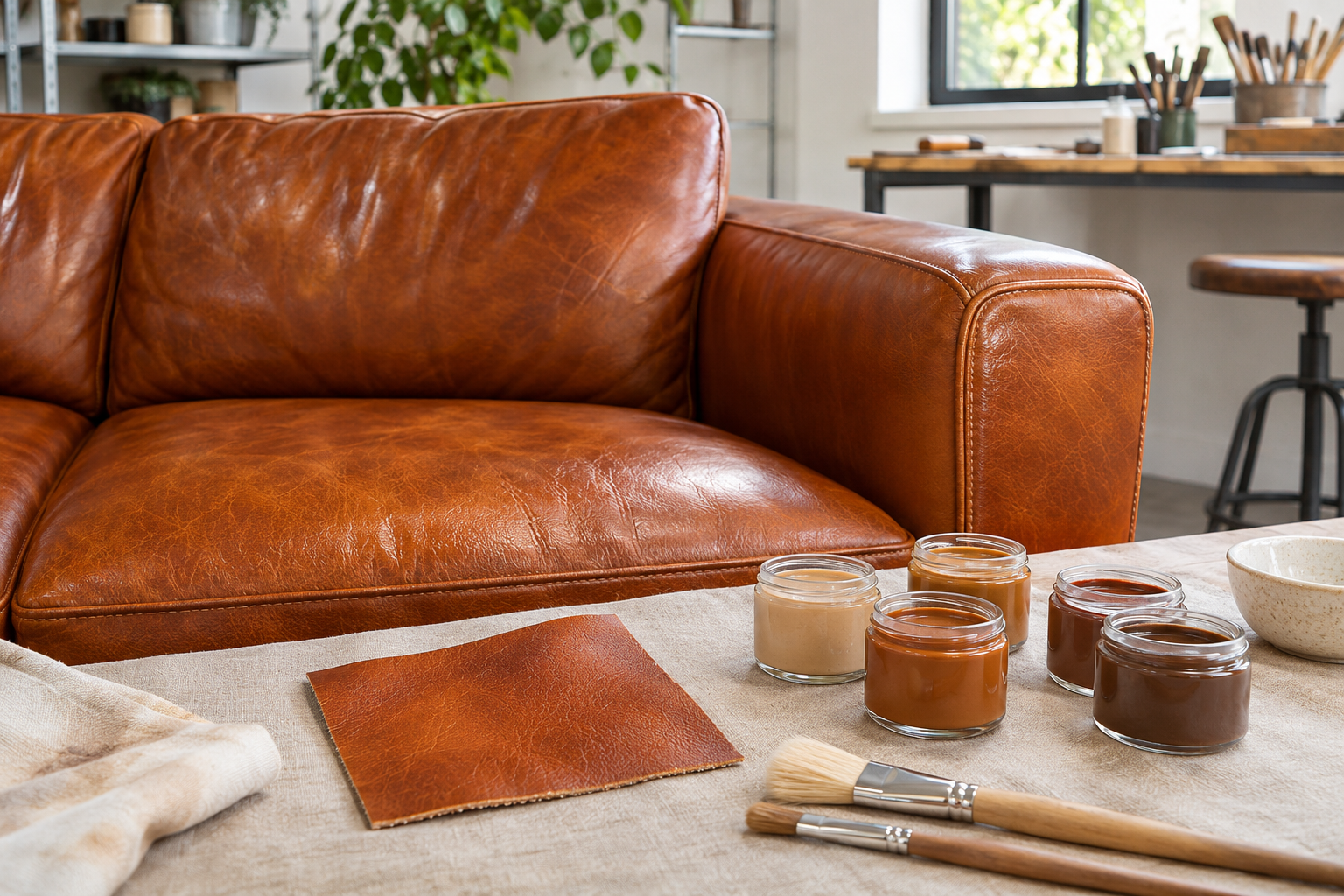
Know what material is on the sofa
“Leather sofa” can describe several materials: full-grain or top-grain leather, corrected or coated leather, bonded leather, faux leather, vinyl, and fabric with a leather-like finish. These surfaces do not necessarily accept the same paint or preparation. Check the furniture tag, original product description, or manufacturer’s care guide before selecting a coating.
If the sofa’s surface is peeling, identify whether the flaking layer is a coating over a substrate or a damaged leather finish. Peeling can expose a backing that does not behave like the original surface. Applying paint over loose material may hide the area temporarily, but the new layer can separate with the old coating. A test patch cannot predict long-term adhesion on a broadly failing surface.
When the material is unknown, do not guess based only on appearance or feel. Ask the sofa maker or a repair professional. Take clear photos of the damaged area, including a wider shot and close-up of the edge where the surface is separating. This can help identify whether the problem is suitable for a color product or needs repair and reupholstery.
Choose a flexible formula made for the material
Leather and vinyl upholstery flex as people sit, stand, and move. A rigid craft paint may not tolerate that repeated movement. Look for a product whose current label specifically identifies the intended material and use, such as leather, vinyl, furniture, or upholstery. A product marketed for shoes or crafts is not automatically suitable for a sofa; confirm the manufacturer’s stated application.
Some brands describe their leather paint as flexible and list furniture among compatible applications. For example, the current Angelus material guide discusses which surfaces its paint is intended for, and Furniture Clinic’s leather and vinyl furniture paint page identifies its intended use. Those manufacturer statements are a starting point, not a guarantee for every sofa finish. Confirm the exact formula, surface, and preparation steps on the label before buying.
Read whether a separate preparer, deglazer, colorant, or topcoat is required. These products can be part of a system and may not be interchangeable with other brands. Using an unapproved topcoat can change sheen, feel, or adhesion. Follow the manufacturer’s full instructions for the specific product combination.
Color matching takes more than choosing a name
Color names vary between brands. “Brown,” “cognac,” “chocolate,” and “dark brown” can look quite different once applied to an existing sofa. A small bottle sample also appears different from a large finished area. If a brand offers a swatch or color chart, use it as a reference, then test the product on a hidden area of the actual upholstery.
Consider the sofa’s current color and the intended coverage. Covering a dark surface with a lighter shade may require a different preparation or more coats than a small touch-up. The manufacturer’s instructions should explain coverage and recoat timing. Do not assume that a listing’s “one coat” phrase applies to every surface or color transition.
Sheen matters too. A matte repair on a glossy sofa can stand out, and a high-gloss finish may look unlike surrounding upholstery. Check whether the product has a finish option or whether a compatible topcoat is recommended. Test both color and sheen in a location that is not visible during ordinary use.
Separate color touch-up from structural repair
Paint can change color, but it does not replace missing material, rebuild torn foam, close a seam, or secure a detached coating. If the sofa has a hole, deep crack, exposed backing, or loose layer, the repair may need a filler, patch, or professional restoration before color is applied. Check the manufacturer’s instructions for what the product is designed to do.
For a small scuff on stable upholstery, a color product may be a reasonable option if the material is compatible. For extensive peeling, repeated cracking, or a sofa that sheds flakes, paint may not solve the underlying failure. Consider a professional assessment, a fitted cover, or reupholstery when the damaged surface is widespread.
Do not use paint to disguise a defect that affects safe operation of a reclining mechanism or a structural seam. Keep products away from the sofa’s moving parts and follow the manufacturer’s cautions about ventilation and curing.
Preparation and application: follow the label
Surface preparation is product-specific. Some formulas require cleaning, drying, or removal of a finish; others have different steps. Do not apply a generic solvent, alcohol, or abrasive just because a video recommends it. The wrong cleaner can strip a finish, discolor the leather, or worsen peeling. Follow the directions for the exact paint and the sofa’s material.
Work in a well-ventilated area as directed by the product label, protect nearby floors and fabrics, and keep children and pets away during application and curing. Use the recommended applicator and apply only the stated amount. Avoid saturating cushions or seams unless the manufacturer specifically directs it.
Allow the product to dry and cure for the time stated on the label before using the sofa. Dry-to-touch and fully cured may not mean the same thing. Rushing the process can cause transfer onto clothing or damage from friction. Do not sit on the repaired area until the product instructions say it is ready.
Product examples to compare
These current Amazon listings illustrate different color paints, repair products, and finishing supplies. They are examples to investigate, not a guarantee that each is appropriate for your sofa. Confirm the material compatibility, color, preparation steps, and complete system on the manufacturer’s current instructions.


What peeling upholstery may need
Peeling often indicates that the outer coating or bonded layer is losing adhesion. Painting over a lifting edge may temporarily change its appearance but cannot reattach material that has separated. If you can gently lift the edge, the damage may continue beneath the visible area. Avoid pulling or scraping at it, which can enlarge the damaged section.
Look for a repair system that specifically describes the sofa’s material and the type of damage. Some kits include a filler or flexible compound for small cracks; others are color products only. Read the limits carefully. A small touch-up product may not restore a large peeling panel or high-wear seat cushion.
If the sofa is still under warranty, contact the manufacturer before attempting a repair. Unauthorized treatments may affect coverage. For a valuable sofa or extensive peeling, ask a professional to inspect the surface and provide a repair estimate. A fitted cover can protect the furniture while you decide on a permanent repair.
Application tools and coverage
Check whether brushes, sponges, applicators, or gloves are included. A small detail brush may help with a nick, while broad panels require even application without visible overlap. The manufacturer may recommend a sponge or airbrush for a smooth finish. Use only tools allowed by the product directions.
Estimate the area to be treated and compare it with the listed bottle size and coverage. Coverage depends on surface condition, color change, absorbency, and number of coats. If the sofa has several matching cushions, consider whether the color needs to be applied consistently across a larger area to avoid a patchy appearance.
Do not mix different colors or products unless the manufacturer permits it. A custom blend can be difficult to reproduce later. Keep notes of the exact product, color, lot number, and number of coats in case a future touch-up is needed.
Check transfer, feel, and sheen
After curing, test the hidden area according to the product instructions. Look for color transfer onto a clean cloth, tackiness, cracking when the material flexes, or a noticeable difference in feel. This test cannot guarantee long-term performance, but it can reveal an immediate incompatibility before the visible area is treated.
Move or flex the upholstery only as the manufacturer allows. Do not aggressively bend a repaired area to force a stress test. If the coating becomes sticky, flakes, or transfers, stop and contact the product maker for guidance rather than adding more layers or a different topcoat.
Compare the repaired spot in daylight and room light. A color can appear to match in one lighting condition and look different in another. If the result is noticeable, ask the manufacturer or a professional about next steps before expanding the application.
Common mistakes to avoid
One mistake is choosing paint based on a color name without confirming material compatibility. Another is assuming that any acrylic paint can be used on a flexible sofa surface. A third is applying paint over dirt, cleaning residue, loose coating, or an unprepared surface.
Do not skip the hidden-area test, and do not use more coats or a different sealer than the maker recommends. More product does not guarantee a more durable result. Excess coating can change the hand-feel, sheen, or flexibility.
Do not expect paint to fix severe peeling or missing material. If the underlying layer is unstable, a surface coating may fail with it. Consider professional repair, reupholstery, or a cover when the damage is broad or the sofa is valuable.
How to choose between the options
Start with the sofa material and the repair area. For a small color scuff on intact leather, compare products whose instructions name that type of leather. For vinyl or faux leather, confirm the formula is approved for that surface. If the sofa is peeling, check whether the product is a complete repair system or only a pigment.
Next, compare color selection, bottle size, preparation requirements, finishing steps, and curing time. A kit with more accessories is not automatically better if its instructions do not match your surface. Select based on compatibility and documented use rather than the number of colors or marketing claims.
Check the seller, return terms, and current product label. Marketplace listings can change, so verify that the purchased formula matches the one you researched. If anything is unclear, contact the manufacturer before opening the product.
Care after a repair
Once the finish has fully cured, follow both the sofa maker’s care instructions and the repair product’s maintenance guidance. Avoid strong cleaners, solvents, and abrasive tools unless they are specifically approved. Wipe spills promptly using the recommended method and keep the area away from direct heat.
Inspect the treated area periodically for cracking, tackiness, color change, or renewed peeling. If a problem returns, avoid layering on a different product without guidance. Record what was used and contact the manufacturer or a repair professional.
Use throws or a fitted cover to reduce wear on frequently used seats, especially while evaluating a repair. Covers can help protect the finish but should not trap moisture or interfere with reclining mechanisms. Choose a cover that fits the sofa and follow its own care instructions.
Final checklist
- Identify whether the sofa is leather, bonded leather, vinyl, faux leather, or another surface.
- Check that the paint label specifically covers that material and furniture use.
- Determine whether peeling needs repair before color touch-up.
- Follow the manufacturer’s preparation, application, ventilation, and cure instructions.
- Test a hidden area and check color, sheen, feel, and transfer.
- Contact the sofa maker or a professional for extensive damage or warranty questions.
Leather acrylic paint may be useful for a compatible, stable surface, but choosing by color alone is risky. Identify the material, match the product to its intended use, and determine whether the damage is truly a color problem. For peeling or extensive wear, repair the failing layer before considering a finish. Careful testing and following the manufacturer’s instructions give you a better basis for deciding whether a DIY touch-up is appropriate.
For other sofa care topics, see our sofa cleaner guide, upholstery fabric guide, and sofa construction guide.
Why flexible coatings matter
Seat cushions and arms move under repeated use. A rigid coating may look acceptable on a stationary sample but fail when the upholstery bends. Paint makers may describe a formula as flexible, but read what material it is designed for and how it must be applied. The word “flexible” by itself does not prove compatibility with every leather-like surface.
Some upholstery has a protective topcoat or factory finish that affects adhesion. Preparation products may remove a finish, which can permanently change the surface. Follow the manufacturer’s process and do not combine steps from unrelated tutorials. If the instructions are intended for shoes or small leather goods, confirm with the maker whether that specific formula is also appropriate for furniture.
Allow for the sofa’s most-used areas. Arms, seat fronts, and cushion edges experience repeated friction and may show wear sooner. If the repair is in one of these locations, ask the product maker whether the coating is intended for high-contact furniture use. For extensive wear, a professional repair may provide a more appropriate result.
Do a small, documented test
Select a hidden area that uses the same material and finish as the visible damage. Follow the complete preparation and application process on that test spot, including any compatible topcoat. Record the products, colors, and number of coats. Let it cure for the full period stated by the manufacturer before judging it.
After curing, check whether the test is tacky, transfers color, looks much glossier, or cracks when the upholstery flexes naturally during ordinary use. Do not aggressively bend or scrape it. If the product behaves unexpectedly, stop and contact the manufacturer instead of proceeding over a larger area.
A hidden test can help catch a poor color match or an immediate reaction, but it cannot guarantee long-term wear. A sofa’s arm or seat may experience more friction than the test location. Treat the test as a screening step, not proof that the repair will last indefinitely.
When to contact the furniture maker
If the sofa is under warranty, contact the brand before using paint, cleaner, or repair compounds. The warranty may have rules about third-party products or alterations. Provide the model number, purchase date, and photos of the damaged area. Ask whether the maker can identify the upholstery material and recommend an approved repair service.
Even when a warranty has expired, the manufacturer may be able to identify a fabric or finish code. This information can make it easier to choose a product or talk to a repair shop. Keep any written response with the sofa paperwork so a later technician knows what has been applied.
If the product maker and furniture maker give different instructions, do not combine them casually. Ask both for clarification about compatibility, and consider a professional who regularly works with that specific surface. A small amount of time spent identifying the material can prevent a larger visible failure.
Compare kits, single colors, and finishers
A single-color bottle can be convenient for a small touch-up if the color is close and the product suits the material. A multi-color kit may help blend a shade, but mixing can be difficult to repeat exactly. A repair kit may include filler, prep solution, color, and topcoat; read the instructions to understand what each item does and whether the full sequence is required.
Do not purchase a finisher just because a listing recommends one in a generic bundle. Check whether the paint manufacturer identifies that finisher as compatible. A topcoat can affect sheen, flexibility, cleanability, and color. An unapproved finish may create a surface that looks or feels different from the surrounding upholstery.
Check bottle size against the repair area. A small bottle may be ample for a spot but not for several full cushions. Do not stretch product too thin or dilute it unless the maker allows that. Coverage estimates can vary with the existing color and surface condition.
Ventilation, cleanup, and household use
Read the safety and cleanup sections of the label before opening a product. Use it only in the conditions specified by the maker and keep the work area ventilated as directed. Protect nearby floors, walls, and fabrics from splashes. Store paint and cleaners away from children and pets, and follow disposal instructions.
Use gloves or other protective equipment if the manufacturer recommends them. Do not eat, drink, or smoke in the application area. Keep the sofa out of service until the product has cured as directed. If the label advises avoiding contact with skin or inhalation, follow those warnings.
Plan the repair when the room can remain unused for the required drying and curing period. A family room sofa may be difficult to leave untouched, so consider whether a professional service or a temporary cover is more practical. Avoid placing a blanket over wet or curing paint because it can stick to the surface.
When a cover or upholstery repair is better
If the surface is flaking over a wide area, a fitted cover may be a temporary way to keep loose flakes contained while you decide on repair. Check the cover’s fit and ensure it does not interfere with reclining controls or safety features. A cover changes the appearance but does not stop the underlying material from deteriorating.
Reupholstery may be worth discussing when the frame and cushions remain usable but the surface has failed. Compare the estimate with the cost of a replacement sofa and consider how long the furniture is expected to stay in the home. A professional can advise whether the material can be repaired, refinished, or needs new upholstery.
For a small, localized scuff, a compatible color product may be less involved. For deep cracks, torn seams, exposed substrate, or widespread peeling, seek an expert assessment. Matching the repair method to the scale of damage is more useful than trying a succession of unrelated products.