Disclosure: Daily Home Decorating participates in the Amazon Associates program. We may earn from qualifying purchases made through links in this guide at no extra cost to you. RV furniture models, dimensions, and availability can change; verify the current listing and vehicle fit before ordering.
A jackknife sofa is an RV sofa that folds or flips into a flat sleeping surface. It is popular in compact motorhomes and trailers because one piece of furniture can provide daytime seating and an occasional bed. The tradeoff is that models differ in width, sleeping length, cushion feel, conversion mechanism, and installation requirements. A sofa that matches the available wall width may still block a walkway or fail to fit through the entry.
This guide explains how to compare jackknife sofas, what to measure in your RV, and which questions to ask before replacing a factory unit. Product examples link to current Amazon listings; confirm the exact SKU, dimensions, fabric, and included hardware with the seller. Always follow the RV and furniture manufacturers’ installation instructions.
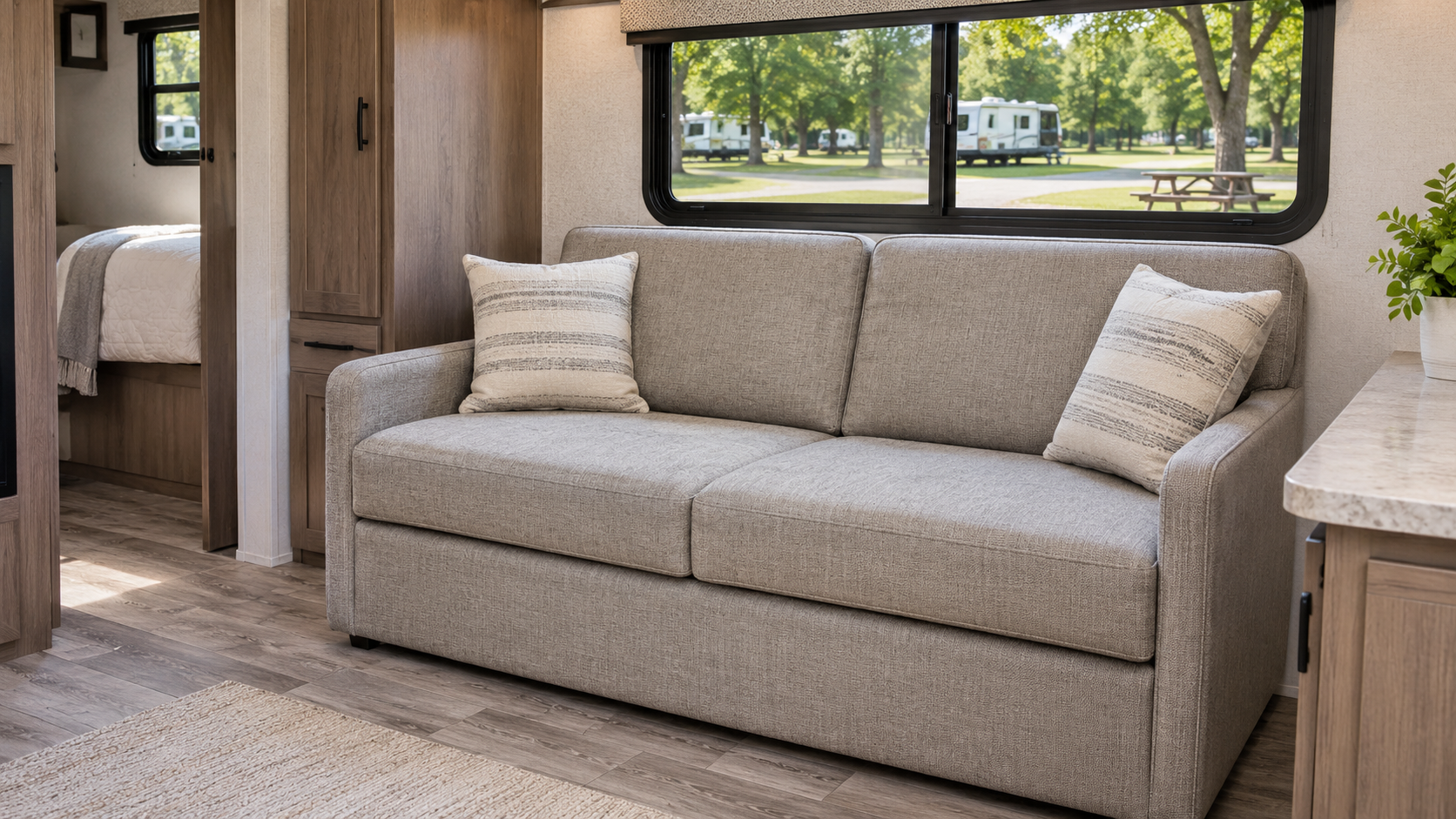
How a jackknife sofa converts
Most jackknife designs use a seat and back that pivot or fold to make a flatter surface. The precise motion varies. Some models use a pull or lift action, some require moving cushions, and some have a center console or kickboard that changes how the bed opens. Do not assume that every sofa described as a jackknife uses the same mechanism or folds in the same direction.
Before buying, watch the manufacturer’s conversion demonstration or request written steps. Check whether conversion requires lifting the seat, moving cushions, or clearing objects from the floor. If the person who will use the RV needs to operate the mechanism, make sure they can do so comfortably without awkward lifting. If the sofa is difficult to open in a showroom or demonstration, it may be frustrating in a tight RV.
Confirm whether the back folds toward the wall or forward into the room. A wall-mounted sofa may need clearance behind it. Lippert’s product information and installation resources for Thomas Payne jackknife sofas describe model-specific dimensions and clearance; use the current manual for the exact model rather than applying one measurement to every brand. See the Thomas Payne jackknife sofa catalog and consult the supplied instructions.
Measure the RV before choosing a width
Measure the clear wall width at the intended mounting position, not just the room width at floor level. Cabinets, trim, wheel wells, armrests, and adjacent furniture may narrow the usable span. Record the floor-to-wall dimensions and note any obstructions above or beside the sofa. Use the product’s actual outside width, including arms, rather than the nominal sleeping width.
Measure the entry door, hallway, and any turn the sofa must pass through. If the item ships assembled, the box or assembled frame may be wider than the doorway. Ask whether the arms or back are removable and whether the seller provides a boxed dimension. A sofa can fit the final wall and still be impossible to bring inside.
Check the RV’s structure at the mounting points. Replacement furniture may not line up with factory bolt locations. Before drilling, identify the vehicle manufacturer’s approved mounting areas and review the relevant manuals. Do not cut into wiring, plumbing, structural members, or components hidden behind the wall. If the installation is unfamiliar, use a qualified RV technician.
Measure the sleeping surface
When folded flat, the sofa’s bed surface may be shorter or narrower than a standard mattress. Measure the usable sleeping area from edge to edge, excluding arms, gaps, or raised supports. Compare it with the people who will sleep there and account for pillows and bedding. A listing’s overall sofa width is not the same as its sleeping width.
Check the surface height and whether the unfolded bed is level. Some mechanisms create a slight transition between seat and back cushions. Look for reviews or specifications describing gaps, seams, or support bars. If possible, try the bed with a sleeping pad or topper to see whether it remains practical and whether the added height interferes with nearby cabinetry.
Think about when the bed will be used. Occasional guest use may tolerate a compact surface, while frequent use calls for more attention to support and cushion feel. The term “sleeper sofa” does not guarantee a particular sleep comfort. Ask the seller for the actual dimensions and construction of the surface.
Compare seat comfort and cushion support
Seat cushions may use foam, fiber, or layered materials. Firmness is subjective and can change as cushions break in. Ask the manufacturer what the cushions contain and whether replacement cushions can be ordered. If the sofa serves as the main seating in the RV, test the sitting position with feet on the floor, arms relaxed, and back supported.
For taller users, seat depth and back height may matter as much as the overall size. For shorter users, a deep seat can make it hard to sit upright without a pillow. If the sofa is used by several people, consider whether separate cushions let people adjust their positions. Review the return policy in case the seat feel is different from expectations.
Do not assume that high-density foam or a premium-sounding fabric makes one model universally more comfortable. Ask for a specification and compare the information with the intended use. Reviews can provide useful patterns about firmness and durability, but they remain individual experiences.
Upholstery and RV use
RV furniture sees varied conditions: road vibration, limited ventilation, temperature changes, and frequent conversion. Ask whether the upholstery and frame are intended for recreational vehicle use. Follow the maker’s care instructions and avoid cleaners that are not approved for the fabric. A removable cover is helpful only if it can be cleaned in the way your household needs.
Fabric options can include cloth, microfiber, leather-like materials, or other coated upholstery. Each has different tactile and maintenance properties. Consider sunlight exposure from RV windows and ask whether the manufacturer offers swatches. Small samples are especially helpful because the RV interior’s wood, flooring, and wall colors affect how the sofa looks.
Check cushion attachment and seam construction. Loose cushions can shift while driving unless secured as designed. Ask how the sofa should be positioned and latched during travel. Do not assume that a sofa’s conversion mechanism also secures it safely for road use; follow the RV maker’s instructions for travel restraints and seating.
Installation and mounting
Read the installation manual before ordering. Confirm the included brackets, bolts, and mounting points, and ask whether the sofa is designed for your RV’s floor and wall structure. If the listing does not explain hardware, get a written answer. Avoid assuming that old hardware will fit a replacement model.
Locate the manufacturer’s recommended mounting points and verify the floor beneath them. RVs may contain wiring, tanks, or structural elements in unexpected places. Use the vehicle’s documentation and a qualified installer if you cannot confirm what is behind the surface. An incorrect installation can damage the RV or create a serious safety risk during travel.
After installation, test the sofa’s conversion and verify that it does not interfere with doors, drawers, appliances, or emergency paths. Confirm that the sofa is secure in its intended travel position according to the furniture and vehicle manuals. Recheck fasteners at the interval recommended by the manufacturer.
Check access, weight, and RV payload
Compare the sofa’s shipping weight with the RV’s available carrying capacity. A replacement can be heavier than the original, especially if it adds a console, storage, or a metal mechanism. Use the vehicle’s ratings and current loading information rather than estimating by appearance. If the change is significant, ask a qualified RV dealer or technician about the implications.
Consider how the sofa affects movement in the cabin. A wide arm or cupholder console can reduce the passage between kitchen and sleeping areas. Mark the footprint on the floor and test the route to the bathroom, exit, and storage compartments. The room may look spacious with the sofa folded, but the bed position can take over the walkway.
Measure the opening angle and clearance needed for conversion. Ensure that a table, ottoman, or cabinetry will not block the mechanism. If the sofa sits near a slide-out, check both the open and closed configurations of the RV. Verify whether the sofa must be moved to operate the slide.
Product examples to compare
These Amazon listings show several widths, fabrics, and configurations. They are examples for checking the specification and fit, not universal recommendations. Confirm the current model number, sleeping dimensions, mounting instructions, and return terms for the exact option.


How to compare models fairly
Create a table with outside width, depth, total height, bed width and length, weight, upholstery, frame construction, mounting method, conversion steps, warranty, and delivery dimensions. Mark missing values as unknown. Comparing by list price alone can be misleading if one sofa includes a console or different installation hardware.
Compare the total cost, including shipping, delivery to the RV, installation labor, and any modifications. Ask whether the seller ships to your location and whether a large item requires a freight appointment. Check the damage-claim process before delivery and inspect the packaging promptly when it arrives.
Verify model numbers across the listing, manufacturer’s catalog, and manual. Color names and nominal widths can be similar across different models. A product page can change over time, so save the exact option and details you relied on at checkout.
Common replacement mistakes
A frequent mistake is ordering by the original sofa’s advertised width without measuring the actual mounting space. RV models may have trim or uneven wall dimensions. Another mistake is checking only the seating configuration and forgetting the open bed footprint. Both can make a replacement impractical.
Do not assume a universal mounting pattern. Even if two sofas have the same nominal width, their brackets and frame construction can differ. Do not drill new holes without confirming the structure behind the floor or wall. Check the manual and involve a technician if necessary.
Finally, do not assume that road-ready means safe to leave unsecured. Follow the vehicle and furniture instructions for travel. Ensure that the sofa is in the proper position, any mechanisms are locked as designed, and loose bedding or cushions are stowed so they do not move around the cabin.
Care and storage
Keep the conversion path clear of objects and debris. Follow the maker’s directions for operating the hinge, latch, or pull mechanism. Do not force the sofa if it catches; identify the obstruction and inspect the manual before applying extra force. If the mechanism becomes noisy or loose, contact the manufacturer or service provider.
Vacuum upholstery with an appropriate attachment and clean spills according to the care label. Avoid excess moisture in a compact RV interior, where ventilation may be limited. Store cushions and bedding only where they will not obstruct safety equipment, exits, or moving components.
Keep the model number, installation guide, and purchase details in the RV’s records. If replacement cushions, covers, or mechanism parts are available, note how to obtain them. Periodically inspect mounting points and hardware as directed by the manufacturer, especially after travel on rough roads.
Final checklist before buying
- Measure mounting width, floor depth, entry route, and conversion clearance.
- Confirm the actual flat sleeping surface dimensions.
- Check weight, payload, mounting points, and RV-specific installation guidance.
- Review upholstery care, cushion support, and replacement part availability.
- Confirm shipping, return, and damage-claim terms.
- Follow the vehicle and furniture manuals for installation and travel positioning.
A good jackknife sofa matches the RV’s space, supports the way you sit and sleep, and can be installed and operated according to the manufacturer’s guidance. Measure both the folded and open configurations, verify the mounting structure, and compare actual specifications rather than relying on a product name. Those checks help prevent an expensive mismatch and make the sofa more useful on the road.
For related space planning, read our sleeper sofa guide, seat depth guide, and sofa construction guide.
Account for bedding and everyday storage
The unfolded surface is only part of the sleeping setup. Measure the space for sheets, pillows, and any topper you plan to use. A thick topper may make the bed more comfortable for some people, but it can change how easily the sofa folds and where bedding can be stored. Check that it can be removed and stowed without blocking cabinets, exits, or the travel aisle.
Decide where the bedding will live when the sofa is used for seating. Some RVs have nearby storage; others require a dedicated bin. Avoid leaving pillows and blankets loose when the vehicle is moving. Follow the owner’s guidance for securing belongings and keeping emergency equipment accessible.
If the sofa has a center console or cupholders, check whether those parts remain exposed in bed mode. A console can be convenient during the day, but it may divide the sleeping surface or make sheets harder to arrange. Inspect conversion photos and ask for the flat-bed dimensions that account for these details.
Understand the difference between nominal width and usable space
Manufacturers may identify models by a nominal width such as 60, 62, 68, or 72 inches. That number may describe the overall width or a named size class, not the width available for sleeping. Arms, consoles, and side structures reduce the usable area. Use the dimension drawing to see where each measurement begins and ends.
Compare the product dimensions with the original sofa’s actual frame, not just the old listing. Measure the seat, arms, floor rails, and wall clearance separately. If the replacement is slightly wider, it might overlap trim or prevent a nearby cabinet from opening. If it is narrower, visible gaps may remain along the wall or floor.
When comparing two brands, ask each seller how the model size is defined. A 68-inch sofa from one brand may not align with a 68-inch model from another. Written dimensions are more reliable than a model name or a size label.
Evaluate new versus replacement furniture
If replacing a factory sofa, identify why the current one is no longer suitable. It may be worn, too small, uncomfortable for sleeping, or difficult to convert. That reason should guide the new measurements. If the issue is cushion support, a full replacement may not be the only option; ask whether cushions or covers can be replaced for the existing frame.
A replacement may involve more than removing the old sofa and installing another. The floor, wall, or mounting brackets could be damaged or nonstandard. Inspect the mounting area after removal and repair it using appropriate materials and professional advice where needed. Do not assume the original hardware remains safe or compatible.
Consider the disposal of the old furniture and packaging. Ask the retailer whether removal is offered and whether it includes carrying the old unit out of the RV. Plan the logistics before delivery, especially if access is narrow or the RV is stored at a location with restrictions.
Check compatibility with slide-outs and nearby systems
Many RV layouts use slide-outs to expand the living area. Check the sofa in both slide-in and slide-out positions. The sofa, mechanism, or footrest must not interfere with the slide, and the slide must not press against the furniture during travel. Use the RV maker’s instructions for operating the slide and positioning interior items.
Look for nearby electrical outlets, heating vents, access panels, storage doors, and switches. A replacement sofa may cover a panel that needs periodic access or block airflow from a vent. Do not cover or alter an appliance vent or service opening; check with the RV manufacturer or a qualified technician if the layout is unclear.
If a powered sofa is considered, verify power requirements and the route for cables. Keep cords away from pinch points and moving components. Have electrical work handled according to the RV and furniture manufacturers’ requirements.
What to inspect at delivery
Before signing for freight delivery, review the seller’s inspection and damage-reporting instructions. Photograph the packaging and any visible damage. Open and inspect the furniture promptly, following the seller’s procedure. Confirm that the model, color, and included components match the order before scheduling installation.
Look for torn upholstery, bent frame parts, missing brackets, or damaged mechanisms. Do not install a unit with a structural problem or force a mechanism that does not operate smoothly. Contact the seller with photographs and the order details. Keep the box and protective materials until the issue is resolved.
Test the sofa’s conversion on a level surface and compare it with the manual. Confirm that all locking or travel-position parts work as specified. A delivery inspection can catch a mismatch before the item is fixed into the RV.
Who should install the sofa?
A handy owner may be able to replace a sofa when the manufacturer provides clear instructions and the vehicle has known mounting points. But RV interiors can conceal wiring, plumbing, tanks, and structure. If you cannot identify the mounting area, or if new holes or electrical connections are needed, consult a qualified installer.
Ask whether the service provider has experience with your RV type and the specific furniture mechanism. A general furniture installer may not know the vehicle’s floor construction or travel restraints. Confirm labor cost, disposal, and any warranty effect before work begins.
After installation, keep copies of the invoice, parts list, and any modification notes with the RV records. This can help a future owner or technician understand what was changed. Follow the manufacturer’s maintenance schedule and inspect the mountings as directed.
Decide whether the sofa will be used nightly
Occasional sleeping and nightly sleeping place different demands on a jackknife sofa. For occasional guests, a compact bed surface may be acceptable if the user understands its limits. For frequent use, pay closer attention to cushion support, seam placement, sleeping length, and whether the surface remains level. If possible, test the sofa in its bed position before purchase.
Consider whether you can make the bed each evening without moving too many objects. The conversion should fit the way the RV is used, not only the floor plan. If opening the sofa requires relocating a table or emptying nearby storage, confirm there is a practical place for those items. Small usability details can determine whether the bed is used comfortably or becomes a daily chore.
If the sleeping area will be shared, compare the actual surface width and the edges near the arms. Do not infer that a two-person sofa automatically makes a comfortable two-person bed. Measure against the users’ needs and consider another sleeping arrangement if the surface is too narrow.