Affiliate disclosure: Daily Home Decorating may earn a commission if you buy through links in this article, at no extra cost to you. As an Amazon Associate, we earn from qualifying purchases. Product images and listing information below were retrieved from Amazon Creators API; we have not physically tested these supplies. The Amazon items are aftermarket supplies, not Kincaid Furniture parts. For a Kincaid sofa, contact the authorized dealer before ordering replacement cushions or modifying a covered seat.
The best cushion choice for a Kincaid sofa depends on the feel you want, the model’s available cushion program, and whether you are choosing upholstery at purchase or trying to service a sofa you already own. Kincaid’s official upholstery information describes five cushion choices: Comfort Support as the standard option, plus Extra Firm, Extra Plush, Blend Down Extra Plush, and Premium Blend Down. The brand’s published construction details distinguish the options by foam density, fiber wrap, and feather/down layers. Those differences affect both the feel and the upkeep.
This guide translates those choices into practical trade-offs, explains what to confirm for your exact sofa, and outlines the right next step if an existing cushion has softened or lost support. Product programs can change by model, dealer, and production date. Confirm current options through Kincaid’s build-your-own upholstery page, the official upholstery warranty, and an authorized retailer. For more home seating advice, browse our Home & DIY section.
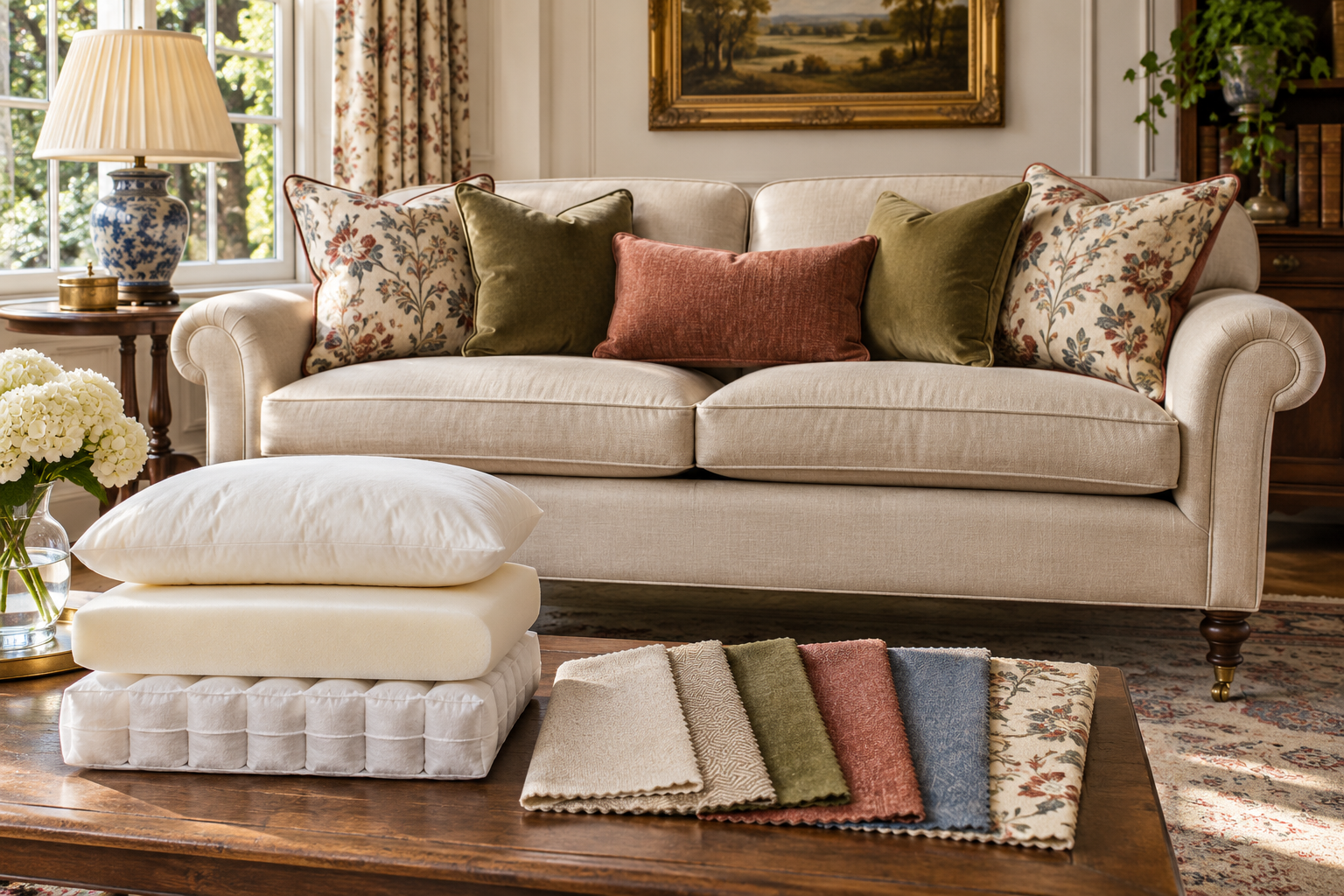
Quick answer: match the cushion to how you sit
- Most balanced starting point: Comfort Support, the standard Kincaid cushion listed with a 1.8-density high-resiliency foam core and fiber crown.
- More tailored, firmer feel: Extra Firm, described by Kincaid with a 2.5-density high-resiliency foam core.
- Plusher seat without a feather jacket around the core: Extra Plush.
- Soft, more relaxed cushion feel: Blend Down Extra Plush.
- Plush feel with a supportive higher-density core: Premium Blend Down, which Kincaid describes with a 2.3-density Qualux foam core and a feather jacket featuring 50% down.
These are manufacturer descriptions, not independent comfort tests. Availability may vary by sofa. Sit on the exact configuration and ask the dealer which options can be ordered for the model, fabric, and production year you want.
1. Comfort Support: the balanced standard option
Kincaid describes Comfort Support as the standard cushion, built with a three-part construction: a 1.8-density high-resiliency foam core, a 1.25-ounce fiber crown patch, and a nonwoven casing. It is a useful baseline when comparing the upgrades because the foam core provides structure while the crown and casing change the surface feel. If you are unsure, try this version before selecting a premium option. Ask the showroom to let you sit for a few minutes in a sofa with the same cushion option and similar seat depth. Standard is not a synonym for low quality; it means this is the reference configuration in the brand’s program. Check whether the exact sofa uses the same standard option and whether arm pillows, if any, are included in the selected fill. A cushion choice can affect how tailored or relaxed the sofa looks, not only how soft it feels.
2. Extra Firm: choose support and shape retention
The Extra Firm option is designed for people who prefer a firmer sit or expect heavier use. Kincaid’s cushion description lists a 2.5-density high-resiliency foam core with a fiber crown and nonwoven casing, and says it holds its shape well. A firmer cushion can be easier for some people to rise from and can preserve a more tailored appearance, but it may feel too rigid if you like sinking into the sofa. Do not choose it simply because you assume every sofa needs the firmest possible foam; pressure comfort is individual. Test the option on the exact sofa’s seat depth and frame. Ask whether this fill is available for every cushion shape and whether it changes the cushion profile. If multiple people share the sofa, each should try it. “Extra firm” is a comparative product name, not a medical recommendation or guarantee against sagging.
3. Extra Plush: a softer surface with a foam core
Kincaid describes Extra Plush as a plush option built around a 1.8-density high-resiliency foam core with fiber wrap and a cotton/poly conjugated-fiber sleeve. That structure aims to create a softer feel than the standard choice while keeping a foam core. It may suit someone who wants more give without selecting a cushion with a feather/down wrap. Softer does not always mean more supportive: the right feel depends on how deeply the cushion compresses under your weight and whether your back is supported. Ask the dealer to compare the exact samples side by side. If a sofa will see daily use, ask about maintenance and whether the extra wrap needs routine fluffing. Check whether this option includes different arm-pillows compared with the standard cushion, since the manufacturer’s descriptions list different pillow fills where applicable. Confirm all construction details on the current program sheet.
4. Blend Down Extra Plush: soft feel with a feather-and-fiber jacket
Kincaid lists Blend Down Extra Plush as a 1.8-density high-resiliency foam core surrounded by fiber wrap and enclosed in a downproof jacket of blown feathers and fiber. That combination is intended to feel plush throughout. It may appeal if you like a softer, less tailored cushion and do not mind that feather and fiber layers can require more regular fluffing and reshaping. Ask to see the cushion sample and compare its look with the sofa’s intended style. The feather jacket is not the same as a cushion made only of loose down: a foam core remains part of the construction. If anyone in the household has feather allergies or sensitivities, discuss the materials before ordering. Ask how to clean the cover and whether the manufacturer recommends professional service. A plush blend may look inviting but can need more maintenance to retain an even profile.
5. Premium Blend Down: a higher-density core with a feather jacket
The premium Kincaid option combines a 2.3-density Qualux high-resiliency foam core, fiber wrap, and a feather jacket that the manufacturer says features 50% down. The brand describes it as supportive while adding down comfort. It may be a strong option for shoppers who want a cushioned, more luxurious sit without moving to the softest construction. The higher density should not be treated as a universal durability score across brands; compare the complete construction and test the cushion yourself. Ask whether this option is available on the sofa you selected, what the price difference is, and whether matching arm pillows are included. Feather/down materials may require fluffing, so ask for written care guidance and consider whether that routine suits you. For a tailored look, compare the sample’s appearance with Extra Firm and Comfort Support before choosing.
How Kincaid’s cushion “feel” and “look” differ
The cushion program uses separate scales for feel and appearance. Feel describes the sensation when sitting, from firmer to plush; look describes the visual profile, from tailored to relaxed. These are related but not identical. A cushion can have a resilient core while a wrap or jacket adds softness and a looser surface appearance. If a sofa’s showroom sample looks flatter or more rounded than expected, ask what option it contains and how it has been maintained. Take a photo of the product tag or written configuration so you can compare like with like. Do not rely on an online photo to judge a small difference in crown, loft, or seams. The fabric, cushion shape, and how the cushion is sewn into its cover also affect the final appearance. Ask whether a bench seat, two-cushion seat, or three-cushion seat uses the same fill options on your model.
Pick based on posture, use, and household preference
Start by describing how you sit rather than choosing a cushion by price tier. Do you sit upright to read, stretch out to watch movies, or use the sofa for short visits? A firmer, more tailored choice may suit upright posture and a formal room; a plush blend may better suit relaxed lounging. These are tendencies, not fixed rules. Seat height and depth, back cushion construction, arm height, and your body proportions can matter more than fill alone. Try a sofa that is similar in scale and has the exact cushion option. If two people use the sofa, compare comfort for both rather than choosing only for the person who shops. Consider whether the sofa is in a high-traffic family area, formal living room, or guest space. A busy household may prefer a construction that is easier to keep orderly, while a low-traffic room may accommodate a more relaxed appearance.
Consider upkeep before selecting feather or fiber wrap
Feather and fiber layers can change the way a cushion feels and looks, but they may need more regular fluffing than a simple foam core. Ask the dealer what maintenance Kincaid expects for each option, how often cushions should be rotated, and whether the cover can be removed for service. Avoid assuming loose feathers can be added later or that an aftermarket bag of fill recreates the factory construction. The interior may include layers, a downproof cover, a crown, and a specific casing. If you do not want to fluff or reshape cushions, ask the salesperson to demonstrate which choices retain a more tailored appearance. Also review upholstery care: Kincaid’s warranty excludes certain damage related to improper cleaning, and the care instructions vary by fabric. Keep the product and fabric identification with your receipt.
For an existing sofa: diagnose before replacing a cushion
A seat that feels softer over time does not automatically indicate a manufacturing defect. Kincaid’s warranty explains that some softening and flattening of fibers and foam is normal with use and aging, while its cushion coverage addresses loss of resiliency due to defects in material and workmanship. The distinction matters. Before buying a replacement, note the sofa’s model, serial or product number, purchase date, original fabric, cushion option, and symptoms. Take clear photos and contact the authorized retailer where the sofa was purchased. The company directs customers to authorized dealers for repair or replacement needs and notes that older discontinued products may have limited support. A dealer can tell you whether the issue is a cushion, suspension, frame, cover, or normal settling. Avoid cutting open a cushion or ordering an insert before checking warranty coverage and the proper service route.
How to identify the right Kincaid cushion replacement
If the authorized dealer confirms a replacement is appropriate, ask for the factory cushion tied to the exact sofa model, seat position, and upholstery order. Provide the original receipt and style/fabric details. Confirm whether the replacement includes the insert only or also the cover, whether it matches the original fill, and whether the fabric dye lot will differ. Kincaid notes that service claims under warranty go through the retailer and that shipping costs are not covered in the warranty terms. If the exact model is discontinued, ask what alternatives the dealer can support and what dimensions or sewing details an upholsterer needs. A generic 24-by-24-inch insert may not match a tapered, T-front, boxed, or crowned cushion. Compare the cover’s interior dimensions and original shape, not just the outside measurement.
When an aftermarket foam insert is worth considering
Aftermarket foam is best treated as a DIY or upholstery-shop material for a non-warranty situation, not a factory-equivalent Kincaid replacement. A custom-cut block can make sense when the original insert is no longer available and you have accurate dimensions or a professional pattern. Density, firmness, compression, thickness, and wrap all affect the outcome. A replacement that is too thick may distort the cover; one that is too soft may bottom out; a hard square can feel unlike the original shaped cushion. If the sofa’s frame or springs are failing, replacing the foam alone will not solve it. Ask an upholsterer to evaluate the entire seat deck and suspension. For a newer sofa or a defect concern, start with the authorized retailer instead of modifying the cushion. Aftermarket supplies below are examples only; check dimensions and seller terms carefully.
Why a cushion support board is not a cushion replacement
A support panel under a sagging seat cushion can temporarily distribute weight over a weak area, but it does not restore the cushion fill or repair a damaged spring or frame. Such products may alter seat height and pressure, and the fit depends on the seat deck dimensions and cushion support underneath. Before using a rigid insert, check whether the problem is the cushion, suspension, or frame. A board can be a temporary fix for some furniture, but it may make another sofa less comfortable or place pressure at the wrong point. If your Kincaid sofa is under warranty, contact the retailer before adding supports or making changes. Save the packaging and product details if you test an aftermarket item, and stop using it if it shifts or creates an uneven seat.
Questions to ask the Kincaid dealer before ordering
Ask the dealer to identify the factory cushion option on your specific sofa and explain the feel/look scales. Confirm whether the model supports all five options, what upcharge applies, and whether arm pillows use matching fill. If you are replacing a cushion, ask if the claim falls under the warranty and what records are required. Request a written quote that states whether the item is a full cushion, insert only, cover only, or complete cushion assembly. Ask about lead time, color matching, return eligibility, and shipping. If the sofa is older, ask whether Kincaid still supports the model and whether the dealer can work with a local upholsterer. These details prevent ordering a cushion that has the right broad size but wrong shape, fill, or fabric. Keep the date and name of the retailer contact with your purchase records.
Best prewrapped replacement insert to measure against an existing cushion: HOMBYS Memory Foam Couch Cushion Replacement

Amazon Creators API lists a 6-by-24-by-27-inch insert with high-density foam, a memory-foam layer, polyester batting, and a removable cover. It is an aftermarket replacement insert, not a Kincaid part. Use the dimensions only as a comparison point; measure your original cushion and contact an authorized Kincaid dealer before replacing a covered seat cushion. A cushion cover may be custom-shaped or use a particular fill, and one standard rectangle will not fit every sofa.
Check the current HOMBYS Memory Foam Couch Cushion Replacement listing on Amazon.
Best customizable foam option for a non-warranty DIY project: Coaseb Custom Polyurethane Upholstery Foam Cut to Size

The listing describes customizable polyurethane foam offered in different densities and dimensions. That can be useful for a DIY upholstery project after you have an exact template, but ordering foam is not the same as replacing a factory cushion. A cushion may need a shaped profile, a crown layer, wrap, ticking, and cover dimensions that foam alone does not provide. Confirm the seller’s available sizes and specifications before purchase, and consider an upholsterer for an expensive or fitted Kincaid piece.
Check the current Coaseb Custom Polyurethane Upholstery Foam Cut to Size listing on Amazon.
Best loose fill to compare for a soft back or throw pillow: ROSE FEATHER Goose Down and Feather Fill, 5/95 Blend

This listing describes a 5-percent-down, 95-percent-feather loose fill for DIY pillows and cushions. Loose fill can refresh a decorative pillow or a back cushion designed for that construction, but it is not a direct substitute for a Kincaid seat-cushion option built around a foam core. Confirm fill weight, allergens, care, casing, and any applicable safety notices. Do not open a factory cushion or alter a warranty-covered seat without checking with the dealer.
Check the current ROSE FEATHER Goose Down and Feather Fill, 5/95 Blend listing on Amazon.
Frequently asked questions
Which Kincaid cushion option is best?
Comfort Support is the standard balanced choice. Extra Firm is intended for a firmer feel; Extra Plush and the Blend Down options add softer, more relaxed layers. The best option depends on personal preference and the sofa model.
How many Kincaid cushion options are there?
Kincaid’s published cushion program describes five: Comfort Support, Extra Firm, Extra Plush, Blend Down Extra Plush, and Premium Blend Down. Confirm current availability for the exact sofa with a dealer.
Does Kincaid warranty sofa cushions?
The current warranty page describes coverage for seat cushions against loss of resiliency due to defects in material and workmanship, while distinguishing normal softening and flattening from a defect. Review the full terms and contact the original authorized retailer.
Can I buy replacement Kincaid cushions on Amazon?
We could not verify a factory Kincaid cushion ASIN through Amazon Creators API. Contact an authorized Kincaid retailer for genuine model-specific service. Amazon links here are aftermarket supplies, not Kincaid parts.
Should I add down fill to a Kincaid cushion?
Not without confirming the cushion construction and service implications. Factory options combine specific foam cores, wraps, and casings. Loose down fill is not a direct replacement for a shaped factory seat cushion.
How do I know whether my sofa cushion needs replacing?
Check whether the change is normal settling, a damaged insert, a failed spring, or a frame issue. Contact the original retailer with your receipt, model details, and photos before purchasing a replacement.
Can cushion covers be washed?
Follow the care label for the selected fabric. Removable does not automatically mean machine-washable. Improper cleaning can damage fabric and may affect warranty coverage.
Final recommendation
For a new Kincaid sofa, use Comfort Support as the baseline, then compare Extra Firm if you want a firmer tailored sit, Extra Plush for a softer foam-based feel, and the two Blend Down choices if you want feather-and-fiber softness. Premium Blend Down combines a higher-density core with a feather jacket, while Blend Down Extra Plush uses a 1.8-density foam core. Ask a dealer to confirm exact availability for your model and let each household member try the sample. For an existing sofa, start with the authorized retailer before trying an aftermarket insert. The correct cushion depends on the model, shape, warranty, and original construction.
For more ideas about sofa sizing and room comfort, explore our Home & DIY guides.
Certain product titles, images, specifications, availability, and offers supplied through Amazon Creators API may change. Amazon alternatives above are aftermarket supplies and do not represent Kincaid Furniture parts. Verify fit, construction, and seller terms before purchase.