Disclosure: Daily Home Decorating participates in the Amazon Associates program. If you buy through qualifying links in this guide, we may earn a commission at no additional cost to you. Product details and availability can change; confirm the current listing before ordering.
“Deep seat” describes a sofa that gives you more room from the front edge of the seat to the back cushion. That extra room can feel relaxed and generous, but it is not automatically more comfortable for every person or every room. This guide explains how to compare seat depth, cushion design, frame size, upholstery, and delivery details so you can choose a sofa that suits the way you sit.
Affiliate product examples are included as starting points for checking dimensions and construction. Use each listing’s current specifications and reviews; a product image alone cannot confirm fit, firmness, or quality.
What “deep seat” means in practice
Seat depth is the horizontal distance from the front of the upholstered seat to the point where the seat meets the back cushion. Retailers do not always measure it in the same way. Some quote the complete seat deck, while others describe usable depth with the back cushions in place. A sofa can therefore appear to have a generous overall depth but offer less room to sit once thick back pillows are added.
Ask for both overall depth and usable seat depth whenever possible. If a listing gives only one number, contact the seller or look for a dimension diagram. Compare that figure with a sofa you can sit on in person, or measure a chair at home that feels comfortable. The goal is to understand how much room your body actually gets, not to chase a label.
Seat depth also interacts with seat height, cushion slope, back angle, and cushion softness. A deep, low seat can encourage lounging, while a higher seat with a supportive back may be easier to rise from. People of different heights may have very different experiences on the same model.
Start with how you sit
Think about the positions you use most. If you sit upright to read, work, eat, or talk, a very deep seat may leave a gap behind your lower back. You may compensate by scooting forward, adding a lumbar pillow, or sitting with your feet unsupported. A moderate depth can be more practical for upright posture, especially when the back cushions are loose and movable.
If you tend to curl up, sit cross-legged, or lean into the corner with a throw pillow, more usable depth can make the sofa feel less restrictive. The extra room also helps some households share a seat with a child or pet, though the actual width and cushion layout matter as much as depth. A long seat that is divided by multiple cushions may not offer one uninterrupted lounging surface.
Consider who will use the sofa most. Measure the seated leg length of the main users and compare it with the usable depth. For a shared household, avoid choosing only for the tallest or shortest person. A flexible back cushion arrangement, removable lumbar pillows, or a chaise can help accommodate different preferences.
Measure usable depth and seat height
Use a tape measure to record the distance from the front edge of the seat cushion to the front face of the back cushion. Do not measure to the rear frame if a thick back pillow sits in front of it. If the back pillows are removable, note both the measurement with them in place and the measurement without them. This creates a more honest picture of the seating options.
Record seat height as well: measure from the floor to the top of the compressed seat cushion, not simply to the cushion when nobody is sitting on it. Cushion compression varies, so a showroom test or owner feedback can help. A deep seat paired with a low seat height may be comfortable for lounging but awkward for someone who prefers firm, easy transitions.
Also note arm height, arm width, and the distance between arms. Wide track arms can reduce the usable width even when the outside dimensions look substantial. If you expect to stretch out, compare the interior seat width with your body length and the positions you use, rather than assuming that a large overall sofa will feel spacious.
Check the whole room before buying
Measure the wall or zone where the sofa will sit, then mark its proposed footprint with painter’s tape or cardboard. Include the full arm-to-arm width and overall depth. Leave the walking routes, doors, windows, radiators, vents, and cabinet doors usable. A deep sofa that blocks a natural path can make a living room feel smaller even if its style is right.
Check the delivery route separately from the final room placement. Measure entry doors, stair turns, elevator interiors, hallways, and the tightest corner. Ask the retailer whether the legs, arms, or back can be removed and whether the product ships in sections. Confirm any delivery restrictions and return costs before purchase; large upholstered furniture can be difficult and expensive to send back.
For a small room, a deep sofa with a compact overall width may work better than a broad model with thick arms. Look for raised legs if visual openness matters, and consider a loveseat, apartment sofa, or modular configuration. Do not rely on a product’s “small space” label without comparing the actual measurements.
Match cushions to the way you use the sofa
Seat cushions may use foam, fiber, down, or layered combinations. Foam often has a more structured feel, but its density and construction differ. Fiber and feather blends can feel softer and more enveloping, though they may need regular fluffing and can settle unevenly. A layered cushion may combine a supportive core with a softer wrap. Ask the maker what is inside and whether replacement cushions are available.
Firmness is subjective and can change with use. Online descriptions such as “plush,” “medium,” and “supportive” are not standardized. Read reviews for specific comments about initial firmness, break-in, cushion recovery, and long-term sagging. Prioritize reviews from people who describe similar body size and sitting habits, but remember that even detailed reviews represent individual experiences rather than guarantees.
Look at the cushion construction: are covers removable, are seats reversible, and can the cushions be rotated? A single bench cushion offers a continuous surface but may be harder to handle. Multiple cushions can make rotation easier but can create visible gaps. For a deep sofa, back cushions that can be repositioned are particularly useful because they change the effective depth.
Frame, suspension, and support
A sofa’s frame and suspension carry the daily load. Check whether the manufacturer describes the frame material, joinery, and support system. A published description should be specific enough to distinguish the structural frame from decorative trim. Ask about the warranty and what it covers; coverage periods and exclusions can vary between the frame, cushions, fabric, and workmanship.
Suspension may use webbing, sinuous springs, or other systems. No single label proves that a sofa will feel right or last a certain number of years. Construction details, materials, assembly, load, and maintenance all matter. If you can test the sofa in person, sit on several parts of the seat and listen for movement or noise. For online orders, seek clear specifications and a straightforward service process.
Heavy users should review the product’s stated capacity and whether it applies to the full sofa or each seat. Do not assume a deep seat means stronger construction. If the listing omits a useful capacity figure, ask the manufacturer rather than extrapolating from appearance.
Choose upholstery for your household
Fabric selection affects touch, cleaning, appearance, and wear. Tightly woven performance fabrics may be easier to maintain in busy homes, while textured weaves can add visual interest but may catch pet claws. Leather and coated materials have different care needs and can show scratches or patina in ways that some owners enjoy and others dislike. Check the maker’s cleaning code and care instructions before using any cleaner.
Color and texture change how a large piece reads in the room. A deep sofa already has a substantial visual footprint; a very dark color or oversized pattern can make it feel heavier. Lighter upholstery may brighten a room but can show spills. Swatches are useful because screen colors are unreliable. View samples in daytime and evening light beside the floor, rug, and wall colors.
For pets or children, ask how the upholstery responds to cleaning and whether the cushions have removable covers. “Pet-friendly” is a broad marketing phrase, not a universal performance standard. Look for specific abrasion, stain, or cleaning information, and verify whether the seller’s warranty excludes damage from claws, spills, or routine wear.
Ways to use deep seating comfortably
Layering cushions can make a deep sofa more versatile. A supportive lumbar pillow can bring the back closer for upright reading, then move aside for lounging. Smaller toss pillows let different users adjust without permanently changing the sofa. Keep enough clear seat area for the posture you intend to use; too many large pillows can consume the depth you paid for.
A matching ottoman or footstool can extend the lounging area without committing to a chaise. Check height and surface size so the combination supports relaxed sitting without pushing the knees too high. A chaise is convenient for one person to stretch out, while an ottoman can move and serve multiple seats. In a narrow room, ensure the added piece can be shifted out of the path.
Lighting and side tables matter too. Deep sofas often place a seated person farther from a wall or table than expected. Test the reach to lamps, outlets, and drinks. A table with enough surface area and a stable base can make a relaxed layout more practical.
Common mistakes to avoid
The first mistake is confusing overall sofa depth with usable seat depth. A thick back pillow can take away several inches of sitting room, while a slim back can make the same outside measurement feel more generous. Always compare like with like and ask the seller how its measurement is defined.
The second mistake is buying based only on a product photo. Camera angle, styling pillows, and wide-angle lenses can distort proportions. Use the dimensions diagram and your floor plan. The third mistake is choosing the deepest model available without considering posture. If you prefer to sit upright, a very deep cushion may require permanent extra pillows.
Another common error is ignoring access and returns. A sofa may fit the room but fail to pass through the stairwell. Confirm delivery access and policy in writing. Finally, do not treat review scores, material names, or warranty language as substitutes for measurements and clear specifications.
Product examples to compare
These listings are examples for comparing dimensions, cushion layouts, upholstery options, and current seller specifications. They are not a claim that every model has a particular seat depth or firmness. Confirm those details on the live product page before buying.
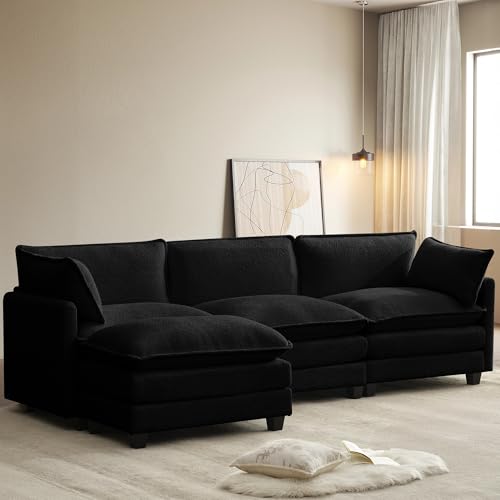


How to compare listings fairly
Create a small comparison sheet with overall width, overall depth, usable seat depth, seat height, inside seat width, cushion fill, upholstery, warranty, and delivery terms. Mark missing details as unknown rather than assuming they match another model. This makes it easier to compare a deep sofa with a conventional sofa and prevents marketing language from dominating the decision.
Look for a return window that gives you enough time to inspect the sofa and understand the conditions. Some retailers charge pickup, restocking, or return shipping fees. Custom colors and made-to-order furniture may have different return rules. Read the policy before purchase and keep the packaging details until you know the sofa works in your home.
When contacting a seller, ask concise questions: “What is the usable seat depth with back cushions in place?” “Can I buy replacement seat cushions?” “What is the delivery path requirement?” and “Which parts of the warranty cover frame, suspension, and cushions?” Written answers are easier to compare and refer to later.
Care that helps cushions keep their shape
Follow the manufacturer’s care instructions, especially for removable covers and spot cleaning. Vacuum upholstery with an appropriate attachment and address spills using the recommended method. Test cleaners in a hidden area only when the care guidance permits it. Aggressive rubbing, excess moisture, or unapproved chemicals can damage fabric or create rings.
Rotate or flip cushions only if the design allows it. Some seat cushions are one-sided or shaped for a specific position. Fluff loose back cushions regularly and redistribute filling when the manufacturer recommends it. Keep the sofa away from prolonged direct sunlight or heat sources if the upholstery instructions warn about fading or drying.
Deep seats may invite more lounging, which concentrates wear in favorite positions. Changing seats periodically can reduce uneven compression. If cushions become uncomfortable, check whether the maker sells replacements before attempting improvised repairs. Replacing a cushion may be more practical than replacing an otherwise sound sofa.
Who benefits most from a deep seat?
Deep seating often suits people who like to curl up, lounge, or use pillows to adjust their posture. It can be appealing in a media room or a casual family space where relaxed positions are common. A deep configuration can also create a generous appearance in a larger room, especially when its proportions are balanced by a broad rug and appropriately sized tables.
It may be less convenient for people who prefer upright sitting, have shorter legs relative to the seat depth, or need a firm perch for frequent standing. That does not mean a deep sofa is automatically unsuitable: movable back cushions, a firmer seat, a higher seat height, or a lumbar pillow can help. A real sit test remains the best way to evaluate the combination.
For shared living rooms, think about both everyday and occasional use. A sofa can look inviting but still be uncomfortable for guests who sit upright. If many people use it, include a chair or another seat with a different posture so everyone has an option.
Use a simple fit test at home
Before you order, recreate the seat depth with a dining chair, a firm bench, or stacked cushions. Measure the surface from the front edge to the point where your back would rest. Sit in your usual position for several minutes, then try the posture you use when reading or talking. This will not reproduce a specific sofa’s cushion feel, but it helps reveal whether the listed depth is likely to feel cramped, neutral, or unusually roomy.
Try the test with shoes off and with the footwear you commonly wear at home. Notice whether your feet rest comfortably on the floor, whether your knees feel supported, and whether your lower back needs a pillow. A deep sofa can work well if your preferred posture is a relaxed curl, even when your legs do not reach the floor in an upright position. The important question is whether the sofa supports the positions you actually use.
If multiple people share the sofa, ask each person to try the same mock-up. One user may want a deep lounge seat while another prefers a more upright position. That difference can inform the choice between fixed and loose back cushions, a chaise configuration, or a sofa paired with a supportive armchair.
Read product descriptions with care
Retail listings may use “deep seat,” “oversized,” “cloud,” or “lounge” as descriptive phrases without a common industry threshold. Do not assume two listings with the same phrase provide the same usable space. Find the dimension diagram and read whether measurements include pillows, removable cushions, or modular components. If a specification is unclear, contact the manufacturer before placing an order.
Check whether the listed dimensions apply to one configuration or an entire modular set. A sectional may be shown with the chaise on one side, while the seller offers left-facing and right-facing versions. Some modules can be rearranged; others have fixed connectors or orientation. Verify exactly what is included in the price, including ottomans, connector hardware, and extra cushions.
Product pages can change as sellers update colors, components, or fulfillment options. Read the listing that is live at the time of purchase rather than relying on old screenshots or a search snippet. Save the final configuration, dimensions, and return terms for your records.
Deep sofa versus chaise or sectional
A deep straight sofa provides extra front-to-back space across its seats. A chaise creates a dedicated place to extend the legs, often without increasing the depth of every seat. A sectional can offer several orientations and more shared lounging surface, but it takes more floor area and can be difficult to reposition. These options solve related but different layout problems.
Choose a chaise when one person typically stretches out and the room has a clear side for the extension. Choose a sectional when multiple people need connected seating and the room can accommodate its footprint. A straight deep sofa can be more flexible if the furniture layout changes often or if you want to pair the sofa with movable ottomans.
Remember that the chaise’s side is described from the perspective of someone facing the sofa in many listings, but retailers sometimes use different conventions. Confirm orientation with the manufacturer’s diagram. If you are unsure, mark the proposed footprint on the floor and check that the extension will not obstruct a doorway or walking route.
Questions to ask before committing
A short list of questions can clarify a listing quickly. Ask for usable seat depth with back cushions installed, the seat height under normal load, and the inside width between arms. Ask whether cushion covers are removable and whether the cushions are reversible. If the sofa is modular, clarify how the pieces connect and whether the arrangement can be changed later.
For a larger purchase, also ask how delivery works, what access measurements are required, whether assembly is included, and what happens if the sofa cannot pass through the entry. Clarify the process for reporting damage or a missing component. If a product has a warranty, request the exact coverage terms and any maintenance steps required to keep it valid.
Keep the answers together with a copy of the product page. If you compare several models, use the same questions for each. That makes it easier to identify missing information and avoids treating a polished listing as inherently more reliable than a plain one.
Final checklist before you order
- Confirm usable seat depth with back cushions in place.
- Compare seat height, seat width, and cushion firmness with your needs.
- Measure the room footprint and delivery route.
- Check upholstery care instructions and warranty coverage.
- Review return fees, assembly requirements, and delivery terms.
- Verify all current product details on the seller’s live listing.
The best deep seat sofa is the one whose dimensions match your body, whose cushions suit your preferred posture, and whose footprint works in your home. Treat seat depth as one part of a complete fit check. When the measurements, materials, support, and service terms are clear, you can compare models with confidence instead of relying on a vague label.
For related planning, see our comfortable sofa fit guide, sofa construction guide, and sleeper sofa guide.