Affiliate disclosure: Daily Home Decorating may earn a commission if you buy through links in this guide, at no extra cost to you. As an Amazon Associate, we earn from qualifying purchases.
The best colored rug for a light gray sofa depends on the sofa’s undertone, the room’s existing finishes, and whether you want the rug to blend in or become an accent. Blue can make a cool gray palette feel composed; beige, ivory, and warm taupe can soften a gray sofa; sage or olive can add a natural note; and rust, terracotta, or muted yellow can bring warmer contrast. A patterned rug can combine several of these tones and make the room easier to coordinate. The gray label alone is not enough to choose: a blue-gray sofa and a warm greige sofa will respond differently to the same rug.
This guide explains how to match rug color, pattern, and texture with a light gray sofa. Product examples were returned through Amazon Creators API; we have not purchased or physically tested them. Listings, colors, images, and available sizes may change. Confirm the exact rug size, color variant, backing, materials, cleaning instructions, and seller details on the live page before ordering. Screen photos can shift color, so compare samples or use the return policy to assess the rug in your room.
For additional palettes, see our accent color guide for gray sofas, browse rug ideas for blue sofas, or use our broader living room rug guide.
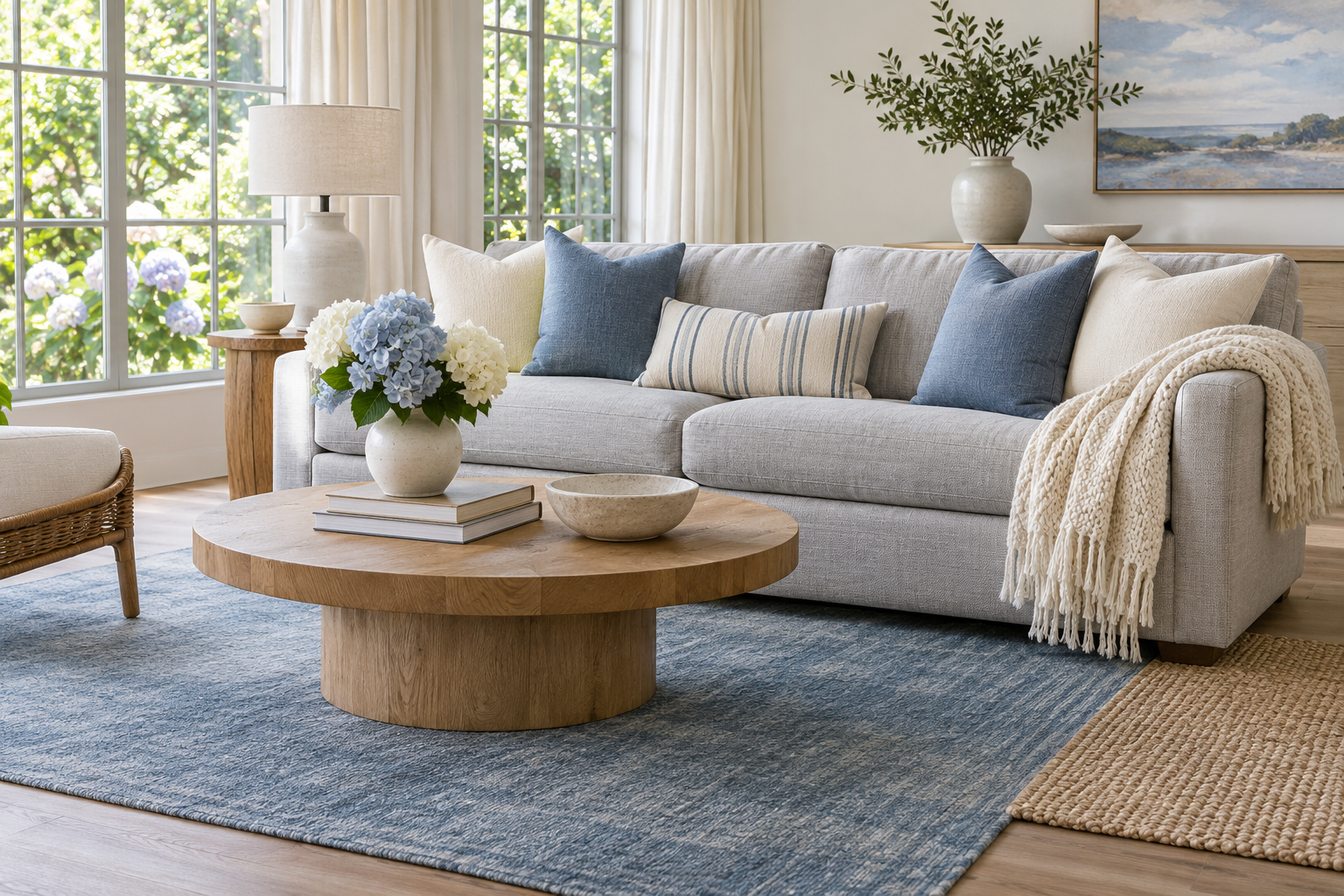
Quick rug color ideas for light gray sofas
- Blue or blue-gray: a coordinated, calm palette, especially when the sofa itself has a cool undertone.
- Ivory, cream, or beige: softens the room and adds warmth; use pattern or texture to keep the rug from disappearing against a pale floor.
- Sage or olive: introduces a natural accent that works with wood, plants, and warm neutrals.
- Rust, terracotta, or muted orange: creates warm contrast with gray and can make a cool sofa feel less stark.
- Charcoal or black: adds definition and can anchor a light sofa, especially in a larger room with lighter walls.
- Multicolor patterns: can connect the sofa with wall art, wood, curtains, and accent pillows in one design.
These are starting points rather than fixed pairings. Look at the sofa, flooring, wall color, and rug together. A color that appears balanced in a product photo may look too cool, too warm, or too saturated once it is spread across the floor.
Identify the gray sofa’s undertone
Light gray upholstery may lean blue, green, violet, or brown. Manufacturers may describe all of these as “gray,” so inspect the fabric in daylight and under the lamps you use at night. Hold a white sheet or neutral paint card nearby to help notice whether the upholstery looks cool or warm. Compare the sofa with the floor and wall, because nearby surfaces can shift how the gray appears.
A cool blue-gray sofa often works naturally with navy, denim, slate, or soft blue rugs. A warm gray or greige sofa may look more at home with oatmeal, camel, ivory, or earthy green. This does not mean you must match undertones exactly. Contrast can be attractive, but it should be intentional: a rust rug can warm a cool gray sofa, while a blue rug can cool a warm greige sofa and make the contrast a feature.
Check the sofa from more than one angle. Upholstery can appear lighter on a cushion facing the window and darker along the side. If the rug will sit beneath the front legs, look at how much upholstery overlaps it. A pale gray sofa against a pale rug may need a darker table or pillows to define its outline, while a darker pattern can create a clearer boundary.
Blue rugs: a calm, coordinated option
Blue rugs are a straightforward choice for a cool light gray sofa. Navy creates contrast and anchors the seating area; dusty blue can feel quieter; and a blue-gray pattern can connect with the upholstery without requiring an exact match. A rug with cream or tan details can warm the pairing and relate it to wood furniture. When a blue-gray sofa and rug are too similar in value and hue, the floor can read as one large cool field, so look for texture or pattern to add separation.
Consider the room’s existing blues. The sofa, rug, curtains, and artwork do not need to match, but they should share a visual relationship. If the sofa is a cool steel gray, a green-leaning teal rug may look distinct from it; if the gray is warmer, dusty blue can add freshness. Put a sample next to the sofa and compare it with art and textiles you plan to keep.
Blue can make a room feel composed, but a strong navy rug may dominate a small low-light space. Balance it with lighter walls, curtains, or pillows. A patterned blue rug with an ivory background may retain the color connection while letting more of the floor show through visually.
Beige, ivory, and warm neutral rugs
Warm neutral rugs can soften a light gray sofa and make the room feel less cool. Ivory, oatmeal, sand, and beige are useful families to test. A cream rug with a subtle pattern can tie gray upholstery to warm wood and leather accents. A flat beige rug may look plain next to textured upholstery, so consider a woven design, tonal pattern, or mix of pile heights.
Check whether the sofa’s gray is cool or warm. A strongly yellow beige can make a blue-gray sofa look bluer by contrast, while a pinkish taupe may introduce an undertone that does not relate to the rest of the room. Test a rug sample beside the sofa and floor. If a sample is unavailable, request additional product photos and review the return terms before ordering a large size.
Light rugs can visually expand a room, but they may show stains and everyday soil. Review the rug’s material and cleaning instructions, especially if the seating area gets meals, pets, or heavy foot traffic. A patterned neutral can be more forgiving than a plain light field, though maintenance depends on construction as well as color.
Sage and olive rugs: a natural accent
Sage and olive introduce color without the intensity of a bright green. Sage can blend with a cool gray sofa if it has gray in its undertone, while olive may add warmth beside wood and cream. Botanical patterns can bring a natural motif into the room, but a solid or abstract sage rug may feel more contemporary. Compare the green with houseplants, curtains, and art rather than assuming every green will coordinate.
A light gray sofa can support a more saturated green rug because the upholstery is neutral, but the combination should be balanced with the rest of the room. Repeat a small amount of green in a pillow, artwork, or plant pot. If the rug contains several colors, choose accents from its pattern instead of adding more unrelated tones.
Think about the room’s daylight. Some sage rugs appear gray in a dim room and much greener in sunlight. If you are choosing online, look for multiple photos and confirm that the exact color variant is selected. A product page can group several shades under one listing, and customer photos may show another size or color.
Rust, terracotta, and warm color contrast
Rust and terracotta rugs can make a light gray sofa feel warmer and more inviting. The contrast is especially effective when the gray has a cool cast. A muted burnt orange can feel earthy beside wood and cream, while a saturated orange pattern may become the room’s main focal point. Use a color sample or a large photo alongside the sofa to decide how much warmth you want.
To keep a warm rug from feeling isolated, repeat its color in small accessories or art. A cognac leather pillow, clay vase, or framed print can connect it to the rest of the room. You do not need to match the rug exactly; use related shades and materials. If the sofa has a warm greige undertone, choose a rust rug with some muted or brown notes rather than a very bright orange.
Patterns that mix rust with navy, cream, charcoal, or sage can be easier to coordinate than a solid high-saturation rug. The pattern may also disguise small marks, though cleaning depends on pile, fiber, and backing. Check the rug’s actual materials and care guidance instead of relying on broad “easy clean” language.
Charcoal and dark rugs
A charcoal or black rug can create a strong frame beneath a light gray sofa. It works well when the room has enough light and other surfaces remain lighter. A dark rug can ground a floating seating arrangement, but a large dark field may make a small room feel more enclosed. Pattern, border, and texture can soften the effect while preserving contrast.
Consider practical visibility. Dark rugs can show pale lint, dust, and pet hair; light rugs can show darker soil. A medium-tone or multicolor pattern may be more forgiving for a busy household. Material and pile height influence vacuuming and spot care, so review those details for the specific product.
If the sofa is very pale, look at the whole balance: dark rug, light upholstery, and mid-tone wood can form a clear layered palette. Add a few dark accents in frames or lamp bases to make the rug feel connected. Avoid scattering too many dark objects around if you want the seating area to remain visually open.
Pattern and color together
A patterned rug can simplify decorating because it contains several colors that already work together. Choose one dominant color that relates to the sofa, then use a secondary color for pillows or artwork. A low-contrast pattern can add interest without competing with a textured sectional, while a bold geometric rug may be a good focal point beneath a simple sofa.
Think about scale. Small, busy motifs can look noisy across a large floor area, while a large pattern may be partially hidden under a coffee table and sofa. Stand back and consider the visible part of the rug. If the sofa covers most of its design, choose a pattern that still reads well around the edges.
Pattern can also help bridge a cool gray sofa and warm wood or leather pieces. A rug that combines blue-gray with cream and rust may connect those finishes more naturally than a solid rug in one color. Bring swatches or photos of the room into the comparison and look for repeated tones, not exact matches.
Choose a rug size before settling on color
Color and scale work together. A small rug can make a large sectional look oversized, while a correctly sized rug can make the whole seating area feel intentional. Measure the sofa and the open area around it. As a planning approach, many rooms look cohesive when the rug reaches under at least the front legs of the sofa and any companion chairs, but the right arrangement depends on the furniture layout and room boundaries.
Use painter’s tape to mark candidate rug dimensions on the floor. View the outline from the doorway and the sofa. Check that the rug does not block a door, crowd a walkway, or stop at an awkward point under the chaise. If the rug is meant to define the conversation area, include the coffee table and any chairs that belong to that group.
Then assess the color at the planned size. A shade that seems subtle in a small sample may dominate across a large rug. A bold pattern can also become more or less prominent depending on how much of it remains visible around the sofa. Do not buy the color before you know the rug can fit the room.
Texture, pile, and material
Texture adds dimension when the sofa and rug share similar lightness. A woven flatweave can feel crisp beneath plush upholstery; a low pile may be easier to maintain in a busy path; and a thicker rug can add softness underfoot. Check the actual fiber, backing, pile height, and care instructions, since product terms such as “soft,” “washable,” and “stain resistant” can describe different constructions.
Consider how the rug interacts with sofa legs. A thick pile may make furniture feel less stable or cause a door to catch. A low-profile rug can be practical around a chaise and coffee table, but an appropriate rug pad may still be needed depending on the floor and manufacturer guidance. Confirm rug and pad dimensions so the pad stays concealed and does not create a tripping edge.
Texture can also influence color perception. A shag or high-low pile creates shadows that make a solid color appear varied. A smooth printed rug may show a more uniform color but can reveal folds or wear differently. Inspect close-up images and customer photos to understand the surface, and follow the cleaning method specified for the chosen rug.
Rugs to compare for a light gray sofa
These Amazon listings illustrate blue, rust, and sage color directions in area rugs. They are examples for comparison, not product test winners. Check the selected size and color, the current listing details, and the room’s measurements. Some listings group multiple designs, and product photos may represent a different size or variant.

Tangsoo washable blue area rug
ASIN: B0DDXTBJBJ
The listing describes a navy floral 5 by 7 rug with a low pile. A blue pattern can coordinate with cool gray upholstery while its lighter details add separation. Confirm actual dimensions, pattern, backing, and care instructions.

Feelyou burnt orange abstract area rug
ASIN: B0FT7F3WJ3
A rust or burnt-orange rug can warm a cool light gray sofa. This listing describes a 5 by 7 abstract design; verify the actual colors, material, dimensions, and backing before purchase.

BEIMO sage green abstract area rug
ASIN: B0DDK5QX3L
This listing describes a green low-pile rug. Sage can connect a gray sofa with plants and warm wood, but check the exact shade and size in the current listing.
Coordinate rugs with walls and furniture
Look at the room as a palette of large surfaces: sofa, rug, walls, floor, and window treatments. If the sofa and rug are both cool, introduce warmth through a wood table, brass, cream pillows, or artwork. If the rug is warm and the sofa is cool, repeat a small amount of the rug’s color elsewhere so it feels connected rather than isolated.
Do not make every accessory match the rug’s dominant color. Use one or two accents to connect the palette, and allow other materials to provide variation. A gray sofa can sit beside a patterned rug, oak furniture, a warm white wall, and blue art without requiring each item to share the same hue.
Consider adjoining rooms and sightlines. A rug seen from the kitchen or hallway may need to relate to those finishes too. If the living room is open plan, repeat a wood or accent color across zones so the gray sofa and rug do not feel like a separate vignette.
Common color and rug-selection mistakes
One mistake is choosing a rug because its color looks right in a listing photo without checking the sofa undertone. Another is buying too small a rug; the color may be attractive, but an undersized piece can make the sectional appear disconnected. A third is forgetting the floor. Gray sofa, gray rug, and gray flooring can blur together unless texture or contrast separates them.
It is also easy to assume “washable” means the entire rug fits a household washing machine or that every stain can be removed. Check the product’s dimensions, weight, care directions, and manufacturer guidance. A printed pattern may look different in person, and colors can vary with screens and lighting. Review return terms before ordering a large rug.
Finally, avoid selecting a palette only by trend. Choose colors that relate to pieces you expect to keep and to the way the room is used. If you want to experiment with a bold accent, a smaller sample, throw, or pillow is a lower-commitment way to test the color before purchasing a large floor covering.
Frequently asked questions
What color rug goes with a light gray sofa? Blue, beige, ivory, sage, rust, charcoal, and multicolor patterns can all work. The sofa’s undertone and the room’s fixed finishes determine the best direction.
Should a rug be lighter or darker than a gray sofa? Either can work. A lighter rug can keep the room open; a darker one can anchor the seating area. Contrast in pattern or texture helps define the sofa.
Does a blue rug go with a gray couch? Yes, especially when their undertones coordinate or the rug includes lighter or warmer accents. Compare the actual shades together before ordering.
Can I use a warm rug with a cool gray sofa? Yes. Rust, terracotta, beige, or warm multicolor rugs can create intentional contrast. Repeat a small amount of the warm color in art or accessories.
What rug pattern works with a light gray sectional? A subtle tonal pattern creates texture, while a bold geometric or floral rug can become a focal point. Consider how much pattern remains visible after the sofa and table are placed.
How big should a rug be under a sectional? Measure the layout and mark candidate sizes on the floor. Many arrangements place the rug beneath the front legs of the sofa, but the exact fit depends on the room and furniture.
Do gray sofas need colorful rugs? No. A neutral rug can look polished with a gray sofa when texture, pattern, and contrast are present. Color is one option, not a requirement.
How can I check rug color online? Compare multiple product images and customer photos, confirm the exact variant, review return terms, and use a swatch if available. Screen images are not exact color standards.
Final checklist
- Identify the sofa’s warm or cool gray undertone.
- Choose whether the rug should blend, warm, or contrast.
- Mark the intended rug size and layout on the floor.
- Compare color and pattern with walls, flooring, and fixed furniture.
- Check pile, material, backing, cleaning instructions, and pad needs.
- Verify the exact rug color and size variant before ordering.
The best colored rug with a light gray sofa is the one that balances the sofa’s undertone with the room’s light, floor, and other furnishings. Blue can coordinate, beige can warm, sage can add a natural accent, and rust can create contrast. Measure first, view the palette together, and verify the exact rug option before buying. That process is more dependable than choosing by a single product photo.
Continue with our gray sofa accent guide, browse rugs for blue sofas, or read the living room rug sizing guide.
Certain content on this site comes from Amazon and may change. Amazon product images and listing details are supplied through Amazon Creators API. Confirm the exact option, seller, dimensions, materials, and current terms before purchase.