Affiliate disclosure: Daily Home Decorating may earn a commission when you buy through links in this article, at no extra cost to you. As an Amazon Associate, we earn from qualifying purchases.
The best beach house sofas balance relaxed coastal style with practical choices for sand, damp towels, frequent guests, and bright natural light. A pale slipcovered sofa can feel airy and casual, while a blue or natural-texture couch adds color without relying on seashell motifs. The right sofa depends on the room’s size, how often the house is occupied, how much cleaning you want to do, and whether the property is near salt air or simply decorated in a beach-inspired style.
This guide compares sofa shapes, upholstery, colors, cushions, layout, delivery, and care for coastal homes and beach-style rooms. The product examples are Amazon Creators API listings, not products we have physically tested. Verify the live listing’s exact fabric, dimensions, cover construction, selected color, seller, and return terms before buying.
For living room layouts, see our rug sizing guide and browse other home projects in Home & DIY.
Quick picks for a beach house living room
- Easygoing, washable look: a slipcovered sofa with removable covers and clearly stated care instructions.
- Color without a strong theme: a slate-blue or muted sea-glass shade paired with cream or natural wood.
- Rental or guest-heavy home: a tight-weave performance-style fabric or replaceable slipcover, with a clear cleaning guide.
- Small cottage or condo: a sofa with narrower arms and measured depth so walkways remain open.
- Open, airy room: a low visual profile, raised legs, and a light neutral fabric, balanced by a textured rug and darker accents.
- Coastal style without a themed look: natural textures, soft blue, warm white, and simple silhouettes rather than literal nautical patterns everywhere.
A beach house sofa should match the actual conditions of the home. A second home that stays closed for long periods may need different ventilation and maintenance planning than a year-round residence. A rental with frequent turnover may need upholstery that cleans easily and holds up to repeated use. Consider the room and routines first, then choose the coastal look.
What makes a sofa feel coastal?
Coastal style often uses light colors, natural textures, and relaxed silhouettes, but there is no single required furniture style. A white slipcover is one option; linen-look upholstery, pale wood legs, woven details, soft blue, sandy beige, and muted green can create the same calm feeling. A beach house does not need nautical symbols or a blue-and-white stripe on every surface.
Think in layers. The sofa is a large visual surface, so keep its shape simple if the room already has patterned tile, shiplap, or strong artwork. Add texture through a woven rug, wood coffee table, cotton throw, or subtle cushion pattern. This makes the room feel connected to a coastal setting without turning it into a theme display.
Natural light changes color. A white sofa near a large window can appear bright and cool during the day but warm under evening bulbs. A gray-blue fabric may look more teal outdoors and more slate indoors. Use a swatch in the room at different times of day before selecting a large upholstery piece.
Coastal style is also about a sense of space. Avoid buying a sofa so deep or wide that it blocks the path to a deck or view. Slim arms, raised legs, and a layout that leaves walking space can make a smaller room feel more open than a large sofa covered in ocean-themed fabric.
Choose upholstery for the household
Fabric choice affects cleaning and feel. A removable slipcover can be useful where guests bring sand or children use the living room, but confirm whether the cover is machine washable, dry-clean only, or spot-clean only. “Washable” may apply only to selected covers or specific sizes. Read the care tag and ask whether the full body of the sofa is covered or only the seat cushions.
Performance-style fabrics are designed for routine use, but the exact fiber and finish vary by product. Check the manufacturer’s cleaning method and any stain-resistance limitations. No fabric is completely maintenance-free. Blot spills promptly when the care instructions allow, and avoid harsh cleaners that can remove a finish or change the color.
Linen and cotton can look relaxed and breathable, but natural fibers may wrinkle and show wear differently from synthetics. A textured weave can hide minor marks, though loose loops may catch on pet claws. Microfiber can be easy to vacuum but may retain heat or show pressure marks. Faux leather can wipe clean in some cases but may peel with use and is sensitive to heat and sunlight.
Consider the home’s proximity to salt air and humidity. Salt, moisture, and direct sun can affect furniture finishes and fabrics over time, but the exposure depends on the building, windows, ventilation, and maintenance. Ask the sofa maker about material care and avoid assuming an indoor sofa is suitable for a screened porch or outdoor area. Use outdoor-rated furnishings for spaces exposed to weather.
For vacation rentals, plan a simple care routine between stays. Keep manufacturer-approved cleaning instructions accessible, use washable throws where helpful, and avoid products that could damage the fabric. If a cover is removable, confirm that replacements are available and note the exact model and fabric before purchase.
Color palettes for beach house sofas
Warm white and sand
Warm white, cream, oatmeal, and sandy beige create a calm base. They pair with pale wood, jute-look textures, and soft blue accents. If the sofa is white, use a slightly darker rug or wood table to separate the seating from pale walls. A warm white is often easier to live with than a stark blue-white, especially in a room with warm flooring.
Layer tones rather than matching every surface. An ivory sofa, sand-colored rug, and pale oak table can feel flat if they are all the same value. Add a mid-tone cushion, darker basket, or a small blue accent for definition. Choose the accent based on the view and other colors already in the room.
Blue, from slate to sea glass
Blue upholstery can bring color to a neutral beach home. Slate and navy create contrast, while dusty blue and sea-glass tones keep the room softer. A blue sofa works with cream, beige, gray, natural wood, and a small amount of green. Avoid forcing an exact match with the ocean outside; the view changes with weather and time of day.
Use blue as the sofa’s main color and keep accessories restrained. A pale blue couch with blue curtains and a blue rug can merge into a single mass. Separate surfaces through value, texture, or a contrasting neutral. For a navy sofa, lighter pillows and a pale rug can help the room stay bright.
Gray and greige
Warm gray and greige work well when the home has a mix of natural wood, white trim, and blue accents. They are flexible but can look cool in shaded rooms. Add cream, tan, or warm wood to soften the palette. Compare fabric swatches with the floor and wall because gray undertones vary from blue to brown.
Charcoal can anchor a large open room, especially if the rest of the furniture is light. In a small cottage, a dark sofa may feel heavy unless there is strong daylight and enough pale area around it. Repeat charcoal in small details rather than adding multiple dark surfaces.
Natural and muted greens
Sage, olive, and muted green can connect indoor furniture with plants and outdoor landscaping. These colors feel calm beside warm white and light wood. If the room already has green views, a neutral sofa can let the landscape provide the color. A green couch can work when the rest of the palette is simple.
Coral and terracotta accents
Coral, rust, or terracotta can add warmth to a blue-and-white room. Use them as accents in a pillow, artwork, or ceramic object rather than putting every warm hue on the sofa. A small amount of color can reference sunsets and warm sand without making the room feel overly themed.
Choose a shape that fits the room
A straight sofa is flexible for a narrow living room and can be paired with lightweight chairs. It is also easier to move when cleaning or rearranging a seasonal home. Measure arm width and total depth; a wide rolled arm can reduce usable seat space and make the sofa feel bulkier than its length suggests.
An L-shaped sectional can orient seating toward a view or create a conversation area in an open plan. Confirm whether the chaise is left- or right-facing and measure the full two-sided footprint. Do not place the chaise across the most natural path to a balcony or deck. If the room is used by guests, leave an easy route to doors and windows.
A sleeper sofa can be helpful in a small beach home with frequent visitors, but check the mattress and open-bed footprint. The bed mechanism needs enough clearance, and sand or damp clothing should not be stored inside the sofa. Follow manufacturer instructions for opening, closing, and cleaning the mechanism.
Modular sofas can adapt when a home’s layout changes. Individual pieces may pass through narrow cottage doors more easily than one large frame. Confirm the package dimensions, module connectors, cushion sizing, and whether matching pieces will remain available. A modular sofa can also drift apart unless its connectors and floor surface work together.
Raised legs create visual lightness and make it easier to clean under the sofa, but check their material and stability. A low plinth can look modern and grounded but may trap sand and dust. Consider how often you clean and whether the sofa can be moved without damaging the floor.
Comfort and construction details
Test seat depth and height with the people who use the home. A deep sofa can be relaxing for lounging but may not suit shorter guests who want to sit upright. A high seat can make standing easier for some people but may leave others’ feet unsupported. Check compressed seat height, cushion fill, and backrest height where the seller provides them.
Ask what the frame is made of and how the cushions are supported. Marketing phrases such as “solid wood” can refer to some components but not the entire frame. Look for clear construction details, weight capacity, warranty terms, and repair support. If those details are missing, ask the seller rather than assuming durability.
Loose cushions offer flexibility and can sometimes be turned, but they may shift during use. Fixed cushions stay in place but can be harder to clean or repair. Check whether seat and back covers unzip, whether replacement covers are sold, and what the care instructions allow.
Sunlight from large windows can gradually change upholstery color. Arrange the sofa to reduce direct exposure where possible, use window treatments when the room is unoccupied, and follow fabric care guidance. A fade-resistant claim should be checked with the manufacturer and should not be treated as a guarantee against all fading.
Product examples for coastal rooms
These examples come from current Amazon Creators API listings and represent different coastal sofa approaches. We have not physically tested these products. Confirm the selected variant, size, exact cover inclusions, and seller details on the live page.

80-inch linen-look slipcovered sofa
This listing describes a three-seat sofa with removable back and seat cushions and slipcovers. It may suit a relaxed coastal room, but verify whether the selected fabric is actual linen or a linen-look blend, which covers are removable, and the cleaning method for the exact variant.
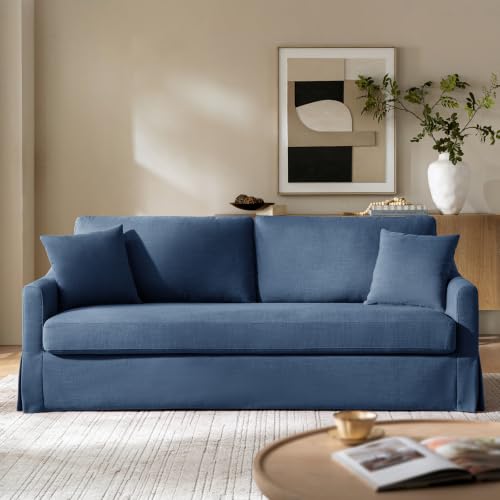
Slate-blue slipcovered sofa option
A muted blue can add coastal color while remaining more restrained than bright turquoise. This Creator API variant is described as slate blue. Check the current shade, dimensions, included pillows, cover care, and delivery route before ordering.

White cotton sofa-cover example
This product is a replacement cover, not a sofa. It is listed for a specific Pottery Barn Basic three-seat sofa format, so check compatibility and measurements before purchase. A slipcover can refresh an existing couch, but the fit depends on the model.

Light-blue coastal pillow covers
Small blue accents can connect a neutral sofa to a coastal palette. This listing describes covers in an 18-by-18-inch size; confirm that inserts are included or purchase compatible inserts separately. Check the care label and color variant.
Layout, rugs, and easy movement
Leave clear paths between the sofa, entry, kitchen, and outdoor doors. A beach home often has movement between inside and outside, so furniture should not make every trip around the room awkward. Tape the sofa and table outlines on the floor before ordering, then walk through the route as if carrying a bag or towel.
Choose a rug large enough to connect the sofa and other seats. A too-small rug can make the seating group look fragmented. Decide whether the front legs or all legs will sit on the rug, and check door clearance and the path to the deck. Our living room rug guide covers common layouts.
For coffee tables, consider rounded edges if the room is narrow or busy. A glass table can preserve visual openness but needs regular cleaning; a wood table adds warmth but may need care around damp items. Keep enough space for people to pass without bumping into corners.
Side tables provide places for drinks and lamps without requiring a large central table. In a rental, choose stable furniture and avoid fragile surfaces near high-traffic paths. Use coasters and trays to protect the sofa arms and table finish.
Layer lighting with a combination of ceiling, floor, and table lamps. A beach house can be very bright in daytime but feel dim in the evening. Warm bulbs and natural shades can soften blue and white palettes. Make sure cords do not cross the main walkway.
Care for sand, spills, and seasonal use
Set up an entry routine to reduce sand on upholstery. A mat outside and inside the door, a place for shoes, and a washable throw can help. Vacuum seat seams and under cushions as part of regular cleaning. Follow the sofa maker’s instructions and use an attachment suitable for the fabric.
For spills, blot rather than rub when the care code allows. Use only a recommended cleaner and test it in a hidden area. A removable cover is useful only if it can be cleaned with the method you are willing to use. Keep any spare covers labeled with the model and fabric name.
If the home is closed for part of the year, avoid storing damp towels or cushions on the sofa. Ventilate the room as appropriate for the building and follow local guidance for humidity control. The sofa maker can advise on cover and frame care; avoid assumptions about mold resistance unless a manufacturer specifically documents it.
Protect the sofa from prolonged direct sun with suitable window coverings when the room is unoccupied. Rotate cushions if allowed, and check zippers and seams periodically. If the property is near salt air, clean metal or exposed hardware as instructed by the manufacturer and avoid storing furniture in a damp, unventilated space.
Delivery and purchase checks
Measure the front door, hallway turns, stair landings, elevator, and final room. A sofa can fit against a wall and still be impossible to deliver through the route. Check package dimensions, whether legs or backs detach, number of boxes, and whether delivery includes carrying the sofa inside or only to the curb.
Read the return policy before buying. Large furniture may require original packaging, and freight or restocking costs can be substantial. Confirm how a damaged or missing part is handled and whether assembly is included. Keep the order information and photographs of the item at delivery until you are satisfied with the condition.
Review recent feedback for the exact size and color option, not just the product page overall. A page may combine several variants. Look for specific comments about cushion firmness, cover fit, assembly, fading, and cleaning. Treat reviews as individual experiences and compare repeated patterns rather than one extreme comment.
Common beach-house sofa mistakes
- Choosing white without a care plan: confirm cover washing and spot-cleaning instructions.
- Buying a sofa that blocks a deck path: map circulation before checkout.
- Using indoor furniture outdoors: check whether the manufacturer rates it for the space and exposure.
- Assuming all slipcovers are washable: verify the exact fabric and cleaning method.
- Overusing nautical motifs: balance coastal colors with simple shapes and natural textures.
- Ignoring sunlight: consider window treatments and placement to limit uneven fading.
- Trusting a color photo: use a sample or a returnable option when shade matters.
- Skipping the delivery route: measure packages and tight turns as well as the room.
A common styling mistake is making every piece white and blue without varying texture or tone. Add wood, woven material, muted green, or a warm neutral. Another is choosing too many distressed finishes, which can make a room feel more like a themed rental than a comfortable home. One or two coastal cues are often enough.
Step-by-step selection plan
- Decide whether the room is year-round, seasonal, or a rental with frequent turnover.
- Measure the room, sofa wall, delivery route, and paths to outdoor doors.
- Choose a shape: straight sofa, sectional, sleeper, or modular layout.
- Compare seat depth, height, cushion fill, frame details, and cover care.
- Choose a palette: warm white, sand, slate blue, gray, or muted green.
- Test fabric swatches in daylight and evening light.
- Plan a rug and table layout with painter’s tape before checkout.
- Verify delivery, assembly, return, warranty, and replacement-cover policies.
Keep a note of the exact fabric name, color, and model number. If you later need a replacement cushion cover, a matching chair, or a warranty repair, this information is more useful than a general product name. Save the care instructions where guests or property managers can find them.
Frequently asked questions
What color sofa is best for a beach house?
Warm white, cream, beige, slate blue, and muted gray are versatile options. Choose based on the room’s light, flooring, and cleaning routine. A washable slipcover may be practical, but verify the exact care instructions.
Are white sofas practical near the beach?
They can be if the household is prepared for regular cleaning and the cover can be maintained. A textured pattern or removable cover may be more forgiving than a smooth, solid white fabric. Sand and spills still require routine care.
Is linen a good sofa fabric for a coastal home?
Linen and linen-look blends can create a relaxed appearance, but they differ in wrinkle resistance, durability, and cleaning. Check the fiber content and care label instead of assuming all linen-style upholstery behaves the same way.
Should a beach house sofa be indoor or outdoor furniture?
Use furniture that is designed for the actual exposure. A sofa for an indoor living room is not automatically suitable for a porch with moisture or direct weather. Follow the manufacturer’s rating and care advice.
How do I protect a sofa from sand?
Use entry mats, a shoe area, washable throws, and regular vacuuming. Avoid rubbing grit into the fabric. Follow the manufacturer’s cleaning instructions and check seams and crevices where sand collects.
What size sofa works in a beach cottage?
Choose based on measured wall space and walking paths, not a generic room label. Tape the footprint, include side tables and doors, and measure the delivery route. Narrow arms and moderate depth can preserve room for movement.
Do coastal sofas have to be blue and white?
No. Natural wood, beige, warm gray, muted green, and terracotta can create a coastal feel. The view, textures, and light can carry the style without using a strict blue-and-white palette.
Our recommendation
For a flexible beach-house sofa, start with a simple shape, measurable seat dimensions, and upholstery care that fits the household. A removable slipcover can suit a guest-heavy room, while slate blue or a warm neutral offers color without turning the sofa into a theme piece. Check sunlight, humidity, and the route to outdoor doors as part of the decision.
Measure first, test swatches in the room, verify the live product variant and return terms, and build the rest of the palette with natural textures. For more room planning, see our living room rug guide, browse Home & DIY, and read our affiliate disclosure.
Certain content on this site comes from Amazon and may change over time. Product images and listing information are supplied through Amazon Creators API. Confirm the exact model, dimensions, selected fabric, seller, and current care and return terms before purchase.