Affiliate disclosure: Daily Home Decorating may earn a commission when you buy through links in this guide, at no extra cost to you. As an Amazon Associate, we earn from qualifying purchases.
The best area rug for blue sofas depends on the sofa’s shade, the room’s light, and the feeling you want underfoot. A navy sofa can anchor a cream rug, while a pale blue couch can blend into a blue-and-white pattern. Warm beige, rust, terracotta, green, and gold can balance cool upholstery; gray, ivory, and black can create a more restrained modern palette.
Color is only one part of the choice. The rug needs to fit the seating arrangement, clear doors, suit the room’s traffic, and use a pile and backing that work for your household. This guide compares color palettes, pattern scale, sizes, materials, and care. The product examples are Amazon Creators API listings, not rugs we have physically tested. Verify the exact size, color variant, materials, and care instructions before ordering.
For more room layouts and sizing, see our living room rug guide and browse other practical projects in Home & DIY.
Quick picks by blue sofa shade
- Navy sofa: try ivory, cream, warm beige, or a lighter patterned rug for contrast; rust or ochre can add warmth.
- Royal or saturated blue: use a quieter neutral pattern, or choose a rug with small touches of blue, cream, and tan.
- Dusty or slate blue: pair it with warm gray, oatmeal, faded terracotta, or muted green.
- Pale blue sofa: ground it with a medium-tone rug in navy, gray, or warm beige; avoid a nearly identical pale blue unless you want a soft monochrome room.
- Blue velvet sofa: balance the sheen with a matte, textured rug in wool-look, cotton, or low-pile synthetic construction.
If you already own a rug, use its colors to select pillows and curtains. If you are starting with the sofa, bring a fabric sample or a clear daylight photo while shopping. Screen images can shift blue toward teal or purple, and a sample may look different beside your wall paint and flooring.
Check the palette at more than one time of day. A north-facing window, trees outside, or a shaded porch can make blue upholstery look cooler, while direct warm sunlight can brighten it and pull out green or violet undertones. Evening bulbs change the rug as well as the sofa. Place a sample on the floor beside the couch, then compare it under the lighting you actually use. If you cannot get a sample, buy from a seller with a return policy that allows you to inspect the color in your room.
Choose a rug color that balances the sofa
A blue sofa is a strong color block, so the rug can either calm it down or make it more energetic. Neutral rugs in cream, ivory, beige, taupe, and soft gray are flexible and help the sofa stand out. A multicolor rug can tie blue to wood, artwork, and cushions, but it needs enough of a quiet color to keep the room from looking busy.
Warm tones can offset blue’s coolness. Beige, camel, tan, rust, terracotta, and muted gold make a room feel less icy, especially when the walls are white or blue-gray. Use small samples to avoid a combination that feels too orange or too yellow. If the sofa is a cool navy, a faded rust detail in a rug or cushion can be more balanced than a large, bright orange field.
Green also pairs well with blue, but the shades matter. Sage and dusty green create a calm, natural palette; emerald and teal create a richer look. If the sofa itself leans teal, green accents may blend into it, so include a distinct neutral or a different value. Plants can repeat a green note without requiring another large upholstered item.
Gray rugs are easy to coordinate, but check their undertone. A cool gray can extend a blue-and-white scheme, while a warm greige can bridge a blue sofa with brown wood. A rug that is nearly the same color as a blue-gray sofa may make both look washed out. Vary the lightness or pattern for separation.
Black and white patterns work with saturated blue and give a crisp graphic look. In a small room, a large black pattern may dominate, so inspect a close-up and full-size photo. If the room already contains several bold patterns, a quieter rug is usually easier to live with.
Match the shade of the sofa
Navy and deep blue sofas
A navy couch has strong visual weight. Cream or ivory rugs brighten it, while warm beige makes the room feel softer. A pale rug creates contrast and can help a small living room feel more open. If a light solid rug would show everyday marks, consider a low-contrast pattern with beige, gray, or blue threads.
For a dramatic scheme, use navy with rust, tobacco brown, or muted gold. Repeat the warm color in only a few places, such as a cushion, framed print, and lamp base. Too many saturated accents can compete with the sofa. Natural wood and soft white provide a visual break.
With a navy velvet sofa, pattern scale matters. The fabric already reflects light differently across its pile, so a heavily textured rug may add too much visual motion. A flat or low-pile rug with a faded pattern can keep the seating area grounded without competing with the velvet.
Bright blue and royal blue sofas
Bright blue upholstery acts as the room’s focal point. A restrained rug in cream, sand, or light gray can balance it. If you want more color, look for a pattern containing blue plus one or two complementary shades, rather than a rug with several unrelated strong colors.
Royal blue can work with mustard, rust, coral, and green, but introduce these carefully. A small accent in the rug is often enough; large areas of saturated yellow and blue can feel loud. Tie the palette together with a neutral wall, natural fiber texture, or simple wood furniture.
Dusty blue, slate, and blue-gray sofas
Muted blue sofas suit warm gray, oatmeal, beige, and faded terracotta. These colors soften the upholstery without removing the cool, relaxed quality. A rug with cream and gray can maintain a gentle palette; olive or sage introduces a natural contrast.
Look for undertones. Some blue-gray fabrics are distinctly violet, while others lean green. Compare the rug sample against the sofa and wall in daylight and in the evening. A supposedly neutral rug may reveal a pink or yellow cast that clashes with the sofa.
Pale blue sofas
A pale blue couch can disappear against a light blue rug, especially when both have similar cool undertones. Add contrast with a mid-tone gray, navy pattern, warm beige, or cream rug containing darker lines. If a soft, airy look is the goal, keep the rug light but use differences in texture and value to define the seating area.
Pattern, scale, and visual balance
A pattern can connect the blue sofa to other room colors. Search for a rug where blue appears alongside a color already in the room, such as cream walls, walnut furniture, green plants, or rust pillows. The blue does not need to match exactly; related shades can look more natural than a forced exact match.
Large-scale patterns are visible from across the room and can make a spacious living area feel cohesive. Small repeating motifs can add texture in compact rooms. If a rug has a bold large design, keep most cushions simpler. If the sofa and pillows are solid, a more expressive rug may provide useful movement.
Faded or distressed patterns often hide small crumbs and everyday marks better than a plain pale surface, though care still matters. A high-contrast print may also make the floor feel busier. View the rug in a photo of the entire room, not only as a product close-up.
Layering is optional. If you layer a smaller patterned rug over a larger neutral rug, keep both edges flat and stable. Use a suitable rug pad and avoid a raised edge on a busy walkway. Do not let the lower rug interfere with doors or create a trip hazard.
Rug size and sofa placement
Choose the rug size from the seating layout, not only the dimensions of the sofa. A rug that is too small can make the sofa look disconnected from chairs and tables. Measure the full conversation area, including chairs or a chaise, and mark the proposed rug size with painter’s tape before ordering.
Common placements include all furniture legs on the rug, only the front legs of the sofa and chairs on it, or a rug centered under a coffee table. The best option depends on room size and furniture. Front legs on the rug often connect pieces visually without requiring the largest size. Keep the arrangement consistent so that chairs do not look stranded just outside the rug boundary.
For an L-shaped blue sectional, check both the long side and chaise. The rug should sit beneath the seating edge without getting trapped under a recliner mechanism or door. Confirm the chaise orientation and leave enough clearance to walk around the coffee table.
Leave a border of visible floor around the rug when the room allows. The border helps define the seating zone and makes cleaning easier. If the room is small, a rug that reaches closer to the walls can visually expand the floor area, but avoid a rug that catches under a door or blocks a vent.
Our living room rug sizing guide covers typical layout decisions. Measure your actual furniture because product dimensions and room photos may not represent your home’s scale.
Product examples: colors and formats to compare
These examples are current Amazon Creators API results for blue-sofa palettes. They illustrate different approaches, not a tested ranking. Check the selected size, color variant, backing, pile, and live care instructions before buying.

Beige-and-blue abstract washable rug
This listing describes an 8-by-10-foot beige and blue abstract rug. The combination can connect a blue sofa to warm floors or wood furniture. Confirm the exact size, backing, pile height, and color option. “Washable” can have specific machine and care limits.
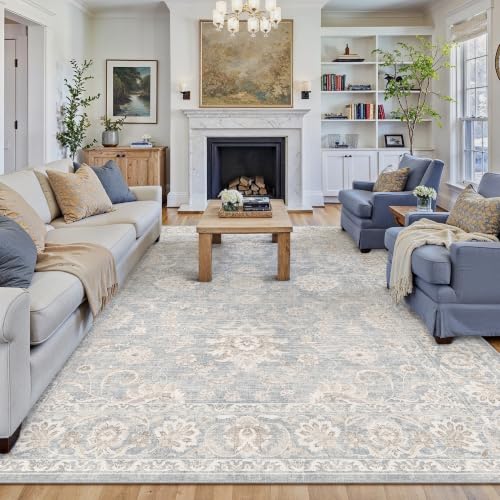
Blue-and-cream 10-by-14-foot rug
A blue-and-cream palette can echo a blue sofa while leaving contrast against dark upholstery. This API listing describes a low-pile style in a large size. Measure the seating zone and door clearances carefully before choosing a 10-by-14-foot rug.

Cream-and-blue vintage-pattern rug
A faded pattern can soften the boundary between a blue sofa and a light floor. This listing describes a washable low-pile rug; confirm its exact dimensions, care requirements, and whether the selected variant matches the photo and color name.
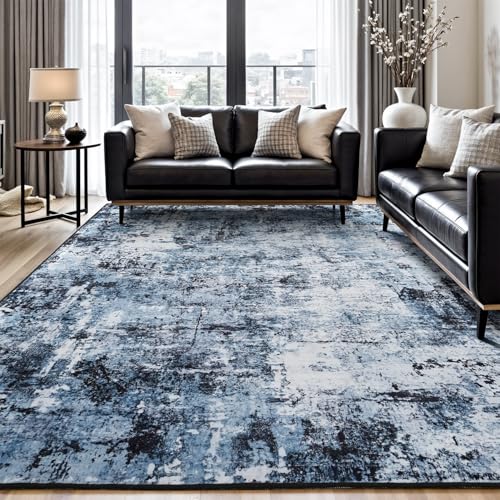
Navy abstract low-pile rug
A darker rug creates a layered blue-on-blue room when the sofa is lighter, or a dramatic tonal scheme with navy upholstery. Check the product’s actual black and blue balance, dimensions, nonslip claims, and cleaning limits before purchase.
Material, pile height, and household use
Material affects feel, cleaning, and how a rug behaves under furniture. Wool can feel warm and resilient but may shed and require specific care. Cotton can feel lighter and may be easier to handle in smaller sizes, though it can shift without a pad. Synthetic rugs vary widely; check the fiber, pile, backing, and cleaning instructions rather than assuming all synthetics perform alike.
Low-pile rugs are often easier to place under chairs, coffee tables, and doors. They can also be easier to vacuum, depending on the fibers and backing. Plush rugs feel softer but can trap crumbs, show furniture dents, or make chair movement harder. Match pile height to how the room is used, and check whether a rug pad is recommended.
In a high-traffic living room, look for a construction and color pattern that can tolerate routine use. A multicolor or distressed design may disguise small marks better than solid cream, but no rug is stain-proof. Keep cleaning products appropriate for the material and test in a hidden area when the care instructions allow it.
If the room includes pets or children, consider whether claws can catch in loops, whether spills can be blotted quickly, and whether the rug can be cleaned without moving heavy furniture. For a household with allergies, ask the manufacturer about fibers and maintenance, and vacuum regularly using equipment suitable for the rug.
Use a nonslip rug pad of the correct size and material for both the rug and floor. A pad can reduce bunching and add cushioning, but not all pads are safe for every finish. Follow the flooring manufacturer’s guidance and make sure the rug edges stay flat.
Coordinate the rest of the room
Once the rug is selected, repeat its colors in a few accessories. A blue sofa, cream rug, and rust pillow can be connected with a framed print that contains both blue and rust. You do not need to match every cushion to the rug; one solid and one subtle pattern can add dimension.
Wood tone changes the palette. Honey oak and warm walnut pair naturally with cream, beige, rust, and sage. Pale ash can support a cooler blue-gray scheme. Dark stained wood can make a navy sofa feel heavier, so introduce a light rug or white wall art for contrast.
Metal finishes also affect the room’s feel. Brass or bronze adds warmth to navy, while black and chrome tend toward a sharper modern look. Mix metals when they repeat intentionally; a single metal detail can look accidental if it appears nowhere else.
Wall color is part of the rug decision. A blue wall, blue sofa, and blue rug can become a single visual block unless their shades and values vary. Add cream curtains or a lighter rug area to create separation. If you want a calm monochrome room, use changes in texture and brightness rather than repeating exactly the same blue everywhere.
Common mistakes when pairing a rug with a blue sofa
- Choosing the closest blue swatch: exact matches can look flat and online color is unreliable.
- Ignoring undertones: a purple-blue sofa may clash with a green-teal rug even if both look “blue.”
- Buying too small: the sofa and chairs can appear disconnected from the conversation zone.
- Using too many bold patterns: a patterned sofa, pillows, and rug compete for attention.
- Choosing a pale rug without considering traffic: spills and marks may be more visible.
- Skipping a pad: a rug can slide or bunch, creating a safety and maintenance problem.
- Trusting the product photo alone: verify variant, dimensions, fiber, pile, and care details.
Another mistake is treating a product’s “living room size” as a reliable room plan. The phrase does not indicate how the rug will sit beneath your sofa. Draw the seating arrangement to scale or tape the dimensions on the floor. Include the coffee table, walkway, and any door swing before ordering.
Step-by-step rug selection for a blue couch
- Identify whether the sofa is navy, bright blue, dusty blue, slate, or pale blue.
- Note the room’s wood, flooring, wall, curtain, and metal colors.
- Pick a palette: neutral, warm contrast, blue-on-blue, or green/natural.
- Choose a pattern scale that balances the sofa and other textiles.
- Measure the conversation zone and mark candidate rug sizes on the floor.
- Check pile, backing, material, care, and rug-pad compatibility.
- Order a sample or confirm return terms when the color is uncertain.
- Repeat one or two rug colors elsewhere in the room, then stop before the scheme feels crowded.
Take a photo from the room entrance after placing the sofa and rug. The view from that angle often shows whether the color is balanced and whether the rug anchors the seating area. If it looks busy, remove one patterned accessory or choose a simpler pillow instead of replacing every item.
Frequently asked questions
What color rug looks best with a navy blue sofa?
Cream, ivory, warm beige, and pale gray create contrast. Rust, muted gold, and terracotta add warmth. A blue-and-neutral pattern can coordinate with navy while avoiding a flat, single-color block.
Can I use a blue rug with a blue sofa?
Yes. Use different shades or values and vary texture so the sofa and rug remain distinct. A patterned rug with cream, gray, or tan can bridge the blues.
Does a gray rug go with a blue couch?
Usually. A cool gray supports a crisp palette, while a warm greige can soften blue upholstery and wood tones. Compare undertones in the actual room before buying.
Should a rug be lighter or darker than the sofa?
Either can work. A lighter rug brightens and defines a dark sofa; a darker rug can ground a pale sofa. Choose based on room light, floor color, and traffic, and include enough contrast to separate the two.
What size rug should I put under a blue sofa?
Size depends on the sofa and the other seats. Measure the conversation zone and decide whether the front legs or all legs will sit on the rug. Tape the dimensions before ordering and check door clearance.
Is a washable rug a good choice for a living room?
It can be practical if the size fits the washing equipment and the manufacturer’s care directions allow cleaning. Check the backing, rug pad, and drying requirements; “washable” does not mean every size can be machine-washed at home.
How do I keep a rug from moving on hardwood?
Use a pad made for the specific rug and flooring finish, and follow the floor manufacturer’s care advice. Check the edges periodically so the rug stays flat and does not bunch.
Our recommendation
For a reliable starting point, pair a blue sofa with a patterned neutral rug that includes cream, beige, or gray and a small amount of blue. This connects the upholstery without demanding an exact shade match. If the room needs warmth, add rust, terracotta, or natural wood; if you want a calm palette, use sage or soft gray accents.
Choose size and pile for the way the room works, not just the product photo. Mark the layout on the floor, verify the selected variant and care instructions, and use a compatible rug pad. For more planning help, read our living room rug guide, browse Home & DIY, and review our affiliate disclosure.
Certain content on this site comes from Amazon and may change. Product images and listing information are supplied through Amazon Creators API. Confirm the exact rug size, color variation, fiber, backing, seller, and care instructions before purchase.