Best Chop Saws: How to Choose Between Abrasive and Cold-Cut Models
The phrase “chop saw” can describe more than one tool. In metalworking, it often means a stationary cutoff saw that lowers a wheel or blade through stock held against a fence. Some models use an abrasive wheel that grinds through metal; others use a toothed cold-cut blade designed to shear material and produce chips. In woodworking, people sometimes use “chop saw” informally for a miter saw. Those tools can look similar from a distance, but they are built for different materials and cutting methods.
The best chop saws are the ones matched to the material, finish, volume of work, and conditions in your shop. An abrasive saw may be suitable for rough cuts in compatible steel when sparks and heat can be managed. A cold-cut saw may be a better fit when cleaner edges, lower heat, or repeatable fabrication cuts matter. The right decision begins with the exact stock you plan to cut, not a broad product label.
This guide explains the differences between abrasive and cold-cut chop saws, how to compare blade and wheel compatibility, how to set up a stable cutting station, and how to work safely around clamping, sparks, hot chips, and noise. It also explains when the woodworking meaning of chop saw points you toward a different tool. If your project is trim or angled crosscuts in lumber, our guide to miter saws covers that category. For ripping boards or breaking down panels, see table saws or circular saws, where each tool has a different setup and safety profile.
Affiliate disclosure: DailyHomeDecorating.com may earn a commission from qualifying purchases through links in this article. This does not change the price you pay.
Amazon product examples to compare
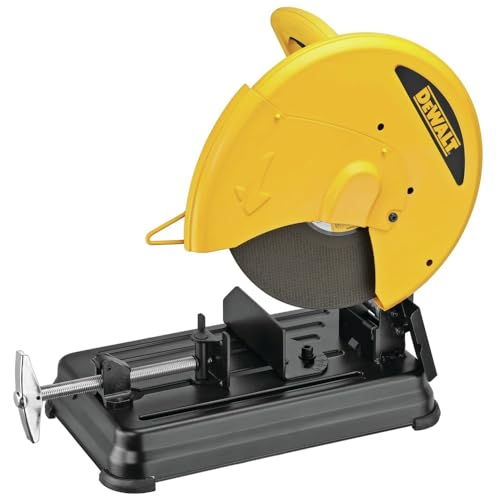
ASIN: B07V5N21JR

ASIN: B0C4F4GTGG

ASIN: B0FYG1FW19
Certain content that appears on this site comes from Amazon. This content is provided “as is” and is subject to change or removal at any time. Product examples and images are supplied through Amazon Creators API; confirm specifications and availability on the current listing.
What is a chop saw?
A chop saw is generally a fixed-base cutting tool with a hinged head. The workpiece sits on a table, rests against a fence, and is secured with a clamp or vise. The operator lowers the wheel or blade through the material in a controlled arc. The stationary setup can make repeatable straight cuts in stock that fits the saw’s capacity. It is commonly used for metal fabrication, construction, repair, and shop work.
The term does not identify one universal blade technology. An abrasive cutoff saw uses a consumable grinding wheel. A cold-cut saw uses a toothed metal-cutting blade, often with a gear-reduction drive and a clamping base designed for cutting stock. Some portable metal saws are hand-held and do not fit the stationary chop-saw category. Confirm the machine’s intended materials and wheel or blade type before purchase.
In casual conversation, “chop saw” may also refer to a woodworking miter saw. A woodworking miter saw typically uses a toothed blade and is designed to crosscut wood, trim, and approved materials. An abrasive metal chop saw is not a substitute for that tool, and a wood miter saw must not be converted for metal by installing an arbitrary abrasive wheel. Follow each saw’s manual and use only approved accessories.
Why the terminology matters
Search results and product titles may use “chop saw,” “cutoff saw,” “metal saw,” and “miter saw” loosely. Read the description beyond the title. Check the manual, product diagram, blade type, material list, speed, and mounting arrangement. If a tool is intended for abrasive wheels, it may have a high-speed drive and guard designed around grinding. A cold-cut machine may use a toothed blade and lower blade speed. Their accessories, work methods, and hazards differ.
Before ordering, write down the material and shape you need to cut: round tube, square tube, angle, channel, bar, rebar, or another stock. Include the maximum outside dimensions, wall thickness, alloy or grade if known, and the number of cuts in a typical session. This information helps you compare capacity, vise range, wheel or blade requirements, and the amount of cleanup that will follow.
Abrasive chop saws
An abrasive cutoff saw uses a bonded abrasive wheel to grind through metal. The wheel has no discrete teeth; its abrasive grains remove material as the wheel rotates. This can be useful for rough, straightforward cuts in suitable ferrous stock. Abrasive machines are often chosen for job-site or shop cutting where a relatively low initial tool cost and broad availability of consumable wheels are priorities.
The process creates sparks, heat, noise, dust, and a cut edge that may need deburring. The wheel wears down as it cuts, so the usable diameter changes. Wheel wear, material, pressure, and setup affect the result. The operator must keep the wheel aligned and let it grind at its intended rate. Pressing too hard can increase heat, bind or damage the wheel, and make the cut less controlled.
When an abrasive saw may fit
- Rough cutoff work in compatible steel stock.
- Applications where spark and heat management can be handled in a dedicated area.
- Projects where a ground edge is acceptable or can be finished afterward.
- Users who need to make occasional cuts and can inspect and replace wheels correctly.
Do not assume that an abrasive wheel can cut every metal or shape. Some materials, coatings, nonferrous alloys, and composites require specific wheels or a different tool. The wheel label and saw manual define approved uses. If the metal is unknown, coated, or potentially hazardous when heated, identify it before cutting and follow appropriate material guidance.
Tradeoffs to consider
Abrasive cutting is not cold. Heat can discolor the edge, affect nearby coatings, and create hot sparks or particles. The kerf removes material and may leave an edge that is less square or smooth than a toothed cut, depending on the wheel, stock, and technique. Dust and wheel fragments are additional concerns. If the work requires a clean edge, low heat, or precise repeatability, compare a cold-cut machine or another process rather than expecting an abrasive saw to provide a finished surface.
Cold-cut chop saws
A cold-cut saw uses a toothed blade selected for metal and machine compatibility. The teeth shear chips from the stock rather than grinding it into sparks. “Cold cut” is a comparative term; the blade and workpiece can still become warm, and chips can be hot. It does not mean there is no heat, no debris, or no need for protective equipment.
When the blade, machine, and material are correctly matched, a cold-cut saw can produce a clean, repeatable cut with less heat and less spark than an abrasive wheel. This can reduce secondary cleanup in some fabrication work. The machine and blades may cost more, and tooth damage can occur if the blade is misused or the workpiece is not clamped. Feed rate, blade speed, tooth engagement, lubrication requirements, and material range are model-specific.
When cold cutting may fit
- Fabrication where a cleaner cut or more consistent finish is valuable.
- Repeated cuts in stock compatible with the machine and blade.
- Work areas where reducing sparks is useful, while still controlling chips and heat.
- Shops that can maintain and store toothed blades correctly.
Cold-cut tools have their own limitations. They are not automatically suitable for every type of steel, stainless steel, aluminum, tubing, or thin wall stock. Blade tooth geometry and machine speed must match the material. Check the manual and blade manufacturer’s application chart. If your project includes mixed materials, compare whether one machine can handle the planned work or whether a separate tool is needed.
Abrasive wheel or toothed blade: a comparison
| Consideration | Abrasive cutoff saw | Cold-cut saw |
|---|---|---|
| Cutting method | Grinding with a bonded abrasive wheel | Shearing chips with a toothed metal blade |
| Typical edge | May need more deburring or cleanup | May produce a cleaner edge when matched correctly |
| Heat and sparks | Creates visible sparks and substantial heat | Usually fewer sparks and less heat, but chips and warmth remain |
| Consumable | Abrasive wheel wears during use | Toothed blade can be resharpened or replaced as specified |
| Key checks | Wheel rating, diameter, material compatibility, guard | Blade type, speed, tooth geometry, material compatibility |
| Best selection approach | Prioritize compatible rough cutoff work and spark control | Prioritize finish, repeatability, and correct blade matching |
This comparison is a starting point rather than a performance promise. Results depend on the exact saw, wheel or blade, stock, clamping, and technique. Check the manufacturer’s capacity and application guidance for the model you are evaluating.
How to choose a chop saw
Start with material and profile
Different stock shapes create different clamping and cutting challenges. Round pipe may roll if it is not held correctly. Square tubing can be stable on one face but may shift when rotated. Angle iron and channel may have an uneven contact surface. Flat bar can vibrate if unsupported. Look for a vise or clamp that secures the shapes you use, and check whether the manual shows the approved orientation.
Include the wall thickness and material grade. Thin material may deform or chatter if clamping is poor or the blade is too aggressive. Thick stock demands an appropriate wheel or blade and machine capacity. If stock dimensions approach the published maximum, confirm that the cut is permitted in that orientation. Do not infer maximum capacity from the blade diameter alone.
Check cutting capacity
Manufacturers may list capacity for round, square, rectangular, or angled stock. A saw that accommodates a large round tube may have a smaller limit for rectangular material. Some profiles can be rotated to make a cut, but this is safe only when the vise and manual allow the setup. Read the capacity chart for the exact cross-section, not a single headline number.
Think about the material length too. A long piece needs support on both sides of the cutting area so it cannot tip, twist, or bind. A short piece must still be held securely without placing hands near the wheel or blade. The saw’s capacity does not replace the need for stable infeed and outfeed support.
Estimate cut volume
Occasional home repair, short fabrication sessions, and daily production place different demands on a saw. For a few cuts, straightforward controls and easy storage may matter most. For repeated work, vise speed, angle adjustment, blade or wheel life, motor duty guidance, service support, and repeatability become more important. Check the manufacturer’s duty-cycle instructions if the tool is intended for intermittent operation.
Do not infer professional duty capability from a heavy-looking housing or a high wattage claim. Use the intended operating schedule and material chart. If your work is continuous or safety-critical, select equipment rated for the actual production conditions and get advice from a qualified supplier.
Assess the vise and fence
The vise should hold the work securely and make it possible to place stock consistently. Look at its range, clamp contact, adjustment method, and how it handles different profiles. A quick-adjust feature can save time, but it must still lock firmly. The fence should support the work without obstructing the wheel or blade path at the angles you plan to use.
For angled cuts, check how the saw’s table or vise adjusts and whether the scale is clear. Verify how the workpiece must be positioned for each angle. A visible scale does not guarantee accuracy; make a test cut in scrap and verify the angle with an appropriate measuring tool. Do not force the fence or alter the vise unless the manual permits the change.
Compare portability and mounting
A stationary shop may benefit from a heavier base that is bolted to a stable bench. A job-site saw may need a handle, manageable weight, and a way to secure it for transport. In either setting, the base must not shift during a cut. Check the mounting holes and required clearance for the head, handle, and stock. The cutting station should be positioned so sparks or chips do not reach people, flammable materials, vehicles, windows, or finished surfaces.
If a portable stand is used, verify that it is designed for the saw and load, fully locked, and stable on the ground. Do not use a folding table or improvised support that can move when the saw is lowered. Make sure the electrical cord is routed out of the cutting path and will not pull the machine as the head moves.
Power and electrical supply
Compare the machine’s electrical requirements with the outlet and circuit available. Follow the manual for voltage, amperage, grounding, extension cord size, and other supply requirements. Do not remove grounding features or use damaged cords. If you use a generator or temporary site power, confirm compatibility and capacity rather than assuming any source will work.
For any cordless metal saw, check that the manufacturer offers an appropriate model and blade system for your material. Battery runtime may vary considerably with stock and cut volume. Keep batteries away from sparks, excessive heat, metal debris, moisture, and direct contact with conductive scraps. Never charge a battery in conditions prohibited by its maker.
Consider cleanup and extraction
Abrasive wheels produce sparks and particulate that must be controlled. Cold-cut saws produce chips that can be sharp and hot. Check the guard, chip management, dust or spark deflector, and cleanup instructions. Do not assume a small collection tray captures every particle. Keep the surrounding area clear and use a cleanup method appropriate for the debris. Avoid blowing metal dust into the air or into electrical equipment.
Blade and wheel selection
For abrasive saws, use a wheel explicitly approved for the machine and the intended material. Confirm wheel diameter, arbor size, thickness, maximum operating speed, direction if marked, and date or condition requirements. A wheel’s speed rating must meet or exceed the saw’s specified speed. Never use a cracked, chipped, damp, expired, or improperly stored wheel. Handle wheels carefully and store them as directed.
For cold-cut machines, use blades specified for the saw’s arbor, diameter, rotation, speed, and material. The blade’s tooth count, tooth geometry, and body design determine how it engages the stock. A blade for thin-wall tubing may not be suitable for thick solid bar. Some systems require particular cutting fluid or lubrication; follow the manual and blade maker’s instructions. Do not substitute a general-purpose woodworking blade.
Match teeth to stock thickness
For toothed metal blades, enough teeth need to engage the work at once to avoid snagging, but an overly fine tooth pattern may cut slowly or clog in thick material. The appropriate tooth count depends on material shape and thickness. Use the blade manufacturer’s chart. The rule of thumb printed on one product page may not cover a different alloy, wall thickness, or machine speed.
For abrasive wheels, the wheel specification and material compatibility determine whether it is suitable. A wheel intended for one class of metal may not be approved for another. Never use a wheel with a speed rating below the saw’s no-load speed or a diameter outside the guard’s design. The guard is part of the system and must remain installed and correctly positioned.
Inspect consumables
Before installation, inspect wheels and blades for visible damage and confirm markings. Use the mounting flanges and fasteners supplied or specified for the machine. Tighten only as directed; overtightening can damage a wheel or blade. After installation, ensure the guard closes and the consumable can rotate without contacting it. Do not run the saw if a wheel wobbles, vibrates, or makes unusual noise during a test run.
Keep spare wheels or blades in their original packaging or an approved case, away from moisture, impact, and chemicals. Do not drop an abrasive wheel. Do not rest heavy objects on a toothed blade. Replace consumables when they are worn, damaged, or no longer cutting properly; never try to repair a cracked wheel.
Setting up a safe cutting station
Read the saw manual and consumable instructions before setup. Choose a level, stable surface that can support the tool and stock. Bolt the saw down if the maker requires it. Arrange material so the cut-off cannot fall onto a foot, bind in the blade, or strike another person. Keep a clear zone around the machine and remove combustible materials from the spark path when using an abrasive wheel.
- Inspect the machine. Check the cord, switch, guard, vise, fence, base, and handles for damage or looseness.
- Inspect the wheel or blade. Confirm the correct type, size, speed rating, material use, and condition.
- Mount securely. Fasten the saw to a rated surface or stand, then verify that it cannot shift.
- Plan the cut. Mark the cut line and identify the reference face, waste section, and expected movement of the stock.
- Support long stock. Use level supports on both sides so the material does not tip or pinch the consumable.
- Clamp the work. Set the vise for the profile and angle described in the manual. Check that the material cannot rotate.
- Clear the hazard zone. Move flammables, people, cords, and sensitive surfaces away from sparks, chips, and hot stock.
- Check power and lighting. Route the cord safely and make sure the cut line and controls are visible.
Keep a suitable fire extinguisher available where required by your shop rules and material risk. Do not cut where sparks could enter a wall cavity or reach hidden insulation, dust, fuel, solvent, vegetation, or other combustible material. A spark guard or deflector reduces exposure but cannot make a hazardous area safe by itself.
Safe operation
Metal cutoff saws can create serious hazards: rotating wheels or blades, sparks, hot chips, sharp edges, noise, and flying fragments. Follow the full manual. Wear the personal protective equipment specified by the saw and wheel or blade makers. At a minimum, eye and face protection, hearing protection, suitable clothing, and task-appropriate footwear may be needed. Respiratory protection requirements depend on material and process. Do not wear loose clothing, jewelry, or gloves that can catch in moving parts; follow the manufacturer’s specific instructions about gloves.
- Keep the wheel or blade guard in place. Do not defeat switches, interlocks, or guards.
- Clamp the work firmly and keep hands away from the cutting zone.
- Stand out of the plane of the abrasive wheel during startup and follow the maker’s positioning guidance.
- Allow the wheel or blade to reach operating speed before engaging the work, if the manual directs this method.
- Lower the head smoothly. Do not force the cut or twist the wheel or blade in the kerf.
- Do not adjust the vise or remove stock while the wheel or blade is moving.
- Wait for complete stop before lifting the head, clearing chips, or measuring the cut.
- Do not leave the machine running unattended.
- Disconnect power before changing a wheel or blade, cleaning, or maintenance.
Never use an abrasive wheel that is cracked or damaged. If a wheel has been dropped, inspect it according to the manufacturer’s instructions and do not use it if there is any doubt. Avoid standing directly in front of the wheel at startup. If the machine vibrates, makes a new sound, or cuts unpredictably, stop it and investigate only after it has fully stopped and power is disconnected.
Control heat, sparks, and chips
With abrasive cutting, sparks can travel farther than expected and hot particles can ignite combustible material. Use the saw in a designated area with a noncombustible surface and suitable barriers where needed. Keep a watch for smoldering material after cutting, especially around dust, vegetation, wood framing, and concealed cavities. Do not direct sparks toward people, vehicles, glass, or flammable liquids.
Cold-cut chips may be hot and sharp. Allow stock to cool before handling or measuring near the cut. Use a brush or appropriate tool to remove chips, not bare hands. Never brush metal chips toward the eyes or blow them across the shop. Store hot cutoffs where they cannot contact combustibles.
Workpiece handling and clamping
A secure clamp prevents stock from rotating or lifting. Pay particular attention to round tubing and short pieces. Do not hold stock by hand near the wheel or blade, and do not place a hand under a cutoff to catch it. If the workpiece is too small for the vise to secure safely, use another method or tool rather than improvising a close-hand hold. The manual may specify minimum piece length and permitted shapes.
Support long stock level with the table. If the outfeed side sags, it can pinch the wheel or blade; if the infeed side drops, the work may rotate or jump. Supports should bear the stock without pushing it sideways into the fence. Plan how to handle the offcut before beginning.
Making a square or angled cut
Mark the work with a clear line and identify the waste side. Set the angle using the saw’s instructions, lock the table or vise, and confirm the work remains clamped in the approved orientation. For a critical fit, make a test cut on scrap from the same stock. Measure the test piece with a suitable square or angle tool and adjust according to the manual.
Angle scales and detents are helpful references, but they do not eliminate verification. Fence alignment, stock shape, burrs, debris, vise pressure, and consumable condition can all affect the result. Do not force a stock profile into a position that leaves it unstable. If the saw cannot safely clamp the angle you need, use another setup approved for the task.
When repeated cuts are needed, set a stop or mark each piece consistently. Make sure the stop cannot trap the cutoff between itself and the wheel or blade. Avoid stacking multiple pieces unless the manufacturer specifically permits the setup and the vise can secure them without movement. Cutting a bundle by hand pressure is not a safe substitute for a proper clamp.
Common buying mistakes
Buying an abrasive saw when you need a finished edge
An abrasive saw can be effective for rough cutoff but may leave heat discoloration, burrs, or a less finished edge. If fit, surface condition, or downstream welding preparation matters, compare cold-cut options and finishing requirements. Do not assume that a cutoff machine will eliminate secondary work.
Assuming all chop saws cut the same metal
Blade and wheel compatibility varies by machine and material. A saw suitable for one type of steel may not be approved for stainless, aluminum, or another alloy. Read the application chart and manual. If the material is unidentified, identify it before cutting.
Choosing from maximum capacity only
Headline capacity may describe a particular shape at a straight cut. Angled capacity, wall thickness, vise range, and stock orientation can differ. Compare your actual profile and cut angle with the detailed chart. Also consider support requirements for long stock.
Ignoring spark clearance
Abrasive sparks can damage nearby surfaces or start a fire. A small shop may not have enough safe clearance for the saw. Plan the cutting location before buying. A different process may be more appropriate if you cannot isolate a spark zone.
Using a woodworking saw for metal conversion
Do not install an arbitrary abrasive wheel in a wood miter saw or use an unapproved metal blade. Speed, guard, arbor, motor, and clamping design must match the consumable and material. If you need wood crosscuts, choose a woodworking saw; if you need metal cutoff, choose a machine designed for that use.
Forgetting replacement consumables
Wheels wear and blades dull or may need sharpening or replacement. Compare the availability and cost of approved consumables and any required fluid or accessories. Confirm the consumable size and rating before purchase. A low initial tool price may not reflect the cost of a frequent-cut workflow.
Care and maintenance
Disconnect the saw before cleaning or service. Remove metal dust, chips, and debris with methods approved by the manufacturer. Keep vents clear and prevent conductive particles from accumulating around switches, motors, and battery contacts. Do not spray liquids into electrical components. Inspect the cord, plug, switch, handle, vise, fence, guard, and base regularly.
For abrasive equipment, inspect the wheel before each use and replace it if damaged or worn beyond the maker’s limit. Keep flanges and spindle surfaces clean and use the specified mounting parts. Do not use a wheel that has been stored improperly or whose condition is uncertain. For cold-cut machines, inspect the blade teeth and body, clean away deposits as directed, and replace or service the blade when cutting performance declines.
Check that the vise locks securely and that the angle adjustment remains firm. Verify the guard returns and encloses the wheel or blade as intended. If the saw has been dropped, exposed to moisture, or begins to vibrate, spark, smell, or sound unusually, stop using it and have it checked by a qualified service provider. Do not repair a guard or electrical fault with improvised parts.
Store the machine in a dry place with its head secured. Keep wheels and blades protected from impact, moisture, and contamination. Keep the manual and consumable information available so future users can verify the correct setup. A clean saw is easier to inspect, but cleaning does not replace pre-use inspection.
When a different saw is the better choice
If you mean “chop saw” as a woodworking crosscut tool, a miter saw is usually the intended category. It is designed for crosscutting and angled cuts in wood and approved materials. Our miter saw guide explains sliding and compound features. If you need to rip boards or break down sheet goods, a table saw or circular saw may be more appropriate, with different support and safety needs.
If you are cutting pipe in place or demolishing framing, a reciprocating saw can offer access a stationary cutoff saw cannot. For branches, use a saw designed for outdoor cutting and reach. These tools are not interchangeable merely because each has a blade. Match tool, consumable, stock, and work position to the manufacturer’s intended use.
Frequently asked questions
What is the difference between a chop saw and a miter saw?
In metalworking, “chop saw” often means a stationary metal cutoff saw that uses an abrasive wheel or cold-cut blade. A miter saw is usually a woodworking tool for crosscuts and angled cuts in lumber and approved materials. People sometimes use “chop saw” informally for a miter saw, so check the material and blade described by the manufacturer.
Is a cold-cut saw better than an abrasive chop saw?
Neither is universally better. A cold-cut saw can provide a cleaner cut and fewer sparks when blade and material are correctly matched. An abrasive saw may be a practical choice for rough compatible steel cutoff. Compare the edge, heat, dust, consumable cost, capacity, and the needs of your workflow.
Can an abrasive chop saw cut aluminum?
Only if the saw and a specifically approved wheel are rated for the material. Do not assume a wheel designed for steel can safely cut aluminum. Follow wheel labeling and machine instructions, and use another process if compatibility is unclear.
Can a chop saw cut wood?
A metal cutoff saw is not a substitute for a wood miter saw. Abrasive sparks and heat can ignite sawdust or damage wood, and the machine is not designed for a wood-cutting blade. Use a woodworking saw intended for the material. If a product uses “chop saw” to describe a wood crosscut machine, verify its actual blade and instructions.
Why does the cut edge have burrs?
Burrs may result from the consumable, material, clamping, feed, or wear. Check that the wheel or blade is suitable and in good condition, that the work is secure, and that the machine is set correctly. Some processes require deburring after the cut. Do not reach near the consumable while it is moving.
Do cold-cut saws create heat?
Yes. “Cold cut” is relative to abrasive grinding and does not mean the blade or material stays cold. Chips and stock can still be warm or hot. Let them cool before handling and use the protection specified by the manufacturer.
How do I prevent metal stock from moving?
Use the saw’s vise and approved clamping method, choose the correct orientation, and support long material level on both sides. Round and short pieces need special care. If the vise cannot hold a piece securely, choose another tool or setup rather than holding it by hand near the blade.
How often should I replace an abrasive wheel?
Follow the wheel maker’s inspection and wear limits. Replace a wheel when it is damaged, worn below its limit, or otherwise unsafe. There is no universal number of cuts because stock, technique, wheel type, and use differ. Never use a cracked, chipped, or improperly rated wheel.
Final thoughts
The best chop saws are selected by material, cut quality, volume, and the environment where they will operate. Decide whether you need an abrasive cutoff saw or a toothed cold-cut machine, then compare capacity for your exact stock profile, vise and fence, angle adjustment, consumable compatibility, spark or chip control, and service support. If your actual need is a woodworking crosscut saw, shop for a miter saw instead of trying to adapt a metal cutoff machine.
Set up a stable station, secure the work, inspect the wheel or blade, and keep people and combustible material clear of the cutting zone. Use approved consumables and protective equipment, let the machine do the work, and wait for the wheel or blade to stop before handling stock. These checks help you choose equipment that fits the job and use it with a more predictable process.