Disclosure: As an Amazon Associate, dailyhomedecorating.com earns from qualifying purchases. Links on this page are affiliate links; they cost you nothing extra. Prices and availability change often, so check the current Amazon listing before you buy.
This guide is a complete wheelbarrow buying guide resource for home gardeners, allotment keepers and anyone facing a season of hauling. This buying guide is organised the way good gardeners actually shop: by job first, by design second, and by product name last. A wheelbarrow looks like the simplest tool in the shed, yet the difference between a good one and a frustrating one shows up on every trip: in how the load balances, how the wheel rolls over your ground, how the handles feel in your hands and how cleanly the tray empties when you arrive. Across the sections that follow you will find an honest look at the main designs on the market, the trade-offs that actually matter, worked examples for common jobs, and the care habits that keep a barrow rolling for years. Product picks in this wave are presented in prose while verification is pending, with qualitative tiers instead of prices, so you can shortlist by fit and then check the current listing for the model that matches your ground and your jobs.
Key Takeaways: Match the barrow to your most common load and your tightest corner, not to your biggest imaginable job. A single wheel is nimble but asks your arms to balance; two or four wheels are steadier but need more room. Steel trays take punishment, poly trays resist rust and weigh less. Keep loads low, centred and within the maker’s rating, lift with your legs, keep pneumatic tyres at sidewall pressure, and store the barrow tipped, hung or covered so it never pools water.
What a Wheelbarrow Does and the Main Types
A wheelbarrow moves bulk material — soil, compost, mulch, waste, stone, logs — from where it is to where it is needed, carrying the weight on its wheel so you only lift, balance and steer. That one job is done by several distinct types, and choosing the type is the most important decision in this entire guide.
The Traditional Single-Wheel Barrow
The classic design: one wheel at the front, two legs at the back, two handles in your hands. It is the most manoeuvrable type, turning in its own length and threading narrow paths, and it tips its load exactly where you aim it. Its demand is balance; your arms steady every load, which most users master within a few trips.
The Dual-Wheel Barrow
Two wheels side by side at the front share the balancing work, making the barrow noticeably steadier with heavy-feeling loads and kinder for newer users. It gives up a little agility in very tight spaces and can straddle ruts awkwardly, but on open ground it is the confidence-building choice.
The Four-Wheeled Garden Cart
A level bed on four wheels, pulled or pushed like a wagon, often with a tipping bed. Carts excel at bulky, fragile or stacked loads — pots, tools, bags, harvested produce — over flat ground, and they are the easiest of all to load because the bed stays level and still. They are the least happy on steep, rough or very narrow routes.
Convertible and Multi-Use Designs
Convertibles rearrange into dollies, carts and barrows. They suit small households that need several tools occasionally and own storage space for only one. The honest caveat is that each mode is a compromise, and the mechanisms add weight and complexity a single-purpose tool avoids.
In this guide
Top Picks at a Glance
The shortlist below is presented in prose while verification is pending, with qualitative tiers rather than prices. Use it to match a shape of tool to your jobs, then check the current listing for the exact model.

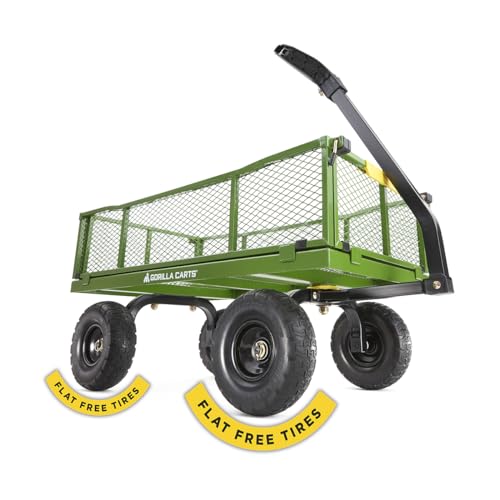
Gorilla Carts Steel Utility Cart — Best Overall Traditional
In prose terms, this pick is a four-wheeled steel utility cart take on the classic barrow, built around a steel bed, a pull handle that keeps the load level, and a dump-style release on many versions that lets you tip material out instead of shovelling it. It is presented here without a purchase link while verification is pending, so judge it on the fit described rather than on any headline claim. Best for: readers whose jobs match the strengths just described. Not suited for: readers whose ground, storage or typical load point the other way, and who would be better served by a different shape of tool from the same shortlist. Check the current listing carefully before you buy, compare the tray material, wheel type and handle design against your route, and treat any optional extras as exactly that — optional.

WORX Aerocart — Best for Steadiness
In prose terms, this pick is a convertible yard tool that shifts between wheelbarrow, dolly and cart duties, aimed at households that want one piece of kit to cover several lighter jobs rather than a single-purpose barrow. It is presented here without a purchase link while verification is pending, so judge it on the fit described rather than on any headline claim. Best for: readers whose jobs match the strengths just described. Not suited for: readers whose ground, storage or typical load point the other way, and who would be better served by a different shape of tool from the same shortlist. Check the current listing carefully before you buy, compare the tray material, wheel type and handle design against your route, and treat any optional extras as exactly that — optional.

Jackson Professional Wheelbarrow — Best Four-Wheel Cart
In prose terms, this pick is a contractor-leaning single-wheel barrow in the traditional mould, with a steel tray, hardwood-style handles and a stance made for daily site and garden work. It is presented here without a purchase link while verification is pending, so judge it on the fit described rather than on any headline claim. Best for: readers whose jobs match the strengths just described. Not suited for: readers whose ground, storage or typical load point the other way, and who would be better served by a different shape of tool from the same shortlist. Check the current listing carefully before you buy, compare the tray material, wheel type and handle design against your route, and treat any optional extras as exactly that — optional.

True Temper Wheelbarrow — Best Convertible
In prose terms, this pick is a long-running household name in this category, offering straightforward steel and poly tray barrows aimed at ordinary garden, landscaping and home-improvement hauling. It is presented here without a purchase link while verification is pending, so judge it on the fit described rather than on any headline claim. Best for: readers whose jobs match the strengths just described. Not suited for: readers whose ground, storage or typical load point the other way, and who would be better served by a different shape of tool from the same shortlist. Check the current listing carefully before you buy, compare the tray material, wheel type and handle design against your route, and treat any optional extras as exactly that — optional.

Polar Trailer Cart — Best for Bulky Loads
In prose terms, this pick is a tow-and-pull trailer cart approach, with a larger poly bed and four wheels, better suited to flat ground and bigger, bulkier loads moved at walking pace. It is presented here without a purchase link while verification is pending, so judge it on the fit described rather than on any headline claim. Best for: readers whose jobs match the strengths just described. Not suited for: readers whose ground, storage or typical load point the other way, and who would be better served by a different shape of tool from the same shortlist. Check the current listing carefully before you buy, compare the tray material, wheel type and handle design against your route, and treat any optional extras as exactly that — optional.

Marathon Dual-Wheel Wheelbarrow — Best Everyday Value Tier
In prose terms, this pick is a two-wheel barrow that trades a little of the single wheel’s nimbleness for noticeably steadier balance, especially for newer users and heavier-feeling loads. It is presented here without a purchase link while verification is pending, so judge it on the fit described rather than on any headline claim. Best for: readers whose jobs match the strengths just described. Not suited for: readers whose ground, storage or typical load point the other way, and who would be better served by a different shape of tool from the same shortlist. Check the current listing carefully before you buy, compare the tray material, wheel type and handle design against your route, and treat any optional extras as exactly that — optional.
How Much Capacity Do You Actually Need?
Capacity is the most mis-bought specification in this category. Shoppers imagine their single biggest job and buy for it, then spend years manoeuvring an oversized tray through ordinary work. Dense loads reach a comfortable lifting limit long before a tray looks full, so for soil, gravel and wet compost, a mid-sized tray filled sensibly beats a giant tray filled bravely. Reserve the biggest trays for genuinely bulky, light work such as leaves, straw and clippings.
When you Think about the work in terms of trips saved rather than loads carried, the details come into focus quickly: grip shape and handle spacing decide whether the tool feels natural with gloves on in winter and with bare hands in summer, and small differences here are felt on every trip. At the same time, the legs matter more than they look, because a barrow spends much of its life parked mid-load, and a stance that rocks or sinks into soft ground makes loading awkward and occasionally messy. Write your own short list of non-negotiables before you shop, and let that list, not a headline, make the decision. In practice that means walking your route once with fresh eyes, noting gates, steps, slopes and soft patches, and then reading every product description against that route rather than against an ideal garden that nobody actually owns.
When you Consider how the tray behaves when it is only half full, which is how most loads actually travel, the details come into focus quickly: a deep tray suits bulky, light material such as leaves, clippings and mulch, while a shallower tray keeps dense material like wet soil and gravel lower and easier to control. At the same time, grip shape and handle spacing decide whether the tool feels natural with gloves on in winter and with bare hands in summer, and small differences here are felt on every trip. Shoppers who match the tool to their most common load almost always end up happier than shoppers who match it to their biggest imaginable load. In practice that means walking your route once with fresh eyes, noting gates, steps, slopes and soft patches, and then reading every product description against that route rather than against an ideal garden that nobody actually owns.
When you Consider how the tray behaves when it is only half full, which is how most loads actually travel, the details come into focus quickly: a single wheel tracks neatly between beds and through gates, but it asks your arms to do the balancing, while two wheels or four wheels share that balancing work and ask more room when you turn. At the same time, a deep tray suits bulky, light material such as leaves, clippings and mulch, while a shallower tray keeps dense material like wet soil and gravel lower and easier to control. None of these choices is right in the abstract; each is right for a particular garden, a particular route and a particular pair of hands. In practice that means walking your route once with fresh eyes, noting gates, steps, slopes and soft patches, and then reading every product description against that route rather than against an ideal garden that nobody actually owns.
When you Notice how a design behaves at walking pace over grass, which is slower and rougher than a showroom floor, the details come into focus quickly: grip shape and handle spacing decide whether the tool feels natural with gloves on in winter and with bare hands in summer, and small differences here are felt on every trip. At the same time, a deep tray suits bulky, light material such as leaves, clippings and mulch, while a shallower tray keeps dense material like wet soil and gravel lower and easier to control. Long after the purchase is forgotten, the trips remain, so it pays to choose for the trips. In practice that means walking your route once with fresh eyes, noting gates, steps, slopes and soft patches, and then reading every product description against that route rather than against an ideal garden that nobody actually owns.
Which Tray Material Suits Your Loads?
Steel and poly divide the market. Steel is the choice for rubble, stone, bricks and any load with sharp corners, and it tolerates being knocked back into shape. Poly is the choice for soil, compost, manure and garden waste, where its light weight and total immunity to rust pay off every single trip. If your loads are mixed, ask which load is roughest rather than which is most frequent; the roughest load decides what the tray must survive.
When you Consider how the tray behaves when it is only half full, which is how most loads actually travel, the details come into focus quickly: the legs matter more than they look, because a barrow spends much of its life parked mid-load, and a stance that rocks or sinks into soft ground makes loading awkward and occasionally messy. At the same time, a deep tray suits bulky, light material such as leaves, clippings and mulch, while a shallower tray keeps dense material like wet soil and gravel lower and easier to control. None of these choices is right in the abstract; each is right for a particular garden, a particular route and a particular pair of hands. In practice that means walking your route once with fresh eyes, noting gates, steps, slopes and soft patches, and then reading every product description against that route rather than against an ideal garden that nobody actually owns.
When you Picture the tightest corner on your usual route and judge every design against that corner, the details come into focus quickly: a deep tray suits bulky, light material such as leaves, clippings and mulch, while a shallower tray keeps dense material like wet soil and gravel lower and easier to control. At the same time, a barrow that converts into a dolly or cart earns its shed space twice, but every conversion adds joints, latches and compromises that a single-purpose tool simply does not carry. A barrow is a simple tool, which is exactly why the small details decide whether it feels like help or like hard work. In practice that means walking your route once with fresh eyes, noting gates, steps, slopes and soft patches, and then reading every product description against that route rather than against an ideal garden that nobody actually owns.
When you Ask where the load sits in relation to the wheel, because that relationship is the whole physics of the tool, the details come into focus quickly: a barrow that converts into a dolly or cart earns its shed space twice, but every conversion adds joints, latches and compromises that a single-purpose tool simply does not carry. At the same time, a deep tray suits bulky, light material such as leaves, clippings and mulch, while a shallower tray keeps dense material like wet soil and gravel lower and easier to control. Shoppers who match the tool to their most common load almost always end up happier than shoppers who match it to their biggest imaginable load. In practice that means walking your route once with fresh eyes, noting gates, steps, slopes and soft patches, and then reading every product description against that route rather than against an ideal garden that nobody actually owns.
When you Weigh up storage before you weigh up capacity, because a barrow you cannot store well will not last well, the details come into focus quickly: a barrow that converts into a dolly or cart earns its shed space twice, but every conversion adds joints, latches and compromises that a single-purpose tool simply does not carry. At the same time, the legs matter more than they look, because a barrow spends much of its life parked mid-load, and a stance that rocks or sinks into soft ground makes loading awkward and occasionally messy. Shoppers who match the tool to their most common load almost always end up happier than shoppers who match it to their biggest imaginable load. In practice that means walking your route once with fresh eyes, noting gates, steps, slopes and soft patches, and then reading every product description against that route rather than against an ideal garden that nobody actually owns.
Which Wheel and Tyre Suit Your Ground?
The wheel is where the barrow meets your garden. A pneumatic tyre floats over lawns, gravel and roots with the least effort and the kindest ride, provided you keep it at sidewall pressure and accept the small risk of punctures. A flat-free tyre suits thorny, debris-strewn ground and owners who know a barrow may sit for a month between jobs. A larger wheel rolls over obstacles more easily; a smaller wheel keeps the tray lower and steadier to load.
When you Ask where the load sits in relation to the wheel, because that relationship is the whole physics of the tool, the details come into focus quickly: long handles give leverage that makes a heavy tray feel lighter at the lift, yet they also lengthen the whole tool, which matters in a small shed and on a narrow path. At the same time, pneumatic tyres roll kindly over roots, gravel and uneven lawns, while flat-free tyres remove punctures and pressure checks from your life at the cost of a firmer, less forgiving ride. That is why experienced gardeners talk about wheels, handles and balance far more than they talk about tray colour or badges. In practice that means walking your route once with fresh eyes, noting gates, steps, slopes and soft patches, and then reading every product description against that route rather than against an ideal garden that nobody actually owns.
When you Picture the tightest corner on your usual route and judge every design against that corner, the details come into focus quickly: a barrow that converts into a dolly or cart earns its shed space twice, but every conversion adds joints, latches and compromises that a single-purpose tool simply does not carry. At the same time, a single wheel tracks neatly between beds and through gates, but it asks your arms to do the balancing, while two wheels or four wheels share that balancing work and ask more room when you turn. When two designs look equal on paper, choose the one whose wheel, handles and storage fit your daily routine more closely. In practice that means walking your route once with fresh eyes, noting gates, steps, slopes and soft patches, and then reading every product description against that route rather than against an ideal garden that nobody actually owns.
When you Judge a barrow on the day the job goes wrong, not on the day everything is dry and level, the details come into focus quickly: a single wheel tracks neatly between beds and through gates, but it asks your arms to do the balancing, while two wheels or four wheels share that balancing work and ask more room when you turn. At the same time, pneumatic tyres roll kindly over roots, gravel and uneven lawns, while flat-free tyres remove punctures and pressure checks from your life at the cost of a firmer, less forgiving ride. Write your own short list of non-negotiables before you shop, and let that list, not a headline, make the decision. In practice that means walking your route once with fresh eyes, noting gates, steps, slopes and soft patches, and then reading every product description against that route rather than against an ideal garden that nobody actually owns.
When you Remember that dumping is half the job, and a tray that empties cleanly saves real effort at the end of each run, the details come into focus quickly: a single wheel tracks neatly between beds and through gates, but it asks your arms to do the balancing, while two wheels or four wheels share that balancing work and ask more room when you turn. At the same time, pneumatic tyres roll kindly over roots, gravel and uneven lawns, while flat-free tyres remove punctures and pressure checks from your life at the cost of a firmer, less forgiving ride. When two designs look equal on paper, choose the one whose wheel, handles and storage fit your daily routine more closely. In practice that means walking your route once with fresh eyes, noting gates, steps, slopes and soft patches, and then reading every product description against that route rather than against an ideal garden that nobody actually owns.
How to Prioritise by Use Case
The allotment grower moving compost and soil weekly should prioritise a mid-sized steel or poly tray, a pneumatic wheel and handles that fit gloved hands. The homeowner with lawns, leaves and seasonal mulching should prioritise tray volume and light weight. The smallholder moving feed, bedding and logs should prioritise stability — dual wheels or a cart — and a tray that hoses clean. The DIY renovator moving rubble and bricks should prioritise a steel tray, a strong undercarriage and a wheel that does not flinch at hard, broken ground.
When you Ask where the load sits in relation to the wheel, because that relationship is the whole physics of the tool, the details come into focus quickly: the legs matter more than they look, because a barrow spends much of its life parked mid-load, and a stance that rocks or sinks into soft ground makes loading awkward and occasionally messy. At the same time, a barrow that converts into a dolly or cart earns its shed space twice, but every conversion adds joints, latches and compromises that a single-purpose tool simply does not carry. Shoppers who match the tool to their most common load almost always end up happier than shoppers who match it to their biggest imaginable load. In practice that means walking your route once with fresh eyes, noting gates, steps, slopes and soft patches, and then reading every product description against that route rather than against an ideal garden that nobody actually owns.
When you Weigh up storage before you weigh up capacity, because a barrow you cannot store well will not last well, the details come into focus quickly: a steel tray shrugs off rubble, broken concrete and sharp-edged stone, while a poly tray is lighter to lift, quieter in use and immune to rust, though it can flex under a pointed load. At the same time, a barrow that converts into a dolly or cart earns its shed space twice, but every conversion adds joints, latches and compromises that a single-purpose tool simply does not carry. When two designs look equal on paper, choose the one whose wheel, handles and storage fit your daily routine more closely. In practice that means walking your route once with fresh eyes, noting gates, steps, slopes and soft patches, and then reading every product description against that route rather than against an ideal garden that nobody actually owns.
When you Separate the jobs you do weekly from the jobs you do once a year, and buy for the weekly ones, the details come into focus quickly: a single wheel tracks neatly between beds and through gates, but it asks your arms to do the balancing, while two wheels or four wheels share that balancing work and ask more room when you turn. At the same time, grip shape and handle spacing decide whether the tool feels natural with gloves on in winter and with bare hands in summer, and small differences here are felt on every trip. When two designs look equal on paper, choose the one whose wheel, handles and storage fit your daily routine more closely. In practice that means walking your route once with fresh eyes, noting gates, steps, slopes and soft patches, and then reading every product description against that route rather than against an ideal garden that nobody actually owns.
When you Consider how the tray behaves when it is only half full, which is how most loads actually travel, the details come into focus quickly: a steel tray shrugs off rubble, broken concrete and sharp-edged stone, while a poly tray is lighter to lift, quieter in use and immune to rust, though it can flex under a pointed load. At the same time, the legs matter more than they look, because a barrow spends much of its life parked mid-load, and a stance that rocks or sinks into soft ground makes loading awkward and occasionally messy. That is why experienced gardeners talk about wheels, handles and balance far more than they talk about tray colour or badges. In practice that means walking your route once with fresh eyes, noting gates, steps, slopes and soft patches, and then reading every product description against that route rather than against an ideal garden that nobody actually owns.
First Setup and Care Essentials
Assemble on a flat surface, fit the wheel and legs first, and tighten everything in stages rather than one corner at a time. After the first few loaded trips, check every fastener again. From then on, care is a rhythm: rinse after dirty work, dry before storage, check tyre pressure against the sidewall, oil the axle now and then, and store the barrow tipped, hung or upside down so it never pools water.
Mistakes to Avoid When Buying
The recurring buying mistakes are easy to dodge once named. Buying for the biggest imaginable job instead of the weekly one. Ignoring the route — gates, steps, slopes and soft ground — that the barrow must actually travel. Forgetting storage until the barrow is home. Choosing a tray material for the loads you wish you had rather than the loads you have. And overlooking the wheel, the single component that decides how every loaded trip feels.
When you Consider how the tray behaves when it is only half full, which is how most loads actually travel, the details come into focus quickly: long handles give leverage that makes a heavy tray feel lighter at the lift, yet they also lengthen the whole tool, which matters in a small shed and on a narrow path. At the same time, a deep tray suits bulky, light material such as leaves, clippings and mulch, while a shallower tray keeps dense material like wet soil and gravel lower and easier to control. The honest test is a loaded run over your own ground, and any design that fights you on that run will fight you for years. In practice that means walking your route once with fresh eyes, noting gates, steps, slopes and soft patches, and then reading every product description against that route rather than against an ideal garden that nobody actually owns.
When you Picture the tightest corner on your usual route and judge every design against that corner, the details come into focus quickly: long handles give leverage that makes a heavy tray feel lighter at the lift, yet they also lengthen the whole tool, which matters in a small shed and on a narrow path. At the same time, a deep tray suits bulky, light material such as leaves, clippings and mulch, while a shallower tray keeps dense material like wet soil and gravel lower and easier to control. When two designs look equal on paper, choose the one whose wheel, handles and storage fit your daily routine more closely. In practice that means walking your route once with fresh eyes, noting gates, steps, slopes and soft patches, and then reading every product description against that route rather than against an ideal garden that nobody actually owns.
When you Picture the tightest corner on your usual route and judge every design against that corner, the details come into focus quickly: grip shape and handle spacing decide whether the tool feels natural with gloves on in winter and with bare hands in summer, and small differences here are felt on every trip. At the same time, pneumatic tyres roll kindly over roots, gravel and uneven lawns, while flat-free tyres remove punctures and pressure checks from your life at the cost of a firmer, less forgiving ride. None of these choices is right in the abstract; each is right for a particular garden, a particular route and a particular pair of hands. In practice that means walking your route once with fresh eyes, noting gates, steps, slopes and soft patches, and then reading every product description against that route rather than against an ideal garden that nobody actually owns.
When you Notice how a design behaves at walking pace over grass, which is slower and rougher than a showroom floor, the details come into focus quickly: a steel tray shrugs off rubble, broken concrete and sharp-edged stone, while a poly tray is lighter to lift, quieter in use and immune to rust, though it can flex under a pointed load. At the same time, a single wheel tracks neatly between beds and through gates, but it asks your arms to do the balancing, while two wheels or four wheels share that balancing work and ask more room when you turn. None of these choices is right in the abstract; each is right for a particular garden, a particular route and a particular pair of hands. In practice that means walking your route once with fresh eyes, noting gates, steps, slopes and soft patches, and then reading every product description against that route rather than against an ideal garden that nobody actually owns.
Going Deeper: Wheelbarrow Buying Guide in Everyday Practice
Beyond the headline questions sit the everyday details that decide whether a barrow becomes a favourite tool or a shed ornament, and they deserve a closer look before any decision is finalised.
When you Separate the jobs you do weekly from the jobs you do once a year, and buy for the weekly ones, the details come into focus quickly: long handles give leverage that makes a heavy tray feel lighter at the lift, yet they also lengthen the whole tool, which matters in a small shed and on a narrow path. At the same time, a steel tray shrugs off rubble, broken concrete and sharp-edged stone, while a poly tray is lighter to lift, quieter in use and immune to rust, though it can flex under a pointed load. Shoppers who match the tool to their most common load almost always end up happier than shoppers who match it to their biggest imaginable load. In practice that means walking your route once with fresh eyes, noting gates, steps, slopes and soft patches, and then reading every product description against that route rather than against an ideal garden that nobody actually owns.
When you Treat the wheel as the engine of the thing, since every push you make travels through it, the details come into focus quickly: grip shape and handle spacing decide whether the tool feels natural with gloves on in winter and with bare hands in summer, and small differences here are felt on every trip. At the same time, the legs matter more than they look, because a barrow spends much of its life parked mid-load, and a stance that rocks or sinks into soft ground makes loading awkward and occasionally messy. When two designs look equal on paper, choose the one whose wheel, handles and storage fit your daily routine more closely. In practice that means walking your route once with fresh eyes, noting gates, steps, slopes and soft patches, and then reading every product description against that route rather than against an ideal garden that nobody actually owns.
When you Treat the wheel as the engine of the thing, since every push you make travels through it, the details come into focus quickly: a deep tray suits bulky, light material such as leaves, clippings and mulch, while a shallower tray keeps dense material like wet soil and gravel lower and easier to control. At the same time, the legs matter more than they look, because a barrow spends much of its life parked mid-load, and a stance that rocks or sinks into soft ground makes loading awkward and occasionally messy. Long after the purchase is forgotten, the trips remain, so it pays to choose for the trips. In practice that means walking your route once with fresh eyes, noting gates, steps, slopes and soft patches, and then reading every product description against that route rather than against an ideal garden that nobody actually owns.
Using and Storing a Wheelbarrow Safely
A few safety habits run through everything in this article, and they are worth stating plainly. Never load a barrow beyond the maker’s stated rating for that model; the rating exists because trays bend, axles flex and tyres fail when they are pushed past it, and a load that feels manageable standing still feels very different once it is moving. When you lift loaded handles, bend your knees and lift with your legs, not your back, keeping the handles close and rising in one smooth motion rather than jerking the load up. Keep every load balanced from side to side and settled low in the tray, with the heaviest material over the wheel rather than piled high at the front or back. If your barrow runs a pneumatic tyre, keep its pressure at the figure printed on the tyre sidewall; a soft tyre makes steering vague and a badly overfilled one rides harshly and wears unevenly. For storage, stand the barrow tipped and stable, or hang it securely, so that it cannot topple onto a child, and never leave it sitting upright outdoors collecting standing water, because pooled water breeds mosquitoes and quietly rusts a steel tray from the inside out.
A Pre-Purchase Measurement and Compatibility Audit for Your Wheelbarrow
Use this audit in the final ten minutes before you order a wheelbarrow, because that is when most buying-guide advice stops being abstract and starts being a tape measure, a doorway and a return label you would rather not need. Write down three numbers for the wheelbarrow you are considering: the footprint where it will sit or be stored, the largest dimension it reaches in normal use, and the clearance it needs so doors, drawers, lids, handles or moving parts can work without catching. If a listing for a wheelbarrow leaves one of those compatibility questions unanswered, treat the gap itself as information and look for the answer in the manual, the dimension diagram or the question section rather than assuming the generous interpretation. When something about the wheelbarrow disappoints, change one variable at a time — position, setting, timing, load, accessory or technique — and give the change a fair trial, because changing three things at once leaves you with a better or worse result and no idea why.
Test the wheelbarrow in the first week under deliberately ordinary conditions rather than saving it for a special occasion, so that any problem surfaces while returning, exchanging or adjusting your setup is still simple. If a problem with the wheelbarrow repeats in the same spot or the same stage of the job, treat the pattern as the clue — patterns point to setup, surface or technique, while random problems point more often to the individual unit. Keep the packaging of a larger wheelbarrow until those first ordinary tests are done, flattened if space is tight, because re-boxing an awkward shape from scratch is the hidden difficulty inside many otherwise straightforward returns. Keep a short note of what you adjusted on the wheelbarrow during the first month, even just a line on your phone, since those notes turn vague impressions into a setup you can repeat, share or troubleshoot months later.
Check the floor, wall, ground or surface the wheelbarrow will meet, since level, texture, moisture and finish decide more about everyday performance in garden & lawn settings than most shoppers expect when they are comparing listings on a screen. Then measure the route, not just the destination, since a wheelbarrow that fits its final spot perfectly can still fail at a narrow hallway, a tight turn, a low doorway or a cupboard mouth that is smaller than the space behind it. Photograph your setup once the wheelbarrow is working well — the position, settings, arrangement or layout you settled on — so that after a move, a deep clean or a seasonal break you can recreate the arrangement that worked instead of rediscovering it. Consider the cleaning rhythm honestly: a wheelbarrow that needs attention after every use suits a household that enjoys small rituals, and frustrates a household that wants to finish a job and walk away, so match the upkeep to the temperament, not the intention.
Use a simple decision checklist at the end: the wheelbarrow fits the measured space, suits the real frequency of the job, matches the household’s cleaning temperament, has obtainable parts, and has a named storage home — five yeses make a confident order. Measure before anything else, and measure the wheelbarrow in its working state rather than its packed or folded state, because handles extend, lids open, cords trail, doors swing and users stand somewhere, and all of that belongs in the measurement. Finally, remember that the best wheelbarrow for your home is the one whose size, habits and upkeep disappear into your routine, leaving only the result behind — a cleaner surface, a better-lit seat, a tidier shelf, an easier job — week after ordinary week. Think about who else will use the wheelbarrow and what they will do differently: shorter reach, less patience, stronger habits, no interest in the manual, and a tendency to leave things wherever they were last set down.
Shortlist discipline helps here: keep two wheelbarrow options that pass the audit and let one fail on paper, because comparing a clear pass against a clear fail teaches you more about your real priorities than comparing three near-identical maybes.
Frequently Asked Questions
Is one wheel or two wheels better for a beginner?
Two wheels are usually kinder for a beginner, because the barrow helps with side-to-side balance and your arms can concentrate on pushing and steering. A single wheel is more manoeuvrable in tight beds and on narrow paths, and experienced users love that agility, but it does ask more of your wrists and forearms while you learn. If your ground is open and your loads are modest, either works; if your loads feel heavy, start with the steadier option.
How do I stop a wheelbarrow tipping over sideways?
Most sideways tips come from a load that is high, off-centre or both. Keep heavy material low and centred over the wheel, slow down for turns, and avoid crossing a slope at an angle with a full tray. On a single-wheel barrow, keep a firm two-handed grip and let the barrow slow rather than wrestling it back upright; setting it down and reloading beats a spilled load and a strained wrist every time.
What is the difference between a steel and a poly tray?
A steel tray is the tougher choice for rubble, stone and sharp-edged material, and it can be hammered back into shape after a dent, but it is heavier and will rust if the coating is chipped and ignored. A poly tray is lighter, quieter and cannot rust, which suits soil, compost and garden waste, though it can flex under pointed loads and may crack if abused in hard frost. Match the tray to the roughest load you move regularly.
Are pneumatic or flat-free tyres better?
A pneumatic tyre gives the softest, most forgiving ride over roots, gravel and uneven lawns, and it is easier on your arms over a long session. The trade-off is upkeep: it needs its pressure kept at the figure on the sidewall and it can puncture. A flat-free tyre removes both worries and is a fine choice for thorny ground or a barrow that sits unused for weeks, but it rides firmer and can feel harsher on hard surfaces.
How should I store a wheelbarrow?
Store it tipped up and stable against a wall, hung securely on strong hooks, or upside down, so it cannot fall on a child and cannot collect rain. Never leave it sitting upright outdoors where standing water pools in the tray, because that water breeds mosquitoes and rusts steel from the inside. A quick rinse, a dry-off and a sheltered spot will add years to any barrow, whatever it is made of.
How much should I load at a time?
Load to a level you can lift smoothly with your legs, steer confidently and set down under control, and never beyond the maker’s stated rating for your model. Dense materials such as wet soil, sand and gravel reach a sensible limit far sooner than bulky materials such as leaves or mulch. Two comfortable trips are faster, safer and less tiring than one overloaded trip that ends in a spill or a strain.


