The best wheelbarrow planters turn a familiar garden object into a focal point: a little rustic, a little unexpected, and useful for displaying flowers, herbs, or seasonal color. A retired wheelbarrow can become a movable-looking container without needing to function as a cart. It works beside a porch, at the edge of a path, near a shed, or as the centerpiece of a cottage-style garden. The key is treating it as a container first. A charming shell still needs drainage, a stable base, suitable potting mix, and plants matched to its light and depth.
This guide explains how to choose or build a wheelbarrow planter, compare wood and metal designs, plan drainage, select plants, and keep the display looking intentional through the seasons. It focuses on decorative planting and container design, not on hauling lawn equipment. If you want a traditional portable garden pot instead, see our guides to window box planters, strawberry planters, and flowers for hanging planters.
Affiliate disclosure: DailyHomeDecorating.com may earn a commission from qualifying purchases made through links in this article. This does not change your price.
Decorative wheelbarrow planters on Amazon
The following product titles, ASINs, and images were retrieved through Amazon Creators API. These examples are for comparing decorative planter styles, not lab-tested rankings. Check dimensions, drainage, assembly, outdoor use, and availability on each current listing before purchase.


Certain content that appears on this site comes from Amazon. This content is provided “as is” and is subject to change or removal at any time.
What makes a wheelbarrow a good planter?
A wheelbarrow has a recognizable silhouette: a deep basin, two handles, legs, and often one front wheel. That outline creates a natural planting scene. The basin gives flowers room to form a mound, while trailing plants can spill over the rim. Handles and wheel add character even if they never move again. Because the body sits above ground, the display can be easier to see than a low pot, and it can make an otherwise plain porch corner feel styled.
The best examples balance appearance and growing conditions. A shallow or narrow basin may look large in a photo but hold little root space. A deep metal tub can become hot in direct sun, while a wooden body may weather or rot if it stays damp. A decorative wheelbarrow can also be top-heavy when loaded with wet mix. Think about where it will stand, how you will water it, and whether you want it to last one season or several years.
There are three practical routes:
- Repurpose a real old wheelbarrow: best for an authentic, one-of-a-kind look. Inspect it carefully and add drainage before planting.
- Buy a decorative wheelbarrow planter: simplest when you want a ready-made accent with a consistent finish and manageable size.
- Build a wheelbarrow-style container: useful when you want a custom width, color, or raised planting basin, but it takes tools and weather-resistant construction.
All three can work. The right choice depends on your space, DIY comfort, climate, and whether the wheelbarrow itself is part of your story or simply a design motif.
1. Repurposed wooden wheelbarrows for a cottage-garden look
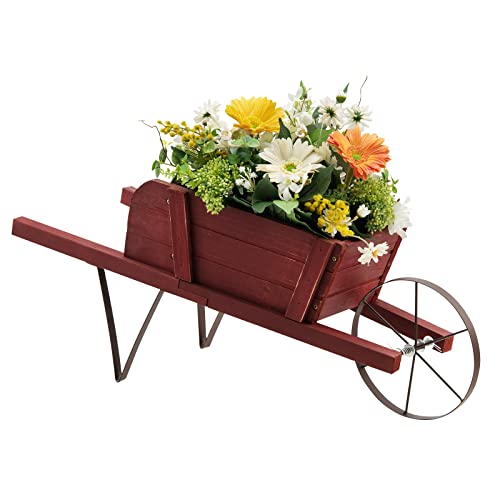
A wood wheelbarrow often has the warmest, most traditional appearance. Weathered boards pair naturally with cottage flowers, herbs, and informal plantings. Some have a small, shallow tray, while others resemble a mini garden cart with a wooden box and decorative wheel. The wood grain can look attractive even without a bright finish, but the basin should not be assumed safe for direct contact with constantly wet soil.
Inspect an old wheelbarrow for rot, mold, peeling paint, sharp fasteners, cracked handles, and loose joints. Pay special attention to boards touching the ground or collecting water. If the wood feels soft or crumbles when pressed, it may not support a heavy load. A cracked handle can still be decorative, but stabilize or remove it if someone might grab it. Do not use a painted antique container for edible crops unless you know what the coating contains and can line it safely.
For planting, use a removable nursery pot or a fitted liner inside the basin. This approach protects wood and lets you remove the planting insert for winter storage or repairs. If you use a liner, ensure it does not trap water. Make drainage holes at the lowest point of the liner, and keep the holes clear of the ground. A liner that functions like a sealed bucket creates soggy roots and can shorten the life of both plants and wood.
Look for a wooden wheelbarrow planter with a deep enough basin for your intended plants, smooth edges, solid wheel supports, and a finish suitable for outdoor exposure. Choose the dimensions based on the place you will display it, not only the listed overall length. Handles may extend several inches beyond the tub and can catch a walkway or block a door swing.
Search Amazon for outdoor wooden wheelbarrow flower planters.
2. Metal wheelbarrow planters for a vintage or industrial accent
Galvanized steel and painted metal can create a farmhouse, industrial, or vintage look. A metal tub is easy to wipe clean and can be more resistant to knocks than thin wood. Some decorative designs use a compact basin on a stand, while repurposed utility wheelbarrows have a much deeper body. A bright painted finish can coordinate with a door, garden furniture, or the color of nearby flowers.
Metal has trade-offs. In full sun, it can heat quickly, particularly in dark colors. Heat passes into the root zone and can stress plants if the basin is small, the soil is dry, or the site gets intense afternoon sun. A metal body can also rust at seams, drilled openings, or scratches. These issues do not make metal unsuitable; they make placement and maintenance important.
For a metal tub, consider planting into nursery pots set inside the wheelbarrow. This cachepot method creates a finished display and allows each plant to drain independently. It also makes it easier to swap seasonal combinations. Leave air space around the pots, and do not let standing water accumulate in the wheelbarrow basin. If the wheelbarrow itself has drainage holes and you fill it directly, cover holes with mesh to help retain mix while allowing water through. Penn State Extension recommends drainage holes and a screen over them, and cautions that a gravel layer does not improve container drainage; the potting mix and open drainage path matter more.
Check whether the planter arrives with drainage holes and whether the seller permits drilling. If you drill a metal body yourself, use appropriate eye protection and a bit designed for metal. Smooth or cover sharp edges so the container is safe to handle. If drilling is not practical, use removable pots rather than filling the un-drained tub with soil.
Search Amazon for galvanized metal wheelbarrow planters with drainage.
3. Decorative resin and lightweight wheelbarrow planters
Resin, molded plastic, and composite planters can be lighter than a real steel wheelbarrow and may imitate a wooden or metal finish. They are convenient on a balcony or porch where a heavy container would be difficult to reposition. A lightweight body also makes seasonal cleaning less of a project. The appearance varies widely, so zoom in on product photos and check user reviews for comments about color, seams, and sturdiness.
Lightweight does not always mean easy to place. Once a large planter is filled with damp mix, its weight rises significantly. The wheel may be decorative rather than designed to roll under load, and handles can be thin. Treat a decorative unit as a stationary pot unless the manufacturer clearly says it is built to move while filled. Do not assume a plastic wheel or axle can carry the weight of saturated soil.
UV exposure can fade some plastics, while freezing weather can make certain materials more brittle. Check care guidance from the maker and consider moving the planter to a sheltered place during harsh weather. A removable insert is especially useful if the outer body is not designed for wet soil or freeze-thaw cycles.
Search Amazon for lightweight resin wheelbarrow planters.
4. Choose the right size and shape for your display
Measure the available footprint before shopping. Include the wheel, handles, and any outward curve of the basin. A planter that fits the bare tub but not its handles can make a narrow porch feel cramped. Leave a clear path for doors and foot traffic, and keep the planting height from blocking a window or house number.
Then think about planting depth. Annual flowers with shallow roots can work in a modest basin, but larger plants need more space. Herbs such as thyme, basil, and parsley can suit a sunny wheelbarrow display if the basin offers room and drainage. A tomato or small shrub is a much bigger commitment and can overwhelm a shallow decorative planter. For container vegetables, University of Illinois Extension lists crop and container size considerations; use those as a guide rather than assuming every vegetable fits in a decorative wheelbarrow.
Check the internal basin dimensions, not just total product length. Some listings measure handle-to-wheel length as the planter size. The interior width and depth determine the root area. If product information does not provide interior dimensions, ask the seller or choose a listing with clear measurements. Also check the approximate volume if available. Volume helps estimate how many bags of potting mix you need and how heavy the filled planter may become.
For visual balance, a long, low trough can take a layered planting with a taller focal plant near the back and trailing plants at the front. A deeper basin can support a central arrangement with upright, mounding, and cascading shapes. Avoid cramming every gap with plants at purchase. Young plants grow; leave the spacing recommended on their labels.
5. Drainage: the detail that keeps roots healthy
Containers need an exit path for excess water. Without drainage, rain and irrigation can leave roots in saturated mix with too little air. A wheelbarrow planter with no holes should not be filled directly with potting mix. You can instead use individual nursery pots or a trough insert that has drainage holes. Set the insert above the basin floor so water can escape and so the outer tub does not become a water reservoir.
If you drill the wheelbarrow body, place several holes at the lowest points of the basin, spaced so water can drain without making the bottom weak. Use a drill bit and protective equipment suitable for the material. Avoid drilling through a structural brace, wheel mount, or seam that could split. For an antique or valuable wheelbarrow, use removable pots and preserve the original body rather than altering it.
Put a small piece of mesh over each hole to limit mix loss. Do not add gravel, broken pottery, or rocks as a bottom layer. Penn State Extension explains that coarse material can hinder movement of water through potting mix rather than improve it. Use a quality container mix from top to bottom and keep the drainage holes open.
Raise the planter slightly on feet, blocks, or a stable stand if the bottom sits flush on a deck or patio. The gap lets water flow and reduces staining or trapped moisture beneath the container. Make sure the support is wide and stable. A wheelbarrow shape may have only one wheel and two legs; if those are not level, the planter can rock. Wedge or stabilize it without blocking drainage.
Search Amazon for outdoor planter feet and container risers.
6. Use a liner or removable pots when direct planting is risky
A liner can make an old or decorative wheelbarrow more practical. The insert protects the outer surface from constant wet mix and allows easier seasonal changes. Use a liner designed for planters or a stable trough insert with drainage. Fabric liners should be suitable for outdoor use and must not be so porous that mix spills through everywhere. Plastic liners need holes at the bottom; a sealed liner can hold water even when the wheelbarrow body has openings.
Individual nursery pots are another flexible option. Arrange them inside the basin, conceal the rims with a light top layer of bark or moss if appropriate, and group plants by similar light and watering needs. You can lift one pot out to replace a spent annual or inspect roots. The downside is that dry spots can form between pots, and the arrangement can look less unified if the rims remain visible.
A single trough insert gives a continuous planting surface and a cleaner finished appearance. Make sure it fits without forcing the wheelbarrow walls apart. Leave room for water to drain underneath, and confirm that the insert is not sitting in collected runoff. If the insert has a tray or saucer, empty it after watering rather than allowing the roots to remain in pooled water.
7. Select a potting mix suited to your plants
Use potting mix made for containers rather than digging heavy garden soil into the wheelbarrow. Garden soil can compact in a pot and limit water movement and air around roots. A commercial container mix is usually easier to handle and is formulated for above-ground growing. Pick a mix according to plant needs, and read the package for fertilizer, moisture-retention, and reuse guidance.
Do not fill a large wheelbarrow planter with rocks to reduce soil volume. That removes root space and can complicate drainage. If the basin is deeper than the roots need, use appropriately sized individual pots or a false bottom designed for planters while preserving a free drainage channel. Avoid packing lightweight filler tightly against drainage holes.
Plan the fill before lifting bags. A large planter can hold more mix than expected, and damp mix is heavy. Stage materials near the final display location, use smaller bags if lifting is difficult, or fill removable inserts where they will sit. Do not move a fully loaded decorative wheelbarrow by its handles unless it is designed and rated for that use.
8. Plant combinations that suit wheelbarrow planters
Wheelbarrow planters are especially effective as mixed displays. Use a “thriller, filler, spiller” structure as a starting idea: one or two upright focal plants, several mounding plants, and a few trailing plants near the rim. The exact arrangement depends on basin size and sun exposure. Do not force the formula if you prefer a single-species display, herbs, or a monochrome planting.
Sunny cottage display
For a bright location, consider compact annuals that thrive in your region, such as petunias, calibrachoa, marigolds, or zinnias. Pair upright flowers with lower mounding foliage and a trailing plant. Check each plant label for mature spread and sun requirements. In very hot climates, afternoon shade may help reduce heat stress, especially in a metal planter.
Part-shade porch planter
In partial shade, use foliage texture and leaf color to keep the display interesting. Coleus, begonias, impatiens, and some ferns can work where local conditions suit them. Match moisture needs: a plant that prefers consistently moist mix may not pair well with one that needs to dry between waterings. Ask a local nursery which varieties tolerate your summer heat and winter conditions.
Herb wheelbarrow
A sunny wheelbarrow can become a small herb display with parsley, basil, chives, thyme, and oregano. Group herbs with comparable watering needs, and keep vigorous herbs from shading smaller ones. Mint spreads aggressively and is usually easier to manage in its own pot tucked into the planter rather than planted directly in a shared basin. A removable pot also makes harvesting and winter protection simpler.
Seasonal fall arrangement
For fall, combine hardy seasonal flowers with decorative foliage and a few small ornamental accents. Keep pumpkins or decorative gourds separate from the soil if you want to lift and replace them. Cold tolerance varies by plant and region, so use local planting dates and forecast guidance. Remove spent plants and compost them only if they are healthy and the local composting rules permit it.
For more plant combinations, see our guide to plants for raised garden beds. The containers differ, but the advice on matching mature size, sun exposure, and plant spacing applies to any garden display.
9. Plan color, height, and viewing angle
Decide where people will see the wheelbarrow from. A planter beside a walkway is viewed at close range and from several sides; a display against a wall may be mostly viewed from the front. Place the tallest plant toward the back when the planter is against a wall, or near the center when it can be seen all around. Keep handles and the wheel visible enough to preserve the wheelbarrow shape.
Limit the palette to a few complementary colors if you want a calm, coordinated look. A cottage display can be more varied, but use repeated colors or foliage textures to make it feel intentional. Choose the finish of the wheelbarrow in relation to the setting: natural wood works with warm stone and brick, while galvanized metal can complement gray decking and modern containers. A vivid painted body can be the accent, so plants may look best in a simpler color range.
Think about mature size. A display that looks sparse at planting can fill in within weeks. Leave recommended spacing and do not crowd foliage against a wall where airflow is poor. If you want an instant full look, use more mature plants but still avoid forcing roots into an undersized basin.
10. A simple step-by-step wheelbarrow planter setup
- Choose the permanent spot first. Check sunlight, access to water, drainage direction, wind exposure, and the weight the porch or deck can support.
- Inspect the wheelbarrow. Remove loose dirt, check joints and edges, and stabilize or repair any part that could tip or snag someone.
- Decide how plants will sit. Use a drainable liner, trough insert, or individual nursery pots. Do not put potting mix into an un-drained basin.
- Protect and prepare the surface. Refinish wood or metal only with products suitable for the material and intended exposure. Let coatings cure according to their labels before planting.
- Set the drainage path. Confirm that every pot or insert has holes and that runoff can escape. Use mesh over holes if needed; skip gravel layers.
- Arrange plants before filling. Leave them in their pots and test the composition from the main viewing angle. Check plant tags for light, spacing, and water needs.
- Add container mix and plant. Fill around roots, firm gently, and leave a little headspace below the rim for watering.
- Water slowly and observe. Confirm that water drains freely and does not collect under the wheelbarrow. Adjust the support or planting if runoff pools.
- Finish the display. Add a simple plant marker, a discreet top dressing, or a small decorative accent only if it does not block drainage or airflow.
11. DIY conversion of an old wheelbarrow
Start by deciding whether the wheelbarrow is structurally sound enough to remain in the garden. You do not need a working wheel or handles for a purely decorative planter, but the base must stand securely. Remove or cover sharp edges and rusty points. If the tub has loose components, fix or remove them before adding weight.
Clean the surface with a method suitable for its material. Avoid sanding unknown old paint until you know whether it could contain hazardous substances. For an antique or inherited item with an unknown coating, preserve the finish or consult a qualified professional rather than creating dust. Use outdoor finishes according to their labels, and never coat the inside of a food-growing container with a product unless it is specifically suitable for that use.
For direct planting, add drainage holes at low points and cover them with screen. If drilling could damage the basin, insert a trough or set several pots inside. Add the potting mix, place plants at their existing soil depth, and water in. Let the first watering drain completely before setting the planter on wood decking or stone that may stain.
For wood, consider raising the container off the ground so the base can dry. A liner can reduce constant contact with damp mix, but it is not a substitute for drainage. Keep leaves and debris from blocking holes. For metal, inspect drilled edges and exposed areas for rust, then touch up with a material-compatible finish if needed.
12. Buying checklist for decorative wheelbarrow planters
- Interior planting dimensions: verify basin length, width, and depth separately from the overall handle-to-wheel length.
- Drainage: check whether holes are present, whether the seller permits drilling, and where runoff will go.
- Material: compare wood, galvanized or painted metal, resin, and composite based on climate and desired maintenance.
- Stability: read how the unit rests on the ground and whether the wheel, legs, or stand are decorative or load-bearing.
- Weight: compare the empty planter’s weight and remember wet mix increases the total substantially.
- Assembly: check whether tools are required and whether handles, wheel, and supports need assembly.
- Weather care: see whether the finish needs sealing, whether the planter can stay outdoors year-round, and what winter storage is recommended.
- Returns and seller: confirm the listing is the expected size and material, especially when multiple variants share one product page.
Amazon links in this guide open targeted searches because we have not confirmed a particular ASIN for these decorative products. Results can change, so inspect the exact listing rather than relying on a thumbnail or a generic title. The query terms include the type of item and intended use to narrow the results.
13. Watering and ongoing care
Container plants dry at a different pace from in-ground beds. Sun, wind, material, basin size, and plant growth all affect how quickly the mix loses moisture. Check the soil with a finger before watering instead of using a fixed schedule. Water thoroughly until excess drains, then empty any saucers or hidden reservoirs. Avoid splashing soil onto wood or painted surfaces repeatedly if it may stain or degrade the finish.
Feed plants according to their labels and the potting mix directions. Too much fertilizer can encourage soft growth or cause salt buildup. If a plant declines, check drainage, sun, water, root crowding, and pests before adding more fertilizer. Remove spent blooms and yellowing leaves where appropriate, and replace plants that are no longer suited to the site.
In windy locations, a tall arrangement can act like a sail. Keep the planter low, use plants with manageable height, or move it to a sheltered spot. Do not add heavy rocks inside the basin as a stability fix if those rocks displace root space and affect drainage. Instead, stabilize the wheelbarrow structure or relocate it to level ground.
14. Common wheelbarrow planter mistakes
Filling a sealed tub with soil
It may seem convenient to add mix directly, but without drainage the roots can remain waterlogged. Use drainable inserts or pots if you cannot create openings in the wheelbarrow.
Adding gravel to the bottom
Gravel does not solve a drainage problem. Keep the potting mix continuous and keep the holes open. Penn State Extension’s container guidance supports using a screen over drainage holes instead of coarse filler.
Choosing plants before measuring the basin
Small decorative wheelbarrows often offer less root depth than their photos suggest. Measure the actual planting space and choose compact varieties for shallow containers.
Assuming the planter is meant to roll
A decorative wheelbarrow may have a cosmetic wheel and lightweight supports. Moving it when full can break the frame or cause a spill. Place it where it will stay, or move individual pots rather than pushing a loaded display.
Mixing plants with opposite care needs
A drought-tolerant herb and a moisture-loving annual may look good together initially but need different watering. Group plants with similar light and water requirements to simplify care.
15. Styling ideas for different spaces
Front porch: choose a compact planter with restrained colors and keep the handles from narrowing the entry path. Use a liner so seasonal plants can be changed easily.
Garden path: place the wheelbarrow at a wider resting point rather than where visitors need to pass. A trailing plant can soften the basin edge, but keep foliage from catching clothing or obscuring the walkway.
Patio focal point: use one taller plant, a repeated flower color, and trailing greenery to create a clear visual center. Coordinate the planter finish with nearby seating and pots.
Vegetable garden entrance: plant culinary herbs or edible flowers only if the container material and finish are suitable. Keep the display ornamental and separate from pesticide applications; follow product labels and local guidance for anything used on edible crops.
Small courtyard: choose a narrow model and use removable pots. Check that water will not run into a neighbor’s space or onto a slippery walkway.
Frequently asked questions
Can I plant directly into an old wheelbarrow?
Yes, if the body is clean and sound, has drainage holes, and is made from a material appropriate for the plants. If the finish is unknown or the container has no drainage, use removable pots or an insert. For edible plants, be cautious about unknown paint, coatings, or previous contents.
Do wheelbarrow planters need drainage holes?
Yes if potting mix is planted directly in the body. If the wheelbarrow is only a decorative cachepot holding drainable nursery pots, water must still be able to escape and should not collect around those pots.
What plants grow best in a wheelbarrow planter?
Compact annual flowers, herbs, and trailing plants are common choices because they make an attractive display without requiring an exceptionally deep basin. Choose by actual container depth, local climate, sun exposure, and mature plant size.
Can I use regular garden soil?
Container mix is usually a better choice because it is made for pots and is less likely to compact like dense garden soil. Follow the mix instructions and plant-specific guidance.
Should I put rocks or gravel in the bottom?
No. Coarse layers can interfere with water movement and reduce usable root space. Keep the drainage holes open and use a screen if needed.
Can the planter stay outside in winter?
It depends on the material, finish, climate, and plants. Empty or protect containers according to the maker’s care instructions, and move vulnerable plants or inserts to shelter before freezing weather. Wood, metal seams, and some plastics can be affected by moisture and freeze-thaw cycles.
Can a filled wheelbarrow planter be rolled around?
Only if the manufacturer explicitly designed and rated it to roll under load. Many decorative versions are stationary accents. For seasonal changes, lift individual nursery pots or empty the planter rather than moving it full.
Final thoughts
The best wheelbarrow planters combine a memorable shape with a dependable growing setup. Choose a body that fits the space, use drainage-ready pots or a correctly prepared basin, and select plants that match the available light and root depth. Repurposed wood and metal can be beautiful, while resin and composite designs may be lighter and easier to maintain. Keep the wheelbarrow stable, do not assume it can move when filled, and let the plants rather than extra decorations carry the display.
Start with the location and the container dimensions, then build the planting around those limits. With drainage, appropriate potting mix, and a simple color plan, a wheelbarrow can become a distinctive garden accent for a porch, path, or patio. For other container ideas, explore our guides to window boxes, strawberry planters, hanging planters, and raised-bed plants.