Disclosure: As an Amazon Associate, dailyhomedecorating.com earns from qualifying purchases. Links on this page are affiliate links; they cost you nothing extra. Prices and availability change often, so check the current Amazon listing before you buy.
So, is a spot cleaner worth it — for your home, with your floors, your family and your actual rate of spills? The short answer is below, followed by the full accounting: what you genuinely get, what it really costs beyond money, the households it pays off for, the ones it does not, and a checklist that settles the question in your specific case rather than in the average household that exists only in advertisements.
Short answer. Worth it if your home produces regular fabric messes — pets, children, carpeted stairs, upholstered furniture, fabric car seats — and you will use it promptly and rinse it after. Not worth it if your floors are mostly hard, your furnishings are delicate or leather, spills are rare, or the maintenance routine will honestly not happen. For the first group it is one of the highest-value appliances in the house; for the second it is shelf decoration.
Key Takeaways
- Value comes from frequency: weekly small messes repay ownership quickly; yearly ones do not.
- The real costs are storage, drying time and a non-negotiable rinsing routine — not just the purchase.
- It prevents stains more reliably than it cures old ones; set expectations accordingly.
- Alternatives — sprays, hire machines, professionals — each win in specific situations.
In this guide
Is a Spot Cleaner Worth It: What You Actually Get
A spot cleaner works on a simple loop that anyone can learn in one session. You spray a mixture of water and cleaning solution onto the stained fibres, give it a short moment to loosen what is trapped there, agitate gently with the brush head, and then pull the dirty liquid back out with suction into a separate dirty-water tank. The clean water and the recovered water never mix, which is why the tank you empty afterwards looks so grimly satisfying and why the fabric is left damp rather than soaked through to the backing.
The extraction step is the whole point of the category, and it is what separates a spot cleaner from a spray bottle and a towel. Blotting lifts only what sits on the surface and often pushes the rest deeper, while extraction physically removes dissolved dirt, spilled drinks and the residue that would otherwise dry sticky and attract fresh soil within days. Work in slow, overlapping passes, release the spray trigger on the final pass, and keep pulling liquid out until the strokes return noticeably clearer water.
Technique matters more than force with these machines. Pressing the tool down hard does not clean deeper; it mostly tires your wrist and can distort delicate pile. Steady contact, a slight tilt so the suction slot seals against the fabric, and patience across several passes will outperform one aggressive scrub almost every time. If a mark is still visible after the first round, treat it again while the area is still damp rather than waiting for it to dry and set further.
Different stains fail in different ways, and matching your response to the spill saves effort. Sugary drinks dry sticky and attract dirt, so extraction matters more than scrubbing. Greasy food marks need the solution a little dwell time to break down oils before you extract. Mud is the counterintuitive one: let it dry completely first, vacuum up the loose soil, and only then treat what remains, because wet mud worked with a brush simply spreads and drives deeper into the pile.
Pet accidents are the job these machines are bought for most often, and they reward thoroughness. Blot and extract as much as possible before applying solution, work from the outside of the mark inward so you do not spread it, and make extra extraction passes because urine wicks outward through backing further than the visible spot suggests. An enzyme-based solution, used exactly as directed, helps neutralise the odour compounds that draw pets back to the same place. Finish only when the recovered water runs clear.
Tannin stains — tea, coffee, red wine and fruit juice — are a race against setting. Blot immediately with a clean white cloth, never rub, keep the area damp rather than letting it dry mid-treatment, and extract in repeated gentle rounds. Cold liquid is your friend here; heat helps tannin bond to fibres, which is why a stain washed hot before it is treated can become permanent. If a faint shadow remains after honest effort, a second session the next day often lifts more than one marathon session.
Stairs are where portable machines justify themselves most clearly, because no full-size extractor climbs them gracefully. Work from the top step down so you are never kneeling on damp, cleaned treads, keep the machine on a level step or the landing rather than balancing it, and give edges and nosings extra attention since that is where shoes deposit the most ground-in soil. The hand tool format, short hose and carry handle all exist precisely for this awkward, vertical territory.
Car interiors are the second natural habitat. Fabric car seats collect coffee, sunscreen, muddy paw prints and the mysterious stickiness of family road trips, and a spot cleaner lets you treat them in the driveway without removing the seats. Work in the shade so solution does not dry on contact, ventilate the cabin fully while you work and afterwards, and allow generous drying time before closing the doors. Floor mats respond especially well and can be removed, cleaned thoroughly and dried flat in the sun.
Small spaces reward a compact machine and punish a bulky one. In flats, rental homes and houses without a utility room, the cleaner that stores on a short shelf and sets up in under a minute is the one that actually gets used. Renters in particular value a tool that handles deposit-threatening spills on landlord-owned carpet without hiring equipment at short notice. Judge size and storage footprint against your real home, not against an idealised one with a large cupboard waiting empty.
The Real Costs Beyond Money
The dirty-water tank needs emptying and rinsing after every single use, without exception. The liquid inside is a warm soup of soil, sugars, oils and bacteria, and leaving it sitting in the machine breeds the sour, swampy smell that owners blame on the cleaner itself. Empty it into a toilet or an outside drain rather than a kitchen sink, rinse the tank and its lid with clean water, and leave the parts open to air-dry before you reassemble and store the machine.
The same hygiene logic applies to the hose, the tool head and any removable brush. Rinse the suction path by drawing a bowl of clean water through the tool, wipe grit from the brush bristles, and check the nozzle for trapped hair and lint that will smear across the next job. Machines that offer a hose-rinse or self-cleaning cycle make this easier, but a manual rinse done faithfully beats a clever feature used occasionally. Five unglamorous minutes now prevent smells, clogs and streaky results later.
Storage habits decide how the machine greets you next time. Store it empty, dry and with the cord or hose loosely coiled rather than kinked, in a place you can reach quickly — because the value of a spot cleaner is highest in the first minutes after a spill. A machine buried behind paint tins in a garage will not save a sofa from red wine on a Saturday night. A hall cupboard, a utility shelf or the space beside the vacuum are all better homes.
Drying time is part of the cleaning result, and planning for it prevents disappointment. Extract until the passes return mostly clear, then make several dry passes with no spray at all. Point a fan at the area, keep the room ventilated, and resist putting furniture back or rugs down until the fibres feel dry when you press a tissue firmly into them. Most spots dry within a few hours in moving air; deep pile and sofa padding take longer, and patience here prevents the musty sequel.
A final vacuum once everything is dry is the step most people skip and professionals never do. Extraction can leave fibres lying in mixed directions and loosened grit sitting at the base of the pile. A slow vacuum pass lifts the pile, evens the appearance of the cleaned patch so it does not show as a flat rectangle, and removes the last loosened soil before it resettles. It also lets you judge the result honestly: some marks only reveal their true remaining state once fully dry and groomed.
Expectations set at the start determine whether owners love or resent these machines. Used promptly, on the jobs they are sized for, with solution tested first and tanks rinsed after, a spot cleaner quietly prevents the slow accumulation of marks that makes carpets and sofas look tired years before they wear out. Used rarely, roughly and on neglected stains, the same machine disappoints. The difference is almost never the badge on the front; it is the routine wrapped around the machine.
Add three quieter costs to the ledger. Storage: a shelf or cupboard corner, permanently. Attention: solution kept in stock, a brush checked for trapped hair, seals glanced at now and then. And interruption: a cleaned sofa is out of service until fully dry, with children and pets kept off it meanwhile, so cleans need a little planning around family life. None of these is large; together they are the true price of ownership, and they are why the honest question is about routine, not budget.
Who It Pays Off For
Pet Households
Accidents are frequent, time-sensitive and odour-driven, and extraction is the only home method that removes rather than masks them. For puppy training alone, most owners consider the question settled within a fortnight.
Families With Young Children
Drinks, snacks, art projects and illness produce a steady stream of small fabric emergencies across sofas, rugs, stairs and car seats. A machine that answers all of them in minutes, with a safety routine the household can follow, earns its shelf many times over.
Renters and Car Owners
Renters protect deposits by answering spills on landlord-owned carpet immediately, without waiting for hire-shop hours. Car owners gain a tool that treats fabric seats, mats and footwells in the driveway — a job no other home appliance attempts.
Who Should Skip It
Hard-Floor, Low-Spill Homes
If your floors are wood and tile, your furniture is leather, and your last fabric stain was two years ago, the maths never turns in the machine’s favour. A good spray and a white cloth cover your reality.
Whole-Room Cleaners
If your actual problem is uniformly tired carpet across whole rooms, this is the wrong purchase entirely — that job belongs to a full-size extractor or a professional, and buying a spot cleaner for it guarantees dissatisfaction with a machine doing nothing wrong.
Households That Will Not Rinse
The dirty tank must be emptied and rinsed after every use. A household honest enough to admit that will not happen should skip ownership, because an unrinsed machine becomes a smelly one, and a smelly machine becomes an unused one.
Strengths and Trade-Offs of Owning One
Strengths
- Prevents most fresh stains from becoming permanent, preserving furnishings for years.
- One machine covers sofas, stairs, rugs, mattresses and car interiors.
- Replaces repeated professional call-outs for small jobs and repeated spray purchases.
Trade-Offs
- Standing routine: patch test, ventilate, dry fully, rinse after every use.
- Scope limit: spots only — whole rooms and ancient stains exceed its brief.
- Storage and drying-time interruption are permanent features of ownership.
Alternatives to Consider

The Ownership Route: Bissell Little Green
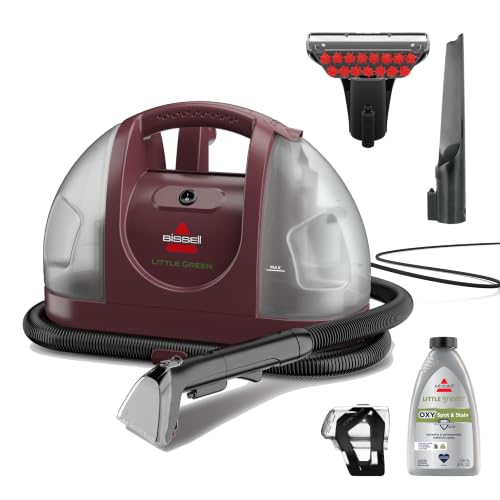
If you decide to own, the reference model is the long-running benchmark of the category, a corded portable with separate clean and dirty tanks and a tough little hand tool that has made it the default first spot cleaner for pet households and sofa owners alike. It represents the balanced middle of the category against which the alternatives below should be judged.
Sprays and manual cleaning win for rare, minor marks: zero storage, zero maintenance, acceptable results on surface soil — at the cost of residue left in the fibres. Hire machines win for the occasional whole-room refresh, bringing full-size power without permanent storage, at the cost of planning and availability when a spill happens at midnight. Professional services win for valuable textiles, whole houses and neglected carpets, at the highest cost per visit. Ownership wins the large middle ground of frequent, small, sudden messes — which is where most homes actually live.

The Versatile Ownership Route: Hoover CleanSlate
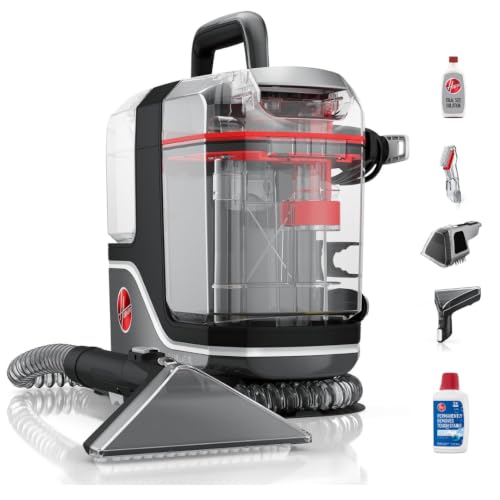
As an ownership alternative in its own right, this model is a corded rival built around strong extraction and a versatile tool set, aimed at households that want one machine to move between carpet spots, upholstery and car interiors without fuss. For homes on the checklist borderline, its versatility across three territories is often the deciding argument.

The Convenience Route: Shark StainForce
For households whose checklist answers yes on frequency but no on patience, this cordless entry trades endurance for immediate response — and since prompt treatment is where most of the value lives, that trade can be the most rational one on this page for the right home.
How to Get the Most Value If You Buy
Before any solution touches a visible area, test it on a hidden patch first. Choose a spot under a cushion, behind a leg or inside a skirt of the sofa, apply a little of the diluted solution, wait, blot with a white cloth and check for colour transfer or texture change. This colourfastness check takes minutes and is the single step that prevents the classic disaster of a clean pale ring where the stain used to be — or worse, dye lifted from the fabric itself.
Ventilation is part of the job, not an afterthought. Open a window or run a fan while you clean, especially in small rooms, stairwells and car interiors where fumes concentrate quickly. Fresh air also speeds drying, which matters because damp upholstery left in still air can develop a musty smell that replaces the one you just removed. Keep the airflow going until the fabric feels dry to the touch, not merely until the machine is back in the cupboard.
Keep children and pets off treated fabric until it is completely dry. Paws and small hands pick up solution residue easily and transfer it to mouths and eyes, and crawling back onto a damp cushion also re-soils fibres you have just extracted. Close the door to the room if you can, or block the sofa with cushions turned on end as a visible barrier. Once the area is fully dry and has had a final vacuum, it is ready for normal family life again.
Never mix cleaning chemicals — not two branded solutions, not a branded solution with bleach, and not a homemade mixture with anything from under the sink. Combinations can release harmful gases, damage fibres and void any sense of predictability about what is touching your upholstery. Use one product, diluted exactly as its label directs, rinse the tank between different products, and if you want to try something else, let the fabric dry fully first so the two never meet in the fibres.
Fabric type changes everything about how you approach a stain. Tightly woven synthetics such as polyester and most modern microfibres forgive a lot: they release spills readily, tolerate gentle agitation and dry quickly. Natural fibres ask for more respect. Wool can felt and shrink with heat and rough scrubbing, cotton can hold dye stains stubbornly, and delicate weaves may distort if the brush works them too hard. Always read the care label on upholstery before you begin, and let the most delicate material in the room set your technique.
Carpet pile deserves its own moment of thought. Short, dense pile releases dirt easily and suits a firmer brush pass, while long or shaggy pile traps spills deep between fibres and needs slower extraction strokes so the suction can reach the base. Loop pile should never be scrubbed in circles, which can fuzz or snag the loops; use straight, gentle strokes instead. On any pile, finish by grooming the fibres in one direction with the tool so the cleaned patch dries looking like the carpet around it.
Leather and vinyl are not spot-cleaner territory in the usual sense, because extraction tools and upholstery solutions are formulated for absorbent fabrics, not sealed surfaces. Wipe those materials with products made for them instead. Equally, silk, velvet with a delicate nap, and antique or hand-knotted textiles deserve a professional opinion before any machine touches them. Knowing where a spot cleaner should not go is part of owning one wisely, and it protects the pieces you would most hate to damage.
Store the machine where a spill can reach it in a minute. Keep solution beside it. Treat marks the day they happen. Clean whole cushion panels rather than tight circles. Vacuum after drying to lift the pile. Those five habits, none of which cost anything, are the difference between owners who call the machine indispensable and owners who call it disappointing.
The Decision Checklist
- Do fabric messes happen in your home at least monthly?
- Do you have pets, young children, carpeted stairs or fabric car seats?
- Can the machine live within a minute of where spills happen?
- Will the tank genuinely be emptied and rinsed after every use?
- Are your main furnishings extraction-safe, confirmed by their care labels?
- Is your problem spots — not whole tired rooms?
Four or more yes answers: buy, and buy the format that fits your stairs, car and storage. Two or fewer: save the money and the shelf, and keep a good spray under the sink instead.
Going Deeper: Habits That Decide Long-Term Results
Rental machines and professional visits still have their place, and owning a spot cleaner does not abolish them. A whole house of neglected carpet, a flood, or a stain on a valuable antique rug all justify bigger equipment or expert hands. What ownership changes is the middle ground: the weekly small disasters that are too minor for a professional call-out and too stubborn for a spray bottle. That middle ground is where most household fabric damage quietly accumulates, and it is exactly the ground these machines defend.
Second-hand and hand-me-down machines deserve a careful first hour. Rinse every tank, run clean water through the hose, inspect the brush for matted hair, and check seals and the suction path for leaks before trusting the machine on a visible stain. A neglected dirty tank from a previous owner is the most common source of the smell people report. Once cleaned and tested on a hidden patch of your own fabric, an older machine can serve perfectly well for years.
Households with allergy concerns often find extraction cleaning reassuring for a simple reason: the dirt leaves the house in the tank instead of being redistributed. Dust, pollen and the fine soil that settles into upholstery are lifted out with the water rather than blown around the room. Rinse the tank outdoors or into a toilet, wash your hands after emptying, and let treated fabric dry fully before children play on it, and the process stays as clean as the result it produces.
Mark your progress honestly as you work. It is easy, mid-session, to lose track of which cushion has been extracted and which has only been sprayed. A simple routine — spray, dwell, agitate, extract, dry pass, move on — repeated in the same order for every section keeps results even and prevents the double-treated patch that dries a shade lighter than its neighbours. Consistency of process, more than any single product choice, is what makes home results look professional.
Seasonality changes how hard these machines work. Winter brings road salt, slush and muddy boots ground into hallway rugs and stair treads, while summer brings sunscreen on car seats, grass stains on upholstery and picnic spills on picnic blankets and patio cushions. Owners who anticipate the seasonal pattern — keeping solution stocked before the muddy months and checking the brush before holiday guests arrive — find the machine ready at exactly the moments when a delayed response would cost the most.
Guests are the other great stain deadline. A spill during a dinner party tempts everyone to postpone treatment until the room empties, by which time tannin and sugar have had hours to bond. The graceful solution is a two-minute first response: blot, keep the mark damp with a clean cloth, excuse yourself properly later, and extract once the house is quiet. Hosts who build that small ritual into the evening protect their furnishings without turning a party into a cleaning demonstration.
Precision is unnecessary, but measurement helps with solution. Dilute exactly as the product label directs, using the tank markings rather than guesswork, because over-concentrated solution leaves residue that attracts soil and under-concentrated solution wastes your effort. If you keep a small measuring cap beside the bottle, the correct dilution becomes automatic, and automatic correctness across dozens of sessions is what keeps results consistent from the first cushion to the fiftieth.
Noise etiquette deserves a line in any honest deep dive. These are suction appliances and they sound like it, so late-night sessions in flats and terraced houses are a courtesy question as much as a cleaning one. Blot and dampen a late spill to hold it safely, then extract at a civilised hour; a stain kept damp overnight responds almost as well as one treated instantly, which is a useful and under-reported fact for anyone with thin walls or sleeping children.
The brush is the most under-maintained part of the whole system. Hair wraps it, grit dulls it and dried solution stiffens it, yet a thirty-second check after rinsing — pull the trapped fibres free, rinse the bristles, spin it once by hand — restores it completely. A neglected brush smears dirt in arcs across pale fabric and convinces owners the machine has lost power, when in fact only the brush has lost its ability to agitate and lift what the suction is ready to remove.
Water temperature is a quiet variable worth controlling. Lukewarm water in the clean tank helps solution work efficiently on most everyday soils, while very hot water risks setting protein and tannin stains and can stress some fibres and adhesives. Cold water is the safe choice for blood and other protein marks. When in doubt, lukewarm is the category’s sensible default, and the care label of the fabric in front of you always outranks any general rule offered here.
Edge cases teach the most. The cleaned patch that dries lighter than its surroundings usually means the surrounding area was dirtier than anyone realised — the machine revealed the room’s true baseline rather than damaging the fabric. The remedy is to clean the full cushion or panel so everything dries to the same honest shade. Similarly, a ring at the edge of a treated spot usually means solution wicked outward; feathering the treatment slightly beyond the visible mark prevents it.
Keeping a simple log sounds excessive until the second identical stain appears. Noting which solution, dilution and dwell time worked on the nursery rug or the car seats turns future sessions into certainties instead of experiments. Households with several fabric types benefit most, because the note captures the patch-test result for each material once, permanently. Two lines in a phone note after a successful session can save a hidden-patch test on every repeat job thereafter.
Children can be part of the routine safely if the boundaries are clear. They can fetch the white cloths, hold the fan in place and learn why the sofa is out of bounds until it dries — which is itself a small lesson in cause and effect. They should not handle concentrated solution, empty the dirty tank or play on treated fabric while it is damp. Clear roles make the process faster, calmer and genuinely safer for everyone in the room.
Pet training and spot cleaning reinforce each other in ways owners notice within weeks. A properly extracted accident, treated with an enzyme solution used as directed, removes the scent markers that draw a puppy back to the same corner, so the machine is not merely cleaning the past but reducing the future workload. That feedback loop — fewer repeat incidents, less odour, calmer training — is one of the strongest long-term value arguments for ownership in a young-pet household.
Travel changes the calculation slightly, and a compact machine travels surprisingly well. Families who drive to holiday cottages, caravans or relatives’ homes often pack the cleaner alongside the dog, because unfamiliar carpets plus excited pets plus holiday food is a statistically dangerous combination. The machine needs only a socket, a sink and a ventilated room at the destination, and it has saved more than one holiday-let deposit from a single muddy evening that would otherwise have defined the whole trip.
Second rooms and second chances matter too. The spot cleaner that proves itself on the living-room sofa soon gets invited to the bedroom carpet, the hallway runner, the nursery chair and the boot of the car, and its cost-per-job falls with every invitation. This expanding circle of use is why owners’ retrospective verdicts are usually warmer than their expectations at purchase: they bought a stain tool and discovered, month by month, that they had actually bought a general defence for every soft surface they own.
There is a discipline to stopping, as well. When three careful rounds — spray, dwell, gentle agitation, thorough extraction — produce no further improvement and the recovered water runs clear, the remaining mark is telling you something about its chemistry or its depth. Further force risks the fabric, not the stain. Accept the fade, note what did not work, and reserve professional assessment for pieces that justify it. Knowing when the machine has done its honest best is part of using it wisely.
Finally, judge the category by months, not minutes. The first session with any new machine is the clumsiest: tanks fumble, the hose feels short, the routine is new. By the fifth session the same owner works quickly, dilutes without thinking, patch-tests automatically and rinses the tank as naturally as washing a mug. Reviews written after one afternoon and ownership experienced across a year describe the same product very differently, and the year’s account is the one your household will actually live with.
Working with a partner transforms bigger jobs. One person manages the machine, tanks and hose while the other lifts cushions, holds fabric taut and moves the fan between sections, and a staircase or a full car interior takes half the time with noticeably better extraction, because the tool hand never has to double as the machine hand. Households that turn a monthly upholstery session into a two-person routine consistently report it stops feeling like a chore at all.
A word about rental deposits and end-of-tenancy cleans, because this is where a portable machine quietly earns serious money. Landlords and letting agents judge carpets and sofas at arm’s length and in daylight, and the small marks that accumulate across a tenancy are precisely the marks a spot cleaner removes best when treated as they happen. Tenants who run the routine through a tenancy rarely face the cleaning deductions that tenants who rely on a final-day blitz so often dispute.
Fabric protection sprays and spot cleaners are partners, not rivals, but the order matters. Protection applied to clean, fully dry fabric slows future spills from penetrating, buying you minutes when an accident happens; extraction then removes what the protection held near the surface. Applying protection over an uncleaned stain seals the problem in, and extracting freshly protected fabric before it has cured wastes the treatment. Clean first, dry completely, protect second, and let each layer do its own job.
The learning curve flattens fastest for owners who standardise their kit. One solution for general work, one enzyme solution for pet accidents, a stack of white cloths, a small fan and the machine itself, all stored together, remove every decision except starting. Decision fatigue is a real cause of delayed treatment, and delayed treatment is the main cause of permanent stains, so a pre-assembled kit is not tidiness for its own sake — it is stain prevention by another name.
Upholstery seams and piping deserve specific mention because they collect soil invisibly and release it reluctantly. Run the narrow edge of the tool slowly along seams after the main passes, and expect the recovered water to darken again even when the open panels ran clear. Piping on sofa arms and cushion edges is also where hands deposit oils daily, so a periodic seam-and-edge session keeps furniture looking even long before any dramatic stain forces the machine out of the cupboard.
Carpets tell the truth about traffic patterns, and spot cleaning can even them out. The path from door to sofa, the turning circle outside the kitchen and the patch in front of a favourite chair all soil faster than the room’s edges. A portable machine lets you refresh those lanes alone, in minutes, without wetting the whole room, which keeps the overall appearance level for years longer than waiting until the contrast forces a full professional clean.
There is also a hygiene argument for mattresses and soft furnishings that rarely get washed at all. Occasional extraction of mattress edges, headboards and the cushions of a nursery chair removes the accumulated dust and spills that vacuuming alone leaves behind. Work with ventilation, allow very generous drying time for anything thick or padded, and keep the room’s occupants — especially small children — away until every layer feels dry, not just the surface you can touch.
When a job goes wrong, troubleshoot in a fixed order before blaming the machine. Check the dirty tank is seated and not full, check the tool seal against the fabric, check the brush for matted hair, check that the solution is diluted correctly and that you allowed it dwell time, and only then question suction itself. In practice the first five checks explain nearly every disappointing session, and working through them calmly takes less time than one frustrated extra scrubbing round.
Colourfastness testing deserves repeating because it is the step with the worst effort-to-consequence ratio in the entire routine. Two minutes, a hidden patch, a white cloth: that is the whole cost. The consequence it prevents — dye lifted from a visible cushion, a pale rectangle announcing itself across the sofa — cannot be undone by any machine at any price. Experienced owners test every new fabric and every new solution without exception, and they regard the habit as the mark of someone who has cleaned upholstery seriously.
Odour deserves a final, careful word. Most household fabric smells are soil smells, and they leave with the soil in the dirty tank. What extraction cannot fix is odour that has soaked into padding, backing or the floor beneath over months of repeat incidents; that is a materials problem, not a cleaning problem, and it may need padding replaced or professional treatment. Distinguishing the two saves owners from endless re-cleaning of a surface that was never the source.
One habit separates satisfied owners from frustrated ones: treat the spill first and the calendar second. A mark handled within the hour, even imperfectly, responds better than a mark handled perfectly next weekend. Keep the machine filled-or-ready according to its instructions, keep solution where you can find it in the dark, and lower the activation energy of starting. Convenience is not a soft benefit in this category; it is the mechanism by which stains get treated while they are still beatable.
White cloths and towels earn their keep during every session. Coloured towels can transfer dye onto wet fibres, and paper towels disintegrate into lint that the suction then has to chase. A small stack of plain white cotton cloths for blotting, checking colour transfer during your patch test and wiping the tool between passes will quietly improve every job you do, and they can be washed hot afterwards without ceremony or worry about what they will touch next.
Working order matters on anything bigger than a single spot. Start with the least visible or least severe mark while your technique settles, move to the worst area while your patience and the solution are fresh, and finish with edges and borders where overspray shows. On upholstery, clean the full cushion panel rather than a tight circle around the mark; a uniformly cleaned panel dries evenly and avoids the halo effect of one bright island in a sea of everyday soil.
Sound and session length are worth a thought before you buy, because a machine you dread switching on will stay in the cupboard. Spot cleaners are not quiet appliances, and evening use in a flat with thin walls or a sleeping baby nearby is a real consideration. Short, prompt sessions usually solve the problem: these machines are designed for minutes of work, not hours, and planning the job for a reasonable hour keeps both the household and the neighbours on your side.
The Break-Even Question in Real Life: When a Spot Cleaner Pays Its Way
This section exists to ask the break-even question honestly, counting not just the purchase but the space, upkeep and attention the item will claim for as long as it is owned. It adds a layer that a feature list cannot give you, grounded in the home cleaning context this spot cleaner will actually live in. Where this guide names examples such as Bissell Little Green, Hoover CleanSlate, Shark StainForce, use them as test cases for the checks below rather than as shortcuts past them.
One more angle is worth your time: the second-order costs. A spot cleaner changes what happens around it. It can demand a different cleaning product, a new storage habit, a moved piece of furniture, a rearranged cupboard or a standing arrangement with the people you live with. List those knock-on effects before you buy and decide whether you accept them as part of the deal. Sometimes the answer is an easy yes, and the spot cleaner earns its place by improving the whole routine around it. Sometimes the honest answer is that the supporting changes are the real project, and the purchase should wait until you are ready for them. Either answer is useful; the only bad outcome is discovering the knock-on effects by accident, one irritation at a time, after the decision can no longer be revisited.
It also helps to separate the problems a spot cleaner can solve from the problems it merely moves. If the underlying difficulty is space, the answer may be a smaller format or a different location rather than a more elaborate model. If the difficulty is time, look for the option that removes steps rather than the one that performs each step slightly better. If the difficulty is that several people want different things, a compromise design that everyone rates as good enough will usually outlast a specialist design that one person loves and everyone else avoids. Naming the real problem in one sentence, out loud, before you order, is a surprisingly powerful filter, and many shoppers find that the sentence itself points at a different spot cleaner than the one they started out researching.
Start with the unglamorous measurements. For a spot cleaner, the numbers that decide satisfaction are rarely the headline ones in a listing; they are cupboard space between uses, cord or hose reach, noise in a real room and how heavy the job feels on the second flight of stairs. Write the real dimensions of your space down, including the awkward constraints you normally work around without thinking, and hold every contender up against that sheet rather than against a showroom photograph. Then walk the route the spot cleaner will take on delivery day and during normal use. A choice that fits on paper but fights you every time it is moved, opened, cleaned or stored will lose its shine quickly, however strong its other qualities look in a comparison table.
Next, rehearse the week, not the ideal day. Picture the spot cleaner inside a rushed weekday tidy, a deep weekend clean and the unexpected mess that arrives five minutes before guests. Most disappointment comes from buying for the best-case scenario: the tidy version of the household, the motivated version of yourself, the weather or the guest list you hope for rather than the one you usually get. If the spot cleaner only makes sense when everything goes to plan, it is the wrong size, the wrong format or the wrong purchase for now. If it still looks useful on the tired, rushed, slightly chaotic version of the day, it has passed the most honest test there is, and the remaining questions are about detail rather than direction.
Pay close attention to the recurring friction points, because they compound. With a spot cleaner, owners tend to run into filters forgotten until performance drops, attachments that live in a different room from the machine, and parts that are awkward to rinse and dry. None of these is dramatic on its own, and that is exactly why they get underestimated at buying time. Ask how the design you are considering handles each one: can the wearing part be replaced, can the awkward part be reached without tools, does the job take two minutes or twenty. A spot cleaner that makes its own upkeep easy gets maintained; one that makes upkeep a project gets neglected, and neglected products perform badly in ways that then get blamed on the original purchase.
Use the listings as a checklist rather than as entertainment. For each spot cleaner you shortlist, note the exact variant, the included parts, what is sold separately, and which photographs show the item in a setting like yours rather than in a studio. If a model named elsewhere in this guide catches your eye, treat it as a worked example for this process: run it through the same measurements, the same weekly rehearsal and the same friction list before letting familiarity turn into preference. Consistency is the whole trick. Shoppers go wrong not by choosing the objectively weaker spot cleaner, but by judging one contender on features, the next on looks and the third on a single enthusiastic anecdote.
Frequently Asked Questions
Can a spot cleaner replace a full-size carpet cleaner?
No, and it is not meant to. A spot cleaner is built for defined areas: a spill on the rug, a stair tread, a car seat, the arm of a sofa. A full-size extractor covers whole rooms efficiently with bigger tanks and a wide floor head. Many households sensibly own the spot cleaner first, because small sudden messes are far more frequent than whole-room cleans, and hire or borrow the bigger machine for a scheduled deep clean once or twice a year.
How soon after a spill should I use it?
As soon as you reasonably can. Blot the spill immediately with a clean white cloth to stop it spreading, then extract while the stain is still fresh and has not bonded to the fibres. Fresh marks often disappear completely; the same mark left for a week may only fade. Keep children and pets away from the area while you work and until the fabric is fully dry, ventilate the room during and after cleaning, and never be tempted to mix two cleaning products together to chase a faster result.
Do I need special cleaning solution?
Use a solution made for portable extraction machines and for the fabric you are treating, diluted exactly as its label directs. More concentrate does not mean more cleaning; excess solution leaves residue that attracts dirt and can stiffen fibres. Never mix different cleaning chemicals together, and rinse the tank if you change products. For pet accidents, an enzyme-based formula used as directed helps address odour at its source. Whatever you choose, test it on a hidden patch first to confirm the fabric’s colour stays exactly where it belongs.
Will a spot cleaner remove old, set-in stains?
Sometimes partially, rarely completely, and any source promising otherwise is overselling. Old stains have had time to bond to fibres, oxidise and collect fresh soil on top, so expect improvement rather than invisibility. Treat the area patiently, allow the solution its full dwell time, extract in repeated rounds and let it dry fully before judging. A second session on another day often lifts more. Dye transfer, heat-set marks and stains that reached the backing may remain as a faint shadow even after honest, careful work.
How long does a cleaned spot take to dry?
In a ventilated room with moving air, most carpet spots feel dry within a few hours, while sofa cushions and deep pile take longer because the padding beneath holds moisture. Help the process along: make extra extraction passes with no spray at the end, point a fan at the area and keep the room aired until the fabric is fully dry. Keep children and pets off the treated area until then. Pressing a tissue firmly into the fibres is a simple test — if it comes away damp, give it more time.
Can I use a spot cleaner on stairs and in the car?
Yes — those are two of its best jobs. On stairs, work from the top down, keep the machine stable on a landing or level tread, and give nosings extra passes because they collect the most ground-in soil. In the car, work in the shade, ventilate the cabin well and allow generous drying time before closing the doors. A compact portable machine with a hand tool reaches seat seams, footwells and mats far more easily than any full-size extractor, which is precisely why the category exists.
Related Guides
Keep exploring with these companion guides: our spot cleaner review, our spot cleaner reviews roundup, our spot cleaner buying guide, our spot cleaner pros and cons breakdown, our guide on how to choose a spot cleaner, best upholstery cleaner for dining room chairs, best vacuums for pet hair on carpet, best vacuums for carpeted stairs, best handheld steam cleaners.