Disclosure: This article contains affiliate links. As an Amazon Associate, Daily Home Decorating earns from qualifying purchases. We may earn a commission when you buy through an Amazon link, at no extra cost to you.
The best vacuums for carpeted stairs are light enough to control, have a head that fits the tread, and let you clean each step without balancing a heavy machine on the edge. A full-size upright may clean carpet well on a flat room, yet feel awkward on a narrow staircase. A handheld can be easy to carry but may lack the brush action or bin capacity for a long flight. A canister with a hose can reach each tread, but the body needs a stable place to rest.
This guide focuses on carpeted stair treads: how to choose between a hose, a convertible stick, and a handheld; how to compare tool width, weight, reach, and debris capacity; and how to clean safely. It is a researched buyer’s guide based on manufacturer product information and model listings, not a standardized stair-cleaning test. Product titles and images linked below were verified through Amazon’s Creators API. Confirm the precise model, included stair tool, and current price before buying.
Stairs are a distinct cleaning problem because every tread is a small horizontal surface bordered by a riser, side wall, nosing, and sometimes a narrow corner. Dirt collects along edges and in the carpet pile. A nozzle that is too wide may not sit flat; a bulky motor housing can strike the riser; and a short cord can force unsafe repositioning. For a broader overview of compact household options, see our affordable vacuum guide. Here, we focus on matching equipment and technique to stair carpet.
Product listings to compare for stair cleaning
The product titles, images, and ASINs below were verified through Amazon Creators API. Use the listing to confirm the current model and included stair tools; accessories may differ between bundles and prices may change.

ASIN: B0D7QMMD1P
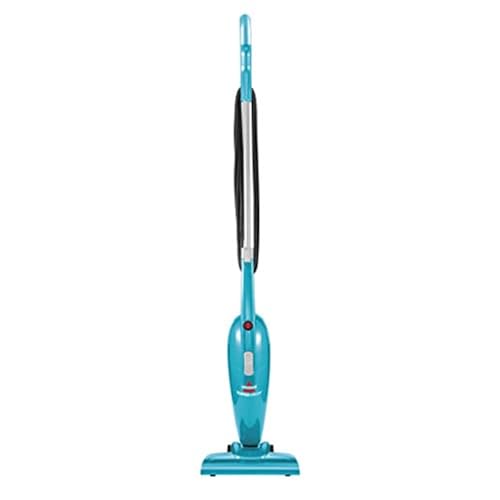
ASIN: B06ZY7BTWM

ASIN: B00DFBDALC

ASIN: B006LXOJC0
Quick picks by stair-cleaning style
Best simple stair-focused attachment: Dirt Devil Scorpion Plus with a pivoting stair and upholstery tool. Its corded handheld format avoids a battery run-time limit and keeps the tool body in your hand. It is most suited to short stair sessions and spot cleanup; check that the current listing includes the pivot tool and hose.
Best lightweight 3-in-1 approach: BISSELL FeatherWeight 2033. BISSELL describes the 2033 as a corded stick that converts into a hand vacuum and stair vacuum, weighs less than four pounds, and includes a crevice tool and floor nozzle. The manufacturer lists it for low-pile carpet and stairs. It is a modest cleaner for quick pickup, not a heavy-duty deep-carpet machine.
Best convertible stick for people who also need floor cleaning: Shark Rocket HV301. The listing describes a corded stick under nine pounds that converts to a handheld vacuum and includes crevice and upholstery tools. It can be a more capable all-purpose option than a tiny hand vac, but verify the total weight of the part you lift on the stairs and the package’s exact tools.
Best for small, localized crumbs: BLACK+DECKER dustbuster CHV1410L. It is a cordless handheld with a rotating nozzle, crevice tool, and flip-up brush, according to the manufacturer. Its short run time and handheld floor area make it better for touch-ups than vacuuming a large carpeted staircase from top to bottom.
Prices and availability can change, and a product family may have several model suffixes. Treat these as formats to compare, not guarantees that every model is suitable for every carpet. Check that the selected listing is a complete vacuum with the exact stair tool described.
How we compared carpeted stair vacuums
We focused on stair-specific factors: whether the vacuum can be lifted and controlled safely, whether a narrow nozzle or powered tool can reach each tread, whether the hose or cord allows the user to work without awkward repositioning, and whether the collection system can handle a full flight without frequent interruptions. We checked manufacturer product descriptions for weight, conversion, included tools, and surface claims where available.
We did not conduct lab tests for carpet pickup, battery runtime under load, noise, or durability. A manufacturer’s weight and product claims are not the same as independent test results. Stair carpet varies from low-pile loop to thick plush, and a nozzle that works on one construction may struggle on another. If your stair carpet is delicate, follow its care instructions and use the vacuum maker’s recommended setting.
The product images, titles, and ASINs in the listing cards were verified using Amazon’s Creators API. Listings can change or be replaced, so check the exact model code and accessory bundle at purchase. A listing image may show tools sold separately. Read the “included” section and warranty terms before ordering.
1. Dirt Devil Scorpion Plus: compact handheld with stair tool
The Scorpion Plus is a corded handheld vacuum whose Amazon listing identifies a pivoting stair and upholstery tool, hose, and dusting brush. This format is easy to carry up a staircase because the machine is small and the cleaning head is in your hand. The pivoting tool can change angle to follow a tread and reach near the riser without forcing the entire vacuum body against the step.
A handheld’s biggest advantage on carpeted stairs is control. You can move the nozzle from the front edge toward the back, then use the hose or narrow tool around the corners. The corded design lets you work without worrying that a long flight will exhaust a battery, though cord placement needs attention. Keep the wire behind you and away from the nozzle, and do not stretch it across a step where it could catch your feet.
Capacity is the main limitation. A compact dust cup fills faster than a full-size upright bin, particularly with lint, pet hair, or grit trapped in carpet. Check the cup between flights and empty it before airflow drops. A handheld is also not ideal for cleaning an entire carpeted home. It is a specialized stair tool or supplemental vacuum, not necessarily the best primary floor machine.
Before purchasing, confirm the current Scorpion Plus listing includes the pivoting stair tool. Listings for related Scorpion versions can differ in included accessories. Look for the model number and the tool in the box, not only a photo of the vacuum next to a stair. Also check whether the filter is washable and how to remove it; fine carpet dust can clog a small filter quickly.
2. BISSELL FeatherWeight 2033: a light stick that converts for steps
The BISSELL FeatherWeight 2033 is a corded stick vacuum that the manufacturer describes as a three-in-one stick, hand, and stair vacuum. The official product information lists a weight under four pounds, a 15-foot cord, a 0.67-liter dirt cup, and a crevice tool. BISSELL says it works on low-pile carpet, stairs, and hard floors. The floor nozzle can be useful across multiple treads, while the conversion option lets you switch to a handheld arrangement for edges or narrow steps.
Its low weight is an advantage when carrying the machine between floors or guiding it on stairs. The 2033 is corded, so it can handle several steps without waiting for a charge. However, a 15-foot cord still needs thoughtful routing. Start near an outlet that allows the cord to remain on a landing or behind the cleaner, and avoid running the cord down the walking path.
This model is aimed at everyday quick pickups. Its small cup and basic filtration are not equivalent to a full-size, sealed upright with a powered brush roll. It may be less effective on deep pile or heavy embedded soil. The floor nozzle is also not a hose, so it does not offer the same reach into stair corners as a separate hose-and-tool setup. Use the crevice tool for the tight edges and do not force the main head into a space it cannot fit.
Before buying, make sure the retailer’s version is model 2033 or an identified similar variant and verify the included floor nozzle and crevice tool. BISSELL lists several related model suffixes. Check that the corded model is what you want, because a similar FeatherWeight name can refer to cordless or brush-equipped products with different controls and performance.
3. Shark Rocket HV301: one machine for rooms and stairs
The Shark Rocket HV301 listing describes a corded stick vacuum weighing under nine pounds and converting to a handheld. It is positioned for carpet and hard floors and includes crevice and upholstery tools. Compared with a small hand vacuum, a convertible stick can offer a wider floor head for room cleaning, then a shorter hand-held configuration for stair treads. This flexibility may appeal to someone who wants one vacuum for several tasks.
Pay close attention to which part you must lift. “Under nine pounds” may refer to the complete stick, while the handheld configuration has a different balance and the cord can add drag. Try to hold the unit as you would when cleaning stairs, and check whether the motor housing blocks your view of the tread. A convertible design does not automatically make every step comfortable.
A corded machine provides continuous power but requires cable management. Keep the cable off the staircase or secured where it cannot cross the walking route. The main floor head may be too wide for narrow treads, so use the included attachments when needed and verify whether a smaller stair tool is part of the exact package. The crevice tool can reach edges but is not necessarily a substitute for a powered upholstery tool.
For carpet, inspect the brush roll and how easily it can be cleaned. Hair and fibers can wrap around brush rolls and reduce performance. The HV301 is an older model family, so check current parts availability, warranty coverage, and whether the listing is new, renewed, or used. Avoid assuming a renewed listing has the same return terms as a new vacuum.
4. BLACK+DECKER dustbuster CHV1410L: cordless spot cleaning
The CHV1410L is a cordless handheld with a rotating nozzle, pull-out crevice tool, flip-up brush, and washable dust bowl/filter, according to BLACK+DECKER. The manufacturer lists a 16V MAX lithium-ion battery, a 605-milliliter dustbin, a 2.6-pound weight, and up to 11 minutes of run time. These specs make it portable for quick debris on a few steps, but the runtime and compact intake make it a limited choice for a long flight of carpeted stairs.
A cordless handheld removes the cord from the staircase, which can make a short cleanup simpler. The rotating nozzle can help reach the tread corner, while the flip-up brush can be used for upholstery or gentler dusting. The small size is useful for crumbs and localized messes. It is not built like a full-size powered carpet head, and it may require many passes on a thick, dirty stair carpet.
Battery age and charge state affect how convenient a cordless hand vacuum feels. Store it on the charger or charging base as the manual directs, and check the manufacturer’s battery-support information before purchase. If your staircase takes longer than the stated run time, consider a corded handheld or convertible machine instead. A single listed runtime is not a promise of the same duration on every carpet and debris load.
As with any bagless handheld, empty the bowl before it is packed full and maintain the filter according to the manual. Dust can escape during emptying, and a clogged filter can quickly reduce suction in a small machine. Check compatibility for replacement filters and inspect that the specific CHV1410L listing is not a replacement accessory or a different Dustbuster model.
Handheld, convertible stick, or canister hose?
Handhelds maximize control on narrow treads
A handheld puts the motor, bin, and nozzle in one compact unit. It is easy to carry and maneuver around a riser, but the body is held in the same hand that guides the nozzle. The bin may be small, and a plain suction nozzle may not agitate carpet deeply. Handhelds work well for a few narrow steps, edges, and spot messes; they can be tiring if the machine is heavy or the flight is long.
Convertible sticks balance stair and room cleaning
A convertible stick can clean a flat room with a wider head and then change to a hand vacuum for stairs. This may reduce the number of appliances in a closet. Check how quickly it converts, where the weight sits, whether the cord or battery reaches the entire flight, and whether a dedicated stair nozzle is included. Some conversions simply remove the wand and floor head; they do not provide a flexible hose.
Canister hoses help keep the body off the steps
A canister with a hose lets the body remain on a landing while the user guides a lighter wand across treads. It can be comfortable when the hose is long enough and the machine has a stable place to rest. The body must not be left balanced on a stair edge or where it can fall. Keep it on a level landing, use a stair tool, and check the hose length before buying. For more on canister options, see our bagless canister comparison.
Match the nozzle to stair width and carpet pile
Measure the usable width of a tread, not just the full staircase width. A handrail, baluster, wall, or stair runner may reduce the flat surface available to the nozzle. A wide floor head can hang over the sides or strike the riser, while a narrow tool may take extra passes but fit neatly along the edges. If you can, compare the nozzle width with the tread depth and width before ordering.
Carpet pile changes how a head moves. A low-pile carpet may allow a compact floor nozzle to glide, while plush pile can create more resistance and seal against the head. A rotating brush can help lift debris but may not suit every carpet construction. Loop pile and delicate fibers need care: check the carpet maker’s vacuum recommendations, use an approved setting, and avoid aggressive brush action if it could snag fibers.
Stair nosings can have rounded or projecting profiles. A bulky nozzle may not reach the carpet tucked around the front edge. A crevice or upholstery tool can clean that area, but it will take longer. Move the tool slowly and do not press hard enough to deform the carpet or strain the hose. Inspect the backing and seam areas as you clean.
Edges collect dust and hair where the tread meets the riser and wall. A crevice tool can trace those joins; a small brush can loosen particles if the carpet tolerates it. Avoid pushing debris deeper into the seam. On stair runners, take extra care around exposed edges, decorative tacks, and fringe.
Weight, balance, and reach are separate considerations
Look beyond a single weight number. A lightweight vacuum may still feel unbalanced if its motor is at the end of the handle. A heavier canister may be easier to use because the body stays on a landing while a wand reaches the step. Consider the weight of the part you lift, the hand position, and how much force is needed to push or pull the head through the pile.
Reach includes the hose or wand, not just the cord. A corded handheld with a short cable may need an outlet at the top and bottom of the stairs. A long cord should never be routed where someone could trip. A cordless model removes that hazard but introduces runtime and charging considerations. A canister hose gives more reach only if it extends without pulling the body toward the stairs.
If you have limited strength, arthritis, balance concerns, or a steep staircase, prioritize a stable setup over a fast cleaning pass. A hand vacuum may weigh less but requires holding the motor continuously. A canister hose can reduce lift but requires parking the body safely. Test the grip and trigger if possible, and ask another person to help move equipment rather than balancing a heavy machine on the stairs.
Safe technique for vacuuming carpeted stairs
Start by removing objects from the stairs and checking the cord, hose, and stair surface. Use a stable landing as the base for a canister, or keep a handheld secured in your grip. Never place a heavy vacuum on the edge of a tread where vibration or hose tension can pull it down. Keep pets and other people off the staircase until the work is finished.
Work from the top landing downward only if you can keep the cord behind you and avoid stepping on a cleaned area with a loose cable. Some users prefer to work upward from the bottom so the cord remains on a lower landing. Choose the direction that lets you stand securely and keep the cord out of your path. There is no cleaning benefit worth risking a fall.
Clean one tread at a time, keeping both feet planted on a stable step or landing. Guide the nozzle along the tread surface, then use a smaller tool for the front edge and corners. Do not overreach across a wide step or lean around a handrail. Reposition your stance instead. Keep fingers and loose clothing away from powered brush rolls and unplug before clearing hair or debris.
Do not pull the vacuum by its cord or hose. Do not carry a running upright up or down stairs. If the manual specifies a stair-cleaning method or attachment, follow it. Stop if the machine overheats, the brush stalls, or the nozzle sticks to the carpet. Check for a full bin, blockage, incorrect head setting, or unsuitable pile before continuing.
Carpeted stairs with pets, long hair, or tracked-in grit
Pet hair and long human hair collect along the nosing and corners. A motorized stair tool can help agitate carpet, but it needs frequent cleaning. Hair wrapped around a roller can slow it, increase load, and make the head difficult to guide. Unplug first, follow the manual’s brush-roll procedure, and do not use scissors where they might cut the bristles or carpet fibers.
Fine grit is abrasive. Vacuuming it from the tread can help, but avoid dragging the nozzle across the exposed stair edges or scratching wood trim. A soft brush tool may be preferable along painted risers. For mud or wet debris, let it dry if the carpet instructions permit, then vacuum; never use a dry-only vacuum on liquids.
For homes with pets, empty a small hand vacuum more often than you think necessary. A full cup can make the tool feel weak partway up the staircase. Check filters frequently during shedding season. If you routinely clean multiple flights, a tiny cordless handheld may create too many interruptions; a corded convertible stick or canister with a stable landing position may be more practical.
When a stair vacuum is the wrong tool
Deep stains, sticky residue, and wet spills require a different cleaning method. A regular vacuum removes dry debris; it does not wash carpet fibers or extract liquid. Do not pour cleaner into the vacuum or use a dry machine on a damp step. Follow the carpet maker’s instructions and use an appropriate carpet spot cleaner or extractor when needed.
For extensive wall-to-wall carpet, a lightweight hand vacuum may be inefficient as a primary machine. Use an upright or canister designed for your carpet type for the room floors, and reserve the handheld for stairs and upholstery. If your main cleaning challenge is pet hair on broad carpeted areas, our pet-hair carpet guide focuses on brush rolls and pile compatibility.
For hard-floor staircases or mixed surfaces, look for a tool that protects the finish and does not scatter debris. The stair carpet recommendations here prioritize pile and tread geometry. A vacuum that works well on carpet may not be the gentlest choice for wood or stone steps.
What to verify before buying
Exact model and tool: check the suffix and confirm the stair, upholstery, or crevice tool is included. Similar model names may refer to different bundles.
Weight in use: determine whether the listed number describes the whole stick, handheld unit, or motor body. Think about what you actually lift for each step.
Carpet approval: verify pile-height compatibility and brush-roll control. Low-pile carpet suitability does not guarantee performance on thick plush stairs.
Reach and power: compare cord length, hose reach, runtime, and charging time. Make sure the configuration can cover your staircase without unsafe cable routing.
Maintenance and returns: find the manual, filter, brush-roll access instructions, and return window. Stair comfort is personal; a safe return option matters if the balance or tool size is wrong.
Frequently asked questions
What kind of vacuum is easiest to use on carpeted stairs?
A light handheld or convertible stick is often easiest to carry, while a canister hose can keep the heavy body on a stable landing. The best format depends on stair width, carpet pile, hose length, and your ability to carry the motor. Try to handle the vacuum before buying if balance or grip is a concern.
Are handheld vacuums powerful enough for carpeted stairs?
They can handle quick pickup and localized dirt, especially when the tool is designed for carpet or stairs. A basic suction-only handheld may not lift embedded soil from dense pile. Check whether it includes a motorized tool and remember that the small bin may need frequent emptying.
Can I use a regular upright vacuum on stairs?
Some uprights include a hose and stair tool, but carrying the full upright from tread to tread can be awkward and unsafe. Use the hose and attachment while the vacuum body rests securely on a level landing, if the manual permits. Do not balance the upright on a step or carry it while running.
Is a cordless handheld better than a corded one for stairs?
Cordless removes the cable from the staircase, which can simplify short touch-ups. Its runtime and battery age may limit long sessions. A corded handheld offers continuous power but requires careful routing. Choose based on the length of your flight and where the outlets are.
How often should I vacuum carpeted stairs?
It depends on foot traffic, pets, and visible debris. A quick weekly pass may work for a low-traffic household, while entry stairs or pet routes may need more frequent attention. Vacuum slowly enough to remove dry soil and check edges where debris accumulates. Follow carpet maintenance guidance.
Should I use a rotating brush on stair carpet?
Only if the carpet maker and vacuum manual allow it. A brush can help agitate pile but may snag loops or delicate fibers. If you are unsure, use a gentler attachment and test a discreet area. Avoid forcing a powered tool that catches or pulls carpet fibers.
Bottom line: choose a tool you can control on every tread
For carpeted stairs, nozzle fit, balance, reach, and safe positioning matter as much as advertised suction. The Dirt Devil Scorpion Plus emphasizes a handheld format with a pivoting stair tool; BISSELL’s FeatherWeight 2033 is a light corded stick that converts for steps; the Shark Rocket HV301 combines room cleaning with a handheld mode; and BLACK+DECKER’s CHV1410L is suited to quick cordless touch-ups. Confirm the exact package and carpet compatibility before buying.
Keep the vacuum body stable, keep cords out of the walking path, and clean one tread at a time without overreaching. If you cannot hold or position a model securely, choose another format or ask for help. The right stair vacuum is the one that lets you clean the carpet without making the staircase less safe.
Amazon content disclosure: As an Amazon Associate, Daily Home Decorating earns from qualifying purchases. Prices and availability are accurate only when checked and may change. Amazon and the Amazon logo are trademarks of Amazon.com, Inc. or its affiliates.