Disclosure: As an Amazon Associate, dailyhomedecorating.com earns from qualifying purchases. Links on this page are affiliate links; they cost you nothing extra. Prices and availability change often, so check the current Amazon listing before you buy.
This spot cleaner buying guide is written for the moment before money changes hands, when the honest questions are still available: what kind of messes does your home actually produce, where do they happen, and which format of machine will you genuinely reach for at the moment they occur? It covers the main types, the criteria that matter in plain language, and a shortlist of real models matched to real households — with no miracle claims and no whole-room promises.
Key Takeaways
- Buy for spots, stairs, sofas and car seats — whole rooms need a full-size extractor.
- Extraction strength, twin tanks and hose reach outrank novelty attachments.
- Corded suits longer jobs; cordless suits fast, frequent, small ones.
- Budget a routine, not just a machine: patch test, ventilate, dry fully, rinse the tank every time.
In this guide
Spot Cleaner Buying Guide: What a Spot Cleaner Does and the Main Types
A spot cleaner works on a simple loop that anyone can learn in one session. You spray a mixture of water and cleaning solution onto the stained fibres, give it a short moment to loosen what is trapped there, agitate gently with the brush head, and then pull the dirty liquid back out with suction into a separate dirty-water tank. The clean water and the recovered water never mix, which is why the tank you empty afterwards looks so grimly satisfying and why the fabric is left damp rather than soaked through to the backing.
The extraction step is the whole point of the category, and it is what separates a spot cleaner from a spray bottle and a towel. Blotting lifts only what sits on the surface and often pushes the rest deeper, while extraction physically removes dissolved dirt, spilled drinks and the residue that would otherwise dry sticky and attract fresh soil within days. Work in slow, overlapping passes, release the spray trigger on the final pass, and keep pulling liquid out until the strokes return noticeably clearer water.
Technique matters more than force with these machines. Pressing the tool down hard does not clean deeper; it mostly tires your wrist and can distort delicate pile. Steady contact, a slight tilt so the suction slot seals against the fabric, and patience across several passes will outperform one aggressive scrub almost every time. If a mark is still visible after the first round, treat it again while the area is still damp rather than waiting for it to dry and set further.
Honesty about scope has to come first, because a spot cleaner is a specialist, not a whole-room machine. It is built for spots, spills, stair treads, car seats, pet accidents and the arm of a sofa — small, defined areas where something specific went wrong. It is not designed to clean an entire living-room carpet wall to wall, and attempting that job with one means endless tank refills, a sore back and a mediocre result. Whole rooms belong to a full-size carpet extractor or a professional service.
Set-in and older stains deserve the same honesty. A fresh spill lifted within the hour often disappears completely, while a mark that has dried for weeks, been walked on, or already been treated with the wrong product may only fade. Heat-set stains, dye transfer from clothing, and some pet accidents that have reached the carpet backing can resist any household machine. A good spot cleaner improves almost every case and fully solves most fresh ones, but no honest guide should promise miracles on neglected marks.
Think of the machine as the middle rung of a cleaning ladder. Below it sit sprays, foams and hand scrubbing, which handle surface marks cheaply but leave residue behind. Above it sit full-size extractors and professional truck-mounted services, which cost more, store larger and make sense for whole rooms or whole houses. The spot cleaner earns its place because most real household messes are small, sudden and localised — exactly the jobs the other two rungs handle badly or wastefully.
Corded Twin-Tank Portables
The classic format: consistent suction for as long as the job takes, separate clean and dirty tanks, and a hand tool on a flexible hose. This is the default recommendation for pet households, family sofas and staircases.
Compact and Mini Portables
Smaller tanks and a lighter body trade session length for storage and speed. Ideal for flats, renters and single-spot emergencies where the machine must live on a short shelf and start work within a minute.
Cordless Portables
Battery freedom suits homes where spills happen far from sockets and where messes are small but frequent. The trade-off is endurance: plan on shorter sessions and a charging habit.
Top Picks at a Glance
| Pick | Badge | Tier | Best for |
|---|---|---|---|
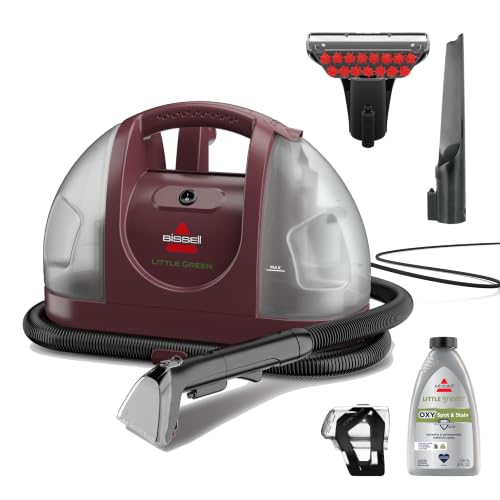
| Bissell Little Green | Best Overall | mid | the long-running benchmark of the category |
| Bissell Little Green Mini | Best for Small Spaces | entry | the compact sibling in the same family |
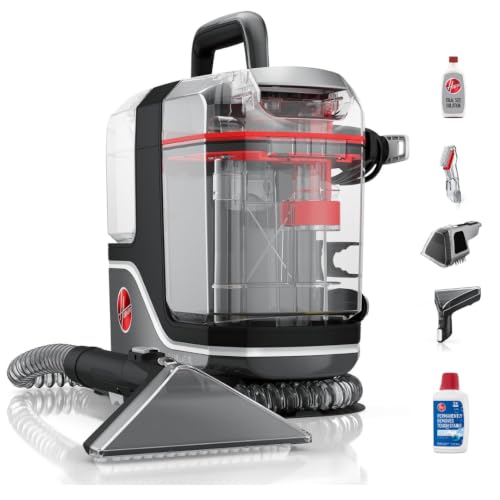
| Hoover CleanSlate | Best for Cars and Stairs | mid | a corded rival built around strong extraction and a versatile tool set |
| Shark StainForce | Best Cordless Convenience | premium | a cordless entry in the category |
| Dirt Devil Portable Spot Cleaner | Best Entry Tier | entry | a straightforward |
| Kenmore Spotlite | Best for Dim Corners | mid | a portable spot cleaner from a long-established floor-care name |
Tiers here are qualitative positioning only — entry, mid and premium — so you can shortlist by household fit first and check the current listing for the model that matches your home.
How Much Extraction Power Do You Need?
Suction is the specification that decides results, yet it is also the one described most vaguely by makers. Judge it by behaviour rather than promises: a good machine leaves fabric damp, not wet, after your final dry pass, and recovers most of the solution you sprayed. Weak suction leaves moisture sitting in the padding, which lengthens drying, invites odour and can wick dirt back up from the backing as it dries. In every comparison, extraction strength should outrank almost any convenience feature.
Twin-tank design is worth insisting on. Separate clean and dirty tanks mean you are never reapplying filthy water to the stain, and removable tanks mean filling and emptying happen at the sink without carrying the whole machine. Tank size is a balance rather than a contest: larger tanks mean fewer refills on stairs and car jobs, smaller tanks keep the machine light enough to carry one-handed and store in tight spaces. Match the balance to the jobs you actually expect, not the biggest job you can imagine.
Corded and cordless designs suit different households, and neither is simply better. Corded models offer consistent suction for as long as a job takes, which suits stairs, cars on the driveway and multi-seat upholstery sessions. Cordless models trade some endurance for grab-and-go freedom, which suits small flats, quick pet accidents and homes where the nearest socket is never near the spill. Be honest about your pattern: frequent small emergencies favour cordless convenience; fewer, bigger jobs favour corded stamina.
The tool head matters more than it looks. A narrow head concentrates suction and suits car seats, stair edges and the seams of sofas, while a wider head covers open carpet patches faster. Some machines include a second, tougher brush for ground-in messes or a crevice-style tool for corners. Interchangeable heads add versatility but also add parts to rinse and store. If your messes live mostly in tight places, prioritise a well-sealed narrow tool over a drawer full of attachments.
Hose length and reach decide which jobs feel easy and which feel like wrestling. The machine should be able to sit stable on the floor or a landing while the tool works every tread of a staircase section or every seat of a car interior. A hose that forces you to hold the machine in one hand and the tool in the other halves your control and your suction seal. When comparing models, picture your own stairs and your own car, and choose the reach that fits them.
How Much Capacity Do You Need?
Capacity is a comfort decision disguised as a specification. A household treating one cushion at a time will never feel a small tank; a household working through a full car interior or a staircase will feel every refill. Be honest about your longest realistic session, then buy for that session — not for the average spill, and not for the once-a-decade disaster that a hire machine handles better anyway.
Stairs are where portable machines justify themselves most clearly, because no full-size extractor climbs them gracefully. Work from the top step down so you are never kneeling on damp, cleaned treads, keep the machine on a level step or the landing rather than balancing it, and give edges and nosings extra attention since that is where shoes deposit the most ground-in soil. The hand tool format, short hose and carry handle all exist precisely for this awkward, vertical territory.
Car interiors are the second natural habitat. Fabric car seats collect coffee, sunscreen, muddy paw prints and the mysterious stickiness of family road trips, and a spot cleaner lets you treat them in the driveway without removing the seats. Work in the shade so solution does not dry on contact, ventilate the cabin fully while you work and afterwards, and allow generous drying time before closing the doors. Floor mats respond especially well and can be removed, cleaned thoroughly and dried flat in the sun.
Small spaces reward a compact machine and punish a bulky one. In flats, rental homes and houses without a utility room, the cleaner that stores on a short shelf and sets up in under a minute is the one that actually gets used. Renters in particular value a tool that handles deposit-threatening spills on landlord-owned carpet without hiring equipment at short notice. Judge size and storage footprint against your real home, not against an idealised one with a large cupboard waiting empty.
Which Fabrics and Stains Must It Handle?
Fabric type changes everything about how you approach a stain. Tightly woven synthetics such as polyester and most modern microfibres forgive a lot: they release spills readily, tolerate gentle agitation and dry quickly. Natural fibres ask for more respect. Wool can felt and shrink with heat and rough scrubbing, cotton can hold dye stains stubbornly, and delicate weaves may distort if the brush works them too hard. Always read the care label on upholstery before you begin, and let the most delicate material in the room set your technique.
Carpet pile deserves its own moment of thought. Short, dense pile releases dirt easily and suits a firmer brush pass, while long or shaggy pile traps spills deep between fibres and needs slower extraction strokes so the suction can reach the base. Loop pile should never be scrubbed in circles, which can fuzz or snag the loops; use straight, gentle strokes instead. On any pile, finish by grooming the fibres in one direction with the tool so the cleaned patch dries looking like the carpet around it.
Leather and vinyl are not spot-cleaner territory in the usual sense, because extraction tools and upholstery solutions are formulated for absorbent fabrics, not sealed surfaces. Wipe those materials with products made for them instead. Equally, silk, velvet with a delicate nap, and antique or hand-knotted textiles deserve a professional opinion before any machine touches them. Knowing where a spot cleaner should not go is part of owning one wisely, and it protects the pieces you would most hate to damage.
Different stains fail in different ways, and matching your response to the spill saves effort. Sugary drinks dry sticky and attract dirt, so extraction matters more than scrubbing. Greasy food marks need the solution a little dwell time to break down oils before you extract. Mud is the counterintuitive one: let it dry completely first, vacuum up the loose soil, and only then treat what remains, because wet mud worked with a brush simply spreads and drives deeper into the pile.
Pet accidents are the job these machines are bought for most often, and they reward thoroughness. Blot and extract as much as possible before applying solution, work from the outside of the mark inward so you do not spread it, and make extra extraction passes because urine wicks outward through backing further than the visible spot suggests. An enzyme-based solution, used exactly as directed, helps neutralise the odour compounds that draw pets back to the same place. Finish only when the recovered water runs clear.
Tannin stains — tea, coffee, red wine and fruit juice — are a race against setting. Blot immediately with a clean white cloth, never rub, keep the area damp rather than letting it dry mid-treatment, and extract in repeated gentle rounds. Cold liquid is your friend here; heat helps tannin bond to fibres, which is why a stain washed hot before it is treated can become permanent. If a faint shadow remains after honest effort, a second session the next day often lifts more than one marathon session.
How to Prioritise by Use Case
The pet household should prioritise extraction strength, an enzyme-compatible solution routine and a tank that rinses clean in seconds, because frequency is everything. The family with young children should prioritise speed of setup and safe practice — patch test first, ventilate, and keep little ones off treated fabric until it is fully dry. The car-focused buyer should prioritise hose reach, a narrow tool and shade-friendly working. The renter should prioritise compact storage and deposit-saving responsiveness on landlord-owned carpet.
The Shortlist in Detail

Bissell Little Green
This pick is the long-running benchmark of the category, a corded portable with separate clean and dirty tanks and a tough little hand tool that has made it the default first spot cleaner for pet households and sofa owners alike. Best for: the household described in its badge above, with the strengths of its format used weekly rather than admired occasionally. Not suited for: whole-room cleaning, or for buyers whose real pattern contradicts its format — cordless for marathon sessions, mini tanks for staircases, and so on. Strengths and trade-offs follow its class: genuine extraction and reach, balanced against tank size, session length and the standing need to rinse everything after use.

Bissell Little Green Mini
This pick is the compact sibling in the same family, sized for small flats, quick grab-and-go spills and storage shelves where the full-size machine would simply not fit into everyday life. Best for: the household described in its badge above, with the strengths of its format used weekly rather than admired occasionally. Not suited for: whole-room cleaning, or for buyers whose real pattern contradicts its format — cordless for marathon sessions, mini tanks for staircases, and so on. Strengths and trade-offs follow its class: genuine extraction and reach, balanced against tank size, session length and the standing need to rinse everything after use.

Hoover CleanSlate
This pick is a corded rival built around strong extraction and a versatile tool set, aimed at households that want one machine to move between carpet spots, upholstery and car interiors without fuss. Best for: the household described in its badge above, with the strengths of its format used weekly rather than admired occasionally. Not suited for: whole-room cleaning, or for buyers whose real pattern contradicts its format — cordless for marathon sessions, mini tanks for staircases, and so on. Strengths and trade-offs follow its class: genuine extraction and reach, balanced against tank size, session length and the standing need to rinse everything after use.

Shark StainForce
This pick is a cordless entry in the category, designed around grab-and-go freedom for small, frequent messes where reaching a socket would slow the response that makes stain removal succeed. Best for: the household described in its badge above, with the strengths of its format used weekly rather than admired occasionally. Not suited for: whole-room cleaning, or for buyers whose real pattern contradicts its format — cordless for marathon sessions, mini tanks for staircases, and so on. Strengths and trade-offs follow its class: genuine extraction and reach, balanced against tank size, session length and the standing need to rinse everything after use.
First Setup and Care Essentials
Before any solution touches a visible area, test it on a hidden patch first. Choose a spot under a cushion, behind a leg or inside a skirt of the sofa, apply a little of the diluted solution, wait, blot with a white cloth and check for colour transfer or texture change. This colourfastness check takes minutes and is the single step that prevents the classic disaster of a clean pale ring where the stain used to be — or worse, dye lifted from the fabric itself.
Ventilation is part of the job, not an afterthought. Open a window or run a fan while you clean, especially in small rooms, stairwells and car interiors where fumes concentrate quickly. Fresh air also speeds drying, which matters because damp upholstery left in still air can develop a musty smell that replaces the one you just removed. Keep the airflow going until the fabric feels dry to the touch, not merely until the machine is back in the cupboard.
Keep children and pets off treated fabric until it is completely dry. Paws and small hands pick up solution residue easily and transfer it to mouths and eyes, and crawling back onto a damp cushion also re-soils fibres you have just extracted. Close the door to the room if you can, or block the sofa with cushions turned on end as a visible barrier. Once the area is fully dry and has had a final vacuum, it is ready for normal family life again.
Never mix cleaning chemicals — not two branded solutions, not a branded solution with bleach, and not a homemade mixture with anything from under the sink. Combinations can release harmful gases, damage fibres and void any sense of predictability about what is touching your upholstery. Use one product, diluted exactly as its label directs, rinse the tank between different products, and if you want to try something else, let the fabric dry fully first so the two never meet in the fibres.
The dirty-water tank needs emptying and rinsing after every single use, without exception. The liquid inside is a warm soup of soil, sugars, oils and bacteria, and leaving it sitting in the machine breeds the sour, swampy smell that owners blame on the cleaner itself. Empty it into a toilet or an outside drain rather than a kitchen sink, rinse the tank and its lid with clean water, and leave the parts open to air-dry before you reassemble and store the machine.
The same hygiene logic applies to the hose, the tool head and any removable brush. Rinse the suction path by drawing a bowl of clean water through the tool, wipe grit from the brush bristles, and check the nozzle for trapped hair and lint that will smear across the next job. Machines that offer a hose-rinse or self-cleaning cycle make this easier, but a manual rinse done faithfully beats a clever feature used occasionally. Five unglamorous minutes now prevent smells, clogs and streaky results later.
Storage habits decide how the machine greets you next time. Store it empty, dry and with the cord or hose loosely coiled rather than kinked, in a place you can reach quickly — because the value of a spot cleaner is highest in the first minutes after a spill. A machine buried behind paint tins in a garage will not save a sofa from red wine on a Saturday night. A hall cupboard, a utility shelf or the space beside the vacuum are all better homes.
Drying time is part of the cleaning result, and planning for it prevents disappointment. Extract until the passes return mostly clear, then make several dry passes with no spray at all. Point a fan at the area, keep the room ventilated, and resist putting furniture back or rugs down until the fibres feel dry when you press a tissue firmly into them. Most spots dry within a few hours in moving air; deep pile and sofa padding take longer, and patience here prevents the musty sequel.
A final vacuum once everything is dry is the step most people skip and professionals never do. Extraction can leave fibres lying in mixed directions and loosened grit sitting at the base of the pile. A slow vacuum pass lifts the pile, evens the appearance of the cleaned patch so it does not show as a flat rectangle, and removes the last loosened soil before it resettles. It also lets you judge the result honestly: some marks only reveal their true remaining state once fully dry and groomed.
Expectations set at the start determine whether owners love or resent these machines. Used promptly, on the jobs they are sized for, with solution tested first and tanks rinsed after, a spot cleaner quietly prevents the slow accumulation of marks that makes carpets and sofas look tired years before they wear out. Used rarely, roughly and on neglected stains, the same machine disappoints. The difference is almost never the badge on the front; it is the routine wrapped around the machine.
Mistakes to Avoid
The recurring buying mistakes are predictable: choosing by attachment count instead of extraction and reach; buying a whole-room expectation in a spot-sized box; skipping the colourfastness patch test on the first visible job; mixing two cleaning chemicals in search of a stronger result; and storing the machine with a full dirty tank, which guarantees a smell no feature can fix. Avoid those five and almost any sensibly chosen model on the shortlist will serve you well.
Going Deeper: Habits That Decide Long-Term Results
Working order matters on anything bigger than a single spot. Start with the least visible or least severe mark while your technique settles, move to the worst area while your patience and the solution are fresh, and finish with edges and borders where overspray shows. On upholstery, clean the full cushion panel rather than a tight circle around the mark; a uniformly cleaned panel dries evenly and avoids the halo effect of one bright island in a sea of everyday soil.
Sound and session length are worth a thought before you buy, because a machine you dread switching on will stay in the cupboard. Spot cleaners are not quiet appliances, and evening use in a flat with thin walls or a sleeping baby nearby is a real consideration. Short, prompt sessions usually solve the problem: these machines are designed for minutes of work, not hours, and planning the job for a reasonable hour keeps both the household and the neighbours on your side.
Rental machines and professional visits still have their place, and owning a spot cleaner does not abolish them. A whole house of neglected carpet, a flood, or a stain on a valuable antique rug all justify bigger equipment or expert hands. What ownership changes is the middle ground: the weekly small disasters that are too minor for a professional call-out and too stubborn for a spray bottle. That middle ground is where most household fabric damage quietly accumulates, and it is exactly the ground these machines defend.
Second-hand and hand-me-down machines deserve a careful first hour. Rinse every tank, run clean water through the hose, inspect the brush for matted hair, and check seals and the suction path for leaks before trusting the machine on a visible stain. A neglected dirty tank from a previous owner is the most common source of the smell people report. Once cleaned and tested on a hidden patch of your own fabric, an older machine can serve perfectly well for years.
Households with allergy concerns often find extraction cleaning reassuring for a simple reason: the dirt leaves the house in the tank instead of being redistributed. Dust, pollen and the fine soil that settles into upholstery are lifted out with the water rather than blown around the room. Rinse the tank outdoors or into a toilet, wash your hands after emptying, and let treated fabric dry fully before children play on it, and the process stays as clean as the result it produces.
Mark your progress honestly as you work. It is easy, mid-session, to lose track of which cushion has been extracted and which has only been sprayed. A simple routine — spray, dwell, agitate, extract, dry pass, move on — repeated in the same order for every section keeps results even and prevents the double-treated patch that dries a shade lighter than its neighbours. Consistency of process, more than any single product choice, is what makes home results look professional.
Seasonality changes how hard these machines work. Winter brings road salt, slush and muddy boots ground into hallway rugs and stair treads, while summer brings sunscreen on car seats, grass stains on upholstery and picnic spills on picnic blankets and patio cushions. Owners who anticipate the seasonal pattern — keeping solution stocked before the muddy months and checking the brush before holiday guests arrive — find the machine ready at exactly the moments when a delayed response would cost the most.
Guests are the other great stain deadline. A spill during a dinner party tempts everyone to postpone treatment until the room empties, by which time tannin and sugar have had hours to bond. The graceful solution is a two-minute first response: blot, keep the mark damp with a clean cloth, excuse yourself properly later, and extract once the house is quiet. Hosts who build that small ritual into the evening protect their furnishings without turning a party into a cleaning demonstration.
Precision is unnecessary, but measurement helps with solution. Dilute exactly as the product label directs, using the tank markings rather than guesswork, because over-concentrated solution leaves residue that attracts soil and under-concentrated solution wastes your effort. If you keep a small measuring cap beside the bottle, the correct dilution becomes automatic, and automatic correctness across dozens of sessions is what keeps results consistent from the first cushion to the fiftieth.
Noise etiquette deserves a line in any honest deep dive. These are suction appliances and they sound like it, so late-night sessions in flats and terraced houses are a courtesy question as much as a cleaning one. Blot and dampen a late spill to hold it safely, then extract at a civilised hour; a stain kept damp overnight responds almost as well as one treated instantly, which is a useful and under-reported fact for anyone with thin walls or sleeping children.
The brush is the most under-maintained part of the whole system. Hair wraps it, grit dulls it and dried solution stiffens it, yet a thirty-second check after rinsing — pull the trapped fibres free, rinse the bristles, spin it once by hand — restores it completely. A neglected brush smears dirt in arcs across pale fabric and convinces owners the machine has lost power, when in fact only the brush has lost its ability to agitate and lift what the suction is ready to remove.
Water temperature is a quiet variable worth controlling. Lukewarm water in the clean tank helps solution work efficiently on most everyday soils, while very hot water risks setting protein and tannin stains and can stress some fibres and adhesives. Cold water is the safe choice for blood and other protein marks. When in doubt, lukewarm is the category’s sensible default, and the care label of the fabric in front of you always outranks any general rule offered here.
Edge cases teach the most. The cleaned patch that dries lighter than its surroundings usually means the surrounding area was dirtier than anyone realised — the machine revealed the room’s true baseline rather than damaging the fabric. The remedy is to clean the full cushion or panel so everything dries to the same honest shade. Similarly, a ring at the edge of a treated spot usually means solution wicked outward; feathering the treatment slightly beyond the visible mark prevents it.
Keeping a simple log sounds excessive until the second identical stain appears. Noting which solution, dilution and dwell time worked on the nursery rug or the car seats turns future sessions into certainties instead of experiments. Households with several fabric types benefit most, because the note captures the patch-test result for each material once, permanently. Two lines in a phone note after a successful session can save a hidden-patch test on every repeat job thereafter.
Children can be part of the routine safely if the boundaries are clear. They can fetch the white cloths, hold the fan in place and learn why the sofa is out of bounds until it dries — which is itself a small lesson in cause and effect. They should not handle concentrated solution, empty the dirty tank or play on treated fabric while it is damp. Clear roles make the process faster, calmer and genuinely safer for everyone in the room.
Pet training and spot cleaning reinforce each other in ways owners notice within weeks. A properly extracted accident, treated with an enzyme solution used as directed, removes the scent markers that draw a puppy back to the same corner, so the machine is not merely cleaning the past but reducing the future workload. That feedback loop — fewer repeat incidents, less odour, calmer training — is one of the strongest long-term value arguments for ownership in a young-pet household.
Travel changes the calculation slightly, and a compact machine travels surprisingly well. Families who drive to holiday cottages, caravans or relatives’ homes often pack the cleaner alongside the dog, because unfamiliar carpets plus excited pets plus holiday food is a statistically dangerous combination. The machine needs only a socket, a sink and a ventilated room at the destination, and it has saved more than one holiday-let deposit from a single muddy evening that would otherwise have defined the whole trip.
Second rooms and second chances matter too. The spot cleaner that proves itself on the living-room sofa soon gets invited to the bedroom carpet, the hallway runner, the nursery chair and the boot of the car, and its cost-per-job falls with every invitation. This expanding circle of use is why owners’ retrospective verdicts are usually warmer than their expectations at purchase: they bought a stain tool and discovered, month by month, that they had actually bought a general defence for every soft surface they own.
There is a discipline to stopping, as well. When three careful rounds — spray, dwell, gentle agitation, thorough extraction — produce no further improvement and the recovered water runs clear, the remaining mark is telling you something about its chemistry or its depth. Further force risks the fabric, not the stain. Accept the fade, note what did not work, and reserve professional assessment for pieces that justify it. Knowing when the machine has done its honest best is part of using it wisely.
Finally, judge the category by months, not minutes. The first session with any new machine is the clumsiest: tanks fumble, the hose feels short, the routine is new. By the fifth session the same owner works quickly, dilutes without thinking, patch-tests automatically and rinses the tank as naturally as washing a mug. Reviews written after one afternoon and ownership experienced across a year describe the same product very differently, and the year’s account is the one your household will actually live with.
Working with a partner transforms bigger jobs. One person manages the machine, tanks and hose while the other lifts cushions, holds fabric taut and moves the fan between sections, and a staircase or a full car interior takes half the time with noticeably better extraction, because the tool hand never has to double as the machine hand. Households that turn a monthly upholstery session into a two-person routine consistently report it stops feeling like a chore at all.
A word about rental deposits and end-of-tenancy cleans, because this is where a portable machine quietly earns serious money. Landlords and letting agents judge carpets and sofas at arm’s length and in daylight, and the small marks that accumulate across a tenancy are precisely the marks a spot cleaner removes best when treated as they happen. Tenants who run the routine through a tenancy rarely face the cleaning deductions that tenants who rely on a final-day blitz so often dispute.
Fabric protection sprays and spot cleaners are partners, not rivals, but the order matters. Protection applied to clean, fully dry fabric slows future spills from penetrating, buying you minutes when an accident happens; extraction then removes what the protection held near the surface. Applying protection over an uncleaned stain seals the problem in, and extracting freshly protected fabric before it has cured wastes the treatment. Clean first, dry completely, protect second, and let each layer do its own job.
The learning curve flattens fastest for owners who standardise their kit. One solution for general work, one enzyme solution for pet accidents, a stack of white cloths, a small fan and the machine itself, all stored together, remove every decision except starting. Decision fatigue is a real cause of delayed treatment, and delayed treatment is the main cause of permanent stains, so a pre-assembled kit is not tidiness for its own sake — it is stain prevention by another name.
Upholstery seams and piping deserve specific mention because they collect soil invisibly and release it reluctantly. Run the narrow edge of the tool slowly along seams after the main passes, and expect the recovered water to darken again even when the open panels ran clear. Piping on sofa arms and cushion edges is also where hands deposit oils daily, so a periodic seam-and-edge session keeps furniture looking even long before any dramatic stain forces the machine out of the cupboard.
Carpets tell the truth about traffic patterns, and spot cleaning can even them out. The path from door to sofa, the turning circle outside the kitchen and the patch in front of a favourite chair all soil faster than the room’s edges. A portable machine lets you refresh those lanes alone, in minutes, without wetting the whole room, which keeps the overall appearance level for years longer than waiting until the contrast forces a full professional clean.
There is also a hygiene argument for mattresses and soft furnishings that rarely get washed at all. Occasional extraction of mattress edges, headboards and the cushions of a nursery chair removes the accumulated dust and spills that vacuuming alone leaves behind. Work with ventilation, allow very generous drying time for anything thick or padded, and keep the room’s occupants — especially small children — away until every layer feels dry, not just the surface you can touch.
Before You Commit: A Hands-On Fit and Compatibility Check for Spot Cleaner
This section exists to treat this as the final check before money changes hands, the point where a shortlist stops being a list of features and becomes a decision about one specific home. It adds a layer that a feature list cannot give you, grounded in the home cleaning context this spot cleaner will actually live in. Where this guide names examples such as Bissell Little Green, Bissell Little Green Mini, Hoover CleanSlate, use them as test cases for the checks below rather than as shortcuts past them.
Use the listings as a checklist rather than as entertainment. For each spot cleaner you shortlist, note the exact variant, the included parts, what is sold separately, and which photographs show the item in a setting like yours rather than in a studio. If a model named elsewhere in this guide catches your eye, treat it as a worked example for this process: run it through the same measurements, the same weekly rehearsal and the same friction list before letting familiarity turn into preference. Consistency is the whole trick. Shoppers go wrong not by choosing the objectively weaker spot cleaner, but by judging one contender on features, the next on looks and the third on a single enthusiastic anecdote.
Think about who else has a vote. A spot cleaner is usually shared, moved, cleaned or complained about by more than one person, and the second user’s priorities are often the ones that surface after the return window closes. Check height, weight, reach, noise, heat, sharp edges or sheer visual presence, whichever apply, against the smallest, oldest or least enthusiastic person who will live with it. If you are buying for a household that includes children, pets, elderly relatives or lodgers, run the clumsy scenario too: the spill, the knock, the curious tug, the door left open. A robust spot cleaner choice survives other people; a fragile one only survives its buyer.
Consider the edge cases that sit just outside normal use, because a spot cleaner will meet all of them eventually. The unusually large load, the unusually small task, the day you are in a hurry, the day something else in the room is broken and this has to cover for it. Versatility is not about a long feature list; it is about behaving predictably when conditions are imperfect. Where a design offers settings, modes, attachments or configurations, ask what each one is actually for in your home, and be suspicious of flexibility you cannot attach to a real occasion. One well-judged configuration used weekly beats five clever ones used once, and the honest spot cleaner for your home is the one whose strengths line up with your most frequent edge case, not your rarest.
Build a simple decision checklist and score it in writing. Five lines are enough: fit in the space, fit with the routine, ease of cleaning or upkeep, quality of the parts that move or wear, and how the spot cleaner will be stored or will look when it is not the centre of attention. Score each contender quickly, then look only at the lowest scores, because purchases are usually ruined by their weakest point rather than saved by their strongest. If two options tie, choose the one whose weakness is cheapest or easiest to live with. This sounds mechanical, and it is meant to: a written checklist is the best defence against the very human habit of falling for the last photograph you looked at.
Frequently Asked Questions
Is it safe to use on all upholstery fabrics?
No. Always read the furniture care label first, and always test cleaning solution on a hidden patch to check colourfastness before treating a visible area. Delicate silk, some velvets, antique textiles and anything labelled for solvent-only cleaning should go to a professional. Sturdy synthetics and most modern upholstery handle water-based extraction well. When in doubt, the hidden-patch test plus the gentlest brush setting tells you more than any general claim, and stopping early is always cheaper than repairing damaged fabric.
How soon after a spill should I use it?
As soon as you reasonably can. Blot the spill immediately with a clean white cloth to stop it spreading, then extract while the stain is still fresh and has not bonded to the fibres. Fresh marks often disappear completely; the same mark left for a week may only fade. Keep children and pets away from the area while you work and until the fabric is fully dry, ventilate the room during and after cleaning, and never be tempted to mix two cleaning products together to chase a faster result.
Can I use a spot cleaner on stairs and in the car?
Yes — those are two of its best jobs. On stairs, work from the top down, keep the machine stable on a landing or level tread, and give nosings extra passes because they collect the most ground-in soil. In the car, work in the shade, ventilate the cabin well and allow generous drying time before closing the doors. A compact portable machine with a hand tool reaches seat seams, footwells and mats far more easily than any full-size extractor, which is precisely why the category exists.
Do I need special cleaning solution?
Use a solution made for portable extraction machines and for the fabric you are treating, diluted exactly as its label directs. More concentrate does not mean more cleaning; excess solution leaves residue that attracts dirt and can stiffen fibres. Never mix different cleaning chemicals together, and rinse the tank if you change products. For pet accidents, an enzyme-based formula used as directed helps address odour at its source. Whatever you choose, test it on a hidden patch first to confirm the fabric’s colour stays exactly where it belongs.
How long does a cleaned spot take to dry?
In a ventilated room with moving air, most carpet spots feel dry within a few hours, while sofa cushions and deep pile take longer because the padding beneath holds moisture. Help the process along: make extra extraction passes with no spray at the end, point a fan at the area and keep the room aired until the fabric is fully dry. Keep children and pets off the treated area until then. Pressing a tissue firmly into the fibres is a simple test — if it comes away damp, give it more time.
Can a spot cleaner replace a full-size carpet cleaner?
No, and it is not meant to. A spot cleaner is built for defined areas: a spill on the rug, a stair tread, a car seat, the arm of a sofa. A full-size extractor covers whole rooms efficiently with bigger tanks and a wide floor head. Many households sensibly own the spot cleaner first, because small sudden messes are far more frequent than whole-room cleans, and hire or borrow the bigger machine for a scheduled deep clean once or twice a year.
Related Guides
Keep exploring with these companion guides: our spot cleaner review, our spot cleaner reviews roundup, our spot cleaner pros and cons breakdown, our verdict on whether a spot cleaner is worth it, our guide on how to choose a spot cleaner, the best cleaner for sofas, best vacuums for pet hair on carpet, best car vacuums for pet hair, best vacuums for carpeted stairs.