Disclosure: As an Amazon Associate, dailyhomedecorating.com earns from qualifying purchases. Links on this page are affiliate links; they cost you nothing extra. Prices and availability change often, so check the current Amazon listing before you buy.
So, is a room divider worth it — the short answer is yes, if the thing you lack is a boundary, and no, if the thing you lack is quiet, storage, or a wall. A divider is worth it when one room is doing two jobs and doing both badly: a studio that cannot feel like a bedroom, a desk dissolving into a living room, a shared bedroom without dignity. It is not worth it when the real problem wears a privacy costume.

Key Takeaways
- Worth it if: you rent, share, work from home, or host — and your problem is visual.
- Not worth it if: your problem is noise, climbing safety, or hidden clutter.
- The value compounds with flexibility: one screen, many layouts, several homes.
- Buy the tier that matches the years of service, not the photograph.
Worth it if a visible boundary would change how a room feels every day. Not worth it if you need silence, a barrier, or a hiding place for a storage problem.
In this guide
Is a Room Divider Worth It: What You Actually Get
What you actually get is a room back. Not a bigger home — the square footage never changes — but a home whose footage is organised: sleep separated from screens, work separated from rest, guests separated from the evidence of daily life. Owners consistently describe the gain in emotional terms before practical ones: the studio feels grown-up, the workday ends when the screen closes, the shared bedroom stops feeling like a compromise. Underneath the feelings sit concrete returns — a better video-call background, a reading corner that survives, a guest arrangement that takes minutes instead of apologies.
You also get optionality, which renters undervalue until move-out day. A divider is one of the few home improvements that travels: it improves this tenancy, folds into the van, and improves the next one. Spread across two or three homes, even a mid-tier screen’s cost per year of service becomes trivially small — while built-ins and landlord-approved fixtures are abandoned at every move.
Value differs by type, so the worth-it question is really six smaller questions. A folding screen’s value is flexibility; a panel system’s value is permanence without building; a bookshelf divider’s value is doubled because it stores as it separates.
Folding panel screens
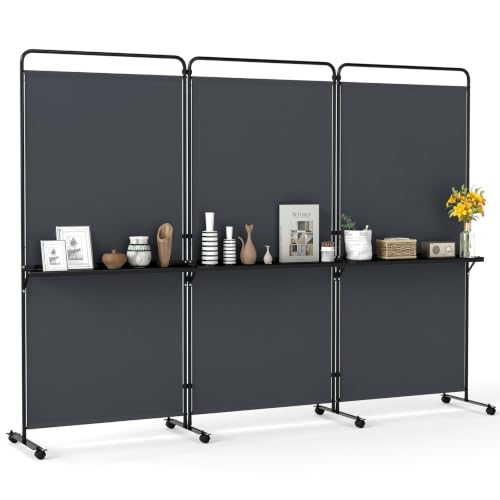
The folding panel screen is the classic room divider: three to six hinged panels that zigzag across a space, fold flat for storage, and need no installation at all. That freedom is the whole appeal. You can claim a work corner in the morning, open the room back up for the evening, and slide the folded screen behind a door or under a bed when guests arrive. The trade-offs are just as consistent. A zigzag footprint eats floor space at both ends, the hinges create narrow sight gaps at certain angles, and a lightweight screen is, by design, easy to move — which also means easy to knock. For renters, studio tenants, and anyone whose layout changes seasonally, it remains the most forgiving place to start.
Curtain and track dividers
A ceiling-track or tension-rod curtain divides a room with fabric instead of furniture. It draws fully closed, stacks to almost nothing when open, and gives the softest, most complete visual coverage of any temporary option. It is also the most honest about what it is: a curtain blocks sight well, softens light, and does almost nothing else. Installation ranges from a no-drill tension rod to a screwed ceiling track, so renters need to read the fine print before falling in love with the look. Curtains pair naturally with the blackout fabrics many apartment dwellers already use for windows, and they wash, swap, and restyle more cheaply than any panel system.
Bookshelf and storage dividers
A low, open bookshelf used as a divider earns its floor space twice: it separates zones and stores the objects that would otherwise clutter both of them. Open-backed shelves keep light and air moving, which makes them the friendliest divider for small, dark rooms. The costs are permanence and weight. A loaded bookshelf does not fold away for a party, it anchors a layout, and it must be loaded thoughtfully — heavy items low, nothing precarious up high — so it stays stable. For a living room that needs a reading nook on one side and a play area on the other, with storage swallowed in between, this is often the most grown-up solution.
Panel and modular systems
Modular panel systems — interlocking tiles, hanging panels, or framed sections that join in runs — sit between furniture and architecture. They can turn corners, span wider openings than a folding screen, and present a flat, deliberate wall-like face. In exchange they ask for planning: measuring, levelling, sometimes wall or ceiling fixings, and a real commitment to the layout. Renters should check lease terms carefully, and everyone should expect a longer, fussier setup than unfolding a screen. Where they shine is the semi-permanent home office carved from a living room, or the shared bedroom that will stay shared for years rather than weeks.
Sliding and barn-style panels
Sliding panels on a floor or ceiling track give a divider that behaves like a door: full closure, a clean flat line, and no zigzag footprint. They suit wide openings between a kitchen and living area, or a sleeping alcove that needs a real nightly ritual of closing off. The hardware is the product here — track quality decides whether the panel glides or grinds — and installation is a genuine DIY project with studs, levels, and dust. It is the least reversible option in this guide, and the most satisfying when the layout is truly settled.
Plant and open-frame dividers
An open frame, a row of tall plants, or a slatted screen divides by suggestion rather than by coverage. It marks a boundary, directs foot traffic, and gives the eye a place to stop, while light and conversation pass straight through. That makes it perfect between a dining area and a sitting area, where separation is about rhythm, not privacy. It makes it useless as a changing screen or a visual shield for a messy desk. Choosing this type is really choosing how much separation you honestly need — and many households, once they think it through, need far less than a solid wall of panels.
The Real Costs Beyond Money
The honest ledger includes non-money costs. Floor space: every format takes some, and in the smallest rooms that tax is real. Daylight: opaque privacy is paid for in borrowed darkness on the far side. Attention: a divider needs dusting, gentle hinges, and a household that respects the boundary it draws — a screen everyone walks through teaches nothing. And there is an aesthetic cost if you choose carelessly: a flimsy, clashing screen can make a good room look provisional. None of these costs is hidden, and all of them shrink when the type matches the job.
Stability deserves blunt honesty, because it is the topic divider listings gloss over. A freestanding folding screen stands by geometry, not by anchoring: the zigzag angle is its only engineering. Open the panels too flat and it becomes a sail waiting for a draught, a brushed shoulder, or a curious cat. Keep a healthy zigzag, place it on a level floor rather than a thick rug edge, and never treat it as furniture. Do not hang bags, coats, wreaths, or string lights heavy enough to pull on the panels. Do not position it where a climbing child or a large, boisterous dog can pull it over, and never use it as a safety barrier at stairs, fireplaces, or balconies. A divider that falls is not a defective divider; it is a light screen asked to do a heavy job.
One expectation needs correcting early, because it drives more returns than any other: a room divider does not meaningfully block sound. A folding screen may take the sharp edge off a voice and slightly dull the clatter from the other side, the way any object in a room absorbs a little echo, but conversations, television dialogue, and a partner’s alarm clock will pass around and over it almost undiminished. It creates visual privacy, not acoustic privacy. If noise is your real problem, the honest tools are different ones — a solid door, heavy curtains layered with seals, soft furnishings that tame echo, or a noise machine on the side that needs masking. Buy a divider for what it genuinely does, and it will not disappoint you on the thing it never promised.
Who It Pays Off For
The Studio Tenant
The clearest yes in this guide. A divider converts a studio from one compromised space into a home with a bedroom’s dignity and a living room’s welcome. The payoff is nightly, which is the strongest kind.
The Home Worker in a Shared Home
A visible boundary gives focus, a professional backdrop, and — underrated — an off switch. Closing the screen at the end of the day is a ritual no laptop lid quite matches.
The Host and the Growing Family
Guest privacy in minutes, a nursery corner that respects a sleeper, a play zone that contains visual chaos: households in flux extract value from a divider constantly, because their layouts keep changing and the divider changes with them.
Who Should Skip It
The Noise Sufferer
If a partner’s television, a neighbour’s schedule, or a baby’s cry through the same room is the pain, a divider spends your money beside the problem. Doors, seals, soft furnishings, and masking sound are the honest budget lines.
The Household Needing a Barrier
Stairs, fireplaces, pools, and climbing toddlers all demand physical barriers or fixed systems. A freestanding screen in those roles is not a saving; it is a risk.
The Clutter Hider
A divider in front of a chaotic corner hides the chaos from guests and preserves it for you. Storage furniture costs similar money and solves the actual problem.
Strengths and Trade-Offs of Owning One
Strengths
- Daily, felt improvement in how shared or small space lives.
- Total reversibility — the improvement can be undone in minutes, forever.
- Portability across homes, which compounds value for renters.
Trade-offs
- Floor space and daylight are spent, not saved.
- Sound and safety limits are absolute, not matters of tier.
- A poor style match can make a room feel temporary.
Alternatives to Consider
A curtain on a ceiling track buys softer, more complete coverage for a similar commitment, and suits a settled sleeping alcove beautifully. A low bookshelf buys storage with its separation, and suits living rooms that need a reading nook. Rearranging existing furniture buys a weaker boundary for free, and should always be tried first — sometimes the sofa’s back is the only divider a room ever needed.
If you do buy, three representatives mark the sensible tiers — a furniture-grade piece for permanence, a system for settled zoning, and the all-round screen:

MyGift Room Divider
The MyGift Room Divider is a decorative wood screen with a more furniture-like finish, positioned as a premium-leaning accent piece as much as a partition. In daily use, what matters most is how honestly it matches the job you actually have. If you need a screen that moves daily, judge it on hinge smoothness, how quietly it folds, and whether one person can carry it without dragging the feet across the floor. If it will stand in one place for months, judge it on panel opacity, frame finish, and whether the silhouette still looks intentional once the novelty wears off. Treat any single model as a representative of its type first and a product second: the type decides whether the idea works in your room at all, and the model only decides how pleasantly it does it.
Best for: readers who want a proven folding-screen format with a clear tier position. Not suited for: anyone expecting a divider to block sound, hold hanging weight, or stand safely where children climb. Check the current listing for the exact panel count, finish, and dimensions before you buy, because variants within one product line differ more than the headline photos suggest.
CozyBlock Room Divider
The CozyBlock Room Divider is a panel system with a more structured, modern look, positioned as a mid-to-premium option for semi-permanent zoning. In daily use, what matters most is how honestly it matches the job you actually have. If you need a screen that moves daily, judge it on hinge smoothness, how quietly it folds, and whether one person can carry it without dragging the feet across the floor. If it will stand in one place for months, judge it on panel opacity, frame finish, and whether the silhouette still looks intentional once the novelty wears off. Treat any single model as a representative of its type first and a product second: the type decides whether the idea works in your room at all, and the model only decides how pleasantly it does it.
Best for: readers who want a proven folding-screen format with a clear tier position. Not suited for: anyone expecting a divider to block sound, hold hanging weight, or stand safely where children climb. Check the current listing for the exact panel count, finish, and dimensions before you buy, because variants within one product line differ more than the headline photos suggest.

Giantex Room Divider
The Giantex Room Divider is a folding wood-frame screen with fabric or woven panels, positioned as a mid-tier everyday choice for living rooms and bedrooms. In daily use, what matters most is how honestly it matches the job you actually have. If you need a screen that moves daily, judge it on hinge smoothness, how quietly it folds, and whether one person can carry it without dragging the feet across the floor. If it will stand in one place for months, judge it on panel opacity, frame finish, and whether the silhouette still looks intentional once the novelty wears off. Treat any single model as a representative of its type first and a product second: the type decides whether the idea works in your room at all, and the model only decides how pleasantly it does it.
Best for: readers who want a proven folding-screen format with a clear tier position. Not suited for: anyone expecting a divider to block sound, hold hanging weight, or stand safely where children climb. Check the current listing for the exact panel count, finish, and dimensions before you buy, because variants within one product line differ more than the headline photos suggest.
How to Get the Most Value If You Buy
Rehearse with tape before spending. Set the zigzag deep and check sight lines from the door. Use the divider daily for a month before judging it — boundaries become habits, and habits are where the value lives. Style both faces. Keep hinges kind and panels dry. And when the layout changes, change the divider’s job instead of replacing it: yesterday’s bedroom screen is tomorrow’s guest screen, craft-fair backdrop, or garden-room shade.
The Decision Checklist
Answer honestly: Is my problem visual rather than acoustic? Does one room do two colliding jobs daily? Can I place a screen safely, away from climbing and heat? Do I have a folded-storage spot? Will this layout serve at least a season? Does the style repeat something already in the room? Four or more yes answers — buy with confidence, at the tier your years of service justify. Two or fewer — save the money; the divider was never your answer.
The Earn-Its-Place Test: When a Room Divider Repays the Space It Takes
Worth-it questions about a room divider are really questions about frequency, so start by honestly counting how often the job it does actually arises in your household in a normal month, not in the motivated week when you decided to shop for one. Multiply that frequency by the friction it removes each time — minutes saved, mess avoided, a workaround retired, a room made usable for longer each day — and the value of a room divider stops being a feeling and becomes a rough but usable number. Use a simple decision checklist at the end: the room divider fits the measured space, suits the real frequency of the job, matches the household’s cleaning temperament, has obtainable parts, and has a named storage home — five yeses make a confident order. Share the checklist result with anyone who shares the space, since a room divider chosen by one person and resented by another rarely survives, however sensible the purchase looked on paper.
Then subtract the standing costs honestly: the floor, shelf, cupboard or counter space a room divider occupies every day, the cleaning and upkeep it asks for, and the small accessories or consumables its ownership quietly requires. If you want a concrete listing check, take a name already shortlisted in this guide, such as MyGift Room Divider, CozyBlock Room Divider and Giantex Room Divider, and verify that exact room divider listing against the measurements and compatibility questions above, field by field, rather than trusting the headline description alone. Plan the storage home for the room divider before it arrives, naming the exact cupboard, corner, shelf, hook or stretch of floor, because a product without a home migrates around the house and slowly becomes the clutter it was bought to reduce. Keep a short note of what you adjusted on the room divider during the first month, even just a line on your phone, since those notes turn vague impressions into a setup you can repeat, share or troubleshoot months later.
When something about the room divider disappoints, change one variable at a time — position, setting, timing, load, accessory or technique — and give the change a fair trial, because changing three things at once leaves you with a better or worse result and no idea why. Decide in advance what good enough looks like for the job the room divider does in your home, because chasing a flawless result usually costs more time than the flaw itself, and most households are happier with a reliable ninety percent they actually repeat. Watch for edge cases in your own home: the pet that investigates everything, the child who treats every new object as furniture, the guest who uses force where you use familiarity, and the weather, light or season that changes how a room divider behaves. Check the floor, wall, ground or surface the room divider will meet, since level, texture, moisture and finish decide more about everyday performance in living room furniture settings than most shoppers expect when they are comparing listings on a screen.
Borrowed enthusiasm is the trap here: a room divider can be excellent and still not be worth it for you, if your neighbours, your feed or your guests use theirs weekly while your own routine would reach for it a handful of times a year. Measure before anything else, and measure the room divider in its working state rather than its packed or folded state, because handles extend, lids open, cords trail, doors swing and users stand somewhere, and all of that belongs in the measurement.
Frequently Asked Questions
Is a room divider worth it in a studio apartment?
Yes — it is the single highest-value change most studio tenants can make. A tall, opaque folding screen gives the sleeping zone genuine separation at night and folds away by day, with no installation and nothing to abandon at move-out. Just set sound expectations correctly: the gain is privacy and calm, not quiet.
Is a room divider worth it for working from home?
For visual focus and a professional backdrop, yes. A divider gives video calls a calm background and gives the workday a boundary the household can see and respect. It will not mute the home around you, so if your calls demand silence in a loud household, budget for a door solution as well or instead.
How long until a room divider pays for itself?
In felt terms, immediately — the first night a studio sleeps like a bedroom. In practical terms, renters who carry a screen across two tenancies have usually extracted more value than the purchase ever cost, because the alternative improvements are left behind at every move. Longevity is the multiplier: buy hinges and finishes that last.
What is the cheapest way to test if one is worth it?
Rehearse free first: mark the footprint with painter’s tape for a day, then borrow the effect with a bookshelf, a clothes rail with a throw, or a sheet on a tension line for a weekend. If the boundary improves the room in rehearsal, a real divider will improve it more. If the rehearsal annoys you, you have saved the purchase.
Are expensive dividers worth it over basic screens?
When the divider is permanent furniture, yes — joinery, hinges, opacity, and finish are daily experiences and age visibly. When the need is temporary or occasional, a basic fabric screen delivers the core value, visual separation, at an entry tier. The mistake is buying either tier for the other’s job.
When is a room divider definitely not worth it?
When the problem is noise, when a physical safety barrier is what the household actually needs, or when the divider would only hide a storage problem. In those cases the money serves better elsewhere — sound treatment, a proper gate or fixed system, or storage furniture that solves the root cause.
Cleaning and Care by Material
Wood frames wipe clean with a barely damp cloth and dry immediately; standing moisture is the enemy of joints and finishes alike. Woven and rattan-style panels prefer a soft brush or a vacuum on its gentlest setting, working with the weave rather than against it. Fabric panels vary — some covers unzip for washing, others are spot-clean only — so check the care label before the first spill, not after. Metal frames need little beyond dusting and an occasional check for loosened screws. Whatever the material, store a folded screen dry, flat or upright without leaning weight on it, and out of the damp corners of garages and basements.
Budget Thinking Without Price Tags
Divider pricing follows materials and mechanics more than brand badges. Entry-tier fabric screens cover the basics honestly and suit temporary layouts. Mid-tier wood-frame models add finish, hinge quality, and opacity — the things you notice daily. Premium pieces charge for furniture-grade joinery, designer patterns, and panel systems that behave like architecture. Spend where your use is heaviest: a screen folded twice a day earns better hinges, while a screen that never moves earns better looks. A useful discipline is to allocate by years of expected service; a divider bought for a six-month lease and one bought for a five-year home office should not be the same purchase.
Style: Making a Divider Look Deliberate
A divider looks like furniture when it speaks the room’s language: a frame finish that echoes a table or bookcase, a panel colour already present in a rug or cushion, a height that relates to nearby pieces rather than floating at random. It looks like clutter when it introduces a fourth wood tone, a clashing pattern, and a silhouette nothing else repeats. Repeat one element — colour, material, or line — on both sides of the divide, and the two zones still feel like one designed room. Plants, a shared palette, and consistent lighting temperature do more for cohesion than matching sets ever will.
Renters, Leases, and Reversibility
For renters, the best divider is the one that leaves no evidence. Freestanding screens, tension-rod curtains, and furniture dividers all qualify; screwed tracks and wall-fixed panels need written permission in most leases. Photograph the walls and floor before setup, keep every fixing you remove, and favour options that fold or roll away for inspections and move-out day. Reversibility also protects you from your own changing mind: a layout that feels essential in the first month of a tenancy often relaxes by the third, and a divider you can store is a divider you will never regret buying.
When a Divider Is the Wrong Answer
Sometimes the honest recommendation is not to buy one. If the problem is noise, a divider will not solve it. If the problem is a permanently messy corner, a divider hides it from guests but not from you, and storage furniture solves the root cause. If two people need genuinely separate schedules in one room — a night-shift sleeper and a daytime worker — a screen softens the compromise but cannot complete it, and the money may serve better toward a layout change or a different room assignment. Naming what a divider cannot do is not pessimism; it is how the households who love theirs chose so well.
Children, Pets, and Honest Safety Limits
Repeat the safety rule without softening it: freestanding dividers can topple. In a home with climbing toddlers or large dogs, choose the heaviest, widest-based format you can, keep the zigzag deep, and place it where it cannot be pulled, pushed, or used as a climbing frame — or choose a furniture divider or a fixed track system instead. Never hang anything from the panels, never lean a divider against a heat source, and never use one to block access to stairs, pools, or fireplaces. A divider is a visual tool. The moment a household needs a physical barrier, it needs a different product category entirely.
Living With a Divider Day to Day
The first week with a divider is about novelty; the third month is about habits. Notice whether you fold it away and forget to reopen it — a sign the boundary mattered less than you thought — or whether the divided zones have quietly become the most used corners of the home. Dust settles on top edges and in woven panels, so a weekly pass with a soft brush keeps screens looking intentional rather than neglected. Hinges loosen with daily folding; a quick check each season, and gentle handling instead of forcing a stiff panel, extends the life of the whole piece far more than any protective spray.
Measuring the Space Before Anything Else
Measure the opening you want to divide, then measure it again the way the divider will actually live there. A folding screen rated by its fully stretched width will cover noticeably less once it stands in a stable zigzag, so plan for the covered width, not the catalogue width. Check ceiling height against panel height, and walk the route the divider will travel from delivery box to final position — narrow hallways and tight stair turns defeat more purchases than room dimensions do. Mark the footprint on the floor with painter’s tape and live with the tape for a day. You will learn where feet, doors, and vacuum cleaners actually go, and whether the line you imagined is the line the room wants.
Sight Lines: The Angle Nobody Tests
Stand where other people will actually stand — the doorway, the sofa, the kitchen counter — and check what the divider hides from there, not from directly in front of it. Folding screens leak sight lines at hinge gaps and at the ends, and a screen that looks complete head-on can reveal a desk, a bed, or a laundry pile from the angle guests really see. Walk the room, sit in the usual seats, and adjust the zigzag until the view is honest from every ordinary vantage point. Five minutes of angle-checking prevents the most common divider disappointment of all: a purchase that works in photographs and fails in the room.
Height: Taller Is Not Always Better
Panel height trades privacy against air and light. A tall screen closes a sleeping zone convincingly but can make a small room feel subdivided into cupboards, and it catches more draught and wobbles more readily. A lower screen — closer to seated eye level — hides a desk or a daybed while keeping the room’s volume visually intact, and it suits open-plan living areas where the goal is zoning rather than secrecy. Match height to the activity: full standing privacy for changing, seated privacy for working and lounging, and no more height than the job requires.
The Floor Underneath Matters
Hard floors let a screen’s feet slide, which loosens the zigzag over a week of bumps; felt pads or a low rug under the footprint hold the geometry and protect the finish. Thick pile carpet does the opposite, gripping the feet but letting the whole screen rock slightly, which argues for a deeper zigzag. Check for floor vents, radiators, and underfloor heating zones before settling a position, and keep woven and fabric panels away from sustained heat. The floor is half the divider’s engineering, and the half most buyers never consider.
One Divider, Two Rooms: Styling Both Sides
Every divider has two faces, and the neglected back face is why some rooms feel divided in the worst sense. Treat the reverse side as its own small wall: it may need the warmer colour, the calmer pattern, or simply enough visual weight to hold its zone. In a studio, the sleeping side usually wants the softer treatment and the living side the bolder one. If a model looks finished from only one direction, rotate your expectations before you buy — you will live with both sides equally.
Seasonal and Guest Flexibility
A divider earns extra value when it adapts: screening a guest bed during visits, shading a reading chair from summer glare, or opening fully for a gathering. Folding screens win this category outright, which is why households with changing needs should weight fold-flat storage heavily. Before buying, rehearse the folded dimensions against the real storage spot — behind the sofa, under the bed, inside the closet — because a screen with nowhere to go becomes permanent furniture whether you wanted that or not.
What Good Hinges Feel Like
On any folding screen, the hinges are the product. Good hinges move smoothly through the full fold in both directions, hold an angle without creeping, and show no wobble when you lift one end panel gently. Poor hinges grind, sag, and slowly teach the screen to lean. If you can inspect a model in person, fold it fully flat and reopen it three times; the third fold tells the truth the first one hides. Online, treat hinge descriptions and close-up photos as seriously as panel materials.
Dividers in a Home Office That Actually Works
A work zone behind a divider succeeds on small details: the screen tall enough to hide the desk from the room’s main seat, a background that looks calm on video calls, and enough clearance that your chair never clips a panel when you stand. Position the divider so daylight reaches your face rather than your screen, and keep cables from crossing the fold line where feet and hinges travel. The divider’s job is psychological as much as visual — a boundary your brain learns, so the workday has an edge even in one room.
Making a Rental Feel Like Yours
Dividers are a renter’s quiet superpower because they create rooms without asking permission. A screen can give a studio a bedroom’s dignity, a hallway a mudroom’s manners, and a shared house a boundary that housemates respect without a difficult conversation. Because nothing is fixed, the improvement travels with you at move-out, which makes a mid-tier, well-built screen a better rental investment than built-ins you would abandon. Choose neutral, durable finishes that will suit the next home as well as this one.
Measuring the Space Before Anything Else
Measure the opening you want to divide, then measure it again the way the divider will actually live there. A folding screen rated by its fully stretched width will cover noticeably less once it stands in a stable zigzag, so plan for the covered width, not the catalogue width. Check ceiling height against panel height, and walk the route the divider will travel from delivery box to final position — narrow hallways and tight stair turns defeat more purchases than room dimensions do. Mark the footprint on the floor with painter’s tape and live with the tape for a day. You will learn where feet, doors, and vacuum cleaners actually go, and whether the line you imagined is the line the room wants.
Renters, Leases, and Reversibility
For renters, the best divider is the one that leaves no evidence. Freestanding screens, tension-rod curtains, and furniture dividers all qualify; screwed tracks and wall-fixed panels need written permission in most leases. Photograph the walls and floor before setup, keep every fixing you remove, and favour options that fold or roll away for inspections and move-out day. Reversibility also protects you from your own changing mind: a layout that feels essential in the first month of a tenancy often relaxes by the third, and a divider you can store is a divider you will never regret buying.
Living With a Divider Day to Day
The first week with a divider is about novelty; the third month is about habits. Notice whether you fold it away and forget to reopen it — a sign the boundary mattered less than you thought — or whether the divided zones have quietly become the most used corners of the home. Dust settles on top edges and in woven panels, so a weekly pass with a soft brush keeps screens looking intentional rather than neglected. Hinges loosen with daily folding; a quick check each season, and gentle handling instead of forcing a stiff panel, extends the life of the whole piece far more than any protective spray.
Style: Making a Divider Look Deliberate
A divider looks like furniture when it speaks the room’s language: a frame finish that echoes a table or bookcase, a panel colour already present in a rug or cushion, a height that relates to nearby pieces rather than floating at random. It looks like clutter when it introduces a fourth wood tone, a clashing pattern, and a silhouette nothing else repeats. Repeat one element — colour, material, or line — on both sides of the divide, and the two zones still feel like one designed room. Plants, a shared palette, and consistent lighting temperature do more for cohesion than matching sets ever will.
Children, Pets, and Honest Safety Limits
Repeat the safety rule without softening it: freestanding dividers can topple. In a home with climbing toddlers or large dogs, choose the heaviest, widest-based format you can, keep the zigzag deep, and place it where it cannot be pulled, pushed, or used as a climbing frame — or choose a furniture divider or a fixed track system instead. Never hang anything from the panels, never lean a divider against a heat source, and never use one to block access to stairs, pools, or fireplaces. A divider is a visual tool. The moment a household needs a physical barrier, it needs a different product category entirely.
Cleaning and Care by Material
Wood frames wipe clean with a barely damp cloth and dry immediately; standing moisture is the enemy of joints and finishes alike. Woven and rattan-style panels prefer a soft brush or a vacuum on its gentlest setting, working with the weave rather than against it. Fabric panels vary — some covers unzip for washing, others are spot-clean only — so check the care label before the first spill, not after. Metal frames need little beyond dusting and an occasional check for loosened screws. Whatever the material, store a folded screen dry, flat or upright without leaning weight on it, and out of the damp corners of garages and basements.
When a Divider Is the Wrong Answer
Sometimes the honest recommendation is not to buy one. If the problem is noise, a divider will not solve it. If the problem is a permanently messy corner, a divider hides it from guests but not from you, and storage furniture solves the root cause. If two people need genuinely separate schedules in one room — a night-shift sleeper and a daytime worker — a screen softens the compromise but cannot complete it, and the money may serve better toward a layout change or a different room assignment. Naming what a divider cannot do is not pessimism; it is how the households who love theirs chose so well.
Budget Thinking Without Price Tags
Divider pricing follows materials and mechanics more than brand badges. Entry-tier fabric screens cover the basics honestly and suit temporary layouts. Mid-tier wood-frame models add finish, hinge quality, and opacity — the things you notice daily. Premium pieces charge for furniture-grade joinery, designer patterns, and panel systems that behave like architecture. Spend where your use is heaviest: a screen folded twice a day earns better hinges, while a screen that never moves earns better looks. A useful discipline is to allocate by years of expected service; a divider bought for a six-month lease and one bought for a five-year home office should not be the same purchase.
A Second Look at the Ends of the Divider
Most buyers judge a divider from the middle, but rooms experience it from the ends. The end panel is where sight lines leak, where the zigzag meets the wall or the walkway, and where a screen either resolves gracefully or stops abruptly mid-room. Angle the end panel slightly inward and the zone feels enclosed; leave it pointing into traffic and the whole arrangement feels accidental. If your opening is wider than one screen covers honestly, two smaller screens with a deliberate gap — treated like a doorway — usually look and work better than one screen stretched to its trembling limit.
Dividers and Light Fittings: Planning the Ceiling Too
A divider changes how a room’s existing lighting behaves. A tall screen can shadow a ceiling light’s reach, strand a pendant over the wrong zone, or block the path of a floor lamp you relied on. Before settling a position, switch on every light you use in the evening and check both zones: the work side needs light on the task, the rest side needs light that does not blast over the panels into a sleeper’s eyes. Sometimes the fix is as small as moving a lamp to the other side of the line — but it is far easier to discover that before the screen’s position hardens into habit.
The Conversation Test: Boundaries People Respect
A divider only works if the household honours it, and households honour boundaries that are legible. A screen that clearly closes a space — full height, definite line, a side that reads as a door’s promise — gets respected. A low, ambiguous marker in a busy family room gets walked around, leaned past, and talked over. When you choose coverage levels, you are really choosing how clearly you need to speak. Work zones for adults usually need only a polite suggestion; a teenager’s corner of a shared bedroom deserves the full sentence.
Renting the Look Before You Buy It
If indecision persists, stage the divider’s effect with what you own: a bookshelf turned perpendicular, a clothes rail dressed with a throw, a curtain strung on a temporary line. Live with the staging for a week of real mornings and evenings. You will learn the true covered width your room wants, the height your sight lines need, and whether the boundary improves the day or merely interrupts it. Staging costs nothing and converts the eventual purchase from a guess into a confirmation — the cheapest research in this entire category.
Why Neutral Panels Outlast Statement Patterns
Panel artwork dates faster than any other element of a room, because it occupies so much visual field. A bold botanical or a novelty print thrills for a season and then quietly argues with every new cushion, rug, and paint choice. Neutral, textured, or classically patterned panels behave like architecture: they support the room’s changing cast without demanding to star in it. If you crave the statement, make it with objects on either side of the divider — art, plants, textiles — which are cheap to change when the mood passes.
A Note on Guests Judging Your Divider
Visitors read a divider as a signal about the household: a well-chosen, well-kept screen reads as resourceful and intentional, the mark of people who make small spaces work beautifully. A wobbling, dusty, half-folded screen reads as a compromise nobody has resolved. The difference is rarely the purchase price; it is placement, upkeep, and the confidence of the line it draws. Choose once, place deliberately, keep it clean — and the divider becomes the detail guests compliment rather than the one they politely ignore.
Storage Reality: The Folded Screen’s Second Life
Every folding divider leads two lives: standing in the room, and waiting somewhere when the room opens up. Measure the second life as carefully as the first. Under a bed, the screen needs clearance and protection from dust; behind a sofa, it needs a gap the sofa can spare; in a closet, it competes with everything the closet already holds. If no honest storage exists, prefer a format whose resting state is attractive in place — a bookshelf divider, a curtain that stacks to nothing — over a screen destined to lean in a hallway, quietly resented, for most of the year.
Related Guides
blackout curtains for small apartments
sectional sofas for apartments