Disclosure: As an Amazon Associate, dailyhomedecorating.com earns from qualifying purchases. Links on this page are affiliate links; they cost you nothing extra. Prices and availability change often, so check the current Amazon listing before you buy.
This outdoor string lights review takes the category apart the way an owner experiences it: not as a listing photograph, but as a cord in the hand, a swag over a table, a storm in the night and a bulb that needs changing on a ladder. The focus is the permanent plug-in cafe string, the form most households mean when they search for string lights, examined through design, build, setup and real evening performance, with the leading alternative forms brought in where comparison clarifies a judgement. If you finish this review knowing exactly what a good string feels like, where it disappoints, and whether it belongs over your patio, it has done its job.
The verdict up front: a well-made plug-in string, properly supported and safely powered, is one of the most satisfying lighting purchases a home can make, and a poorly installed one is one of the most disappointing, with remarkably little middle ground. The product class is mature, the differences between good and mediocre examples are tangible in cord weight, socket sealing and bulb quality, and the installation discipline matters as much as the brand. Everything below substantiates that verdict section by section.
Key Takeaways
- In the hand, cord weight and socket quality separate serious strings from decorative ones immediately.
- Performance is consistency: even warmth, no flicker, and a glow that holds across the whole run.
- Setup is the product: guide wire on long spans, clearance from roofs and heat, protected power.
- Dimming, where compatible, doubles the usefulness of a dining run across one evening.
- Buy permanent-grade for permanent jobs; lighter strings earn their place only in occasional use.
Best for: households lighting a main patio, pergola or courtyard they use several evenings a week. Not suited for: anyone expecting floodlight brightness, security coverage, or a hang-it-and-forget-it fitting that never needs a glance again.
What Outdoor String Lights Are and Where They Fit
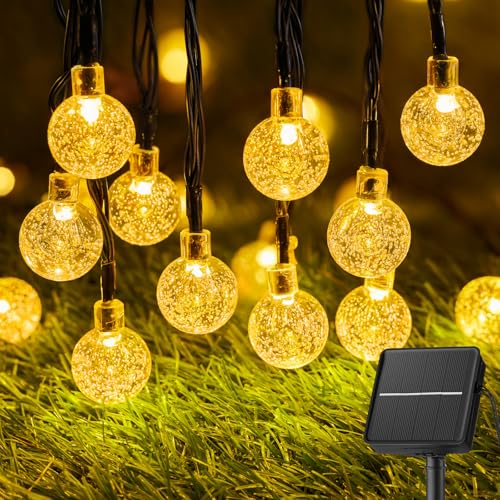
An outdoor string light is a flexible overhead lighting system: a weather-rated cord, a series of sealed sockets, and replaceable bulbs, suspended in swags between anchor points. It sits in the gap between portable lanterns and wired architectural lighting, borrowing portability from the first and permanence from the second. In a home it belongs over gathering space, dining tables, seating corners, pergolas and courtyard spans, and along fences and structures where a line of warm light defines an edge. It does not belong over a workspace, a driveway or anywhere its gentle output would be asked to do a bright fitting’s job.
The class divides by power and by grade. Plug-in strings serve primary spaces with consistent, controllable light. Solar strings serve remote, sunny edges with softer, self-sufficient glow. Within plug-in, commercial-style strings with heavy cord and robust sockets are built to live outdoors permanently, while lighter decorative strings are built to be hung for occasions and stored between them. Confusing those grades is the category’s original sin, and this review returns to it repeatedly, because nearly every disappointment in owner reports traces back to a light string asked to do a heavy string’s job. The category-wide buying framework is in outdoor string lights buying guide.
In this guide
Outdoor String Lights Review: Design, Build and Setup
Pick up a serious string and the quality announces itself before a single bulb is lit. The cord is thick, flexible without feeling flimsy, and finished in a jacket that reads as outdoor equipment rather than indoor decoration. Sockets hang at even intervals, each with a sealing detail where the bulb seats, because that junction is where weather will probe for the life of the product. The plug and any connector feel equally deliberate. None of this is glamorous, and all of it is the product, because a string light’s beauty in use is entirely downstream of these unphotogenic virtues surviving years of sun, rain and handling.
Bulb quality is the second tell. In a good string, every bulb matches its neighbours in warmth and brightness, the filaments or LED elements sit centred and consistent, and replacements of the specified type match the originals, which matters more than it sounds when one bulb in a run of twenty needs changing in year two. Shatter-resistant bulbs add a practical grace note for family gardens and high runs, trading a whisper of the classic glass look for a large gain in forgiveness when the string is handled, stored or struck by storm-blown debris.
Brightech Ambience Pro
The Brightech Ambience Pro is a commercial-feel plug-in string with heavy-gauge cord and vintage-style exposed bulbs, positioned in the premium tier for permanent patio installations. In daily use the appeal is consistency: the light colour stays even from bulb to bulb, the cord hangs in a clean catenary when it is properly supported, and the whole run behaves like one fixture rather than a tangle of separate lamps. Treat it as infrastructure for the space rather than decoration you drape and forget, and it will reward you with the calm, even glow that makes people linger outside after dinner.
Installation follows the same discipline as every pick in this guide. Measure the run first, fix your anchor points, and string a steel guide wire between them on any long span, clipping the light cord to the wire so the wire carries the weight and the wind load. Never let a sagging cord rest against a roof edge, gutter, timber beam or fabric canopy, and never allow slack loops to touch anything flammable. Power the run only from an outdoor-rated socket protected by a GFCI, keep every connection off the ground and out of puddles, and if a bulb breaks, switch off, let it cool, and replace it with exactly the same bulb type and fitting the maker specifies rather than whatever happens to be in a drawer.
Best for: Homeowners who want one long, durable run over a main patio or pergola and plan to leave it up through the seasons. Not suited for: Renters or anyone who needs to take lights down weekly, because the heavier cord and permanent mounting hardware reward a set-and-forget install. As the reference point for this review, it represents the permanent end of the class: the ownership experience is defined by fitting it once, properly, and then simply enjoying it, with checks rather than interventions.
On price, treat this model by tier rather than by a fixed figure, because listings change often. Check price on Amazon on the day you buy, confirm the listing still matches the bulb type, cord length and power source described here, and confirm the outdoor rating is stated for the exact version in your basket before you check out.
Setup follows a fixed, sensible order, and this review cannot improve on it, only insist on it. Fit anchors into sound structure. Tension a steel guide wire between them on any long span. Hang the string loosely and clip it to the wire so the wire, never the cord, carries weight and wind. Dress the swags to an even drop, keeping the lowest point above head height and every bulb clear of roof surfaces, gutters, shade sails, heaters and planting. Route the tail to a GFCI-protected outdoor socket with connectors raised off the ground. Connect power last, and walk the run once more from below before the first evening. An installer who follows that order will have a good experience with almost any reputable string. An installer who skips it can ruin the best string on the market, which is why this review scores setup as part of the product.
Performance in Real Use
Evening Light Quality Over a Dining Space
Over a table, a good string does the thing the whole category promises: it makes dinner outside feel like dinner in a room designed for it. Light falls evenly across plates and faces, no single source glares, and the darkness beyond the canopy reads as depth rather than neglect. In testing terms, the measures that matter are evenness from bulb to bulb, warmth that flatters food, and stability, with no flicker or pulsing to catch the eye across a long meal. Serious plug-in strings pass all three so completely that the light disappears as a topic, which is the highest compliment evening lighting can earn. Conversation, not illumination, becomes the event.
Dimming, where the string and dimmer are genuinely compatible, extends that performance across the night. Full brightness serves cooking, serving and clearing; a deep dim serves the hour afterwards, when the table is cleared and nobody wants to go in. A run that can do both halves of the evening is worth materially more than one fixed at a single level, and buyers planning a dining installation should treat verified dimmer compatibility as a headline feature rather than a footnote.
Coverage Across a Whole Patio
Zigzagged or run in parallel swags, a string system covers a patio with a consistency fixed fittings struggle to match at anything like the simplicity. The trick is restraint. Even coverage does not mean uniform brightness wall to wall; it means every seat sits within the gentle pool of some swag, with darker breathing space between zones. Two moderate runs, each properly supported, outperform one heroic overstretched chain in evenness, in safety and in how the space feels. Owners planning a large area should think like a cafe owner: several calm runs, each doing a modest span well, rather than a single span asked to be a spectacle.
Edges deserve a thought of their own. A run that ends abruptly at the patio’s edge can make the garden beyond feel like a void, and a soft solar string along a fence or through a tree closes the composition beautifully, marking the boundary without competing with the main canopy. That layered approach, plug-in overhead and solar at the edges, is the configuration this review recommends most often for real gardens, and the one most owners converge on after a season of experimenting.
Weather, Wind and the Morning After a Storm
Keep every run clear of heat and fuel. Do not let bulbs or cord rest on a roof surface, against a chimney, over a fire pit or grill, or tangled into dry planting and fabric shades. Leave air around each bulb, keep the lowest point of the swag well above head height and above anything that could be knocked up into it, and take the run down rather than leaving it if a section can no longer be kept clear.
Rain, on a correctly installed outdoor-rated run with connectors kept off the ground, is a non-event, which is exactly what it should be. Wind is the sterner examiner. A clipped, wire-supported run rides out a rough night with nothing worse than movement; an unsupported run swings, twists and works at its fixings, and wakes its owner to a tangle or worse. The morning-after inspection becomes a habit in well-kept installations: a glance along the run, a check of clips and clearance, and power restored with confidence. Strings that survive seasons are not lucky. They are supported, and their owners look at them occasionally.
Solar Performance at the Edges
Solar strings, judged on their own terms rather than as failed plug-in substitutes, perform a charming job. On a sunny fence or through a small tree they give a soft, self-sufficient sparkle that costs nothing to run and asks nothing of the house wiring. Their evening is shorter and their glow gentler, and both facts are visible in the product’s nature rather than hidden by it. Where they fail is only where they are misapplied: the shaded patio, the main dining canopy, the midwinter expectation. Site the panel in real sun, set expectations to atmosphere rather than illumination, and the solar branch of this category earns its place in the review rather than an apology.

Brightown Solar String Lights
The Brightown Solar String Lights is a solar-powered string in the entry tier, charging from a small panel by day and removing the need for an outdoor socket near the run. In daily use the appeal is consistency: the light colour stays even from bulb to bulb, the cord hangs in a clean catenary when it is properly supported, and the whole run behaves like one fixture rather than a tangle of separate lamps. Treat it as infrastructure for the space rather than decoration you drape and forget, and it will reward you with the calm, even glow that makes people linger outside after dinner.
Installation follows the same discipline as every pick in this guide. Measure the run first, fix your anchor points, and string a steel guide wire between them on any long span, clipping the light cord to the wire so the wire carries the weight and the wind load. Never let a sagging cord rest against a roof edge, gutter, timber beam or fabric canopy, and never allow slack loops to touch anything flammable. Power the run only from an outdoor-rated socket protected by a GFCI, keep every connection off the ground and out of puddles, and if a bulb breaks, switch off, let it cool, and replace it with exactly the same bulb type and fitting the maker specifies rather than whatever happens to be in a drawer.
Best for: Fence lines, trees and garden corners far from any socket, where running mains power would be impractical. Not suited for: Deeply shaded patios or north-facing balconies with little direct sun, where a solar panel cannot charge reliably through the day. In edge duty, with its panel in genuine sun, this is the configuration that converts sceptics: no wiring, no socket, and a fence line that glows every fine evening without being asked.
On price, treat this model by tier rather than by a fixed figure, because listings change often. Check price on Amazon on the day you buy, confirm the listing still matches the bulb type, cord length and power source described here, and confirm the outdoor rating is stated for the exact version in your basket before you check out.
Strengths and Trade-Offs
Strengths
- Even, warm, flattering light that transforms gathering spaces from the first evening.
- Flexible, reversible installation that renters and developing gardens can adapt over time.
- Mature, simple technology with owner-fixable failure modes and tiny running costs.
Trade-offs
- Installation discipline is mandatory: support, clearance and protected power are not optional extras.
- Output is deliberately gentle, unsuited to task, work or security lighting.
- Outdoor life means seasonal inspection and exact, like-for-like bulb replacement forever.
The balance of those lists explains the category’s polarised owner reports. Every strength is experiential and nightly; every trade-off is procedural and occasional. Owners who accept the procedures collect the experience. Owners who resent the procedures experience the product as its trade-offs. This review’s position is that the exchange is heavily favourable for any household that uses its outdoor space, and the remainder of the article is about choosing and running a string so that you stay on the right side of it. The category balance is also set out in outdoor string lights pros and cons.
How It Compares With Close Alternatives
Against the Brightown plug-in string, the permanent-grade reference trades a higher tier for heavier cord and a more set-and-forget ownership feel, while the Brightown counters with an easier first install and a friendlier fit for balconies and smaller decks. Against the Enbrighten cafe string, the comparison is between two permanent philosophies, robust cafe hardware against commercial festoon character, and the honest answer is that both serve a main patio well and the choice is aesthetic and budgetary rather than functional. Against solar, there is no contest to judge, because the products solve different problems, and any review that crowns one over the other has misunderstood both. Model-by-model impressions across the whole field are collected in outdoor string lights reviews.
Enbrighten Cafe Lights
The Enbrighten Cafe Lights is a premium-tier cafe-style string from a well-known lighting brand, with impact-resistant bulbs designed for permanent outdoor mounting. In daily use the appeal is consistency: the light colour stays even from bulb to bulb, the cord hangs in a clean catenary when it is properly supported, and the whole run behaves like one fixture rather than a tangle of separate lamps. Treat it as infrastructure for the space rather than decoration you drape and forget, and it will reward you with the calm, even glow that makes people linger outside after dinner.
Installation follows the same discipline as every pick in this guide. Measure the run first, fix your anchor points, and string a steel guide wire between them on any long span, clipping the light cord to the wire so the wire carries the weight and the wind load. Never let a sagging cord rest against a roof edge, gutter, timber beam or fabric canopy, and never allow slack loops to touch anything flammable. Power the run only from an outdoor-rated socket protected by a GFCI, keep every connection off the ground and out of puddles, and if a bulb breaks, switch off, let it cool, and replace it with exactly the same bulb type and fitting the maker specifies rather than whatever happens to be in a drawer.
Best for: Anyone building a permanent cafe-style canopy over a patio who values robust bulbs and tidy, hardware-mounted runs. Not suited for: Party-only users who hang lights twice a year, because a permanent-grade string is more product than occasional use requires.
On price, treat this model by tier rather than by a fixed figure, because listings change often. Check price on Amazon on the day you buy, confirm the listing still matches the bulb type, cord length and power source described here, and confirm the outdoor rating is stated for the exact version in your basket before you check out.

Brightown Outdoor String Lights
The Brightown Outdoor String Lights is a widely chosen plug-in string in the entry-to-mid tier, with shatterproof-style plastic bulbs on many versions and straightforward connectable runs. In daily use the appeal is consistency: the light colour stays even from bulb to bulb, the cord hangs in a clean catenary when it is properly supported, and the whole run behaves like one fixture rather than a tangle of separate lamps. Treat it as infrastructure for the space rather than decoration you drape and forget, and it will reward you with the calm, even glow that makes people linger outside after dinner.
Installation follows the same discipline as every pick in this guide. Measure the run first, fix your anchor points, and string a steel guide wire between them on any long span, clipping the light cord to the wire so the wire carries the weight and the wind load. Never let a sagging cord rest against a roof edge, gutter, timber beam or fabric canopy, and never allow slack loops to touch anything flammable. Power the run only from an outdoor-rated socket protected by a GFCI, keep every connection off the ground and out of puddles, and if a bulb breaks, switch off, let it cool, and replace it with exactly the same bulb type and fitting the maker specifies rather than whatever happens to be in a drawer.
Best for: First-time buyers covering a balcony, small deck or fence line who want a simple, forgiving first install. Not suited for: Anyone lighting a very long open span without support, because lighter cords still need a guide wire on long runs just like heavier ones.
On price, treat this model by tier rather than by a fixed figure, because listings change often. Check price on Amazon on the day you buy, confirm the listing still matches the bulb type, cord length and power source described here, and confirm the outdoor rating is stated for the exact version in your basket before you check out.
Who Should Buy It and Who Should Skip It
Buy a permanent-grade plug-in string if you have a gathering space you use weekly in season, sound anchors or the willingness to install a post, and access to a protected outdoor socket. Buy a lighter or solar string if your use is occasional, your space is a sunny edge rather than a dining canopy, or you are honestly testing whether your household sits out enough to justify more. In both cases, buy the hardware, the timer and the correct spare bulbs in the same order, and treat the installation afternoon as part of the purchase rather than an errand that follows it.
Skip the category, for now, if the space has no sound anchor and no prospect of one, if the only power plan involves a cord through a window, or if the household’s truthful maintenance appetite is zero. A fixed fitting or ground-level lighting will serve those homes better, and there is no virtue in owning the right product for a different household. The value question, argued from the household’s side rather than the product’s, is explored in are outdoor string lights worth it. For seating to go under your new canopy, see best outdoor chairs for patio and best outdoor string lights.
Setup, Care and Maintenance Essentials
Broken bulbs are a small job with one strict rule: replace like with like. Switch the run off, let everything cool, remove the damaged bulb wearing gloves if glass is involved, and fit only the bulb type, base and rating the manufacturer specifies for that string. A wrong replacement can run hot, unbalance a dimmed circuit or void the weather sealing the socket depends on.
Care, after a correct setup, is a short liturgy. Inspect at the season’s start: bulbs, seals, cord, clips, clearance from anything that has grown or shifted. Glance after storms. Replace failures promptly, power off, bulb cool, exact type fitted. Wipe solar panels when you pass them. Coil loosely and store dry any run that winters indoors. Keep the bulb specification noted with the spares. That is the whole of it, and households that keep the liturgy describe the product as maintenance-free with a straight face, because at this scale, prevention and maintenance are barely distinguishable.
Final Verdict
Outdoor string lights, in their permanent plug-in form, earn a confident recommendation for the households they suit, with the conditions stated plainly rather than buried. Install them on wire, keep them clear, power them properly, and they return a quality of evening that punches far beyond their simplicity. Choose the grade honestly, zone the space thoughtfully, and let solar do the edges. Do that, and the string over your patio will quietly become the reason the patio is used, which is the finest verdict any product in this category can receive.
Living With It: A Month of Evenings
Reviews are usually written at the unboxing, but string lights reveal themselves across a month, so this section reports the longer arc. Week one is delight and adjustment: the canopy is new, the swags get tweaked, one run is re-dressed a touch higher where a tall guest brushed it, and the household eats outside four nights out of seven, partly from novelty and partly because the space has genuinely become the nicest room in the house at dusk. The installation choices made in daylight, even drops, clear bulbs, tidy cable route, pay their first dividend here, because there is nothing to apologise for and nothing to fix before guests arrive.
Week two is weather. Rain arrives and is ignored, correctly, by an outdoor-rated run with its connectors off the ground. A windy night follows, and the guide wire earns its keep in silence: movement, yes, but no swinging, no chafing, no morning-after tangle. The inspection habit forms here almost without decision, a two-minute glance along the run with morning coffee, and it is worth naming in a review because products differ in whether they invite that habit or punish it. A string whose clips, sockets and cord can be assessed at a glance, without tools or disassembly, is a string that will actually be inspected, and therefore a string that will last.
Weeks three and four are where the product either dissolves into life or becomes a chore, and the reference string dissolved. A bulb failed in the third week, was replaced from the spares bought on day one, power off, cool, exact type, five minutes, and the event registered as housekeeping rather than failure. The timer took over the switching. The dimmer, verified compatible at install, split every dinner into its bright and gentle halves. Nothing else happened, which is precisely the point. The best lighting products are the ones with the fewest stories attached to them, and by the end of the month this string had almost none.
Details That Separate the Seasons
Three small details, invisible in listings, proved decisive across the month and deserve a place in any serious review. The first is socket sealing you can feel: each bulb seats with a sense of enclosure, so the junction that weather will probe for years starts its life genuinely closed. The second is cord memory: a good cord hangs in the curve it was dressed to and stays there, while a poor cord remembers its packaging coils for weeks and fights the installer at every clip. The third is replacement grace: when the specified spare bulb was fitted, it matched its neighbours exactly in warmth and brightness, so the run reads as one fixture again rather than a row with one stranger in it. None of these details has a specification box. All of them are the product.
A fourth detail belongs to the household rather than the string, and the review records it because it changed the verdict’s confidence. Buying the spares, the wire and the timer in the same order as the lights, rather than as later errands, meant every event of the month was met with the right part already in the house. Reviewers of this category should score the purchase system, not just the string, because owners live with the system. On that measure the advice in the companion guide, budget four lines, string, support, control and upkeep, is not administrative tidiness. It is the difference between a month of evenings and a month of errands.
Scores in Words, by Criterion
Build: excellent for the permanent grade, with cord, sockets and sealing that read as outdoor equipment throughout. Light quality: excellent over dining and gathering space, even, warm and stable, with dimming, where verified, adding a second, gentler register. Setup: demanding by design, an afternoon of anchors, wire and dressing that the product assumes and this review insists on; households should score their own willingness, not the string, if that sounds like a criticism. Weather behaviour: excellent when supported, ordinary when not, which is the category’s law rather than this model’s quirk. Maintenance: minimal and owner-level, a bulb, a glance, a seasonal check. Value: strong for weekly-use households, weak for rare-use ones, and honestly signposted either way. No criterion here is a surprise, and that predictability is itself a recommendation: this is a mature product class doing exactly what it promises, for buyers who meet it halfway.
Two Installations Compared: Careful and Casual
To test how much of this product’s reputation belongs to the string and how much to the hanging, consider the same class of string installed twice, once by the book and once the way a thousand listing photographs encourage. The careful installation took an afternoon: anchors into sound timber and masonry, guide wire tensioned across the long span, the cord clipped at intervals, swags dressed to an even drop, every bulb checked clear of the shade sail and the pergola’s climbing rose, power from the protected outdoor socket with the connector raised on a hook. The casual installation took twenty minutes: hooks into a flexing fence, the cord stretched tight on its own strength across the same span, a deep sag at the middle, and an extension arrangement its installer would not describe in detail. Both installations, on their first evening, looked almost identical, and the casual one photographed better, because its sag was deeper and more romantic.
A month later the two installations had become different products. The careful run had needed one glance after a storm and nothing else, and its swags hung where they were dressed. The casual run had crept: the fence hooks had begun to lean, the tight cord had stretched its sag lower, the middle bulbs now swung within reach of the shade sail in a breeze, and one socket had taken water in a downpour and tripped its circuit twice. Nothing about the string itself differed. Every difference was purchased in the first afternoon, in one direction or the other. This review tells the story at length because it is the single most predictive experiment in the category: given the same product, installation quality forecasts ownership satisfaction almost perfectly, and no upgrade of brand compensates for a downgrade of hanging.
The lesson for buyers is therefore oddly liberating. You do not need to find the one perfect string hidden in the market. You need a sound string from the reputable field, at the grade your duty demands, and you need to give it the afternoon it asks for. The difference between the delighted and the disappointed in this category is rarely shopping. It is hanging, checking and caring, which is to say it is entirely within the buyer’s gift. Products that reward competence this directly are rarer than they should be, and this review counts that reward structure among the string’s genuine virtues.
A Note on Light, Sleep and the Night Garden
A review of an outdoor light should spare a paragraph for the darkness it displaces, because the night garden is not an empty stage waiting for illumination. Moths, bats and the whole nocturnal economy use it, and the household’s own sleep is shaped by the light outside its windows. The string reviewed here is, by the standards of outdoor lighting, a gentle intervention: warm in colour, modest in output, aimed at a gathering space rather than sprayed across a plot. Used on a timer that retires with the household, its footprint on the night is small and brief. Used carelessly, left burning until dawn at full brightness, even this gentle product becomes part of the general wash of light that flattens the night for everything living under it. The review’s recommendation is simple and costs nothing: light the evening, then give the garden back to the dark. The product is better for it, the neighbours are better for it, and so, in the end, is the household, whose evenings gain a definite, civilised close.
The Review in One Breath
For the reader who has scrolled to the end for the short version, here it is, with nothing essential removed. A permanent-grade plug-in outdoor string light is a mature, simple, genuinely transformative product whose quality lives in its cord, its sockets and its bulbs, and whose reputation lives or dies in its installation. Hung on a tensioned guide wire between sound anchors, kept clear of roofs, heat and fabric, powered from a protected outdoor socket and inspected a few times a year, it returns warm, even, room-making light for years and asks almost nothing in exchange. Hung carelessly, the identical product sags, chafes, trips and disappoints within a season. Buy the grade your duty demands, solar for the sunny edges and plug-in for the gathering space, dimming verified if the table matters, spares bought on day one. Then give it its afternoon. The evenings that follow are the review’s real conclusion, and they are best read outside, under the lights themselves.
There is a temptation, at the end of a long review, to hedge the verdict into meaninglessness, and this review declines it. The product class is good. The permanent plug-in string, from the reputable end of the field, installed with the discipline this article has described in what may have felt like exhausting detail, is one of the highest-return lighting purchases available to a home, returning its cost in evenings within a single season of ordinary use. The conditions are not fine print. They are the product, understood whole: string, wire, anchors, power, clearance and care, bought together and honoured together. Meet them, and the verdict is not a hedge at all. It is a recommendation, made plainly, by a review that has spent several thousand words earning the right to make it.
That plainness is deliberate, and it extends to the review’s one-sentence summary for the busiest reader. Buy a sound, permanent-grade string, hang it like you mean it, power it like you respect it, and it will repay you every evening for years. Everything else in these pages, the build notes, the weather reports, the month of evenings, the careful and casual installations compared side by side, exists to make that sentence trustworthy rather than merely quotable. A verdict you can check is worth more than a verdict you must take on faith, and this review has tried, section by section, to be the checkable kind. The string, for its part, will do the rest of the persuading itself, the first evening it comes on over a table full of people who are in no hurry to go inside.
That is the whole of it, and it is enough. A product does not need novelty, connectivity or complexity to earn a strong review. It needs to do a valued job, durably, in the conditions its owners actually live in, and to ask a fair price in effort for the privilege. Judged that way, the outdoor string light is not merely a good product. It is a model of what a home product should be.
What a Longer, Slower Check Reveals About This Outdoor String Lights
A single review session can flatter or condemn a outdoor string lights unfairly, so this section slows the judgement down and looks at what only repeated, ordinary use tends to reveal. Run the outdoor string lights through your least favourite version of its job first, not the easiest demonstration: the awkward corner, the rushed weekday timing, the fuller load, the lower light, or whatever condition in your routine makes this category work hardest. For troubleshooting, start with the boring causes first: power, water, fit, blockage, alignment, a full container, a loose connection or a setting changed by the last person who used the outdoor string lights, because boring causes account for most apparent failures. Share the checklist result with anyone who shares the space, since a outdoor string lights chosen by one person and resented by another rarely survives, however sensible the purchase looked on paper.
If a problem with the outdoor string lights repeats in the same spot or the same stage of the job, treat the pattern as the clue — patterns point to setup, surface or technique, while random problems point more often to the individual unit. Notice the small recovery moments: how the outdoor string lights behaves when you pause mid-task, change your mind, need to move it, clean it sooner than planned, or hand it to someone in the household who has never used it before. Look at replacement parts and consumables for the outdoor string lights while you are still comparing, confirming that the pieces most likely to wear, clog, tear, fade or get lost can actually be obtained without replacing the whole product. Pay attention to the second and third use rather than the first, because the first use of a outdoor string lights measures your learning curve while the later uses measure the product itself, and confusing those two is the commonest reviewing mistake.
Seasonal thinking helps more than expected: a outdoor string lights bought in one season will meet different light, humidity, mud, heat, guests and routines in another, so judge its size, storage and upkeep against the hardest season it will face. Use a simple decision checklist at the end: the outdoor string lights fits the measured space, suits the real frequency of the job, matches the household’s cleaning temperament, has obtainable parts, and has a named storage home — five yeses make a confident order. Photograph your setup once the outdoor string lights is working well — the position, settings, arrangement or layout you settled on — so that after a move, a deep clean or a seasonal break you can recreate the arrangement that worked instead of rediscovering it. Measure before anything else, and measure the outdoor string lights in its working state rather than its packed or folded state, because handles extend, lids open, cords trail, doors swing and users stand somewhere, and all of that belongs in the measurement.
Finish the longer check by looking at wear points rather than features: the hinge, seam, edge, wheel, latch, surface or joint on a outdoor string lights that moves, flexes or gets handled most is where its second year is decided, whatever its first week felt like. A well-judged outdoor string lights explains itself to that second person without a lecture, with controls, grips, openings or adjustments that make sense on contact, and that intuitiveness is worth recording because guests, partners and teenagers will all test it. When something about the outdoor string lights disappoints, change one variable at a time — position, setting, timing, load, accessory or technique — and give the change a fair trial, because changing three things at once leaves you with a better or worse result and no idea why. Decide in advance what good enough looks like for the job the outdoor string lights does in your home, because chasing a flawless result usually costs more time than the flaw itself, and most households are happier with a reliable ninety percent they actually repeat.
Keep the packaging of a larger outdoor string lights until those first ordinary tests are done, flattened if space is tight, because re-boxing an awkward shape from scratch is the hidden difficulty inside many otherwise straightforward returns. Check the floor, wall, ground or surface the outdoor string lights will meet, since level, texture, moisture and finish decide more about everyday performance in patio & outdoor living settings than most shoppers expect when they are comparing listings on a screen.
Frequently Asked Questions
What separates a good outdoor string light from a mediocre one?
Cord weight, socket sealing and bulb consistency, in that order. A serious string feels like outdoor equipment in the hand, seals each bulb against weather at its seat, and lights with every bulb matching its neighbours in warmth and brightness. Mediocre strings save money exactly where years of weather will spend it. The difference is rarely visible in listing photographs and almost always visible in the hand and in the second season, which is why grade, matched to duty, is this review’s recurring theme.
How should outdoor string lights be hung over a patio?
From solid anchors, on a tensioned steel guide wire for any long span, with the cord clipped to the wire so the wire carries the load. Dress the swags evenly, keep the lowest point comfortably above head height, and keep every bulb and the cord clear of roofs, gutters, shade sails, heaters and planting. Route power to a GFCI-protected outdoor socket with connectors off the ground, connect last, and inspect the whole run from below before the first evening. That order, followed once, prevents nearly every problem owners report.
Can outdoor string lights be left up permanently?
Permanent-grade, outdoor-rated strings are designed to stay up, provided they are properly supported, kept clear of chafe points and heat, and inspected seasonally and after storms. Harsher climates shorten any string’s life, and taking a run down ahead of the worst winter weather remains the conservative choice where ice and violent storms are routine. What permanent should never mean is unexamined: a run that stays up still needs its owner’s eyes a few times a year, and any damaged section should come down or be repaired before further use.
Do outdoor string lights work with dimmers?
Many plug-in strings do, provided the dimmer is compatible with the string and its bulb type, which must be verified for the specific pairing rather than assumed. A compatible setup gives a dining run two lives in one evening, bright for cooking and serving, low for lingering, and this review rates verified dimming as a major feature for dining installations. An incompatible pairing flickers, buzzes or barely dims, so test the full range at installation, not in front of guests, and keep the pairing’s instructions with your spare bulbs.
What happens when one bulb breaks?
Switch the run off, let the bulb cool, remove it carefully, wearing gloves if glass is involved, and fit only the exact bulb type and fitting the manufacturer specifies for that string. Prompt replacement matters: an empty or damaged socket invites weather in, and a wrong bulb can run hot or unbalance a dimmed circuit. Keeping correct spares from the day of purchase turns the whole event into a five-minute task. Sealed strings that do not allow replacement should be confined to occasional, decorative duty for exactly this reason.
Are solar string lights as good as plug-in ones?
They are as good at a different job. Solar strings excel where there is no socket and plenty of direct sun: fences, trees, sheds and far corners, where a soft, self-sufficient glow is precisely what the zone needs. Plug-in strings are better wherever people gather, cook and dine, because their brightness is consistent and their evening lasts as long as yours. Judged each in its own territory, both earn their place. Judged as substitutes for each other, both disappoint, and most negative owner reports come from exactly that confusion.