Disclosure: As an Amazon Associate, dailyhomedecorating.com earns from qualifying purchases. Links on this page are affiliate links; they cost you nothing extra. Prices and availability change often, so check the current Amazon listing before you buy.
A fair account of outdoor string lights pros and cons has to hold two truths at once. Overhead string lighting genuinely transforms outdoor evenings, which is why cafes, courtyards and happy garden owners swear by it. It also lives outdoors, hangs overhead and runs on electricity, which means its downsides are not cosmetic footnotes but real obligations around support, clearance and power. This guide sets out five to seven honest pros and five to seven honest cons, each explained rather than merely listed, then translates the balance for different households, compares the alternatives, and shows how smart buying and careful setup shrink the cons without pretending they disappear.
The quick verdict is this. The pros are about life: more evenings outside, better-looking spaces, flexible and reversible installation. The cons are about diligence: a proper install, seasonal checks, weather exposure and safe power. Households that use their outdoor space often and do small maintenance willingly will find the pros decisive. Households that rarely sit out, or that want lighting they can forget entirely, will find the cons decisive. Neither answer is wrong. What matters is knowing which household is yours before the string goes up, not after.
Key Takeaways
- The biggest pro is behavioural: lit spaces get used, and used spaces repay their cost quickly.
- The biggest con is installation: long spans need guide wire, sound anchors and safe power, every time.
- Weather exposure is manageable with the right grade of string, but it is never zero-maintenance.
- Solar removes the wiring con and adds a sunlight con; plug-in does the reverse.
- Most cons shrink with grade matched to duty and a short seasonal check routine.
Outdoor String Lights Pros and Cons: The Pros in Detail
They Make the Space Get Used
The strongest pro is not aesthetic at all; it is behavioural. A patio, balcony or garden corner with warm overhead light gets used on ordinary evenings, not just occasions. Dinner migrates outside. A drink after work becomes a half hour in the air instead of in front of a screen. Children and guests settle where the light is. Every other pro in this list is a detail compared with this one, because a product that changes how a home is lived in, every week of the season, delivers value of a different order from a product that merely looks nice in a photograph.
This is also why the pro compounds. The more a space is used, the more worthwhile its other comforts become, and the more evenings the lights themselves deliver. Owners routinely report that string lights were the purchase that unlocked value in furniture and planting they already owned. No other common garden purchase has quite that unlocking effect, and it is the reason the category survives every fashion cycle that was supposed to replace it.
The Quality of Light Is Genuinely Better
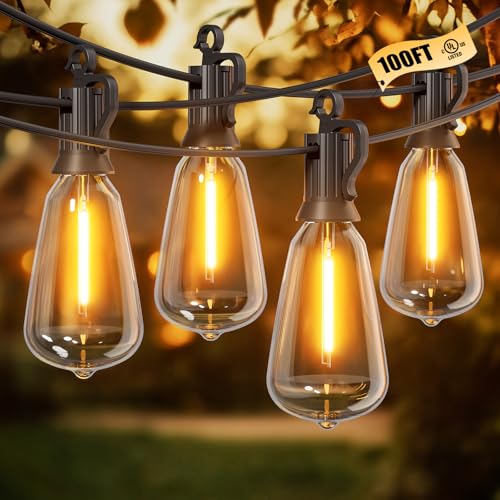
A single bright fitting by a door creates glare, harsh shadows and a pool of light around itself while the seating sits in gloom. A string run distributes many small sources across the whole area, so light arrives from above and from several angles at once. Faces look natural, food looks appetising, and eyes are not fighting one dazzling point. That distributed, gentle character is difficult and expensive to achieve with fixed fittings, and strings achieve it almost by accident, simply because of how they are built and hung.
Warmth helps too. Domestic string lights are almost always warm in colour, which flatters skin, timber, brick and foliage simultaneously. The effect reads instantly as welcoming, the way candlelight does indoors, but at a scale and consistency candles cannot sustain outdoors in a breeze. When people describe a garden as magical in the evening, they are almost always describing this specific quality of light, whether or not they know its name.
Installation Is Reversible and Renter-Friendly
Compared with wired garden lighting, strings ask remarkably little of the building. No trenches, no junction boxes, no electrician for the lights themselves, and removal leaves, at worst, a few screw holes, and with removable fixings on your own structures, not even those. Renters can transform a balcony they do not own. Owners can experiment with a layout for a season before committing to anything permanent. If you move house, the lights come with you in a box. That reversibility lowers the stakes of the whole purchase, which is a real and underrated pro.
Reversibility also means adjustability. A run can be re-hung higher for a party, extended along a new fence, or re-zoned when furniture moves. Fixed lighting freezes the garden’s layout at the moment of installation; strings evolve with it. For households whose outdoor space is still developing, and most are, that evolutionary quality keeps the lighting useful through every rearrangement rather than stranded by the first one.
They Scale From One Swag to a Whole Garden
Few products scale as gracefully. One short string civilises a balcony. A second and third, zoned properly, civilise a garden. You can start with the dining area, live with it, and add the fence line or the tree next season, with each addition independent and each failure isolated to its own run. That incremental path spreads cost, spreads effort, and lets experience guide expansion, which is how most successful gardens are actually built: one proved improvement at a time.
Scaling works downwards as well as up. A household that discovers it only ever uses one corner can retire the other runs, store them, and lose nothing. Compare that with a wired scheme sized for the whole garden on day one, where every unused fitting is a permanent reminder of an overestimate. Strings forgive changing minds, and gardens are full of changed minds.
They Define Rooms Without Building Anything
A swag of light draws a ceiling and a boundary in empty air. On an open patio it says dining here, lounging there, with a clarity that rugs and furniture alone rarely achieve outdoors. On a balcony it converts exposure into enclosure, the feeling of a room, without screens or building work. Hosts find guests naturally gather and stay within the lit zone, which makes an evening easier to hold together. That quiet social architecture is a pro that photographs actually understate, because it is felt as comfort rather than seen as an object.
Definition also helps a garden read as designed rather than accumulated. Even a modest space gains intention when its gathering zone is crowned with light, and planting at the edges gains depth by contrast with the dark beyond. Designers charge for that effect. A string of bulbs delivers a working version of it for the price of an afternoon’s careful hanging.
Running Costs and Simplicity Favour Them
Modern LED strings draw very little power, run cool, and ask for no consumables beyond an occasional replacement bulb. There is no fuel, no charging ritual for plug-in models, no app that must be updated before the lights will work, and no subscription hiding anywhere in the category. In an era of complicated home technology, a product that is a cord, some bulbs and a switch has a refreshing honesty. Even traditional-style bulbs on a single residential run are a modest load, and a timer keeps even that expenditure tied to the hours you are actually outside enjoying it.
Simplicity is also a reliability pro. With no moving parts and no software, the failure modes are few, visible and fixable by the owner: a bulb, a clip, a connection. Most households can maintain a string lighting setup for years with nothing more specialised than correct spare bulbs and a glance after storms, which cannot be said of many smarter, more impressive lighting systems.
In this guide
The Cons, Honestly Stated
Installation Is Real Work, and Shortcuts Are Punished
The first con is the mirror of the flexibility pro: because strings are easy to buy, people assume they are trivial to hang, and they are not, at least not well. Long spans need a steel guide wire between solid anchors, with the cord clipped to the wire so the wire carries the load. Ends need fixings into something sound. Swags need clearance from roofs, gutters, shade sails, heaters and foliage. All of that is an afternoon of measuring, drilling and checking, and skipping it produces the sagging, swinging, chafing installations that give the category its disappointed reviews.
Support is the safety point most people skip. On any span longer than a short balcony rail, run a steel guide wire or cable between solid anchor points and clip the string to it, so the wire — not the electrical cord — carries the tension. A cord stretched tight on its own will fatigue, and a cord left to sag deeply can swing in wind, chafe against edges and droop onto roofs, awnings or foliage where it does not belong. The punishment for shortcuts is not merely ugliness. A cord carrying its own tension fatigues. A swinging run chafes through insulation against an edge. A drooping bulb resting on fabric or dry planting is a fire risk, not a style choice. The con is real: this product demands competence at installation, and households unwilling to supply it should buy a different kind of light.
They Live Outdoors, and Outdoors Is Hard on Things
Sun degrades, rain probes seals, wind works at every clip, and winter adds ice and storm load in colder climates. Even a well-made, outdoor-rated string is ageing from the day it goes up, and its owner inherits a small but permanent inspection duty: start of season, after storms, whenever something looks changed. Bulbs crack, seals perish, cords chafe where they touch. None of this is dramatic, but it never fully stops, and a buyer who wants lighting with the forgettability of a ceiling rose will feel the difference.
Exposure also means the failure you get is the failure weather chooses, not the one you scheduled. A run can need attention the week of a party because a storm found the weak clip. Owners who build the checks into their rhythm barely notice this con. Owners who experience maintenance as an insult will find string lights a recurring irritation, and should weight this con heavily.
Power Is a Constraint, One Way or Another
Outdoor electricity deserves outdoor hardware. Plug in only at a socket with GFCI protection, use only components stated as rated for outdoor use, keep plugs and connectors raised off soil and decking where water pools, and never run the cord through a doorway or window where it can be pinched shut. If a breaker or GFCI trips, unplug and find the cause instead of repeatedly resetting it.
Plug-in strings need a proper outdoor socket within a safe cable route, and many homes simply do not have one where the patio needs it, which adds electrician cost or kills the plan. Solar strings escape the socket and inherit the sun instead: shaded gardens, dull climates and short winter days all shrink their evening to a brief, dim gesture. Battery-free simplicity is real, but so is the physics. Every string lighting plan is, underneath, a power plan, and households that do not want to think about power at all will find this con decisive.
Light Output Has Limits
String lights are atmosphere with a practical edge, not task lighting and certainly not security lighting. You can dine, talk, read a menu and find your glass; you cannot comfortably thread a needle, referee a darts match or light a work area, and a burglar will not be deterred by festoon bulbs. Households that buy strings expecting them to replace a bright utility light will be disappointed by the gentleness that everyone else is buying on purpose. The category’s softness is its charm and its ceiling at the same time.
Output also varies across a long run and between models in ways listings rarely make vivid. Solar output fades through the evening. Dimmed runs trade brightness for mood. A very long single chain can look less even than two shorter zoned runs. None of these are defects, but they are limits, and planning zones, as our outdoor string lights buying guide recommends, is the difference between limits you chose and limits that surprise you.
Bulbs Break, and Replacements Must Be Exact
Broken bulbs are a small job with one strict rule: replace like with like. Switch the run off, let everything cool, remove the damaged bulb wearing gloves if glass is involved, and fit only the bulb type, base and rating the manufacturer specifies for that string. A wrong replacement can run hot, unbalance a dimmed circuit or void the weather sealing the socket depends on.
Glass bulbs break in storms, during hanging, and when a stored string is handled carelessly, and even robust bulbs occasionally fail. Each event is minor and each carries the same strict rule: power off, let it cool, and fit only the bulb type and fitting the maker specifies for that string. Keeping correct spares is a small standing obligation, and sealed strings that do not allow replacement at all turn one failure into a countdown for the whole strand. Households that know they will never keep spares or check a specification should choose the most robust, replaceable-bulb string they can, or a different light entirely.
A Bad Install Looks Worse Than Nothing
There is an aesthetic con that owners feel keenly: strings are prominent. A crooked, sagging, tangled run does not fade into the background the way a mediocre wall light does; it advertises itself across the whole garden, every evening, lit. The product that promises a cafe canopy delivers, in careless hands, the look of a forgotten fairground. This is not snobbery. It is the flip side of the definition pro: overhead lines shape a space powerfully, for better or for worse, and there is no neutral setting.
The good news inside this con is that it is almost entirely within the buyer’s control. Even swags, consistent drop, tidy cable routes and runs that follow the architecture rather than fighting it are achievable by any careful installer, and re-hanging a disappointing run is an hour’s work, not a rebuild. But the effort is not optional, and a household that wants the look without the measuring should hire the hanging, not skip it.
What the Trade-Offs Mean for You
For the regular outdoor diner, the balance is not close. The pros land every evening, at the table, in the quality of the light and the length of the night, while the cons reduce to one careful install and a few minutes of checking per season. Buy plug-in, buy robust, support it properly, and the trade-offs will feel theoretical within a month. The fuller value argument is in are outdoor string lights worth it.
For the balcony dweller, the pros shrink in scale but grow in proportion, because one run transforms the whole space, while the cons shrink too: short spans, close anchors, simple support. The main judgement is power, sun for solar or a socket for plug-in, and the main risk is expecting solar to perform in shade. Get that one call right and the balance is strongly favourable.
For the occasional host, the honest balance is finer. A string hung for parties and ignored between them collects the cons, weather, tangles, last-minute failures, while sampling the pros only a few nights a year. The answer is not necessarily no; it is a lighter, shatter-resistant, easily stored string, hung for the occasion and kept coiled and dry between times, rather than a permanent installation slowly deteriorating for an audience that is rarely there. Match the ownership model to the use and the trade-offs rebalance themselves.
For the set-and-forget household, the balance says skip, and skipping is a success of this guide, not a failure. Fixed fittings, fitted once and ignored for years, serve that temperament better, and ground-level solar path lights serve its routes and borders with no overhead obligations at all. See best solar pathway lights for that layer, and keep strings for the day a space genuinely calls for them.
How String Lights Compare With the Alternatives
Against fixed wall lights and downlights, strings win on atmosphere, flexibility and installation cost, and lose on permanence, brightness and forgettability. Against solar stake and path lights, strings win on gathering-space light and room definition, and lose on effortlessness and suitability for borders and steps. Against candles and lanterns, strings win on consistency, wind resistance and coverage, and lose on portability and the particular romance of a live flame, which is why many patios sensibly combine a string canopy with lanterns on the table. The comparison rarely produces one winner. It produces layers, each doing what it is good at, and strings are the overhead layer. Hands-on model comparisons are gathered in outdoor string lights reviews and the single-product deep dive in outdoor string lights review.
Cost comparisons follow the same pattern. Strings are cheaper to install than any wired scheme and more capable than any comparably priced ground lighting, but their true cost includes the hardware, anchors, wire and occasional bulbs that make them safe and durable. Judged whole, they remain one of the best value transformations in the garden. Judged by the box price alone, they invite the under-budgeted install that manufactures most of the cons in this article.
How to Buy Smart and Shrink the Cons
Buy the grade that matches the duty: commercial-style cord and replaceable bulbs for permanent runs, lighter shatter-resistant strings for occasional use. Measure spans and buy lengths that hang in a natural swag. Budget the guide wire, clips, hooks, timer and correct spare bulbs in the same purchase. Verify the outdoor rating, the bulb specification and the strand-linking limit on the exact listing. Choose plug-in for gathering spaces and solar only where the sun is proven. Every one of those decisions removes a named con from this article before it can happen, which is what buying smart means in a category where the product is simple and the context is everything.
Finally, buy from the space outward, not from the photograph inward. Photographs are taken in perfect gardens at dusk by people who hang lights for a living. Your anchors, your sun, your socket and your weather are the specification that matters. A string chosen against that specification, even a modest one, will outperform a premium string chosen against a fantasy, and it will keep outperforming it for years. For more patio context, browse best outdoor string lights, best outdoor porch rocking chairs and best garden hoses.
Setup and Care That Reduce the Cons
Hang in daylight, in order: anchors first, guide wire tensioned on long spans, string hung loosely and clipped to the wire, swags dressed evenly, clearance checked from below, power connected last. Keep every bulb clear of roofs, fabrics and foliage, keep connectors off the ground, and keep the lowest point of each swag comfortably above heads. That sequence, followed once, prevents the majority of the cons in this guide. Photograph the result for reference, note the bulb specification somewhere durable, and store spares with the string’s box rather than in a random drawer.
Then keep the rhythm small and regular. A seasonal inspection, a post-storm glance, a panel wipe for solar, prompt like-for-like bulb replacement with the power off, and loose coiling if a run comes down for winter. Ten minutes at a time, a few times a year. Owners who do this describe string lights as nearly maintenance-free, and they are telling the truth about their experience, because prevention at this scale really does feel like nothing. The cons belong to the neglected install, not to the category.
Bottom Line
Outdoor string lights offer an unusually honest bargain. In exchange for one careful installation and a small standing duty of inspection, they return transformed evenings, better-used space and a garden that feels finished, night after night, season after season. The pros are lived; the cons are managed. If your household will use the space and do the managing, the balance is clearly in favour, and the remaining task is simply choosing well with the guide above. If it will not, the balance is equally clear the other way, and a fixed or ground-level alternative will serve you better. Either way, you now know exactly which side of the line your home sits on, which is what a pros and cons guide is for.
Three More Pros Worth Weighing
They Are Kind to Old Houses and New Budgets Alike
String lights ask almost nothing of a building’s fabric or wiring, which makes them unusually democratic. A period cottage whose owners will not chase cables through old walls, a new-build whose developer fitted one stingy outdoor socket, and a flat with a balcony all reach the same transformation by the same afternoon of work. There is no planning permission, no making good, no decorator afterwards. In a home-improvement landscape full of projects that metastasise, a complete, finished, reversible project with a beginning and an end on the same day has a psychological value that should not be underestimated. It gets done, and done things get enjoyed.
That accessibility also makes strings an ideal first outdoor project for a new homeowner, because the skills it teaches, measuring spans, choosing fixings, respecting outdoor electricity, are the foundation skills for every garden project that follows. Success here builds the confidence and the judgement for pergolas, planting and bigger lighting schemes later. A product that educates its owner while delighting them is earning its place twice.
They Photograph Well Because They Genuinely Look Good
It is unfashionable to list appearance among serious pros, but honesty requires it: string lights are beautiful, in the uncomplicated way of candlelight and campfires, and beauty in a home is a real benefit, not a frivolous one. The warm points of light against a darkening garden flatter everything they touch, planting, brick, faces and food alike. Households entertain more partly because the space works better and partly because it looks like somewhere an evening should happen. Dismissing that as mere decoration misunderstands how homes are actually lived in. Atmosphere is a function. Strings perform it better, per hour of effort, than almost anything else in the garden.
They Fail Gently and Fix Easily
When string lights fail, they fail in small, visible, owner-sized pieces: one bulb, one clip, one connection. There is no control board to diagnose, no sealed unit to return, no engineer to book. A household with correct spares and a stepladder resolves nearly every failure in this category in minutes, at the moment it is noticed, for the cost of a bulb. Compare the failure profile of almost any other electrical installation in the home and the pro becomes vivid. In an age of products that must be replaced whole when a component dies, a system whose parts are individually replaceable is a quiet triumph of design, and a genuine long-term cost advantage.
Two More Cons, and the Products That Answer Them
They Can Encourage Light Spill and Late Nights Outdoors
A con rarely listed, because it is social rather than technical: a beautifully lit garden invites long, happy, occasionally noisy evenings, and light left burning past the household’s own bedtime spills into neighbours’ windows and washes out the night for wildlife. The product does not cause inconsiderate use, but it enables it more charmingly than most. The answer is behavioural and simple: a timer that retires the lights at a civilised hour, runs kept within your own boundaries, and brightness no greater than the gathering needs. Owners who build those habits in from the start keep the pros and disown this con entirely, which is the pattern this whole guide keeps finding.
Cheap Examples Give the Category a Bad Name
The final con belongs to the market rather than the product: the category’s low end is crowded with indoor-grade strings in outdoor clothing, sealed bulbs that cannot be replaced, and listings that omit every specification an installer needs. Those products fail quickly and publicly, and their owners reasonably conclude that string lights are flimsy, when what they bought was a photograph with a plug. The defence is the reading discipline in the companion guide: verify the outdoor rating, the bulb specification, the linking limit and the replacement path before purchase, and treat any listing that hides them as having answered your question.
Owner Profiles Revisited: The Picks Behind the Balance
Abstract pros and cons become concrete when attached to the products households actually choose between, so this section names the roundup’s reference points, each presented prose-only with its tier, so the balance in this article can be mapped onto real shelves. The full comparative treatment lives in the companion reviews, and the point here is narrower: notice how each product’s position on the pro-and-con scales is set by its grade and power source, not by its badge.
Brightech Ambience Pro
The permanent plug-in reference: premium tier, commercial character, the strongest expression of the pros, transformation, even light, set-and-forget ownership, bought at the price of the cons in their most demanding form, a proper anchored, wire-supported install and a standing seasonal inspection. For a main patio used weekly, that exchange is the best in the category. For a twice-a-year party space, the same product is the cons without the pros to pay for them, which is why this guide insists the household, not the product, decides the verdict.

Brightown Outdoor String Lights
The forgiving middle: entry-to-mid tier, plug-in, lighter in the hand and kinder to a first-time installer, with the pros fully present at balcony and deck scale and the cons at their mildest, because spans are short and handling is easy. Its trade is ceiling rather than floor: a household that later wants a permanent, yard-wide canopy will outgrow it, and should read that not as a flaw but as the honest boundary of a product aimed at the spaces most homes actually have.

Brightown Solar String Lights
The freedom pick: entry tier, solar, deleting the entire power con, no socket, no cable route, no electrician, and replacing it with the sunlight con in its purest form. On a sunny fence its personal balance sheet is almost all pros. In shade it is almost all cons. No product in this roundup demonstrates the guide’s thesis more cleanly: the balance is a property of the match, and this match is decided by a single afternoon spent watching where the sun actually falls in your garden.
Taken together, the three profiles show why a single score for the category would be a lie. The pros and cons in this article are real, but they are weighted differently by every combination of product, space and household. Your task is not to memorise the lists. It is to locate your own patio, your own sun, your own appetite for small maintenance, on the scales the lists describe, and then buy the product whose profile tips them your way. Do that, and the balance will not merely favour you on paper. It will favour you every evening, which is the only place it counts.
How the Balance Shifts With Climate
Climate reweights every item in this article, and a household in a mild, dry region is reading a different ledger from a household facing Atlantic storms or snowy winters, even when the words are the same. In gentle climates the exposure con shrinks toward a formality: runs stay up, seals rest, and the seasonal check is a pleasant ten minutes in spring sunshine. The pros, meanwhile, swell, because the usable season is long and the evenings the lights create number in the hundreds. It is no accident that the cafe-canopy tradition comes from climates where the outdoor evening is a way of life. The product and the climate were made for each other, and in such places the balance in this guide understates the case in favour.
In harsh climates the ledger tightens honestly. Exposure becomes the dominant con: ice load, storm swing and freeze-thaw cycles all spend the string faster, and the winter decision, down or up, carries real consequences either way. The pros contract to a shorter, more precious season, which cuts both ways, because a household that gets twelve perfect outdoor evenings a year may treasure its canopy more, not less, than the household that takes two hundred for granted. The practical conclusion is not to avoid strings in hard climates but to buy and run them accordingly: the most robust grade, the most conservative support, the winter removal done without resentment, and expectations set to a short season savoured rather than a long one assumed.
Humidity and salt deserve a sentence of their own for coastal and tropical households. Connectors and sockets live harder lives in salt air, and the inspection rhythm in this guide should tighten accordingly, with particular attention to any bright metal and any point where the cord meets a fitting. None of this disqualifies the product; the coasts of the world are strung with festoon lights that work nightly. It simply means the care con weighs a little more in the balance, and the grade decision matters a little more at purchase, in exactly the way this article has argued from the start.
The Balance for Landlords, Sellers and Stagers
A final set of readers weighs these pros and cons professionally rather than personally, and their ledger is worth a paragraph. For landlords of homes with gardens, a well-installed, safely powered string run is a viewing-day asset out of all proportion to its cost, because it photographs as a lifestyle and presents, at an evening viewing, as a second living room. The obligations travel with the property, however, so the install must be exemplary and the documentation, bulb type, linking limits, timer instructions, left where a tenant will find it. A careless run is worse than none, for the liability reasons this guide has repeated.
For sellers and stagers the calculus is simpler and the verdict warmer. A lit garden extends a viewing into the evening, flatters every photograph taken at dusk, and costs less than almost any other intervention with comparable effect. The run should be treated as staging rather than infrastructure: hung immaculately for the sale, checked before every evening viewing, and either gifted to the buyer as a documented, working installation or removed cleanly at completion. Judged as staging, the cons barely exist and the pros are nearly pure, which is why experienced agents reach for festoon lighting so reliably when a garden needs to become a room before Friday.
A Final Weighing, Household by Household
Step back from the individual items and the pattern of this article is a single sentence long: the pros of outdoor string lights are collected nightly by households that use their outdoor space, and the cons are paid occasionally by households willing to install and inspect with basic care, so the balance is decided less by the product than by the intersection of use and care in one particular home. High use with willing care is the strongest yes in the category. High use with no appetite for care argues for fixed fittings instead. Low use with willing care argues for a light, occasional string rather than a permanent canopy. Low use with no care is the one combination where the honest answer is simply no, and recognising it in advance is a successful outcome of this guide, not a failed sale.
That is also why this article has resisted giving the category a score. A score would flatter the product and mislead the household, because there is no average patio, no average climate and no average appetite for maintenance for a score to describe. There is only your space, your sun, your socket, your anchors and your evenings, weighed on scales that this guide has tried to make accurate and legible. Weigh them honestly, buy or skip accordingly, and the pros and cons of outdoor string lights will have done for you exactly what a balanced guide is supposed to do: they will have disappeared into a decision you trust.
One more consideration belongs in any complete weighing, and it is the simplest of all: regret asymmetry. Households that buy string lights and install them well almost never wish they had not, because the cost of being wrong is a stored box and a few screw holes. Households that skip the purchase while their evenings keep ending at dusk often revisit the decision every summer, because the cost of being wrong is measured in seasons of evenings that did not happen. Asymmetry like that does not decide the question by itself, and it should never bully a household past the genuine obstacles this guide has named, the missing anchor, the absent socket, the shaded site. But where the obstacles are absent and only hesitation remains, the asymmetry is honest evidence about which mistake is cheaper, and it points, gently and consistently, toward the lights.
Keep that asymmetry in its proper place, as the last weight on the scales rather than the first. The obstacles come first in this guide’s order, because safety and suitability are not negotiable and no evening, however lovely, is bought with a cord through a window or a span on a rotten rail. But once those gates are passed, and for most patios they can be, the remaining question really is only whether the household will sit out and glance up occasionally. If it will, the scales in this article settle, the pros outweigh the cons by the width of a summer, and the only remaining work is the pleasant kind: choosing the string, hanging it well, and being outside at dusk when it first comes on.
Living With the Trade-Offs: A Week-by-Week Reality Check for a Outdoor String Lights
A pros-and-cons list is a snapshot, but living with a outdoor string lights is a film, and this section follows the trade-offs across the first weeks when novelty fades and routine takes over. In week one, most owners notice the headline advantage of a outdoor string lights constantly, because every use is a comparison with whatever came before it, while the headline drawback feels minor simply because it is still new. Finally, remember that the best outdoor string lights for your home is the one whose size, habits and upkeep disappear into your routine, leaving only the result behind — a cleaner surface, a better-lit seat, a tidier shelf, an easier job — week after ordinary week. Measure before anything else, and measure the outdoor string lights in its working state rather than its packed or folded state, because handles extend, lids open, cords trail, doors swing and users stand somewhere, and all of that belongs in the measurement.
Keep the packaging of a larger outdoor string lights until those first ordinary tests are done, flattened if space is tight, because re-boxing an awkward shape from scratch is the hidden difficulty inside many otherwise straightforward returns. Watch for edge cases in your own home: the pet that investigates everything, the child who treats every new object as furniture, the guest who uses force where you use familiarity, and the weather, light or season that changes how a outdoor string lights behaves. When something about the outdoor string lights disappoints, change one variable at a time — position, setting, timing, load, accessory or technique — and give the change a fair trial, because changing three things at once leaves you with a better or worse result and no idea why. If a problem with the outdoor string lights repeats in the same spot or the same stage of the job, treat the pattern as the clue — patterns point to setup, surface or technique, while random problems point more often to the individual unit.
For troubleshooting, start with the boring causes first: power, water, fit, blockage, alignment, a full container, a loose connection or a setting changed by the last person who used the outdoor string lights, because boring causes account for most apparent failures. Share the checklist result with anyone who shares the space, since a outdoor string lights chosen by one person and resented by another rarely survives, however sensible the purchase looked on paper. Decide in advance what good enough looks like for the job the outdoor string lights does in your home, because chasing a flawless result usually costs more time than the flaw itself, and most households are happier with a reliable ninety percent they actually repeat. By week three the pattern usually reverses: the advantage becomes invisible background, part of how the room or routine simply works now, while any recurring friction with the outdoor string lights — a awkward reach, a fiddly clean, a storage squeeze — is the thing you feel on every single use.
Test the outdoor string lights in the first week under deliberately ordinary conditions rather than saving it for a special occasion, so that any problem surfaces while returning, exchanging or adjusting your setup is still simple. Photograph your setup once the outdoor string lights is working well — the position, settings, arrangement or layout you settled on — so that after a move, a deep clean or a seasonal break you can recreate the arrangement that worked instead of rediscovering it. Plan the storage home for the outdoor string lights before it arrives, naming the exact cupboard, corner, shelf, hook or stretch of floor, because a product without a home migrates around the house and slowly becomes the clutter it was bought to reduce. Check the floor, wall, ground or surface the outdoor string lights will meet, since level, texture, moisture and finish decide more about everyday performance in patio & outdoor living settings than most shoppers expect when they are comparing listings on a screen.
Use a simple decision checklist at the end: the outdoor string lights fits the measured space, suits the real frequency of the job, matches the household’s cleaning temperament, has obtainable parts, and has a named storage home — five yeses make a confident order. One-time costs forgive easily, so a outdoor string lights that is slow to assemble, heavy to position once, or demanding on its first deep clean can still be the right long-term choice if daily use afterwards is effortless.
Frequently Asked Questions
What is the biggest disadvantage of outdoor string lights?
Installation and upkeep, taken together. Long spans need a tensioned guide wire on solid anchors, the whole run must stay clear of roofs, heat and flammable material, and the owner owes the string a short inspection each season and after storms. None of it is difficult, but all of it is mandatory, and skipping it converts the product’s main advantage, a beautiful overhead canopy, into its main liability. Households unwilling to do that work should choose fixed or ground-level lighting instead.
Do outdoor string lights attract insects?
Any outdoor light attracts some insects, but warm-coloured, low-level string lighting tends to draw noticeably fewer than a bright, cool-white fitting blazing by a door, and the light is spread out rather than concentrated where you sit. Positioning helps: keep the brightest run over the gathering area rather than directly over food preparation, and avoid placing strings immediately beside dense, flowering planting at peak season. Most owners find the trade more than acceptable for the quality of evening the lights provide.
Are outdoor string lights safe to leave on overnight?
A correctly installed, outdoor-rated run on a protected circuit is designed for evening use, but leaving any outdoor lighting on all night wastes power and light, disturbs wildlife and neighbours, and adds wear for no benefit. Use a timer set for the hours the space is actually enjoyed, so the lights greet the evening and retire when you do. If a run ever shows damage, a cracked bulb, a chafed cord or a tripping protective device, switch it off and deal with the cause before the next use, day or night.
How do string lights cope with wind and rain?
Outdoor-rated strings are built for rain, provided connectors are kept off the ground and out of standing water and the installation follows the maker’s guidance. Wind is the harder test, and it is a test of the installation rather than the string: a run clipped to a tensioned guide wire rides out weather that would swing, chafe and eventually damage a run hanging from its own cord. In severe storms, or across a harsh winter, taking a run down is always the conservative option, and it costs an hour rather than a replacement.
Is solar or plug-in better overall?
Neither, in the abstract. Plug-in is better wherever people gather, cook and dine near a suitable socket, because its brightness is consistent and its evening is as long as yours. Solar is better wherever there is no socket and reliable direct sun, along fences, trees and far corners, where its softer glow is exactly what the zone needs. The commonest mistake is forcing one type to do the other’s job. The best gardens usually run both, each in the territory where its pros dominate and its cons barely matter.
Can string lights increase how much a home is used outdoors?
In practice, yes, and it is the benefit owners mention most. Light is usually the binding constraint on outdoor evenings: the furniture, the space and the inclination already exist, and dusk is what ends them. A warm canopy removes that constraint, and households consistently report eating, hosting and simply sitting outside more often afterwards. That is also why the category’s value is best judged per evening of use rather than per bulb or per metre of cord. Used nightly, string lights are inexpensive. Used twice a year, nothing is.