Disclosure: As an Amazon Associate, dailyhomedecorating.com earns from qualifying purchases. Links on this page are affiliate links; they cost you nothing extra. Prices and availability change often, so check the current Amazon listing before you buy.
This lawn mower buying guide is written for the reader who wants the whole category explained before any money moves: the types, the specifications translated into plain language, and a shortlist of proven lines matched to real lawns. Read it alongside how to choose a lawn mower if you want the decision as a step-by-step process; read this one for the landscape of what is actually on offer.
Key Takeaways
- Five families cover the market: gas, cordless, corded, reel and riding or wide-cut machines.
- Buy the power source and the platform first; model-level differences come second.
- Self-propelled drive, deck width and clipping handling are the three choices that shape daily use.
- Qualitative tiers — entry, mid, premium — predict ownership experience better than feature lists.
- The right mower for your lawn will feel almost boringly obvious once the types are clear.
In this guide
The Main Types of Lawn Mower, Explained Plainly
Gas Walk-Behind Mowers
The traditional petrol mower remains the benchmark for raw, sustained cutting power. It runs as long as there is fuel in the can, shrugs off thick, damp or overgrown grass that stalls lesser machines, and comes in push and self-propelled forms, the latter driving the wheels so you steer rather than shove. The costs are noise, exhaust, vibration and the most maintenance of any type: oil, filters, plugs, fuel storage and winterising all come with the territory.
Cordless Battery Mowers
Battery mowers have moved from novelty to default for most suburban lawns. They start with a button, run far more quietly than petrol, need almost no routine maintenance and store neatly, sometimes upright. Their limits are runtime per charge and cutting muscle in heavy grass, both of which improve as battery platforms mature; buying into a platform whose batteries also fit your other garden tools is the smart way to own one.
Corded Electric Mowers
The corded mower is the lightest and simplest powered option: unlimited runtime, minimal maintenance and a modest purchase tier, balanced against the tether. The cable dictates your route, limits your range from the socket and demands constant awareness so you do not run over it. For a small, flat lawn near the house, that bargain can still make sense; for anything larger or more awkward, the cord becomes the story of every mow.
Reel and Manual Mowers
A reel mower cuts with a scissor action as you push, producing a fine finish on small, flat, well-kept lawns with no fuel, no battery and almost no noise. It asks for frequent mowing, struggles with long or coarse grass and twigs, and covers ground slowly. As a deliberate, quiet ritual on a pocket lawn it is charming; as the tool for a big or rough plot it is a penance.
Riding and Wide-Cut Mowers
Once a lawn grows beyond what you can comfortably walk, wide-deck walk-behinds and riding mowers enter the picture. They trade purchase tier, storage space and manoeuvrability for sheer coverage per hour. They suit genuinely large, open ground; on a typical suburban plot they are more machine than the job needs, and gates, beds and tight corners still leave hand work behind them.
Top Picks at a Glance
Six lines, six different answers to the same question. Badges are qualitative, tiers are by positioning rather than price, and every profile below is expanded in the mini-reviews later in this guide.
| Pick | Badge | Tier | Best For |
|---|---|---|---|
| Honda HRX Series | Best Overall Gas | Premium | Medium-to-large lawns, slopes, thick grass |
| EGO Power+ Select Cut | Best Cordless | Premium | Larger lawns wanting quiet power |
| Toro Recycler | Best for Mulching | Mid | Regular mulch-mowing on medium lawns |
| Greenworks 40V | Best for Small Lawns | Mid | Small-to-medium flat lawns |
| Ryobi 40V | Best Platform Value | Entry–Mid | Owners already on the Ryobi battery system |
| Toro TimeMaster | Best for Big Lawns | Premium | Large open plots without a rider |
How Much Cutting Power Do You Actually Need?
Power requirements follow your grass, not your ambitions. Fine, regularly cut lawn grass asks little of any mower; coarse, lush or neglected grass asks a great deal, and it asks it of the blade at the moment the deck is full. Gas engines deliver their power continuously and shrug off the heavy days. Cordless motors deliver strong bursts but are ultimately rationed by the battery. If your lawn is the kind that gets away from you — holidays, wet months, fertile soil — buy for the worst month, not the average one. If it never gets away from you, almost any mower in this guide has power to spare, and your decision should be made on other grounds entirely.
How Wide a Deck Should You Choose?
Deck width is your cutting swath, and it cuts both ways. Wider decks finish open lawns faster and suit the wide-open geometry of large plots. Narrower decks turn tighter, fit through standard side gates, store smaller and cost less to buy and to blade. The suburban middle of the range exists because most lawns are a compromise: some open ground, some corners, one gate. Measure the gate and the narrowest passage the mower must travel before you let a wide deck seduce you, and remember that a mower too wide for the garden spends its life being wrestled, not driven.
Push or Self-Propelled: How Much Does Drive Matter?
On flat ground with a light mower, pushing is perfectly sustainable and the simpler machine wins on cost and maintenance. Add slope, size or a heavier gas deck and the equation flips: self-propelled drive converts the job into steering, preserves your energy for the edges and details, and makes the weekly appointment one you keep. Variable-speed drive, which matches the mower’s pace to yours, is the refined version worth having if the lawn is big enough to walk at different speeds on straights and corners.
What Should You Look for in Clippings Handling?
Decide your default mode first. Mulching is the low-effort, lawn-feeding default for regular mowing and the mode most owners use most; a mower designed around mulching does it visibly better. Bagging is the tidy default for longer grass, formal lawns and the first cut of spring. Side discharge is the pressure valve for genuinely overgrown grass. Most mowers offer at least two modes; the buying question is whether the mode you will live in is the one the machine was designed around, or an afterthought bolted onto it.
How Much Do Noise and Neighbours Matter?
More than specifications suggest. A gas mower announces itself to the whole street; a cordless mower can be used early on a summer morning without a thought. If your mowing windows are antisocial hours, if your street is dense, or if you simply value quiet, electric power is not a compromise but a feature. Conversely, if the plot is rural and the nearest neighbour is a field away, gas noise costs nothing and its stamina is free value. Put the social facts in the spreadsheet alongside the mechanical ones.
How to Prioritise by Use Case
The small flat lawn. Prioritise lightness, storage and simplicity: a mid-tier cordless or a corded mower, push drive, mulching. Everything else is surplus.
The medium family lawn. Prioritise versatility: mulching and bagging both done well, single-lever height adjustment, cordless or gas by your maintenance appetite. This is the market’s centre of gravity and the choice is widest here.
The large or sloped lawn. Prioritise drive and stamina: self-propelled, wider deck, gas or premium cordless with a second battery. Comfort features stop being luxuries at this scale.
The rough or overgrown plot. Prioritise power and discharge: gas, bagging and side discharge, a deck that clears clippings rather than choking on them. Finesse can come later, once the plot is tamed.
The Picks in Detail

Honda HRX Series Gas Mower
Best Overall Gas — Premium tier
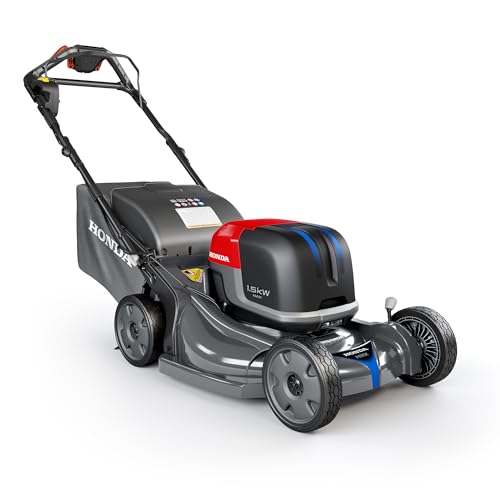
The HRX line is Honda’s flagship walk-behind family and the reference point for gas mowing: a strong engine, a deck shaped for fine mulching and clean bagging, self-propelled drive and a build that owners keep for a very long time. It is the pick when the lawn is medium-to-large, the grass is serious and the budget reaches the premium tier.
Its ownership proposition is the classic gas one: total stamina and power in exchange for fuel, oil and servicing. Buyers who accept that bargain rarely regret this machine; buyers who resent engine care should take the hint and go cordless instead.
Strengths
- Benchmark gas cutting and mulching performance
- Self-propelled drive suited to slopes
- Built for a long service life
Trade-offs
- Premium tier within walk-behinds
- Full gas maintenance routine applies
- Heavy in tight, obstacle-filled gardens
Best for: Medium-to-large lawns with slopes or thick grass, owned by someone content with engine care.
Not suited for: Small flat lawns and anyone avoiding petrol entirely.
EGO Power+ Select Cut Cordless Mower
Best Cordless — Premium tier
EGO built its name on a high-voltage battery platform that makes cordless mowing feel uncompromised, and the Select Cut line is its flagship mower family: strong cutting in real grass, quiet running, and packs shared with an extensive tool range.
It suits the owner who wants the cordless life — button start, no fuel, minimal servicing — on a lawn big enough that lesser cordless machines feel rationed. The tier is premium, and the honest caveat is runtime: very large lawns may want a second pack in the charger.
Strengths
- Cordless convenience with gas-like confidence
- Extensive shared battery platform
- Quiet, clean, minimal servicing
Trade-offs
- Premium tier, packs included in the reckoning
- Runtime finite on the largest lawns
- Heavier than entry cordless models
Best for: Medium-to-large lawn owners committed to cordless who want the strongest platform.
Not suited for: Budget-first buyers and very large plots without a second battery.
Toro Recycler Gas Mower
Best for Mulching — Mid tier
The Recycler family is designed around one idea: chop clippings so finely that they disappear into the lawn and feed it. For the owner who mows weekly and mulches by default, that focus shows in the finish, and the mid-tier positioning makes it the value pick of the gas world.
Self-propelled versions handle modest slopes, and Toro’s dealer and parts network is a genuine ownership advantage over a decade. Bagging is available but secondary; this is a mulcher first.
Strengths
- Mulching performance is the design brief
- Mid tier with a wide service network
- Self-propelled options available
Trade-offs
- Gas routine: fuel, oil, servicing
- Bagging is the secondary mode
- Less refined than premium gas lines
Best for: Weekly mulch-mowers with medium lawns who want gas stamina without the premium tier.
Not suited for: Owners who bag everything or who want to leave petrol behind.

Greenworks 40V Cordless Mower
Best for Small Lawns — Mid tier
Greenworks’ mid-voltage family is the straightforward cordless answer for small-to-medium lawns: light to handle, simple to store, quiet in use and backed by a broad platform of everyday garden tools at accessible tiers.
It asks the owner to mow regularly rather than heroically; kept to that rhythm it is all the mower most suburban lawns need. Steep slopes and meadow-reclamation are outside its brief, and it does not pretend otherwise.
Strengths
- Light, quiet and easy to store
- Broad, accessible battery platform
- Minimal maintenance
Trade-offs
- Limited muscle in overgrown grass
- Push drive across much of the line
- Runtime sized for small-to-medium lawns
Best for: Small-to-medium flat lawns mowed little and often.
Not suited for: Large, steep or rough plots.
Ryobi 40V Cordless Mower
Best Platform Value — Entry to mid tier
Ryobi’s mower line makes most sense as part of its battery universe: if your drill, trimmer and blower already run on the platform, the mower joins a family your chargers already serve, and the effective cost of ownership drops accordingly.
As a mower it is a competent, friendly machine for small-to-medium lawns, with the same cordless caveats as its class. As a platform decision it is one of the shrewdest in the guide, which is why it earns its badge.
Strengths
- Outstanding value for existing platform owners
- Huge range of compatible tools
- Friendly, simple operation
Trade-offs
- Unremarkable if you own no other platform tools
- Class-typical limits in heavy grass
- Runtime sized for modest lawns
Best for: Owners already invested in the Ryobi battery system with small-to-medium lawns.
Not suited for: Large lawns and buyers starting a platform from zero who want premium cutting.
Toro TimeMaster Wide-Cut Gas Mower
Best for Big Lawns — Premium tier
The TimeMaster takes the walk-behind format wide: a broad deck that covers open ground at a pace approaching a small rider, with self-propelled drive to manage the size. For a large, open lawn whose owner does not want a riding mower’s storage and maintenance, it is the specialist answer.
The trade is manoeuvrability and storage: this is a big machine that wants open ground and a proper shed corner, and it is wasted — worse, cumbersome — in a small, bed-filled garden.
Strengths
- Wide deck cuts large lawns quickly
- Self-propelled drive handles the size
- Walk-behind simplicity versus a rider
Trade-offs
- Bulky to store and to turn
- Premium tier
- Overkill anywhere but open ground
Best for: Large, open lawns where a rider is unwanted.
Not suited for: Small or intricate gardens.
First Setup and Care Essentials
Unbox patiently: fit the handle, add oil before fuel on a gas mower (engines are often shipped dry, and the manual is the authority), charge cordless batteries fully before first use, and set the deck to a middle height for the first cut while you learn the machine. Register the warranty, keep the manual with the machine, and learn the safety routine — engine off and spark plug disconnected, or battery removed, before any work under the deck — before the first clog teaches it to you the hard way.
Safety First: The Rules That Matter Every Time You Mow
Every mower, whatever powers it, spins a steel blade fast enough to throw stones and cut through whatever it meets, so the safety habits below are not fine print — they are part of using the machine, and they apply before, during and after every single session.
The first rule governs any work near the blade or under the deck. Before you tip a mower, scrape the deck, clear a blockage or touch the blade for any reason, switch the engine or motor off and make sure it cannot restart: on a gas mower, disconnect the spark plug lead; on a cordless mower, remove the battery pack; on a corded mower, unplug it and keep the plug where you can see it. A blade that can still be spun by a bumped starter or a squeezed bail bar is a blade that can injure you, and most serious mower injuries happen during exactly this kind of quick maintenance, not during mowing itself.
Never reach under a mower while it is running, and never reach under one that has just been switched off until the blade has come to a complete stop — a spinning blade coasts for a while after the power cuts. If grass clumps clog the discharge chute mid-job, stop, wait for a full stop, make the machine safe as described above, and clear the clog with a stick or a tool, never with your hand.
Before you start, walk the whole lawn and clear it: pick up stones, sticks, toys, hoses, bones and any other debris. A mower blade can fling a small stone at dangerous speed, and hidden objects also damage blades and decks. Keep children and pets completely out of the mowing area while you work and until the mower is put away; they should never ride on, play near or “help” push a mower, and bystanders belong indoors or well away from the cutting path and the discharge side.
Dress for the job: sturdy closed footwear with grip, long trousers, and eye protection as a minimum, with ear protection a sensible addition around a gas engine. Loose clothing, jewellery and dangling laces stay away from the machine. On slopes, work at a steady, conservative pace: with a walk-behind mower, mow across the face of the slope rather than straight up and down it, so the mower cannot roll back toward you if you slip, keep your footing deliberate, and never mow a slope when the grass is wet and slippery. If a slope feels too steep to walk confidently, it is too steep to mow with a walk-behind machine.
Fuel needs its own discipline on gas models. Refuel outdoors only, away from any ignition source, with the engine off and cooled — petrol vapour and a hot exhaust are a bad combination. Use an approved fuel container, never fill to the brim, wipe spills before starting, and store fuel away from living spaces and heat sources. For cordless models, charge batteries on a stable, dry surface with the maker’s charger, and store packs somewhere cool and dry rather than in a freezing or roasting shed.
Mistakes to Avoid When Buying
Buying by headline specification instead of by lawn. Buying a battery platform for one tool without checking the rest of the range. Buying wide for speed and discovering the gate. Buying gas for power and discovering you hate servicing. And buying the cheapest machine in a category whose whole value is a decade of weekly use — the tier difference, spread over ten years of Saturdays, is smaller than the difference between a mower you like and one you tolerate. The verdicts in our lawn mower reviews apply these same tests model family by model family.
Lawn Mower Buying Guide: Reading a Specification Sheet
Specification sheets are written to sell, but they can be read to learn — if you know which lines carry information and which carry adjectives. Cutting width is real: it is your swath, and it interacts with your gate and your geometry as this guide has described. Drive type is real: push, single-speed or variable-speed self-propelled are genuinely different ownership experiences. Height range and the adjustment mechanism are real, and weekly-relevant. Battery voltage and capacity, on cordless models, are real but only comparable within a platform’s own logic; cross-brand number contests mislead. Engine displacement on gas models correlates loosely with stamina but says little about cut quality, which lives in the deck and blade.
The lines to discount are the superlatives: every deck is aerodynamic, every motor is advanced, every handle is ergonomic. Judge those claims with your hands in the shop instead. And treat runtime figures on cordless models as fair-weather estimates made on short, dry grass; your lush spring lawn will write its own figure, lower. A specification sheet, read this way, becomes a checklist of questions to verify rather than a verdict to accept.
Grass Types and Regional Climate
Fine ornamental grasses reward precision and frequent light cuts; coarse utility grasses reward stamina and clearance. Warm-season grasses grow aggressively in heat and can be kept shorter; cool-season grasses surge in spring and autumn and sulk in summer, asking for height and patience. Wet climates argue for corrosion resistance, bagging capacity and decks that shed clippings; dry climates argue for mulching quality and height headroom. None of this requires a specialist machine in most gardens — it requires weighting the ordinary criteria correctly, which is the entire skill this buying guide exists to teach. If your region has a dominant grass type, ask local dealers what they sell most of and why; regional wisdom about regional grass is real knowledge, freely given.
Accessibility and Ease of Use
A mower should fit its operator as carefully as its lawn. Weight is the first accessibility fact: a machine that cannot be lifted over a step or turned comfortably will be used reluctantly, and reluctance is the enemy of the weekly rhythm. Electric starting — standard on cordless, available on some gas models — removes the pull cord that defeats many shoulders. Handle height adjustment, easy-grip bail bars, variable-speed drive that matches a slower walking pace, and controls that do not demand strong hands all matter more with every year of ownership. For gardeners with limited strength or mobility, the lightest cordless machines and self-propelled models are not luxuries; they are what makes independent lawn care possible at all, and they should be weighted accordingly — ahead of width, ahead of power, ahead of tier.
Warranty, Parts and Resale
Read the warranty for its battery clause on cordless models and its corrosion clause on decks; those are the two places money will actually be claimed. Confirm that blades, bags and filters for your model are stocked locally or reliably available, because a mower waiting three weeks for a blade in May is a lawn emergency. Keep receipts and service records: a documented machine resells for meaningfully more, and mowers are among the most resold of all garden tools because lawns change hands and sizes. Finally, buy from a channel that will still exist at service time; the cheapest source for a machine you cannot get repaired is expensive in the only currency that matters, which is seasons of use.
Questions to Ask in the Shop
Ask what the machine weighs with its bag and battery, not without. Ask how the height adjusts and do it yourself, twice. Ask which blade it takes and whether the shop stocks it. Ask what the first service involves and what it costs in effort. Ask cordless dealers what else the platform powers, and gas dealers where the nearest service bench is. Ask what the shop would buy for your lawn, described honestly — dealers who mow their own grass give answers worth hearing. Then go home and measure the gate one more time before any money moves.
Anatomy That Matters: Engines, Motors and Decks
Strip the marketing away and three components decide a mower. The engine or motor decides stamina and temperament: gas engines are mature, torquey and serviceable anywhere; cordless motors are clean, instant and platform-bound; corded motors are the simplest machines in the category. The deck decides the finish: its shape governs how clippings circulate for mulching and how freely they clear for bagging, and its material — pressed steel in most of the market — decides how it ages against corrosion and knocks. The blade decides the cut itself, and it is the cheapest component of the three, which is the category’s great open secret: owners agonise over engines and decks, then cut all season with a dull blade. When comparing two mowers in a shop, spend your attention in that order of consequence for the lawn — deck and blade for the finish, engine or motor for the stamina — and you will be reading the machine the way its designers built it.
The Second-Hand Market as a Buying Channel
A buying guide that ignores the used market ignores where a large share of mowers change hands. The channel’s logic is sound: mowers are durable, owners move, downsize and upgrade, and a three-year-old mid-tier machine with a service history is often a better purchase than a new entry-tier one. Shop it with the discipline this guide has taught: cold start, straight blade, sound deck, plausible story, and a service-and-blade allowance inside the true price. Avoid ex-commercial machines unless you know their history, because their hours are counted in different units. And buy the seller as much as the machine: the owner who produces receipts and a clean, stored mower is telling you how it was treated when nobody was watching.
Delivery, Assembly and First-Week Checks
Most mowers arrive nearly ready, and the hour of assembly is your first service: fit the handle at your height, check every fastener the factory left for you, add oil before fuel on gas models — engines are commonly shipped dry, and this is the one mistake that can kill a mower in its first minute — and charge cordless packs fully. In the first week, re-check the blade’s tightness after the first cuts, learn the machine’s true height settings against your grass rather than the numbers on the lever, and note the turning and discharge behaviour on your own obstacles. Keep the box until the mower has survived its first month; returns are a fact of retail life and packaging is their passport.
A Final Decision Worksheet
Write the answers down; decisions made on paper survive the showroom. Lawn area and shape: measured, not guessed. Slopes: none, gentle, or serious. Grass: fine, utility, or coarse. Power family: chosen, with the reason in one sentence. Drive: push or self-propelled, decided by the slopes. Default clippings mode: mulch or bag. Platform: if cordless, named and vetted. Storage: the actual corner, measured. Tier: entry, mid or premium, justified by the hardest honest description of the ground. Nine lines, five minutes, and the buying guide has done its work — the model that fits the worksheet is the model to buy, and every model that does not can be admired and left on the shelf.
Reading Owner Reviews Without Being Misled
Owner reviews are evidence, but they are evidence with known biases, and a buying guide should teach the discount. The angriest reviews cluster at two poles: machines mis-sold to the wrong lawn — the light mower bought for a meadow — and machines killed by skipped maintenance, both of which describe the match rather than the mower. The happiest reviews cluster in the first season, before durability has voted. Read for the middle: owners in their second and third seasons, on lawns like yours, describing the specific behaviour you care about — the slope, the bagging, the wet cut. Patterns across many such reviews are trustworthy; any single story, glowing or furious, is a sample of one lawn, one owner and one summer. This guide’s profiles were written to that standard, and the roundup in the reviews section applies it line by line.
The Demo, the Dealer and the Big Box
Where you buy shapes what you own. A specialist dealer offers the handling test, honest regional advice, assembly done properly and a service bench that knows your model — advantages that compound across a decade and are worth a modest tier difference to most buyers. The big-box and online channels offer tier and convenience, and transfer assembly, calibration and first-service knowledge to you; capable owners lose nothing, while first-time owners should budget an hour with the manual and no shame about it. Either channel is legitimate; the illegitimate purchase is the one made with no handling, no measuring and no plan for service, from any channel at any tier.
One Last Pass: The Guide in Nine Sentences
Measure the lawn, the gate and the shed. Choose the power family by stamina, noise and maintenance appetite. Choose drive by the slopes. Choose width by the geometry. Choose the clippings mode you will live in and buy the machine designed around it. If cordless, buy the platform, not the mower. Read the warranty where the money is — battery and deck. Handle the finalists with your own hands. Then keep the blade sharp for a decade. Everything else in this guide is commentary on those nine sentences, and a purchase made by them will still look wise when the second battery, or the tenth spring service, comes around.
The Guide’s Own Shortlist, Revisited With Fresh Eyes
Return to the six profiles in this guide after reading the criteria sections, and a pattern worth naming emerges: the shortlist contains no exotic machines. Every line on it is a mainstream product from a maker with dealers, parts and a decade of presence, because a buying guide’s first duty is not excitement but survival — the machine must still be serviceable when its owner has forgotten the purchase. Readers tempted by the novel, the ultra-cheap or the over-specified should apply the guide’s own tests in order: does it fit the worksheet, can it be serviced locally, does its maker publish parts, and would the dealer’s own staff buy it for the lawn described? A machine that passes those four gates deserves its place on any shortlist, including this one; a machine that fails them is a story you will tell later, at your own expense.
Buying for the Decade: A Closing Perspective
Step back from the criteria and the category resolves into a single thought: a mower is not really bought, it is adopted. It will be present for ten springs, ten autumns, several redesigns of the garden and possibly of the household; it will be cursed twice a year and thanked forty times; it will outlast cars, phones and most of the furniture. Purchases with that lifespan deserve the unhurried method this guide has laid out — lawn first, family second, worksheet always — because the cost of choosing well is one careful hour, and the dividend is paid weekly for a decade. Few transactions in domestic life offer that exchange rate, and none of them hum.
How the Guide Treats Innovation
New features arrive yearly, and a buying guide owes readers a filter for them. Sort each novelty into one of three baskets. Basket one: it changes the weekly experience — variable-speed drive did, upright storage did, single-lever height did. Basket two: it changes the decade — platform breadth, corrosion-proof decks, serviceable design. Basket three: it changes the brochure. Buy baskets one and two without hesitation when the worksheet supports them; let basket three be a tie-breaker at most, and never a reason to cross a tier. The filter’s deeper value is calm: a category this mature improves by accumulation, not revolution, and the owner who buys sound fundamentals is never made a fool by next spring’s launch.
The Guide’s Verdict on Extended Warranties and Service Plans
Extended warranties divide owners, so here is the guide’s reasoning rather than a slogan. A mower’s expensive failures are concentrated in two places: the engine or motor, and the cordless battery. Manufacturer warranties already cover the early years, when defects declare themselves; the failures of middle age are wear, which plans commonly exclude, and neglect, which they always exclude. The exception is the battery: where a plan genuinely extends pack coverage at a sane tier, it insures the one real bill in cordless ownership. For the rest, the money a plan costs across a decade approximates the cost of the servicing it might have covered — which the owner can simply buy directly, from a local bench, while keeping the change. Verdict: insure the battery if the terms are real; self-insure the rest through maintenance.
From Guide to Garden: The Purchase, Sequenced
End where the reader stands: worksheet complete, shortlist handled, decision made. Buy in the channel that gives you service confidence. Assemble slowly, oil before fuel, charge before cutting. Register the warranty the same day. Make the first mow the learning mow this guide described. Enter the maintenance rhythm in the logbook from week one. And keep this guide’s nine sentences somewhere in the shed, because in ten years, when the replacement decision arrives, the worksheet will be waiting — and the lawn it describes will be the best evidence of whether the method worked.
A Note on Demonstration Models and Open-Box Buys
One channel sits between new and used and deserves the guide’s verdict: the demonstration model and the open-box return. These machines carry most of a new mower’s warranty story at a used mower’s tier, and their risks are specific rather than general — a season of showroom handling, a first owner who returned the machine for fit rather than fault. Inspect as you would a used machine, confirm the warranty’s start date and completeness of accessories in writing, and the channel is one of the category’s genuine bargains. The mower that was wrong for a stranger’s gate may be exactly right for yours, and its discount is the price of a story you can inspect in full.
The Guide in the Glovebox
Keep this guide’s essence where the purchase happens: lawn measured, family chosen, drive decided by slopes, width by gates, mode by habit, platform by system, warranty read where the money is, finalists handled by hand. A buyer carrying those eight checks into any showroom, dealership or marketplace listing is effectively un-sellable-to — immune to the wrong width, the orphan platform, the tier that flatters the ego and starves the lawn. That immunity, more than any single recommendation in these pages, is what a buying guide is for, and it travels free of charge to every future purchase of every machine in the shed.
The Last Hundred Words of the Guide
A buying guide should know when to stop, and this one stops here: with the worksheet filled, the family chosen, the finalists handled and the service bench identified, further reading has a declining return measured in uncut grass. The category will not reward another evening of comparison; it will reward a decade of the routine that follows a sound purchase. Buy the machine your worksheet describes, keep its blade sharp and its deck clean, and let the lawn — the only reviewer whose opinion compounds — deliver its verdict weekly. On the evidence assembled in these pages, it will be a favourable one.
A Pre-Purchase Measurement and Compatibility Audit for Your Lawn Mower
Use this audit in the final ten minutes before you order a lawn mower, because that is when most buying-guide advice stops being abstract and starts being a tape measure, a doorway and a return label you would rather not need. Write down three numbers for the lawn mower you are considering: the footprint where it will sit or be stored, the largest dimension it reaches in normal use, and the clearance it needs so doors, drawers, lids, handles or moving parts can work without catching. Consider the cleaning rhythm honestly: a lawn mower that needs attention after every use suits a household that enjoys small rituals, and frustrates a household that wants to finish a job and walk away, so match the upkeep to the temperament, not the intention. Use a simple decision checklist at the end: the lawn mower fits the measured space, suits the real frequency of the job, matches the household’s cleaning temperament, has obtainable parts, and has a named storage home — five yeses make a confident order.
Then measure the route, not just the destination, since a lawn mower that fits its final spot perfectly can still fail at a narrow hallway, a tight turn, a low doorway or a cupboard mouth that is smaller than the space behind it. Seasonal thinking helps more than expected: a lawn mower bought in one season will meet different light, humidity, mud, heat, guests and routines in another, so judge its size, storage and upkeep against the hardest season it will face. Watch for edge cases in your own home: the pet that investigates everything, the child who treats every new object as furniture, the guest who uses force where you use familiarity, and the weather, light or season that changes how a lawn mower behaves. Check the floor, wall, ground or surface the lawn mower will meet, since level, texture, moisture and finish decide more about everyday performance in garden & lawn settings than most shoppers expect when they are comparing listings on a screen.
For troubleshooting, start with the boring causes first: power, water, fit, blockage, alignment, a full container, a loose connection or a setting changed by the last person who used the lawn mower, because boring causes account for most apparent failures. Keep the packaging of a larger lawn mower until those first ordinary tests are done, flattened if space is tight, because re-boxing an awkward shape from scratch is the hidden difficulty inside many otherwise straightforward returns. When something about the lawn mower disappoints, change one variable at a time — position, setting, timing, load, accessory or technique — and give the change a fair trial, because changing three things at once leaves you with a better or worse result and no idea why. Shortlist discipline helps here: keep two lawn mower options that pass the audit and let one fail on paper, because comparing a clear pass against a clear fail teaches you more about your real priorities than comparing three near-identical maybes.
Share the checklist result with anyone who shares the space, since a lawn mower chosen by one person and resented by another rarely survives, however sensible the purchase looked on paper. If a problem with the lawn mower repeats in the same spot or the same stage of the job, treat the pattern as the clue — patterns point to setup, surface or technique, while random problems point more often to the individual unit. Read the manual’s warnings page for the lawn mower even if you read nothing else, because that page is a compressed list of every way the product has ever been misused, and it tells you exactly which of your own habits needs adjusting. Plan the storage home for the lawn mower before it arrives, naming the exact cupboard, corner, shelf, hook or stretch of floor, because a product without a home migrates around the house and slowly becomes the clutter it was bought to reduce.
Measure before anything else, and measure the lawn mower in its working state rather than its packed or folded state, because handles extend, lids open, cords trail, doors swing and users stand somewhere, and all of that belongs in the measurement. If a listing for a lawn mower leaves one of those compatibility questions unanswered, treat the gap itself as information and look for the answer in the manual, the dimension diagram or the question section rather than assuming the generous interpretation. Finally, remember that the best lawn mower for your home is the one whose size, habits and upkeep disappear into your routine, leaving only the result behind — a cleaner surface, a better-lit seat, a tidier shelf, an easier job — week after ordinary week. If you want a concrete listing check, take a name already shortlisted in this guide, such as Honda HRX Series Gas Mower, EGO Power+ Select Cut Cordless Mower and Toro Recycler Gas Mower, and verify that exact lawn mower listing against the measurements and compatibility questions above, field by field, rather than trusting the headline description alone.
Keep a short note of what you adjusted on the lawn mower during the first month, even just a line on your phone, since those notes turn vague impressions into a setup you can repeat, share or troubleshoot months later. Look at replacement parts and consumables for the lawn mower while you are still comparing, confirming that the pieces most likely to wear, clog, tear, fade or get lost can actually be obtained without replacing the whole product.
Frequently Asked Questions
What type of mower is best for most suburban lawns?
For the typical medium, fairly flat suburban lawn, a cordless walk-behind from a mainstream battery platform is the current sweet spot: quiet, clean, easy to store and powerful enough for grass that is cut regularly. Gas remains the better answer where the lawn is large, sloped or coarse. The type matters more than the model; get the family right and most reputable lines within it will serve you well.
How much should I expect to spend, in tier terms?
Think in tiers rather than figures. Entry-tier mowers cover small, easy lawns and ask compromises in build and runtime. Mid-tier machines are the value centre: full features, durable builds, platforms with breadth. Premium tiers buy power, refinement, width and longevity. Because a mower is a decade-long weekly tool, most owners find the mid tier the rational home, stepping up only when lawn size, slope or grass type genuinely demands it.
Is a wider deck always better?
No. A wider deck cuts open ground faster but turns worse, stores bigger, costs more and may not fit your gate or your narrowest passage. On a lawn broken up by beds and trees, a narrower deck often finishes sooner in real life because it manoeuvres instead of wrestling. Match width to geometry: open rectangles reward width, intricate gardens punish it.
Should I buy into a battery platform or just a mower?
Buy the platform. With cordless mowers the batteries and charger are a large share of the system’s cost and value, and they are shared across trimmers, blowers and other tools. A platform with a wide, healthy tool range turns one purchase into a shed-wide system; an orphan platform turns a good mower into a dead end. Check the range before you commit, not after.
Gas or electric if my lawn sometimes gets overgrown?
Gas, or premium cordless with a second battery. Overgrown grass is the stress test that separates the families: sustained power and a deck that clears clippings matter more than convenience features. If overgrowth is a rare accident, mid-tier cordless copes with a raised deck and two passes. If it is your lawn’s normal state, buy for it honestly rather than hoping each year will be different.
What warranty and support should I look for?
Look for a warranty that covers the machine for several years and, on cordless models, the battery explicitly, since the pack is the consumable heart of the system. Prefer brands with local dealers or a proven parts pipeline; a mower is a machine you will service, blade and repair over a decade, and support availability decides whether a minor fault is an afternoon’s errand or the end of the machine.


