Disclosure: As an Amazon Associate, dailyhomedecorating.com earns from qualifying purchases. Links on this page are affiliate links; they cost you nothing extra. Prices and availability change often, so check the current Amazon listing before you buy.
These food thermos reviews take the wider view: where the companion review in this cluster examines one benchmark jar in depth, this piece surveys the food thermos field as a whole, comparing the designs real households actually choose between and explaining which differences matter at lunchtime and which are shelf appeal. A food thermos lives or dies on unglamorous details — a gasket that washes clean, a mouth a ladle fits, a lid small hands can open — so these reviews judge the field on exactly those details, across the classic, rugged, modern, slim and kids’ designs that dominate packed lunches.
Key Takeaways
- Across the field, preheating and filling fully matter more than which badge is on the jar.
- Classic wide-mouth jars suit adult mains; slim jars suit commuters; small jars suit children.
- Lids divide the field: bowl-lids and spoon-lids add real convenience, fiddly seals subtract it.
- Judge every design by its gasket — removable and washable is the standard to insist on.
Short verdict. There is no single best food thermos, only a best match: match the jar to the eater, the food and the length of the morning, and almost every reputable design in this roundup will serve you well.
In this guide
Food Thermos Reviews: The Field at a Glance
Lay the current field out on a table and a pattern emerges. Every serious design is a stainless, double-walled vacuum jar; the variation is in mouth width, capacity tier, lid engineering and intended eater. Classic jars aim at the adult main course and emphasise capacity and a spoon-friendly mouth. Rugged jars add handles, heavier steel and lids that double as bowls, aimed at sites, trucks and outdoor work. Modern lifestyle jars polish the exterior, refine the lid and size down for desks and school bags. Slim commuter jars from Japanese makers prioritise a tidy profile and a seal that inspires confidence in a laptop bag. Kids’ jars shrink everything, brighten everything and accept a shorter holding window in exchange for lightness.
What the field shares matters more than what divides it. All of them demand the same ritual — preheat for hot food, pre-chill for cold, fill fully, seal on a clean rim — and all of them punish the same shortcuts. All of them keep wet food better than dry, full jars better than half jars, and the morning better than the whole day. A shopper who understands those shared rules can read any single design’s compromises clearly, which is the real purpose of a roundup like this one.
Design, Build and Setup Across the Field
Build quality spreads wider than prices suggest. The best lids in the field close with a cushioned, gasket-compressing stop and open without a wrestling match even after hot food has pulled a vacuum; the weakest feel gritty on the thread and weep at the first bag-tip. Steel quality shows in the rim and the base: smooth, rolled rims and flat, dent-resistant bases at the good end, thin lips and rocking bases at the other. Exterior finishes divide into brushed steel that hides wear, powder coats that add grip and colour but can chip, and classic enamel-style coatings that shrug off site life. Setup is uniform across the field — kettle, patience, proper food temperature — and any design claiming to abolish that ritual is selling you a story rather than a jar.
Thermos Stainless King Food Jar
In this roundup, the long-running family-size benchmark, a wide-mouth stainless vacuum jar sold in a generous capacity tier with a folding spoon stored in the lid on many versions. Judged on the field’s shared standards, its case rests on how well its particular emphases match a particular lunch: how its mouth handles a ladle and a brush, how its lid behaves in a tipped bag, how its gasket fares after a month of tomato soup, and whether its size tier matches the portions its intended eater actually eats. Designs in this category rarely fail outright; they mismatch. A jar that disappoints a site worker may delight a schoolchild, and the same jar praised for a generous mouth may be criticised for the bag space that mouth demands. Read each design here as an answer to a specific lunch, and the field sorts itself.

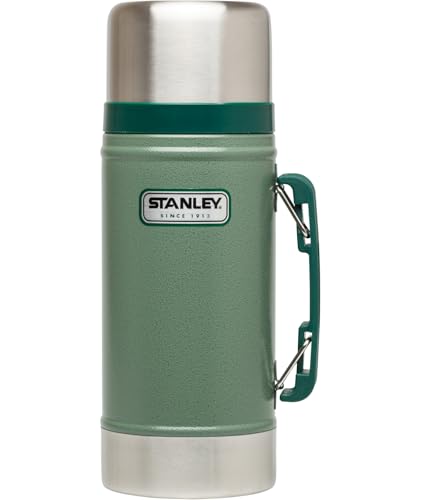
Stanley Classic Legendary Food Jar
In this roundup, the rugged work-site classic, a heavy-gauge stainless jar with a chunky lid that doubles as a small bowl and a handle built for gloved hands on many versions. Judged on the field’s shared standards, its case rests on how well its particular emphases match a particular lunch: how its mouth handles a ladle and a brush, how its lid behaves in a tipped bag, how its gasket fares after a month of tomato soup, and whether its size tier matches the portions its intended eater actually eats. Designs in this category rarely fail outright; they mismatch. A jar that disappoints a site worker may delight a schoolchild, and the same jar praised for a generous mouth may be criticised for the bag space that mouth demands. Read each design here as an answer to a specific lunch, and the field sorts itself.
Hydro Flask Insulated Food Jar
In this roundup, the colourful modern option, a powder-coated stainless jar with a leak-resistant insulated lid, sized in smaller personal tiers for desk lunches and kids’ bags. Judged on the field’s shared standards, its case rests on how well its particular emphases match a particular lunch: how its mouth handles a ladle and a brush, how its lid behaves in a tipped bag, how its gasket fares after a month of tomato soup, and whether its size tier matches the portions its intended eater actually eats. Designs in this category rarely fail outright; they mismatch. A jar that disappoints a site worker may delight a schoolchild, and the same jar praised for a generous mouth may be criticised for the bag space that mouth demands. Read each design here as an answer to a specific lunch, and the field sorts itself.
Zojirushi Stainless Steel Food Jar
In this roundup, the refined commuter pick, a slim stainless jar with a tight-sealing lid, a wide mouth for easy filling, and a reputation for gentle, even temperature holding. Judged on the field’s shared standards, its case rests on how well its particular emphases match a particular lunch: how its mouth handles a ladle and a brush, how its lid behaves in a tipped bag, how its gasket fares after a month of tomato soup, and whether its size tier matches the portions its intended eater actually eats. Designs in this category rarely fail outright; they mismatch. A jar that disappoints a site worker may delight a schoolchild, and the same jar praised for a generous mouth may be criticised for the bag space that mouth demands. Read each design here as an answer to a specific lunch, and the field sorts itself.
Thermos FUNtainer Food Jar
In this roundup, the kids’ lunchbox staple, a smaller stainless jar in bright colours and licensed designs, light enough for small hands and short school mornings. Judged on the field’s shared standards, its case rests on how well its particular emphases match a particular lunch: how its mouth handles a ladle and a brush, how its lid behaves in a tipped bag, how its gasket fares after a month of tomato soup, and whether its size tier matches the portions its intended eater actually eats. Designs in this category rarely fail outright; they mismatch. A jar that disappoints a site worker may delight a schoolchild, and the same jar praised for a generous mouth may be criticised for the bag space that mouth demands. Read each design here as an answer to a specific lunch, and the field sorts itself.
Bentgo Insulated Food Jar
In this roundup, the lunch-kit system pick, a stainless jar designed to sit alongside bento-style boxes, with a built-in folding utensil on many versions and a tidy, bag-friendly shape. Judged on the field’s shared standards, its case rests on how well its particular emphases match a particular lunch: how its mouth handles a ladle and a brush, how its lid behaves in a tipped bag, how its gasket fares after a month of tomato soup, and whether its size tier matches the portions its intended eater actually eats. Designs in this category rarely fail outright; they mismatch. A jar that disappoints a site worker may delight a schoolchild, and the same jar praised for a generous mouth may be criticised for the bag space that mouth demands. Read each design here as an answer to a specific lunch, and the field sorts itself.
Performance in Real Use
Hot Food Through a Working Morning
Across designs, hot performance follows the physics rather than the branding. Full jars of soup and stew, preheated and packed at a simmer, arrive at lunch properly hot in every reputable design tested by everyday use; the gaps appear with smaller portions, drier foods and longer waits, where larger, well-sealed jars hold their advantage and small or slim jars fade sooner. Rice and pasta dishes sit in the middle: saucy and tightly packed, they travel well in any design; dry and loose, they cool in all of them. The practical lesson of the whole field is that technique is a feature, which is why owner opinions of identical jars diverge so wildly.
Cold Food, School Bags and Desk Drawers
Cold performance is more democratic. Pre-chilled, every design here keeps yoghurt, fruit and salads properly cold through a morning, and the smaller jars aimed at children perform their shorter shift perfectly well. Where designs differ is convenience: lids that small, cold fingers can grip; bodies that fit the lunchbox’s allocated corner; finishes that survive the daily bag-to-floor journey. For desk workers the calculus flips — the jar lives a gentle life, appearance and lid manners matter more, and slim or design-led jars earn their keep.
Cleaning: The Test Every Jar Eventually Faces
Ask owners a month in, and cleaning — not heat — is what they talk about. Wide mouths and removable gaskets age gracefully; narrow shoulders and fixed seals accumulate odour and resentment. Tomato, curry and garlic are the field’s stress test, and the designs that pass it share a pattern: steel that rinses clean, a gasket that pops out for its own wash, and a lid without decorative crevices. Any design can survive a week; the roundup standard is whether it is still pleasant in month six.
Strengths and Trade-Offs of the Field
Strengths
- Genuine choice: a design exists for the site, the school run, the commute and the desk.
- Mature, proven technology — vacuum steel jars are durable, repairable in the small (gaskets, lids) and free of electronics.
- Every design doubles for hot and cold, which few lunch products can claim.
Trade-offs
- No design escapes the ritual: preheat, fill fully, pack at temperature, or accept lukewarm results.
- Capacity tiers confuse buyers into oversizing, the commonest cause of disappointment.
- Lid and gasket quality, the parts that matter most, are the hardest to judge from a product page.
How the Designs Compare
Think of the field as a triangle. At one corner sits capacity and heat endurance, the classic and rugged jars. At another sits portability and polish, the slim and lifestyle jars. At the third sits lightness and price gentleness, the kids’ jars. Every design leans toward a corner, and the shopper’s job is simply to stand in the right corner first. Comparisons that ignore this — ranking a child’s jar against a site jar on heat alone — produce confident nonsense. Compare within your corner, then check the gasket, the mouth and the lid, in that order.
Who Each Design Suits
Site and outdoor workers should start with the rugged corner: handles, bowl-lids and steel that shrugs off drops. Commuters with laptop bags should start slim, where the seal’s reputation matters more than capacity. Desk workers and students can choose on looks and lid manners, since their jars live gently. Parents should size honestly for a child’s portion and grip, and should value a lid a child can open alone over an extra hour of theoretical heat. Soup devotees of any kind should go wide-mouth and generous; yoghurt-and-fruit people can go smaller and prettier.
Setup, Care and Maintenance Essentials
Food safety with any insulated jar is qualitative common sense rather than a numbers game. Preheat the jar with hot water before filling it with hot food, so the steel gives its warmth to the meal instead of taking warmth from it. Fill hot food steaming hot, seal promptly, and eat it while it is still properly hot rather than after a long, lukewarm wait; perishable food should not sit at room temperature for long stretches, and leftovers that have cooled into the in-between zone are safer discarded than saved. Chill cold foods thoroughly before packing them into a pre-chilled jar. Wash the gasket, lid threads and mouth after every use, let every part dry fully before reassembly, and retire a jar whose seal smells stale even after washing, because trapped residue in a gasket is where odours and bacteria quietly live.
Care is simple but not optional. Wash the jar the same day you use it, because dried soup film in the threads is far harder to shift than a fresh rinse. Most stainless bodies prefer hand washing even when a listing suggests otherwise, since harsh dishwasher cycles dull powder coatings and stress vacuum seals over time. A soft bottle brush reaches the shoulder of wide-mouth jars, a paste of baking soda lifts tea and tomato staining, and a periodic soak with warm water and a little white vinegar clears lingering smells. Dry upside down with the lid off, store with the lid loose so air circulates, and check the silicone gasket monthly for cracks, flattening or mould spots hiding in its fold.
Final Verdict
Surveyed as a field, food thermoses are a solved problem sold at many levels of polish: the physics is shared, the differences are ergonomic, and the buyer’s discipline matters as much as the purchase. Choose your corner of the triangle, insist on a removable gasket and an honest size, learn the preheating ritual, and the jar you pick will almost certainly be the right one.
How These Reviews Judged the Field
Roundup reviews earn their keep by stating their criteria, so here they are. Each design in this field was judged on five everyday tests. The ladle test: can the jar be filled from a saucepan without spills and drama? The spoon test: can an adult eat a main course from it comfortably? The brush test: can the interior, shoulder and lid be cleaned with ordinary tools? The bag test: does it seal confidently enough to travel on its side? And the month-six test: do its gasket, threads and finish invite continued use or quiet avoidance? Designs that ace the first four and fail the fifth are the category’s heartbreakers, and they exist at every price tier, which is why this roundup weighs cleanability and seal design as heavily as insulation.
Insulation itself was judged with deliberate scepticism toward laboratory claims. Every maker can quote a holding time measured with boiling water in a sealed, full jar in a still room; no eater’s lunch resembles that measurement. The field was therefore judged on realistic patterns — food packed at eating temperature, in real portions, opened once at lunch — and on that realistic pattern the honest finding is convergence: reputable designs perform within a narrow band of each other, and the user’s ritual moves the result more than the choice among them. That finding is the roundup’s most useful sentence, and shoppers should let it demote heat claims and promote lid, gasket and fit in their own judging.
Owner Patterns: What Long-Term Users Actually Say
Read enough long-term owner experience across this category and themes repeat with metronome regularity. Delight clusters around three discoveries: that soup at work can be genuinely good, that a child’s yoghurt comes home eaten, and that a jar bought for winter keeps earning its shelf space in summer. Complaints cluster just as predictably: jars bought a size too large, seals that were never removed for washing until the smell announced itself, lids tightened over dirty rims and then blamed for leaking, and — the saddest pattern — excellent jars abandoned because a steel container met a microwave expectation it could never fulfil. Almost no long-term complaint concerns the vacuum failing early; the steel, it turns out, is the reliable part, and the human system around it is where the variance lives.
There is also a revealing pattern in second purchases. Owners rarely replace a jar with the same design in a different colour; they replace it with a different corner of the triangle — the site jar’s owner buys a slim commuter jar when the job changes, the parent buys a second, smaller jar when a second child starts school, the classic jar’s owner adds a kids’ jar rather than duplicating the classic. The field, in other words, is used the way this roundup recommends choosing it: as a set of specialised answers, assembled over time, rather than a single crowned winner.
The Field by Eater: A Longer Tour
For the early-shift worker, the day’s main meal may ride in the jar, and the rugged and classic designs earn their bulk honestly: handles for gloved hands, bowl-lids for yards and cabs, steel that treats a dropped bag as weather. For the train commuter, the calculus is volume and trust — the jar must disappear into a bag and never, ever weep onto a laptop — and the slim designs’ careful seals justify their smaller portions. For the student, price gentleness and looks compete with function, and the modern lifestyle jars pitch exactly there, accepting that a student morning is short and a student bag is rough in different ways than a site bag.
For parents, the field’s centre of gravity is the school morning: portions measured in child units, lids tested against child hands, weights audited against child shoulders. The kids’ designs win this eater not by insulating harder but by fitting the eater, and parents comparing them against adult jars on heat specifications alone are reading the wrong chart. For the desk worker, finally, the jar is tableware as much as transport: lid manners, quiet opening, a mouth that eats like a bowl, and a finish that looks at home beside a keyboard. That five very different eaters can all be served by one product category is the field’s real strength — and the reason blanket rankings of it mislead.
Durability and the Parts That Wear
A food thermos has exactly three wear items: the gasket, the lid’s moving or sealing details where present, and the vacuum itself. Gaskets age by flattening, cracking and absorbing odour; they are the spark plugs of the category, cheap in principle and decisive in practice, and a design whose maker sells replacement seals is a design planning to be owned for years. Lids wear at threads and hinges; smooth, coarse threads age best. The vacuum fails rarely and suddenly, usually after a drop, and announces itself through a warm exterior and fast-cooling contents. Everything else — the steel body, the finish, the base — ages cosmetically. A shopper weighing two finalists should ask one unfashionable question: in year three, which of these can I still get a gasket for? The answer predicts satisfaction better than any feature list.
Side-by-Side Habits: A Morning With Three Corners of the Field
Abstract comparison sharpens when it is forced through one kitchen on one morning. Imagine three lunches packed at the same counter: a stew for a site worker, a soup for a commuter, and yoghurt with fruit for a seven-year-old. The rugged jar takes the stew without discussion — filled by ladle, sealed by a gloved-hand-friendly lid, heavy in the hand in a way that reads as reassurance. The slim jar takes the soup, disappearing into a work bag’s profile, its seal checked twice because a laptop is its travelling companion. The kids’ jar takes the yoghurt, pre-chilled, filled by small hands under supervision, light enough to be carried by its owner without negotiation. Now swap the lunches among the jars and feel the field’s logic invert: the stew overwhelms the slim jar’s portion, the soup portion rattles in the rugged jar’s generosity, and the yoghurt in either adult jar makes a child’s lunch feel like borrowed equipment. No jar failed in the swap; the lunches simply stopped fitting. That is the roundup’s thesis performed rather than stated.
What the Numbers on Listings Do and Do Not Tell You
Listings compete on three numbers: capacity, holding time and weight. Capacity is honest but must be read against your measured portion, as this roundup keeps insisting. Weight is honest and underrated — weigh your current lunch setup and feel the candidate’s addition in that context rather than in the abstract. Holding time is the problematic one, measured under conditions engineered to flatter: boiling water, a full jar, a still room, no opening. Translate it by asking what it implies for your food, your fill and your morning, and you will usually land at the same conclusion this roundup reached — that reputable designs cluster closely, and that the spread of real-world results within one design, driven by ritual, is wider than the spread between designs driven by engineering. Buy the number you can verify, which is capacity; verify the rest yourself in the first week, while the returns window stands open like a safety net.
Finishes, Colours and the Psychology of Daily Objects
A roundup that ignored appearance would be lying about how objects get used. A jar chosen with pleasure gets packed with pleasure; a jar bought resentfully in the wrong colour lives in the cupboard’s shadow. The modern designs understand this and sell colour and finish as features, and within limits they are right to. The caution is sequence: appearance should break ties among designs that already fit, never promote a misfit. The classic finishes age into patina, the bright coatings risk chips that read as damage rather than character, and children’s designs face the hardest brief of all — exciting in September, survivable in June, and not so babyish by spring that the owner stages a protest. None of this is frivolous. Daily objects earn their keep through affection as much as engineering, and the field’s variety of finishes is a genuine, if secondary, strength.
The Roundup’s Buying Order of Operations
Compressing this entire survey into a sequence: name the eater, measure the portion, choose the corner of the triangle, inspect the gasket, test the lid against the eater’s hands, check the finish against the life it will live, and only then compare prices among the survivors. Each step discards designs for cause, so the final comparison is among two or three jars that would all serve — at which point any of them is the right answer and the shopper can stop researching and start lunching. The field’s depth, which looks like complexity from outside, is really just the category offering a fitted answer to every kind of lunch; the order of operations is how a buyer collects theirs.
Two Weeks, Six Designs: Rotation Notes
Rotating the field through one household’s fortnight produced the kind of small, decisive observations that specifications never capture. The classic jar was reached for most often, not because it won any single day outright but because it never lost one badly — the all-rounder’s quiet superpower. The rugged jar owned the weekend: a fishing morning and a allotment afternoon, where its handle and bowl-lid stopped being features and became simply how lunch worked. The slim jar owned the train days, and twice earned a specific gratitude no other design received, when a tipped bag was opened with held breath and found dry. The design-led jar owned the desk days, where its manners and looks are not vanity but fit. The kids’ jar owned the school run completely, and the lunch-kit jar proved its system logic on the days when the whole lunch — jar, box, bottle — packed like a solved puzzle. A household does not need all six; the fortnight’s lesson is that it needs the one or two whose owned days match its own calendar.
Failure Stories and What They Teach the Field
Every design family in this roundup has a characteristic failure story, and the stories are more instructive than the successes. The classic jar’s story is the half-filled Monday: a small portion, a big jar, a lukewarm verdict, and an owner who blames steel for a sizing decision. The rugged jar’s story is the over-tightened lid, closed with site-worker enthusiasm over a dirty rim, weeping slowly into a bag. The slim jar’s story is the forgotten wash — narrow, elegant, and quietly accumulating odour in a seal its owner did not know removed. The kids’ jar’s story is the September-to-June arc, loved at seven, negotiated at eight, as appetites and dignity both grow. None of these stories ends with the vacuum failing or the steel giving up; all of them end with a habit. A roundup that reports this honestly is telling the shopper where to spend their attention after purchase, which is worth more than another decimal of laboratory heat retention.
The Field’s Price Tiers, Translated
Without printing a single price, the field’s tiers still deserve translation, because buyers feel them. The gentle tier buys sound steel and simple lids, and asks the owner to supply the discipline — a fair trade for organised households and the tier where most children’s jars happily live. The mid tier buys better seals, smoother threads, finishes that age gracefully and the confidence of long-running designs; it is where this roundup’s centre of gravity sits, and where most households should shop first. The premium tier buys refinement — the silkiest lids, the most considered seals, design as a genuine feature — and rewards eaters who use a jar twice daily and notice such things at every use. What no tier buys is exemption from physics: a premium jar half-filled still cools, and a gentle-tier jar properly used still delights. Tiers buy polish and fit, never magic.
The Field’s Menu: One Week, Six Designs
A menu is the fastest way to feel what a week of jar lunches actually looks like, so here is one built from the foods this category flatters. Monday: a lentil and tomato soup, packed at a simmer, with the bread travelling outside the jar where bread belongs. Tuesday: overnight oats from the chilled jar, eaten at a desk with fruit added fresh. Wednesday: a chicken curry with rice stirred through its sauce, the jar filled completely so the rice rides in warmth rather than in air. Thursday: yoghurt, berries and a separate small pot of granola, the crunch preserved by geography. Friday: the week’s leftover stew, reheated properly, packed proudly — the lunch that makes the whole system feel clever. The weekend jar rests, gets its deep wash, and dries with its lid off. Notice what the menu never asks of the jar: nothing crisp, nothing dry, nothing reheated. A menu written inside the category’s strengths is the quiet secret behind every satisfied owner this cluster has described.
Assign the menu across the field and the roundup’s triangle reappears at the table: the classic and rugged jars queue for Monday, Wednesday and Friday; the design-led and slim jars take Tuesday’s desk oats gracefully; the kids’ jar claims Thursday for its rightful owner; the lunch-kit jar wants the whole week organised around it. The menu does not care about badges. It cares about fit, fullness and temperature — which is to say, it judges exactly as this roundup has judged.
Travel and Days Out: The Field on the Move
Travel widens the jar’s brief in ways worth a section of their own. On trains and in cars, a sealed jar is the rare hot meal that asks for no facilities and leaves no smell crime scene behind it, provided the rim was wiped and the seal respected. On walking days and site visits, the jar’s meal is the difference between a planned lunch and whatever a petrol station offers. For parents, travel is where the cold mode earns a second income: yoghurt and fruit held properly chilled through a long drive end the service-station sugar negotiation before it starts. The travel cautions are the usual ones, sharpened: test the seal at home before trusting it to a moving bag, pack the jar upright where the vehicle allows, and treat journey food with the same temperature discipline as work food — hot means properly hot at packing, cold means properly chilled, and a very long day is a reason to eat earlier rather than to hope harder.
What Reviewers Get Wrong About This Category
Roundups of food thermoses, this one included, must resist three temptations. The first is ranking by laboratory heat claims, which crowns whichever maker tests most creatively and tells the shopper almost nothing about their lunch. The second is reviewing the jar and ignoring the ritual, as if a car’s reviewer never mentioned fuel. The third is scoring a child’s jar on an adult’s rubric and an adult’s jar on a child’s, producing confident verdicts about products that were never rivals. The field is best served — and so is the shopper — by the duller virtues practised here: name the eater, state the criteria, report the convergence honestly, and let fit do the ranking. Any review that ends with one winner for every lunch has not reviewed the field; it has merely pointed at it.
If This Roundup Had to Stock One Shelf
Imagine a small shop allowed to stock exactly three jars from this field, chosen to serve the widest honest range of lunches. The first shelf slot goes to the classic wide-mouth design, because it covers the centre of the market — adult hot mains — better than any other single pattern. The second goes to a slim, carefully sealed commuter jar, because the bag-carrying lunch is the field’s second great population and its needs are genuinely different. The third goes to a small, light, child-openable jar, because no adult design, however discounted, serves a seven-year-old properly. The rugged and design-led and system jars would be missed — by the site worker, the desk aesthete and the lunch-kit household respectively — and their absence proves the roundup’s recurring point from the opposite direction: three jars can serve most lunches, but the field’s full variety exists because ‘most’ is not ‘all’, and the remaining eaters are not edge cases to themselves.
A Note on Reviewing Without Laboratory Theatre
This roundup has deliberately avoided the laboratory theatre that decorates much category coverage — no improbable probe rigs, no decimal-point verdicts on equipment no reader owns. The omission is principled. A food thermos is bought for a lunch, judged at a lunch, and kept or abandoned because of lunches, so its reviews should be written in the units lunches are measured in: portions, mornings, bags, appetites and washes. Readers who want a single number to obey will find this survey unsatisfying, and that dissatisfaction is the correct response to a category where the honest finding is fit. The field’s designs are good — genuinely, variously good — and the work of choosing among them belongs, in the end, to the person who knows what is for lunch.
Soup Weather Across the Field
Cold-season weeks sort the field more honestly than any laboratory. The rugged jar becomes a site institution, refilled at dawn and opened at noon like a small ceremony. The classic jar carries the office through soup season on sheer all-round competence. The slim jar’s shorter window matters least in winter, because winter lunches are eaten promptly and hot food in a cold bag loses its race more slowly. The kids’ jar performs its finest work of the year, sending warm pasta into classrooms where the alternative is a sandwich eaten in a coat. And the design-led jars discover that a steaming lunch forgives many aesthetic compromises — nobody at a cold desk has ever wished their jar were prettier instead of hotter. A roundup written in July might rank the field by polish; a roundup honest about the calendar knows the field is bought in autumn and judged in February.
The seasonal lens also corrects a common misreading of owner enthusiasm. Reviews of these jars spike with praise in the cold months and with criticism in the warm ones, and the swing is usually blamed on the products. It belongs to the use: winter asks the hardest question — keep this hot, for hours, in the cold — and summer asks the easiest. A design judged in its hard season and bought for its easy one will delight; the reverse arrangement manufactures disappointment out of thin air. Shoppers reading owner opinion should therefore weight the February voices most heavily, because February is when the field tells the truth about itself.
The Roundup’s Closing Note
Fields like this one reward the shopper who reads surveys as maps rather than as podiums. Every design in this roundup is somebody’s correct answer, defended daily at a lunch table somewhere, and every one is somebody else’s cupboard resident for reasons of fit that no ranking could have foreseen. Use the map — eater, portion, corner, gasket — and the territory will make sense quickly. The lunches, after all, were never waiting for a winner. They were waiting for a match.
One practical postscript: whichever design a reader chooses from this field, the first week should be treated as the second half of the purchase — sink test, flagship food, cold test, cleaning audit — because a roundup can narrow the field but only a household’s own lunches can finish the review. Finish it while exchanges are easy, and the jar that remains will remain for years.
One Last Field Note
Surveys end, lunches continue. The field documented here will gain colours, lose models and refine its lids, but its shape — three corners, one physics, a gasket at the heart of every verdict — will outlast the model years, because it is drawn by eaters rather than by makers. Read any future roundup, including updates to this one, with the same questions in hand, and the field will never be able to confuse you for long.
Filed with the roundup’s papers, then, goes a single recommendation that survives every caveat in it: choose by eater, verify by week, and judge by lunch. The field will take care of the rest.
The field, surveyed whole, is in good health — and so, with the right match made, is lunch.
the in-depth food thermos review
food thermos pros and cons in full
how to choose a food thermos step by step
practical storage baskets for the pantry shelf
vacuum storage bags for bulky kitchen linens
water coolers sized for camping trips
sports water coolers for kids’ teams
A Closer Look: What to Inspect on a Food Thermos Before You Commit
Listings present a food thermos at its best, so this section slows the assessment down and looks at the evidence an individual model offers: its construction, its finish, its listing detail and the checks you can run before and just after it arrives. The aim is a verdict based on inspection rather than impression.
Start With Your Space and Your Routine
Where the food thermos meets the floor, the wall or another surface, check what protects both sides, because scuffs and marks in those contact zones are the most common early complaint. If the food thermos will be seen every day, its proportions matter as much as its function, so hold the listing dimensions up against a familiar piece nearby to judge the visual weight honestly. A return is easiest when you have kept the packaging until you are sure, so give the food thermos a fair trial period in its real position before you break down boxes and dispose of padding. If a part of the food thermos can be replaced, refreshed or re-covered separately, that option can extend its useful life well beyond the point where a sealed design would be thrown out.
When you examine a food thermos in detail, work from the largest element to the smallest, checking overall proportions first, then construction, then finish, and only then the small features sellers emphasise. Seasonal checks suit most Food Storage & Organization items well, so tie a quick inspection of the food thermos to a job you already do, such as changing clocks or clearing gutters. Apply the same checks to each shortlisted example, whether that is the Zojirushi Stainless Steel Food Jar; the Stanley Classic Legendary Food Jar; the Bentgo Insulated Food Jar, because consistent testing is what makes the differences between models visible. The best food thermos for a rented home may differ from the best for an owned one, because fixings, marks and alterations carry different consequences in each case.
Look for the detail photographs in the listing, not just the wide shots, and zoom in on edges, joints, fasteners, controls and finishes, which is where build quality usually shows itself first. Photograph the food thermos as delivered, before assembly or first use, so that any later question about condition, parts or finish can be answered from evidence rather than memory. Equally, list what your old food thermos did well, because replacements sometimes quietly lose a virtue you relied on, such as a size, a shape or a simplicity the new model has redesigned away. Read the listing for what it does not say as carefully as for what it does, because missing information about materials, assembly or care is itself a useful signal when you compare food thermos options.
When Small Problems Appear
If you shop with someone else, agree the must-haves together before looking, so that the food thermos you choose is a shared decision rather than one person’s compromise discovered later. A single food thermos can be well made and still wrong for your home, so keep two verdicts separate as you assess it: the quality verdict and the fit-for-your-life verdict. Do not let a single impressive feature distract you from a basic mismatch in size, capacity or care needs, since basics decide satisfaction long after features stop being novel. Start by writing down the job the food thermos has to do in your home, in one plain sentence, before you look at another listing, because a clear job statement turns a long shortlist into a short one.
Think about the season in which the food thermos will work hardest, and judge it against that season rather than the mild week in which you happen to be shopping. Storage is part of ownership, so decide now where the food thermos, its accessories and its seasonal extras will go when they are not in use, and measure that space too. Think about the end of the food thermos’s life with you as well, including whether it could move to another room, be passed on, or be stored without damage when your needs change. Take a photograph of the space before you order and mark the intended position of the food thermos on it, then revisit that photo whenever a listing tempts you toward a larger or different style.
If the food thermos needs assembly, read the instruction preview if one is offered, count the steps honestly against the time you have, and check whether a second pair of hands is recommended.
A Short Decision Checklist
- Delivery path, from the door to the final position
- The one feature you will not compromise on
- Packaging kept until the food thermos has passed its first trial in place
- What your current arrangement does badly that the food thermos must fix
- Assembly needs, tools required and whether help is needed
- Who will use the food thermos most, and any limits they have
- The measured space, including clearance to use and clean around the food thermos
- The material and finish, matched to light, moisture and wear in its spot
Taken together, these checks take only a little time, yet they answer the questions that decide whether the food thermos suits your home, your household and your routine, and they do so before money changes hands rather than after.
Frequently Asked Questions
Which food thermos is best overall?
The best overall is the one matched to your lunch: a classic wide-mouth jar for adult hot mains, a slim jar for commuting, a small light jar for a child. Fit beats ranking in this category every time.
Do expensive food thermoses keep food hotter?
Better lids and seals help at the margins, but preheating, filling fully and packing food hot move the result far more than price tier does. Spend on the gasket and the fit, not on promises.
Can one jar serve both a parent and a child?
It can, but portions argue otherwise: a child-sized portion rattling in an adult jar cools fast. If the jar will serve a child daily, size it for the child and fill it fully.
How long should a good food thermos last?
The steel body should last for years. Gaskets are the consumable — expect to wash them diligently and replace them when they crack, flatten or hold odours despite cleaning.
Are food thermoses leakproof enough for a school bag?
A well-sealed jar closed on a clean, dry rim travels on its side without leaking. Wipe the rim before closing, check the gasket is seated, and test a new jar over the sink before trusting it to a bag.
What is the difference between a food jar and a drinks flask?
Mouth width and purpose: a food jar is short and wide for ladling, eating and scrubbing; a drinks flask is tall and narrow for pouring. Each does the other’s job badly, so buy for the contents.


