Disclosure: As an Amazon Associate, dailyhomedecorating.com earns from qualifying purchases. Links on this page are affiliate links; they cost you nothing extra. Prices and availability change often, so check the current Amazon listing before you buy.
This food thermos buying guide is for the shopper standing in front of a wall of steel jars wondering which differences are real. A food thermos is a simple product with a short list of things that genuinely matter — capacity tier, mouth width, lid and gasket design, and the match between the jar and the person eating — wrapped in a long list of things that do not. This guide walks the short list properly, surveys the main types, puts named picks on the table with honest badges, and finishes with the setup and care habits that decide whether any jar, cheap or premium, actually performs.
Key Takeaways
- Size for the eater and fill the jar fully — the most important buying decision is capacity.
- Insist on a removable, washable gasket; it decides how the jar ages.
- Wide mouths for soups and stews; slim jars for bags; small jars for children.
- No jar performs without the ritual: preheat for hot food, pre-chill for cold.
In this guide
What a Food Thermos Does and the Main Types
Classic Wide-Mouth Jars
The classic pattern: a generous stainless vacuum jar with a mouth wide enough for a ladle, a spoon and a scrubbing brush. These are the all-rounders for adult main courses — soup, stew, curry, chilli — and the safest first purchase for a household new to hot packed lunches. Their trade-off is bulk: the mouth that makes them liveable also makes them the largest thing in the lunch bag.
Rugged and Site Jars
Built for work rather than desks, rugged jars add heavier steel, handles sized for gloves, and lids that double as serving bowls. They suit vans, sites, fishing trips and anywhere a jar gets knocked, dropped and opened with cold hands. The trade-off is weight and a utilitarian look that not every office wants at noon.
Slim Commuter Jars
Slim jars trade capacity for profile, sliding into the side of a work bag without dominating it. Japanese makers in particular refine this type: tidy seals, smooth threads and a footprint a laptop can live beside. They suit moderate portions and shorter mornings, and they punish oversizing mistakes less because their portions are honest to begin with.
Kids’ Jars
Kids’ jars shrink the format to a child’s portion and grip, lighten the body, and add the colours that make a lunchbox feel personal. Their holding window is shorter by design because a school morning is short. The features that matter are a lid a child can open unaided and a body light enough that the jar comes home instead of being quietly abandoned as too heavy.
Top Picks at a Glance
Best Overall: Thermos Stainless King Food Jar
Badge: Best Overall. This pick is the long-running family-size benchmark, a wide-mouth stainless vacuum jar sold in a generous capacity tier with a folding spoon stored in the lid on many versions. It sits in the mid tier of the category, and it earns its badge on fit rather than on any single specification: the eater it suits will feel the match daily, in the mouth width, the lid manners and the size of the portion it asks for. Check price on Amazon once you have confirmed the size tier against a real portion in your kitchen.

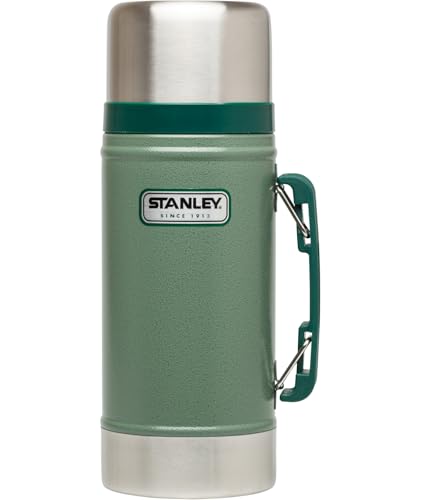
Best for Work Sites: Stanley Classic Legendary Food Jar
Badge: Best for Work Sites. This pick is the rugged work-site classic, a heavy-gauge stainless jar with a chunky lid that doubles as a small bowl and a handle built for gloved hands on many versions. It sits in the mid tier of the category, and it earns its badge on fit rather than on any single specification: the eater it suits will feel the match daily, in the mouth width, the lid manners and the size of the portion it asks for. Check price on Amazon once you have confirmed the size tier against a real portion in your kitchen.
Best for Desks and Bags: Hydro Flask Insulated Food Jar
Badge: Best for Desks and Bags. This pick is the colourful modern option, a powder-coated stainless jar with a leak-resistant insulated lid, sized in smaller personal tiers for desk lunches and kids’ bags. It sits in the premium tier of the category, and it earns its badge on fit rather than on any single specification: the eater it suits will feel the match daily, in the mouth width, the lid manners and the size of the portion it asks for. Check price on Amazon once you have confirmed the size tier against a real portion in your kitchen.
Best for Careful Seals: Zojirushi Stainless Steel Food Jar
Badge: Best for Careful Seals. This pick is the refined commuter pick, a slim stainless jar with a tight-sealing lid, a wide mouth for easy filling, and a reputation for gentle, even temperature holding. It sits in the premium tier of the category, and it earns its badge on fit rather than on any single specification: the eater it suits will feel the match daily, in the mouth width, the lid manners and the size of the portion it asks for. Check price on Amazon once you have confirmed the size tier against a real portion in your kitchen.
Best for Kids: Thermos FUNtainer Food Jar
Badge: Best for Kids. This pick is the kids’ lunchbox staple, a smaller stainless jar in bright colours and licensed designs, light enough for small hands and short school mornings. It sits in the mid tier of the category, and it earns its badge on fit rather than on any single specification: the eater it suits will feel the match daily, in the mouth width, the lid manners and the size of the portion it asks for. Check price on Amazon once you have confirmed the size tier against a real portion in your kitchen.
Best Lunch-Kit Partner: Bentgo Insulated Food Jar
Badge: Best Lunch-Kit Partner. This pick is the lunch-kit system pick, a stainless jar designed to sit alongside bento-style boxes, with a built-in folding utensil on many versions and a tidy, bag-friendly shape. It sits in the mid tier of the category, and it earns its badge on fit rather than on any single specification: the eater it suits will feel the match daily, in the mouth width, the lid manners and the size of the portion it asks for. Check price on Amazon once you have confirmed the size tier against a real portion in your kitchen.
How Much Capacity Do You Need?
Capacity is the decision buyers get wrong most, and they get it wrong upward. A jar should be filled nearly full to perform, so its size should mirror a real portion: weigh or eyeball the soup, stew or yoghurt your eater actually eats, and buy the tier that portion fills. A child’s jar should hold a child’s lunch, not a parent’s optimism. Adults eating a main course want the generous tiers; adults packing a side, a snack or a modest desk portion are better served by the smaller ones. When torn between two tiers, choose the smaller and fill it properly — a full small jar beats a half-full large one on temperature every single day.
How Wide Should the Mouth Be?
Mouth width decides three things: what food fits, whether you can eat from the jar comfortably, and whether you can clean it properly. Soups, stews and chunky food want the widest mouths. Yoghurt, fruit and smooth food forgive narrower ones. If the jar will be eaten from directly — at a desk, on a site, in a car — width is comfort; if food will be tipped into a bowl at home or work, width matters less. Test the idea against your own kitchen: your ladle, your spoon and your bottle brush should all fit the mouth you buy.
What Makes a Lid Trustworthy?
A trustworthy lid seals on a removable silicone gasket, closes with a smooth cushioned stop, and opens without heroics even when hot contents have pulled a vacuum — some designs add a vent or pressure-release detail for exactly this. Lids that double as bowls earn their complexity on sites and trains. Folding spoons in lids are a genuine convenience for children and desk lunches. What to avoid: fixed gaskets you cannot wash behind, decorative grooves that trap food, and threads that feel gritty from new. The lid is where cheap jars confess.
How Much Does Heat Retention Really Vary?
Less than marketing implies, and more through your hands than the factory’s. All vacuum steel jars share the same physics; the variables that move your lunch’s temperature are preheating, fill level, food type and how often the lid opens. Buy for fit, seal quality and cleanability, learn the ritual, and retention takes care of itself. Treat any promise of extreme holding times as a laboratory number measured with boiling water in a full jar — interesting, and almost unrelated to a half portion of pasta at noon.
How to Prioritise by Use Case
The soup commuter should prioritise mouth width and seal confidence, in that order, and choose a generous classic or slim jar accordingly. The site worker should prioritise toughness, a handle and a bowl-lid, accepting weight as the price of a jar that survives the van. The parent packing school lunches should prioritise a child-openable lid, honest small capacity and lightness, for hot and cold food alike. The desk worker can prioritise looks and lid manners, since the jar’s life is gentle and its morning is short. Notice that no profile prioritises headline heat claims — that is the guide’s central lesson in one paragraph.
Mini Reviews: The Picks in Detail
Thermos Stainless King Food Jar
This pick is the long-running family-size benchmark, a wide-mouth stainless vacuum jar sold in a generous capacity tier with a folding spoon stored in the lid on many versions. Best for: the eater whose portion, bag and habits match its emphases. Not suited for: anyone asking it to be a different kind of jar — larger, lighter or more rugged than it is. Its strengths are the daily ones: a mouth that suits its food, a lid that seals without drama, and a gasket that can be kept honestly clean. Its trade-off is the mirror of its badge: specialisation always costs generality, and this jar spends its design budget on its chosen eater rather than on everyone.
Stanley Classic Legendary Food Jar
This pick is the rugged work-site classic, a heavy-gauge stainless jar with a chunky lid that doubles as a small bowl and a handle built for gloved hands on many versions. Best for: the eater whose portion, bag and habits match its emphases. Not suited for: anyone asking it to be a different kind of jar — larger, lighter or more rugged than it is. Its strengths are the daily ones: a mouth that suits its food, a lid that seals without drama, and a gasket that can be kept honestly clean. Its trade-off is the mirror of its badge: specialisation always costs generality, and this jar spends its design budget on its chosen eater rather than on everyone.
Hydro Flask Insulated Food Jar
This pick is the colourful modern option, a powder-coated stainless jar with a leak-resistant insulated lid, sized in smaller personal tiers for desk lunches and kids’ bags. Best for: the eater whose portion, bag and habits match its emphases. Not suited for: anyone asking it to be a different kind of jar — larger, lighter or more rugged than it is. Its strengths are the daily ones: a mouth that suits its food, a lid that seals without drama, and a gasket that can be kept honestly clean. Its trade-off is the mirror of its badge: specialisation always costs generality, and this jar spends its design budget on its chosen eater rather than on everyone.
Zojirushi Stainless Steel Food Jar
This pick is the refined commuter pick, a slim stainless jar with a tight-sealing lid, a wide mouth for easy filling, and a reputation for gentle, even temperature holding. Best for: the eater whose portion, bag and habits match its emphases. Not suited for: anyone asking it to be a different kind of jar — larger, lighter or more rugged than it is. Its strengths are the daily ones: a mouth that suits its food, a lid that seals without drama, and a gasket that can be kept honestly clean. Its trade-off is the mirror of its badge: specialisation always costs generality, and this jar spends its design budget on its chosen eater rather than on everyone.
Thermos FUNtainer Food Jar
This pick is the kids’ lunchbox staple, a smaller stainless jar in bright colours and licensed designs, light enough for small hands and short school mornings. Best for: the eater whose portion, bag and habits match its emphases. Not suited for: anyone asking it to be a different kind of jar — larger, lighter or more rugged than it is. Its strengths are the daily ones: a mouth that suits its food, a lid that seals without drama, and a gasket that can be kept honestly clean. Its trade-off is the mirror of its badge: specialisation always costs generality, and this jar spends its design budget on its chosen eater rather than on everyone.
Bentgo Insulated Food Jar
This pick is the lunch-kit system pick, a stainless jar designed to sit alongside bento-style boxes, with a built-in folding utensil on many versions and a tidy, bag-friendly shape. Best for: the eater whose portion, bag and habits match its emphases. Not suited for: anyone asking it to be a different kind of jar — larger, lighter or more rugged than it is. Its strengths are the daily ones: a mouth that suits its food, a lid that seals without drama, and a gasket that can be kept honestly clean. Its trade-off is the mirror of its badge: specialisation always costs generality, and this jar spends its design budget on its chosen eater rather than on everyone.
First Setup and Care Essentials
Food safety with any insulated jar is qualitative common sense rather than a numbers game. Preheat the jar with hot water before filling it with hot food, so the steel gives its warmth to the meal instead of taking warmth from it. Fill hot food steaming hot, seal promptly, and eat it while it is still properly hot rather than after a long, lukewarm wait; perishable food should not sit at room temperature for long stretches, and leftovers that have cooled into the in-between zone are safer discarded than saved. Chill cold foods thoroughly before packing them into a pre-chilled jar. Wash the gasket, lid threads and mouth after every use, let every part dry fully before reassembly, and retire a jar whose seal smells stale even after washing, because trapped residue in a gasket is where odours and bacteria quietly live.
Care is simple but not optional. Wash the jar the same day you use it, because dried soup film in the threads is far harder to shift than a fresh rinse. Most stainless bodies prefer hand washing even when a listing suggests otherwise, since harsh dishwasher cycles dull powder coatings and stress vacuum seals over time. A soft bottle brush reaches the shoulder of wide-mouth jars, a paste of baking soda lifts tea and tomato staining, and a periodic soak with warm water and a little white vinegar clears lingering smells. Dry upside down with the lid off, store with the lid loose so air circulates, and check the silicone gasket monthly for cracks, flattening or mould spots hiding in its fold.
Mistakes to Avoid
The five classic mistakes: buying a tier too large and underfilling it; skipping the preheat and blaming the jar; packing food merely warm instead of properly hot; closing the lid over a dirty rim and blaming the seal for the leak; and letting the gasket go unwashed until the jar smells of every lunch it has ever carried. Each is a habit, not a purchase, which is good news — habits can change the day you finish this guide. A sixth deserves mention: putting a steel jar in a microwave or leaving it on a hob to reheat. The jar is a keeper of temperature, never a maker of it.
Reading a Product Listing Like an Inspector
A food thermos listing contains perhaps four facts that matter and a page of atmosphere. Extract them in this order. First, the capacity tier and the jar’s external dimensions, checked against the eater’s portion and the bag it will ride in. Second, the gasket: does the listing or its photographs show a removable seal, and does the maker offer replacements? Third, the mouth width, checked against your ladle, spoon and brush rather than against adjectives. Fourth, the care instructions, which quietly reveal the maker’s honesty — hand-wash guidance and gasket-removal instructions signal a product designed to be owned, while silence on care signals a product designed to be photographed. Everything else on the page, from lifestyle scenes to extreme holding claims, is atmosphere, and atmosphere has never kept soup hot.
Holding claims deserve a buyer’s translation rule. A claim measured with boiling water describes the jar’s ceiling under laboratory conditions; your lunch lives several floors below it. Halve the drama mentally, then ask the questions that actually predict your result: will I preheat, will the jar be full, is my food wet and dense, and how long is my morning really? Buyers who run that checklist stop needing the claim at all, which is the healthiest relationship to have with it.
Materials, Finishes and What They Mean at the Sink
Inside, every serious jar is stainless steel, and the interior questions are about smoothness and seams: a smooth, gently shouldered interior rinses clean and gives residue nowhere to hide, while sharp internal corners and rough welds collect the films that become odours. Outside, the finish is a lifestyle decision with practical edges. Brushed steel hides scratches and suits buyers who find wear honest. Powder coatings add colour and grip, please children and desk workers, and ask in return for gentler handling, since a hard knock can chip them. Classic coated finishes in the work-jar tradition are the toughest of the three and the least interested in fashion. None of these choices changes the insulation; all of them change how the jar looks and feels in year two, which is a legitimate thing to buy on once the functional boxes are ticked.
Lids in Depth: The Feature Tour Worth Taking
Spend your comparison time on lids, because lids are where jars differ in ways you will feel daily. The plain screw lid with a removable gasket is the dependable default: few parts, honest sealing, easy washing. The bowl-lid adds a serving vessel and a place to rest food mid-meal, valuable anywhere a table is not guaranteed. The spoon-lid stores a folding spoon or fork where it cannot be forgotten, a small mercy that children and desk workers feel weekly. Vented and pressure-release designs solve the hot-jar problem — vacuum and pressure making a lid stubborn at noon — and are worth seeking for long, hot mornings. What unites the good lids is boring virtue: smooth threads, a gasket you can remove, and a close that feels cushioned rather than forced. What unites the bad ones is decoration where hygiene should be.
A Shortlist Method You Can Finish Today
Here is the guide compressed into an afternoon’s method. Measure one real portion for the intended eater. Write down the food list the jar will carry and the bag it will ride in. From the types section, name your corner of the field — classic, rugged, slim or kids’. Shortlist two or three designs in that corner whose gasket removes and whose tier matches your portion. Check price on Amazon for each, read their care instructions once more, and choose the lid you would rather wash every day for three years. That last criterion sounds homely; it is, empirically, the one that decides whether the jar is still in service when the novelty has worn off, and a buying guide that ends anywhere else has not finished its job.
Seasonal Buying Notes
Food thermoses sell against the calendar in ways a buyer can use. The school-year rush tightens availability of kids’ designs in late summer, while the deepest choice across the whole field tends to appear when makers launch colours and sizes ahead of the cold season. None of this changes what to buy — the fit rules in this guide are season-proof — but a buyer with flexibility can shop the shoulder weeks, when the full range is present and the rush is not. Whenever you buy, buy the size honestly: a jar on offer in the wrong tier is not a bargain but a lukewarm lunch with a discount attached.
Matching the Jar to the Bag It Will Ride In
Buying guides talk about kitchens and forget bags, yet the bag is where a food thermos spends its working life. Audit the actual bag before choosing. A structured work tote with a flat base welcomes a classic wide jar and keeps it upright. A soft commuter backpack argues for slim, because a wide jar becomes the bag’s awkward elbow. A child’s school bag argues for the smallest honest capacity and a lid that survives being swung by a strap. A site bag or van cab argues for rugged and handled, because the jar will be fished out with gloves among tools. Even the lunch bag inside the bag matters: many households park the jar in an insulated tote for organisation, and the tote’s internal height has ended more good matches than any specification. Measure the bag as faithfully as the portion; the jar must fit both.
Buying for Children: A Dedicated Pass
Children deserve their own section in this guide because their criteria reorder the adults’ list. First comes openability: test the lid with the child’s own hands, ideally in a shop, because a jar a child cannot open is a jar whose lunch comes home untouched and whose owner feels the failure personally. Second comes weight, audited against the whole loaded bag, not the empty jar. Third comes portion honesty — children eat child portions, and a jar sized to them will be filled properly and perform. Fourth comes the gasket, because children’s jars meet yoghurt, fruit and the occasional forgotten weekend in the bag, and a removable seal is the difference between a wash and a write-off. Colours and characters come fifth and legitimately: a child who loves the jar carries it proudly and brings it home, which is a functional outcome disguised as decoration.
Buying for Workplaces: Desks, Sites and Everything Between
Workplace buying splits by what noon looks like. Desk workers should weight lid manners, quiet opening, a mouth that eats like a bowl and a finish that belongs beside a keyboard; their mornings are short and their jars live gently, so polish outranks toughness. Site, trade and outdoor workers should invert the ranking: handles, bowl-lids, heavy steel, seals that forgive being closed by tired hands. Shift workers eating at odd hours should think hardest about capacity discipline, because their ‘lunch’ may be a main meal carrying real nutritional weight. Drivers and field workers should prize one-handed practicality and leak confidence above all, since their dining room moves. The guide’s types map cleanly onto these workplaces — classic for desks that eat properly, slim for commuters, rugged for sites, and the honest buyer simply names their noon before naming a jar.
Gift Buying: The One Case Where Guessing Is Allowed
A food thermos makes a better gift than most kitchen objects because it is personal without being intimate and useful without being presumptuous — but gift buying reverses the guide’s discipline, since the giver cannot measure the recipient’s portion. The safe gift pattern is a classic mid-tier jar for an adult who packs lunch, or a kids’ design where the child and their habits are genuinely known. Include the ritual with the gift, written on the card without embarrassment: preheat it, fill it full, and it will treat you well. A gift jar with its instructions honoured becomes a daily reminder of the giver; the same jar without them risks becoming a lukewarm anecdote. Choose the finish for the recipient’s taste, the size for their likely portion, and resist the largest tier, which flatters the giver’s generosity at the expense of the recipient’s lunch.
Food Thermos Buying Guide: Putting the Whole Method Together
This food thermos buying guide has argued a sequence — eater, portion, mouth, lid, bag — and the sequence deserves one final defence against the way jars are usually bought, which is backwards: badge first, size guessed, lid unexamined, regret scheduled. The backwards method fails not because the jars are bad but because the questions were never asked in the order that eliminates error. Eater first, because every later answer depends on whose lunch it is. Portion second, because fullness is the hidden specification that decides temperature. Mouth third, because food type is fixed by your kitchen’s habits, not by the shop’s hopes. Lid fourth, because it is the part you will touch, wash and trust daily. Bag fifth, because a jar that does not travel does not work. Run forwards, the method takes ten honest minutes and produces a shortlist of two or three jars, any of which will serve. Run backwards, it produces this guide’s entire mistakes section, one purchase at a time.
Accessories and Companions Worth Considering
A jar rarely works alone, and a complete buying guide should name its companions. A long-handled spoon that lives with the jar ends the forgotten-cutlery problem more reliably than any lid-stored utensil. A slim bottle brush sized to the jar’s mouth turns the evening wash into thirty seconds. A small companion pot for toppings, dressings and granola protects the textures the jar itself cannot. A spare gasket, bought while the model is current, is the cheapest insurance in the category. And for households packing several jars, a simple labelling habit — initials on bases with a paint pen — prevents the daily portion mix-up that quietly undermines the whole sizing discipline. None of these companions is glamorous; together they are the difference between a jar that is owned and a jar that is used.
The Guide’s Final Shortlist Logic
If this guide were forced to spend a stranger’s money with only three questions answered — who eats, what food, how long a morning — it would buy a classic wide-mouth jar for the adult soup-and-stew eater, a slim sealed jar for the bag-carrying commuter, and a small light jar for the child, each with a removable gasket, each sized to a stated portion, each checked on Amazon for its current listing before purchase. It would not buy the largest tier for anyone, the narrowest mouth for anyone eating stew, or a fixed-gasket design for anyone at all. Those three refusals, more than any badge in the picks section, are the guide in miniature — and a reader who internalises them can walk into any shop, any listing, any sale, and buy well without this page open beside them.
The Buying Guide’s Menu Test
A menu is the fastest way to feel what a week of jar lunches actually looks like, so here is one built from the foods this category flatters. Monday: a lentil and tomato soup, packed at a simmer, with the bread travelling outside the jar where bread belongs. Tuesday: overnight oats from the chilled jar, eaten at a desk with fruit added fresh. Wednesday: a chicken curry with rice stirred through its sauce, the jar filled completely so the rice rides in warmth rather than in air. Thursday: yoghurt, berries and a separate small pot of granola, the crunch preserved by geography. Friday: the week’s leftover stew, reheated properly, packed proudly — the lunch that makes the whole system feel clever. The weekend jar rests, gets its deep wash, and dries with its lid off. Notice what the menu never asks of the jar: nothing crisp, nothing dry, nothing reheated. A menu written inside the category’s strengths is the quiet secret behind every satisfied owner this cluster has described.
Use this menu as a purchase test before any shortlist is finalised. Count how many of its five lunches your household would genuinely eat in a fortnight. Four or five means the category fits your kitchen and the guide’s types section will sort you quickly. Two or three means a smaller, cheaper commitment — one jar, honestly sized, rather than a set. Fewer than two means the honest purchase is probably a different container entirely, and a good buying guide should say so at exactly this point rather than after the sale.
Travel and Days Out: Buying for the Moving Lunch
Travel widens the jar’s brief in ways worth a section of their own. On trains and in cars, a sealed jar is the rare hot meal that asks for no facilities and leaves no smell crime scene behind it, provided the rim was wiped and the seal respected. On walking days and site visits, the jar’s meal is the difference between a planned lunch and whatever a petrol station offers. For parents, travel is where the cold mode earns a second income: yoghurt and fruit held properly chilled through a long drive end the service-station sugar negotiation before it starts. The travel cautions are the usual ones, sharpened: test the seal at home before trusting it to a moving bag, pack the jar upright where the vehicle allows, and treat journey food with the same temperature discipline as work food — hot means properly hot at packing, cold means properly chilled, and a very long day is a reason to eat earlier rather than to hope harder.
For buyers whose lunches move — drivers, field workers, travelling families — let those paragraphs reorder the guide’s priorities: seal confidence first, one-handed practicality second, capacity third, looks last. A jar bought for motion is a jar bought for its lid, and the listing inspection in this guide should be read with that emphasis.
Two Shoppers, One Shelf: The Guide in Dialogue
Watch two shoppers work the same shelf to see the method breathe. The first reads badges top-down, falls for a generous rugged jar, and is halfway to the till before remembering the eater is her daughter. She restarts with the guide’s order: eater, a six-year-old; portion, small and yoghurt-led; mouth, forgiving; lid, tested against small hands at the shelf’s edge with a shop assistant’s blessing; bag, a school bag weighed by experience. She leaves with a small bright jar, a spare gasket, and the particular calm of a purchase that has survived its own questions. The second shopper, a site worker buying for himself, runs the same steps in ninety seconds — eater obvious, portion generous, mouth wide, lid gloved-hand friendly, bag a van — and leaves with the rugged jar the first shopper put back. Same shelf, same guide, opposite jars, both right. That is not indecision in the method; that is the method.
The Guide’s Promise and Its Limits
A buying guide can promise a process, not an outcome, and this one closes by saying so plainly. Follow the sequence and you will buy a jar that fits the eater, the food, the lid standard and the bag — the four fits that decide satisfaction. The guide cannot promise the household will keep the ritual, that appetites will stay sized as measured, or that a child will not stage a colour protest in spring. Those are living variables, and the guide’s final service is to hand them over honestly rather than to pretend a purchase can settle them. Buy well, then live with the jar attentively for a fortnight, and the combination — a good method plus a fair trial — is as close to certainty as this category honestly offers.
Soup Weather: Buying Before the Season Turns
Timing is the last buying variable, and it is a gentle one. The shopper who buys in early autumn buys with the full field in stock, the household’s hot-lunch appetite honestly known, and a whole season ahead in which the jar can prove itself daily. The shopper who buys in the January sales buys well on price and must simply be stricter about the fits this guide has listed, because a discounted misfit is still a misfit. The shopper buying for the school year should reverse the calendar entirely and shop in the summer lull, when kids’ designs are plentiful and a child can practise the lid at leisure before September makes it urgent. None of these timings changes the method; they change only how much choice and rehearsal the method gets to work with.
And a last word on buying once. This category rewards the household that buys deliberately a single time — right eater, right size, removable gasket, lid tested — over the household that buys hopefully three times. The first household’s jar becomes infrastructure and disappears from thought, which is the highest compliment a lunch container can earn. The second household owns a shelf of almost-right steel and a lingering suspicion that the category itself is overrated. The difference was never the jars. It was the ten minutes of method in this guide, spent before the purchase instead of after it.
A Closing Note From the Guide
Buying guides are forgotten by design; nobody rereads them once the jar is in the bag. What survives is the habit of asking questions in the right order, and if this guide leaves a reader doing that — eater before badge, portion before polish, gasket before glamour — it has done its whole job in the ten minutes the asking takes. The jar itself will do the rest, at noon, in all weathers, for years. That division of labour between a page and a product is exactly as it should be.
Keep the receipt until the test week has passed, keep the spare gasket with the jar rather than in a drawer of good intentions, and keep the ritual welded to the kettle. Everything else about owning a food thermos is lunch.
One Last Buying Note
If a single sentence from this guide survives the shopping trip, let it be the shortest one: buy the jar your lunch would choose. Lunches are honest critics — they know their temperature, their portion and their eater — and a purchase made on their testimony rarely needs returning.
The shelf will change; the questions will not. Ask them in order, and the guide has finished its work.
the in-depth food thermos review
these food thermos reviews of the whole field
how to choose a food thermos step by step
food thermos pros and cons in full
practical storage baskets for the pantry shelf
vacuum storage bags for bulky kitchen linens
water coolers sized for camping trips
sports water coolers for kids’ teams
Measuring, Matching and Checking: The Food Thermos Decision Worksheet
Most of the groundwork for choosing a food thermos is covered above, so this section turns to the stage where orders are actually placed: verifying fit, reading listings critically and checking the practical details that photographs tend to hide. Work through it with your measurements and your shortlist in front of you.
Start With Your Space and Your Routine
If the food thermos needs assembly, read the instruction preview if one is offered, count the steps honestly against the time you have, and check whether a second pair of hands is recommended. A return is easiest when you have kept the packaging until you are sure, so give the food thermos a fair trial period in its real position before you break down boxes and dispose of padding. Look for the detail photographs in the listing, not just the wide shots, and zoom in on edges, joints, fasteners, controls and finishes, which is where build quality usually shows itself first. Take a photograph of the space before you order and mark the intended position of the food thermos on it, then revisit that photo whenever a listing tempts you toward a larger or different style.
A useful buying habit is to read the questions other shoppers have asked about the food thermos, because those questions often expose the exact ambiguities the main description glosses over. Take a break between shortlisting and ordering if you can, and return to the listings with fresh eyes, because fatigue makes almost any food thermos look acceptable late in a long search. Apply the same checks to each shortlisted example, whether that is the Stanley Classic Legendary Food Jar; the Zojirushi Stainless Steel Food Jar; the Thermos Stainless King Food Jar, because consistent testing is what makes the differences between models visible. If a part of the food thermos can be replaced, refreshed or re-covered separately, that option can extend its useful life well beyond the point where a sealed design would be thrown out.
When Small Problems Appear
Beware of choosing a food thermos for a rare occasion, such as a large gathering once a year, if that choice makes everyday use worse for the other fifty-one weeks. Where the food thermos has a surface you will set things on, lean on, or load, consider the heaviest realistic load in your household rather than the lightest display load in the photos. Keep a short note of the questions each listing leaves unanswered, and treat a seller who answers them clearly as a better prospect than one who repeats general claims. Small problems are easiest to solve in order: check position first, then adjustment, then cleaning, and only then conclude that the food thermos itself is at fault.
Think about the season in which the food thermos will work hardest, and judge it against that season rather than the mild week in which you happen to be shopping. If a food thermos comes in several sizes or configurations, choose by the measured demands of your space and household rather than by the middle option, which is a common default that suits nobody in particular. Consider the busiest version of the day, not the calmest one, and ask whether the food thermos still works when people are hurrying, carrying things or sharing the same space. Photograph the food thermos as delivered, before assembly or first use, so that any later question about condition, parts or finish can be answered from evidence rather than memory.
Where the food thermos has moving parts, work them through their full range during your first checks, listening and feeling for roughness that a photograph cannot show. Seasonal checks suit most Food Storage & Organization items well, so tie a quick inspection of the food thermos to a job you already do, such as changing clocks or clearing gutters. Decide in advance which single feature you would refuse to compromise on, and let that one priority settle ties between otherwise similar food thermos choices. Guests notice different things than owners do, so if the food thermos will be used by visitors, test it from a fresh user’s point of view, without the habits you have already built around it.
A Short Decision Checklist
- The material and finish, matched to light, moisture and wear in its spot
- The main job the food thermos must do, written in one sentence
- What your current arrangement does badly that the food thermos must fix
- What your current arrangement does well that the food thermos must not lose
- Assembly needs, tools required and whether help is needed
- Who will use the food thermos most, and any limits they have
- The measured space, including clearance to use and clean around the food thermos
- Packaging kept until the food thermos has passed its first trial in place
Taken together, these checks take only a little time, yet they answer the questions that decide whether the food thermos suits your home, your household and your routine, and they do so before money changes hands rather than after.
Frequently Asked Questions
What is the best first food thermos to buy?
A classic wide-mouth jar in the tier that matches an adult main course, with a removable gasket. It covers the widest range of food, cleans easily, and teaches you the ritual before you specialise.
Does a bigger jar keep food hot for longer?
Only when it is full. A large jar of soup holds heat superbly; a small portion in a large jar cools quickly because of the air inside. Fullness, not size alone, is the variable that matters.
Should I buy a jar with a folding spoon in the lid?
For children and desk lunches, yes — it removes a daily friction. Committed soup eaters may still prefer a full-size spoon, but the folding spoon is far better than the forgotten spoon.
Are plastic food jars ever the better buy?
When microwave reheating at the destination is the plan, a microwave-safe tub wins, because steel can never be microwaved. For carrying food at temperature without power, the vacuum jar wins outright.
How do I check a seal before trusting it in a bag?
Fill the jar with water, close it firmly on a clean rim, and leave it on its side on a towel for a while. A dry towel means a seal you can trust; repeat the test whenever you replace a gasket.
Can I pack breakfast in a food thermos the night before?
Pack the jar in the morning for hot food — preheating and filling with fresh, properly hot porridge is quick. Cold overnight oats, by contrast, can be assembled in the chilled jar the night before and grabbed from the fridge.


