Disclosure: As an Amazon Associate, dailyhomedecorating.com earns from qualifying purchases. Links on this page are affiliate links; they cost you nothing extra. Prices and availability change often, so check the current Amazon listing before you buy.
These food storage bags reviews exist because a single review cannot capture a category this varied. Food storage bags range from a few cents’ worth of polyethylene film to a silicone bag built to last a decade, and judging them by one standard would be unfair to both ends. So this roundup reviews the six products that define the category’s realistic choices — disposable freezer bags, slider bags, vacuum seal bags, and three tiers of reusable — scores each against the jobs it claims to do, and tells you plainly which ones we would buy again, which ones suit a narrower set of kitchens, and which compromises you should accept with your eyes open.
The short version. The Ziploc gallon freezer bag remains the disposable standard for seal reliability. The Hefty slider is the friendliest closure for wet or weaker hands. FoodSaver vacuum bags are the long-freezer champions and the only choice here that changes how long food keeps. Stasher’s silicone bags are the reusable benchmark; (re)zip is the lightweight lunch-and-snack reusable; IDEATECH’s freezer sets are the budget way to test the reusable habit. Every one of those verdicts is argued in full below, with the weaknesses included, because a roundup that only praises is just advertising wearing a lab coat.
Key Takeaways
- Judge each bag against its own job — a snack bag and a vacuum bag are not competing products.
- Seal reliability is the single best predictor of satisfaction across every type we reviewed.
- Freezer-grade film is non-negotiable for freezing; storage-grade film is the most common cause of freezer burn complaints.
- Reusable bags divide into durable silicone and lightweight PEVA, with very different lifespans and care demands.
- Vacuum sealing is a system purchase — the bags only make sense alongside the machine.
- Check price on Amazon before buying, as pack configurations change often.
How These Food Storage Bags Reviews Were Put Together
Each product below is assessed on the same five axes, weighted by the job it is sold for. Seal integrity comes first: does the closure close completely, every time, with ordinary hands, and does it stay closed under a freezer load or in a lunch bag? Film or material quality is second: thickness, puncture resistance, cold flexibility for freezer products, and heat tolerance where claimed. Third is usability — how the bag handles being filled, labelled, stacked and reopened, including small mercies like write-on blocks and standing bases. Fourth is care burden: whether the bag is disposable, rinse-and-dry, or dishwasher-safe, and what that rhythm really asks of a household. Fifth is honest value: not the box price, but the cost per successful use, which punishes bags that fail and rewards bags that last.
Two category rules framed every judgement. The first is the hygiene line: disposable bags that held raw meat, poultry or seafood are single-use in the strictest sense, and no product below gets credit for being washed and reused in that role. The second is the freezer burn principle: burn is caused by air and time, so any freezer claim is judged on how much air the system leaves around the food and how well the film slows moisture loss. Products that respect those rules and still perform earn their recommendations; products that ask you to ignore them do not appear here at all. A note on scores: this roundup deliberately avoids a single league table, because a league table would rank a lunch bag against a vacuum system and call the result information. Instead, each product carries a verdict within its territory, and the head-to-head section that follows the reviews compares only the products that genuinely compete. If you read nothing else, read the verdict line at the end of each review — they were written to be lifted out of context without becoming untrue, which is more than can be said for most summary scores in this category. For the underlying buying framework, our food storage bags buying guide explains how to weight these axes for your own kitchen.
In this guide
The Reviews: Six Food Storage Bags, Judged One by One
Ziploc Gallon Freezer Bags — reviewed
Best for: general freezer and marinating work in households that want the most predictable seal in the disposable category. Not suited for: storage beyond a few months, or households eliminating disposables.
Seal integrity is where this bag built its reputation. The double zip closes with a feel and sound that tell you it has worked, and that feedback loop matters more than it sounds: most seal failures in home kitchens are not product defects but closures the user never realised were incomplete. The film is properly freezer-grade — thick enough to resist bone ends and frozen corners, supple enough at freezer temperature not to crack along folds. The write-on block is genuinely used by real households, which is more than can be said for most packaging features, and the gallon size handles a whole chicken or a family marinade without straining the seal. In use, its freezer horizon is the honest disposable horizon: excellent for weeks, good for a few months with air pressed out, and not the tool for a six-month freeze. Its weaknesses are the category’s: ongoing box purchases, single-use plastic, and a seal that can still be defeated by a crumb of food caught in the track if you close it carelessly. Verdict: the benchmark. If you buy one disposable freezer bag, this is the one against which its rivals must argue their case.
Hefty Slider Freezer Bags — reviewed
Best for: batch cooking, damp-handed sealing, and anyone who finds press seals fiddly. Not suited for: travelling liquids or being crushed under the heaviest freezer loads.
The slider is a genuinely better interface for a specific set of moments: hands wet from washing produce, hands cold from handling frozen goods, hands that simply do not have the pinch strength a press seal assumes. One pass and the bag is closed, with none of the track-alignment fumbling that leaves press seals half-open. The film is honest freezer grade, and the bag’s wide top makes filling from a chopping board less spill-prone than narrower rivals. Where the design pays for its convenience is the slider itself — a small rigid component that can crack if a heavy load lands on it, and a closure we rate slightly below a double zip for travelling with liquids, since a knock can move a slider in a way it cannot unzip a track. Within its lane — the freezer, the fridge, the prep counter — it is excellent, and for households with older cooks or young helpers it may be the most usable bag in this roundup. Verdict: the accessibility champion, with a defined and acceptable trade-off.

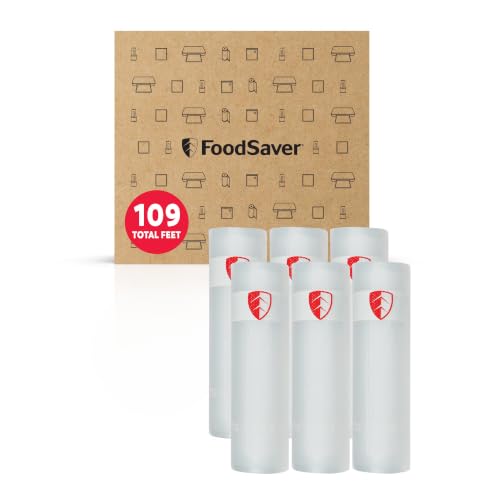
FoodSaver Vacuum Seal Bags and Rolls — reviewed
Best for: long freezer storage, bulk meat and cheese, harvest freezing and sous vide. Not suited for: daily leftovers or any kitchen that will not use the machine weekly.
Reviewing these bags means reviewing a system, because the bags do nothing without the sealer — and the system, judged on results, is the strongest storage performance in this roundup by a wide margin. Removing nearly all the air and heat-welding the film shut attacks freezer burn at its cause, and the multi-layer film holds that vacuum for months without the slow leaks that plague lesser bags. The rolls deserve specific praise: cutting a bag to the item eliminates the half-empty bag problem entirely and reduces waste on awkward shapes. Pre-cut bags trade a little of that efficiency for speed. The costs are real and we list them without softening: the machine’s price and footprint, the per-bag price above disposables, the minutes each seal takes, and bags that are single-use by design since opening means cutting. There is also a learning curve — wet foods need a paper towel barrier or a pre-freeze to seal cleanly. Verdict: unmatched for the long freeze, unjustifiable for the quick one; the clearest case in this category of a product being simultaneously the best and wrong for most daily jobs, a tension we explore further in are food storage bags worth it.

Stasher Silicone Bags — reviewed
Best for: daily reusable use across fridge, freezer and microwave, in households that wash as they go. Not suited for: bulk freezer archives or the tightest budgets.
Stasher is the product that made reusable bags feel like equipment rather than a compromise. The silicone is thick and confidence-inspiring, the pinch-lock seal closes across a wide lip with a definite press, and the bag stands open on the counter while you fill it — a small design decision that removes the third-hand problem every other bag in this roundup has. It freezes well, reheats in the microwave or a water bath, and goes through the dishwasher, which is the single feature most likely to keep a reusable in actual rotation. Over a long life the per-use cost falls below disposables, and the bag still seals crisply when cheap PEVA rivals have gone vague. The criticisms: the upfront cost of a working set is real money; silicone is bulky in a drawer; the seal, while very good, should not be trusted with a full bag of soup in a gym bag; and like all reusables it is only hygienic if it is washed and dried properly, every time. Verdict: the reusable benchmark — buy it if your household’s washing habit is as reliable as its eating habit.
(re)zip Reusable Storage Bags — reviewed
Best for: lunches, snacks, travel and fridge organisation where light, flat and transparent wins. Not suited for: long freezing, reheating or heavy liquids.
The (re)zip proposition is familiarity: the same sizes, transparency and feel as the disposable zip bags in every kitchen drawer, rebuilt in a washable PEVA film with a double zip seal. That familiarity is a genuine virtue — households adopt what fits their routines, and these slide into lunchboxes, handbags and fridge shelves without asking anyone to learn a new system. The double zip seals convincingly for dry and fridge use, the bags rinse in seconds and dry fast, and a whole set stores flat in almost no space. The limits are material limits: PEVA is not silicone, so there is no heat tolerance to speak of, the film and seal wear sooner under heavy daily use, and long freezer storage is beyond its design brief. Judged as a freezer bag it would score poorly; judged as the lunch-and-snack reusable it actually is, it scores very well. Verdict: the easiest first step away from disposables, provided you keep it in its lane — a distinction our food storage bags pros and cons page presses on in more detail.

IDEATECH Reusable Freezer Bags — reviewed
Best for: families testing reusables across a whole freezer routine on a budget. Not suited for: buy-it-for-life expectations or reheating in the bag.
IDEATECH sells the experiment: mixed-size reusable freezer sets at a price low enough that trying them feels like no risk at all. The bags are food-grade film with zip closures, sized for family reality — gallon bags for bulk portions, smaller sizes for the everyday tail of items — and they do freeze food respectably, with the usual reusable conditions: wash by hand, dry fully propped open, inspect seals as they age. The film is thinner and the closures less refined than the premium reusable in this roundup, and we would expect a working set to need refreshing sooner. But that framing misses the point of the product: its job is to answer the question every household has to answer before spending on silicone — will we actually wash and reuse bags? A season with an IDEATECH set answers it honestly and cheaply. Verdict: the value pick and the gateway reusable; a stepping stone that knows it is one.
Head to Head: How the Six Compare
Read across the reviews and a pattern emerges: the category is not a ladder with one winner, but a map with territories. For seal reliability in a disposable, the double zip leads; for ease of closing, the slider leads; for storage duration, vacuum leads by months; for lifespan, silicone leads by years; for lightness and lunch duty, PEVA leads; for low-risk experimentation, the budget reusable set leads. The useful comparison is therefore between the products that share your territory. In the freezer, the real contest is disposable zip versus vacuum, and it is decided by time: under a couple of months, the zip bag’s convenience wins; beyond that, vacuum’s protection wins and it is not close. In the reusable territory, the contest is silicone versus PEVA, decided by heat and lifespan: if you will reheat in the bag or want a decade of service, silicone; if you want flat, light and cheap, PEVA.
Two comparisons cut across territories. The first is cost per successful use. A disposable costs little and is used once; a silicone bag costs a great deal more and must be used scores of times to win — which it does, but only in a household whose washing rhythm keeps it in circulation. The second is failure cost. A failed seal on a snack bag loses a snack; a failed seal on a freezer bag can lose a joint of meat, and a slow vacuum leak loses it invisibly. That asymmetry is why our scores weight seal reliability so heavily for freezer products and so lightly for lunch products, and why we recommend spending your money at the high-failure-cost end of your own usage. The full philosophical version of this argument lives in food storage bags vs reusable silicone bags.
Which Food Storage Bag Should You Actually Buy?
Start from your busiest bag day, not your ideal one. If that day is a bulk shop divided into freezer portions, your anchor purchase is a freezer-grade disposable or a vacuum system, decided by how long the food will wait. If that day is school and work lunches, your anchor is a lightweight reusable set plus a box of disposables for the raw and the messy. If that day is leftovers Tetris in a small fridge — perhaps in a flat where the fridge itself came from our best mini fridges shortlist — silicone bags that stand, seal and reheat will organise your week. Most households end with a two-product answer: one anchor for the heavy job, one flexible backup for everything else. Buying all six products in this roundup is not thoroughness; it is drawer clutter with good intentions.
Sequencing matters as much as selection. Buy the anchor product first and live with it for a month; the gaps that remain after a month of real use are your true second purchase, and they are often surprising — households that expected to need three sizes discover they need one size and a better labelling habit, while committed disposable users discover that a single silicone bag for leftovers quietly takes over a third of their weekly bag work. A starter set built this way costs less, clutters less, and reflects your kitchen rather than a reviewer’s. It also makes the reviews above more useful, not less: once your anchor is chosen, the relevant head-to-head section tells you exactly which companion product the evidence supports, and which purchases can be postponed indefinitely. Restraint, in this category, is a feature of the system rather than a compromise of it.
Who should skip each? Skip vacuum if your freezer turns over in days. Skip premium silicone if bags in your house are used once and abandoned in the sink. Skip sliders for travelling liquids. Skip budget reusables if you already know you are a committed reusable household — go straight to the durable end and save the intermediate step. And skip any product, however reviewed, whose sizes do not match the food you actually store; the mismatch tax is paid on every single use.
Care and Hygiene Notes From the Reviews
Care is where reusable scores are won and lost after the first month. Silicone asks for the dishwasher or a hot soapy wash and rewards it with years of service; left open to dry, it never develops the stale smell that haunts neglected reusables. PEVA asks for a gentler hand wash and a thorough air-dry propped open — the step households skip, and the skip is what makes a reusable unhygienic rather than the material itself. All reusables should be inspected monthly: cloudy, scratched or torn film and seals that no longer close with a crisp press are retirement signals, and a retired reusable demoted to storing screws or crayons has still served well. Disposables need no care, which is precisely their appeal, but they carry the one care rule that matters most in this whole category: a disposable that held raw meat, poultry or seafood is never washed and reused, full stop. Date everything, cool food before sealing it away, and remember that every bag in this roundup extends the life of food without repealing the basic rules of the fridge — when in doubt about leftovers, the bag is not the thing to trust. One more care note specific to freezers: let hot food cool before it goes into any bag destined for the freezer, both to protect the film and to avoid warming everything stored around it, and freeze liquids flat with headspace left for expansion, because a bag filled to the seal with soup will find the one weak point in its seam as the contents expand.
Deeper Notes: How Each Type Ages
A review snapshot can mislead in this category because the products age at completely different speeds, so this section records what time does to each of them. The disposable freezer bag does not age in your kitchen at all — it is used at full performance and discarded, which is its hidden consistency advantage: the five-hundredth bag from the box seals exactly like the first. Its only ageing happens on the shelf over years, where film stored in a hot garage can grow brittle, one more reason to buy counts matched to your pace rather than stockpiling a decade’s supply.
The slider bag ages at its closure. The film will outlast the slider mechanism if the bag were reused, which it is not designed for, so the practical ageing question is storage: sliders stored crushed under heavy boxes can arrive pre-damaged. Buy from stock that turns over, and give the first slider in a new box a test run before trusting it with a marinade. Vacuum bags age in the roll and in the seal they make on the day; a roll stored for years still welds well, but a bag whose vacuum was drawn on a wrinkled fold can develop a slow leak that only announces itself as freezer burn weeks later. The discipline of smoothing the bag mouth before sealing is the difference between the system’s promise and its disappointment.
Silicone ages the most gracefully of anything reviewed here. The material itself is close to indifferent to time, temperature and washing; what ages is the seal’s crispness and, cosmetically, the surface, which can pick up odours from strong foods if it is stored sealed and unwashed — a care failure, not a material one. A silicone bag washed promptly and stored open will perform in year five much as it did in month one, which is the entire basis of its value case. PEVA ages fastest: each wash and each freeze cycle asks a little more of the film and the zip, and the honest expectation is a working life of months of heavy use rather than years. That is not a condemnation — at its price, a PEVA set that serves a school year of lunches has done its job — but buyers should set the expectation before the purchase, not after the first tired seal.
Sizes and Formats: What the Reviews Assume
Every verdict above assumes sensible sizing, so it is worth stating the size logic the reviews used. Sandwich and snack sizes were judged on lunch and portion duty, where the demands are a reliable seal and a film that does not tear on a carrot stick. Quart sizes were judged as the all-rounders — produce, cheese, leftovers, small freezing jobs — and this is the size where mediocre seals are punished most, because quart bags get opened and resealed more than any other. Gallon sizes were judged on marinating, bulk portions and whole items, where seam strength under weight matters more than delicacy. Two-gallon and roll formats were judged as specialists: the turkey, the harvest, the awkward shape.
Format interacts with brand in one way buyers often miss: the same maker’s film and seal quality is usually consistent across its sizes, so a good experience with a brand’s quart bags is meaningful evidence about its gallon bags. The reverse is not true across product lines — a maker’s storage-grade line and freezer-grade line are different films wearing similar boxes, and several of the angriest reviews in this category trace back to a household freezing in storage-grade bags and blaming the brand. Read the word freezer on the box as a specification, not a suggestion, and let our food storage bags review talk you through the film differences in full.
What We Left Out, and Why
A roundup earns trust partly by what it excludes. Generic unbranded freezer bags were left out not because they are all bad but because their defining trait is inconsistency: the same listing can ship noticeably different film across batches, and a review of an inconsistent product misleads in both directions. Compostable and plant-based bags were left out of the main six because, at the time of writing, their freezer performance and seal reliability still trail the mainstream products by a margin that matters for food waste — the greenest bag is the one that saves the food — though this is the corner of the category improving fastest and the one we would re-test first. Produce-specific and bread-specific bags solve narrow problems well but do not change the general picture. Finally, we excluded any bag marketed with antibacterial or freshness-extending chemical claims that a home user cannot verify; a storage product should earn its place with film, seal and seam, not with promises printed on the box.
The Seal-Failure Clinic: Diagnosing the Complaints Behind Bad Reviews
Read enough owner feedback in this category and the same failures recur, and most of them are technique wearing a product’s name. The marinade on the fridge shelf is almost always a seal closed over a wet or greasy track — liquid in the zip channel prevents the tracks from mating, and the fix is to fold the bag’s top over before filling, wipe the track dry, and store the bag upright in a bowl as insurance. The freezer-burned roast in a good bag is almost always air: the bag was sealed with a lungful of air inside, or it was a storage-grade bag asked to do a freezer’s job for a season. The vacuum bag that lost its seal usually met a bone end or a sharp frozen edge that punctured the film from inside — blunting sharp edges with a fold of parchment or choosing a thicker bag answers it. The reusable that smells is a bag stored sealed while damp; the reusable that leaks after months is a seal at the end of its honest life asking to be retired.
We dwell on this because it changes what a review can promise. The products above were ranked assuming ordinary competent use — tracks wiped, air pressed out, sizes matched to jobs. Under that assumption their differences are real and repeatable: the double zip forgives more, the slider speeds more, the vacuum protects longer, the silicone endures more. No product in this roundup, however, survives being used carelessly, and the gap between the best bag used badly and a mid-range bag used well is smaller than the marketing of either suggests. Buy the bag that fits your habits, then give it the thirty seconds of technique it asks for; that combination outperforms every upgrade path in the category.
Three Kitchens, Three Different Winners
To make the roundup’s logic concrete, consider three real household shapes. The first is a family of five with a warehouse-club habit and a chest freezer. Their bag spend is dominated by bulk division and long storage, so their winner is the vacuum system for the monthly shop, backed by gallon freezer bags for the weekly tail of items that will be eaten within the month. Reusables barely feature, because their problem was never lunches. The second kitchen is a couple in a small flat, cooking nightly, freezing little, wasting fridge space on half-used ingredients. Their winner is a set of silicone bags that stand, seal, reheat and organise the fridge, with lightweight reusables for work lunches; a vacuum machine would be a cupboard ornament, and disposables appear only for raw meat portioning. The third is a single cook who meal-preps on Sundays: portions for the week, marinades for the grill, snacks for a desk drawer. Their winner is the slider freezer bag for prep-day speed with damp hands, plus quart double-zips for the marinades that travel to a friend’s barbecue. Three kitchens, three different best products, and each would be mildly miserable with another’s choice — which is the whole argument of these reviews in miniature, and why how to choose food storage bags starts with your week rather than with any product.
Understanding What the Box Is Really Telling You
Packaging in this category is a dialect worth learning, because the honest specifications are present but rarely emphasised. The word freezer is the most important word on any box: it commits the maker to a thicker, cold-flexible film, and its absence is equally informative — a box that says only storage or sandwich is telling you, in code, that the film is not built for the freezer. Closure language comes next. Double zip or double track describes redundancy in the seal; grip, click or colour-change features describe feedback that helps you know the seal is complete, and feedback is worth more than it sounds because most failures are unnoticed incomplete closures. Slider language describes mechanism, not strength — a slider bag’s seal is as strong as the track it closes, no more.
Material language separates the reusables. Platinum silicone signals a curing process associated with purer, more heat-stable silicone and is the grade to look for in a bag you will cook in. PEVA is a specific, chlorine-free plastic film; listings that say only eco plastic or vinyl are being vague in a way that should lower your confidence. For vacuum bags, the meaningful terms are the layer construction and whether the film is textured with air channels on one side — smooth film will not evacuate properly in a standard external vacuum sealer, whatever the listing implies. Finally, treat every count on the box with a size check: counts are comparable only within the same size, and a headline count that mixes sizes is marketing arithmetic. The buyers who get this category right read boxes the way the reviews above read products — for film, seal and seam, in that order.
Value Tiers, Without the Price Tags
Since pack prices shift constantly, the reviews sort value into tiers instead. At the entry tier sit store-brand and budget disposable bags and the IDEATECH-style reusable sets: entirely respectable for dry, fridge and short freezer work, and the right spend for low-stakes jobs, with the understanding that seal consistency is where the saving was made. The mid tier is where most households should live: name-brand freezer bags with double seals, slider bags, and lightweight PEVA reusables — the point where film quality and closure reliability stop improving quickly and marketing begins. The premium tier holds vacuum systems and silicone reusables, and it is justified not by luxury but by different capabilities: months of freezer protection in one case, years of heat-tolerant service in the other. The mistake is not buying premium or buying entry; it is buying a tier for a job it cannot do — entry film for a season-long freeze, premium silicone for a dry snack. Match the tier to the failure cost of the job, a rule that recurs throughout food storage bags buying guide, and the category’s pricing stops being confusing.
The Labelling and Rotation System Every Review Assumes
Every product above performs better inside a small system, and the system is worth describing because it costs nothing. Label with three things: contents, date frozen or stored, and quantity or portions. The write-on block on freezer bags exists for exactly this, and a permanent marker kept in the bag drawer — not the junk drawer, the bag drawer — is the difference between a habit and a hope. Date discipline matters because bags are anonymous: a rigid container of leftovers announces itself, but three frosted bags of red sauce could span two seasons and three recipes, and the oldest one is only identifiable if someone wrote on it.
Rotation is the second half. New bags go to the back or bottom of the freezer stack; the flat-freeze filing system makes this natural, since flat bags file like books and the front of the file should be the oldest. In the fridge, a single designated zone for bagged leftovers — one shelf or one basket, perhaps from the best storage baskets approach to corralling small things — prevents the scatter that leads to forgotten food. Reusables join the system by being stored open and dry in the same drawer as the disposables, so the choice between them is made at the moment of use rather than by whichever happens to be clean. None of this is glamorous, and all of it is the difference between the performance these reviews describe and the performance a chaotic kitchen gets from identical products. The best bag in this roundup cannot rescue an unlabelled freezer; a mid-range bag inside this system will outperform it.
Environmental Scoring Across the Six
Because many buyers weigh waste alongside performance, each product was also scored on its footprint logic — not with false precision, but with the honest variables: how many uses the product delivers, what its use displaces, and what food waste it prevents. The disposable freezer and slider bags score worst on uses — one each — but must be credited with the food they reliably protect, since a bag that saves a portion of meat has prevented a waste far larger than itself. The vacuum system scores surprisingly well for bulk households despite single-use bags, because the quantity of food each bag protects for months is large and the alternative is often spoiled bulk food; for a household that would use it twice a year, the same system scores badly, because the machine’s footprint is then amortised over almost nothing.
Silicone scores best on uses — hundreds to thousands across its life — provided the household actually keeps it in rotation; a silicone bag abandoned in a drawer after a month is the worst footprint in this roundup, premium materials spent on a single-digit number of uses. PEVA sits honestly in the middle: dozens of uses, light materials, modest demands. The budget reusable set’s score depends entirely on whether it converts the household — as a gateway that leads to years of reusable habits it is excellent, and as a one-season experiment discarded without changing anything it is merely cheap. The pattern across all six is the pattern of this whole category: behaviour dominates materials. The reviews above therefore score the products, but your habits will decide the real outcome, which is why the care and routine sections of this roundup carry as much weight as the product verdicts.
Final Verdict Across the Roundup
If forced to stock one product, most households should stock the double-zip freezer bag and accept its disposability as the cost of reliability. If allowed two, add the reusable that matches your washing honesty — silicone for the committed, lightweight PEVA for the lunch-driven. If your freezer holds food for months or your shopping is bulk by design, the vacuum system outranks everything else here for that job. The six products reviewed above are the category’s honest choices; match the territory to your week, check price on Amazon for the current pack configurations, and use how to choose food storage bags if you want the decision walked through step by step. And if you take one habit from this entire roundup, take the labelling habit: a dated bag is a system, an undated bag is a gamble, and no product at any tier can tell you in February what you froze in October unless someone wrote it down in October.
One closing observation from putting this roundup together: the products have converged. A decade ago the gap between the best and worst freezer bag was dramatic; today the mainstream makers all produce competent film and seals, and the differences that remain are about fit — closure style, size range, material philosophy — rather than basic competence. That is good news for buyers, because it means the decision can be made on your habits with confidence that any of the six products above will do its stated job. Choose by territory, stock the anchor first, and let the system described in these reviews do the rest.
Under the Surface: The Food Storage Bags Details That Decide Long-Term Satisfaction
Listings present a food storage bags at its best, so this section slows the assessment down and looks at the evidence an individual model offers: its construction, its finish, its listing detail and the checks you can run before and just after it arrives. The aim is a verdict based on inspection rather than impression.
Start With Your Space and Your Routine
Decide in advance which single feature you would refuse to compromise on, and let that one priority settle ties between otherwise similar food storage bags choices. Dust, moisture, sunlight and heat each age Food Storage & Organization items in different ways, so match the finish and material of the food storage bags to the conditions of the room or outdoor spot it will occupy. Consider the busiest version of the day, not the calmest one, and ask whether the food storage bags still works when people are hurrying, carrying things or sharing the same space. A good test is the two-week question: imagine the food storage bags after a fortnight of ordinary use, with no special effort from you, and ask whether you would still choose it.
Consistency is the detail to hunt for in a food storage bags: consistent gaps, even finish, matching parts and smooth actions usually indicate care in manufacture that shows up later as reliability. A return is easiest when you have kept the packaging until you are sure, so give the food storage bags a fair trial period in its real position before you break down boxes and dispose of padding. Apply the same checks to each shortlisted example, whether that is the FoodSaver Vacuum Seal Bags; the Hefty Slider Freezer Bags; the Ziploc Gallon Freezer Bags, because consistent testing is what makes the differences between models visible. Beware of choosing a food storage bags for a rare occasion, such as a large gathering once a year, if that choice makes everyday use worse for the other fifty-one weeks.
Take a photograph of the space before you order and mark the intended position of the food storage bags on it, then revisit that photo whenever a listing tempts you toward a larger or different style. Think about the end of the food storage bags’s life with you as well, including whether it could move to another room, be passed on, or be stored without damage when your needs change. Seasonal checks suit most Food Storage & Organization items well, so tie a quick inspection of the food storage bags to a job you already do, such as changing clocks or clearing gutters. Where the food storage bags has a surface you will set things on, lean on, or load, consider the heaviest realistic load in your household rather than the lightest display load in the photos.
When Small Problems Appear
Storage is part of ownership, so decide now where the food storage bags, its accessories and its seasonal extras will go when they are not in use, and measure that space too. A single food storage bags can be well made and still wrong for your home, so keep two verdicts separate as you assess it: the quality verdict and the fit-for-your-life verdict. Where the food storage bags meets the floor, the wall or another surface, check what protects both sides, because scuffs and marks in those contact zones are the most common early complaint. Look for the detail photographs in the listing, not just the wide shots, and zoom in on edges, joints, fasteners, controls and finishes, which is where build quality usually shows itself first.
Equally, list what your old food storage bags did well, because replacements sometimes quietly lose a virtue you relied on, such as a size, a shape or a simplicity the new model has redesigned away. Households with children or pets put different demands on a food storage bags than the listing photographs suggest, so judge edges, stability and cleanability against your real household, not a styled one. Keep a short note of the questions each listing leaves unanswered, and treat a seller who answers them clearly as a better prospect than one who repeats general claims. If the food storage bags needs assembly, read the instruction preview if one is offered, count the steps honestly against the time you have, and check whether a second pair of hands is recommended.
Where the food storage bags has moving parts, work them through their full range during your first checks, listening and feeling for roughness that a photograph cannot show.
A Short Decision Checklist
- How the food storage bags will be cleaned in an ordinary week
- The measured space, including clearance to use and clean around the food storage bags
- Assembly needs, tools required and whether help is needed
- Packaging kept until the food storage bags has passed its first trial in place
- Who will use the food storage bags most, and any limits they have
- Delivery path, from the door to the final position
- What your current arrangement does badly that the food storage bags must fix
- The material and finish, matched to light, moisture and wear in its spot
Taken together, these checks take only a little time, yet they answer the questions that decide whether the food storage bags suits your home, your household and your routine, and they do so before money changes hands rather than after.
Frequently Asked Questions About Food Storage Bags Reviews
Which food storage bag is best overall?
There is no single winner, because the category covers different jobs. For a disposable all-rounder, the double-zip gallon freezer bag is the benchmark for seal reliability and film quality. For long freezer storage, vacuum seal bags outperform everything else. For a reusable, silicone bags are the most durable and versatile. The best overall choice is the one matched to your dominant job — freezing, lunches, leftovers or bulk storage — which is why this roundup reviews each product against its own brief.
Are reusable food storage bags as good as disposable ones?
For fridge, lunch and short freezer work, yes — a good silicone or PEVA reusable seals as well as a disposable and lasts far longer. For the longest freezer storage, vacuum bags (a disposable system) still win on protection. The reusable’s real condition is care: it must be washed and fully dried after each use. A well-kept reusable is the equal of a disposable; a neglected one is worse than either.
Why do some freezer bags still let food get freezer burn?
Usually because of air and film, not bad luck. Air left in the bag dries the food’s surface, and thin storage-grade film lets moisture escape over time. Press or roll the air out before sealing, use freezer-grade bags rather than sandwich or storage bags, freeze flat, and do not expect any zip bag to protect food for many months — that horizon belongs to vacuum sealing.
How many times can a reusable food storage bag be used?
A quality silicone bag can be used for years — hundreds of cycles — if it is washed, dried and stored properly. Lightweight PEVA reusables have a shorter working life and should be retired when the seal stops closing crisply or the film clouds and tears. There is no fixed number; the seal’s condition is the counter. Inspect monthly and demote tired bags to dry storage.
Are slider bags better than zip bags?
They are easier, not strictly better. A slider closes the bag in one pass, which helps with wet or cold hands and limited grip strength, and the seal is reliable for fridge and freezer use. A double zip track is slightly more secure for travelling liquids and has no small rigid part to crack under heavy loads. Choose the slider for convenience at the counter, the zip for maximum seal security.
Do I need a vacuum sealer to use vacuum seal bags?
Yes. Vacuum seal bags and rolls are one half of a system; the machine removes the air and heat-welds the bag shut. Without it, the bags are just expensive pouches. The system justifies itself for bulk buying, long freezer storage and sous vide. If your freezing is short-term, a good freezer zip bag and proper air removal by hand will serve you perfectly well for far less commitment.
Related reading: food storage bags review · food storage bags buying guide · best storage baskets · best under bed storage


