Disclosure: As an Amazon Associate, dailyhomedecorating.com earns from qualifying purchases. Links on this page are affiliate links; they cost you nothing extra. Prices and availability change often, so check the current Amazon listing before you buy.
Learning how to choose a fireplace heater is mostly learning what order to ask your questions in. Buyers who start with the flame end up with a beautiful appliance in the wrong spot; buyers who start with the room end up with the right heater almost automatically. A fireplace heater is a portable, heat-first appliance with a simulated flame, bought to warm the zone you sit in and to make that zone feel like the heart of the home. It is not an electric fireplace in the furniture sense — those are mantels, consoles, and inserts chosen for looks with heat in support — and the choosing method differs accordingly: here, zone, safety, and controls come before finish and flame, every time. Work the steps in order and the choice will feel less like a gamble and more like a conclusion you reached on purpose.
Key Takeaways
- The deciding criteria, in order: the zone you need to warm, the safe spot and its wall outlet, the heating style that matches how the room is used, the safety feature group, the controls you will touch daily, and only then flame and finish.
- Plug the heater directly into a wall outlet. Extension cords and power strips are forbidden with heating appliances — so outlet position chooses the heater’s home before style does.
- Keep the manual’s clearance from curtains, bedding, upholstery, and anything flammable, and plan to run the heater only while you are present and awake — never unattended, never overnight.
- Confirm tip-over shutoff and overheat protection in the manufacturer’s manual for the exact model; treat them as backstops for good placement and supervision.
- Match heating style to behaviour: infrared for still sitters, fan-forced for busy rooms, hybrids for households that do both.
In this guide
What You Need to Know Before Comparing
Three ideas carry the whole method. The first is the zone. A fireplace heater does not heat a house or even, honestly, a whole large room; it creates a zone of comfort around the people in it. Everything in the choosing process flows from identifying your zone precisely: which room, which seats, what hours, with doors open or closed. The second idea is that the room itself is half the heating system. Ceiling height, insulation, window area, draughts, rugs, and curtains will change your result more than the difference between two similar models, so the method spends as much time on the room as on the appliance. The third idea is that safety is a set of conditions, not a badge. Direct wall plugging, clear space, supervised use, and the protection feature group form a single system; the method checks each condition in turn, and a model or a spot that fails any of them is out, however lovely its flame.
It also helps to know the category’s shapes before the steps begin. Stove designs are squarish, corner-friendly, and portable, echoing a small wood burner. Cabinet designs are wide and shallow, sit against a wall like a sideboard, and often carry a mantel line. Compact designs shrink the idea for small rooms and desks. Heating styles cut across the shapes: infrared designs radiate warmth onto people and furniture, fan-forced designs warm the air of the zone, and many models blend both. With those pictures in mind, the steps below become simple matching: your room describes itself, and the right category member steps forward.
How to Choose a Fireplace Heater in 7 Steps
Step 1: Define the Zone in Writing
Write down the room, the seats, and the hours. Be specific: the sofa and the armchair, six until eleven, doors closed. Note who uses the zone — readers, film-watchers, children playing on the floor, a worker at a desk — because behaviour chooses the heating style in step three. Note also what the zone is not: if your sentence includes the whole house, sleeping hours, or an empty home, stop and reconsider the category itself, because those jobs belong to other systems. This single written sentence will arbitrate every later decision, so make it honest. Households that skip this step buy for an imaginary room and spend the winter discovering the real one.
Step 2: Audit the Spot and the Socket
Find the spot before the model. It needs flat, stable, hard floor; the manual’s clearance on every side from curtains, upholstery, bedding, clothing, paper, and anything that can burn; and freedom from walkways, draughts of passing feet, and clutter migration. Then the decisive check: a wall outlet within the heater’s own cord reach. The heater will plug directly into that outlet — no extension cord, no power strip, no adapter, no cord under a rug — so if the perfect spot fails the socket test, the spot is not perfect and the furniture must move instead. Measure the full safe footprint, cabinet plus clearance, and tape it on the floor if the room is tight. Live with the tape for a day. Rooms forgive many things, but they do not forgive a footprint that was never really available.
Step 3: Choose the Heating Style by Behaviour
Still people want infrared. Its warmth lands on the body and the chair, like low sun, and a room of readers and film-watchers feels comfortable before the air has fully warmed. Busy rooms want fan-forced air: children moving, cooks passing, doors opening — circulating warmth serves motion better. Mixed households should look at the many designs that blend radiant cabinets with fan assistance, and everyone should weigh noise: a fan on a high setting in a silent room is a presence, so quiet or low modes and a good thermostat matter if your evenings are hushed. There is no wrong style here, only mismatched ones, and step one’s written sentence tells you which is yours.
Step 4: Pick the Shape That Fits the Room
Let the floor decide the silhouette. Corners and flexible rooms suit stoves, which also travel between rooms across the seasons. A long wall and a traditional interior suit cabinets with a mantel line. A small room or a desk zone suits a compact body, bought honestly for a small zone. Check the flame window against your seating: it should face the seats, at a distance where it reads as a hearth rather than a screen, and at a height that flatters a seated eye. Check the cabinet in daylight terms too, because you will look at it switched off for most of its life — finish, proportions, and build honesty matter more than any single evening’s glow.
Step 5: Verify the Safety Feature Group in the Manual
Before falling for any model, find its manufacturer manual and confirm the protection group: tip-over shutoff, which cuts power if the unit is knocked or lifted, and overheat protection, which cuts power if temperatures climb too far. Note the exact clearances the manual specifies and any instructions about surfaces, tops, and storage. Treat silence as an answer: a model whose maker does not clearly state these things has told you what you need to know, and the correct response is to choose a model whose maker does. This step takes minutes and is the highest-value time in the whole method, because it converts safety from a hope into a specification.
Step 6: Match the Controls to Your Evenings
List the controls you will actually touch. A thermostat, to hold comfort without babysitting. Heat levels, to match the night. A timer, as an end-of-evening backstop. A remote, if the heater sits across the room. Flame-only mode and adjustable brightness, if ambience matters beyond the cold months — and it usually does, more than buyers expect. Display dimming for film nights, a child lock for family rooms, and memory of the last setting are small graces worth having. Ignore features you cannot imagine using; a long feature list is not value if your evenings are simple.
Step 7: Set the Tier, Then Choose the Model
Only now does money enter, as tier rather than as a hunt for the lowest figure. Entry tiers buy competent warmth and simple flames for secondary rooms and first experiments. Mid tiers buy the category’s heartland: furniture-grade cabinets, convincing displays, full controls. Premium tiers buy flame artistry, finish, and build heritage for a main room you will look at for a decade. Within your tier, let the earlier steps arbitrate among the finalists — the one whose shape fits, whose manual states its protections plainly, whose controls match your list. The shortlist in the fireplace heater buying guide and the verdicts in the fireplace heater reviews exist to make this final step short.
Gear for This Guide
Duraflame Infrared Quartz Fireplace Stove — The Balanced Answer
Choose this format when your steps land on a living-room zone, still-evening behaviour, and a corner or wall spot that suits a stove. Tier: mid. It is the model the method produces most often, because it has no weak step: personal infrared warmth, a likeable cabinet, complete controls, and a clear manual culture.

Dimplex Electric Fireplace Stove Heater — The Flame-First Answer
Choose this direction when step four and step seven combine: a main room, a premium-leaning tier, and a household that will watch the display nightly. Tier: mid to premium. Its heating is well-mannered zone comfort; its flame is the argument.
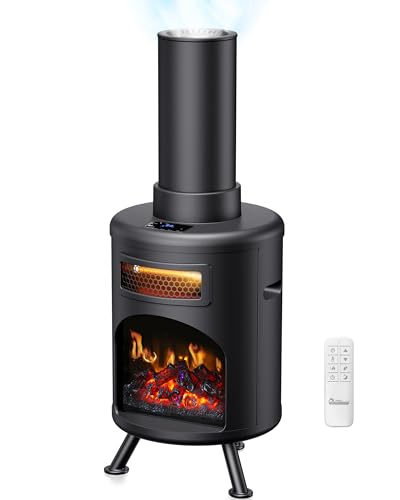
Dr Infrared Heater Fireplace Style Space Heater — The Big-Zone Answer
Choose this cabinet when step one describes a large or draughty zone and the seating sits far from the heater’s spot. Tier: mid to premium. Reach is its virtue; plan its placement and forgive its plainer styling.

Heat Storm Infrared Fireplace Heater — The Small-Zone Answer
Choose this compact when the zone is one desk, one chair, or one small room, and the floor audit leaves no room for cabinets. Tier: entry to mid. Bought at its true scale, it satisfies completely.
Common Mistakes
The first mistake is choosing by photograph: a flame screenshot cannot tell you about zones, sockets, or clearances, and it is responsible for more returns than any defect. The second is measuring the cabinet and forgetting the clearance, so the heater arrives to a spot that exists only in imagination. The third is solving a cord problem with an extension cord or power strip — the one mistake in this category that is dangerous rather than merely disappointing; the heater plugs into the wall, directly, or it does not get used. The fourth is buying a compact for an open-plan room, or a cabinet for a box room, because the tier was tempting. The fifth is expecting overnight or empty-house service from an appliance designed for supervised evenings. The sixth is ignoring the room: no heater chosen by this method will perform in a room with doors flung open, curtains billowing against it, and a rug nowhere near the seating. Avoid these six and the method’s success rate is remarkably high.
Pro Tips
Tape the footprint on the floor for a day before ordering; rooms confess their truth to tape. Read the manual before the listing’s marketing, and read the safety pages twice. Angle seating toward the flame from the start rather than migrating chairs all winter. Draw curtains early on cold evenings — the room’s half of the heating system works best when asked early. Buy in autumn if you can, when the field is complete and the choosing is calm. And agree the household routine out loud — who switches off, what never goes near the heater, where the plug lives — because a routine agreed in daylight survives the sleepiest evening.
Worked Examples
The Film-Loving Couple in a Rental
Zone: one living room, sofa, evenings, doors closed. Spot: a corner with a wall outlet two steps away, curtains on the far wall only. Style: infrared, for still sitters. Shape: stove, portable for the next rental. Safety: manual verified, protections confirmed. Controls: remote and flame dimming for films, timer as backstop. Tier: mid. Result: the Duraflame-format stove, and a room that becomes the flat’s reason to stay in.
The Parent Warming a Family Room
Zone: family room, floor play and a sofa, after-school and evening hours, adults present. Spot: a hard-floor stretch away from toy traffic, socket on the same wall. Style: fan-assisted for a busy room. Shape: a sturdy cabinet or stove with a child lock on the controls. Safety: clearances doubled in spirit, pet and child choreography arranged with furniture. Tier: mid. Result: a heater that warms the gathering and is switched off, reliably, when the room empties — the routine being the real purchase.
The Worker in the Cold Spare Room
Zone: one desk, one chair, working hours, door closed. Spot: a clear patch of floor beside the desk, socket behind it. Style: focused infrared or gentle fan-forced. Shape: compact. Controls: the simpler the better, reachable from the chair. Tier: entry to mid. Result: the Heat Storm direction, with the rest of the house left cool and the worker warm — the zone philosophy in its purest form. Compare the wider small-heater field in best space heaters if the flame proves unnecessary.
Support every example with the room itself: a rug to hold the zone’s comfort, as in best rugs for a fireplace area, seating arranged as two sofas around a corner fireplace describes, and blankets for the hours after the heater is off, from best blankets for the living room.
After Choosing: The First Evening Done Right
The method does not end at the purchase. Unbox where the heater will live, read the manual’s placement pages again with the actual room in front of you, and set the unit on its flat, clear spot. Plug it directly into the wall outlet. Test every function while you are fresh: heat levels, thermostat, timer, remote, flame-only mode, and the protection behaviours as the manual directs. Expect a brief new-appliance smell that should fade; investigate anything that persists. Then run the first evening deliberately — moderate setting, thermostat in charge, timer armed as backstop, household watching how the zone forms — and adjust the seating toward the warmth rather than cranking the heater toward the seating. Switch off when the evening ends. That first evening, done properly, teaches the household everything the winter will ask of it.
Balance this method against the category’s honest ledger in fireplace heater pros and cons, pressure-test the purchase in is a fireplace heater worth it, and if the furniture-first category keeps calling, compare methods with how to choose an electric fireplace and the head-to-head electric fireplace versus fireplace heater.
The Steps at Greater Depth
Understanding Your Zone’s Personality
Step one deserves a second pass, because zones have personalities that a sentence alone can miss. Some zones are gathering zones, defined by a sofa’s gravity; the heater serves them by warming a semicircle of seats and giving the group a visual centre. Some are solo zones — the reading chair, the desk — where the heater serves one person completely and the rest of the room is scenery. Some are threshold zones, like a hallway-adjacent family room, where traffic and open doors constantly tax the warmth; these zones need the most honest expectations and often benefit from a door discipline the household must agree to keep. Naming your zone’s personality refines every later step: gathering zones reward cabinet presence and flame, solo zones reward focus and simplicity, and threshold zones reward reach and patience. Buyers who skip this reflection often buy a solo appliance for a gathering room, or a gathering appliance for a desk, and feel a dissatisfaction they cannot name. Name the personality and the dissatisfaction never forms.
The Electrical Reality Check
Step two also deserves reinforcement, because it is where good intentions meet old houses. Many homes, especially older ones, have fewer wall outlets than modern life wants, and the temptation to solve a heater’s placement with a power strip is the category’s most dangerous everyday moment. Resist it absolutely. A heating appliance’s sustained draw is exactly what cord accessories handle worst, and the rule — directly into the wall, nothing between plug and socket — admits no heavy-duty exceptions. If your chosen room cannot offer a clear spot within cord reach of a wall outlet, the correct moves are rearranging furniture, choosing a different spot, or having an electrician add an outlet as a permanent improvement to the house. All three are cheaper than the alternative. While auditing, also give the outlet itself a glance: it should be sound, undamaged, and not already sagging under a tangle of other demands. The heater deserves a healthy socket the way a stove deserves a sound flue.
Reading a Manual Like a Reviewer
Step five’s manual check is a skill worth describing. Open the manual — most makers publish it — and go first to the safety pages, not the feature tour. Find the protection features named in plain words: the shutoff that responds to tipping, the protection that responds to overheating. Find the clearance figures and picture them in your room with a tape measure in hand. Find the prohibitions, which will echo this guide’s: no extension cords, no unattended running, keep flammables away. A manual that states these things clearly and early is the signature of a maker who takes the category seriously; a manual that buries or omits them is telling you to buy elsewhere. Then, and only then, read the features: the thermostat’s behaviour, the timer’s range of use, the flame’s adjustments, the care instructions. Ten minutes of this reading is worth more than an evening of review videos, because the manual is the one document that must, by law and by conscience, tell you the truth.
Choosing for Someone Else
The method bends, slightly, when the buyer and the user are different people. For an older parent, weight simplicity above all: large, legible controls, a remote that cannot be misunderstood, a stove shape that stands stably and reads clearly as a hot appliance to be respected. Set it up for them, agree its spot together, and make the routine part of the gift — the plug in the wall, the clear space, the evening switch-off. For a student or young renter, weight portability and compactness, and have the outlet conversation before the purchase, because rental rooms are where power strips breed. For a partner, choose together if you possibly can: flame taste and noise tolerance are personal, and a heater one of you finds soothing and the other finds humming will migrate to the cupboard by mutual, silent consent. In every case, the chooser’s job is to transfer the routine along with the appliance; the method is the gift as much as the machine.
When the Method Says No
A choosing method that never says no is a sales pitch, so let this one say it plainly. If your audit finds no spot with both clearance and a reachable wall outlet, the method says no — improve the room first. If your zone sentence honestly reads whole house, all night, or while we are out, the method says no — those are central-heating sentences, and a portable appliance that pretends to serve them will serve none of them safely. If the household cannot agree to keep the clear zone clear — if the corner will inevitably fill with laundry, toys, and draped throws — the method says no, kindly, because a rule that will not be kept is not a rule at all. And if the flame leaves every member of the household cold when seen in person, the method says no to the category and yes to a plain heater and a better armchair. Saying no in November is a disappointment; discovering it in January is a grievance. The method exists to move the answer to November.
The Method Applied to the Cluster’s Own Shortlist
Watch the steps work on the guide’s own picks and the method stops being abstract. The Duraflame stove survives every step for the median living room, which is why it is the cluster’s reference: zone-friendly infrared warmth, a shape that fits corners, a manual culture that states its protections, controls that match real evenings, and a mid tier that respects the buyer. The Dimplex survives for the same room when step seven’s tier rises and step four’s flame judgement dominates. The Dr Infrared survives when step one grows teeth — a big zone, distant seating — and step four accepts a cabinet’s bulk as the price of reach. The Heat Storm survives when steps one and two shrink the problem honestly to a desk or a small room. The LifeSmart survives when step seven is budget-led and step four wants a mantel line. The EdenPURE survives when step three’s behaviour reads long and gentle. Six models, six survivals, each one traceable to the buyer’s own answers. That traceability is the difference between choosing and shopping, and it is available to any buyer willing to spend one hour with a tape measure, a manual, and an honest sentence about their evenings.
Second-Order Choices: The Details That Decide Year Two
Once the method has produced a model, a handful of smaller choices decide whether year two feels as good as week one. Choose the finish for your room’s light, not the showroom’s: dark cabinets forgive dust and suit evening rooms; lighter finishes suit bright, traditional spaces and show every mark in a busy family room. Choose control placement for your habits: top controls suit a heater you pass often; front controls and a remote suit one that lives across the room. Choose a model whose flame window you can clean easily, because a dusty display quietly degrades the very feature you paid for. Choose with storage in mind if the heater will rest for summer — where will it stand, upright and dry, and can you lift it there comfortably? Choose, finally, with the household’s least technical member in mind: if they cannot operate it confidently and switch it off certainly, the choice is not finished. These are small questions, but appliances are not loved or abandoned over specifications; they are loved or abandoned over exactly this grain of daily fit.
A Short History of Choosing Wrong
The category’s returns pile tells a consistent story, and it is worth a paragraph because every returned heater was once chosen with hope. The largest pile is placement failures: heaters bought for spots without sockets, spots without clearance, spots that existed in a photograph of someone else’s room. The second pile is scale failures: compacts glowing bravely in halls, cabinets overwhelming bedsits. The third is expectation failures: flames judged by a standard no simulation meets, warmth expected through the night by an appliance that must sleep when its owners do. Notice what is absent from the piles: almost nobody returns a heater because its brand was wrong. The failures are method failures, which is the most hopeful fact in this article — method can be learned in an hour, and you have just spent part of that hour learning it.
The Room’s Half of the Bargain
Every step in this method has quietly assumed a partner: the room. It is time to pay the partner directly. A room that helps its heater has doors that close and are closed, curtains that draw fully and are drawn early on cold evenings, a rug under the seating that keeps warmth where feet can feel it, and seating arranged to face the flame rather than to ignore it. A room that fights its heater has a staircase swallowing its warmth, a draught under every door, and furniture arranged for a television alone with the heater exiled to a peripheral wall. The difference between those rooms, measured in comfort, exceeds the difference between any two models in this cluster — which is why the method spends its early steps indoors rather than in catalogues. If your room currently fights, spend the first effort there: a draught excluder, curtain linings, a rug, a rearranged sofa. Then choose the heater for the room you have made, and prepare to be surprised by how capable even a modest model becomes inside a cooperative space.
Confidence at the Till
The method’s final gift is a feeling: the absence of doubt at the moment of purchase. Doubt in this category usually comes from unasked questions — the unmeasured spot, the unread manual, the unexamined evenings. A buyer who has written the zone sentence, taped the footprint, read the safety pages, listed the controls, and set the tier has asked them all, and what remains is not doubt but preference, which is a pleasant thing to exercise. Buy the model your answers produced, keep the receipt and the manual together, and let the first evening be a confirmation rather than an experiment. That is what choosing, as opposed to merely buying, feels like — and it is available for every appliance in the house once the habit forms.
The Checklist, Printed in One Place
For the buyer who has read the method and wants its skeleton, here it is. One: the zone sentence, written and honest. Two: the spot audited — flat floor, full clearance from curtains and all flammables, no walkway, and a wall outlet within the heater’s own cord reach. Three: the style matched to behaviour — infrared for stillness, fan-forced for motion, a blend for both. Four: the shape fitted to the room — stove, cabinet, or compact — with the flame facing the seats. Five: the manual read, the protection group of tip-over shutoff and overheat protection confirmed, the clearances noted. Six: the controls matched to the evenings — thermostat, levels, timer, remote, flame-only mode as needed. Seven: the tier set by finish and flame, and the model chosen among the survivors. Beneath all seven, the standing rules: direct wall plugging with no extension cord or power strip ever, supervised use while present and awake, off overnight and when out, and a household that has agreed to all of it. Print that list, work it in order, and the purchase is made.
Teaching the Household the Choice
The last step is not in the numbered list because it happens after the box arrives, but it decides whether the choice stays chosen. Walk the household through the appliance the way this guide walked you through the method: here is its spot and why the space around it stays empty; here is its plug, in the wall, where it always lives; here is what it may never be connected to, and why; here is when it runs — while we are here and awake — and when it rests; here is the timer, the thermostat, and the flame we can enjoy with no heat at all on a mild night. Say it once, cheerfully, as the lore of a new household object rather than as a lecture, and then let the routine prove itself across the first fortnight. Households absorb appliances the way they absorb furniture: by living around them. A heater introduced with its story told becomes part of the home’s furniture of the mind, respected without effort and enjoyed without anxiety — which is the final state every step of this method has been aiming at.
Choosing in a Hurry, Without Choosing Badly
Sometimes the cold does not wait for a methodical hour: a heating failure, a sudden snap, a guest arriving Friday. The method compresses honourably. Five minutes: write the zone sentence and measure the spot, socket included. Five more: pick the style by behaviour and the shape by the floor. Five more: open the manual of your leading candidate on a phone and find the protection features and clearances in writing. Then buy the tier you can justify and set the appliance up slowly, because setup is the one stage that never compresses safely. What a hurried buyer must not skip is exactly what a leisurely buyer must not skip — the socket rule, the clearances, the supervised routine — because those are not refinements of the method. They are the method’s foundation, and a foundation poured in a hurry is still poured in full or not at all.
The Method, Remembered as a Story
If the steps ever blur, remember them as the story of one buyer. She began with a cold room and a catalogue, and nearly bought the prettiest flame in it. Instead she wrote a sentence about her evenings, taped a square on her floor, and discovered the square’s socket was a wall away from where she had imagined the heater — so the furniture moved, once, on paper, for free. She read a manual before a single review and crossed off a model whose protections were vague, however glowing its photographs. She chose warmth for sitting still, a stove for her corner, controls for her films, and a tier for her decade. The heater that arrived felt less like a purchase and more like a conclusion, and its first evening felt like the room had been waiting for it. Every buyer in this category is that buyer, one honest hour away from the same ending.
After the Choice: Living With the Answer
A well-chosen heater changes the questions a household asks. November’s question — which model — becomes December’s contentment and January’s ritual. The chooser’s remaining work is tiny and recurring: keep the intakes clean, keep the zone clear, keep the cord honest, and re-read the manual’s safety pages each autumn with the seriousness of a pilot’s checklist. Do that, and the choice you made with this method will keep remaking itself, evening after evening, as the obviously right one. Few purchases repay an hour of method with years of evenings. This one does, and now the method is yours.
One Page for the Refrigerator Door
Some households keep the method visible: the zone sentence, the spot’s measurements, the model’s clearances, and the standing rules, pinned where the household actually looks. It sounds excessive until the first busy week, when a basket migrates toward the heater and a glance at the door restores the geography without an argument. Good methods survive by being findable at the moment of temptation, and the temptations in this category are all small, domestic, and daily — a cord stretched just this once, a throw draped just for tonight, a heater left running just while someone pops out. The page on the door answers each of them in advance, in the household’s own handwriting. That is the method’s final form: not a guide read once, but a household that knows.
The Chooser’s Closing Thought
Every product category has a version of this method hiding inside it: begin with the life, not the object; let the constraints speak before the desires; verify the unglamorous documents; and let beauty arbitrate only among the options that have earned the right to be compared. Fireplace heaters reward the method unusually visibly, because their constraints are physical and their beauty is literal firelight. Choose in the right order and you will spend the winter in the warm room, watching the flame, wondering why anyone buys these things any other way.
A Note on Patience
The method asks for roughly an hour across a few days: an evening to write and tape and think, a morning to read a manual, a moment to choose. Set against a winter of evenings — and then a second winter, and a fifth — the hour is the cheapest part of the purchase by an enormous margin. Buyers who begrudge it usually spend it anyway, later, in the currency of returns, rearrangements, and low-grade dissatisfaction. Spend it first, spend it gladly, and let the heater arrive into a home that is ready for it in every sense.
And If You Are Choosing a Second One
Second purchases in this category are their own pleasure: the method is already in the household’s bones, the first heater has taught everyone its lore, and the only real question is which room graduates next. Apply the steps fresh anyway — the second room has its own zone, its own socket geography, its own behaviour — and resist the assumption that the first model is automatically the second answer. Households that choose twice, properly, end with a house whose cold rooms have all been adopted, one glowing corner at a time.
How to Choose a Fireplace Heater: The Method in One Breath
Zone first, written down. Spot second, measured with its socket. Style by behaviour, shape by floor, safety by manual, controls by evening, tier by how long you will look at it. Then the standing rules that outlive the choosing: direct wall plugging, clear space, supervised hours. A buyer who can say those sentences in order already knows how to choose a fireplace heater; the rest of this guide simply walks beside them while they do it.
Measure Twice, Order Once: A Hands-On Fit Check Before You Choose a Fireplace heater
Choosing a fireplace heater goes wrong far more often at the measuring stage than at the comparing stage. Listings are easy to browse; rooms are unforgiving. This section turns the advice elsewhere in the guide into a single hands-on session with a tape measure, a phone camera and twenty unhurried minutes. Work through it before you order, and you will eliminate the most common causes of returns in the seasonal & holiday category: the near-fit, the blocked door, the cable that does not reach, and the delivery that cannot get through the hallway.
Step One: Measure the Space, Then Measure the Journey
Measure the destination first — width, depth and height, at floor level and again higher up, because walls lean and skirting steals more room than people expect. Note sockets, vents, radiators, window swings and door arcs on the same sketch. Then measure the journey: every doorway, turn and stair the fireplace heater must pass through, boxed, on delivery day. A model that fits the room but not the route is a return waiting to happen. Photograph each measurement with the tape in frame; when you compare listings later, the photos end arguments that memory would lose.
Step Two: Mock It Up Before You Commit
Mark the footprint on the floor with painter’s tape, or build the volume from cardboard boxes, and live around the mock-up for a day. Open nearby doors and drawers against it, walk past it carrying something bulky, and sit or stand in your usual spot to check sightlines. For anything with a screen, flame, light or lid, check the viewing or working angle from where you will actually be, not from where the photograph was taken. This crude rehearsal catches proportion mistakes that no dimension table can, and it costs nothing but an evening.
Finish the fit check with these five confirmations before ordering your fireplace heater:
- The taped footprint leaves your main walking route clear even when doors, lids or drawers are fully open.
- Power, water, drainage or ventilation — whichever the design needs — is reachable without stretching cables or hoses across a walkway.
- The delivery route fits the boxed dimensions with room to spare at the tightest turn, not just at the doorways.
- Daylight and artificial light fall on the spot the way you expect, checked at the time of day you will use it most.
- Every regular user can reach, open, lift or operate the key parts from their natural standing or sitting position.
Think about noise, light and heat as neighbours of the fireplace heater, not afterthoughts, since a choice that performs well but disturbs the room around it rarely stays popular for long. Remember that guests experience your fireplace heater without instructions, so anything that needs explaining, warning or demonstrating is worth simplifying before it is worth defending. Plan for the fireplace heater to be moved at least twice in its life — for cleaning, redecorating or a change of room — and favour designs that forgive being shifted, tilted or carried. Look at the edges and undersides when you judge build quality, because those are the places makers save money first and the places owners discover last. Ask how the fireplace heater behaves on your worst floor, wall or surface rather than your best one, since homes are uneven and listings are photographed in perfect rooms. Keep the receipt, delivery note and a photograph of the label together, because warranty conversations go smoothly when dates and model details are at hand. If two people in the household disagree about the fireplace heater, let the person who will use or maintain it most have the deciding vote on practical questions. Beware of buying for the household you hope to become; the fireplace heater that serves the household you already are will be used this week, not someday. A tape measure, a spirit level and ten patient minutes prevent more fireplace heater regrets than any amount of comparison shopping after the fact. When a listing is vague about a dimension, material or included part that matters to you, treat the vagueness itself as information and look for a clearer seller. Photograph your room at the time of day you will use the fireplace heater most, and compare candidates against that light rather than against bright midday photographs. Small households should weight compactness and easy storage more heavily, while large households should weight durability and simple operation, because the failure modes differ. If the fireplace heater will serve children or older relatives, test the key actions with the weakest grip and the shortest reach in the house in mind. Leave a little capacity unused — in size, storage or power — because a fireplace heater run permanently at its limit ages faster and annoys sooner than one with headroom. Notice which parts are replaceable and which are not; a fireplace heater whose wear parts can be swapped cheaply often outlasts a sealed design twice its price in spirit, if not in years. Consider the fireplace heater from the perspective of the person who cleans around it, because designs that trap dust, block access or demand special products quietly tax every week of ownership.
A fireplace heater chosen this way rarely surprises its owner, and that is the real goal: not the thrill of a bargain, but the quiet absence of regret. Keep the sketch and photographs with the receipt. If you ever add a matching piece, extend the setup, or move home, those twenty minutes of measurements become the most useful document you own for this category.
Frequently Asked Questions
What is the most important factor when choosing a fireplace heater?
The zone-and-spot combination: knowing exactly which seats in which room you are warming, and having a flat, clear spot for the heater within its own cord’s reach of a wall outlet. Those two facts decide the size, shape, and style before any brand is discussed. Buyers who settle them first choose well; buyers who start with brands and flames often have to start over.
Infrared or fan-forced: how do I decide?
Decide by behaviour. If the zone’s occupants sit still — reading, films, conversation — infrared warmth, which lands directly on people and furniture, usually feels best. If the room is busy, with people moving, cooking nearby, or playing on the floor, fan-forced air warming serves better. Many designs blend both. Also weigh fan noise if your evenings are quiet.
Can I use an extension cord if the outlet is just out of reach?
No — not just out of reach, not heavy-duty, not temporarily. Fireplace heaters plug directly into a wall outlet, always; extension cords and power strips are a recognised risk with heating appliances. Move the heater, move the furniture, or choose a different spot. If no safe spot in the room can reach an outlet, the room is telling you to solve its electrics before its heating.
Which safety features are essential?
Confirm in the manufacturer’s manual that the exact model includes tip-over shutoff and overheat protection, and note its specified clearances. Then treat those features as backstops: the real safety system is placement with clear space from curtains and flammables, direct wall plugging, and running the heater only while you are present and awake, never overnight or in an empty house.
What size should I buy for my room?
Think in zones rather than figures. A desk or single chair is a compact’s zone. A sofa group in a closed room suits a full stove or standard cabinet. A large, draughty seating area calls for a reach-focused cabinet and managed expectations. Ceiling height, insulation, and draughts matter more than small model differences, so support any choice with closed doors, drawn curtains, and a rug in the seating area.
Is flame quality worth paying more for?
If the heater will anchor your main room and be watched nightly for years, yes: flame craft is the premium tiers’ real product, and the best displays hold a room’s mood in a way budget effects do not. For a spare room, an office, or a first experiment, a simpler flame at a lower tier delivers the category’s warmth honestly, and you can upgrade the room that matters later.
Related Guides
The full cluster: fireplace heater buying guide, fireplace heater review, fireplace heater reviews, and timing via space heater Black Friday deals. Each companion assumes this method and builds on it, so a reader who has worked through the steps above will find the rest of the cluster reads like a set of worked answers to the questions the method taught them to ask.